Leidsid 33 sarnast õppematerjali, mis on seotud failiga "The control of forest insects: general considerations". Need materjalid aitavad sul teemat sügavamalt mõista.
insect, insects, trees, forest, method, light, important, control, bark, beetle, effect, attack, fourth, supply, other, trunk, conditions, host, around, factor, feed, timber, diseases, them, birds, bacteria, mechanical, direct, effective, poison, within, active, species, upon, material, mature, usually, leaves, struck, lighting, beetles, ground, firehttp://www.bbc.co.uk/nature/programmes/tv/jungle/vjungle.shtml Virtual Jungle worksheet I 1. Structure 1.1. Describe these layers Emergents The canopy trees are tall, but some species grow even taller until they stick right out above the canopy. These are called 'emergents' and can reach almost 90m in height. Up here they don't have to compete with other trees for light, but they are exposed to the high winds that lash the canopy during tropical storms. Emergents are the favourite nest sites of jungle eagles such as the harpy eagle of South America. Canopy Suspended 40m above the ground is the canopy - a belt of tree crowns supported by enormous rainforest tree trunks. This is the most productive and diverse habitat on Earth - perhaps 40% of the world's species spend their lives among its branches. The canopy's function is to photosynthesise
pieces. Permafrost consists mostly of gravel and finer material. The arctic tundra is also a windy place and winds can blow between 48 to 97 kilometres. The tundra is basically like a desert when it comes to precipitation. Only about 150-250 millimetres of precipitation (mostly snow) fall each year. When water saturates the upper surface, bogs and ponds may form, providing moisture for plants, and breeding thousands of insects that attract many migrating birds. Animals are adapted to handle cold winters and to breed and raise young quickly in the very short and cool summers. Some animals have grown thick fur that turns white in the winter. Others find a place to hibernate during the winter months. Many plants have dark red leaves that allow the plant to absorb more heat from the sun in the cold tundra climate. All of the plants are adapted to sweeping winds and disturbances of the soil
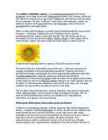
1. The first stage of the 3. The flower is nearly flower formation 2. The flower is still covered, completely exposed but faces the sun Introduction Taste is tops, but health and nutrition rank high for consumers who want foods that are as good for them as they are good to eat. Sunflower oil and kernels meet that challenge with their combination of health benefits and flavor. From phytochemicals and important vitamins and minerals to convenience of size and cost effectiveness, the amazing sunflower kernel is a powerhouse compared to no other! And one need look no further than NuSun oil for a healthy, trans-free alternative to hydrogenated oils and shortenings. While the vibrant, strong sunflower is a recognized worldwide for its beauty, it is also an important source of food. Sunflower oil is a valued and healthy vegetable oil and sunflower seeds are enjoyed as a healthy, tasty
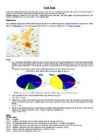
2. Where is prairie, pampas, steppe, and veldt situated? EurasiaSteppe, North America-Prairie, South AmericaPampa, South AfricaVeldt 3. Using the climate diagram describe the climate of the region. Temperate deciduous forest -Well-defined seasons with a distinct winter characterize this forest biome. Moderate climate and a growing season of 140-200 days during 4-6 frost-free months distinguish temperate forests. Temperature varies from -15° C to 25° C. Precipitation (750-1500 mm) is distributed evenly throughout the year. Temperate grassland- Semiarid, continental climates of the middle latitudes typically have between 25 cm and 50 cm of precipitation a year. Much of this falls as snow, serving as reservoir of moisture for the beginning of the growing season
Also are finded in tempered areas of South America. Climate: The average temperature in temperate forests is 50° F. Summers are mild, and average about 70° F, while winter temperatures are often well blow freezing. The average yearly precipitation is 30-60 inches. This precipitation falls throughout the year, but in the winter it falls as snow. There are four seasons in this biome, with warm summers and cold winters, often snowy. In autumn, the leaves change color and fall from the trees. The leaves decay on the forest floor, so the soil is very rich. Because of this, and because of the long growing season, many deciduous forests have been cut down for farming purposes. Plants: Trees of this biome include hardwoods such as maple, oak, hickory, and beech. There are often some evergreens, such as hemlock, spruce, and fir growing amongst them. Decidous forests have usually 3-5 layers of plants; Top layer, or canopy: tall deciduous trees.
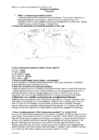
There are six large areas of temperate grassland: the Pampas in South America, the Veld in Africa, the Canterbury Plains in New Zealand, the Murray-Darling Basin in Australia, the Prairies in North America and the Steppes in Central Asia. 2. Colour the distribution of temperate grassland on the map. 3. How is temperate grassland called in these regions? Eurasia - steppe Hungary - puzda North America - prarie South America - pampa South Africa - veldt 4. What is forest steppe (forest steppe – metsastepp)? A forest steppe is a temperate-climate ecotone and habitat type composed of grassland interspersed with areas of woodland or forest. 5. Describe the climate of temperate grassland. Temperate grasslands have a temperate continental climate, which is cooler than savannas. Temperate grasslands have warm, humid summers with an average temperature of 18° C and cool, dry winters with an average temperature of 10° C. Most of the rain falls as
The Coral Sea is the warmest that is why many corals live in the seas. The skeletons of these tiny organisms have formed a great belt of coral- called the Great Barrier Reef. Its is 2000 km long and 2-150 km wide. There are five distinguishable natural zones in Australia. In the very east there are wet forests that occupy the space between the Great Dividing Range and the eastern coast. The wet forests give place to beautiful grasslands with some trees called the savannas. Farther west the trees disappear and the bushlands begin. The real desert occupies the centre of the Western Plateau. In the very southwest there are thin forests of evergreen trees. Most of Australian trees are kinds of eucalyptus (or gum tree to Australians) and acacia (wattle of Australians). Eucalyptuses give the people timber and eucalyptus oil. Of 600 kinds of acacias the golden wattle, the national flower of Australia, is the best known.
Environmental effects Very obvious environmental effect of acid rain is the loss of fish in acid sensitive lakes and streams. Loads of fishes are not able to survive in acidic water. There are 2 ways acid rain effects lakes and streams: chronic and episodic. The first one is long-term process and this acidification is result from years of acidic rainfall. Episodic, on the other hand, is rapid change sudden jump in the acidity of water. Acid deposition may influence forest vegetation and soils. It removes soil nutrients such as calcium and magnesium from soils in high elevation forests. Acid rain may also help weaken natural defenses of some trees, making them more vulnerable to some diseases and pests. Acid rain wears away the waxy protective coating of leaves, damaging them and preventing them from being able to photosynthesize properly. Many animals and insects are sensitive to acidification
precipitation can eventually wash pollutants into streams, lakes, and rivers. Acidity itself is determined based on the pH level of the water droplets. PH is the scale measuring the amount of acid in the water and liquid. The pH scale ranges from 0 to 14 with lower pH being more acidic while a high pH is alkaline; seven is neutral. Normal rain water is slightly acidic and has a pH range of 5.3-6.0. Acid deposition is anything below that scale. It is also important to note that the pH scale is logarithmic and each whole number on the scale represents a 10-fold change. Causes and History of Acid Rain Acid deposition can occur via natural sources like volcanoes and rotting vegetation but it is mainly caused by the release of sulfur dioxide and nitrogen oxide during fossil fuel combustion. When these gases are discharged into the atmosphere they react with the water,
1. Key features for all studied biomes. Tundra The main seasons are winter and summer. The tundra is the world's coldest and driest biomes. The average annual temperature is -28° C. Nights can last for weeks when the sun barely rises during some months in the winter, and the temperature can drop to -70° C. During the summer the sun shines almost 24 hours a day. Summer are usually warm. Average summer temperatures range from 3° to 16°C. TaigaTaiga is the Russian word for forest and is the largest biome in the world. It stretches over Eurasia and North America. The taiga is located near the top of the world, just below the tundra biome. The winters in the taiga are very cold with only snowfall. The summers are warm, rainy, and humid. Some of the animals in the taiga hibernate in the winter, some fly south if they can, while some just cooperate with the environment. GrasslandsGrassland biomes can be found in the middle latitudes
The average rainfall measures 8-13 cm in many areas. The maximum annual precipitation over a long period of years has been 37 cm with a minimum of 5 cm. In cold deserts the mean winter temperature is between -2 to 4° C and the mean summer temperature is between 21-26° C. The winters receive quite a bit of snow. The mean annual precipitation ranges from 15-26 cm. Vegetation Canopy in most deserts is very rare. Plants are mainly ground-hugging shrubs and short woody trees. Leaves are "replete" (fully supported with nutrients) with water- conserving characteristics. They tend to be small, thick and covered with a thick cuticle (outer layer). These plants include: yuccas, ocotillo, turpentine bush, prickly pears, false mesquite, sotol, ephedras, agaves and brittlebush. The spiny nature of many plants in semiarid deserts provides protection in a hazardous environment. Many plants have silvery or glossy leaves, allowing them to reflect more radiant energy
Australia is 1,800 miles from the mainland of Asia and almost half way round the world from Europe. More than 6,000 miles of ocean separate in from the America. Australia is the only continent except for Antarctica that lies all south of the equator. The natural zones of Australia are very various. There are deserts, semi deserts, grasslands, savannas, bushlands and rainforests. The wet forests occupy the narrow region in the east. Most of the animals, birds and insects live in that region, because there is enough food. The savannas which are grasslands with some trees are mostly in the west. Farther west are the bushlands. The real deserts occupy the centre of the Western Plateau. In the very south west there are thin forests of evergreens trees. Australia is the driest inhabited continent, the flattest, and has the oldest and least fertile soils. Only the south-east and south-west corners of the continent have a temperate climate. The
Just how damaged they will be by pollution is uncertain. Acid rain The term acid rain refers to what scientists call acid deposition. It is caused by airborne acidic pollutants and has highly destructive results. Scientists first discovered acid rain in 1852, when the English chemist Robert Agnus invented the term. From then until now, acid rain has been an issue of intense debate among scientists and policy makers. Acid rain, one of the most important environmental problems of all, cannot be seen. The invisible gases that cause acid rain usually come from automobiles or coal-burning power plants. Acid rain moves easily, affecting locations far beyond those that let out the pollution. As a result, this global pollution issue causes great debates between countries that fight over polluting each other's environments. For years, science studied the true causes of acid rain. Some scientists concluded that human
Estonian University of Life Sciences Report on Soil Microflora By Katrin Vares Tartu 2013 Introduction The purpose of this report is to define soil microflora and establish the importance of it. Since the microorganisms clearly play an important role in preserving the balance of life, the next objective is to look into factors that influence this balance. Natural conditions and cultural impact could be considered as the variables that correlate the most with the activity and composition of microflora, hence some of the natural and cultural factors will be looked into a little more in detail. Definition, composition and importance of microflora
Click to edit Master text styles Second level Third level Fourth level Fifth level Bird ringing center co-ordinates the marking of more than 100000 birds each year throughout the country. Altough Matsalu is an internationally important for bird areas in particular, is the national parks' mission to contribute to the conservation of protected mammalian species Click to edit Master text styles Second level Ring seals can be Third level regulary spotted in Fourth level Fifth level the Väinemeri, but also in the bay and
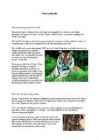
China, and because there are so few individuals left, it is regarded by many scientists as being "functionally extinct" in the wild. But a group called Save China's Tigers has been working on a captive- breeding programme and hopes to reach an agreement with China's State Forestry Administration to reintroduce captive-bred animals into the wild. If all goes well, the first individuals could be reintroduced to coincide with the Beijing Olympic Games in 2008. Rare insect hit by housing scheme Britain's rarest beetle, the streaked bombardier, could soon become extinct in the UK when a new housing development is built over the single site at which it can be found, a brownfield site on the Thames Estuary in East London. "It is very sad that a deliberate choice has been made to plough on with the development, regardless of the consequences to wildlife," said Jamie Roberts of the invertebrate conservation group Buglife.
The Mountain Lion cougar (Puma concolor), also puma, cougar, or panther, is a member of the Felidae family, native to the Americas. This large, solitary cat has the greatest range of any wild land mammal in the Western Hemisphere, extending from Yukon in Canada to the southern Andes of South America. An adaptable species, the cougar is found in every major North American habitat. The Mountain lions of Yellowstone region were significantly reduced by predator control measures during the early 1900s. It is reported that 121 lions were removed from the park between the years 1904 and 1925. Then, the remaining population was estimated to be 12 individuals. Mountain lions apparently existed at very low numbers between 1925 and 1940. They maintain a secretive profile in the Yellowstone region. Although the cougar population numbered in the hundreds during the early 1900s, controlled hunts between 1904 and 1925 decimated the population
[A very low] does not. max 3 [3] 6. (a) (i) award both marks for correct answer 10 000 / 800 000 (× 100); 1.25 / 1.3 / 1(%); 2 (ii) R any reference to energy / light missing the plant reflected (off plant) / only certain wavelengths of light can be, absorbed / used; ora absorbed by / hits, non-photosynthetic parts; e.g. bark passes through leaf / misses chlorophyll / misses chloroplasts; some is heat that is used in evaporation / respiration; max 2
Air pollution Firstly, lets talk about air pollution, which endangeres our life in cities and also the forests near by. Cars and factories blow poisoned gas in the air and it mixes with the oxygen, so the air that we breathe, becomes dangerous to our health. The ozone layer around the Earth, there is a special type of oxygen called ,,ozone". Ozone is important because it stops ultraviolett radiation from the sun. Many aerosol sprays and factories destroy ozone and they have made a very big hole in the ozone layer. This means that too much ultraviolet radiation now enters the Earth. This is very dangerous because it can cause cancer. Poisonous chemicals also cause acid rain, that destroyes plants, rivers, lakes and buildings. Acid rain can travel thousands of miles, so pollution in one country can become acid rain for another country. So
Many different factors may cause disease. Examples of such are genetic defects or nutritional deficiencies. The reasons that may cause disease can be broadly categorized into the following categories like social, psychological, chemical and biological. Some of them may fall into more than one category. Some diseases are contagious or infectious. Infectious diseases can be transmitted by any of a variety of mechanisms, including aerosols produced by coughs and sneezes, bybites of insects or other carriers of the disease, and from contaminated water or food. 5. First aid There are three main aims of first aid and they are: · preserve life · prevent further injury · promote recovery In addition, some may add a 4 th 'P' protect yourself, although this is not an aim of providing first aid and some would consider that it is covered by 'Prevent further injury'. Much of first aid is common sense and people are almost certain to learn some elements
Savanna A savanna is a grassland ecosystem with scattered trees or shrubs. In savannas trees are small or widely spaced so that the canopy does not close. It is often believed that savannas are characterized by widely spaced, scattered trees, however in many savanna communities tree densities are higher and trees are more regularly spaced than in forest communities. The open canopy allows sufficient light to reach the ground to support an unbroken herbaceous layer consisting primarily of C4 grasses. Savannas are also characterised by seasonal water availability, with the majority of rainfall being confined to one season of the year. Savannas can be associated with several types of biomes. Savannas are frequently seen as a transitional zone, occurring between forest and desert or prairie. Although the term savanna is believed to have originally come from a Native American word
The Great Basin Desert is the largest desert in America. Missouri river is the longest river in the States. The largest lake is Lake Superior. Click to edit Master text styles Second level Third level Fourth level Fifth level There are very many species in the States. There are about 17 000 types of trees (larger plants) in the mainland and Alaska. Over 1,800 species of flowering plants are found in Hawaii. The United States is home to more than 400 mammal, 750 bird, and 500 reptile species. About 91,000 insect species have been described. In America, there are very many parks, which 58 are national parks and there are hundreds of federally managed parks, forests and wilderness areas. The first national park in the world was Yellowstone national park in Wyoming. http://www.youtube.com/watch
Negative aspects of wind energy Wind turbines make noise. Slowly rotating blades can kill birds and bats. Wind is variable: if it's not blowing , there's no electricity generated. Wind turbines are expensive. Hydroelectric power Hydropower is electricity generated using the energy of moving water. Hydropower is the cheapest way to generate electricity today. It's a clean fuel source that is renewable yearly by snow and rainfall. Hydropower is readily available; engineers can control the flow of water through the turbines to produce electricity on demand. In addition, reservoirs may offer recreational opportunities, such as swimming and boating. A typical hydro plant is a system with three parts: an electric plant where the electricity is produced; a dam that can be opened or closed to control water flow; and a reservoir where water can be stored. Hydroelectric power provides almost onefifth of the world's electricity.
called the Rockies, are a broad mountain range in western North America. The Rocky Mountains stretch more than 3,000 miles (4,800 kilometres) from British Columbia, in Canada, to New Mexico, in the United States. Mount Robson, at 12,972 feet (3,954 meters) is the highest peak in the Canadian Rockies Canada has many different biomes. For instance: The Arctic. It is a very cold, windy, and often snowy biome located around the North Pole. Long periods of darkness (in the winter) and light (in the summer) also affect Arctic life. Nature. Canada is one of the most exciting countries in the world. It has many interesting cities, like Toronto, North Vancouver, Montreal or Halifax. But also some of the most impressive nature, which is great for outdoor activities, like hiking, skiing, rafting and fishing. It is because of the different biomes that appear in that country. One can do everything one wants to do in different parts of the land.
The unofficial anthem of Australia is `Waltzing Matilda'. It tells a story about a swagman, who has named his sleeping blanket Matilda. He is chased by police for stealing a sheep which he wanted to eat. The swagman doesn't want to be punished, so he jumps into a billabong and drowns. The golden wattle was proclaimed the official national floral emblem in 1988. It is a spreading shrub or a small tree, which grows in the under storey of open forest, woodland and open scrub in South Australia, Victoria, New South Wales and the Australian Capital Territory. Green and gold were proclaimed Australia's national colour by the Governor-General in 1984. Before the proclamation, Australia had no official colour, although three colour combinations traditionally had a claim to be Australia's national colours: red, white and blue; blue and gold; and green and gold. Head of State:
recession () and rising unemployment, when people can no longer afford ( ) housing, and governments cut down public housing expenses. Inadequate shelter or housing creates conditions that promote disease. Without decent ( ) protection, many of the poor are exposed ( ) to severe ( ) and dangerous weather as well as to bacteria and viruses carried by other people and animals. They also are more likely to become infected with diseases carried by insects or rodents (). In arid()regions, drought leaves the poor without clean water for drinking or bathing. In temperate climates, including in the major cities of developed countries many of the homeless poor are harmed by or die of exposure ()to extreme winter cold. Inadequate shelter almost always accompanies inadequate sanitation and unhygienic practices. Because the poor in developing nations commonly have no running water or sewage() facilities, human excrement and garbage
Railway Busses High speed trains Waterways Airports Metros ENTERTAINMENT La Scala-worldknown theater in Milano Bagno il Faro- beachnightclub in Castiglione della Pescaia. VATICAN MUSEUMS The Vatican Museums are the museums of the Vatican City and are located within the city's boundaries. They display works from the immense collection built up by the Roman Catholic Church throughout the centuries including some of the most renowned classical sculptures and most important masterpieces of Renaissance art in the world. COLOSSEUM Click to edit Master text styles Second level Third level Fourth level Fifth level COLOSSEUM The Colosseum or Coliseum, also known as the Flavian Amphitheatre is an elliptical amphitheatre in the centre of the city of Rome, Italy
Most of the lakes alsi have water after it rains only. Lake Eyre, the biggest, is one of the many salt lakes in Central Australia. Australia has much underground water. The Great Artesian Basin under the central Lowlands makes cattlebreeding possible thee. The network of artesian wells provides cattle with water. Natural zones The wet forests also called the rainforests occupy the narrow coastal region in the east. In the west they give place to grasslands with some trees called savannas. Farther west the trees disappear and the savannas give place to the bushlands. The real desert occupies the centre of the Western Plateau. In the very southwest there are thin forests of evergreen trees. Plants A rich variety of plant can be found in the natural landscapes of Australia. A lot of species can be found in wet tropical forests in the north and in temperate rainforests in the south. The biggest family of the native plants is the myrties
hours. Plants A rich variety of plants can be found in the natural landscapes of Australia. A lot of species can be found in wet tropical forests in the north and in temperate rainforests in the south. The biggest family of native plants is the myrtles. They include more than 500 species of eucalyptus, or gum trees. Only the big river red gum is seen nearly everywhere. These can be found beside rivers and dry riverbeds. Some gum trees are valuable timber species and have been cut down for many years. Gum tree leaves are full of oils, which evaporate easily. Another big family of native plants is the acacias. They are also known as wattles. There are about 900 wattle species. The golden wattle is Australia’s native flower. Its gold flowers and green leaves inspired the colours worn by many Australian sporting teams. In Australia bushfires are very often to happen. Because the trees and shrubs do not lose
The City and The Tower of London Styv Solovjov G1a The City Founded by Romas 43-50 AD, set up trading post It has seen at least 15 major fires 1666 burnt down 4/5 of its houses Then The City was rebuilt Tower Bridge (Tower Hill tube), built in 1894 during the Second World War, its was heavily bombed Now there is one of the biggest financil centres in Europe Banks, stock exchange Many banking and insurance institutions have their headquarters there Stock Exchange, Lloyd's of London,the Bank of England are all based in the City Over 500 banks have offices in the City City is an established leader in trading in Eurobonds, foreign exchange, energy futures and global insurance Of the $3.98 trillion daily global turnover, trading in London accounted for around $1.36 trillion,or 34.1% of the total Canary wharf Click to edit Master text styles Second level Third level
In some parts of Australia the tribes called the places where initiation ceremonies were held, bora grounds. They were called Buna grounds in other parts of the country, but the sites were not randomly chosen and were used for thousands of years by the tribe. The bora ground itself was identified by two circles that were drawn on the ground or were formed by rocks or pebbles. The circles were connected by a path and other symbols were drawn into the earth or carved into trees near the grounds. These symbols were highly significant in ceremonies and also warned people (women and uninitiated youths and strangers), to stay away from the area. The people also believed that a person's spirit could visit living people to harm or warn them of danger. This usually resulted in a 'inquiry' about the death of a person who was considered to have died prematurely or in unusual circumstances. The inquiry - usually undertaken in consultation with an
One of the most famous songs of Iron Maiden. Click to edit Master text styles Second level Third level Fourth level Fifth level I am a man who walks alone And when I'm walking a dark road At night or strolling through the park Lyrics When the light begins to change I sometimes feel a little strange A little anxious when it's dark. Watching horror films the night before Debating witches and folklore Fear of the dark, fear of the dark The unknown troubles on your mind I have constant fear that something's always nearMaybe your mind is playing tricks Fear of the dark, fear of the dark You sense, and suddenly eyes fix
The biggest ones are located to the west. The four biggest islands are Saaremaa, Hiiumaa, Vormsi and Muhu. The highest point in Estonia and also in the Baltic region is Suur Munamägi. It is 318. above sea level. Estonia is a country of a thousand lakes. The Largest one is Lake Peipsi which is also the fourth biggest freshwater lake in Europe. Lake Peipsi and Lake Võrtsjärv are rich in fish. Estonia has many rivers but only nine of them are longer than 100km. The most important ones are Pärnu River and Emajõgi River Climate Estonia lies in the northern part of the temperate climate zone and in the transition zone between maritime and continental climate. Because Estonia is continuously warmed by the Gulf Stream it has a milder climate despite its northern latitude. Northern latitude means long summer daylight hours (the longest summer day stretches to 19 hours), and dark winters when daylight lasts sometimes only six hours.
 annaabi.ee