Leidsid 33 sarnast õppematerjali, mis on seotud failiga "Test 1 Form 11". Need materjalid aitavad sul teemat sügavamalt mõista.
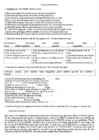
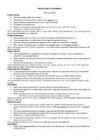
thin, other, look, before, complete, sentences, hard, adjective, those, herself, never, correct, felt, brush, wait, child, live, arrive, simple, perfect, found, bath, sister, remembered, suffer, times, agreeliday, hear, describe, talk, polite, predict, best, trusts, everybody, tell, exam, results, says, modest, thinks, uncle, brings, expensive, giftsTests Superstar 1 Luke Prodromou Test 1 Name____________________ Class_______ Use your English 1 Complete these sentences using the correct form (present simple or present continuous) of the verb in brackets. _ 1 She is in a band and she _________________________________ (record) a CD at the moment. _ 2 She is an actress and often _________________________________ (appear) on television. _ 3 At the moment she _________________________________ (have) a rest because she is tired. _ 4 Mike is a doctor and he _________________________________ (live) in Manchester.
Books are expensive. (NOT The books are expensive.) I love music. (NOT I love the music.) 10. Use had better, not have better. I think you'd better see the doctor. (NOT I think you have better see the doctor.) We'd better ask John to help us. 11. Use the present progressive am playing, is raining etc to talk about things that are continuing at the time of speaking. I'm playing very badly today. (NOT I play very badly today.) Look! It's raining! (NOT Look! It rains!) 12. Use for with a period of time. Use since with the beginning of the period. for the last two hours = since 9 o'clock for three days = since Monday for five years = since I left school I've been learning English for five years. (NOT I've been learning English since three years.) We've been waiting for ages, since eight o'clock. 13. Don't separate the verb from the object. VERB OBJECT She speaks English very well . (NOT She speaks very well English.)
1. FIRST SIGHT My mother drove me to the airport with the windows rolled down. It was seventy-five degrees in Phoenix, the sky a perfect, cloudless blue. I was wearing my favorite shirt -- sleeveless, white eyelet lace; I was wearing it as a farewell gesture. My carry-on item was a parka. In the Olympic Peninsula of northwest Washington State, a small town named Forks exists under a near-constant cover of clouds. It rains on this inconsequential town more than any other place in the United States of America. It was from this town and its gloomy, omnipresent shade that my mother escaped with me when I was only a few months old. It was in this town that I'd been compelled to spend a month every summer until I was fourteen. That was the year I finally put my foot down; these past three summers, my dad, Charlie, vacationed with me in California for two weeks instead. It was to Forks that I now exiled myself-- an action that I took with great horror. I detested
publisher. ISBN 1-59905-201-6 Printed in the United States of America 13 12 11 10 09 08 07 9 8 7 6 5 4 3 2 1 Introduction Grammar is a very old field of study. Did you know that the sentence was first divided into subject and verb by Plato, the famed philosopher from ancient Greece? That was about 2,400 years ago! Ever since then, students all over the world have found it worthwhile to study the structure of words and sentences. Why? Because skill in speaking and writing is the hallmark of all educated people. Lesson by lesson, this book provides basic instruction in the eight parts of speech--nouns, pronouns, verbs, adjectives, adverbs, prepositions, conjunctions, and interjections--as well as the standard patterns of English sentences. All students of English, be they native speakers or those who are studying English as a second language, will profit from the fundamental introduction and review of
Chapter 21 Chapter 42 Chapter 1 It is a truth universally acknowledged, that a single man in possession of a good fortune, must be in want of a wife. However little known the feelings or views of such a man may be on his first entering a neighbourhood, this truth is so well fixed in the minds of the surrounding families, that he is considered the rightful property of some one or other of their daughters. "My dear Mr. Bennet," said his lady to him one day, "have you heard that Netherfield Park is let at last?" Mr. Bennet replied that he had not. "But it is," returned she; "for Mrs. Long has just been here, and she told me all about it." Mr. Bennet made no answer. "Do you not want to know who has taken it?" cried his wife impatiently. "You want to tell me, and I have no objection to hearing it." This was invitation enough. "Why, my dear, you must know, Mrs
5 (possible answers) she was my age and apart from the 1 1 go ahead 5 come to eighties hairstyle we're the spitting 1 Well, you will go to bed late every night. 2 fall through 6 bring about image of each other! Some people 2 Well, you will refuse to wear a 3 tip off 7 go down with say that they can see a strong family coat. 4 mistake for 8 come up with resemblance between my dad and me.
work for it. Basically, she kicked my ass. By not pulling her punches or letting me shortchange the details, she made me work harder and because of that, this story is a much, much better book. BARED TO YOU wouldn't be what it is without you, Hilary. Thank you so much! To Martha Trachtenberg, copy editor extraordinaire. This book is an important one for me and she treated it that way. Thank you, Martha! To Victoria Colotta, for all her hard work on the interior design and typesetting. She took my plain text and made it gorgeous. Thank you, Victoria! To Tera Kleinfelter, who read the first half of Bared to You and told me she loved it. Thank you, Tera! To all girls who were at Cross Creek at some point in your adolescence: May all your dreams come true. You deserve it. And to Alistair and Jessica, from Seven Years to Sin , who inspired me to write Gideon and Eva's story. I'm so glad the inspiration struck twice!
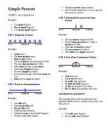
· He is constantly talking. I wish he would shut up. USE 2 Longer Actions in Progress Now · I don't like them because they are always complaining. REMEMBER Non-Continuous Verbs/ Mixed Verbs Examples: (All of these sentences can be said while Examples: eating dinner in a restaurant.) · She is loving this chocolate ice cream. Not · I am studying to become a doctor. Correct · I am not studying to become a dentist. · She loves this chocolate ice cream. Correct · I am reading the book Tom Sawyer. Simple Past [VERB+ed] or irregular verbs Examples:
· action set by a timetable or usually schedule Present A: He is speaking. · action taking place in the at the moment, Continuous N: He is not speaking. moment of speaking just now, Q: Is he speaking? Listen!, Look!, · action taking place only for a now, right now limited period of time · action arranged for the future Past Simple A: He spoke. · Finished action in the past yesterday, 2 N: He did not speak. minutes ago, in Q: Did he speak
.. (7 win) lots of prizes. She ... even ... (8 be) on TV. Kelly ... (9 break) her arm twice while doing a jump on the ice, but she's OK now. Last year she ... (10 travel) to Canada to practise in a training camp. I'm sure sometime in the future she ... (11 win) an Olympic medal. By that time, I ... (12 be) a famous author and she ... (13 ask) me to write a book about her way to the top. That's why I ... (14 start) taking notes of her and my other classmates' results. 3. Complete the exercise with the verbs in the past simple, the past continuous, or the past perfect tense. Do you remember? I went I was / we were going I had gone I couldn't wait for the first day of school to show off the new bike which I ... (1 get) as a birthday present. As I ... --- 5 (2 want) to look cool riding up to the front steps, I ... (3 put) on my new skirt. When I ... (4 reach) the school, I ... (5 make) a big mistake and ... (6 smile) at my friends instead of watching where I was going
3 1 gold 5 lamb 3 obstinate 6 misery 2 show 7 as though 2 bird 6 rake 3 imagine 8 would guess 2 1 Water was pouring into the boat. 3 the hills 7 bee 4 like 9 hard 2 We clambered onto the rocks. 4 a mouse 8 a fox 5 judging 3 The wooden floor had rotted. Challenge! 4 The little boy was sobbing and Transcript
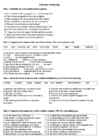
today. b) Diana wants to get to the top in her company. She is very……………. c) It's not ……………. to stare at people and say nothing! d) I think you have to be very……………. to write a novel. e) Thank you for helping me. It was very ……………. of you. f) Peter refuses to change his mind, although he is wrong. He's so ……………. g) It was very……………. of Sheila to put out the fire on her own. h) Our neighbours look down on us. They are a bit ……………. i) Don't eat all the cakes! You really are becoming……………. ! j) If you lend me the money, I'll be very ……………. k) I am very ……………. of my new motorbike. 1) My parents don't mind my crazy hairstyle. They are very ……………. 4. Use the word given in capitals at the end of each line to form a word that fits in the space in the same line. Jack's real character How easy is it to understand another person's character
are timeless. Snow falls in the December in Minnesota. Water boils at 100 degrees Celsius. The Present Continuous This tense is used to describe an action that is occurring right now (at this moment, today, this year, etc.). The action has begun and is still in progress. It can be occuring now, but is temporary Formed by adding Is/are before the verb and ing to the verb She is typing a paper for her class. He can't talk. He is fixing the sink right now. On your handout, write one sentence that reflects PRESENT CONTINUOUS: something that is occurring right now. The Simple Past We use the simple past to indicate exactly when an action or event took place in the past. I visited my sister yesterday.
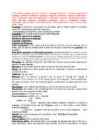
society for communication and self-expression. - human language at all levels is rule- or principle-governed. Linguistics: the scientific study of human natural language Synchronic approach to language: Diachronic approach to language: Linguistic competence: Linguistic performance: What is grammar?: "The sounds and sound patterns, the basic units of meaning, such as words, and the rules to combine them to form new sentences constitute the grammar of a language" Prescriptive grammar vs. Descriptive garmmar: Descriptive grammar: the systematic study and description of a language. Descriptive grammar refers to the structure of a language as it is actually used by speakers and writers. Prescriptive grammar: a set of rules and examples dealing with the syntax and word structures of a language, usually intended as an aid to the learning of that language. Prescriptive grammar refers
· Action which was in a progress at a started time in the past. We don't mention when it was started or finished. (at 11 o'clock I was driving home) · To describe the atmosphere, setting etc and to give background information to a story (The birds were singing, sun was shining..) TIME EXPRESSIONS USED WITH PAST CONTINUOUS: while, when, as, all morning/day etc Past Perfect · Action which happened before another past action or bf a started time in the past (Lucy had finished her homework by 6) · Action which finished in the past and whose result was visible at a later point in past (He had sprained his ankle few days ago and he was still limping) · General situation in past (Everything had seemed normal at first) TIME EXPRESSIONS USED WITH PAST PERFECT: before, after, already, just, fot, since, until, when, by the time, never etc. Past Perfect Continuous
Adverbs and Adverbial Phrases ........................................................... 2 Types of Adverbs ..................................................................................... 2 Position of Adverbs.................................................................................. 4 Yet, still, already ....................................................................................... 6 Adverbs and Adverbial Phrases An adverb describes a verb, an adjective, another adverb or a whole sentence. Adverbs can be divided according to the information that they give. Types of Adverbs 1. Some adverbs tell us how somebody does something or how something happens. These are called Adverbs of Manner. Please speak quietly. Tom drove carefully along the narrow road. 2. Some adverbs tell us where. These are called Adverbs of Place: She put the book on the table. 3. Some adverbs tell us when. These are called Adverbs of Time.
sense. Teachers kept changing all the time, teaching methods kept changing as well and learning Pushkin by heart does not work wonders with one's speaking skills, really. (Although I still can recite one of his poems...) The point is, I actually really like Russian. I've never been good at it, but I like the language and I really wish I knew it better. I can speak some, but not read much. As soon as the characters stop talking to each other, I'm stuck and can barely understand anything. Most of my Russian skills my ten years younger mates envy come from my year of living in Narva (literally starve or learn!) and talking to a variety of Estonian-Russian roleplayers I know. (But since they are also fluent in English and most in Estonian as well, it turns into a stew of languages very soon.) Chronologically the second language I started to learn was French. That was because of the Descartes Lyceum
c) After leaving school, Ann studied/trained as a teacher. d) Peter decided not to go in/enter for the examination. e) My sister learned/taught me how to draw. f) I can't come to the cinema. I have to read/study for a test. g) In history we had to learn a lot of dates by hand/heart. h) I hope your work will improve by the end of course/term. i) Martin failed/missed his maths exam and had to sit it again. j) If you have any questions, raise/rise your hand. Task 2. Complete each sentence with a word from the box. Use each word once only. cheat copy memorise pay revise concentrate divide pass punish underline a) Our teachers used to punish us by making us stay behind after school. b) If you…….twenty-seven by nine, the answer is three. c) Try to……. the most important rules. d) It is difficult to …….attention in a noisy classroom. e) Pauline tried her best to …….the end of year examinations.
parents. past perfect simple present perfect simple He said he had been to France three I've been to France three times. times. present perfect continuous past perfect continuous I've been working very hard. He said he had been working very hard. past simple past perfect I bought a new car. He said he had bought a new car. past continuous past perfect continuous It was raining earlier. He said it had been raining earlier. past perfect past perfect The play had started when I arrived
for a particular purpose. No warranty may be created or extended by sales representatives or written sales materials. The advice and strategies contained herein may not be suitable for your situation. The publisher is not engaged in rendering professional sevices, and you should consult with a professional where appropriate. Neither the publisher nor author shall be liable for any loss of profit or any other commercial damages, including but not limited to special, incidental, consequential, or other damages. For general information on our other products and services, please contact our Customer Care Department within the United States at (800) 762-2974, outside the United States at (317) 572-3993 or fax (317) 572-4002. Wiley also publishes its books in a variety of electronic formats. Some content that
Lamb to the Slaughter by Roald Dahl (1916-1990) The room was warm and clean, the curtains drawn, the two table lamps alight - hers and the one by the empty chair opposite. On the sideboard behind her, two tall glasses, soda water, whiskey. Fresh ice cubes in the Thermos bucket. Mary Maloney was waiting for her husband to come him (correction: home) from work. Now and again she would glance up at the clock, but without anxiety, merely to please herself with the thought that each minute gone by made it nearer the time when he would come. There was a slow smiling air about her, and about everything she did. The drop of a head as she bent over her sewing was curiously tranquil. Her skin - for this was her sixth month with child - had acquired a wonderful translucent quality, the mouth was soft, and the eyes, with their new placid look, seemed larger darker than before. When the clock said ten minutes to five, she began to listen, and a few
Vronsky, Betsy's cousin. Vronsky continues to pursue Anna. Although Anna initially tries to reject him, she eventually succumbs to his attentions. Karenin warns Anna of the impropriety of paying too much attention to Vronsky in public, which is becoming a subject of society gossip. He is concerned about his and his wife's public image, although he believes that Anna is above suspicion. Vronsky, a keen horseman, takes part in a steeplechase event, during which he rides his mare Frou-Frou too hard and she falls and breaks her back. Vronsky escapes with minimal injuries but is devastated that his mare must be shot. Anna tells him that she is pregnant with his child, and is unable to hide her distress when Vronsky falls from the racehorse. Karenin is also present at the races and remarks to her that her behaviour is improper. Anna, in a state of extreme distress and emotion, confesses her affair to her husband. Karenin
FUTURE SIMPLE BE GOING TO Will + infinitive (will go) Am/is/are going to + infinitive (is going to rain) 1.A decision at the moment of 1.Future plans made before the speaking: moment of speaking: A: 'I'm cold'. A: 'We've run out of milk.' B: 'I'll close the window'. B: 'I know, I'm going to buy some.' 2.Prediction based on opinion: 2.Prediction based on present I think the Conservatives will win the evidence: next election. Look at those boys playing football! 3
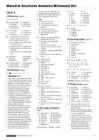
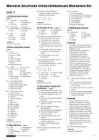
Test 14 1 Translate. 1 arstiabi puudumine lack of medical care 2 haiguste käes kannatama suffer from illnesses 3 saksa päritolu of german descent 4 Ameerikat avastama discover America 5 ametlik keel official language 6 orjusele lõppu tegema put an end to slavery 7 oma traditsioone ja kultuuri säilitama keep your traditions and culture 8 immigrantide arv the number of immigrants 2 Complete the sentences with the names of countries, nationalities, and languages. 1 The capital of Norway is Oslo. 2 Kevin lives in Chicago. He is American. 3 Michail comes from Moscow. He speaks Russian. 4 What nationality are you? I´m Estonian. 5 The descendants of the Africans brought to America are called settlers. 6 Uwe´s grandparents live in Germany. They speak German. 7 Michael comes from Australia. He speaks Australian English. 8 Eve lives in Ireland. She speaks English and Irish.
Too full of gab, and too impertinent And free with your advice on all occasions. DAMIS But . . . MADAME PERNELLE You're a fool, my boy--f, o, o, l Just spells your name. Let grandma tell you that I've said a hundred times to my poor son, Your father, that you'd never come to good Or give him anything but plague and torment. MARIANE I think . . . MADAME PERNELLE O dearie me, his little sister! You're all demureness, butter wouldn't melt In your mouth, one would think to look at you. Still waters, though, they say . . . you know the proverb; And I don't like your doings on the sly. ELMIRE But, mother . . . MADAME PERNELLE Daughter, by your leave, your conduct In everything is altogether wrong; You ought to set a good example for 'em; Their dear departed mother did much better. You are extravagant; and it offends me, To see you always decked out like a princess. A woman who would please her husband's eyes Alone, wants no such wealth of fineries. CLEANTE
years. The first flower probably did not survive for long, and flowers must have remained rare and isolated phenomena, since conditions were most likely not yet favorable for a widespread flowering to occur. One day, however, a critical threshold was reached, and suddenly there would have been an explosion of color and scent all over the planet – if a perceiving consciousness had been there to witness it. Much later, those delicate and fragrant beings we call flowers would come to play an essential part in the evolution of consciousness of another species. Humans would increasingly be drawn to and fascinated by them. As the consciousness of human beings developed, flowers were most likely the first thing they came to value that had no utilitarian purpose for them, that is to say, was not linked in some way to survival. They provided inspiration to countless artists, poets, and mystics
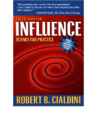
do it, enabled us to make significant changes. His work has enabled us to gain significant competitive differentiation and advantage" -LAURENCE HOF, Vice President, Relationship Consulting, Advanta Corporation "This will help executives make better decisions and use their influence wisely ... Robert Cialdini has had a greater impact on my thinking on this topic than any other scientist." -CHARLES T. MUNGER, Vice Chairman, Berkshire Hathaway, Inc. If you're wondering why of Latin America, the Far East, and Central Europe. you should buy this new edition of Influence: o More neuroscience evidence of how the influence process works is inte-
The main question is what makes a human being happy? In my opinion, as a person claims that he is happy, then we can firmly say that this person is successful in life because he feels content with his life. Contentedness and happiness are the key factors in determing how succesful someone is. It is often said that for a small town inhabitant, it is a lot harder to achieve something in life. I totally disagree with this statement. There are just other values in a town with a small population density. Values concerning family life are coming more forth, career and such kind of personal ambitions are kept in the backround. Also it is often mentioned that making a successful career in a small town is largely impossible, because of the lack of different resources and opportunities. By these it is commonly ment a uncompetitive education and few opportunities to develop extracurricular activities. In my opinion it is again a misunderstanding
7. Present Perfect Continuous [has/have + been + present participle]. Tegevus algas minevikus ning kestab siiani. You have been waiting here for two hours. They have been talking for the last hour. Recently, I have been feeling really tired. Sam has had his car for two years. Active= Recently, John has been doing the work. Passive= Recently, the work has been being done by John. 8. Past Perfect [had + past participle] You had studied English before you moved to New York. I had never seen such a beautiful beach before I went to Kauai. We had had that car for ten years before it broke down. Active= George had repaired many cars before he received his mechanic's license. Passive= Many cars had been repaired by George before he received his mechanic's license. 9. Past Perfect Continuous [had been + present participle] You had been waiting there for more than two hours when she finally arrived. They had been
Questions: a) Under what branch of literacy the given text goes to? ...................................................................................................... ............................................................ b) Who is the storyteller? ...................................................................................................... ............................................................. c) Describe her character with tree sentences. ...................................................................................................... ...................................................................................................... ...................................................................................................... ...................................................................................................... ....................................................
Conditionals Sentences with if are used to express possibilities. 0 Zero conditional If-clause present (past) simple Main clause present (past) simple Sometimes sentences with if express certainty rather than possibility. The zero conditional is used to talk about sth. that is always true (such as a scientific fact), or that was always true in the past. In this type of conditional we can use when instead of if. E.g., If/When you mix blue and red, you get purple. If/When you don't water flowers, they die. (present simple in both parts of the sentence) If/When I asked her to come with us, she always said no. (past simple in both parts of the sentence)
I used to have long hair. 2 Kas see on teie kooli direktor? Is that the head teacher of your school? 3 Peaaegu igaüks räägib võõrkeelt aktsendiga. Almost everyone speaks a foreign language with an accent. 4 Ära muretse, sinu inglise keel on suurepärane. Don´t worry, your English is excellent. 5 Ma ei suuda taluda valju muusikat. I can´t stand loud music. 6 Kas sa tahaksid töötada ruumis või väljas? Would you like to work indoors or outdoors? 2 Complete the sentences with a job. 1 Vets look after sick animals. 2 Lifeguards work on the beach and help swimmers in danger. 3 Childminders look after small children when their parents are at work. 4 Teachers work at school. 5 Plumbers mend baths, sinks, and leaks. 6 Cooks prepare food. 7 Nurses help doctors and look after people who are ill. 8 Farmers work in the fields. 3 Write the opposites. 1 lazy hardworking 5 possible impossible
· How do they differ? · Which extracts are examples of formal letters? · How is the reader addressed in a formal letter? · What are the closing remarks for formal letters? · What is the salutation in a friendly letter? · How would you end extracts 1,2,3 ? · How would you begin the extracts 4 and 5? 1. Dear Mr Miller, I received your kind invitation to the reception. Unfortunately, owing to other commitments. I will be unable to attend ... 2. Dear Ralph, l just got your invitation to the company's event. l `m afraid I can't make it because I've a/ready made plans which l can "t change ... 3. Dear Sirs, I am writing to complain about the poor quality of the items which I received from your company. I have no other alternative but to cancel the order which 1 placed earlier this week ... 4. ... thus, I recommend that you accept this advice on the matter
 annaabi.ee