Leidsid 33 sarnast õppematerjali, mis on seotud failiga "Temperate grassland worksheet". Need materjalid aitavad sul teemat sügavamalt mõista.
grass, land, rate, biome, soil, fire, prairie, animals, plants, root, forest, ground, roots, south, regions, pampa, grow, deep, stems, fertile, process, kooligeo, rohtlad, there, areas, veld, africa, north, asia, describe, than, average, summer, occur, winter, role, trees, shrubs, come, during, leaves, conditions, layers, dead, works, rich, metres2. Where is prairie, pampas, steppe, and veldt situated? EurasiaSteppe, North America-Prairie, South AmericaPampa, South AfricaVeldt 3. Using the climate diagram describe the climate of the region. Temperate deciduous forest -Well-defined seasons with a distinct winter characterize this forest biome. Moderate climate and a growing season of 140-200 days during 4-6 frost-free months distinguish temperate forests. Temperature varies from -15° C to 25° C. Precipitation (750-1500 mm) is distributed evenly throughout the year. Temperate grassland- Semiarid, continental climates of the middle latitudes typically have between 25 cm and 50 cm of precipitation a year. Much of this falls as snow, serving as reservoir of moisture for the beginning of the growing season
Tundra The main seasons are winter and summer. The tundra is the world's coldest and driest biomes. The average annual temperature is -28° C. Nights can last for weeks when the sun barely rises during some months in the winter, and the temperature can drop to -70° C. During the summer the sun shines almost 24 hours a day. Summer are usually warm. Average summer temperatures range from 3° to 16°C. TaigaTaiga is the Russian word for forest and is the largest biome in the world. It stretches over Eurasia and North America. The taiga is located near the top of the world, just below the tundra biome. The winters in the taiga are very cold with only snowfall. The summers are warm, rainy, and humid. Some of the animals in the taiga hibernate in the winter, some fly south if they can, while some just cooperate with the environment. GrasslandsGrassland biomes can be found in the middle latitudes
Savanna A savanna is a grassland ecosystem with scattered trees or shrubs. In savannas trees are small or widely spaced so that the canopy does not close. It is often believed that savannas are characterized by widely spaced, scattered trees, however in many savanna communities tree densities are higher and trees are more regularly spaced than in forest communities. The open canopy allows sufficient light to reach the ground to support an unbroken herbaceous layer consisting primarily of C4 grasses. Savannas are also characterised by seasonal water availability, with the majority of rainfall being confined to one season of the year. Savannas can be associated with several types of biomes. Savannas are frequently seen as a transitional zone, occurring between forest and desert or prairie. Although the term savanna is believed to have originally come from a Native American word
Eastern region of Asia (in special, Chinese and Japan) and North America. Also are finded in tempered areas of South America. Climate: The average temperature in temperate forests is 50° F. Summers are mild, and average about 70° F, while winter temperatures are often well blow freezing. The average yearly precipitation is 30-60 inches. This precipitation falls throughout the year, but in the winter it falls as snow. There are four seasons in this biome, with warm summers and cold winters, often snowy. In autumn, the leaves change color and fall from the trees. The leaves decay on the forest floor, so the soil is very rich. Because of this, and because of the long growing season, many deciduous forests have been cut down for farming purposes. Plants: Trees of this biome include hardwoods such as maple, oak, hickory, and beech. There are often some evergreens, such as hemlock, spruce, and fir growing amongst them.
151,480 miles of coastline. Most of Canada's human population lives along its southern border. 3. Relief Canada's geography is very diverse. It has huge lakes, evergreen forests, prairies, meadows and beautiful mountains. There are thousands of miles of coastline with beaches, fjords and wild rivers flowing to the oceans. Canada is a country of wide open spaces and beautiful landscape where traveling visitors can unexpectedly bump into wild animals like bears or be struck by unusual sight like the scarecrows on the Cabot Trail. Canada is rich in natural wonders, one of them, the Niagara Falls between lakes Erie and Ontario, which is the second biggest waterfall in the world is one of the greatest attractions in the world. About twelve million tourists come to see the beauty of the falling waters on the border between the United States of America and Canada
Table of contents 1. Introduction 2. Geographical position 3. Mountains, lowlands 4. Rivers, lakes 5. The territories and provinces 6. Towns, economy, agriculture 7. Climate 8. Animals, plantlife 9. Population 10. Sports 11. Culture 12. History 13. Political system, symbols 14. Conclusion 15. Materials 1. Introduction If you had to use two words to describe Canada, they might be large and diverse. Canada is the second largest country in the world, bordered by three oceans, and across the country, Canadians experience many different landscapes from rolling plains and mountains to the cold tundra of the north. Despite Canada's great size, it is
Most of Canada's human population lives along its southern border. Geographical facts. Canada's geography is very diverse. It has huge lakes, evergreen forests, prairies, meadows and beautiful mountains. There are thousands of miles of coastline with beaches, fjords and wild rivers flowing to the oceans. Canada is a country of wide open spaces and beautiful landscape where traveling visitors can unexpectedly bump into wild animals like bears or be struck by unusual sight like the scarecrows on the Cabot Trail. Canada is rich in natural wonders, one of them, the Niagara Falls between lakes Erie and Ontario, which is the second biggest waterfall in the world is one of the greatest attractions in the world. About twelve million tourists come to see the beauty of the falling waters on the border between the United States of America and Canada.
shown in parentheses): Alberta (Edmonton), British Columbia (Victoria), Prince Edwars Island (Charlottetown), Manitoba (Winnipeg), New Brunswick (Fredericton), Nova Scotia (Halifax), Nunavut (Iqaluit), Ontario (Toronto), Quebec (Quebec City), Saskatchewan (Regina), Newfoundland and Labrador (St. John's), Northwest Territories (Yellowknife) and Yukon Territory (Whitehorse). Geographically, Canada can be divided into five major regions: the Pacific Region, the Prairie Provinces, Central Canada, the Atlantic Provinces and the North. The Pacific Region includes Canada's westernmost province, British Columbia. The region is known for it's mild coastal climate, its forests and its spectacular mountains, including the famous Rockies. Alberta, Saskatchewan and Manitoba are Canada's Prairie Provinces. They are known for their rolling plains and extreme climate with long, cold winters and hot, dry summers. Much of the area is covered with farms producing
ample forests with broad leave tree. They are mostly found at lowlands near the equator - Asia, Africa, South & Central America and on many of the Pacific Islands. Almost 50% forests of the world are tropical and subtropical in nature. Rainforests are characterized by high rainfall. They are home to two-thirds of all the living animal and plant species on the planet. Tall, broad-leaved evergreen trees are the dominant plants, forming a leafy canopy over the forest floor. The undergrowth or understory in a rainforest generally consists of shade-tolerant shrubs, herbs, ferns, small trees and large woody vines. The temperature ranges from 5°C to 50°C. Human uses of tropical and subtropical forests: o Habitation - Humans have and do exploit rainforests for food and shelter in several parts of the world.
forest is known as the tree line or timberline. Tundra comes from the Finnish word tunturi, meaning treeless plain. It is noted for its frost-moulded landscapes, extremely low temperatures, little precipitation, poor nutrients, and short growing seasons. Dead organic material functions as a nutrient pool. The two major nutrients are nitrogen and phosphorus. Nitrogen is created by biological fixation, and phosphorus is created by precipitation. The most distinctive characteristic of tundra soil is its permafrost, a permanently frozen layer of ground. The average winter temperature is -28°C, but the average summer temperature is 3-16°C. During the brief summers, the top section of the soil may thaw out allowing plants and microorganisms to grow and reproduce. However, these plants and microorganisms become dormant during the cold winter months. Soil is formed slowly. The constant freezing and thawing in the tundra helps to break the rocks into smaller pieces
..........................................................................................................3 Geographical Position.....................................................................................................3 Relief...............................................................................................................................4 Climate & Time Zones....................................................................................................5 Plants...............................................................................................................................5 Animals...........................................................................................................................6 Population.......................................................................................................................6 The Native Australians..............................................................................
1. What is a biome? A biome is a large area of distinctive plants and animals, which are adapted to that environment. The climate and geography determines which type of biome can exist there. 2. Using the map describe the distribution of the biome (tropical rainforest/tropical deciduous forest). Tropical rainforest South America, Africa (Madagaskar), Asia. Tropical deciduous forest South America, Asia, Australia 3. Compare the climates (tropical rainforest/tropical deciduous forest). Tropical rainforest is wetter than tropical deciduous forest. Both of these biomes have a warm climate all year long. Tropical deciduous forest has a well defined dry and a wet season
Drip tips Equatorial rainfall is so heavy that trees can easily get damaged during storms. Their solution is to shed the rain as quickly as possible. Each leaf has a spout called a drip tip which acts like a gargoyle on a church, channelling the water away in a quick but controlled manner so the tree crown isn't weighed down. Drip tips may protect the tree in another way. Releasing the rain at drop size reduces the risk of the thin soil below being washed away so easily. An unstable soil structure could spell disaster for the larger trees. Epiphytes An epiphyte is a plant that grows upon another plant (such as a tree) non-parasitically or sometimes upon some other object (such as a building or a telegraph wire), derives its moisture and nutrients from the air and rain and sometimes from debris accumulating around it, and is found in the temperate zone (as many mosses, liverworts, lichens and algae) and in the tropics (as many ferns, cacti, orchids, and bromeliads). Lianas
populatsioonid. 4. Ökoloogiliste tegurite liigitus Biootilised(liigisisesed ja liikide vahelised) ja abiootilised(klimaatilised, edaafilised jne,); Looduslikud ja antropogeensed, Maa rütmidega seonduvad: esmasperioodilised, sekundaarsed ja aperioodilised. 5. Selgitage autökoloogilise ja sünökoloogilise kasvukõvera vahelisi erinevusi Autecology is the ecology of a single species, its relations to its natural conditions like soil and climate. The science of the relations within the population of one species is called population ecology. Synecology on the other hand is the ecology of different species living in the same habitat, their relations with one another 6. Darwini postulaadid 1)Populatsiooni sees esineb individuaalset muutlikkust. 2)See muutlikkus on osaliselt päritav. 3)Iga populatsioon oleks võimeline hõivama kogu Maa, kui kõik indiviidid jääksid elama ja
an island but rather small for a continent. Australia is 1,800 miles from the mainland of Asia and almost half way round the world from Europe. More than 6,000 miles of ocean separate in from the America. Australia is the only continent except for Antarctica that lies all south of the equator. The natural zones of Australia are very various. There are deserts, semi deserts, grasslands, savannas, bushlands and rainforests. The wet forests occupy the narrow region in the east. Most of the animals, birds and insects live in that region, because there is enough food. The savannas which are grasslands with some trees are mostly in the west. Farther west are the bushlands. The real deserts occupy the centre of the Western Plateau. In the very south west there are thin forests of evergreens trees. Australia is the driest inhabited continent, the flattest, and has the oldest and least fertile soils. Only the south-east and south-west corners of the continent have a temperate climate
Forestry Importance: · Environmental-protective importance Oxygen Cleans the air/soils/ground water Protects the soil from erosion · Timber Firewood Woodwork Building materials Timber cellulose paper · Mushrooms/berries/juices · Habitat of different species Measuring the amount of forest: · Fixing the area under the forests (ha/%) -> In Estonia 47.4%, 2.143 mil/ha It doesn't take into account the amount of timber · To measure the amount of timber (m3) -> 352.7 mil/m3 It doesn't take into account the annual increase
The coat of arms features a kangaroo and an emu (the national animals of Australia), golden wattle (the national floral emblem), a shield with the coats of arms of the six states of Australia and a star for all states and territories. Australia's national anthem is "Advance Australia Fair", which replaced "God Save The Queen" in 1984. the unofficial anthem is "Waltzing Matilda". As said before Australias national animals are kangaroos and emus. Often coalas are mentioned too, its floral emblem is the golden wattle and its national colours are the colours of its flag red, white and blue. Head of state Head of state is Queen Elizabeth II, who is queen of United Kingdom and also queen is Australia. In practice, Governor General performs her functions in queen's absence. Since 1989 Bill Hayden has been the Governor General Government
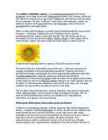
The sunflower (Helianthus annuus) is an annual(iga aastane) plant in the family Asteraceae, with a large flower head (inflorescence(õiekobar, õisik, õitseaeg, õidumine)). The stem(tüvi) of the flower can grow up to 3 metres tall, with the flower head reaching 30 cm in diameter. The term "sunflower" is also used to refer(nimetama, viitama, üle andma) to all plants of the genus(perekond, sugu) Helianthus, many of which are perennial(alaline, aastaringne) plants. What is usually called the flower is actually a head (formally(ametlikult) composite(liit-, komposiit- ; korvõieline, komposiit) flower) of numerous flowers (florets) crowded(täistuubitud, tunglev, rahvarohke) together. The outer flowers are the ray florets(pähik (õisiku osa) and can be yellow, maroon, orange, or other colors, and are sterile(steriilne, viljatu). The florets inside the circular head are called disc florets.
and 21-25° C in January. The average rainfall measures 8-13 cm in many areas. The maximum annual precipitation over a long period of years has been 37 cm with a minimum of 5 cm. In cold deserts the mean winter temperature is between -2 to 4° C and the mean summer temperature is between 21-26° C. The winters receive quite a bit of snow. The mean annual precipitation ranges from 15-26 cm. Vegetation Canopy in most deserts is very rare. Plants are mainly ground-hugging shrubs and short woody trees. Leaves are "replete" (fully supported with nutrients) with water- conserving characteristics. They tend to be small, thick and covered with a thick cuticle (outer layer). These plants include: yuccas, ocotillo, turpentine bush, prickly pears, false mesquite, sotol, ephedras, agaves and brittlebush. The spiny nature of many plants in semiarid deserts provides protection in a hazardous environment
The droughts are caused by the EL Nino, a weather pattern which happens when the Southern Pacific Ocean heats up. This causes the wind direction to reserve. Instead of bringing moist air towards eastern Australia, the rain bearing clouds are blown away. An EL Nino occurs every four or five years causing droughts and bushfires. Droughts are often followed by floods. Plant Life A long time ago Australia was separated form other countries. This movement caused the difference of species, plants and animal form the other countrys. The water controls the type of vegetation in a country. The two main types of vegetation are the eucalyptus or gum trees and acacia or wattles. The eucalypts are found all over Australia. There are more than 500 varieties of gum trees in Australia. Australia is the home of some 600 species of acacia. These trees develop smaller, leathery leaves to avoid loss of water. Australia has over 155 million hectares of native forest, about 80 per cent of which are
Climate Canada's climate varies wildly based on geography, from perma-frost in the north to four distinct seasons towards the equator. In this region the temperature can climb up to 35 degrees Celsius in the summer and descend to a chilly -25 degrees Celsius during winter. Canada's climate and environment are one of the main reasons that Canada is such a succesful country. The blend of natural resources and climate sustains us. The seasons dictate the look of the land: according to whether the natural environment is in a state of dormancy or growth. Canada's climate is characterized by its diversity, as temperature and precipitation differ depending on where you are and what time of year it is. Other than the North where it's above freezing for only a few months a year, most Canadian cities are within 300 km of the southern border, where mild springs, hot summers and pleasantly crisp autumns are common during the majority of the year.
Estonian University of Life Sciences Report on Soil Microflora By Katrin Vares Tartu 2013 Introduction The purpose of this report is to define soil microflora and establish the importance of it. Since the microorganisms clearly play an important role in preserving the balance of life, the next objective is to look into factors that influence this balance. Natural conditions and cultural impact could be considered as the variables that correlate the most with the activity and composition of microflora, hence some of the natural and cultural factors will be looked into a little more in detail.
That country is Australia. The continent it fills is Australia, too. Australia, then, is both a country and a continent. If someone wants to make clear that he is speaking of the country, he may call it by its full name of Commonwealth of Australia. Sixty million years ago Australia and its nearby islands were separated from the rest of the world by a great upheaval. They were cut off from Asia by the ocean. Very few people and almost no animals visited Australia before English colonists began to settle there in 1788. During all those 60 million years the native Australian mammals developed by themselves, undisturbed by the animals developing elsewhere. Australia is the only continent except Antarctica that is all south of the equator. It's name means "southland". Since it is south of the equator, its seasons are just the opposite of ours. It has summer while we have winter and the other way round.
inhabitants. The majority of them live within 300 kilometres of Canada's southern border. Much of the rest of Canada is uninhabited or thinly populated, because the country has a rugged terrain and severe climate. Canada extends across the continent of North America, from Newfoundland on the Atlantic coast to British Columbia on the Pacific coast and northward into the Arctic Ocean. Canada shares land borders with the United States to the south and north-west. Canada is a land of great variety. Towering mountains, crystal-clear lakes, and lush, green forests make Canada's far west a beautiful region. Farther inland, fields of wheat and other grains cover Canada's vast prairies. Thes fertile farmlands contrast vividly with the Arctic wastelands to the north. Most of the largest towns and industrial areas lie near the Great Lakes and the St Lawrence River in central Canada. In the east, fishing villages and sandy beaches dot the Atlantic coast
Distribution of tundra swan ● Difficult to differentiate ● Breeds in the Arctic, subarctic tundra ● Inhabit – shallow pools, lakes and rivers ● Migratory birds ● The breeding range extends across the coastal lowlands of Siberia to the Pacific ● Start to arrive around mid-May, leave for winter the end of September Ecology of tundra swans ● In summer – aquatic vegetation – mannagrass, pondweeds, marine eelgrass ● Also eat some grass on dry land, leftover grains and oteher crops ● Breeding season – tend to be territorial and agressive ● Few natural predators – brown bears, foxes Reproduction ● Mate in the late springs ● Pair monogamously until one partner dies ● Nesting season starts at the end of the May ● The pair build the large mound-shaped nest from plant material at an elevant site near open water Conservation status
Connecticut. The Mid-Atlantic region plays an important role in the United States. Its cities include Washington D. C., the nation's capital, and New York City, the nation's financial centre. The Mid-Atlantic region is densely populated. It includes six states: New York, New Jersey, Pennsylvania, Delaware, Maryland and West Virginia. The South is economically, historically and culturally a distinct region. With its warm climate and rich soil, it developed an economy based on cotton export. Conflicts between the North and the South, especially over slavery, led to the Civil War in 1861. The South preserves its traditions, for example good cooking and a slower, more hospitable way of life. The South includes eleven states. The Midwest is a large, economically important region. It contains major industrial cities and much farmland. Geographically, the Midwest can be subdivided into three smaller
Australia Fact file: Australia comprises a land area of 7 686 850 square kilometres. Its population is about 21,3 million people. Australia's capital is Canberra. The national language is English. The official name of it is the Commonwealth of Australia. It's divided into six states and two territories: New South Wales, Queensland, South Australia, Western Australia, Tasmania, Victoria, Australian Capital Territory (ACT) and Northern Territory. Symbols:
months or years at a time. Lake Eyre is the largest lake in Australia and is the lowest point in Australia. It's about 15m below sea level. The biggest deserts are The Great Sandy Desert and The Victoria Desert. History Two hundred years ago there were no white people in Australia. The only inhabitants were dark-skinned people who were still living in Stone Age. Their only weapons were stone knives, simple spears and boomerangs. They raised no crops and had no herds of tame animals. For food they hunted and fished and gathered wild fruits and nuts. But their tribes had very wellworked-out customs. A few aborigines still live in the emptier part of the continent and follow the thousand-of-years-old customs of their ancestors. Dutch sailors stopped at several places on the northen and western coasts in the 1600s. They brought back word that the land was '' of very little use ''. First people in Australia were the ancestors of the current Aborigenes, who arrived
National Park and Reserve in southwestern Yukon. The Rocky Mountains, often called the Rockies, are a broad mountain range in western North America. The Rocky Mountains stretch more than 3,000 miles (4,800 kilometres) from British Columbia, in Canada, to New Mexico, in the United States. Mount Robson, at 12,972 feet (3,954 meters) is the highest peak in the Canadian Rockies Canada has many different biomes. For instance: The Arctic. It is a very cold, windy, and often snowy biome located around the North Pole. Long periods of darkness (in the winter) and light (in the summer) also affect Arctic life. Nature. Canada is one of the most exciting countries in the world. It has many interesting cities, like Toronto, North Vancouver, Montreal or Halifax. But also some of the most impressive nature, which is great for outdoor activities, like hiking, skiing, rafting and fishing. It is because of the different biomes that appear in that country.
TARTU VEERIKU KOOL New Guinea animals and plants Koostaja: Tauri-Viljar Vahesaar Juhendaja: Priit Pensa Tartu 2009 Table of content Introduction................................................................................................................................................3 The forests of New Guinea ..................................................................................
3. Relief The USA is situated in the central part of the North American continent. Its western coast is washed by the Pacific Ocean and its eastern coast is washed by the Atlantic Ocean and in the south its coast is washed by the Gulf of Mexico. The coastline is even. There are no big islands belonging to the USA except the Hawaiian Islands which lie halfway the continents of America and Asia. The biggest peninsulas are the Florida Peninsula and Alaska. 4. Land Regions Mountains The Appalachian Mountains are a vast system of North American mountains, partly in Canada, but mostly in the United States, forming a zone, from 100 to 300 miles wide, running from the island of Newfoundland some 150 miles south-westward to central Alabama in the United States. The Rocky Mountains, often called the Rockies, are a broad mountain range in western North America. The Rocky Mountains stretch more than 4800 km. The Rocky Mountain System within
ref. to ease of use (of bioreactor) 3 [6] 13. (i) adding / using, water to break, bond / ester bond, (in molecule); A breakdown into smaller molecules 1 (ii) matrix, protects / stabilises, enzyme / lipase; functions, at optimal rate / more efficiently, at higher temperature / 45 °C; A greater activity / AW ref. to soluble lipase begins to denature (reducing activity); ora functions, at optimal rate / more efficiently, at lower pH; ref. to presence of fatty acids changing pH; ref. to ionic bonds breaking (in soluble lipase); ora AVP; e.g. ref to industrial uses
10. Kõdusoometsad ALVAR FORESTS LOOPEALSED METSAD This groupof types includes forests of low productivity and with a peculiar xeromesophilous ground vegetation, which grow on a layer of limestone, gravel, grit or shingle. See metsa kasvukohatüüp sisaldab madala tootlikkuse ja iseloomulikult suure või keskmise kuivusnõudlikkusega alustaimestikku, mis kasvab pae-, kruusa- , peenkruusa või klibukihil. This layer is close to surface, with thickness of soil up to 30 centimetres. See rinne on maapinnale lähemal, mullatüsedus on kuni 30 sentimeetrit. Alvar forests grow mainly in western Estonia (also on the islands) and to a lesser extent in Northern Estonia. Loopealsed metsad kasvavad peamiselt Lääne-Eestis (samuti saartel) ning vähemal määral Põhja-Eestis. The bearberry (Arctostaphylos) alvar site type has a soil layer with fine texture and rich in lime and humus ( 6 ...20%), but with thickness up to 10 centimetres only.
 annaabi.ee