Leidsid 33 sarnast õppematerjali, mis on seotud failiga "Sustainability aspects of biofuels". Need materjalid aitavad sul teemat sügavamalt mõista.
biofuel, fuels, production, sugar, ease, feed, rice, than, price, increase, other, land, crop, brazil, global, ethanol, stock, heat, there, wheat, corn, impact, europe, grow, demand, figure, crops, animal, major, such, consumption, current, inter, maize, process, emissions, ability, grown, policy, areas, sustain, fact, mainly, oils, report, causeenergy consumption came from renewables, with 13% coming from traditional biomass, such as wood-burning. Hydroelectricity was the next largest renewable source, providing 3% (15% of global electricity generation),followed by solar hot water/heating, which contributed 1.3%. Modern technologies, such as geothermal energy, wind power, solar power, and ocean energy together provided some 0.8% of final energy consumption. While there are many large-scale renewable energy projects and production, renewable technologies are also suited to small off-grid applications, sometimes in rural and remote areas, where energy is often crucial in human development.Kenya has the world's highest household solar ownership rate with roughly 30,000 small (20100 watt) solar power systems sold per year. Some renewable energy technologies are criticised for being intermittent or unsightly, yet the market is growing for many forms of renewable energy. Climate change concerns coupled with high oil
.................................................................................................31 9.2 How wind machines work..........................................................................................32 9.3 Types of wind machines............................................................................................. 32 9.4 Wind power plants......................................................................................................33 9.5 Wind production......................................................................................................... 34 9.6 Wind and the environment..........................................................................................34 TIDAL ENERGY............................................................................................................... 35 10.1 Wave Energy............................................................................................................ 36 10
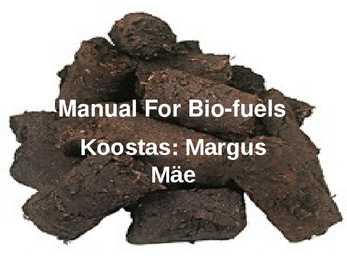
Manual For Biofuels Koostas: Margus Mäe Introduction This book told me a lot of practical uses of solid biofuels and peat compustion technologies in estonia and baltic sea countries. The hole technological chain from production to flue gas cleaning is brought to reader ´s. Also the energy policy and reguierment for users is shown. Properties of boifuels and peat In the boiler plants of Baltic Sea countries a wide range of various woodbased fuels are burned. To some extent also straw and other biomass based fuels are used. All these fuels are considered as renewables and according to the international agreement the CO2 emitted by the combustion of these fuels is not listed as a greenhouse gas. Wood, in particular the shell of wood cells, consists mainly from cellulose, lignin and hemicellulose. Due to the high carbon and hydrogen content, the lignin has higher calorific value than cellulose and hemicellulose
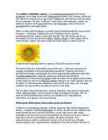
alternative, Sunbutter, especially in China, the United States, the Middle East and Europe. In Russia it is probably the most wide spread snack.[citation needed] It is also sold as food for birds and can be used directly in cooking and salads. Sunflower oil, extracted from the seeds, is used for cooking (but is less cardiohealthy than olive oil), as a carrier oil and to produce biodiesel, for which it is less expensive than the olive product. During the 18th Century, the use of sunflower oil became very popular in Europe, particularly with members of the Russian Orthodox Church because sunflower oil was one of the few oils that was not prohibited during Lent. The cake remaining after the seeds have been processed for oil is used as a livestock feed. Some recently developed cultivars have drooping heads. These cultivars are less
prospects of the biogas. I have tried to make this report as understandable as possible. By the end of this report I want to come to a conclusion whether biogas is the best source of future energy or are there any other sources that are better. What is biogas? Typically it refers to the gas produced by the anaerobic digestion or fermentation of organic matter including manure, sewage sludge, municipal solid waste, biodegradable waste. If opportunely refined it can be used for electricity production. Also for space-, water- or process heating. Unintentional production of biogases has been an ongoing issue in many regions of the world, and several nations have also looked to biogas as a potential source of clean energy. India and China have both invested extensively in creative biogas technology to provide fuel for their citizens and there are a number of interesting applications for this gas which appeal to people who are interested in sustainable energy and the health of the environment.
characterization (mainly in terms of porosity and permeable structures). It is refined and separated, most easily by boiling point, into a large number of consumer products, from petrol (or gasoline) and kerosene to asphalt and chemical reagents used to make plastics and pharmaceuticals. Petroleum is used in manufacturing a wide variety of materials, and it is estimated that the world consumes about 88 million barrels each day. The use of fossil fuels such as petroleum can have a negative impact on Earth's biosphere, releasing pollutants and greenhouse gases into the air and damaging ecosystems through events such as oil spills. Concern over the depletion of the earth's finite reserves of oil, and the effect this would have on a society dependent on it, is a field known as peak oil. Etymology The word "petroleum" comes from Greek: πέτρα (petra) for rock and Greek: ἔλαιον (elaion) for oil
-These giant pinwheels spin from strong winds which spins a turbine of a generator to produce energy. Giant Pin Wheels? Any Studies done? · It is said that wind · Bentek Energy did the energy is suppose to Study and used about bring down costs and 1/3 of the US population reduce the in the air. for 2 years. · Well Forbes found a · The claims of cutting CO emissions were study on this and actually less than half of wrote an article about what was stated. it. · Subsidies (government · Forbes said "no" money) to the wind sector is more than 200 times as great as those given to oil and gas sector. Oh and the wind has to blow. Hydropower Power to the Water · By using earth's · 90% energy
Geothermal energy Biomass energy Renewable energy Renewable energy comes from sources that naturally renew, or will not run out in our lifetimes. Includes sunlight, wind, water, geothermal heat and various forms of biomass. Renewable energy cannot be exhausted and is constantly renewed. Does not harm the environment. Saves money. Solar energy Solar energy is the technology used to harness the sun's energy and make it useable. Every hour the sun beams onto Earth more than enough energy to satisfy global energy needs for an entire year. Solar energy use has surged at about 20 percent a year over the past 15 years, thanks to rapidly falling prices and gains in efficiency. Solar energy is inexhaustible. Noise free. Does not harm the environment. Click to edit Master text styles Second level Third level Fourth level Fifth level
How to produce bioenergy from agricultural resources without harming the environment Jürgen Aosaar Jaak-Albert Metsoja Ahto Oja BOVA cource on biogas from biomass March 3-7 2008 Tartu Deciduous tree species on abandoned agricultural land Current situation • The long term development plan of the Estonian energy industry foresees a reduction in the use of fossil fuels and an increase in the share of biofuels: by the year 2010 renewable energy must account for 5.1% of total energy consumption Current situation (2) • In Estonia we have abandoned arable land about 400 000 ha, part of it is overgrowing naturally, and another part has been afforested • For short-rotation forestry in Estonia, ecologically and economically the most suitable tree is probably grey alder, which is a highly productive and soil improving species
organisms according to the needs of humanity, going back to the initial modifications of native plants into improved food crops through artificial selection and hybridization. Bioengineering is the science upon which all biotechnological applications are based. With the development of new approaches and modern techniques, traditional biotechnology industries are also acquiring new horizons enabling them to improve the quality of their products and increase the productivity of their systems. Before 1971, the term, biotechnology, was primarily used in the food processing and agriculture industries. Since the 1970s, it began to be used by the Western scientific establishment to refer to laboratory-based techniques being developed in biological research, such as recombinant DNA or tissue culture-based processes, or horizontal gene transfer in living plants, using vectors such as the Agrobacterium bacteria to transfer DNA into a host organism
The losses by energy conversion in Europe are of the same magnitude as the European heat demand and consist mainly of heat that is wasted by electricity generation . District heating is a means to utilise such surplus heat to cover heat demand. District heating can utilise the heat from electricity generation in combined heat and power (CHP) plants. District heating can also use other heat sources that are difficult to use for individual buildings, such as unrefined biomass fuels, heat from waste incineration and industrial surplus heat. The latter may, for example, be a by-product from production of automotive biofuel. District heating can provide cheap energy to consumers by using low-cost energy sources, such as wood, waste and surplus heat. Many of these resources can be of local origin and promote local business and industry. The main advantages with district heating are high security of supply through utilisation of
human beings, who consume the agricultural produce. ✘ Fruits and vegetables purchased from farms that promote intensive farming are covered with invisible pesticides. These cannot be washed off easily. Exceeding the use of pesticides affects the health of human beings severely, leading to skin allergy, physical deformity, and congenital disease. ✘ Statistics show a direct relation between the consumption of food procured from intensive farming sites and an increase in the number of cancer patients and children born with defects. Researchers opine that consumption of inorganic poisonous vegetables, fruits, poultry, and meat could probably be one of the reasons for causing such damage in the human body. ✘ There are many hybrid varieties of livestock, plants, and poultry available today. The livestock and poultry are injected with hormones and other chemicals to increase the yield. Alternatives?
Canada's climate and environment are one of the main reasons that Canada is such a succesful country. The blend of natural resources and climate sustains us. The seasons dictate the look of the land: according to whether the natural environment is in a state of dormancy or growth. Canada's climate is characterized by its diversity, as temperature and precipitation differ depending on where you are and what time of year it is. Other than the North where it's above freezing for only a few months a year, most Canadian cities are within 300 km of the southern border, where mild springs, hot summers and pleasantly crisp autumns are common during the majority of the year. Climate sculpts the landscape through heat, cold, humidity, light and wind. In Canada, the variety of landscapes shows the diversity of our climate. In the north, low precipitation and cold
http://www.whitehouse.gov/news/releases/2001/06/20010611-2.html *I also call on Congress to work with my administration to achieve the significant emission reductions made possible by implementing the clean energy technologies proposed in our energy plan. Our working group study has made it clear that we need to know a lot more. *The United States has spent $18 billion on climate research since 1990 -- three times as much as any other country, and more than Japan and all 15 nations of the EU combined. http://www.guardian.co.uk/environment/2004/feb/22/usnews.theobserver *Jeremy Symons, a former whistleblower at the Environmental Protection Agency (EPA), said that suppression of the report for four months was a further example of the White House trying to bury the threat of climate change. *Senior climatologists, however, believe that their verdicts could prove the catalyst in forcing Bush to accept climate change as a real and happening phenomenon
that soils, degradation and transformation of natural and xenobiotics depends on the activities of soil enzymes and the number and activities of soil micro organisms. Deposited waste of dumps as an ecological factor changes the chemical composition, microflora and enzyme activity of soils. Agriculture and fertilisation of soil is another mojor game changer for the microflora of soil. Canbolat et al. (2007) state in their research that microbial biomass appeared to increase with both mineral fertilization and bacterial inoculation, whereas the microbial community structure (total culturable bacteria and fungi) changed consistently according to the treatments applied. As another example, Lipsa (2011) claimes that his results show that the compost applied on maize fields has in general, a positive influence on soil microflora structure and biological activity, which can be compared with the mineral elements influence. Furthermore,
The Estonian economy is diverse industry and transport, as well as commerce and different branches of services are all equally important. Due to the available natural resources Estonian economy largely relies on the branches related to the forest; Estonian energy sector is based on oil shale. Finland and Sweden are the most important trade partners. The Estonian economy profits significantly from the business generated by more than 2 million tourists a year. The important sectors of the Estonian economy are the processing, transport, warehousing and communications, commerce and estate, rental and letting, as well as business services, agriculture, construction and government, education and health care. In order to be able to import all the products and services, something must be exported, that's why export holds such a prominent position for the Estonian economy and its growth.
Statistics for the time are notoriously uncertain, but the best ones available show Ukraine's GDP at just $1,307 per capita. Only Azerbaijan, Georgia, Kyrgyzstan, Tajikistan, and Uzbekistan lagged behind Ukraine; even Moldova and Turkmenistan, generally regarded as very poor Soviet republics, were ahead of Ukraine. Ukraine's economy contracted annually between 9.7 and 22.7 percent in 19911996. The country experienced hyperinflation and an exceptionally huge production decline for a country not ravaged by a major war. Official GDP collapsed by almost half from 1990 to 1994, and slow decline continued throughout the decade. Economic growth would not resume again until 2000. The budget deficit was, at 14.4 percent of GDP, exceptionally large. Barter and the use of surrogate moneys and foreign currencies prevailed. Ukraine had introduced a sovereign currency, the Hryvnia, but it was little used. A shadow economy
time not using sustainable measures. The industry is linked to major issues such as deforestation, habitat degradation, climate change, animal cruelty and indigenous rights abuses in the countries where it is produced, as the land and forests must be cleared for the development of the oil palm plantations. According to the World Wildlife Fund, an area the equivalent size of 300 football fields of rainforest is cleared each hour to make way for palm oil production. This large-scale deforestation is pushing many species to extinction, and findings show that if nothing hanges, species like the orangutan could become extinct in the wild within the next 5-10 years, and Sumatran tigers less than 3 years. In total, 50 million tons of palm oil is produced annually, supplying over 30% of the world’s vegetable oil production. This single vegetable oil is found in approximately 40-50%
It is energy released by the splitting (fission) or merging together (fusion) of the nuclei of atoms. The conversion of nuclear mass to energy is consistent with the mass-energy equivalence formula E = m.c², in which E = energy release, m = mass defect, and c = the speed of light in a vacuum. Nuclear chemistry can be used as a form of alchemy to turn lead into gold or change any atom to any other atom (albeit through many steps). Radionuclide (radioisotope) production often involves irradiation of another isotope (or more precisely a nuclide), with alpha particles, beta particles, or gamma rays. Iron has the highest binding energy per nucleon of any atom. If an atom of lower average binding energy is changed into an atom of higher average binding energy, energy is given off. What is nuclear fusion? Nuclear fusion is the process by which multiple like- charged atomic nuclei join together to form a heavier nucleus
However, during the colonial period the seizure of communal land in South Africa restricted and discouraged traditional agriculture and wild harvesting, and reduced the extent of land available to black people. Decline of indigenous cookery Urbanization from the nineteenth century, coupled with close control over agricultural production, led black South Africans to rely more and more on comparatively expensive, industrially-processed foodstuffs like wheat flour, white rice, mealie (maize) meal and sugar. Often these foods were imported or processed by white wholesalers, mills and factories. The consequence was to drastically restrict the range of ingredients and cooking styles used by indigenous cooks. On the other hand, some imported food plants (maize, tomatoes) have expanded the dietary range of indigenous cooks. Of these maize is the most significant - it has been integrated to
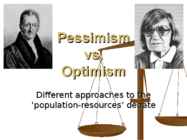
Pessimism vs. Optimism Different approaches to the ‘population-resources’ debate Malthus Task: View figure 13.57 (page 378 of Waugh). Draw the graph and discuss. Malthus believed that there was a finite optimum population in relation to food supply and that an increase beyond that point would lead to a decline in living standards and to war, famine and disease. An increase in the population above the optimum limit would therefore lead to war, famine and disease. A PESSIMISTIC approach Thomas Malthus (1798) proposed his work during the early stages of the industrial revolution when inadequate food and clothing were common features in England. His argument was that population increases (geometrically) or at an exponential rate if unchecked i.e. 1-2-4-8- 16-32 etc Food supply at best increases at an
Farther west the trees disappear and the savannas give place to the bushlands. The real desert occupies the centre of the Western Plateau. In the very southwest there are thin forests of evergreen trees. Plants A rich variety of plant can be found in the natural landscapes of Australia. A lot of species can be found in wet tropical forests in the north and in temperate rainforests in the south. The biggest family of the native plants is the myrties. They include more than 500 species of eucalyptus, or gum trees. Only the big river red gum is seen everywhere. These can be found beside rivers and dry riverbeds. Some gum trees are valuable timber species and have been cut down for many years. Gum tree leaves are full of oils, which evaporate easily. That why the Blue Mountains are called like that, because the evaporateing eucalypt oils, which make the air blue. Another big family of native plants is acacias. They are also known as wattles
chapters distributed in three parts. The first guished international experts from fifteen part deals with the description of meat chem- countries. The editor wishes to thank all the istry, its quality for further processing, contributors for their hard work and for and the main technologies used in meat sharing their valuable experience, as well as processing, such as decontamination, aging, to thank the production team at Wiley- freezing, curing, emulsification, thermal pro- Blackwell. I also want to express my appre- cessing, fermentation, starter cultures, drying, ciation to Ms. Susan Engelken for her kind smoking, packaging, novel technologies, support and coordination of this book. and cleaning. The second part describes the manufacture and main characteristics of Fidel Toldrá
3 Energy Dividends You Can Still Trust This has been a bad year for energy dividends, but there are still a few out there that investors can still trust. With the price of oil recently hitting a sevenyear low and natural gas now at a 14 year low, there has been a deep impact on the cash flows at oil and gas companies. Many don't have enough money coming in to drill the required number of new wells needed to maintain their production rates, let alone any left over to pay shareholders a steady dividend. This has resulted in the reduction or suspension of a countless number of energyrelated dividends. All that said, there are a few energy dividends that investors can still trust. Here are three companies that have been making their dividend a priority. Jason Hall After Kinder Morgan's stunning announcement that it would cut its rocksolid (or so I
Earth's climate system. Since 1971, 90% of the increased energy has been stored in the oceans, mostly in the 0 to 700m region. Despite the oceans' dominant role in energy storage, the term "global warming" is also used to refer to increases in average temperature of the air and sea at Earth's surface. Since the early 20th century, the global air and sea surface temperature has increased about 0.8 °C (1.4 °F), with about two-thirds of the increase occurring since 1980.Each of the last three decades has been successively warmer at the Earth's surface than any preceding decade since 1850. More than 90% certain that most of global warming was being caused by increasing concentrations of greenhouse gases produced by human activities.In 2010 that finding was recognized by the national science academies of all major industrialized nations. Affirming these findings in 2013, the IPCC stated that the largest driver of global
Estonian Economy Estonians earn about half of the average European income, despite the fact that the economic growth during the recent years has been very fast and the differences have been diminishing. Although the extremely vigorous period of economic reforms is now over, the changes that Estonia is presently going through are far more extensive than those in the developed countries. The Estonian economy is diverse industry and transport, as well as commerce and different branches of services are all equally important. Due to the available natural resources Estonian economy largely relies on the branches related to the forest; Estonian energy sector is based on oil shale, a resource quite rare elsewhere in the world. Finland and Sweden are the most important trade partners. The Estonian economy profits
At present forests cover 30% of the land but every year tree cover is lost amounting to the country of Panama due to growing population demand for more food, shelter and cloth. Deforestation simply means clearing of green cover and making that land available for residential, industrial or commercial purpose. FIND OUT 5 WAYS HOW TO STOP DEFORESTATION. 7. Ocean Acidification: It is a direct impact of excessive production of CO2. 25% of CO2 produced by humans. The ocean acidity has increased by the last 250 years but by 2100, it may shoot up by 150%. The main impact is on shellfish and plankton. Acid Rain: Acid rain occurs due to the presence of certain pollutants in the atmosphere. Acid rain can be caused due to burning of fossil fuels or erupting volcanoes or rotting vegetation which release sulphur dioxide and nitrogen oxides into the atmosphere. Acid rain is a known environmental problem that can
(http://academic.mintel.com A) Since 1998 more and more households are owing 2 cars. The percentage has been raised 6,4 per cent from 1998 to 2004. Although the overall percentage of car owning have went down by 0,7 per cent at the same period. The survey taken in 2004 december shows that people who are using car to go to work is 29 per cent and 25 per cent use car to take out their family. 26 per cent have a household at size 4 and to take family out they will propably use a bigger car than mini because it will not be so comfortable to squeeze four people in to a mini. (http://academic.mintel.com B) Recently people are started to think more about the environment where we all are living. Most people take in consideration if the product they buy and consume is recycable and also how it will affect on climate change wether it is environment friendly or not. Car manufacturers have made their results out of that and are producing cars more environment-friendly. They are
Estonian Maritime Academy English specialty language Homework Book „International Ecomomics“ by Hendrik Van den Berg resume Kuressaare 2018 Some people choose for a resume book about something else than ecomoic. Its realy easier ofcours. I wrote to the Defence Forces library and asked to send me something about economi. Well , I got „International Economics“ by Hendrik Van den Berg. We had to read 100 pages. So I did. What I remmember about from 100 pages economics? There were a lot interesting what I didnt know before. It all started about U.S Economics. U. S Economy does not appear to be „globaal“ if look at its ratio of tarded otuput to GDP (Gross
Venables captured it; it was formally ceded to England in 1670, but the local European population obtained a degree of autonomy. Jamaica prospered from the wealth brought by buccaneers, notably Sir Henry Morgan, to Port Royal, the capital; in 1692, however, much of the city sank into the sea during an earthquake, and Spanish Town became the new capital. A huge, mostly African, slave population grew up around the sugarcane plantations in the 18th cent., when Jamaica was a leading world sugar producer. Freed and escaped slaves, sometimes aided by the maroons (slaves who had escaped to remote areas after Spain lost 3 control of Jamaica), succeeded in organizing frequent uprisings against the European landowners. The sugar industry declined in the 19th cent., partly because of the abolition of slavery in 1833 (effective 1838) and partly because of the elimination in 1846 of the imperial
Brazil's national drinks Caipirinha Caipirinha is Brazil's national cocktail, made with cachaça, sugar and lime. Cachaça is Brazil's most common distilled alcoholic beverage. While both rum and cachaça are made from sugarcane-derived products, most rum is made from molasses. Specifically with cachaça, the alcohol results from the fermentation of sugarcane juice that is afterwards distilled. The caipirinha is a national cocktail of Brazil, and is enjoyed in restaurants, bars, and many households throughout the country. Once almost unknown outside Brazil, the drink has become
How sugar made it to Europe. Sweetness in older than sugar. Europeans and others have respected sugar for thousands of years. Prior to knowing sugar, our ancestors used honey and other sweet ingredients which were used as sweeteners. We know all that thanks to Mediterranean antique culture writings and bareljeefs . Oldest known sweetener is honey. In Arãna caves there are 12000 years old murals where are depicted woman honey collectors. As nowadays, womans used honey to make food, heal wounds and to make
Capture fisheries resources are highly diverse. FAO landing statistics refer to about 2 500 species or group of species most of which are finfish. By far the most numerous fish species, and those most important to aquaculture and fisheries, are teleosts, or bony fish, which in the sea extend from small "grazing" species such as anchovy to large active predatory fish such as tuna. A similarly wide range is also found in freshwater, with the most important species from a production point of view belonging to the carp family. These account for over half the total of inland waters fisheries production. Marine capture fisheries resources are usually considered close to full exploitation worldwide with about half of them fully exploited, one quarter over exploited, depleted or recovering from depletion and one quarter only with some capacity to produce more than they presently do. The overall situation of inland capture fisheries resources is not as well
 annaabi.ee