 50 punkti
Autor soovib selle materjali allalaadimise eest saada 50 punkti.
50 punkti
Autor soovib selle materjali allalaadimise eest saada 50 punkti.
 ~ 1 leht
Lehekülgede arv dokumendis
~ 1 leht
Lehekülgede arv dokumendis
 2010-02-02
Kuupäev, millal dokument üles laeti
2010-02-02
Kuupäev, millal dokument üles laeti
 9 laadimist
Kokku alla laetud
9 laadimist
Kokku alla laetud
 0 arvamust
Teiste kasutajate poolt lisatud kommentaarid
0 arvamust
Teiste kasutajate poolt lisatud kommentaarid
 Asso Kivilaan
Õppematerjali autor
Asso Kivilaan
Õppematerjali autor
Traveling Description Traveling is the movement of people or objects (conveyances) between relatively distant geographical locations. Travel may occur by human-powered transport such as walking or bycycling, or with vehicles, such as public transport, automobiles, trains and airplanes. Etymology The term "travel" originates from the Old French word travail. The term also covers all the activites performed during a travel (movement). A person who travels is spelled "traveler" in the United states, and "traveller" in the United Kingdom. Purpose and motivation Reason for traveling include recreation, tourism or vacationing, research travel for gathering information, for holiday to visit people, volunteer travel for charity, migration to begin life somewhere else, religious pilgrimages and mission trips, business travel, trade, commuting, and other reason, such as to obtain health care or fleeing war or for the enjoyment of traveling. Wo
sea, as there is a harbour adjacent to the beach. Not surprisingly, the locals and the residents of Tallinn did not approve this kind of action. Locals disagree with Pro Kapital idea of a port as Kalasadam harbour is separate from Kalaranna beach. 3 Knowing that the City Council would not have given the permission to build a fence around the property, Pro Kapital dug their fence only about 30cm into the ground. This not qualifying the structure as a fence, they did not need any permission from the city to put it up. A really questionable move, as putting up over 100m fence should still count as a construction work. Within two days, the new fence around the Kalaranna beach, was torn out by unknown activists. Kalamaja community was disappointed by Pro Kapital action and the dispute only escalated. Pro Kapital ordered a new fence around the beach and ordered a security company
ancient strongholds in Valjala, Lihula and Soontagana. The churches in Muhu, Valjala, Mustjala, Karja and Kihelkonna are honorable and elderly because Straitland was the one to bring Christianity to Estonia. The castle of Kuressaare is still standing proudly, but in Lihula only ruins can be seen. The patterns of national dresses and the churches bring memories of secret sign cultures of Medieval Times. Good knowledge of singing and facility of speech of the people of Straitland have given Estonia a big number of writers and poets. Character of the landscape The area of Straitland contains Pärnumaa county and some of the islands such as Saaremaa, Muhu, Kihnu, Ruhnu and Abruka. Straitland is low-lying and flat. It was flooded by the sea for much longer than the rest of mainland Estonia. The climate is maritime and greatly influenced by the Baltic Sea. The area features large bogs, extensive forests, coastal plains, warm and peaceful
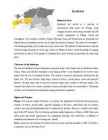
Estonia, officially the Republic of Estonia is a country in Northern Europe. It is the smallest of the three Baltic countries. Estonia has land borders with Latvia (339 km) to the south and Russia (229 km) to the east. It is separated from Finland in the north by the narrow Gulf of Finland and from Sweden in the west by the Baltic Sea. Estonia has been a member of the European Union since May 1, 2004 and of the NATO since March 29, 2004. The area of Estonia is about 45000 square kilometres and the population is about 1.4 million people. The capital of Estonia is Tallinn and the official language is Estonian. The currency is Eesti kroon. The main religion is Lutheran. Anniversary of the republic is celebrated on February 20. The national flower is cornflower, national bird is barn swallow and national stone is limestone. It is a land of great natural beauty with a long and varied history and rich culture
The biggest ones are located to the west. The four biggest islands are Saaremaa, Hiiumaa, Vormsi and Muhu. The highest point in Estonia and also in the Baltic region is Suur Munamägi. It is 318. above sea level. Estonia is a country of a thousand lakes. The Largest one is Lake Peipsi which is also the fourth biggest freshwater lake in Europe. Lake Peipsi and Lake Võrtsjärv are rich in fish. Estonia has many rivers but only nine of them are longer than 100km. The most important ones are Pärnu River and Emajõgi River Climate Estonia lies in the northern part of the temperate climate zone and in the transition zone between maritime and continental climate. Because Estonia is continuously warmed by the Gulf Stream it has a milder climate despite its northern latitude. Northern latitude means long summer daylight hours (the longest summer day stretches to 19 hours), and dark winters when daylight lasts sometimes only six hours.
EISTLAND; to modern Scandinavians it is known as ESTLAND. Most contemporary languages use the Latin name ESTONIA. FLAG The Estonian blueblackandwhite national flag was originally the flag of the Estonian Student's Society, consecrated in Otepää Church in 1884. today there is a memorial plaque on the church wall commemorating the event. The Flag Museum attracts tourists who take an interest in the history of the flag. After about half a century, during which it was prohibited by the Soviet authorities, the flag was sen again in public for the first time in Tartu. Many elderly people were carrying the flags they had kept in secret hiding places durin the Soviet years; tears were rolling down their cheeks. On 24 February 1989, Estonia, still part of the Soviet Union, hoisted its tricolour on the tower of Pikk Hermann in Tallinn. Since then the flag has always been hoisted with
, near the centre of Estonia. Around 870 singers took part, along with 76 musicians. Things have changed a lot, and today, the average festival gathering involves 25,000 participants, including large, joint choirs from all over Estonia. Festivals often close with choirs of around 25,000 taking part in an electrifying finale, in front of an openair audience of about 100,000. The festival takes place at the beginning of July, and it's common for many Estonians to take the week off work and travel to Tallinn to join in the celebrations. Visitors from other countries converge in Tallinn to experience the powerful singing, lively dances and intricate, colourful folk costumes at first hand. If you're interested in seeing this spectacular live performance, or maybe even taking part in a festival, the next event happens in 2004, 2009 and 2013.
also to impress any visitors arriving via the harbour. The Great Coastal Gate, along with the Viru Gates, are the last of six gates that controlled access to the town in Medieval times. The gate system here on Pikk street originated in the 1300s, but it was during reconstruction in the early 16th century that the Fat Margaret cannon tower was added. Built from 1511 to 1530, this hefty, round tower has a diameter of 25 metres, a height of about 20 metres, and walls up to 5 metres thick. The origins of Fat Margaret's name are a mystery. Some theories insist it was named for one of its larger cannons, while others hint at a cook called Margaret who once worked here. In any case, the tower has served a number of different functions throughout its history. It has been used a storehouse for gunpowder and weapons, and as a prison. Now it's home to the Estonian Maritime Museum, which provides a detailed look at the nation's seafaring past
 annaabi.ee








Kõik kommentaarid