YELLOW SUBMARINE The Beatles In the town where i was born, There lived a man, Who sailed the seas, And he told us of his life, In the land of Submarines, So we sailed into the sun, Till' we found a sea of green, And we lived beneath the waves, In our yellow submarine, We all live in a yellow submarine, A yellow submarine, A yellow submarine, We all live in a yellow submarine, A yellow submarine, A yellow submarine. And my friends are all aboard, Many more of them live next door, And the band begins to play, ( a band plays a short song ) We all live in a yellow submarine, A yellow submarine, A yellow submarine, We all live in a yellow submarine,
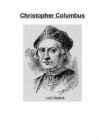
This is the name we know him by today but his actual name is Cristobal Colon in Spanish, or Cristofero Colombo in Italian. He first went to sea at the age of 1465 at the age of 14. He was a deck boy and he had to clean, cook and mend clothes. By the age of 30 he was an experienced sailor and a skilful navigator. He had made many journeys to the South Atlantic from his home the Madeira Islands. He also sailed to Bristol and Galway. Many people believed that he had also sailed to the north of Iceland in 1477. During those visits Columbus heard stories about life to the west of Europe. His ambition to find the shortest and safest sea route to the riches of the Far East started to grow. Gradually he worked out his plan to reach the East by sailing west. In 1482 Columbus tried to interest the Portugese king, Joao III, in his journey. The Portugese king had tried to find a route to the Indies from the east for a long time.
2.Anglo sax 410-793 wrom the jutes came from juteland,angles from south of denma, saxons from germ; deff-the new anglo saxon invaders were not organised centrally as the romans had been;days of the week 3.The celtic peop 500bc-43ad the cealts(fr) the brit(eng)the graels(irel) 4.Roman britain ad 43-410 britains helped the cauls fight against julius ceasar 5.the vihing793-1066 they came acress the north seam most viking who sailed overses were simply searching for letters land for their farms.alfred great the eng king, king canute 1016 of denmark captured the english
THE PEOP L E O F T H E AM E R I CA . I-LI IS, GRETE JA MA RTIN K. KOOSTASID: MA R IN THE BEGINNING. • WHEN COLUMBUS DISCOVERED AMERICA, THERE WAS ABOUT 10 MILLION NATIVE AMERICANS. • NEXT 200 YEARS, PEOPLE OF SEVERAL COUNTRIES SAILED ACROSS THE ATLANTIC OCEAN TO SETTLE AMERICA, WHICH WAS CALLED ‘’THE NEW WORLD’’. • PEOLE TOOK AWAY NATIVE AMERICAN’S LAND AND BROUGHT ILLNESSES THAT THEY COULDN’T SURVIVE. IRISH IN 18TH AND 19TH CENTURIES. • AMERICA WAS DREAM TO MANY IRISH. • FIRST PEOPLE WHO CAME TO AMERICA WERE MAINLY EDUCATED PEOPLE. • BELIVED THAT AMERICA WAS RICH LAND FULL OF OPPURTUNITIES FOR EVERYBODY. • THE LETTERS INVITED PEOPLE TO FOLLOW THE HAPPY SETTLERS THROUGHT THE „GOLDEN DOOR“.
At the time when Columbus discovered America, there were about 10 million Native Americans. During the next 200 years, people from several European countries sailed across the Atlantic to settle the New World. Native Americans suffered from the hands of the new settlers. A many educated people from Ireland, like teachers or doctors, left their country and came to America. They wrote letters to their families, where they said that America was full of new opportunities for everybody. In the middle of the 19th century many British people started they journey to America from Liverpool. A great number of settlers were the Irish who left their country after the
Öölooma unemaskid on väga hinnatud ning kandideeris see parima elustiili toote disaini auhinnale. Kollektsioon “casual clic” Autor:Anneli Kree Materjal: Kroompark nahk, veekindel kangas Kollektioon on lihtne ja praktiline. Klassikalised lõiked annavad kottidele tagasihoidliku välimuse, mis omakorda võimaldab kotti kanda nii tööl kui vabal ajal. Kanga lisamine teeb kotti kandja jaoks kergeks. Kangas on vastupidav ja kergesti puhastatav. Fotoseeria “The one who sailed the seas” filmine “Polaarpoiss” Autor: Renee Altrov Nii karakterid kui ka autor olid väljamõeldud. Kuigi karakterid on väljamõeldud, näeb kujutatu väga tõene välja- endised meremehed, kes igatsevad oma elukutset ja lõputut ookeani. Näitus “Austrian design update” Printtex Wall-Printer Autor: Benjamin Loinger Printtex Wall-Printer on väga nutikas mobiilne seina-printer, mis prindib soovitud motiive seinale. Camcopter s-100 Unmanned Air System Autor: Gerhard Heufler
History First people who lived in Canada came by a land bridge from Russia and Greenland. They were the ancestors of nowadays indigenous people of Canada. They just searched better for living places and followed their prey and they didn't even know they were on a different continent. The first explorers were Norse seafarers known as Vikings. As they sailed from Iceland to Greenland in AD 985, they were blown far off their course and they saw the coast what must have been Labrador. The forested areas of Canada's coast encouraged further explorations, because their settlement lacked lumber. They established a colony, what they called Vinland on Newfoundland. It died out during the 14th and 15th centuries. 500 years later Europeans started looking for a waterway to Asia, because travelling with spices over land wasn't very safe anymore
When merchants went to Syria's sultan, and told him tales of beautiful Constance, Sultan fell in love and wanted to marry with her. But then came legal difficulties in his way. He had to be christened and all his vassals too. In all this, Constance was really sad because she did not wanted to marry with Sultan. Sultan's mother also was not happy when she became aware of Sultan's intending to renounce prescriptions of Alkoran. Constance left for Syria with a boat and sailed for days without eating and drinking. Withstanded thanks to God. She was founded by Dame Hermnengild's husband. Dame Hermengild saved Constance because he felt sorry for her. Dame took Constance to his wife who was very careful woman. Hermengild also turned to Christianity hoping to have a better life when believing in God. One night when all were sleeping came a knight who killed Hermnengild's husband. Everyone accused of murder to Constance, but she was not guilty
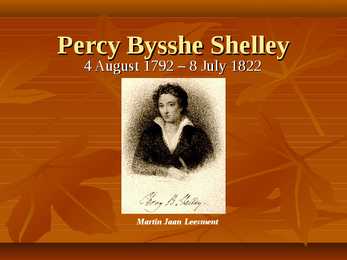
The eldest of the children Received his early education at home On 10 April 1810, he matriculated at University College, Oxford Expelled from Oxford on 25 March 1811 After being expelled, he eloped to Scotland with the 16- year-old schoolgirl Harriet Westbrook Visited Ireland shortly afterward and wrote his Address to the Irish People On 28 July 1814, Shelley abandoned his family and ran away with Mary (also 16, later author of Frankenstein) Sailed to Europe, crossed France, and settled in Switzerland After six weeks they returned to England In the autumn of 1815 he wrote Alastor, or The Spirit of Solitude Shelley's estranged wife Harriet drowned herself and custody of the children was given to foster parents Contact with Byron encouraged Shelley to write again (Julian and Maddalo) The Shelleys travelled around various Italian cities Spent the summer of 1819 writing a tragedy, The Cenci, in Livorno
1962. Red, black and white symbolise the warmth of the people, the richness of the earth and water respectively. Currency • Trinidad and Tobago Dollar (TTD) Coat of Arms • The coat of arms was designed by the Independence committee, and features the scarlet ibis (native to Trinidad), the cocrico (native to Tobago) and hummingbird. The shield bears three ships, representing both the Trinity, and the three ships that Columbus sailed. Population • 2015 estimate 1,349,667 Total area • 5,131 km2 Administrative divisions • Trinidad is split into 14 regional corporations and municipalities, consisting of 9 regions and 5 municipalities, which have a limited level of autonomy. Largest island • Trindidad Higest Point • El Cerro del Aripo, at 940 metres (3,084 ft) Lowest point • Lowest point is the Carribean sea 0m Cultural life • The culture of Trinidad and Tobago reflects the influence
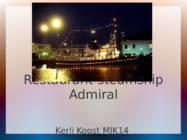
Restaurant-steamship Admiral Kerli Koost MJK14 Steamship S/S "Admiral" is a living example of the steamship era. She was built in 1955 in St. Petersburg (Leningrad). She had sailed for 40 years as a stem-tug on the Baltic Sea, participated in parades of historical vessles in Helsinki, Kotka (FIN) and Hamburg (GER). In 1996 the ship was rebuilt into a salon-steamer. The ship is under the supervision of the Russian Maritime Register of Shiping. "Admiral" can take up to 60 passangers on a sea-voyage. However, at the present moment they do not organise trips to the sea. Restaurant Restaurant-steamship Admiral was opened in 1996 and is located in the
but over the centuries words have been simplified. Adjectives do not change according to the noun and gender is not a problem in English. The loss of inflections has made English very flexible language where the same word can operate as many different parts of speech. That is why word order is crucial! At present English is one of the major languages in the world. It started ti spread in the 17th century, when Englishmen sailed to faraway lands. It has become a world language thanks to its establishment as a mother tounge outside England, in all the continents of the world. Above all, it is the great growth of population in the USA taht has given the English language its present standing in the world. English can be compared with Latin oh the acient times. It dominates the planet as the medium of exhange in science, technology, commerce, tourism, diplomacy and pop culture.
Natural Disasters: Does Mankind Even Stand a Chance? Throughout time, man has fought valiantly against the forces of nature. We have successfully climbed the tallest mountains, sailed the greatest seas, and defeated the mighty dinosaurs. But we are no match for nature's greatest weapon: Natural Disasters. As far as natural disasters go, the deadly trinity of mudslides, whirlpools, and meteors is man's greatest nemesis. Mudslides strike without warning and with deadly force. Every day, across the world, unsuspecting villagers are hammered by the force of 36,000 tons of that soft wet dirt known
him with ships and money. Finally they agreed. In 1492 Christopher left from Spain with a crew of 90 men and a fleet of three ships. His three ships were called the Niña, the Pinta, and the Santa María. There were 24 men on the Niña, 26 men on the Pinta, and 40 men on the Santa María. The Niña and the Pinta were caravels. The Santa María was a larger and slower-sailing supply ship. They left Spain on August 3, 1492. They made one stop, then sailed on toward the west. Two days later they saw land; an island Columbus named San Salvador. He thought he had found the Indies and called the people he saw there "Indians". When they got to Cuba, he thought he was in China. The world was a lot larger than he thought. On Christmas Eve, the Santa Maria was wrecked near Haiti. Columbus built a fort and left 40 men to hunt for gold. Then he returned to Spain on the Nina. The Pinta also returned
for their task of lighting the way for the floats - a custom that continues today. Now, the torches may be lighter and use butane or kerosene, but the entertaining exchange between the crowd and the flambeaux is a rich Carnival tradition. Mardi Gras History Mardi Gras came to America in 1699 with the French explorer Iberville. Mardi Gras had been celebrated in Paris since the Middle Ages, where it was a major holiday. Iberville sailed into the Gulf of Mexico, from where he launched an expedition up the Mississippi River. On March 3 of 1699, Iberville had set up a camp on the west bank of the river about 60 miles south of where New Orleans is today. This was the day Mardi Gras was being celebrated in France. In honor of this important day, Iberville named the site Point du Mardi Gras. On Mardi Gras of 1857, the Mystick Krewe of Comus held its first parade. Comus is the oldest
to the early 18th century, and is on its current and previous flags, the penny, and on the coat of arms. The national colours are red and white which also appear on the flag. The national animal is the beaver and it is because the fur trade. Maple syrup is very important for Canadians also. Hockey is the official winter sport. Canada's official colours are red and white. The colours appear on the flag. History. Almost a thousand years ago men from Norway sailed across the Atlantic Ocean and "discovered" America about 4 centuries before Columbus. In 985 AD Vikings who wanted to go to Greenland from Iceland were blown off their course and they reached Canada. It is thought that they reached Labrador. They saw forested areas there and further exploration were encouraged by this discovery because the Norse colonists from Greenland lacked lumber which was found in Canada. Five hundred years later an Italian John Cabot sailed from England to the
In they India pressed out of sugar cane cloudy juice or they licked it as lollypop such as sugar cane - it is the practice in many countries still exist. Later, people began to boil sugar cane juice, sweet - both were solid sugar crystals. "Cane, which gives the sugar without the aid of bees" According to legend, brought the cane - or at least it can be transmitted Kumu - first to Greece by Alexander the Great, expedition returning to India. Around the year 300BC the mother Nearchos sailed along the Persian Gulf to the Indus river, on the river side by side but the wind rising sugar canes. Nearchos picked one of the plants, taste it, and said: "Indian dish, which gives the sugar without the aid of bees." Western Mediterranean Arabs brought sugar. Having occupied the south of Spain and Sicily, there they raised sugar cane. During the Middle Ages was the major sugar importer-exporter of Venice. Raw cane sugar imported from India and refined in Venice prior to export to the rest of
museums and art galleries. Royal residence English (later British) kings and queens have lived in London for almost 1,000 years. There are several royal palaces in the capital. St James's Palace was built by King Henry VIII in the 16th century. Since 1837 the monarch has lived in Buckingham Palace LONDON'S EARLY HISTORY The Romans invaded England in 43 AD. They landed in Kent, made their way to the River Thames and sailed up it. Then they settled in a place on the north bank, where the river was not to wide. This settlement was called Londinium. A bridge was later built across the Thames. Roman London Tribes in England fought the Romans. The Iceni tribe, led by Queen Boudicca, burned down Londinium in 61 AD. The Romans later defeated the tribes and restored Londinium. It became the capital of Roman Brittan. A Basilica, forum and fort were built, plus a wall around the city. The Romans ruled until 410.
Australia remained unknown for Europeans until 400 years ago and no European settled there until 1788. Long before the seventeenth century, people though there was land in the southern ocean, but nobody had seen it. So it was called Terra Australis Incognita - the Unknown South Land. The first recorded European to see Australia was a Dutch - Captain William Jansz who entered the Gulf of Carpentaria in 1606. Another Dutch - Abel Tasman sailed to the south and discovered Tasmania in 1642. By the middle of the seventeenth century most of the north, west and south coasts had been charted. But the Dutch were disappointed with their new discoveries. The first British captain who saw the new continent was William Dampier who visited the north western coast in 1688 and 1689. In 1770 the British sailor Captain James Cook landed on the east coast at Botany bay, and said Australia now belonged to Britain
The discovered continent was called New Holland. Therefore no interest was taken in it for more than 150 years, cause the land was described as sandy and waterless. In 1770 Captain James Cook, the famous sailor and explorer, reached Australia from the south-east and it differed from the other parts of Australia. He landed in a place, great of beauty, with lots plants and flowers, which James Cook named Botany Bay. From there, J. Cook sailed along the east coast as far as Cape York, where he put up the British flag. The eastern part of Australia became a British Colony. th The colonization of Australia began at the end of the 18 century. The first settlers were convicts from England, who were taken to a prison camp at Botany Bay, where they led a hard life.
the sea on the western and southern coasts. William Dampier was the first englishman to reach Australia. But captain James Cook's explorations on the southeast coast were more important. He was on his way from New Zealand and reached Australia from the southeast. The part of Australia he found was very much different from the country visited by the earlier explorers. He landed in a place of great beauty, rich in plants and flowers, which he named Botany Bay. From Botany Bay James Cook sailed along the east coast as far as the Cape York, where he put up the British flag. The eastern part of Australia became a British colony. The Colonization of Australia The British initially used it as a gigantic prison camp for convicts from Britain. Altogether 160 000 men, women and children were deported from Britain to Australia, where they led a very hard life. At the beginning of the19th century free settlers began to arrive from Britain in large
Their babies are born from eggs but drink milk from their mothers. There are more than 800 kinds of birds in Australia. The emu is a flightless bird. It is up to two metres tall and can run very fast. The first people to inhabit Australia were the ancestors of the Aborigines, who arrived over 40,000 years ago. The first Europeans to sight the Australian continent were the Dutch in 1606. They called what they had found New Holland, but made no attempt at settlement. In 1770, James Cook sailed there, mapping the east coast of Australia, which he named New South Wales and claimed for Britain. Britain started sending its convicts to the place now called Sydney, and they established the colony of New South Wales. This day is celebrated as Australia's national day, Australia day. Most of the people there are of British origin, with a culture and outlook similar to the UK and USA. In 1901, five colonies became states linked by one federal government the Commonwealth of Australia.
8. European discoverers of Canada (Irish (?), Viking, British, French). St Brendan the Navigator, an Irish monk, is told to have taken a seven-year yoyage in the 6th century across the North Atlantic Ocean and he could have reached Canada. However, as far as we know, the first white men to discover the Atlantic seaboard of North America were the Norsemen from Greenland about 1000 AD. On 20 May in 1497 an Italian named John Cabot sailed west from Bristol in England, hoping to reach Kathay. He sighted land on 24 June rediscovered of Canada's eastern shores and landed somewhere near Newfoundland, Maine or Cape Breton Island. King Henry VII gave him 10 pounds for "finding a new isle" and sponsored a new yoyage. Jaques Cartier did three expeditions to Canada. He sailed from Northern France in 1534, 1535-1536 and 1541-1542 and sailed up the St Lawerence River
Only the Legio IX Hispana is likely to have stayed there, as it is attested to being in residence at Eburacum (York) in AD 71 and on a building inscription there dated AD 108, before its eventual destruction fighting in the East, likely during the Bar Kochba Revolt. The invasion was delayed by a mutiny of the troops, who were eventually persuaded by an imperial freedman to overcome their fear of crossing the Ocean and campaigning beyond the limits of the known world. They sailed in three divisions, and probably landed at Richborough in Kent, although some suggest that at least part of the invasion force landed on the south coast, in the Fishbourne area of West Sussex. The Romans defeated the Catuvellauni and their allies in two battles: the first, assuming a Richborough landing, on the river Medway, the second on the Thames. One of the Catuvellaunian leaders, Togodumnus, was killed, but his brother Caratacus survived to continue resistance elsewhere
London History The Romans AD 43- AD 410 The Romans finally invaded Britain in AD 43 from Kent. The Romans lead by Julius Caesar attempted to invade Britain twice before that in 55 and 54 BC but the invasions were unsuccessful. They made their way to the river Thames and sailed up it. The Romans knew it was important to control a crossing point at the river Thames, so they decided to build a settlement on the north bank. Although small settlements had been built on the banks of the Thames, the Romans were the ones who built the first city. They called their city Londinium. The Roman engineers noticed that the point where the swampy river narrowed would make an ideal crossing point, they built London Bridge. Less than 20 years later the native Iceni tribe,
governing country. In 1867 the Dominion of Canada was created - an independent country within the British Empire consisting of 4 provinces: Ontario, New Brunswick, Quebec and Nova Scotia, with the monarch represented in Canada by governor-general. HOW CANADA GOT THE NAME CANADA There have been many theories about the origin of the name Canada but there can be a little doubt that the word is Indian in origin. When Jacques Cartier sailed up the St. Lawrence River in 1534 to the Indian village of Stadacona, now Quebec, he heard the village called ,,kanata" and took that to be the name of the country. However, in some Huron dialects, ,,Kanata" means settlement or a village. In the Mohawk language, a similar word means simply a place. In Cartier's map of St. Lawrence, he put tha name Canada on the area between the Saguenay River and what is now Quebec City.
· 1607 - the first lasting settlement in North America was established in Virginia, Jamestown. · 1609 - the colonisation of Ulster. (first tried out by Queen Elizabeth I and later continued officially by James I). Ulster was colonised to prevent further rebellion. The Irish were forced to become protestants. Due to these events, we can now see some common features in speech between lowland Scotland and Northern Ireland. · 1620 - the English ship Mayflower sailed to North America from England. The ship failed to reach Virginia and landed in Plymouth instead. Jamestown and Plymouth were now the 2 settlements and grew rapidly. · 17th century - the English began to spread in Southern America as a result of slave trade. New kind of Englishes developed so that slaves and captors could understand eachother. This happening is called the Pidgin (Pidgin English). · 18th century - Large scale immigration from Ireland to North America
[22] Towards the end of his stay at the school, it was decided that he lacked the academic ability to get into Oxford University on a scholarship[22] and his parents lacked the wherewithal to finance him; [16] consequently, Lockwood Kipling obtained a job for his son in Lahore (now in Pakistan), where Lockwood was now Principal of the Mayo College of Art and Curator of the Lahore Museum. Kipling was to be assistant editor of a small local newspaper, the Civil & Military Gazette. He sailed for India on 20 September 1882 and arrived in Bombay on 18 October 1882. This arrival changed Kipling, as he explains, "There were yet three or four days' rail to Lahore, where my people lived. After these, my English years fell away, nor ever, I think, came back in full strength". Travels & First writings During the summer of 1883, Kipling visited Simla (now Shimla), well-known hill station and summer capital of British India
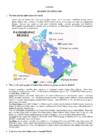
2. Who are the native people of New Zealand? What is their origin? When did they arrive in New Zealand? Maori are the indigenous Polynesian people who settled on New Zealand aroun 1300 AD. They did not have a word to refer to themselves. They adopted maori, which means 'normal, natural, ordinary', when they encountered the colonizers, or pakeha, which means 'people of European descent'. 3. Discovery of New Zealand by Europeans. In 1769-70 James Cook sailed around New Zealand, charting its entire coastline. 4. By which treaty did the Maoris cede their sovereignty? By the treaty of Waitangi. 5. The status of the Maori language and Maori culture at present. Maori became an official language in 1987, New Zealand Sign language became an official language in 2006. 6. The peculiarities of New Zealand’s plant and animal life. The national bird of New Zealand. 7. The political system of New Zealand. New Zealand is a unitary constitutional monarchy
The Saxons were a confederation of Old Germanic tribes. Their modern-day descendants are generally considered ethnic Germans, Dutch or English.. Saxons participated in the Germanic settlement of Britain during and after the 5th century The Jutes were a Germanic people who were one of the three most powerful Germanic peoples of their time. They are believed to have originated from Jutland in modern Denmark. Were associated with the Saxons. The Jutes, along with some Angles, Saxons and Frisians, sailed across the North Sea to raid and eventually invade Great Britain from the late 4th century onwards, either displacing, absorbing, or destroying the native Celtic peoples there. 6. The Anglo-Saxon invasion Germanic invasions 410-1066 5th cent. A-S soon had the s-east of the country in their grasp. A-S were pagan when they came to br. A-S had little use for towns and cities but had great effect on the countryside, where thay introduced
nation. On the 17th of March the Irish celebrate the anniversary of his death. Many scholars think that there must have been at least two Patricks. The patron saint of Ireland was not Irish by birth or the origin of his parents. Magnus Sucatus Patricius was born in 386. His father was a high-ranking town official. One day he was captured by pirates and sold as a slave to Ireland. He spent six years in slavery and then he escaped by hiding on a ship which sailed to France. He entered a monastery and wanted to study religion. He wanted to become a free man and a missionary. He became a priest, then a bishop. He returned to Ireland to bring Christianity to people. The local pagan priests used all their magic on him and they were very powerful. Once they poisoned his wine but Patrick removed the poison miraculously and drank the wine. One of the legends says that St. Patrick got rid of all the reptiles by beating his drum.
commercial prosperity opened, as did the so-called Golden Age of Dutch art, with such painters as Rembrandt and Jan Vermeer. By the mid-17th century the Netherlands was the foremost 9 commercial and maritime power of Europe, and Amsterdam was the financial centre of the Continent. (3) 2.7 Exploration and Colonization About 1600 a Dutch merchant expedition of three vessels sailed from Amsterdam to Java. This was the first of numerous journeys that left Dutch geographic names scattered over the globe, from Spitsbergen to Cape Horn and from Staten Island to Tasmania. These voyages resulted in the establishment or acquisition of many trading stations in Africa, Southeast Asia, and America. (3) In 1602 the Dutch parliament granted to the Dutch East India Company a charter that gave it a
· 1579 San Fransisco/St. Fransis · 1607 Jamestown collony/John Smith · 1620 a boat called MayFlower · 1630 Boston was established · 1636 Harvard University · 1773 Boston Teaparty · 1775 War of Independence · 1776 4 July Declaration of Independence · First President George Washington Christopher Columbus Christopher Columbus (1451-1506) was an Italian explorer who sailed across the Atlantic Ocean in 1492, hoping to find a route to India (in order to trade for spices). He made a total of four trips to the Caribbean and South America during the years 1492-1504. He discovered America in 1492. I Indian sun, they pray for fan. J we hate Jews, they are fools. K Bush is okey, because he is not gay. L Americans are large, they eat much. M Mc`Donalds is good, there is a lot of food. N is for Nigga who pulled the trigger.
Columbus' voyage has even less meaning for North Americans than for South Americans because Columbus never set foot on our continent, nor did he open it to European trade. Scandinavian Vikings already had settlements here in the eleventh century, and British fisherman probably fished the shores of Canada for decades before Columbus. The first European explorer to thoroughly document his visit to North America was the Italian explorer Giovanni Caboto, who sailed for England's King Henry VII and became known by his anglicized name, John Cabot. Caboto arrived in 1497 and claimed North America for the English sovereign while Columbus was still searching for India in the Caribbean. Unable to celebrate Columbus' exploration as a great discovery, some apologists now want to commemorate it as the great "cultural encounter." Contrary to popular legend, Columbus did not prove that the world was round; educated people had known that for centuries
routes throughout most of southern Asia, and sent the first direct European maritime trade and diplomatic missions to China and Japan. In 1415, Portugal acquired the first of its overseas colonies by conquering Ceuta. It was the first prosperous Islamic trade center in North Africa. There followed the first discoveries in the Atlantic: Madeira and the Azores, which led to the first colonization movements. Throughout the 15th century, Portuguese explorers sailed the coast of Africa, establishing trading posts for several common types of tradable commodities at the time, ranging from gold to slaves, as they looked for a route to India and its spices, which were coveted in Europe. The Treaty of Tordesillas, intended to resolve the dispute that had been created following the return of Christopher Columbus, was signed on 7 June 1494, and divided the newly discovered lands outside Europe between Portugal and Spain along a meridian 370 leagues
Henry VIII rejected the power of the Pope but Spain remained Catholic and religious and Philip wanted to make England return to the old faith. The second important reason was competition for supremacy in trade and sea power. The Armada anchored at the coastal border area between France and the Spanish Netherlands. While awaiting communications from Parma's army, it was driven from the bay by an English fire ship attack. The English fleet followed them and the fleet sailed into the Atlantic, past Ireland. 50 vessels failed to make it back to Spain. *The House of Stuart (kings, centuries) Founded by Robert II of Scotland, the Stewarts first became monarchs of the Kingdom of Scotland during the late 14th century. During the reign of the Stewarts, Scotland developed from a poor and backwards country into a more prosperous one. There were five Stuart monarchs who ruled both England and Scotland as
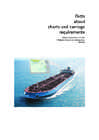
The communication of the VP will in many ways be similar to the approval. However, it is an issue, which requires separate attention to ensure that all bridge Officers are properly prepared for the intended voyage. Communication of the VP could cover the presentation to the bridge Officers at the beginning of the voyage as well as the Officer’s review of the part of the voyage likely to be sailed during a watch. Voyage execution The voyage execution impacts on various bridge procedures, and the consequence of the new procedures introduced with the ECDIS should be analysed and appreciated. It concerns e.g. issues such as the changing of the watch and the settings of the equipment. Facts about chart carriage reguirements 49
the diplomat from his home office, encoded in the English-French half of Clifton's Nouveau Dictionnaire Frangals, which had replaced the betrayed Cipher 13040, were solved by MI-8. They disclosed Germany trying to bribe Mexico to remain neutral. San Antonio, the effect was condemnatory. The handsome young spy was sentenced to death. Wilson later commuted it to life imprisonment, however, and Witzke was released in 1923. In August of 1918, Yardley sailed for Europe to learn as much as he could from America's allies. He obtained entrance to Great Britain's M.I. l(b) after demonstrating his abilities and there studied British methods for the solution of different codes and ciphers. The doors of Room 40 remained resolutely locked against him as against everyone else, though Hall did give him a German naval code and a neutral nation's diplomatic codes. In Paris that fall, Yardley met Painvin, who gave him a desk in his
Germanic tongue (which combined to form the basis of modern English). By the end of the tenth century England was one kingdom with a Germanic culture throughout. Under Norman rule the Anglo-Saxons and Danes gradually and peacefully merged into one people – the English people. 39 Notes 1. The Vikings were excellent seamen, fishers and shipbuilders. In the 9th – 10th centuries they sailed as far as Novgorod and Kiev. Constantinople and Cicily, Iceland, Greenland, and North America (A Viking leader Leif Eriksson reached it about the year 1000, that is 500 years before Columbus). Armed gangs of Vikings raided nearly all the European countries. The inhabitants of coastal and inland cities often collected money to pay them off. Besides the British Isles, the Vikings settled in Iceland, Greenland and a part of north- western France which became known as Normandy
gods' age-old enemies, the Titans. T h i s monument is virtually a storyboard in stone for what would be a great special-effects movie. T h e builders of the Titanic, who probably had seen pictures of these reliefs, chose to identify themselves and their clients not with the gods but with their ancient enemies, the Titans. T h e y were truly challenging the gods by this choice. M a n y people felt, even before the ship sailed, that the builders were tempting fate to give the ship such a grandiose name. Even worse was to claim that it was unsinkable. T h a t was a foolish blasphemy, challenging the almighty power of God. A superstitious aura surrounds the Titanic, something like the curse of KingTut's tomb, a belief that the builders called down the wrath of God by their arrogance and pride. T h e story of the Titanic resonates with an old literary concept, T h e Ship of Fools
 annaabi.ee