Leidsid 33 sarnast õppematerjali, mis on seotud failiga "Renewable energy". Need materjalid aitavad sul teemat sügavamalt mõista.
sources, heat, green, such, grow, growing, lightlectricity, cause, global, warming, comes, place, fossil, fuels, technology, known, harm, oldest, stored, work, machines, least, consequence, might, there, doesn, listening, different, forms, bodies, protein, move, humans, inventedasier, homes, these, while, others, tides, geothermal, replaced, without.........................................................................27 7.8 Measuring electricity..................................................................................................27 SOLAR ENERGY..............................................................................................................27 8.1 Photovoltaic energy...................................................................................................... 28 8.2 Solar thermal heat.......................................................................................................29 8.3 Solar thermal power plants......................................................................................... 30 8.4 Solar energy and the environment..............................................................................30 WIND ENERGY.................................................................................................................31 9
..........................................16 3. Conclusion............................................................................................................ ....18 4. Sources............................................................................................................... .......19 Renewable energy Renewable energy is energy generated from natural resources--such as , wind, rain, tides and geothermal heat--which are renewable (naturally replenished). In 2006, about 18% of global final energy consumption came from renewables, with 13% coming from traditional biomass, such as wood-burning. Hydroelectricity was the next largest renewable source, providing 3% (15% of global electricity generation),followed by solar hot water/heating, which contributed 1.3%. Modern technologies, such as geothermal energy, wind power, solar power, and ocean energy together provided some 0.8% of final energy consumption.
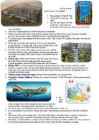
Renewable energy Meriliin Lend Estonian University of Life Sciences Tartu 2013 Topics Renewable energy Solar energy Wind energy Hydroelectric power Geothermal energy Biomass energy Renewable energy Renewable energy comes from sources that naturally renew, or will not run out in our lifetimes. Includes sunlight, wind, water, geothermal heat and various forms of biomass. Renewable energy cannot be exhausted and is constantly renewed. Does not harm the environment. Saves money. Solar energy Solar energy is the technology used to harness the sun's energy and make it useable. Every hour the sun beams onto Earth more than enough energy to satisfy global energy needs for an entire year.
These resources are also used in industry. We get natural resources from the environment. Many of them are essential for our survival while others are used for satisfying our wants. Renewable resources: Some natural resources can be reproduced within a few years or decades. These are called renewable resources. Solar radiation, wind and hydroelectricity, are perpetual resources that are in no danger of a lack of long-term availability. Some natural renewable resources such as geothermal power, fresh water, timber, and biomass must be carefully managed to avoid exceeding the worlds capability to displace them. Solar energy is the energy derived directly from the Sun. Along with nuclear energy, it is the most important source of energy on Earth. People usually use solar energy to produce electricity and heat. Wind power is the conversion of wind energy into a useful form of energy, such as electricity, using wind turbines
Green Energy Program paid for and brought to by -Anja Bananja -Franz the Manz - And Just Chadrick Overview- What is Green Energy? Different Types? What is sustainability? German Green Energy Cost and Efficiency Recycling What is Green Energy? -It is energy resources that are renewable -Can be naturally replenished -Clean, Safe and not harmful to the environment (aka mother earth) Types of Green Energy Green Energy going cute Solar Power · Is produced by using photovoltaic cells, which capture sunlight and turns that into energy. Problems ? -The sun has got to shine -The cost of solar panels and the systems range
Hello My name is JOHN SMITH and I am here to talk about Hydroelectricity. Global energy use has risen by 70% since 1971 and continues to increase at the rate of 2% per year. There are many scenarios for future demand. One solution would be to use more hydropower. In 2005, renewable energy represented one-fifth of total power generation. Hydropower is the most advanced of the renewable and represents 87% of this production. 160 countries all over the world are using hydropower. Five countries make up more than half of the world's hydropower production. Those countries are: Brazil,Canada, China, Russia and the USA. (Production) *Most of the energy comes from the potential energy of dammed water driving a water turbine and generator. In this case the energy extracted from the water depends on the volume and on the difference in height between the source and the water's outflow. *Pumped storage hydroelectricity produces electricity to supply high peak demands by moving water between reser
The environment in realtion to mobility/transport in Europe Air pollution is problem all over the world. Through some pollution comes from these natural sources, most pollution is the result of human activity. The biggest causes are the operation of fossil fuel- burning power plants and automobiles that combust fuel. Combined, these two sources are responsible for about 90% of all air pollution in the United States. All kind of pollutions can lead us to serious health problems. For example, air pollution is increasingly being cited as the main cause of lung conditions such as asthma - twice as many people suffer from asthma today compared to 20 years ago. Every year, 3.2m Europeans are diagnosed with cancer - the most common cause of death after heart disease. Most widespread are cancers of the lungs, breast and colon
GLOBAL WARMING Global warming is the observed century-scale rise in the average temperature of Earth's climate system. Since 1971, 90% of the increased energy has been stored in the oceans, mostly in the 0 to 700m region. Despite the oceans' dominant role in energy storage, the term "global warming" is also used to refer to increases in average temperature of the air and sea at Earth's surface. Since the early 20th century, the global air and sea surface temperature has increased about 0.8 °C (1.4 °F), with about two-thirds of the increase occurring since 1980.Each of the last three decades has been successively warmer at the Earth's surface than any preceding decade since 1850. More than 90% certain that most of global warming was being caused by increasing concentrations of greenhouse gases produced by human activities.In 2010 that finding
...... Economical....................................................................................................... Dangers of biogas............................................................................................... Future prospects................................................................................................ Conclusion......................................................................................................... Used sources..................................................................................................... Introduction To be honest I got the list of topics after most interesting ones for me were taken. At first I was not very satisfied with my topic but then I realized that this could be actually really interesting thing to make a report of. I chose this particular topic because I have always been interested in green energy. This topic gave me an excellent
............................12 References..........................................................................................................................................13 Introduction What is nuclear power? Nuclear power is any nuclear technology designed to extract usable energy from atomic nuclei via controlled nuclear reactions. The most common method today is through nuclear fission, though other methods include nuclear fusion and radioactive decay. All utility-scale reactors heat water to produce steam, which is then converted into mechanical work for the purpose of generating electricity or propulsion. In 2007, 14% of the world's electricity came from nuclear power. More than 150 nuclear-powered naval vessels have been built, and a few radioisotope rockets have been produced. Nuclear life cycle The Nuclear Fuel Cycle begins when uranium is mined, enriched, and manufactured into nuclear fuel, which is delivered to a nuclear power plant.
Water creates energy Eduard Kamenski 11a form The world uses energy from many different sources, such as: hydroelectric power, nuclear power plants, solar energy, and wind generated power. There are positive and negative aspects of each source, but which source of energy is best? My opinion is that the best source of energy is water and I'll bring up some facts why do I think so. Hydroelectric power is currently the world's largest renewable source of electricity. It accounts for six percent of the worldwide energy supply or about fifteen percent of the world's electricity.
policies facilitate DH development. Introduction This paper describes barriers to district heating (DH) in various parts of Europe and to Swedish involvement in district-heating business abroad. The paper is based on a report called "District Heating in Europe: Barriers to overcome for Swedish export" , which was prepared for The Swedish District Heating Association. The losses by energy conversion in Europe are of the same magnitude as the European heat demand and consist mainly of heat that is wasted by electricity generation . District heating is a means to utilise such surplus heat to cover heat demand. District heating can utilise the heat from electricity generation in combined heat and power (CHP) plants. District heating can also use other heat sources that are difficult to use for individual buildings, such as unrefined biomass fuels, heat from waste incineration and industrial surplus heat. The latter may, for example, be a by-product from production of automotive
various molecular weights and other liquid organic compounds, that are found in geologic formations beneath the Earth's surface. The name Petroleum covers both naturally occurring unprocessed crude oils and petroleum products that are made up of refined crude oil. A fossil fuel, it is formed when large quantities of dead organisms, usually zooplankton and algae, are buried underneath sedimentary rock and undergo intense heat and pressure. Petroleum is recovered mostly through oil drilling. This comes after the studies of structural geology (at the reservoir scale), sedimentary basin analysis, reservoir characterization (mainly in terms of porosity and permeable structures). It is refined and separated, most easily by boiling point, into a large number of consumer products, from petrol (or gasoline) and kerosene to asphalt and chemical reagents used to make plastics and pharmaceuticals
plastic · Massive skyscrapers, roof-top aerodromes, wide pedestrian boulevards, metal roadways, urban space launch pads, noise regulations. · Cities must change radically to achieve long-term sustainability. · Energy, food and water sources, transportation systems and basic infrastructure, must all adapt to emerging pressures from climate change, dwindling resources and growing urban populations. · 70 million people a year migrate from the country to cities. That is about 130 a minute, that means very massive globalization. · At this rate, our future cities may turn out to be quasi-temporary, missing the basics of human life, such as water and electricity, still
Margit Tepner k0848752 Sustainability aspects of biofuels 1. Introduction The literature review will discuss the sustainability aspects of biofuels. Food production will be the main concern as it is the most debated issue, but other aspects, such as land use change and water consumption will be also considered as they are essential aspects in the biofuels sustainability criteria. The review will discuss the viability of biofuels based on the current technologies. Second-generation biofuels are not yet commercially viable and therefore will not be discussed; although they could significantly improve the sustainability of biofuels when they break through to the industrial scale. 2. The scale of biofuels production 2.1
Every day, the average person inhales about 20,000 liters of air. Every time we breathe, we risk inhaling dangerous chemicals that have found their way into the air. Air pollution includes all contaminants found in the atmosphere. These dangerous substances can be either in the form of gases or particles. Air pollution can be found both outdoors and indoors. Pollutants can be trapped inside buildings, causing indoor pollution that lasts for a long time. The sources of air pollution are both natural and human-based. As one might expect, humans have been producing increasing amounts of pollution as time has progressed, and they now account for the majority of pollutants released into the air. Air pollution has been a problem throughout history. Even in Ancient Romepeople complained about smoke put into the atmosphere. The effects of air pollution are diverse and numerous. Air pollution can have serious consequences
Mainy used to heat and power production, but as well as natural lighting. Solar power released as a result of fusion reactions taking place in the sun. What is solar power? Päikeseenergia on energia, mis on saadud päikesekiirguse energiast. Põhiliselt kasutatakse seda soojuse ja elektri tootmiseks aga ka loomulikus valgustuses. Päikeseenergia vabaneb päikesel toimuvate termotuumareaktsioonide tulemusel. Using heat production production of electricity from solar energy Kasutamine: Soojuse tootmiseks (sh. tarbevee ja joogivee kütmiseks) kasutatakse päikesekütteseadmeid. Elektri tootmine päikeseenergiast võib toimuda fotoelement- ehk fotogalvaanilises elektrijaamas päikesepatareidega või päikese-soojuselektrijaamades läbi soojuse. Solar radiation is used in the installations are divided Radiation concentrating installations;
About 98% of Ireland's final energy demand is produced by burning coal, petroleum, peat, or natural gas. This over reliance on fossil fuels ( see liigne toetumine sisseostetavatele kütustele )-particularly oil - (eriti õli) has left Ireland vulnerable to international price fluctuations as it imports all of its oil needs. (on jätnud iirimaa haavatavaks tänu rahvusvahelistele hindande muutumisele ) There have been recent efforts in Ireland to use renewable energy such as wind energy with large wind farms being constructed in coastal counties such as Donegal, Mayo and Antrim. Flora Because of Irelands mild climate , many tropic species such as palm trees grow in Ireland. Much of the land is now covered with pasture(karjamaa) and there are many species of wild-flowers The country has been "invaded" by some grasses, such as Spartina anglica which you can see on the picture
• In Estonia we have abandoned arable land about 400 000 ha, part of it is overgrowing naturally, and another part has been afforested • For short-rotation forestry in Estonia, ecologically and economically the most suitable tree is probably grey alder, which is a highly productive and soil improving species Grey alder • The stock of grey alder (Alnus incana) in Estonia in 2005 was 35 millions m³. A majority of Estonian grey alder stands grow in private forests where they make up 13.7% of all stands; in state forests their share is 1.7%. Grey alder (2) • The annual mean increment of Estonian grey alder stands is 7.1 m³ per hectare • The mean average volume is 182 m³ per hectare Grey alder (3) • The yield example of experimental area, located in Põlvamaa, Estonia 80 70 Dry ma ss t ha-1 60
A typical wavelength of deep water waves is about 156.1 meter. Please calculate the maximum power output by a point absorber using the surging technology. The power of the waves is about 6.7 kW per meter of crest length. 14 Technologies to convert wave energy There is a wide range of technologies converting the energy of waves into electric energy. Harvesting wave energy enables an engineer to use different physical principles to generate the target energy. More than in all other energy sources for regenerative power engineering. Tapered channel (Tapchan) The Tapchan concept is one of the oldest wave harvesting technologies to generate electric energy. Tapchan is the acronym for TAPered CHANnel. This power plant uses the kinetic energy of the waves reaching the shores. The principle behind is, that an incoming wave flows over a tapered channel of concrete into a a higher basin. The tapering is used to enlarge the velocity of the water flow following the continuity equation
Tartu Kivilinna Gümnaasium Liis Viljak 10b Bodyshop Company The Body Shop International plc is a global manufacturer and retailer of naturally inspired, ethically produced beauty and cosmetics products. Founded in the UK in 1976 by Dame Anita Roddick, we now have over 2,100 stores in 55 countries, with a range of over 1,200 products, all animal cruelty free, and many with fairly traded natural ingredients. We were the first international cosmetics brand to be awarded the Humane Cosmetics Standard for our Against Animal Testing policy. And we have our own fair trade
productivity • The recent rapid increase in human population over the past three centuries has raised concerns that the planet may not be able to sustain present or future numbers of inhabitants. Loss of Fresh Water • Most of the freshwater resources are either unreachable or too polluted, leaving less than 1% of the world's freshwater, or about 0.003% of all water on Earth, readily accessible for direct human use. • According to the Global Outlook for Water Resources to the Year 2025, it is estimated that by 2025, more than half of the world population will be facing water-based vulnerability and human demand for water will account for 70% of all available freshwater. • Freshwater is the most fundamental finite resource with no substitutes for most uses, yet we are consuming fresh water at least 10 times faster than it is being replenished in regions of northern
leaving a light bulb on here and there, keeping the air conditioning on at home when you're out at work or school all day etc. Although it may not be obvious, there is a connection between energy use and the environment. As the same with recycling; when you consume less power, you reduce the amount of toxic fumes released by power plants, conserve the earth’s natural resources and protect ecosystems from destruction. Although, individual consumers can’t solely be blamed for our rising global temperatures, since most of the world’s greenhouse gas emissions can be traced back to large companies. But people want to feel like they’re doing something, no matter how small, to prevent the worst-case climate catastrophe scenario from unfolding. After all, the only thing that has ever helped to change and protect the world, are us, humans.
economic solutions to produce power. This is where the necessity of nuclear power plants comes in question. Nuclear power plants are a cheap way to generate electricity but it also brings a lot of pollution that is much more radioactive and toxic than, for example, coal waste. But if we are looking at the facts, burning coal pollutes the Earth much more than nuclear power plants because more waste is generated. CO2, which is released from burning coal, is the main cause of global warming. Nuclear waste is collected and hidden in rocks or under ground, where it won't face the environment. However we shouldn't depend on nuclear energy as Uranium reserves are ending, especially when the world population is increasing and so is the demand for energy. There is Uranium in seawater, but getting it is too expensive. We can only depend on nuclear power for a few years or decades. On the other hand, we will always have wind and solar power. Right now, producing
Auckland average summer temperature (January) is about 21C and winter is 11C. Annual rainfall in North Island is around 125-150cm, the west receiving slightly more rain than the east. South island is colder. Energy and natural resources: Despite a comparatively small population and abundant natural resources, New Zealand is a net importer of energy. Energy importation is in the form of oil products. About 30% of primary energy is from renewable energy sources. The leading manufacturing sectors are food processing, metal fabrication, wood and paper products. Natural resources: natural gas, iron ore, sand, coal, timber, hydropower, gold, limestone Government & economy: New Zealand is a constitutional monarchy with a parlamentary democracy. The House of Representatives - with 120 members an 5 seats for Maoris. Queen Elizabeth is Queen of New Zealand and is represented as head of state by the Governorgeneral.
Introduction (slide 2) In this presentation I'd like to give a brief overview of clay bricks. I'll speak about 15min to allow time for questions at the end. Firstly clay bricks are known for centuries as one of the most solid and reliable structural elements is set to play a role in reducing global warming. Apart form the many benefits obtained from using clay bricks in construction, such as their durability, insulation properties and aesthetic qualities, recent findings show that they also produce less carbon emissions than any other masonry material. History (slide 3) In more detail the earliest bricks were dried bricks, meaning they were formed from clay- bearing earth or mud and dried usually in the sun until they were strong enough for use. The oldest discovered bricks, originally made from shaped mud and dating before 10000 BC, were
organic matter, food and energy supply, microbial association and interactions) 2. Cultural practices These factors play a great role in determining not only the number and type of organism but also their activities. Variations in any one or more of these factors may lead to the changes in the activity of the organisms which ultimately affect the soil fertility level. Natural conditions Extreme environments such as high-altitude and highlatitude ecosystems are very sensitive to environmental changes. Global warming is hypothesised to alter both above- and below ground processes affecting the soil ecosystem (Asher et al. 2012). As an example, Asher et al. (2012) further proved in their research on humus creation that thermal conditions (due to differences in altitude and exposure) and consequently the climate influence soil microflora considerably
Lawrence and Great Lakes lowlands, Canadian Shield, The Prairies, mountain ranges and high plateaus of the Canadian Cordillera, and northern Canada. Climate Canada's climate varies wildly based on geography, from perma-frost in the north to four distinct seasons towards the equator. In this region the temperature can climb up to 35 degrees Celsius in the summer and descend to a chilly -25 degrees Celsius during winter. Canada's climate and environment are one of the main reasons that Canada is such a succesful country. The blend of natural resources and climate sustains us. The seasons dictate the look of the land: according to whether the natural environment is in a state of dormancy or growth. Canada's climate is characterized by its diversity, as temperature and precipitation differ depending on where you are and what time of year it is. Other than the North where it's above freezing for only a few months a year, most Canadian cities are within 300 km of the southern
The Cataclysmic Death of Stars Republished from the pages of National Geographic magazine Written by Ron Cowen March 2007 Ever since he was a teenager, Stan Woosley has had a love for chemical elements and a fondness for blowing things up. Growing up in the late 1950s in Texas, "I did everything you could do with potassium nitrate, perchlorate, and permanganate, mixed with a lot of other things," he says. "If you mixed potassium nitrate with sulfur and charcoal, you got gunpowder. If you mixed it with sugar, you got a lot of smoke and a nice pink fire." He tested his explosive concoctions on a Fort Worth golf course: "I screwed the jar down tight and ran like hell."
Industry and motor vehicle exhaust are the number one pollutants. Heavy metals, nitrates and plastic are toxins responsible for pollution. While water pollution is caused by oil spill, acid rain, urban runoff; air pollution is caused by various gases and toxins released by industries and factories and burning of fossil fuels; soil pollution is majorly caused by industrial waste that deprives soil from essential nutrients. FIND OUT 5 WAYS HOW TO STOP POLLUTION. 2. Global Warming: Climate changes like global warming is the result of human practices like emission of Greenhouse gases. Global warming leads to rising temperatures of the oceans and the earth surface causing melting of polar ice caps, rise in sea levels and also flash floods, excessive snow or desertification. FIND OUT 5 WAYS HOW TO STOP GLOBAL WARMING. 3. Overpopulation: The population of the planet is reaching unsustainable levels as it faces shortage of resources like water, fuel and food
Methodist 3%, Pentecostal 1.7%, Baptist 1.3%, other Christian 9%, other 3% Culture New Zealanders have made a profound impact in the areas of art, poetry, music, film, and architecture. Not only have the artists reached local recognition, but also gained worldwide apperception. New Kiwi self-confidence is revealed intensely in literature, film and theater. Opera diva Kiri Te Kanawa performs regularly nationally and internationally. Writers such as Witi Ihimaera, Albert Wendt, Patricia Grace, and Keri Hulme are also international figures. Fine Arts In the past, Kiwis were hostile towards art. In 1982, the McDougall Gallery in Christchurch planned to spend $10,000 on a painting by Colin McCahon, arguably the country's most significant and contentious painter, and this triggered ire among locals. At present, however, McCahon's paintings are auctioned at very high prices in many international collections.
Moreover, there are no students who have both breakfast and school lunch, eat more than four slices of brown bread per day, and avoid fat. In this essay, I will discuss whether prevention is better than trying to treat people who are ill and whether or not this is possible in all cases. I will divide the subject into illnesses caused by lifestyle, and illnesses caused by other factors such as genetic factors. First of all, a person's lifestyle can be a major factor in their wellbeing, both physical and mental. People who eat too much fast, fatty, or sugary foods without doing enough physical activity, may put on weight. This has serious effects and can lead to heart disease. Similarly, people who smoke and drink too much run the risk of getting cancers and heart disease. However, by
co.uk/environment/2004/feb/22/usnews.theobserver *Jeremy Symons, a former whistleblower at the Environmental Protection Agency (EPA), said that suppression of the report for four months was a further example of the White House trying to bury the threat of climate change. *Senior climatologists, however, believe that their verdicts could prove the catalyst in forcing Bush to accept climate change as a real and happening phenomenon. They also hope it will convince the United States to sign up to global treaties to reduce the rate of climatic change. *Among those scientists present at the White House talks were Professor John Schellnhuber, former chief environmental adviser to the German government and head of the UK's leading group of climate scientists at the Tyndall Centre for Climate Change Research. He said that the Pentagon's internal fears should prove the 'tipping point' in persuading Bush to accept climatic change.
 annaabi.ee