Leidsid 33 sarnast õppematerjali, mis on seotud failiga "Renewable energy". Need materjalid aitavad sul teemat sügavamalt mõista.
renew, other, biomass, hydro, power, geothermal, electric, solar, plant, electricity, turbine, sources, year, hydropower, heat, global, negative, turbines, generate, comes, harm, such, clean, once, plants, than, expensive, land, river, forms, cannot, exhausted, money, technology, percent, work, without, requires, there, available, control, swimming.........................................6 2.1.1. Annual Generation........................................................................................7 2.1.2. Growth and cost trends................................................................................8 2.1.3. Theoretical potential.....................................................................................9 2.1.4. Benefits of wind energy................................................................................10 2.2. Solar Energy........................................................................................................11 2.2.1 Development, deployment and economics................................................12 2.3. Hydroenergy.......................................................................................................13 2.4. Geothermal Energy............................................................................................14 2.5. Biomass Energy...................................
.........................................................................27 7.8 Measuring electricity..................................................................................................27 SOLAR ENERGY..............................................................................................................27 8.1 Photovoltaic energy...................................................................................................... 28 8.2 Solar thermal heat.......................................................................................................29 8.3 Solar thermal power plants......................................................................................... 30 8.4 Solar energy and the environment..............................................................................30 WIND ENERGY.................................................................................................................31 9
- And Just Chadrick Overview- What is Green Energy? Different Types? What is sustainability? German Green Energy Cost and Efficiency Recycling What is Green Energy? -It is energy resources that are renewable -Can be naturally replenished -Clean, Safe and not harmful to the environment (aka mother earth) Types of Green Energy Green Energy going cute Solar Power · Is produced by using photovoltaic cells, which capture sunlight and turns that into energy. Problems ? -The sun has got to shine -The cost of solar panels and the systems range between $20k-40k -The light from the sun produces a very small amount of energy Wind Power -These giant pinwheels spin from strong winds which spins a turbine of a generator to produce energy. Giant Pin Wheels? Any Studies done? · It is said that wind · Bentek Energy did the
Natural resources-our treasure Natural resources are land or raw materials like minerals, fluids, gases, organic matters and also woods, groundwater, animals and so on, in other words it's everything that human hasn't created. These resources are also used in industry. We get natural resources from the environment. Many of them are essential for our survival while others are used for satisfying our wants. Renewable resources: Some natural resources can be reproduced within a few years or decades. These are called renewable resources. Solar radiation, wind and hydroelectricity, are perpetual resources
and think. We also use energy to do work and to play. Humans have invented thousands of machines and appliances that use energy to make our work easier, to heat our homes, and to get ourselves from place to place. Some of these machines use electricity, while others, like automobiles, use the energy stored in substances such as gasoline. Renewable energy is energy generated from natural resources such as sunlight, wind, rain, tides, and geothermal heat, which are renewable. Renewable energy uses natural resources that can be replaced or "renewed" without harming the environment and does not contribute to the greenhouse effect and global warming. Non-renewable energy Non-renewable energy comes from sources that can't be replenished in a short period of time. We get most of our energy from nonrenewable energy sources, which include fossil fuels such as oil, natural gas, coal and from nuclear energy
Water creates energy Eduard Kamenski 11a form The world uses energy from many different sources, such as: hydroelectric power, nuclear power plants, solar energy, and wind generated power. There are positive and negative aspects of each source, but which source of energy is best? My opinion is that the best source of energy is water and I'll bring up some facts why do I think so. Hydroelectric power is currently the world's largest renewable source of electricity. It accounts for six percent of the worldwide energy supply or about fifteen percent of the world's electricity. Water has been found to be a major source of energy. Water power is utilized at present mainly as hydro-electricity. It is produced from moving water and from falls with the help of turbines and dynamos. Hydro-electricity has acquired great significance as a source of energy in the country in the
New energy sources Rauno Hermann Scheer Energy law example for 47 countries 6.3% to over 20% Numerous awards including The Right Livelihood Award Renewable energy in world Investments 63 billion USD > 120 billion USD 20062009 Wind energy: 74 000 MW to 135 000 MW Solar energy: 5100 MW to 19 000 MW WHAT ARE THE ALTERNATIVES TO TODAYS SOLAR, WIND AND BIOMASS ENERGY SOURCES? Osmotic power How it works? Pressure created by osmosis powers turbines Where could be used Where fresh and salt water meet (creeks, fjords) Desalination plants Now Worlds first test factory in Norway Tofte (2009) Disadvantages Km2s of membranes needed Norway, Tofte Click to edit Master text styles Second level Third level
Hello My name is JOHN SMITH and I am here to talk about Hydroelectricity. Global energy use has risen by 70% since 1971 and continues to increase at the rate of 2% per year. There are many scenarios for future demand. One solution would be to use more hydropower. In 2005, renewable energy represented one-fifth of total power generation. Hydropower is the most advanced of the renewable and represents 87% of this production. 160 countries all over the world are using hydropower. Five countries make up more than half of the world's hydropower production. Those countries are: Brazil,Canada, China, Russia and the USA. (Production) *Most of the energy comes from the potential energy of dammed water driving a water turbine and generator. In this case the energy extracted from the water depends on the volume and on the difference in height between the source and the water's outflow.
.......................... Producing process............................................................................................... Nowadays............................................................................................................ Areas where biogas is used in............................................................................. Biogas as replacement of fuel.......................................................................... Other benefits..................................................................................................... Health.............................................................................................................. Economical....................................................................................................... Dangers of biogas............................................................................................... Future prospects
1 Wave energy Introduction to wave energy There are several possibilities to harvest different forms of energy from the sea. One of these options is the usage of waves for the generation of electricity. The devices needed to perform this task are called wave energy converters. Wave energy is indirect solar energy in twice. At first there is the wind, which is caused by variations in atmospheric pressure due to a differential solar heating of earth's surface by the sun. Different regions of pressure drives a force which rises a movement of atmospheric air masses that causes the earths wind system. If wind strikes over the surface of an open water, waves are induced. First they are very flat with only a low level of energy. When there is a long distance over
Heating in Europe: Barriers to overcome for Swedish export" , which was prepared for The Swedish District Heating Association. The losses by energy conversion in Europe are of the same magnitude as the European heat demand and consist mainly of heat that is wasted by electricity generation . District heating is a means to utilise such surplus heat to cover heat demand. District heating can utilise the heat from electricity generation in combined heat and power (CHP) plants. District heating can also use other heat sources that are difficult to use for individual buildings, such as unrefined biomass fuels, heat from waste incineration and industrial surplus heat. The latter may, for example, be a by-product from production of automotive biofuel. District heating can provide cheap energy to consumers by using low-cost energy sources, such as wood, waste and surplus heat. Many of these resources can be of local origin
It was proposed by Joseph Fourier in 1824, discovered in 1860 by John Tyndall, was first investigated quantitatively by Svante Arrhenius in 1896, and was developed in the 1930s through 1960s by Guy Stewart Callendar. Solar activity Since 1978, output from the Sun has been precisely measured by satellites. These measurements indicate that the Sun's output has not increased since 1978, so the warming during the past 30 years cannot be attributed to an increase in solar energy reaching the Earth . The graphs show otherwise. Effects of global warming on oceans Global warming can affect sea levels, coastlines, ocean acidification, ocean currents, seawater, sea surface temperatures, tides, the sea floor, weather, and trigger several changes in ocean bio-geochemistry; all of these affect the functioning of a society. Impacts on society The rise in sea level along coastal regions carries implications for a wide range of
Tallinn 2013 Ott Speek Subject: English Geodesy Study group: GI-21b PETROLEUM PRESENTATION Petroleum (L. petroleum, from Greek: Πέτρα (rock) + Latin: oleum (oil) is a naturally occurring flammable liquid consisting of a complex mixture of hydrocarbons of various molecular weights and other liquid organic compounds, that are found in geologic formations beneath the Earth's surface. The name Petroleum covers both naturally occurring unprocessed crude oils and petroleum products that are made up of refined crude oil. A fossil fuel, it is formed when large quantities of dead organisms, usually zooplankton and algae, are buried underneath sedimentary rock and undergo intense heat and pressure. Petroleum is recovered mostly through oil drilling. This comes after the studies of
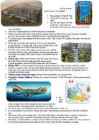
plastic · Massive skyscrapers, roof-top aerodromes, wide pedestrian boulevards, metal roadways, urban space launch pads, noise regulations. · Cities must change radically to achieve long-term sustainability. · Energy, food and water sources, transportation systems and basic infrastructure, must all adapt to emerging pressures from climate change, dwindling resources and growing urban populations. · 70 million people a year migrate from the country to cities. That is about 130 a minute, that means very massive globalization. · At this rate, our future cities may turn out to be quasi-temporary, missing the basics of human life, such as water and electricity, still
Margit Tepner k0848752 Sustainability aspects of biofuels 1. Introduction The literature review will discuss the sustainability aspects of biofuels. Food production will be the main concern as it is the most debated issue, but other aspects, such as land use change and water consumption will be also considered as they are essential aspects in the biofuels sustainability criteria. The review will discuss the viability of biofuels based on the current technologies. Second-generation biofuels are not yet commercially viable and therefore will not be discussed; although they could significantly improve the sustainability of biofuels when they break through to the industrial scale. 2. The scale of biofuels production 2
Tartus secondary school of business Nuclear Power Helena Nulk form 11b Tartu 2009 Table of contents Introduction..........................................................................................................................................3 What is nuclear power?....................................................................................................................3 Nuclear life cycle.............................................................................................................................3 What is nuclear energy?...................................................................................................................3 What is nuclear fusion?.................................................................
How to produce bioenergy from agricultural resources without harming the environment Jürgen Aosaar Jaak-Albert Metsoja Ahto Oja BOVA cource on biogas from biomass March 3-7 2008 Tartu Deciduous tree species on abandoned agricultural land Current situation • The long term development plan of the Estonian energy industry foresees a reduction in the use of fossil fuels and an increase in the share of biofuels: by the year 2010 renewable energy must account for 5.1% of total energy consumption Current situation (2) • In Estonia we have abandoned arable land about 400 000 ha, part of it is overgrowing naturally, and another part has been afforested • For short-rotation forestry in Estonia, ecologically and economically the most suitable tree is probably grey alder, which is a highly productive and soil improving species Grey alder
1)Main machinery On a ship, the engine room, or ER, is the propulsion machinery spaces of the vessel. To increase the safety and damage survivability of a vessel, the machinery necessary for operations may be segregated into various spaces. The engine room is one of these spaces, and is generally the largest physical compartment of the machinery space. The engine room houses the vessel's prime mover, usually some variations of a heat engine - diesel engine, gas or steam turbine. On some ships, the machinery space may comprise more than one engine room, such as forward and aft, or port or starboard engine rooms, or may be simply numbered. 1.1)Main engine The engine room of a motor vessel typically contains several engines for different purposes. Main, or propulsion engines are used to turn the ship's propeller and move the ship through the water. They typically burn diesel oil or heavy fuel oil, and may be able to switch between the two
What is sustainable city planning? • A sustainable city, or also know as eco-city, is a city designed with consideration of environmental impact, inhabited by people dedicated to minimization of required inputs of energy, water and food, and waste output of heat, air pollution - CO2, methane, and water pollution. • It should meet the needs A sustainable city should be able to... • feed itself with minimal reliance on the surrounding countryside, and power itself with renewable sources of energy. • create the smallest possible ecological footprint • produce the lowest quantity of pollution possible • efficiently use land • compost used materials - Practical Achievement • Different agricultural systems - agricultural plots within the city – reduces distance. • Renewable energy sources - wind turbines, solar panels, or bio-gas created from sewage. • Methods to reduce air conditioning - planting trees
Distilled water(doesn't contain CO 2), has pH level 7. Liquids with pH level less than 7 are acidic, liquids with pH level greater than 7 are alkaline. Unpolluted rain has a pH level over 5.7, so it is slightly acidic. Affected areas Places significantly impacted by acid rain around the globe include most of eastern Europe from Poland northward into Scandinavia, the eastern third of the United States and southeastern Canada. Other affected areas include the southeastern coast of China and Taiwan Causes · It is caused when sulfur dioxide and nitrogen oxides are released into the air. In the atmosphere they react with water, oxygen and other chemicals to form more acidic pollutants, known as acid rain. Sulfur dioxide and nitrogen oxides dissolve very easily in water and can be carried very far by wind
The University of Amsterdam ( MS/Drs – Science and Technology Studies ) http://boa.czp-vecer.si/vecer2000/20131211/5023698_ Primarily researches social, cultural, political and economic .jpg conditions influencing energy policy priorities and project outcomes Introduction This book talks about the negative side effects of the alternative energy like wind turbines, solar cells and bio fuels. We don't have an energy crisis. We have a consumption crisis. And this book, offers refreshingly straight talk about what's wrong with the way we think and talk about the problem. Though we generally believe we can solve environmental problems with more energy, Solar cells Advantages: Simple Low cost Reduce pollution Increase home safety Good for remote locations Clean and renewable No noise http://
Nuclear Power: A Burden or a Blessing? Today, when the pollution of Earth is an important matter, people are trying to find economic solutions to produce power. This is where the necessity of nuclear power plants comes in question. Nuclear power plants are a cheap way to generate electricity but it also brings a lot of pollution that is much more radioactive and toxic than, for example, coal waste. But if we are looking at the facts, burning coal pollutes the Earth much more than nuclear power plants because more waste is generated. CO2, which is released from burning coal, is the main cause of global warming. Nuclear waste is collected and hidden in rocks or under ground, where it won't face the environment.
Solar power What is solar power? Solar power is the energy, which is derived from solar radiation energy. Mainy used to heat and power production, but as well as natural lighting. Solar power released as a result of fusion reactions taking place in the sun. What is solar power? Päikeseenergia on energia, mis on saadud päikesekiirguse energiast. Põhiliselt kasutatakse seda soojuse ja elektri tootmiseks aga ka loomulikus valgustuses. Päikeseenergia vabaneb päikesel toimuvate termotuumareaktsioonide tulemusel. Using heat production production of electricity from solar energy Kasutamine: Soojuse tootmiseks (sh. tarbevee ja joogivee kütmiseks) kasutatakse päikesekütteseadmeid.
The environment in realtion to mobility/transport in Europe Air pollution is problem all over the world. Through some pollution comes from these natural sources, most pollution is the result of human activity. The biggest causes are the operation of fossil fuel- burning power plants and automobiles that combust fuel. Combined, these two sources are responsible for about 90% of all air pollution in the United States. All kind of pollutions can lead us to serious health problems. For example, air pollution is increasingly being cited as the main cause of lung conditions such as asthma - twice as many people suffer from asthma today compared to 20 years ago. Every year, 3.2m Europeans are diagnosed with cancer - the most common cause of death after heart disease. Most widespread are cancers of the lungs, breast and colon
SOLAR ENERGY Karol Pakkas What is solar power? Solar power is energy that comes from the sun. The sunlight gives off energy as heat. Solar power is a renewable source of energy. How does solar power work? Solar panels are used to collect sunlight. Solar panels are made up of photovoltaic cells that convert the sunlight into energy. Why do we need it? How does it lead to better health? Solar power is source of clean energy. It does not produce pollution or greenhouse gases or carbon compounds. Solar power would be a lot safer for the environment and a lot better for the health of people. What would happen if we don't use solar power? If we don't start using solar power, we would use oil and coal. They produce pollution and will cause millions of people to suffer from respiratory related problems.
SOLAR ENERGY Karol Pakkas What is solar power? Solar power is energy that comes from the sun. The sunlight gives off energy as heat. Solar power is a renewable source of energy. How does solar power work? Solar panels are used to collect sunlight. Solar panels are made up of photovoltaic cells that convert the sunlight into energy. Why do we need it? How does it lead to better health? Solar power is source of clean energy. It does not produce pollution or greenhouse gases or carbon compounds. Solar power would be a lot safer for the environment and a lot better for the health of people. What would happen if we don't use solar power? If we don't start using solar power, we would use oil and coal. They produce pollution and will cause millions of people to suffer from respiratory related problems.
2013): 1. Bacteria a) Heterotrophic bacteria, eg. symbiotic and non - symbiotic N2 fixers, ammonifier, cellulose decomposers, denitrifiers b) Autrotrophic bacteria, eg. nitrosomonas, nitrobacter, sulphur oxidizers, etc; 2. Fungus; 3. Viruses 4. Actinomycetes and stretomyces; 5. Algae eg. BGA, yellow gree algae, golden brown algae. The soil microflora largely depends on the type of soil, temperature, moisture, plant growth, nutrients, pH, and many other factors which may vary between locations but also within a single plot and over very small distances (OECD, 2007). Nevertheless of the quantity of microflora, biomass of all microorganisms living in soil play an important role in the functioning of entire soil ecosystems because their enormous biochemical activity (Barabasz et al. 2002). Soil microflora cycles carbon, nitrogen, phosphorus, and sulfur, plays a role in soil structure
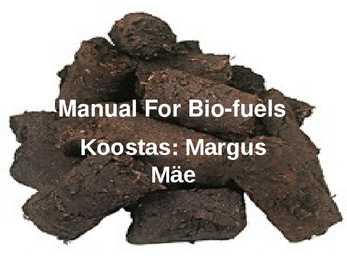
Introduction This book told me a lot of practical uses of solid biofuels and peat compustion technologies in estonia and baltic sea countries. The hole technological chain from production to flue gas cleaning is brought to reader ´s. Also the energy policy and reguierment for users is shown. Properties of boifuels and peat In the boiler plants of Baltic Sea countries a wide range of various woodbased fuels are burned. To some extent also straw and other biomass based fuels are used. All these fuels are considered as renewables and according to the international agreement the CO2 emitted by the combustion of these fuels is not listed as a greenhouse gas. Wood, in particular the shell of wood cells, consists mainly from cellulose, lignin and hemicellulose. Due to the high carbon and hydrogen content, the lignin has higher calorific value than cellulose and hemicellulose. In smaller quantities the wood contains also tar, resins and phenols
distinguished - successful and respected by many people District- an area of a town or country Draped- to put something made of cloth over or around something Draughts- a game for two people, played on a board with black and white squares using 24 round pieces. The American word is checkers Drill- a way of teaching people something by making them repeat it several times Ecological- relating to the environment and the way that plants, animals, and humans live together and affect each other Energy usage- Excavation- the process of digging in the ground to find things from the past Flannel coat- Forgery- the crime of making copies of valuable documents or works of art in order to make money by selling them Fowl- a bird that is kept on a farm for its eggs and meat, for example a chicken or a duck Fully-equipped- Fully-furnished- Genuine- real, rather than pretended or false Glass front- Handle- to take action in order to deal with a difficult situation
and natural radioactivity are all among the natural causes of air pollution. Usually, natural air pollution does not occur in abundance in particular locations. The pollution is spread around throughout the world, and as a result, poses little threat to the health of people and ecosystems. Though some pollution comes from these natural sources, most pollution is the result of human activity. The biggest causes are the operation of fossil fuel-burning power plants and automobiles that combust fuel. Combined, these two sources are responsible for about 90% of all air pollution in the United States. Some cities suffer severely because of heavy industrial use of chemicals that cause air pollution. Places like Mexico City and Sao Paulo have some of the most deadly pollution levels in the world. EFFECTS Air pollution is responsible for major health effects. Every year, the health of countless people is ruined or endangered by air pollution.
changes drastically. And as a side effect new uses could be found in everyday life, not to mention the advancement in spacecraft related research. The purpose of this essay is to explain what a railgun is and how it works along with a little history and the recent advancements in railgun related science. 3 1. What a railgun basically is A railgun is an electrically powered electromagnetic projectile launcher and a large electric circuit, made up of three parts: a power source, a pair of parallel rails and a moving armature. Along the pair of parallel conducting rails a sliding armature is accelerated by the electromagnetic effects of a current that flows down one rail, into the armature and then back along the other rail. Railguns have long existed as experimental technology but the mass, size and cost of the required power supplies have prevented railguns from becoming practical military weapons.
It's geographical position in co- ordinates is 83°N north, 42°N south, 53°W east, 141°W west. Canada borders with United States of America by land; Pacific Ocean, Arctic Ocean and Atlantic Ocean by coastline. Canada is one of the largest countries in the world, second only to Russia in territorial size. It has a total area of 9.9 million square kilometers. This includes 755,170 square kilometers of water. Toronto is the largest city in Canada with a population of 4.3 million. Other major cities include Montreal (3.3 million people), Vancouver (1.8 million people). Located in the southeast corner of the nation, Ottawa is the nation's capital. Relief Canada is a vast country comprised of a multitude of very different landscapes: Atlantic provinces, the Appalachians, St. Lawrence and Great Lakes lowlands, Canadian Shield, The Prairies, mountain ranges and high plateaus of the Canadian Cordillera, and northern Canada. Climate
timeline," ) · 1945- Hiroshima and Nagasaki- US. drops atomic bombs to Japan to end World War II ("Nuclear technologies timeline," ) · 1946- First nuclear energy in civilian use ("Nuclear technologies timeline," ) NUCLEAR ENERGY · 1954- Atomic Energy Act of 1954- allows the Atomic Energy Commission to license private companies to use nuclear materials and to build and operate nuclear power plants ("Nuclear technologies timeline," ) · 1955- First nuclear power plant that provides electricity to the whole town. (Borax-III) ("Nuclear technologies timeline," ) · 1986- Chernobyl- nuclear disaster in Ukraine ("Nuclear technologies timeline," ) · 1986-...- The use of nuclear energy is growing all over the world Nuclear Energy Pros and Cons Pros:
 annaabi.ee