 50 punkti
Autor soovib selle materjali allalaadimise eest saada 50 punkti.
50 punkti
Autor soovib selle materjali allalaadimise eest saada 50 punkti.
 ~ 28 lehte
Lehekülgede arv dokumendis
~ 28 lehte
Lehekülgede arv dokumendis
 2012-06-04
Kuupäev, millal dokument üles laeti
2012-06-04
Kuupäev, millal dokument üles laeti
 5 laadimist
Kokku alla laetud
5 laadimist
Kokku alla laetud
 0 arvamust
Teiste kasutajate poolt lisatud kommentaarid
0 arvamust
Teiste kasutajate poolt lisatud kommentaarid
 onujaar
Õppematerjali autor
onujaar
Õppematerjali autor
ELEKTROENERGEETIKA INSTITUUT Referaat Taastvad Energiaallikad Esitamise tähtaeg 14.04.2009 Õppejõud: Hannes Agabus Tudeng: Sergei Belosapko Nikita Naumov Tallinn 2009 Contents: 1. Renewable energy 1.1. Costs................................................................................................................... 2 1.2. Potential future utilization..............................................................................4 1.3. Why Don't We Use More Renewable Energy? ...........................................5 2. Energy Types 2.1. Wind Energy.......................................................................................................6 2.1.1. Annual Generation........
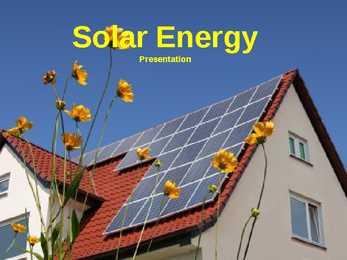
Solar Energy Presentation Introduction Solar energy Solar power Ø applications Ø energy storage method and solar power plants Solar energy Radiant light and heat from the sun Solar energy technologies include: Ø solar heating, Ø solar photovoltaics, Ø solar thermal electricity , Ø solar architecture Solar power Conversion of sunlight into electricity Using: Ø Photovoltaics (PV) Ø concentrated solar power (CSP). Click to edit Master text styles Second level Third level Fourth level Fifth level
Renewable energy Meriliin Lend Estonian University of Life Sciences Tartu 2013 Topics Renewable energy Solar energy Wind energy Hydroelectric power Geothermal energy Biomass energy Renewable energy Renewable energy comes from sources that naturally renew, or will not run out in our lifetimes. Includes sunlight, wind, water, geothermal heat and various forms of biomass. Renewable energy cannot be exhausted and is constantly renewed. Does not harm the environment. Saves money. Solar energy Solar energy is the technology used to harness the sun's energy and make it useable. Every hour the sun beams onto Earth more than enough energy to satisfy global energy needs for an entire year. Solar energy use has surged at about 20 percent a year over the past 15 years, thanks to rapidly falling prices and gains in efficiency. Solar energy is inexhaustible. Noise free.
SISUKORD ENERGY STORY................................................................................................................4 USES OF ENERGY............................................................................................................. 4 2.1 Uses of energy in homes...............................................................................................5 2.2 Types of energy used in homes.................................................................................... 6 2.3 Energy use in different types of homes........................................................................ 6 2.4 Commercial Energy Use...............................................................................................9 2.5 Industrial and Manufacturing Energy Use..................................................................11 2.6 Transportation Energy Use........
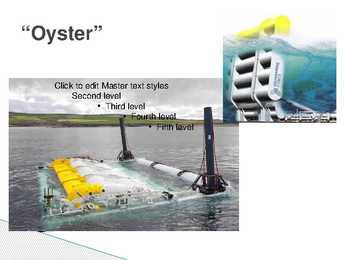
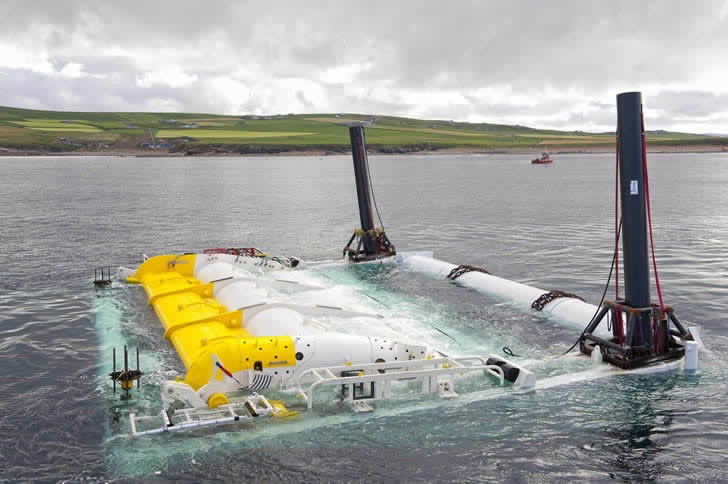
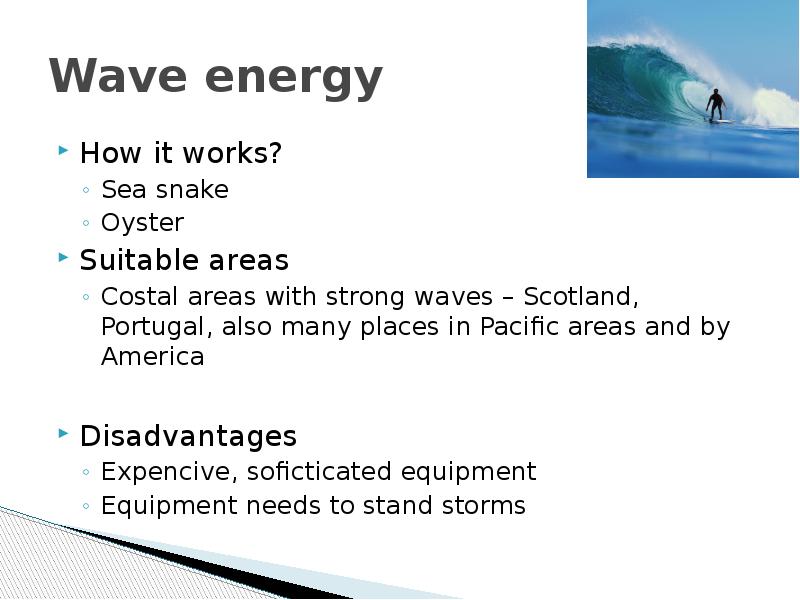
1 Wave energy Introduction to wave energy There are several possibilities to harvest different forms of energy from the sea. One of these options is the usage of waves for the generation of electricity. The devices needed to perform this task are called wave energy converters. Wave energy is indirect solar energy in twice. At first there is the wind, which is caused by variations in atmospheric pressure due to a differential solar heating of earth's surface by the sun. Different regions of pressure drives a force which rises a movement of atmospheric air masses that causes the earths wind system. If wind strikes over the surface of an open water, waves are induced. First they are very flat with only a low level of energy. When there is a long distance over
...... Economical....................................................................................................... Dangers of biogas............................................................................................... Future prospects................................................................................................ Conclusion......................................................................................................... Used sources..................................................................................................... Introduction To be honest I got the list of topics after most interesting ones for me were taken. At first I was not very satisfied with my topic but then I realized that this could be actually really interesting thing to make a report of. I chose this particular topic because I have always been interested in green energy. This topic gave me an excellent
wings of a projectile and the apparatus surrounded by a magnetic field.When current passes through the busbars and projectile, a force is created which propels the projectile along the busbars into air. 4 The first theoretically viable railgun was proposed in 1944 by Joachim Hänsler of Germany's Ordnance Office. The gun was never built but a 1947 report concluded that while it was feasible in theory, the energy consumption for each gun would be enough to illuminate half of Chicago. While minor successes happened afterward, the most notable one was late into the first decade of 2000s, when the U.S. Navy tested a railgun that accelerates a 3.2 kg (7 pound) projectile to hypersonic velocities of approximately 2.4 kilometres per second (8,600 km/h), about Mach 7. They gave the project the motto "Velocitas Eradico", Latin for "I, speed, eradicate"-- or simply, "Speed Kills". 1.2 Theory behind it
shared savings. Consumers can benefit as well through higher quality goods provided at a lower cost. ACTIVITIES/FUNCTIONS OF SCM Supply chain management is a cross-functional approach to managing the movement of raw materials into an organization and the movement of finished goods out of the organization toward the end-consumer. As corporations strive to focus on core competencies and become more flexible, they have reduced their ownership of raw materials sources and distribution channels. These functions are increasingly being outsourced to other corporations that can perform the activities better or more cost effectively. The effect has been to increase the number of companies involved in satisfying consumer demand, while reducing management control of daily logistics operations. Less control and more supply chain partners led to the creation of supply chain management concepts. The purpose of supply chain management
 annaabi.ee










Kõik kommentaarid