Leidsid 33 sarnast õppematerjali, mis on seotud failiga "Red Panda". Need materjalid aitavad sul teemat sügavamalt mõista.
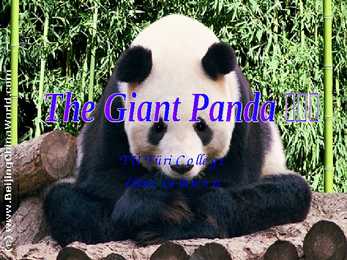
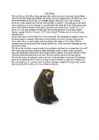
pandas, liveamboo, tail, earsodylack, tails, nepal, forests, trees, even, four, year, looking, them, animals, around, noseurma, southern, china, surrounding, areas, himalaya, mountains, fastalance, running, during, clean, cats, snow, leopard, sharp, claws, defend, stand, seconds, dens, places, june, julyabies, first, months, milk, motherclassified in the bear family, native to centralwestern and southwestern China. It is easily recognized by its large, distinctive black patches around the eyes, over the ears, and across its round body. · The Giant Panda lives in a few mountain ranges in central China. · It once lived in lowland areas, but farming, forest clearing, and other development now restrict the Giant Panda to the mountains. In the wild · The Giant Panda is a · Pandas communicate terrestrial animal and through vocalization primarily spends its life and scent marking such roaming and feeding in as clawing trees or the bamboo forests. spraying urine. It is able · Though generally alone, to climb and take each adult has a shelter in hollow trees defined territory and or rock crevices. females are not tolerant · Pandas do not of other females in their hibernate, which is range
for convenience in modern discussion (since it isn't allocated to anything else). Brown Locus (modern symbols) B/- = Black/Brown (Shaw's black/sepia) b/b = chocolate (Shaw's "standard chocolate dilution") bI/bl = cinnamon (probably not recognised by Shaw) Barrington Brown Locus (modern symbols) Ba/Ba - no Barrington Brown dilution ba/ba - Barrington Brown dilution/recessive brown THE BASIC SELF (SOLID) COLOURS OF CATS Copyright 2002 - 2013 Sarah Hartwell Genetically speaking, there are four basic self (or solid) colours of cats: black, chocolate, cinnamon and red. All other self colours are modifications of these. Although covered here as a self colour, red is a form of tabby and it is impossible to completely eliminate the tabby markings. Why are there not five basic colours? White is counted as an absence of colour rather than a colour. Different countries, registries and breeds have different names for some of the same basic colours
Snowshoe rabbit It is larger than other rabbits. It has large rear feet and the toes can spread out to act like snowshoes. Their feet also have fur on the bottom, which protects them from the cold and gives them traction in the snow. In the summer its fur is rusty, greyish brown but is turns pure white in the winter, except for its eyelids and the tips of their ears. They have three to four litters a year with one to eight in each litter. The snowshoe rabbit can run up to 27 mph and jump 10 feet in one hop. Since they are herbivores they are mainly prey. They are experts at escaping predators like the wolf, bobcat, or lynx. When a predator chases it, the rabbit will quickly change direction. They are also good swimmers and will jump in the water to make an escape. Polar bear Polar bear is the largest carnivore on land.
Natural Zones and Flora. There are five distinguishable natural zones in Australia. In the very east there are wet forests (1.) that occupy the space between the Great Dividing Range and the eastern coast. Westward from the Great Dividing Range the wet forests give place to beautiful grasslands with some trees . These grasslands are called the savannas (2.). Farther west the trees disappear and the bushlands (3.) begin. The real desert (4.) occupies the centre of the Western Plateau. In the very southwest there are thin forests of evergreen trees (5.). Most of Australian trees are kinds of eucalyptus trees (or gum trees to Australians) and acacia ( wattle to Australians). Eucalyptus trees are found everywhere in Australia. There are many kinds of them and they greatly differ in size. One kind, the
3 popular a Australia sport surfing in is Surfing is a popular sport in Australia. 4 large of is island Australia a Tasmania south the to Tasmania is a large island to the south of Australia. 5 southeast Zealand the Australia of new to lies New Zealand lies to the southeast of Australia. 6 of eucalyptuses to trees in tallest world group the belong the Eucalyptuses belong to the group of tallest trees in the world. 7 areas in snakes are lizards meet desert and numerous Snakes and Lizards are most numerous in desert areas. 8 first British the to Isles Australia from settlers the came
Uluru is sacred to the Aboriginal people of the area. It has many rock caves and ancient paintings. Water bodies: Australia is a very dry continent. There are very few rivers and no big lakes in Australia. Most of the lakes of Australia have water in them only after rain. The biggest lake of Australia is Lake Eyre and it is also the lowest point in Australia, at approximately 15 metres below the sea level. The lake is located in the deserts of central Australia. Even in dry season there is usually some water remaining in Lake Eyre. Australian temporary rivers are called creeks. The biggest rivers of Australia are in the eastern part of the country. The Murray River is the largest but the second longest river, only its tributary the Darling river is longer than it. The Murray rises in the Australian Alps and flows north-west. It makes up much of the border of the New South Wales and Victoria. The
The island of Tasmania is in the south-east of Australia. The capital of Tasmania is Hobart. The seas and oceans that wash the coasts of Australia are warm. The Coral Sea is the warmest that is why many corals live in the seas. The skeletons of these tiny organisms have formed a great belt of coral- called the Great Barrier Reef. Its is 2000 km long and 2-150 km wide. There are five distinguishable natural zones in Australia. In the very east there are wet forests that occupy the space between the Great Dividing Range and the eastern coast. The wet forests give place to beautiful grasslands with some trees called the savannas. Farther west the trees disappear and the bushlands begin. The real desert occupies the centre of the Western Plateau. In the very southwest there are thin forests of evergreen trees. Most of Australian trees are kinds of eucalyptus (or gum tree to Australians) and acacia (wattle of Australians)
Galapagos. Despite the trials of arrival, over 560 species of native plants, over 55 species of native land vertebrates and 1700 species of native insect are found on Galapagos. There are no large mammals, the key herbivores are reptiles, and the top predators are birds and snakes. Mammals on the Galapagos include two species of bat, two endemic rice rat species and its most famous mammals - the Galapagos sea lion and fur seal. There can be identified four broad categories of habitat (the coastal zone, the dry lowlands, a transition zone and the moist uplands), each with its distinctive species. Lava Cactus: One of the first plants to colonize a new lava field, the Lava Cactus is found on barren black lava flows Iguanas on the Galapagos are either land or marine iguanas. Both are about the same size, growing up to about 1.5m, have stocky heads, a ridge of spiny scales along the neck and backbones
Males tend to be 10-45% larger than females the former normally weigh between 30 and 70 kg , and the latter between 20 and 40 kg. The shoulder height is about 60-72cm .The Sun Bear possesses sickle-shaped claws that are relatively light in weight. It has large paws with naked soles, probably to assist in climbing. Its inward-turned feet make the bear's walk pigeon toed, but it is an excellent climber. It has small, round ears and a stout snout. The tail is 1.2-2.8 inches (3-7 cm) long. Despite its small size, the Sun Bear possesses a very long, slender tongue, ranging from 8 to 10 inches (20-25 cm) in length. The bear uses it to extract honey from beehives. Unlike other bears, the Sun Bear's fur is short and sleek. This adaptation is probably due to the lowland climates it inhabits. Dark black or brown-black fur covers its body, except on the chest, where there is a pale orange-yellow marking in the shape of a horseshoe. Similar
Book 1 BASIC ENGLISH BASIC ENGLISH GRAMMAR GRAMMAR BASIC ENGLISH GRAMMAR Book 1 Book 1 Younger students at beginning to intermediate levels will greatly benefit from this step-by-step approach to English grammar basics. This is the ideal supplement to your language arts program whether your students are native English speakers or beginning English language learners. Skill-specific lessons make it easy to locate and prescribe instant reinforcement or intervention. · Illustrated lessons a
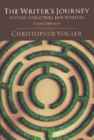
with you and whisper what to do in your ear as you write a screenplay. Insight for insight, step for step, Chris Vogler takes us through the process of connecting theme to story and m a k i n g a script come alive." — Lynda Obst, Producer, How to Lose a Guy in 10 Days, Sleepless in Seattle, One Fine Day, Contact; Author, Hello, He Lied "The Writers Journey is an insightful and even inspirational guide to the craft of story telling. An approach to structure that is fresh and contemporary, while respecting our roots in mythology." — Charles Russell, Writer, Director, Producer, Dreamscape, The Mask, Eraser "The Writer's Journey should be on anyone's bookshelf who cares about the art o f storytelling at the movies. N o t just some theoretical tome filled with development
economy and rebuild the country's infrastructure. The first few years helped make great changes in the social and cultural life. People had hope because the Bolsheviks introduced free universal health care, education and social security. Russian Orthodoxy was prohibited and the government started promoting atheism ( " T h e r i s e o f , " ) . In 1922, the Union of Soviet Socialist Republics (USSR) was created. At first the new nation had only four members: the Russian, Ukrainian, Belarusian and Transcaucasian Soviet republics. Over the years the number grew to 15 (Russian Soviet Federative Socialist Republic, Ukrainian Soviet Socialist Republic, Uzbek Soviet Socialist Republic, Kazakh Soviet Socialist Republic, Byelorussian Soviet Socialist Republic, Azerbaijan Soviet Socialist Republic, Georgian Soviet Socialist Republic, Tajik Soviet Socialist Republic, Moldavian Soviet Socialist
On 1 January 1901 all the six separate states of Australia united into one country. Many people left Britain for a new life in Australia. After 1945 people from other European countries, like Italy, Greece, Germany and Holland, began coming to Australia. Since 1945 more than three million people have moved there. Economy Australia is extremely rich in mineral resources like coal, iron, copper, nickel, lead, tin, zinc and others. The forests have much good timber. Along the seashores pearl shell and tortoise shell can be gathered. Australia is one of the biggest producers of diamonds, apals, sapphire, agates. Oil and natural gas have been found in western and southern Australia. Australia has a wide range of industries. Most of them are located in Australia's largest cities which are also ports. Australia produces chemicals, machinnery, motor vehicles, electronic equiptment, paper, textiles,
would not try to break away from Britain. After the American War of Independence immigrants from Britain began to arrive, among them there were also poor Irishmen and Scotsmen. Indeed, all the Canadians except the Indians and Eskimos, are really immigrants or their descendants. Canada is politically a young country. In 1967 the people celebrated its first century of independence. It was on the first of July, 1967, that four provinces of British North America joined together and formed the Dominion of Canada. Geographical facts. Canada occupies the northern portion of North America. It shares land borders with the United States to the south and with Alaska to the northwest. It shares territorial water boundaries with the United States, Greenland to the northeast, and Saint-Pierre and Miquelon (an overseas community of France) to the southeast
Yes, so it is, but, I do have a certain reason. Do you remember Sir Thom of the Minquettes'? That fine young man with fascinating blue eyes... Oh, my sweet Mary, you will never guess what happened yesterday! It was about seven o'clock in the evening when Lillian called me out for a walk you know I can't say `no' to my little sis. Anyway we went to the forest near the Swan Lake and, believe it or not, got lost! Awful! I was so scared... We walked and walked, not even knowing the direction we were heading to, until we reached a huge mansion. And the garden around it was so extraordinary... That is something you just must see! But neither the trees nor flowers could be as wonderful as the owner himself! Sir Thom treated us tea and sandwiches, not forgetting to show us way back to the village. He was so kind, don't you think? In the end, when we had nearly reached our home, he suddenly stopped and called us to a ball! Can you imagine?! A ball with Sir Thom
Rules That Change the Rules: Everything Popular Is Wrong GROUND ZERO--GETTING STARTED AND SWARAJ The Harajuku Moment: The Decision to Become a Complete Human Elusive Bodyfat: Where Are You Really? From Photos to Fear: Making Failure Impossible SUBTRACTING FAT BASICS The Slow-Carb Diet I: How to Lose 20 Pounds in 30 Days Without Exercise The Slow-Carb Diet II: The Finer Points and Common Questions Damage Control: Preventing Fat Gain When You Binge The Four Horsemen of Fat-Loss: PAGG ADVANCED Ice Age: Mastering Temperature to Manipulate Weight The Glucose Switch: Beautiful Number 100 The Last Mile: Losing the Final 510 Pounds ADDING MUSCLE Building the Perfect Posterior (or Losing 100+ Pounds) Six-Minute Abs: Two Exercises That Actually Work From Geek to Freak: How to Gain 34 Pounds in 28 Days Occam's Protocol I: A Minimalist Approach to Mass Occam's Protocol II: The Finer Points IMPROVING SEX
This brought along the great gold rush. Thousands of people went to the new land to find fortune. Forty years later the gold was found in the west. The miners of the east had a very hard time, the water was scarce and the roads were bad. But then the railway was built. Many of people who came to Australia to find gold stayed on to do other kinds of work. The found that Australia has other riches too, such as coal, copper, ironore, nickel, natural gas and more. The forests had good timber. Along seashorepearls and tortoise shells could be gathered. Some needed to manufacture such things as butter, cheese, shoes and clothing. Geographical position Australia is located in southern hemisphere. It's the only continent except for Antarctica that is all south of equator. Sometimes Australia is called the Island Continent. There is a great reason why. It really is an island. It is
Sport in an important part of Australian culture thanks to a climate that favours outdoor activities. At an international level, Australia has practicularly strong teams in cricket, field hockey, netball, rugby league, rugby union, and performs well in cycling and swimming. Australia has participated in every summer Olympic Games of the modern era, and every Commonwealth Games. Australia hosted the 1956 and 2000 Summer Olympics. The Australian Open is one of the four major tennis tournaments played in the world each year. Economy Australia is leading producer of coal, copper, gold, silver, iron ore, managanese, nicker, tin. Mineral resources are: lead, zinc, bauxite, natural gas, petroleum, uranium, diamonds. Agriculture: 10% of cropland is irrigated 5% of workers are farmers highly mechanized farms Leading farm products: wool, wheat, sugar cane, cattle, meat, carves, fairy products,
Alphabetic writing emerged in Egypt about 5,000 years ago. The Ancient Egyptians would often write on papyrus, a plant grown along the Nile River. At first the words were not separated from each other (scriptura continua) and there was no punctuation. Texts were written from right to left, left to right, and even so that alternate lines read in opposite directions. The technical term for this type of writing is 'boustrophedon,' which means literally 'ox-turning' for the way a farmer drives an ox to plough his fields. 1/15 Scroll Egyptian papyrus showing the god Osiris and the weighing of the heart.
→ Or has one object and an adjective phrase following. For example: I found it difficult. They elected Mr. Smith president. Tip: Try paraphrasing: Mr Smith is president. It was difficult. 6. Adjectives and adjective phrases Adjectives are words in English that describe the noun. They can take different positions in sentences. 6.1 Four properties of adjectives Attributive adjectives – An adjective is attributive when it comes before a noun. For example: An ugly painting, an old man Predicative adjectives – An adjective is predicative when it comes after a noun. For example: He looks unwell. I am afraid. Postpositive adjectives – Adjectives that come immediately after a noun. For example: Something useful, everyone present, those responsible
Massachusetts are called New England. They are all small states in the USA that lie in the north- east. The first colony of immigrants settled down in Virginia, in the eastern part of the USA. 3. Relief The USA is situated in the central part of the North American continent. Its western coast is washed by the Pacific Ocean and its eastern coast is washed by the Atlantic Ocean and in the south its coast is washed by the Gulf of Mexico. The coastline is even. There are no big islands belonging to the USA except the Hawaiian Islands which lie halfway the continents of America and Asia. The biggest peninsulas are the Florida Peninsula and Alaska. 4. Land Regions Mountains The Appalachian Mountains are a vast system of North American mountains, partly in Canada, but mostly in the United States, forming a zone, from 100 to 300 miles wide, running from the island of Newfoundland some 150 miles south-westward to central Alabama in the United States.
) Only 4 of the top-ranked one hundred words in the Brown Corpus are of foreign origin. o 64 state o 81 use v (Old French) o 93 people (Anglo-Norman, > Old French) o 100 just (> Old French) Core vocabulary and syllable structure: o 93 of the first one hundred words in the Brown Corpus are monosyllabic, and the remaining have two syllables (only, about, other, also, many even people) Core vocabulary – often short (monosyllabic) words of Germanic and Old Norse origin. 3. Native and foreign element. The native vocabulary has 3 strata Indo-European words - names of close relatives, names of natural objects, parts of the body, numerals. o Mother, father, night, foot, heart, bear (bore, born), see Germanic words o Friend, bridge, ship, life, heaven, glass, death, make, meet
In the most cases the art is an expression of ideas and way of life, ritual ceremonies, hunting, fighting. The pictures of people and animals are often strikingly lifelike and artistic. Many of these ancient relics have been destroyed by the ravages of nature and of man. Wind and water have worn away and continue to wear away, unprotected sites. And the paintings and carvings are increaslibly falling victim to vandalism: they have been painted over, spoilt with knives, even used for target practice. The American Rock Art Research Association protects rock-art sites. 2) THE FAVOURITE SPORT IN BRITAIN The most popular sport is probably football. Two kinds of football is played in Great Britain. One of them, which is called association football, is played all over Europe. The other kind: rugby football is also very popular in New Zealand, France, and some other European countries. English boys play it at school, and in public parks. When
an island but rather small for a continent. Australia is 1,800 miles from the mainland of Asia and almost half way round the world from Europe. More than 6,000 miles of ocean separate in from the America. Australia is the only continent except for Antarctica that lies all south of the equator. The natural zones of Australia are very various. There are deserts, semi deserts, grasslands, savannas, bushlands and rainforests. The wet forests occupy the narrow region in the east. Most of the animals, birds and insects live in that region, because there is enough food. The savannas which are grasslands with some trees are mostly in the west. Farther west are the bushlands. The real deserts occupy the centre of the Western Plateau. In the very south west there are thin forests of evergreens trees. Australia is the driest inhabited continent, the flattest, and has the oldest and least fertile soils.
background. Red means courage, blue justice and white innocence. There is a star for every state of the USA. The official language of the USA is English; Spanish is also widely spoken. The currency of the USA is the United States Dollar. The government of the USA is composed of three coordinate branches: the executive, legislative and the judicial. All the three branches are equal. The executive power is vested in the president, who holds office for a term of four year. At the moment George W. Bush is the president. The president is elected together with a vice-president and will take his place when the president dies or resigns in office. The president of the USA lives in the White House (at 1600 Pennsylvania Avenue) Washington, D.C. while he holds office. The Legislative branch Congress consists of the Senate and the House of Representatives. There are a hundred people in the Senate (two from each state) and 435
The north part of the country gets about 300 mm of rain a year. Much of the rain soaks into the ground and does not form any rivers or lakes. Monsoon winds bring moist air during summer. This is the time of high rainfall. It’s known as “the wet “season. High temperature also means hat a lot of moisture evaporates or is used by plants. In the southern two thirds of the country the climate is temperate to cool. Winter temperatures can be low but not freezing. There are four seasons. The seasons are the opposite of our seasons. When we have summer then in Australia is winter. In Australia droughts and floods are pretty usual. The draught is caused by El Nino, a weather pattern which happens when the Southern Pacific Ocean heats up. This causes the wind direction to reverse. An El Nino occurs every four or five years, causing drought and bushfires. Droughts are followed by floods. Australia has three time zones
The train will leave in a few minutes. In + how long it takes to do something I learned to drive in four weeks. FOR SINCE We use for + a period of time expressing duration We use since + a starting point, a specific time
Canada is a vast country, with a territory of 3.8 million square miles of land and fresh water it is the second biggest country in the world after Russia. Canada covers most of the northern part of North America. Canada has over 151,480 miles of coastline. Most of Canada's human population lives along its southern border. 3. Relief Canada's geography is very diverse. It has huge lakes, evergreen forests, prairies, meadows and beautiful mountains. There are thousands of miles of coastline with beaches, fjords and wild rivers flowing to the oceans. Canada is a country of wide open spaces and beautiful landscape where traveling visitors can unexpectedly bump into wild animals like bears or be struck by unusual sight like the scarecrows on the Cabot Trail. Canada is rich in natural
on it. A strict feudal system was imposed. 12. Magna Carta. In 1215 King John was forced to sign the document, drawn up by the noblemen of England. It limited his power and extended the rights of his subjects. The Magna Carta is a well-known charter of personal and political liberty. Later, especially in the 17th century, the document was seen as a statement of basic civil rights. Four copies have survived. 13. The Wars of the Roses. During the 15th century, the power of the greatest nobles, who had their own private armies, meant that constant challenges to the position of the monarch were possible. These power struggles came to a head in the Wars of the Roses, in which the nobles were divided into two groups, one supporting the house of Lancaster, whose symbol was a red rose, the other the House of York, whose symbol was a white rose.
4 On the territory of the USA the mountain ranges stretch in the north-south direction. The first from the east are the Rocky Mountains. West of the Rockies lie vast plateaus and tablelands: the volcanic Columbia Plateau, the Great Basin, the Colorado Plateau. Further west is a narrow belt of the Cascade Mountains, and the Sierra Nevada Range Still further west lies an area of valleys. The forests cover 30% of the US. In the southern part of Alaska grow coniferous trees, notably spruces and firs. Around the Great Lakes and New England are mixed forests of pines, maples, elms, birches, oaks and beeches. Along the Gulf of Mexico grow magnolia, red and black gum, cypress and mangrove. Geographical Regions The territory of the United can be divided into eight regions: 1) New England; 2) the Mid-Atlantic region; 3) the South; 4) the Midwest; 5) the Southwest; 6) the Rocky
them to her door. She doesn't have Speaking a scientist and a proud inventor of to queue for the checkout. · Elicit strategies for the task from the a robotic laser hand that moves via S2Yes, but I still think security is an students. Remind them to talk about corresponding signals from a glove important concern. each picture, comparing/contrasting worn by its operator. I've even got a them rather than just describing patent for it. I never imagined I could 5 Students' own answers them. If necessary, in a weaker produce such a clever invention. class, brainstorm ideas about both The biggest challenge was with the 2G Essay: for and against pictures before starting. Students design
portable deities. In consequence flags in their modern sense were still to be invented. Nevertheless, flags are related to the units they represent, as signs of identification, whether flown in ancient or modern times. Banners and Flags in the Middle Ages The Koran's injunction against representational art encouraged the development of flags in the Arab World. These relied heavily on abstract patterns and calligraphic inscriptions - often religious texts - in embroidery, applique or painting. Even before the rise of Islam, promulgated by Mohammed in Arabia, flags of black and white were used in the early part of the 7th century. From what we know today, Mohammed (570-632) used one black and one white flag connected with him. The Arab World developed the tradition of using specific colors and inscriptions for different dynasties and leaders. As dynasties followed one another, contrasting colors were used, in order to differentiate the ruling dynasty from its predecessors. (Smith, 1975)
form microhabitat / reduce exposure / provide shelter / reduce erosion; max 3 (c) any two from following: grazing; burning; mowing / application of fertilizer / application of selective herbicide; exposure to wind; grass able to continue to grow (linked to a statement above); 2 (d) increases; plants at later stages are large / plants in early stages are small; trees / shrubs. are woody, appear later in succession; 2 [9] 15. max 1 mark from following: 1 economic definition of sustainable; e.g. similar quantities of timber can be harvested year on year 2 grants for planting forests / management schemes; 3 planting to ensure sustainable harvest rate; max 3 marks for planting strategy:
 annaabi.ee