Leidsid 33 sarnast õppematerjali, mis on seotud failiga "Psychology – Gleitman". Need materjalid aitavad sul teemat sügavamalt mõista.
neuron, dream, other, action, impulse, call, effec, effect, different, nerve, spinal, rate, muscle, axon, fiber, between, brain, individual, there, fibers, sent, potential, another, than, sleepve, cord, even, often, fire, once, such, changes, term, these, message, face, part, experience, those, actions, know, behavior, them, body, present, none, leadactivation of the sympathetic nervous system. It is implicated in stress response. AFFERENT – Carrying information towards a particular group of neurones (compare efferent*). AGONIST – A neurotransmitter or a drug which binds to a receptor and triggers a cascade of intracellular signalling leading to changes in the membrane potential. AMINO ACID – A chemical made of carbon, oxygen, hydrogen and nitrogen, which is a building unit of all proteins* and other biologically important substances. AMINO ACID NEUROTRANSMITTERS – A group of fast acting neurotransmitters* which includes glutamate (excitatory) and GABA (gamma-amino butyric acid, inhibitory). AMNESIA – Loss of memory. AMYGDALA – A structure in the forebrain which is a component of the limbic* system. It is implicated in control of emotions. ANTAGONIST – A chemical which blocks receptors* and stops (inhibits) the effects of agonists*. ANTERIOR – Towards the front, e.g
You've probably heard that drugs are bad for you, but what does that mean and why are they bad? Medicines Are Legal Drugs If you've ever been sick and had to take medicine, you already know about one kind of drugs. Medicines are legal drugs, meaning doctors are allowed to prescribe them for patients, stores can sell them, and people are allowed to buy them. But it's not legal, or safe, for people to use these medicines any way they want. Cigarettes and Alcohol Cigarettes and alcohol are two other kinds of legal drugs. (In Estonia, adults 18 can buy cigarettes and alcohol.) But smoking and excessive drinking are not healthy for adults and off limits for kids. Nicotine is the drug in tobacco leaves. Whether someone smokes, chews, or sniffs tobacco, he or she is delivering nicotine to the brain. Each cigarette contains about 10 milligrams of nicotine. Nicotine is what keeps people smoking despite its harmful effects. Because the
and some vomiting. 0.30 BAC: Loss of consciousness. 0.40 BAC and up: Onset of coma,possible death due to respiratory arrest. WHAT IS CONSIDERED A DRINK: A drink that contains a half-ounce of alcohol or more. The amount you would problibly find in a 12 ounce can of beer, 4 ounce glass of table wine, 1 ounce shot of 100% destilled spirits such as whiskey or vodka. Generally this is the amount of alcohol a person can metabolize in about an hour. But of course it also depends on other stuff. The way to see the amount of alcohol in someone is the Blood Alcohol Content. The Blood Alcohol Content is measured in milligrams percent. For example, a BAC of 10 means that one-tenth of 1% of your total blood content is alcohol.This means that a BAC of 0.5 and below may give you a little buzz;a BAC of .50 or greater may cause death. Blood Alcohol Content depends on two things size,the bigger you are the more
speech or language, but the balance between his intellectual abilities and emotional control had been destroyed. He became highly agitated and irrelevant, often impatient and rude. Study to his frontal lobe provided evidence that the brain affects personality and social behaviors. Discuss ethical considerations related to research studies at the biological level of analysis. In case studies for example, the researcher often obtains deeply personal information, which is not usually shared with other people. Any researcher conducting a case study must be very protective of the identities of the participants. The researcher should also have the professional competence to deal with the focus of the case study. Animal rights!! Explain one study related to localization of function of the brain. Gazzaniga & Sperry held experiments with monkeys, whose brains were `'split `' by cutting off the connection, the corpus colossum, between the two hemispheres of the brain
.....................................................120 Is That So?..................................................................................................121 The Ego and the Present Moment .............................................................122 The Paradox of Time...................................................................................124 Eliminating Time.........................................................................................125 The Dreamer and the Dream.......................................................................127 Going Beyond Limitation...........................................................................128 The Joy of Being.........................................................................................130 Allowing the Diminishment of the Ego......................................................130 As Without, So Within................................................................................132
for a particular purpose. No warranty may be created or extended by sales representatives or written sales materials. The advice and strategies contained herein may not be suitable for your situation. The publisher is not engaged in rendering professional sevices, and you should consult with a professional where appropriate. Neither the publisher nor author shall be liable for any loss of profit or any other commercial damages, including but not limited to special, incidental, consequential, or other damages. For general information on our other products and services, please contact our Customer Care Department within the United States at (800) 762-2974, outside the United States at (317) 572-3993 or fax (317) 572-4002. Wiley also publishes its books in a variety of electronic formats. Some content that
r w gametes C , C ; F1 genotypes and phenotypes 1 mark: r w F1 genotypes (all) C C F1 phenotypes (all) pink; F2 genotypes and phenotypes 1 mark: r w r w gametes C , C C , C ; r r r w r w w w F2 genotypes C C C C C C C C F2 phenotypes red pink (pink) white; F2 ratio 1:2:1; accept other symbols if key given. accept r and w as symbols without key. 6 (c) (i) 65; 130; 65; 3 (ii) 0.138 + 0.007 + 0.061; (or other suitable working) 0.206 – 0.208; 2 marks for correct value if no working shown ecf for both marks but calculated value must be to three decimal
We can store and retrieve data much more efficiently. We can communicate in a flash. But still, at the basic level, we must be well grounded -- we must possess common sense, civil manners, frank discussion skills, reasoning abilities, and moral fiber. It is possible to be a technological genius, say a computer nerd, without social skills or civil conscience. I'd rather have as a neighbor an illiterate janitor with an easy-going, friendly disposition. Hence, I value what we might call character more than specialist knowledge from an antisocial person. God knows we want everyone to be a well-mannered genius. But humans are not cut out to be happy like pigs in a pen. We instead have insatiable brains, with mental appetites. So our goal is to balance the brainwork with hearts and smiles. "Facts served with sauce." Where does common sense fit on? Is it teachable? To a degree, what we mean by common sense is simply learned experience. Something more exists, though
" --Laura Roden, chairman of the Silicon Valley Association of Startup Entrepreneurs and a lecturer in Corporate Finance at San Jose State University "With this kind of time management and focus on the important things in life, people should be able to get 15 times as much done in a normal workweek." --Tim Draper, founder of Draper Fisher Jurvetson, financiers to innovators including Hotmail, Skype, and Overture.com "Tim has done what most people only dream of doing. I can't believe he is going to let his secrets out of the bag. This book is a must read!" --Stephen Key, top inventor and team designer of Teddy Ruxpin and Lazer Tag and a consultant to the television show American Inventor ALSO BY TIMOTHY FERRISS The 4-Hour Workweek Copyright © 2010 by Tim Ferriss All rights reserved. Published in the United States by Crown Archetype, an imprint of the Crown Publishing Group, a division of Random House, Inc., New York. www.crownpublishing.com
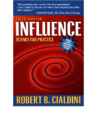
do it, enabled us to make significant changes. His work has enabled us to gain significant competitive differentiation and advantage" -LAURENCE HOF, Vice President, Relationship Consulting, Advanta Corporation "This will help executives make better decisions and use their influence wisely ... Robert Cialdini has had a greater impact on my thinking on this topic than any other scientist." -CHARLES T. MUNGER, Vice Chairman, Berkshire Hathaway, Inc. If you're wondering why of Latin America, the Far East, and Central Europe. you should buy this new edition of Influence: o More neuroscience evidence of how the influence process works is inte-
with concentration, or just feeling awful. These symptoms are relieved by the next cigarette. Most smokers need to smoke regularly to feel normal and to prevent nicotine withdrawal symptoms. So once you start smoking it is very hard to quit. But why is smoking so harmful? Cigarettes have tar in them which contains many chemicals. These deposit in the lungs and can get into the blood vessels and are carried to other parts of the body. Cigarette smoke contains over 4,000 chemicals, including over 50 known carcinogens (causes of cancer) and other poisons. In addition to different kinds of cancer (mouth, nose, throat, larynx, gullet, pancreas, bladder, cervix, blood, and kidney) it also may cause heart diseases, rheumatoid arthritis, fasten your ageing and have impact on your fertility. There are also other conditions where smoking often causes worse symptoms. For example: asthma, flu, chest infections,
organisation and interpretation of incoming sensory information. The Gestalt theorists first identified many of the principles that dominate in human visual perception. As Dowell (1995) has observed: "To perceive seems effortless. To understand perception is nevertheless a great challenge" (cited in Gross, 2005, pp 244). This essay will look at Gregory's theory and Gibson's theory of visual perception whether one or the other offers a better explanation of human visual perception. According to top-down perceptual processing theorists, perception is the end result of an indirect process that involves making inferences about the world based on knowledge and expectations. An example of this process is Gregory's (1980) constructivist theory. He suggests that to avoid sensory overload, we need to select from the information surrounding us, therefore, we often supplement perception with unconscious inferences.
Ameerika Kirjandus 30.01.13 Naturalism · France, Emile Zola · Put down his theory in 1879: Le Roman Experimental, attempt to explain the development of human society throuch biological laws · Outlook is deterministic, pessimistic, fatalistic (fate or biology) · Man as an animal-clever than other beasts, still explainable within the framework · Man is not a free agent, is govern by something · Unable to determine his own faith · Hereditary · Naturalists tried to apply in fiction the processes of natural sciences · Writers task is to record facts, systems of behaviour, living conditions, never revealing any natural unbiased (completely natural) · Point of view: amoral-outside the category of morality, neither good or bad
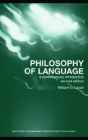
This edition published in the Taylor & Francis e-Library, 2008. "To purchase your own copy of this or any of Taylor & Francis or Routledge's collection of thousands of eBooks please go to www.eBookstore.tandf.co.uk." First edition © 2000 Taylor & Francis Group Second edition © 2008 Taylor & Francis Group All rights reserved. No part of this book may be reprinted or repro- duced or utilised in any form or by any electronic, mechanical, or other means, now known or hereafter invented, including photocopying and recording, or in any information storage or retrieval system, without permission in writing from the publishers. Trademark Notice: Product or corporate names may be trade- marks or registered trademarks, and are used only for identification and explanation without intent to infringe. Library of Congress Cataloging in Publication Data Lycan, William G. Philosophy of language: a contemporary introduction/William G. Lycan.
- why is this salt? because made of sodium and chloride 3. Efficient cause: - what initiated the change or movement - why did the baseball move? because someone hit it 4. Final cause: - what end or goal does it have? - why does he walk? because he wants to be healthy - also nature operates in terms of final causes - things don't happen spontaneously, every action that nature takes is for the sake of something, everything has a purpose - where a series has a completion, all the previous steps are done for the sake of that - art partly competes with and imitates nature - animals and plants do things for the sake of an end - plants grow leaves to provide shade for fruit - has roots downwards for nourishment - spiders have a web to catch flies Bacon
......................................................................................................4 USES OF ENERGY............................................................................................................. 4 2.1 Uses of energy in homes...............................................................................................5 2.2 Types of energy used in homes.................................................................................... 6 2.3 Energy use in different types of homes........................................................................ 6 2.4 Commercial Energy Use...............................................................................................9 2.5 Industrial and Manufacturing Energy Use..................................................................11 2.6 Transportation Energy Use.........................................................................................12 RENEWABLE ENERGY...............................
state to launch an unnecessary and expensive war, in order to sell more arms and consolidate their power. In this example, the free riders avoid all of the personal risks of war while enjoying the benefit of tax dollars spent under the false popular perception of the urgent need for national defense. Government is indeed the primary mechanism by which societies address free rider problems. In addition to fiscal measures noted above, regulation is another form of collective action taken by governments to resolve free riders problems such as environmental degradation or excessive resource use. The free rider problem is also one justification for the existence of governments which provide public goods. Some ideologies, such as libertarian capitalism, are often rebuked, because in such a system all property in a society would be privately owned, away from any state involvement or regulation. Libertarians counter that potential free riders within
species as can be imagined and any serious consideration of their cognitive, social and general mental faculties deemed futile. I can give example about sheep memory. Every summer, just about time when apples are cooked, my mothers sheep flock goes to find appletrees. They could go there every season and after winter in barn it would be obvious that they wouldnt even remeber but they do. What senses do you think sheep has? Sensory discrimination abilities and their uses Sheep like other species have adapted thier senses to achieve remarkable discrimination skills. These allow them to identify importnant individuals and objects in their environment and communication of social signals. Popular belief tends to emphasise the absolute importance of smell for sheep in line with many other mammals, however as we shall see this another misconception with all three major senses playing essential roles. Vision Sheep depend heavily on their vision
225 Wildwood Avenue Woburn, MA 01801-2041 Tel: 781-904-2500 Fax: 781-904-2620 For information on all Newnes publications available, contact our World Wide Web home page at: http://www.newnespress.com 10 9 8 7 6 5 4 3 2 1 Printed in the United States of America Contents Preface ix Introduction xi 1 System Design 1 Dynamic Range 1 Calibration 2 Bandwidth 5 Processor Throughput 6 Avoiding Excess Speed 7 Other System Considerations 8 Sample Rate and Aliasing 11 2 Digital-to-Analog Converters 13 Analog-to-Digital Converters 15 Types of ADCs 17 Sample and Hold 26 Real Parts 29 Microprocessor Interfacing 30 Serial Interfaces 36 Multichannel ADCs 41 Internal Microcontroller ADCs 41 Codecs 42 Interrupt Rate 43 Dual-Function Pins on Microcontrollers 43
between. ADVANTAGES o Large film size (4x5, 5,7, 8x10) o Sharp detail o What you see in the viewfinder is exactly what you will get on the negative. o You can change the position of the film and lens relative to each other to correct distortion. DISADVANTAGES o Bulky and heavy o Must use a tripod. o Image on the viewing screen is not bright so you have put a focusing cloth over your head and the back of the camera. o The image appears reversed and upside down on the viewing screen.
Edulugude võistlus Success-story competition „Small Town Inhabitants – Educated or Uneducated People“ To begin with, my childhood was quite ordinary, I spent a lot of time in my country home, spending most of my time playing. I have been raised by my mother. As I grew older, I got more and more interested in different things. At one point it occured to me that when I want to be successful in some field, then I really have to educate myself in that filed.When my friends have characterised me then they have mainly mentioned that I am an active person, who has been successful in different fields. I still do not think I am succesful because it is a really complicated definition, but I know that I have succeeded in doing several things. For me the key is my so called success has been
giant of Africa. In the last 32 years, I have watched with horror and outright helplessness as the downward slide of the African race continues to escalate. But rather than address the problems, we resort to blaming the Caucasians, Asians and others for our misfortune. We are not men enough to accept responsibility for our actions. Africans blame either the British, French or little Portuguese/Spanish for their problems. Africans in America blame the Caucasians for all their problems, or any other ethic group they have allowed to take over their neighbours, a frequently recurring phenomena. Africans blame the International Monetary Fund, the World Bank, the Group of 7, the former colonial masters for the abject poverty in our respective countries. We blame the wars ravaging several African sectors on the interference of our former colonial masters on “our internal affairs.” Ha! – some kind of independence!
"I am become death, the destroyer of worlds." So said the physicist Robert Oppenheimer, who helped to invent the atomic bomb. The two bombs dropped on Hiroshima and Nagasaki in 1945 killed around 200,000 Japanese people. No other species has ever wielded such power, and no species could. The technology behind the atomic bomb only exists because of a cooperative hive mind: hundreds of scientists and engineers working together. The same unique intelligence and cooperation also underlies more positive advances, such as modern medicine. But is that all that defines us? In recent years, many traits once believed to be uniquely human, from morality to culture, have been found in the animal
The making of a new nation. The Enlightenment in America. The emergence of the notion of the American Dream. The great Enlighteners: Crèvecoeur, Jefferson, Paine, Franklin. The American Enlightenment is the intellectual thriving period in the United States in the midtolate 18th century (17151789), especially as it relates to American Revolution on the one hand and the European Enlightenment on the other. Influenced by the scientific revolution of the 17th century and the humanist period during the Renaissance, the Enlightenment took scientific reasoning and applied it to human nature, society, and religion. American Enlightenment a gradual but powerful awakening that established the ideals of democracy, liberty, and religious tolerance in the people of America.
AMBER AND RUSSET - LATE COLOUR CHANGE GENES Copyright 2014, Sarah Hartwell The ancestors of the domestic cat were nondescript black/brown striped tabbies. Over the centuries, mutation produced a wide array of colours based on 2 different pigments. Eumelanin gives the blacks, browns and blues while phaeomelanin gives the reds, fawns and creams. A few other genes give further variations on those colours such silvers, colourpoints and solids/selfs. Mutations continue to occur and unexpected colours also turn up due to inbreeding where recessive genes, hidden for generations, start showing up. AMBER AND LIGHT AMBER During the 1990s, some purebred Norwegian Forest Cats in Sweden produced chocolate/lilac and cinnamon/fawn offspring. However, those colours are not found in the purebred Norwegian Forest Cat gene pool
of scale or pace or pattern that it introduces into human affairs. The railway did not introduce movement or transportation or wheel or road into human society, but it accelerated and enlarged the scale of previous human functions, creating totally new kinds of cities and new kinds of work and leisure. This happened whether the railway functioned in a tropical or a northern environment, and is quite independent of the freight or content of the railway medium. The airplane, on the other hand, by accelerating the rate of transportation, tends to dissolve the railway form of city, politics, and association, quite independently of what the airplane is used for. Let us return to the electric light. Whether the light is being used for brain surgery or night baseball is a matter of indifference. It could be argued that these activities are in some way the "content" of the electric light, since they could not exist without the electric light. This fact
5 (possible answers) she was my age and apart from the 1 1 go ahead 5 come to eighties hairstyle we're the spitting 1 Well, you will go to bed late every night. 2 fall through 6 bring about image of each other! Some people 2 Well, you will refuse to wear a 3 tip off 7 go down with say that they can see a strong family coat. 4 mistake for 8 come up with resemblance between my dad and me.
In revealing new material, he explores key principles like polarity and catharsis, plus: • A revised chapter which looks back at the Star Wars phenomenon and analyzes the six feature films as an epic on the theme of father-son relationships • New illustrations and diagrams that give additional depth to the mythic principles • A final chapter, "Trust the Path," an inspiring call to adventure for those who want to discover themselves through writing "This book is like having the smartest person in the story meeting come home with you and whisper what to do in your ear as you write a screenplay. Insightfor insight, step for step, Chris Vogler takes us through the process of connecting theme to story and making a script come alive. "
histories give it but passing mention. Churchill's great history of World War II has been cleaned of every single reference to Allied communications intelligence except one (and that based on the American Pearl Harbor investigation), although Britain thought it vital enough to assign 30,000 people to the work. The intelligence history of World War II has never been written. All this gives a distorted view of why things happened. Furthermore, cryptology itself can benefit, like other spheres of human endeavor, from knowing its major trends, its great men, its errors made and lessons learned. I have tried in this book to write a serious history of cryptology. It is primarily a report to the public on the important role that cryptology has played, but it may also orient cryptology with regard to its past and alert historians to the sub rosa influence of cryptanalysis. The book seeks to cover the entire history of cryptology
odds are that you'll turn heads back in your direction again. A good speaker communicates with the audience with his or her eyes. The first person to discover he didn't like the sound of his own voice was probably Thomas Edison. When he invented the first phonograph, he heard his own historic words, "Mary had a little lamb." Like most of us, Edison was probably disappointed because our voices sound different on a recording and we usually don't like the result. The reason is that our voices sound better inside our heads than they do when played back on recording machines. The two important lessons here are (1) Your voice probably doesn't sound as bad as you think it does, and (2) if you are troubled by the sound of your voice, there are simple ways to improve its quality. Nervousness is usually the reason why are voices are so affected in public speaking. There are
Only persons whose names are on the medial register can parties as doctors in the NHS. The minimum qualification for registration requires, for a doctor 5 to 7 years' training in the medical school and hospital, for a dentist 4 years at a dental school. 4. Diseases Today many diseases are well known and can be cured. Such diseases are flu, pneumonia, bronchitis, quinsy, measles and many others. But besides falling ill with one of those diseases, you may hurt yourself in many other ways. You may sprain your ankle, break your leg, cut your finger of graze your knee. You may also have a nosebleed or a heart attack Quite a number of diseases are infectious. We can get these diseases from people already ill with the disease or infected food or animals. Most common infectious diseases are such children's diseases as measles, mumps, scarlet fever and chicken pox. Some diseases have become more rare because children and grown-ups can be
Source: Feedbooks 1 About Shakespeare: William Shakespeare (baptised 26 April 1564 – died 23 April 1616) was an English poet and playwright, widely regarded as the greatest writer in the English language and the world's pre-eminent dramatist. He is often called England's national poet and the "Bard of Avon" (or simply "The Bard"). His surviv- ing works consist of 38 plays, 154 sonnets, two long narrative poems, and several other poems. His plays have been trans- lated into every major living language, and are performed more often than those of any other playwright. Shakespeare was born and raised in Stratford-upon-Avon. At the age of 18 he married Anne Hathaway, who bore him three children: Susanna, and twins Hamnet and Judith. Between 1585 and 1592 he began a successful career in London as an actor, writer, and part owner of the playing company the Lord Chamberlain's Men, later known as the King's Men. He ap-
Where do I want to go? What would I most like to be doing right now? Where would I like to be? Who would I most like to be with? What are my dreams for the future? What do I intend to do to achieve these dreams? What will I be doing ten years from now? How does this university fit in my plans for the future? You can also brainstorm using the following questions: What might help the evaluating committee in understanding me better? What distinguishes me from other applicants? What are my career aims? What skills do I possess that would improve your chances for success in this field? What has stimulated my interest in this field of study? Why should an admissions committee be interested in me? Why am I interested in this field? 1 Some other topics are suggested below to stimulate your thinking: The most memorable experiences
 annaabi.ee