Leidsid 33 sarnast õppematerjali, mis on seotud failiga "Presentatsioon Bullying". Need materjalid aitavad sul teemat sügavamalt mõista.
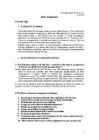
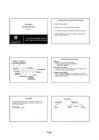
bully, bullying, other, stand, child, pick, types, physical, mean, children, others, come, punching, speech, activities, choose, another, allowed, exclude, mary, wants, friend, cyber, political, military, hazing, definition, harm, through, subtle, such, scary, courage, even, control, tend, those, little, gets, often, became, kids, elementary, useful1 Types of bullying 1. Physical bullying: hitting, kicking, pushing, choking, punching 2. Verbal bullying: threatening, taunting, teasing, starting rumors, hate speech. 3. Exclusion from activities: This does not mean that a child should not have the right to choose to play, or not to play, with another child; it does mean that children should not be allowed to systematically exclude others: "No one play with Mary;" "No one wants to play with him;" "Don't be her friend." 2 Types of bullying 4. School bullying 5. Workplace bullying 6. Cyber-bullying 7. Political bullying 8. Military bullying 9. Hazing 3 4 DEFINITION • "Bullying is the act of intentionally causing
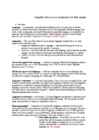
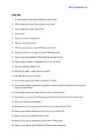
School Bullying Worksheet Respond to the questions below in detail. 1. What are the 4 levels of negative consequences of bullying specified by the text? General school climate, right of students to learn in a safe environment without fear, lifelong consequences. 2. What is the foremost source of formal bullying research? Scandinavian countries, Great Britain, and Japan. 3. Direct bullying behaviours include (5) teasing, taunting, threatening, hitting, stealing. 4. Indirect bullying is such as spreading rumours and enforcing social isolation. 5. Boys and girls differ in their bullying behaviours in that Boys typically engage in direct bullying methods. but girls are more apt to utilize more subtle indirect strategies. 6. In general terms, bullying can be defined as direct and indirect. 7
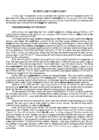
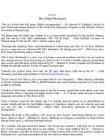
I love you all so much!" Most Canadians remember the tragic 1997 murder of Reena Virk, a high-school student whose battered body was recovered from the Gorge Waterway, near Victoria. Her head and internal organs had been severely damaged by a beating that rendered her senseless before she was deliberately drowned. One girl and a boy were convicted of second-degree murder, and six girls were found guilty of aggravated assault. Her death is an example of bullying taken to its ultimate expression. But even in its mildest everyday forms, bullying is about one thing: the strong taking unfair advantage of the weak. Bullying has been defined as "the tendency for some children to frequently oppress, harass or intimidate other children, verbally, physically or both, in and out of school." It is not the minor behaviour problems that are a part of growing up, such as horseplay,
BULLYING Bullying is a very big problem in almost every school. When bullying goes out of the limit, it might end with a terrible gunfire(Colombian massacre). I believe everyone have been bullied by someone and have been a bully for a once. Bullying is an issue that is very important in nowadays and needs a special attention. Some of the ways to bully other people are by: calling you names, making things up to get you into trouble, hitting, pinching, biting and pushing, taking things away from you, damaging your belongings, stealing your money, taking your friends away from you. Now, to talk about why people bully someone there are many aspects. Some bullies do it to get attention or to make other people afraid of them. Others might be jealous of the person they are bullying
My languages I love different languages. I mean, I really, really love different languages. I also believe and have been told that I pick them up rather easily. That might be true, although I did not pick any Greek up in Greece but that might have been because they spoke so damn fast that I could not tell if it was a word or an entire sentence. The first foreign language I learned was Russian. Considering I was ten when Estonia became a Republic, it makes sense. We began studying Russian in first grade, though it was simplified – "koška" instead of "kot", "medvešonok" instead of "medved", "saichik" etc. Did not make much sense and we mostly played some games in Russian (Tare-tareke etc)
[2] Early life and career Marley was born in the small village of Nine Mile in Saint Ann Parish, Jamaica. His father, Norval Sinclair Marley, (born in 1895), was a Jamaican of English descent, with parents from Sussex. Norval was a Marine officer and captain, as well as a plantation overseer, when he married Cedella Booker, a black Jamaican then eighteen years old. Norval provided financial support for his wife and child, but seldom saw them, as he was often away on trips. Marley was ten years old when his father died of a heart attack in 1955 at age 60. Marley suffered racial prejudice as a youth, because of his mixed racial origins,[3] and faced questions about his own racial identity throughout his life. He once reflected: I don't have prejudice against myself. My father was a white and my mother was black. Them call me half-caste or whatever. Me don't dip on nobody's side. Me don't dip on the black man's
" 10. Everyone knows what shit tastes like. 11. Exclusive occupancy of a private room is a basic human right. 12. Fair compensation for genius is wealth. 13. God's not perfect, so it's a pretty good bet that you're not, either. 14. Good institutions help to overcome human moral inertia. 15. I am not one of your little friends. 16. If a dimension is anywhere it's everywhere. 17. If God's not crazy, why are you? 18. If one makes a promise one shouldn't have made it cannot stand against the obligation to do the right thing. 19. If you odn't give a certain amount of attention to filtering distractions, every distraction is a catastrophe. 20. If you don't know what your duty is, your duty is to find out. 21. If you're not an animal, then you must be a vegetable. 22. If you want to get along you have to get along with those who don't want to get along. 23. If you whine whenever anybody messes with your crutches you can't claim not to be crippled. 24
Maturita Solutions Advanced Workbook Key stand bananas and coffee! It's a bit 3 1 to 8 of Unit 1 uncanny really. Is it something she's 2 about 9 century passed on to me genetically, or is it 3 like 10 assumed / 1A Memories page 3 learned behaviour? Who knows? 4 of thought /
Education Education is so multifaceted that it is difficult for me to know where to begin discussing it, or how to prioritize the many factors. Relaying my own experience is easy: I had a standard classroom approach, supplemented by inordinate reading. In only the briefest and least memorable instances did I receive any individual tutoring. Education is commonly thought of as the job of schools. Adults cry "educate our children!" Everyone has opinions about the best way to do the job. It is of urgent importance, and all the numerous factors are much studied, debated, and new (or old) ideas continually tested or retested. Some people say "it's as simple as . . . " and then name their pet peeve or passion. My view is not of an education specialist, but of one who loves sharing what I learn, and owes much to educators. Since I don't have an educational theory neatly worked-out, nor an outline
Tallinn´s University Pedagogical College Department of Youth Work and Continuing Education Andra Pant NT-32 GETTING PHYSICAL Tallinn 2012 "Delivery is more important than content." Arch Lustberg, speech trainer According to wellknown social anthropologist Edward T. Hall, 60% of our communication is nonverbal. That means whenever we stand before an audience, our stance, our posture, our facial expressions, our hand gestures, our whole body
Behm did not want to enlist, but he caved under the pressure of the schoolmaster, Kantorek. His ugly, painful death shatters his classmates' trust in the authorities who convinced them to take part in the war. Detering - One of Paul's close friends in the Second Company. Detering is a young man with a wife and a farm at home; he is constantly homesick for his farm and family. Gérard Duval - A French soldier whom Paul kills in No Man's Land. Duval is a printer with a wife and child at home. He is the first person that Paul kills in hand-to-hand combat, one of Paul's most traumatic experiences in the war. Leer - One of Paul's classmates and close friends during the war. Leer serves with Paul in the Second Company. He was the first in Paul's class to lose his virginity. Haie Westhus - One of Paul's friends in the Second Company. A gigantic, burly man, Westhus was a peat-digger before the war. He plans to serve a full term in the army after the
.................................................................59 Happiness as a Role Vs. True Happiness..................................................59 Parenthood: Role or Function? ................................................................60 Conscious Suffering.................................................................................63 Conscious Parenting.................................................................................64 Recognizing Your Child...........................................................................65 Giving Up Role-playing............................................................................66 The Pathological Ego................................................................................68 The Background Unhappiness...................................................................70 The Secret of Happiness............................................................................71
do it, enabled us to make significant changes. His work has enabled us to gain significant competitive differentiation and advantage" -LAURENCE HOF, Vice President, Relationship Consulting, Advanta Corporation "This will help executives make better decisions and use their influence wisely ... Robert Cialdini has had a greater impact on my thinking on this topic than any other scientist." -CHARLES T. MUNGER, Vice Chairman, Berkshire Hathaway, Inc. If you're wondering why of Latin America, the Far East, and Central Europe. you should buy this new edition of Influence: o More neuroscience evidence of how the influence process works is inte-
0.07-0.09 BAC: Slight impairment of balance, speech, vision, reaction time, and hearing. Judgement and self-control are reduced, and caution, reason and memory are impaired. 0.10-1.125 BAC: Signficant impairment of moter coordination and loss of good judgement. Speech may be slurred; balance, vision,reaction time and hearing will be impaired. (It is illegal to operate a motor vehicle at this level of intoxication.) 0.13-0.15 BAC: Gross motor impairment and lack of physical control. BLurred vision and major loss of balance. Euphoria is reduced and dysphoria beginning to appear. 0.16-0.20 BAC: Dysphoria (anxiety,restlessness) predominates, nausea may appear. The drinker has the appearance of a "sloppy drunk." 0.25 BAC: Needs assistance in walking; total mental confusion. Dysphoia with nausea and some vomiting. 0.30 BAC: Loss of consciousness. 0.40 BAC and up: Onset of coma,possible death due to respiratory arrest. WHAT IS CONSIDERED A DRINK:
adjective + preposition omadussõna + eessõna proud of, good at, married to adverb particle Some verbs are followed by adverb particles. Examples are: put on, take off, give away, bring up, call in. Sometimes the particle is detached from the verb and put after the object. •He took his boots off. •They called the doctor in. apposition a grammatical construction in which two usually adjacent nouns having the same referent stand in the same syntactical relation to the rest of a sentence (as the poet and Burns in “a biography of the poet Burns”) back-reference In grammatical analysis, the term reference is often used to state a relationship of identity which exists between grammatical units, e.g. a pronoun 'refers' to a noun or noun phrase. When the reference is to an earlier part of the discourse, it may be called a 'back-reference' (or anaphora); collective noun
achievements in exams. There is nothing like potentials, creativeness, possibilities or even 2nd chances. Families put high expectations on academic achievements and they always compare their kids with other's kids. A minority in each community will be really dedicated to help their kids explore their horizons. It is true that we should re-think the fundamental principles in which we educate our children. Our task is to educate the children so that they can face this future. II 10 effective classroom management techniques. 1. Set and agree the house rules and class regulations with the class. 2. Choose class activities that encourage any good relationships. 3. Be dedicated and care for your students. 4. Accept and even celebrate individual differences. 5. Realise that people learn in different ways 6. Create more student-centred activities. 7. Provide a diverse lesson with a variety of activities 8
Allophone is a sound form of a phone. For example: An Estonian word palk has two possible pronunciation ways. L can be palatalised or not. Phoneme is a smallest unit in language which distinguishes meaning. With other phonemes it can form morphemes and words. For example: The difference between words in English call and fall is a result of the exchange of the phoneme c and f. Morphology - The study of word formations and the
degree of B.A. International Relations` Table of Contents Abstract 3 Introduction 4 Chapter 1: Citizenship, Children`s Rights and Participation: from the UN to the UK 6 Chapter 2: Citizenship Education in Wales………………………………………………14 Active Citizenship in Cadle Primary School: A Case Study 20 Conclusion 29 Bibliography 32 Appendices Appendix 1: The United Convention of the Rights of the Child Appendix 2: Interview with Jamie Richards, the Head Teacher of Cadle Primary School 2 Abstract: Children inherently have had a rather tenuous relationship with citizenship. Similarly to how women were once viewed, children have not been considered as subjects of rights due to their perceived incompetence and irrationality. Currently, children are not considered as being
A woman who would please her husband's eyes Alone, wants no such wealth of fineries. CLEANTE But, madam, after all . . . MADAME PERNELLE Sir, as for you, The lady's brother, I esteem you highly, Love and respect you. But, sir, all the same, If I were in my son's, her husband's, place, I'd urgently entreat you not to come Within our doors. You preach a way of living That decent people cannot tolerate. I'm rather frank with you; but that's my way-- I don't mince matters, when I mean a thing. DAMIS Mr. Tartuffe, your friend, is mighty lucky . . . MADAME PERNELLE He is a holy man, and must be heeded; I can't endure, with any show of patience, To hear a scatterbrains like you attack him. DAMIS What! Shall I let a bigot criticaster Come and usurp a tyrant's power here? And shall we never dare amuse ourselves Till this fine gentleman deigns to consent? DORINE If we must hark to him, and heed his maxims, There's not a thing we do but what's a crime;
rocket throwers. They used very large bamboo rockets which had a range of hundreds of metres. The British were determined to learn from their mistakes and a British officer, William Congrieve, began work on developing even bigger and better rockets. Within a few years Congrieve had developed 14 kg iron rockets that could be fired over 3200 m. These rockets were successfully used against Napoleon in the battle of Waterloo and during the US War of Independence. By the 1889s other applications for rockets were being developed. They were used for signalling, for whaling, and even for rescuing people from sinking ships. If a boat got into trouble near to the shore, a rocket with a thin rope tied to it would be fired out over the boat; survivors in lifeboats could use the ropes to pull themselves ashore. These traditional rockets are still used as distress signals on boats and planes.
At this point, it becomes necessary to define mass media. Mass media may be defined as any form of communication which is meted out to the people at large, through the various forms of communication. What modes of communication are we talking about? Well there can be no static definition for the channels of mass communication as they are increasing all the time. But any form of communication which is seen and understood by a large mass of people can be taken to mean mass communication or mass media channels. Why is mass media so attractive to people? Mass media holds a kind of mystique in the minds of the people. It is because the communication is designed in such a way that it appeals to a larger demographic segment. The test of a good mass communication marketing drive is to see if it gets the people talking. If it does, then not only does it mean that the advertising drive has been successful, but the
It gives you an idea of what grammar is about. Read and remember it. Every name is called a noun, Pronoun As field and fountain, street and town. Noun In place of noun the pronoun stands, As he and she can clap their hands. The adjective describes a thing, As magic wand or bridal ring. Adjective Most verbs mean action, something done, Verb To read and write, to jump and run. How things are done the adverbs tell, As quickly, slowly, badly, well. ition Adverb Prepos The preposition shows relation, As in the street or at the station.
In London you'll also find Indonesian, Mexican, Greek... Cynics will say that this is because English have no "cuisine" themselves, but this is not quite the true. Vocabulary: to criticize - tasteless overcooked - ingredient - to invent - sauces - to disguise - spice herb - delicious - disappointing - to lend cuisine British Youth (2) Most 18 and 19 year-olds in Britain are quite independent people. English people say that children grow up more quickly now. Relationships within the British family are different now. Children have more freedom to make their own decisions. For example, children aged 13 may be employed part time in Great Britain. Age 15 is legally a "young person" not a "child". Age 16 is a school leaving age. They can leave home, drive a moped, marry with "parents' consent" buy beer. Age 17 can drive a car. Age 18 can vote, get married, drink in pubs.
Not many people bought it. 10 He is so ________________________ that people fall asleep while he is talking. Marks: /10 5 Match the words in list A with the correct definitions in list B. A B 1 intelligent a in a hurry to do things 2 stubborn b giving things to other people 3 shy c believing in yourself 4 popular d being very clever 5 pessimistic e not very good at talking to other people 6 friendly f wanting to know the answer to things 7 impatient g easy to talk to and nice 8 generous h not changing your mind easily
It is a specialized area of the Engl lg learning and teaching largely attributed to non-native English speakers Aim to enhance their chances of doing business with companies from English speaking countries. BE can refer to the study of business Engl voc used in the fields of trade, business, finance, or international relations. If the study focuses on techniques on business presentations, negotiations, correspondence, writing and other skills needed for business communications, then it can be classified as the study of Business English communication skills in the workplace. Both are important and used usually together. Culture. Barriers to Intercultural communication Synergy (from Greek for "working together") means that the combined effect is more than the effect of the sum of the individual parts. Culture: Could refer to literature, music, art. Here: refers to the system of shared attitudes, beliefs, values and behavior.
giant of Africa. In the last 32 years, I have watched with horror and outright helplessness as the downward slide of the African race continues to escalate. But rather than address the problems, we resort to blaming the Caucasians, Asians and others for our misfortune. We are not men enough to accept responsibility for our actions. Africans blame either the British, French or little Portuguese/Spanish for their problems. Africans in America blame the Caucasians for all their problems, or any other ethic group they have allowed to take over their neighbours, a frequently recurring phenomena. Africans blame the International Monetary Fund, the World Bank, the Group of 7, the former colonial masters for the abject poverty in our respective countries. We blame the wars ravaging several African sectors on the interference of our former colonial masters on “our internal affairs.” Ha! – some kind of independence!
· Neuroticism do you often feel `just miserable' for no reason? · OCEAN do you worry about your health? · Extraversion · O penness can you get a party going? · C onscientiousness do other people think of you as being very lively? · E xtraversion · Psychoticism · A greeableness would being in debt worry you? · N euroticism would you like other people to be afraid of you? · Lie Scale do you always wash before a meal
Published in the United States by Crown Archetype, an imprint of the Crown Publishing Group, a division of Random House, Inc., New York. www.crownpublishing.com Crown Archetype with colophon is a registered trademark of Random House, Inc. All registered trademarks in this book are property of their respective owners. Library of Congress Cataloging-in-Publication Data Ferriss, Timothy. The 4-hour body / Timothy Ferriss. -- 1st ed. Includes bibliographical references and index. 1. Health. 2. Physical fitness. 3. Weight loss. I. Title. II. Title: Four-hour body. RA775.F47 2010 613.7--dc22 2010018533 eISBN: 978-0-307-46365-4 All illustrations by Fred Haynes/Hadel Studio, unless otherwise noted in the Photo and Illustration Credits section Jacket front-flap photos: (top) (c) Mark Reifkind; (bottom) (c) Photos taken by Inge Cook, provided courtesy of Ellington Darden, PhD v3.1 For my parents, who taught a little hellion that marching to a different drummer was a good thing
1. FIRST SIGHT My mother drove me to the airport with the windows rolled down. It was seventy-five degrees in Phoenix, the sky a perfect, cloudless blue. I was wearing my favorite shirt -- sleeveless, white eyelet lace; I was wearing it as a farewell gesture. My carry-on item was a parka. In the Olympic Peninsula of northwest Washington State, a small town named Forks exists under a near-constant cover of clouds. It rains on this inconsequential town more than any other place in the United States of America. It was from this town and its gloomy, omnipresent shade that my mother escaped with me when I was only a few months old. It was in this town that I'd been compelled to spend a month every summer until I was fourteen. That was the year I finally put my foot down; these past three summers, my dad, Charlie, vacationed with me in California for two weeks instead. It was to Forks that I now exiled myself-- an action that I took with great horror. I detested
Source: Feedbooks 1 About Shakespeare: William Shakespeare (baptised 26 April 1564 – died 23 April 1616) was an English poet and playwright, widely regarded as the greatest writer in the English language and the world's pre-eminent dramatist. He is often called England's national poet and the "Bard of Avon" (or simply "The Bard"). His surviv- ing works consist of 38 plays, 154 sonnets, two long narrative poems, and several other poems. His plays have been trans- lated into every major living language, and are performed more often than those of any other playwright. Shakespeare was born and raised in Stratford-upon-Avon. At the age of 18 he married Anne Hathaway, who bore him three children: Susanna, and twins Hamnet and Judith. Between 1585 and 1592 he began a successful career in London as an actor, writer, and part owner of the playing company the Lord Chamberlain's Men, later known as the King's Men. He ap-
34. Are sports days held at your school? 35. What sports events do you watch on TV? 36. Do you read the sports page in a paper? Do you watch/listen to sports news? Could you tell us the latest sports news? 37. Who is the best athlete in your class? 38. Who is your favourite athlete? What do you know about him? 39. What sports events are popular in Estonia? How many Estonian Olympic gold medalists can you name? 40. Do you think it is necessary for children to play sport? Why? 41. Do you know any Estonian people who are known to everyone and liked by all? Are they politicians, writers, scientists, musicians? 42. Can you name some Estonian writers who are famous for their humour? Which of their books have you read? 43. What kind of books do you like to read? 44. When did you last read a poem? 45. Do you enjoy reading poems? http://www.abiks.pri.ee 46
for a particular purpose. No warranty may be created or extended by sales representatives or written sales materials. The advice and strategies contained herein may not be suitable for your situation. The publisher is not engaged in rendering professional sevices, and you should consult with a professional where appropriate. Neither the publisher nor author shall be liable for any loss of profit or any other commercial damages, including but not limited to special, incidental, consequential, or other damages. For general information on our other products and services, please contact our Customer Care Department within the United States at (800) 762-2974, outside the United States at (317) 572-3993 or fax (317) 572-4002. Wiley also publishes its books in a variety of electronic formats. Some content that
The making of a new nation. The Enlightenment in America. The emergence of the notion of the American Dream. The great Enlighteners: Crèvecoeur, Jefferson, Paine, Franklin. The American Enlightenment is the intellectual thriving period in the United States in the midtolate 18th century (17151789), especially as it relates to American Revolution on the one hand and the European Enlightenment on the other. Influenced by the scientific revolution of the 17th century and the humanist period during the Renaissance, the Enlightenment took scientific reasoning and applied it to human nature, society, and religion. American Enlightenment a gradual but powerful awakening that established the ideals of democracy, liberty, and religious tolerance in the people of America.
 annaabi.ee