Leidsid 33 sarnast õppematerjali, mis on seotud failiga "Population". Need materjalid aitavad sul teemat sügavamalt mõista.
land, urban, britain, west, england, english, welsh, north, scotland, language, wales, south, religion, northern, ireland, year, irish, move, rate, these, than, scottish, speak, gaelic, years, yorkshire, ethnic, live, areas, meanere, size, birth, density, languages, other, europe, british, east, although, change, difference, places, manchester, glasgowThe United Kingdom The United Kingdom consists of England, Scotland, Wales and North Ireland and it is situated in the Atlantic Ocean near the mainland of Europe. The population of the UK is 58.6 million and area is 244,110 sq km. Britain has a temperate humid climate. Its characteristic features are mild winters, warm summer, no temperature extremes, abundant rain all year round and frequent changes of weather. The mild climate is partly due to the warm Gulf Stream and partly to the south westerly winds. Occasional winds from the east in winter may bring cold and dry weather. The distribution of rainfall is influenced by the Atlantic Stream. The mountainous areas of the north and west have more rain than the
Tallinn English College Topic Great Britain 2007 1. Introduction The official name of Great Britain is `the United Kingdom of Great Britain and Northern Ireland (or short United Kingdom)' The population is about 60.4 million. The capital is London. Other biggest cities include Birmingham, Bristol, Portsmouth, Glasgow and Swansea. English is the main language of Great Britain, but Welsh is officially recognized in Wales and Gaelic in Scotland. 2. Geographical position The British Isles is the geographical term for a group of about 5000 islands off the coast of mainland Europe. The largest island is Great Britain, which is also the largest island in Europe. It consists of England, Wales and Scotland. The next largest island is Ireland, which is made up of Northern Ireland and the Irish Republic. Britain and Northern Island together form the United Kingdom. When referring to Britain or Great
.......................................................................................... 8 Population and Ethnicity..............................................................................................9 3 Introduction The official name of the country is the United Kingdom. The United Kingdom is an island country. It consists of the island of Great Britain and Northern Ireland. Great Britain can be divided into three parts England, Wales and Scotland. Each of them has their own capital city. Glasgow in Scotland, Cardiff in Wales and London in England. The country is situated in the north-western Europe. The territory of the United Kingdom is about 244,000 square kilometres and about 60 million people live there. The UK contains a number of small islands. The largest islands that belong to the United
Society and culture of english-sspeaking countries Introduction 1. The countries of the world where the English language is spoken. 2. Approximate number of mother tongue speakers of English approximately 350-400 million native speakers. Which place does English occupy in the world by its number of speakers?After which language? English occupies second place by its number of speakers after Mandarin Chinese. 3. What is the difference between English as a Second Language, English as a Foreign Language and English for Specific Purposes? Give examples of situations where they are used. English as a Second Language (ESL or TESL) is a traditional term for the use or study of the English language by non-native speakers in an English-speaking environment. That environment may be a country in which English is the mother tongue (e.g., Australia, the U.S.) or one in which English has an established role (e.g., India, Nigeria)
SOCIETY AND CULTURE OF ENGLISH-SPEAKING COUNTRIES Introduction 1. Nowadays, English is so widely spoken that it can hardly be considered "a one nation's" language. The main countries where English is spoken are: the U.K, the U.S, Canada, Australia, the Republic of Ireland, New Zealand, West Indies 2. There are approx. 300-400 million speakers of English in the world. English occupies the 3rd place by its number of speakers; it is right behind Mandarin and Spanish. 3. ESL (English as a Second Language) used in your own country (e.g. India) EFL (English as a Foreign Language) used in a foreign country ESP (English for Specific Purposes) used in business, airlines, hotels etc. 4. Settlement colonies people migrated into them from Britain and started their own
THE U.K Different Parts The United Kingdom is a short way of saying the United Kingdom of Great Britain and Northern Ireland. The UK is the political name for those countries which share a parliament in London. All of them were at one time independent kingdoms with their own monarch. Now they are all part of the same kingdom and share the same monarch. The UK consists of Northern Ireland, Scotland, England and Wales. The peoples of these countries are British subjects; they hold British passports and therefore their nationality is British. The british Isles is the geographical name for all the islands off the west coast of Europe. These islands also include The Republic of Ireland, which is politically independent of the Britsh government. Many people refer to the inhabitants of the British isles as 'the English', but England is only one of the countries
Ireland is the third largest island in Europe. It lies in between the Atlantic Ocean and the Irish Sea. Politically it is divided into a sovereign state, the Republic of Ireland, that covers about five-sixths of the island (south, east, west and north-west), and Northern Ireland, which is part of the United Kingdom, covering the northeastern sixth of the island.[1] The name 'Ireland' derives from the name Ériu (in modern Irish, Éire) with the addition of the Germanic word 'land'. The population of the island is just under 6 million (2006); just over 4.2 million in the Republic of Ireland[2] (1.6 million in Greater Dublin[3]) and just over 1.7 million in Northern Ireland[4] (0.6 million in Greater Belfast[5])). Politics
The united kingdom · Britain includes all the islands the republic of ireland, northern ireland, scotland, wales and england, which lie off the north-west coast of mainland europe. · Great britain comprises england, wales and scotland. The full name is the united kingdom · Covering 242,500 sq km, britain nearly 500 kmwide and almost 1,000 km long. The climate is tempererate but subject to frequent changes. Wettest areas- north and west, the warmest- south-east. Longest river, the severn, flows for 354 km and the largest lake is lough neagh 388 sq km. Scotland is the most mountainous part and the highest peak ben nevis 1,343 m high · Britain is relatively densely populated contry with some 57 million people(ranks 16in the world in terms of population )in london thers around 8 million people. England has the highest population density of four lands and scotland teh lowest.
The united kingdom · Britain includes all the islands the republic of ireland, northern ireland, scotland, wales and england, which lie off the north-west coast of mainland europe. · Great britain comprises england, wales and scotland. The full name is the united kingdom · Covering 242,500 sq km, britain nearly 500 kmwide and almost 1,000 km long. The climate is tempererate but subject to frequent changes. Wettest areas- north and west, the warmest- south-east. Longest river, the severn, flows for 354 km and the largest lake is lough neagh 388 sq km. Scotland is the most mountainous part and the highest peak ben nevis 1,343 m high · Britain is relatively densely populated contry with some 57 million people(ranks 16in the world in terms of population )in london thers around 8 million people. England has the highest population density of four lands and scotland teh lowest.
The foundation stones The Island Britain has a mild climate due to the Gulf Stream which brings warm waters from the Gulf of Mexico. The northern part of the island in average 5'C cooler and it's mountainous or hilly and that's why the south has been more populated.. Britain became an island only 5000 years BC after the Ice Age ended. Britain's prehistory The first evidence of human life on the island are dated back to 250 000 BC. 50 000 BC in a milder Ice Age period Britain became habitable again. People from that time were the ancestors of the modern British. 10 000 BC ige age ended and Britain became inhabited by small
The United Kingdom and London United Kingdom is a political name of the United Kingdom of Great Britain and Northern Ireland. These political names include the countries of England, Scotland and Wales. Every country has its own capital and language. The capital of England is London, the people there are english and the language spoken is English. In scotland live the scots, capital is Edingburg and the languages spoken are English and Scottish. The capital of Wales is Cardiff, the people tehre are welsh and the languages spoken are welsh and English. N. Ireland is the home for the Irish, the capital is Belfast and the language is Irish. The first inhabitants were Iberians and Celts who settled on the land and were often at war with each other. In AD 43 Britain was made a Roman province. The romans stayed there for three hundred years. After the romans left came the Angles, Saxons and Jutes. Angles
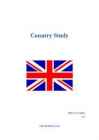
1) General facts The UK: * the United Kingdom of Great Britain and Northern Ireland was formed in 1801 * it covers 243,610 sq km * everybody from the UK is called British * the capital city is London * is made up of four constituent countries: England, Scotland, Wales and Northern Ireland which in turn are divided into counties * the flag is called the Union Jack which is a combination of the flags of England, Scotland and Northern Ireland * the population is about 60,000,000 people, the population density is 242 people/sq km * its coasts are washed by the Atlantic Ocean, the North Sea, the English Channel, the Celtic Sea, Saint George's Channel, and the Irish Sea. It is linked to France by the Channel Tunnel * the United Kingdom is a constitutional monarchy. The current monarch is Queen Elizabeth II, who is also the Queen and Head of State of fifteen other Commonwealth Realms, such as
UK Conservation & Environment 1. What does AONB stand for? 2. What type of environment does the Ramsar Convention protect? 3. Which country has the greatest proportion of its land devoted to National Parks and other countryside conversation areas: England, Scotland, Wales or Northen Ireland? 4. Which is the main contributing gas to the greenhouse effect? 5. Which fortification in Britain dates from the Roman era and is listed in the World Heritage List? 1. Area of outstanding natural beauty 2. Wetlands 3. Northen Ireland 4. Carbon dioxide 5. Hadrian's Wall, in the north of England Physical geography 1. Which of the following countries is the nearest continental neighbour to Great Britain: Denmark, Portugal, France or Greece? 2. Which of these cities are close to the same line of latitude as London: Berlin, Moscow,
1. What are the capitals of the 4 constituent countries? England- London; Northen Ireland- Belfast; Scotland- Edinburgh; Wales- Cardiff 2. Order the invaders in correct chronological order: Anglo-Saxons, Normans, Romans, Celts. Romans Anglusaxons , Norman 3. How did the Celts influence Britain? Language. Wars. Engand and Scotland eventually became 1 contry 4. How many people approximately speak English? Approximately 600 million 5. Who (which tribes) gave the base of the English language?Germanic tribes- Anglo-Saxons. 6. Describe Wales.- Wales is a mountainous country on the western side of Great Britain. The national game of Wales is Rugby. Flag- Red dragon on a green and white field. They have their own language Cymraeg ( Welsh) . Anthem- Land Of My Fathers. Official animal- Dragon. There used to be a lot of coalmines. 7
Scotland ! Scotland (Gaelic: Alba) is a country in northwest Europe that occupies the northern third of the island of Great Britain. It is part of the United Kingdom, and shares a land border to the south with England. It is bounded by the North Sea to the east, the Atlantic Ocean to the north and west, and the North Channel and Irish Sea to the southwest. In addition to the mainland, Scotland consists of over 790 islands including the Northern Isles and the Hebrides. Edinburgh, the country's capital and second largest city, is one of Europe's largest financial centres. It was the hub of the Scottish Enlightenment of the 18th century, which saw Scotland become one of the commercial, intellectual and industrial powerhouses of Europe. Scotland's largest city is Glasgow, which was once one of the
BRITISH HISTORY 17TH-19TH CENTURY SEVENTEENTH-CENTURY ☄ When James I became the first English king of the Stuart dynasty, he was already king of Scotland, so the crowns of these two countries were united. ☄ The kind of Middle English spoken in lowland Scotland had developed into a written language known as Scots ☄ The Scottish Protestant church adopted English rather than Scots bibles ☄ Religion and politics are inextricably linked ☄ Some people tried to kill the king because he wasn't Catholic enough and another king had been killed, partly because he seemed too Catholic ☄ Anger grew in the country at the way that the Stuart monarchs raised money ☄ Puritanism- ideological Protestantism ☄ Some of them thought the luxurious lifestyle of the king and his followers was immoral
Contents Introduction...................................................3 London's early history.....................................45 The people of London......................................6 Buildings and bridges......................................7 Intruduction London is the capital of the united kingdom (UK), which is made up of Great Britain(England, Scotland, Wales) and Northern Ireland. The city lies in the southeast of England and covers an area of about 1,578 square kilometres on either side of the River Thames. With population of seven million, London is by far the largest city in the UK. Birmingham, the second largest, has just over one million inhabitants. Cultural life London is the worldclass centre. It has more than40 theatres, where audiences enjoy everything from musicals to William Shakespeare's plays
1) Standard and non-standard varieties of English Standard varieties of English are the varieties of the English language that are considered to be a norm and are spoken and written by the minority (educated people). This is the optimum for educational purposes. The standard varieties of English are: BrEng (British), EngEng (English), NAmEng (North-America), USEng (United States), CanEng (Canada), AusEng (Australia), NZEng (New Zealand). Standard English (British English) is the most widely accepted and understood among native speakers, learned by foreigners. It is used in broadcasting, TV, news etc. It doesn't concern pronounciation (accent), but grammar and vocabulary. It includes formal and informal styles. British Standard English grammar and vocabulary, together with the RP accent should be called English English. RP (Received Pronounciation) is an accent that originates from South-East of England. A
Country Studies The United Kingdom Test revision questions Form 11 1. What are the capitals of the 4 constituent countries? England London; Wales Cardiff; N-Ireland Belfast; Scotland - Edinburgh 2. Order the invaders in correct chronological order: Anglo-Saxons, Normans, Romans, Celts, Vikings. Celts > Romans > Anglo-Saxons > Vikings > Normans 3. How did the Celts influence Britain? The Celts were in Britain long before the English language existed. Celtic influence on English is minimal. There are more Amerindian words in English than Celtic ones. 4. How many people approximately speak English? 300million as mother tongue, 470million as 2nd language. 5. Who (which tribes) gave the base of the English language? Anglo-Saxons 6. Describe Wales. Part of the United Kingdom and the island of Great Britain, population: 3,064,000, Wales has a distinctive culture including its own language,
Tallinna Mustamäe Humanitargümnaasium Valeria Jefremenkova ENGLISH AS A GLOBAL LANGUAGE INGLISE KEEL KUI ÜLEMAAILMNE KEEL Research work Supervisor: Jevgenija Kozlova Tallinn 2016 1 Table of Contents СONTENT…………………………………………………………………………………...2 INTRODUCTION…………………………………………………………………………...3
Great Britain Pärnu 2012 Contents Great Britain Great Britain or Britain is an island situated to the northwest of Continental Europe. It is the ninth largest island in the world, the largest European island, and the largest of the British Isles.
1. Ancient Britain: the Celtic tribes. 2000 years ago there was an Iron Age Celtic culture throughout the Br Isles. It seems that the Celts, who had been arriving from Europe from the 8th cent BC onward, intermingled with the peoples who were already there. The Celts were extremely talented people, creative and artistic. More than 1 Celtic tribe invaded Br. The descendants of ancient Celts live in Wales, Scotland, Cornwall and Ireland. They lived in primitive society. Druids priests, more powerful than chiefs. Acted like prophets. 2. Stonehenge From prehistoric period. Was built on Salisbury plain between 2500 and 1500 bc. One of the most famous and mysterious archaeological sites in the world. One of the mysteries is how it was built at all with the technology of the time. Another is its purpose. It appears to function as a kind on
'ledsltv 'sembl/ seadusandlik kogu The British Isles is the name of a group of islands washed by the North Sea in the east and the Atlantic Ocean in the west. The British Isles are shared by two separate and independent countries: the
Report of SCOTLAND Maiki Joakit 10. klass 2008 Etymology Scotland is from the Latin Scoti, the term applied to Gaels. The Late Latin word Scotia (land of the Gaels) was initially used to refer to Ireland. By the 11th century at the latest, Scotia was being used to refer to (Gaelic-speaking) Scotland north of the river Forth, alongside Albania or Albany, both derived from the Gaelic Alba. The use of the words Scots and Scotland to encompass all of what is now Scotland became common in the Late Middle Ages. History Repeated glaciations, which covered the entire land-mass of modern Scotland, have destroyed any traces of human habitation that may have existed before the Mesolithic period. It is believed that the first post-glacial groups of hunter-gatherers arrived in Scotland around 12,800 years ago, as the ice sheet retreated after the last glaciation. Groups of settlers began building the first known permanent houses on Scottish soil around 9,500
свои знания о стране, являющейся родиной английского языка, ставшего ведущим мировым языком, и парламентаризма, который переняли большинство стран мира. 6 INTRODUCTION Aspects of British History presents a brief outline of the most significant milestones in the long and eventful history of Great Britain, such as the five successful invasions of the island, the birth of Parliament and transformation of an absolute monarchy into a constitutional monarchy, the origin of the English language, the rise and fall of the British Empire. The units contain an informative reading text on an important issue, preceded by preparatory discussion questions and followed by notes offering some additional information, and a vocabulary with relevant language notes. The main reading text is
The UK & London The United Kingdom (or the UK) is a short way of saying the United Kingdom of Great Britain and Norther Ireland. The UK is situated north-west of the European continent between the Atlantic Ocean and the North Sea. The UK consists of England, Wales, Scotland and Northern Ireland. Its highest point is Ben Nevis in Scotland followed by Snowdon in Wales. The Severn is the longest river in the United Kingdom. Other important rivers are the Trent, the Mersey, the Tyne, etc. Lough Neagh which lies in the centre of Northern Ireland is thr UK's largest freshwater lake. The climate in the UK is variable. The weather changes so frequently that it is difficult to forecast. It is not unusual for people to complain that the weathermen were wrong
History exam *Stonehenge - is a monument located in England. It is one of the most famous prehistoric sites in the world and is composed of earthworks surrounding a circular setting of large standing stones. The surrounding circular, earth bank and ditch, have been dated to about 3100 BC. Stonehenge was produced by a culture with no written language. Many aspects of Stonehenge remain subject to debate. There is little or no direct evidence for the construction techniques used by the Stonehenge builders. *The Celts in Britain and their legacy The Cets lived in Britain in The Iron Age. They were warring tribes who were battleful amongst themselves as well as inter-tribal war. They were not centrally governed. The Celts brought iron working, iron ploughs and metal swords,
Essee Great Britain or Britain (Welsh: Prydain Fawr, Scottish Gaelic: Breatainn Mhòr, Cornish: Breten Veur) is an island situated to the northwest of Continental Europe. It is the ninth largest island in the world, and the largest European island, as well as the largest of the British Isles. With a population of about 60.0 million people in mid-2009, it is the third most populous island in the world, after Java and Honsh. Great Britain is surrounded by over 1,000 smaller islands and islets. The island of Ireland lies to its west. Politically, Great Britain may also refer to the island itself together with a number of surrounding islands which comprise the territory of England, Scotland and Wales. All of the island is territory of the sovereign state of the United Kingdom of Great Britain and Northern Ireland, and most of the United Kingdom's territory is in Great Britain. Most of England,
WALES . Wales is a country that is part of the United Kingdom , bordered by England to its east , and the Atlantic Ocean and Irish Sea to its west . It is also an elective region of the European Union . Wales has a population estimated at three million . The capital Cardiff is Wales's largest city with 317,500 people . For a period it was the biggest coal port in the world . Cardiff is the largest media centre in the UK outside of London . Wales is located on a peninsula in central-west Great Britain . Its area , the size of Wales , is about 20,779 km²
There are 16 of them (including the UK) and they have a combined area of 18.7 million sq km and a population of 140 million. The vast majority of the population live in the six most populous realms: the UK, Canada, Australia, Papua New Guinea, New Zealand, and Jamaica. A Commonwealth realm is a country which shares Queen Elizabeth II as monarch. 8. Crown dependency- consist of the Isle of Man in the Irish Sea and thee Bailiwicks of Jersey and Guernsey in the English Channel. Although internationally, the dependencies are recognised as "territories for which the United Kingdom is responsible", the relationship between the Crown dependencies and the UK is "one of mutual respect and support, i.e. a partnership". In 2007-2008, each Crown Dependency and the UK signed agreements that established frameworks for the development of the international identity of each Crown Dependency. 9
Britain History Pre-Norman Britain The Iberians brought their metal-working skills and the first real civilization to Britain in the third millennium B.C and were overrun by various Celtic invasions that began in the 8th century. The Celts introduced their tribal organization and an early form of agriculture before they were forced westward by the Roman invasion. Forms of Celtic language are still spoken in Britain. Romans (with Julius Caesar in the head of them) first tried to occupy Britain in 55 B.C., but there was a rebellion in Gaul so they had to leave to fight against it. Next time they came in 43 A.D. and their leader was Emperor Claudius. Romans brought a lot with them. Their brought paved roads, the sites of important cities, the seeds of Christianity, the Roman law, Roman baths, language and advanced civilization. They also built Hadrian's Wall in 122 A.D
Topic London Tallinn English College Tallinn 2007 1. Introduction London is the capital city of the United Kingdom and the largest urban area in England. The ancient City of London, to which the name originally belonged, still maintains its medieval boundaries, but the name "London" has long applied more to the whole metropolis that has grown up around it. London has been an important settlement for over two millenniums. It is also one of the world's leading business, financial and cultural centres and its influence in politics, education, entertainment and even fashion contribute to its status as a major global city
ENGLAND General overview England is part of the United Kingdom Land borders with Scotland to the north and Wales on to the west The English Channel on south separates it form continental Europe The country includes over 100 smaller islands Capital and largest city is London Its has consitutional monarchy Monarch is Elizabeth II Total area is 130,395 km2 Population is 51,446,000 million, around 84% of the population of the UK Currency is Pound stearling(GBP) Has left-hand traffic Patron saint is ST. George Geography England comprises the central and southern two-thirds of the island of Great
 annaabi.ee