Leidsid 33 sarnast õppematerjali, mis on seotud failiga "Peresuhted". Need materjalid aitavad sul teemat sügavamalt mõista.
other, father, mother, child, brother, sister, husband, wife, daughter, married, relations, parent, woman, relationship, male, informal, whom, engaged, children, grandfather, uncle, aunt, someone, female, parents, paternal, maternal, bride, wedding, before, particular, divorced, friend, mummy, plural, cousin, nephew, niece, spouse, person, presentsA) character B) appearance C) personality D) looking A) row B) discussion C) argue D) dispute b) I was born in Scotland but I…in Northern Ireland. g) I got to …Steve well last year when we worked together. A) grew up B) raised C) brought up D) rose A) introduce B) know C) meet D) sympathise c) Edward was named after one of his father's distant … h) Is Brenda married or …? I don't like to ask her. A) family B) brothers C) members D) relations A) spinster B) alone C) bachelor D) single d) Jane and Brian got married a year after they got … i) Parents have to try hard to understand the A) divorced B) proposed C) engaged D) separated younger … e) Graham works well in class, but his …could be A) generation B) people C) adolescents D) teenagers better
Old Mr. Dashwood is the owner of a large estate in Sussex called Norland Park. Following the death of his sister, Mr. Dashwood invites his nephew Mr. Henry Dashwood to come live with him at Norland. The younger Mr. Dashwood brings John Dashwood, his son from a previous marriage, as well as the three daughters born to his present wife. John Dashwood is grown and married, and has a four-year-old son, Harry. When Old Mr. Dashwood dies, he leaves his estate to John and little Harry, who had much endeared himself to the old man. But now John's father, Henry Dashwood, is left with no way of supporting his wife and three daughters, and he too dies one year later, leaving only ten thousand pounds for his family. Just before his death, he makes his son John promise to care for his stepmother and three half-sisters. Mr
Hamlet - The Prince of Denmark, the title character, and the protagonist. About thirty years old at the start of the play, Hamlet is the son of Queen Gertrude and the late King Hamlet, and the nephew of the present king, Claudius. Hamlet is melancholy, bitter, and cynical, full of hatred for his uncle's scheming and disgust for his mother's sexuality. A reflective and thoughtful young man who has studied at the University of Wittenberg, Hamlet is often indecisive and hesitant, but at other times prone to rash and impulsive acts. Hamlet (In-Depth Analysis) Claudius - The King of Denmark, Hamlet's uncle, and the play's antagonist. The villain of the play, Claudius is a calculating, ambitious politician, driven by his sexual appetites and his lust for power, but he occasionally shows signs of guilt and human feeling--his love for Gertrude, for instance, seems sincere. Claudius (In-Depth Analysis) Gertrude - The Queen of Denmark, Hamlet's mother, recently married to Claudius
PRESENTATION PRINCESS DIANA Diana, Princess of Wales was born on the 1st of July in 1961 and died on the 31st of August in 1997. She was a popular member of the British royal family and an international personality of the late 20th century. She was the first wife of Charles, Prince of Wales, whom she married on the 29th of July in 1981. The wedding, which was held at St. Paul's Cathedral, was televised and watched by a global audience of over 750 million people. Diana and Charles had two sons, Princes William and Harry. EARLY LIFE She was born at Park House, Sandringham in Norfolk, England. Her parents were John Spencer and Frances Burke Roche. She had two older sisters Sarah and Jane and a younger brother Charles. When Diana's parents divorced in 1969, her mother took her and her younger
vivacious woman about whom a future Viceroy of India would say, "Dullness and Mrs. Kipling cannot exist in the same room."[3] Father - John Lockwood Kipling. Lockwood Kipling, a sculptor, an illustrator, museum curator and pottery designer, was the principal and professor of architectural sculpture at the newly- founded Sir Jamsetjee Jeejeebhoy School of Art and Industry in Bombay. Later in life Kipling illustrated many of Rudyard Kipling's books, and other works. Kipling also remained editor of the Journal of Indian Art and Industry, which carried drawing works from the students of the Mayo School. COUPLE named their son after the place they had first met Rudyard Lake. Alice Kipling Fleming - Sister of British author Rudyard Kipling who became a well-known psychic, producing automatic writing under the name "Mrs. Holland." Born June 11, 1868, Alice Kipling was privately educated
"Anna Karenina" Lev Tolstoi Part 1 The novel opens with a scene introducing Prince Stepan Arkadyevitch Oblonsky, "Stiva", a Moscow aristocrat and civil servant who has been unfaithful to his wife Darya Alexandrovna, nicknamed "Dolly". Dolly has discovered his affair - with the family's governess - and the house and family are in turmoil. Stiva's affair and his reaction to his wife's distress shows an amorous personality that he cannot seem to suppress. In the midst of the turmoil, Stiva reminds the household that his married sister, Anna Arkadyevna Karenina is coming to visit from Saint Petersburg. Meanwhile, Stiva's childhood friend
TARTUFFE A COMEDY CHARACTERS MADAME PERNELLE, mother of Orgon ORGON, husband of Elmire ELMIRE, wife of Orgon DAMIS, son of Orgon MARIANE, daughter of Orgon, in love with Valere CLEANTE, brother-in-law of Orgon TARTUFFE, a hypocrite DORINE, Mariane's maid M. LOYAL, a bailiff A Police Officer FLIPOTTE, Madame Pernelle's servant The Scene is at Paris ACT I SCENE I MADAME PERNELLE and FLIPOTTE, her servant; ELMIRE, MARIANE, CLEANTE, DAMIS, DORINE MADAME PERNELLE Come, come, Flipotte, and let me get away. ELMIRE You hurry so, I hardly can attend you. MADAME PERNELLE Then don't, my daughter-in law. Stay where you are.
Chapter 17 Chapter 38 Chapter 58 Chapter 18 Chapter 39 Chapter 59 Chapter 19 Chapter 40 Chapter 60 Chapter 20 Chapter 41 Chapter 61 Chapter 21 Chapter 42 Chapter 1 It is a truth universally acknowledged, that a single man in possession of a good fortune, must be in want of a wife. However little known the feelings or views of such a man may be on his first entering a neighbourhood, this truth is so well fixed in the minds of the surrounding families, that he is considered the rightful property of some one or other of their daughters. "My dear Mr. Bennet," said his lady to him one day, "have you heard that Netherfield Park is let at last?" Mr. Bennet replied that he had not. "But it is," returned she; "for Mrs. Long has just been here, and she told me all about it
QUEEN VICTORIA & HER TIME Project Mari Murakas Class 11A 2011 Early life of Queen Victoria Victoria was born in London on 24 May 1819, the only child of Edward, Duke of Kent, and Victoria Maria Louisa of Saxe-Coburg. [1] The Duke of Kent was the fourth son of George III and Victoria Maria Louisa was the sister of King Leopold of Belgium. The Duke and Duchess of Kent selected the name Victoria but her uncle, George IV, insisted that she be named Alexandrina after her godfather, Tsar Alexander II of Russia. [2] Victoria's father died when she was eight months old. The Duchess of Kent developed a close relationship with Sir John Conroy, an ambitious Irish officer. Conroy acted as if Victoria
The Moving Finger Agatha Christie The Moving Finger Agatha Christie Plot summary: Brother and sister Jerry and Joanna Burton bought a country house in an idyllic English town called Lymstock so that Jerry could recover from injuries received in a wartime plane crash. They had been living in London their whole life and thus were excited but intimidated to go. Lymstock was much like any other English village, no more than 300 people. Those that live there enjoy the peace of rural life and form a union to where it can be difficult for strangers to blend in
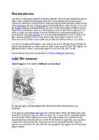
Manor) as governess for Adèle Varens, a young French girl. Out walking one day, Jane encounters and helps a horseman who has sprained his ankle. On her return to Thornfield, she discovers that the horseman is Edward Rochester, Master of Thornfield Manor. Rochester is a moody, self-willed man nearly twenty years older than Jane. Adèle is his ward, belonging to a French "opera dancer" whom he had a romantic relationship with, in the past. Adèle however is not his daughter, but is brought up by him, after her mother abandons her. Miss Blanche Ingram Mr. Rochester disguised looking in a book. as a Gypsy woman. Jane saves Mr. Bertha Mason rips Rochester from a fire. Jane's wedding veil. Mr. Rochester seems quite taken with Jane, and she enjoys his company. However, odd things
MY FAMILY. FAMILY IS EXTREMELY IMPORTANT IN OUR LIFE. I N A WAY , OUR FAMILY IS OUR LIFE. A FAMILY IS NOT JUST A GROUP OF RELATIVES LIVING IN ONE APARTMENT OR HOUSE . A FAMILY CONSISTS OF THE CLOSEST AND DEAREST PEOPLE IN THE WORLD , ALWAYS READY TO LISTEN TO YOU , ALWAYS READY TO SHARE YOU JOY AND TO PROVIDE HELP IN NEED . OUR FAMILY IS NOT VERY LARGE: MY PARENTS , MY BROTHER, MY GRANDPARENTS AND I. SOMETIMES MY UNCLE AND AUNT VISIT WITH THEIR DAUGHTER AND SON, WHO ARE MY COUSINS . OUR FAMILY IS VERY FRIENDLY . ANY TIME, WE HAVE A CHANCE WE TRY TO DO SOMETHING TOGETHER , TO GO TO THE COUNTRY , PLAY SOME KIND OF GAME FOR ALL OR JUST SIT AT A TABLE AND TELL EACH OTHER FUNNY STORIES . I WILL START WITH MY PARENTS. M Y MOTHER AND FATHER MET AT THE UNIVERSITY. THEY GOT MARRIED ONE YEAR AFTER GRADUATION . THEY HAVE BEEN WIFE AND HUSBAND FOR 19 YEARS ALREADY . M Y MOTHER ' S NAME IS E MMA A USTEN . S HE IS FORTY -THREE YEARS OLD ,
which included foreign groups such as Germans, Irish, and Spaniards whose names were given a French accent. The people who could trace their noble ancestors called themselves "Creole." Others were "chacas" or tradesmen, "chacalatas" or country folk (peasants), or "chacumas" for anyone with Black blood. All Creoles, no matter what level of society they were in, including slaves, looked down on the Americans. 3 Family life In the Creole family the father was dominant. His word was law. He was not always a faithful spouse, but he was an indulgent parent. If he was a planter, he ruled his estate like a king. He had a large house, large crops, and a large family. He was a dutiful husband and accompanied his wife to balls, the theatre, and social events. He would go to the cafes to discuss business, play dominoes, and have a drink. Historical Creole Gender Role Young men were given their own quarters for entertainment purposes. They had
Arthur Conan Doyle Life Arthur Conan Doyle was born on 22 May 1859, in Edinburgh, Scotland, to an English father, Charles Altamont Doyle, and an Irish mother, Mary Foley, who had married in 1855.] Although he is now referred to as "Conan Doyle", the origin of this compound surname is uncertain. Conan Doyle's father was an artist, as were his paternal uncles (one of whom was Richard Doyle), and his paternal grandfather John Doyle. Conan Doyle was sent to the Roman Catholic Jesuit preparatory school St. Mary's Hall, Stonyhurst, at the age of eight. He then went on to Stonyhurst College, but by the time he left the school in 1875, he had rejected Christianity to become an agnostic. From 1876 to 1881 he studied medicine at the University of Edinburgh, including a
During this period a new class called bourgeoeisie came into being. This is the period when monarchies based on nationality were estabilished. The Renaessance started in Italy In the 14th century. Then it spread all over Europe, reached England in 16th century. The struggle for power culminated in a war called The War of Roses. It was a civil war between two dynasties, families. They had different emblems on one side the Yorks (white rose) other Lancasters (red). They couldn't decide who gets the throne. War ended 1485. A new dynasty came to throne, Tudor, the first king in this dynasty was Henry Vll. When he came to throne a period of stability followed because he built a nation based state. He was good at diplomacy.He could avoid quarrels and wars with neigbouring countries. France, Spain - greatest enemies.So he could save much money and thus laid a good economic basis for his state. Besides that he built a
11 See also 12 Notes 13 References 14 External links Childhood Family and early life Main article: Childhood of Marilyn Monroe Marilyn Monroe was born in the charity ward of the Los Angeles County Hospital.[1][10] According to biographer Fred Lawrence Guiles, her grandmother, Della Monroe Grainger, had her baptized Norma Jeane Baker by Aimee Semple McPherson.[1] Although she took a stagename of Marilyn Monroe in 1946, she did not legally change her name until February 23, 1956.[11] Her mother was Gladys Pearl (Monroe) Baker.[12] Her family is believed to have been Anglo-Spanish originally; and possibly related to the Sepulvedas. [13] For many years it was believed Gladys' second husband Martin Edward Mortenson (18971981) was Monroe's father. His name was listed on her birth certificate. [14] Foster homes Mentally unstable and unable to care for Monroe, Gladys placed her with foster parents Albert and Ida Bolender of Hawthorne, California, where she lived until she was seven
probably been to add legitimacy to the already-existing trends towards greater psychological introspection and towards more prominent and franker discussions of sexuality. Main characteristic features of Modernism: Characteristics of Modernism Formal characteristics(11) · Open Form · Free verse · Discontinuous narrative · Juxtaposition (kõrvutamine) · Intertextuality · Classical allusions(vihje) · Borrowings from other cultures and languages · Unconventional(ebaharilik) use of metaphor · Metanarrative · Fragmentation · Multiple narrative points of view (parallax) Thematic characteristics(8) · Breakdown of social norms and cultural sureties(veendumus) · Dislocation(nihestus) of meaning and sense from its normal context · Valorization of the despairing individual in the face of an unmanageable future · Disillusionment (silmade avamine, illusioone purustama)
(that) he was tired. cold. Reporting special questions Direct Speech Indirect Speech "What did you do Tell me what you had yesterday?" done yesterday. "When will you come Tell me when you would home?" come home. "Who won the game?" Tell me who had won the game. Read the sentences and write them in the indirect form. 1. Nancy asked her mother, "What is the weather going to be, rainy or sunny?" 2. The teacher asked her class, "Who will take part in the competition?". 3. Mary asked her friend, "What did you do during your winter holidays?". 4. Lucy asked her new friend, "When were you born?" 5. The tourist asked a policeman, "How can I get to the centre of the city?" 6. Wife asked her husband, "When will you come home from work?" 7. The mother asked her children, "Who will help me to lay the table?"
traveling across Britain by stagecoach to cover election campaigns for the Morning Chronice. His journalism, in the form of sketches which appeared in periodicals from 1833, formed his first collection of pieces Sketches by Boz which were published in 1836 and led to the serialization of his first novel, The Pickwick Papers, in March 1836. On 2 April 1836, he married Catherine Thompson Hogarth (1816 1879), the daughter of George Hogarth, editor of the Evening Chronice. After a brief honeymoon in Chalk, Kent, they set up home in Bloomsbury, where they had ten children. On 9 June 1865, while returning from France with Ternan, Dickens was involved in the Staplehurst rail crash in which the first seven carriages of the train plunged off a cast iron bridge that was being repaired.Because of that he died.( 9 June1870) Oliver Twist (1837-39), Nicholas Nickleby (1838-39), The Old Curiosity Shop and, Barnaby
Mary I Mary I, called Mary Tudor (1516-1558), Queen of England (1553-1558). Mary was born in London on February 18, 1516, the daughter of Henry VIII by his first wife, Catherine of Aragón. Because Henry divorced Catherine, Mary was declared illegitimate. Nonetheless, Henry included her in his will, and on the death of her half-brother, Edward VI, on July 6, 1553, she became the legal heir to the throne. Although Lord High Chamberlain John Dudley, Duke of Northumberland, favoured the
Teisy Slavin Form 8 The President of the United States and his family Research Paper Instructor: Kati Leis Sõmerpalu 2012 Contents Introduction I wrote my research paper on the president of the United States and his family, because I wanted to know more about Barack Hussein Obama, his wife Michelle Obama and his daughters Malia and Natasha. I think that I now know much more about the President of the United States and I think that I should know, because in the future I would like to travel to and one day maybe even move to the United States of America. I think that Barack Obama is the most hated president in the United States history because of his racial. Barack Hussein Obama Barack Hussein (born on August 4, 1961) is the 44th and current President of the United States
It will give the legal knowledge, what you need to know preparing your estate plan. ,,Estate Planning" essentially means two things. First, it means deciding who gets your property after you die and choosing the wisest legal transfer methods for leaving your property to those you want to receive it. Second, it means makeing some important personal decisions, such as who will provide care for your young children, if you have any, if anything happens to you and the children´s other parent, and who should make medical and financial decisions for you if you someday become incapacitiated and unable to handle things yourself. A First Look at Estate Planning Who needs to bother with estate planning? Here´s short answer: · Anyone who owns property that matters to them · Anyone with a minor child (under 18) If you have a minor child, or children, you automatically have estate planning concerns. It doesn´t go for Estonia.
1. Beowulf. The dating of Beowulf is still controversial. The poem is one of the earliest and greatest monuments of the Germanic literatures. The main stories of the poem (the fights of B.) are versions of common folk-tales, but the poet also introduces many incidental stories, some of which belong to the world of ancient Germanic legend. He writes his folk-tales and legends in a web of other events, mainly set in the Baltic Kingdoms. He shows a very rich and leisurely portrayal of this Baltic world, providing many customs like the close relationship between lord and man in the war-band and others. All this encouraged the supposition that the unknown author of the poem was himself a bard of the ancient type portrayed within the poem (a lord's scoop). However, many people propose that the author could be
Tallinna Inglise Kolledz THE HORSE WHISPERER BOOK REPORT Alice Tärk, 9b. Title: The Horse Whisperer Author: Nicholas Evans Publisher: Transworld Publishers Ltd Year: 1991 Number of pages: 97 Genre: fiction The setting: Takes place in Montana The Time Period: 1995 Goal: Some are going to be okay, some are not. The main character is Grace, who is thirteen years old and lives with her mother and father in New York. She is a usual teenager until she loses her leg and her best friend in a serious riding accident. After that she is sad and truly desperate hating the entire world. Her mother Annie is an Englishwoman who had lost his dad and wanted to prove her whole life that she is good in everything: as an important journalist in a fashionable magazine, as a mother and as a husband. But her job is number one and she does not find a lot time for her daughter and husband.
WHAT IS MARRIAGE ??? ( Thoughts pouring down in ones mind ) 1. Marriage is not a word. It's a sentence (a life sentence). 2. Marriage is love. Love is blind. Therefore marriage is an institution for the blinds. 3. Marriage is an institution in which a man loses his Bachelor's Degree and the woman gets her masters. 4. Marriage is a three ring circus: engagement ring, wedding ring and suffering. 5. Married life is full of excitement and frustration: In the first year of marriage, the man speaks and the woman listens. In the second year, the woman speaks and the man listens. In the third year, they both speak and the NEIGHBOR listens. 6. Getting married is very much like going to a restaurant with friends. You order what you want, and when you see what the other person has, you wish you had ordered that instead. 7. There was this man who muttered a few words in the church and found himself married
The book includes maps of the house, the murder scene, and a drawing of a fragment of a will. The Mysterious Affair at Styles was adapted as a 103-minute drama and transmitted on ITV in the UK on Sunday September 16, 1990 as a special episode in their series AgathaChristie'sPoirotto celebrate the centenary of the author's birth. AGATHA CHRISTIE Agatha Christie was born Agatha May Clarissa Miller in Devon, in England in 1890, the youngest of three children. Her father died, when she was a child. At sixteen she was sent to school in Paris where she studied singing and piano. Christie was an accomplished pianist but her stage fright and shyness prevented her from pursuing a career in music. She never attended school. Dame Agatha Christie was an English crime writer of novels, short stories and plays. She also wrote romances under the name Mary Westmacott, but is best remembered for her 80 detective novels and her successful West End theatre plays.
November 8, 1991 Charlie has some good news and some bad news. Firstly the good ones: Charlie got a B for his English paper on Peter Pan. His language skills are also improving. He says that he wants to write when he grows up. At the same time he is helping Mary Elizabeth with her Rocky Horror Picture Show fanzine, Punk Rocky. Charlie also says that he loves Sam. And the bad news is that Sam has already a boyfriend Craig. Charlie's sister tells him that Sam used to be a "blow queen". This hurts Charlie very much, because he didn't want to think like that over Sam. November 12, 1991 Charlie likes Twinkies. He tells a story about rats, pleasurable rewards, and electric shock. It's a very interesting experiment and it tells that rat or mouse would put up with a lot more voltage for the pleasure. November 15, 1991 Charlie thinks a lot about his brother and his dad. I think that Charlie's brother and father are big idols for them
cup train desk truck door watch gate egg window 11 Exercise 1 Underline the common nouns in these sentences. 1 There's a little bird in the garden. 2 Who is your teacher? 3 Don't eat that rotten apple. 4 Kate has a lovely doll. 5 I like reading stories. 6 My father is a doctor. 7 Every child has a dictionary. 8 Rudy hates bananas. 9 The phone is ringing. 10 Here's a book for you. Exercise 2 Here's a mixed bag of words. Put each word under its correct heading. swimmer snail fire engine clown letters flag river barber mountain fox hotel parrot granny taxi gardener camel
word.periphery – vague. Formal usage (often polysyllabic words) from Norman French (rank, courtliness,refinement). Learning, science, abstraction: Latin, and Greek. The core vocabulary is predominantly Germanic (the, I, you, etc.) Only 4 of the topranked one hundred words in the Brown Corpus are of foreign origin. 93 of the first one hundred words in the Brown Corpus are monosyllabic, and the remaining have two syllables (only, about, other, also, many even people) Origin of the ten 10000 most frequent words: Example of stratification • Old English 31.8 % heart • French 45 % core ME [origin unknown] (!) • Latin 16.7 % cardiac LME [Fr. cardiaque or L cardiacus adjs., f. • Other Germanic languages 4
bachelor who was expected to die and leave his fortune to them. But instead he marries an Irishwoman, Rosaleen Turner, invalidating his previous will, before being killed in an explosion at his home, which his new wife survives. As a result, Rosaleen inherits Gordon's fortune and the entire family now faces financial crisis, augmented by the poor state of the economy in the aftermath of World War II. Rosaleen's fortune is zealously guarded by her brother, David Hunter, and although various family members manage to wheedle small sums out of Rosaleen, David refuses to help Frances Cloade, whose husband Jeremy is on the brink of ruin. A man calling himself Enoch Arden arrives in the village, and attempts to blackmail David by saying he knows how to find Rosaleen's first husband, Robert. Their conversation in Arden's hotel room is overheard by the landlady, who immediately tells Rowley Cloade. Later, Arden's
EMMA Youthful Emma Woodhouse, whose long-time governess and friend Miss Taylor has just married Mr. Weston, takes some solace in being left alone with her aging father by claiming that she made the match herself. An old friend of the family, Mr. George Knightley, does not believe her, but in her certainty she decides that she must also marry off the young rector, Mr. Elton. Among her friends and acquaintances in the large and populous village of Highbury, she begins to notice young Harriet Smith, the pretty illegitimate seventeen-year-old who lives at Mrs. Goddard's boarding school.
Learner's Dictionary. 6th edition.) Situation: When Andy, the engineer that June meets in the bar, peels a pink egg for her, saying that it matches her turtleneck, she corrects him, explaining that the item of clothing is called a shell, to which the man jokingly replies that he could peel that for her, too. dormancy (7) - the state of being dormant. Situation: Albertine explained that between her and her mother was an abuse, which required periods of dormancy. fallow (11) - a piece of fallow land. Situation: tattered grey windbreaks bounded flat, plowed fields that the government had paid to lie fallow. to founder (13) (of a plan or undertaking) fail or break down as a result of a particular problem. Situation: Aurelia foundered when talking about June but then her voice got stronger and she asked explained that June had nothing to come home to.
Ameerika Kirjandus 30.01.13 Naturalism · France, Emile Zola · Put down his theory in 1879: Le Roman Experimental, attempt to explain the development of human society throuch biological laws · Outlook is deterministic, pessimistic, fatalistic (fate or biology) · Man as an animal-clever than other beasts, still explainable within the framework · Man is not a free agent, is govern by something · Unable to determine his own faith · Hereditary · Naturalists tried to apply in fiction the processes of natural sciences · Writers task is to record facts, systems of behaviour, living conditions, never revealing any natural unbiased (completely natural) · Point of view: amoral-outside the category of morality, neither good or bad
 annaabi.ee