Leidsid 33 sarnast õppematerjali, mis on seotud failiga "Past Continious". Need materjalid aitavad sul teemat sügavamalt mõista.
working, minevik, olevik, continuous, talk, jaatav, eitav, talking, playing, come, coming, taking, putting, lying, dying, present, olevikus, yesterday, seven, clock, roomNimisõnade omastav kääne 66 OMADUSSÕNA kesk- ja ülivõrre 67 TEGUSÕNA Tegusõna BE pööramine (olevik) 69 Tegusõna BE pööramine (minevik) 70 HAVE GOT pööramine 71 Üldolevik 73 Üldminevik Jaatav lause - reeglipärased tegusõnad 74 Jaatav lause - ebareeglipärased tegusõnad 75 Eitav ja küsiv lause 77 USED TO 78 LISTEN & REPEAT REPEAT 59 Lk. Üldtulevik 78
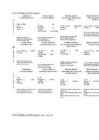
TEGUSÕNA AKTIIVI AJAD Lihtolevik Kestev olevik Perfekti olevik Perfekti kestev O [ ma töötan (igal suvel) ] [ ma töötan (praegu) ] [ ma olen (siin) töötanud (alates [ (täna) olen ma (jub 1987. a.) ] töötanud ] O L I, you, we, they I am
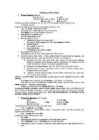
TENSES. ACTIVE VOICE. 1. Present Simple (üldolevik) I (he, she, it s) he works Eitav,küsiv do (I, you, we, they) he does not work does (he, she, it) does he work? Verbidele, mis lõpevad infinitiivis ss, -sh, -ch, -x või o, lisatakse ainsuse 3. pöördes es he touches, she goes Verbidel, mis lõpevad y-ga, mille ees on konsonant, muutub y->ies carry - he carries Vrdl: play he plays 1. Harjumuspärane, korduv tegevus või seisund olevikus. Tom drinks tea every day. He lives in Brussels.
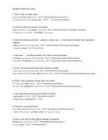
http://www.english-4u.de/a_an_some_ex1.htm ◦ *some bananas *some cats *some monkeys *some 2. http://www.english-4u.de/a_an_some_ex3.htm balls ◦ *some eggs*some oranges *some umbrellas *some 3. http://www.english-4u.de/a_an_some_ex6.htm eagles We us the • when we talk about a specific thing. • when it is clear which thing or person we mean. A – AN - THE • when there is only one of something. Examples:
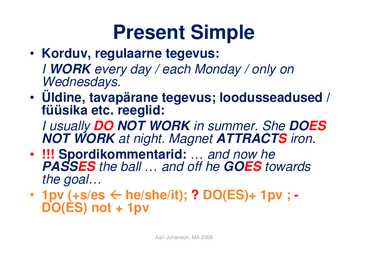
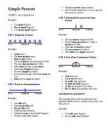
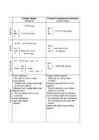
Wednesdays. · Üldine, tavapärane tegevus; loodusseadused / füüsika etc. reeglid: I usually DO NOT WORK in summer. She DOES NOT WORK at night. Magnet ATTRACTS iron. · !!! Spordikommentarid: ... and now he PASSES the ball ... and off he GOES towards the goal... · 1pv (+s/es Å he/she/it); ? DO(ES)+ 1pv ; - DO(ES) not + 1pv Aari Juhanson, MA 2008 Present Progressive · Hetkel toimuv, pooleliolev tegevus: S/he IS TALKing on the phone now. I AM READing an interesting book. · Ajutine, regulaarsele ja tavapärasele vastanduv tegevus (tulevikku viitav): This summer they ARE not GROWing cucumbers as usual. They'RE GROWing tomatoes instead. · !!! Halvakspanu väljendus harjumuspärase tegevuse kohta: He IS always COMPLAINing! · BE (am/is/are) + 1pv-ing Aari Juhanson, MA 2008 Present Perfect ON -NUD · Toimunud tegevus, seos olevikuga: I have WORKed here for 3 years.
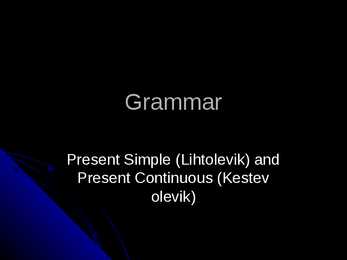
Grammar Present Simple (Lihtolevik) and Present Continuous (Kestev olevik) PRESENT SIMPLE - LIHTOLEVIK Lihtolevik väljendab: 1) Harjumuspärast tegevust või seisundit olevikus. What time do you usually get up? 2) Üldtuntud tõdesid ja fakte. It always rains in October. 3) Oskusi ja võimeid. She speaks English well. Juhul kui tegusõna lõpeb häälikuga `s` või ühenditega sh`, `ch`, lisatakse ainsuse kolmandas pöördes tegusõna lõppu ` ES` (switch switches). Täpselt sama reegel kehtib tegusõnade kohta, mis lõpevad
KESTEV OLEVIK Present Continuous Kestev olevik väljendab tegevust mis toimub praegu. ,,be" olevikus + põhitegusõna / I am;he, she, it is;we, you they are / -ing vorm Küsiv vorm moodustatakse sõnajärje muutumise teel ja eitav vorm not lisamisega peale BE vormi: N: Jaatav- He is reading. Küsiv- Is he reading? Eitav- He is not (isn't) reading. Märksõnad: now (paregu) at present (praegu) at the present moment (käesoleval tehtkel) at the moment (käesoleval hetkel)
1. Active/Passive Active - the professor teaches the students. Passive - The students are taught by the professor 2. Present Simple [VERB] + s/es in third person. Tegevus on korduv või tavapärane. You speak English. I play tennis. Cats like milk. The train leaves tonight at 6 PM. I am here now. Active= Once a week, Tom cleans the car. Passive= Once a week, the car is cleaned by Tom. 3. Present Continuous [am/is/are + present participle]. Tegevus toimub/ei toimu praegusel hetkel. You are watching TV. You are learning English now. I am studying to become a doctor. I am meeting some friends after work. Active= Right now, Tom is writing the letter. Passive= Right now, the letter is being written by Tom. 4. Past Simple [VERB+ed] or irregular verbs. Tegevus algas/lõppes minevikus täpsel ajal. . You called Debbie. I saw a movie yesterday. I finished work, walked to the beach, and found a
INGLISE KEELE GRAMMATIKA Present Simple Lihtoleviku moodustamine Jaatav vorm Eitav vorm Küsiv vorm I make I do not make Do I make? He/she/it speaks He/she/it does not speak Does he/she/it speak? We/you/they go We/you/they do not go Do we/you/they go? NB! ERANDID! · Verbidele, mis lõpevad ss, h, ch, tch, x või oga, lisatakse ainsuse kolmdandas pöördes es. he does
· Cats like milk. still, just, etc. · Birds do not like milk. · Do pigs like milk? Examples: · California is in America. · California is not in the United Kingdom. · You only speak English. · Windows are made of glass. · Do you only speak English? I am not reading any books right now. Present Continuous · · Are you working on any special projects at work? [am/is/are + present participle] · Aren't you teaching at the university now? Examples: USE 3 Near Future · You are watching TV. · Are you watching TV? · You are not watching TV.
Lihtoleviku moodustamine Jaatav vorm Eitav vorm Küsiv vorm I make I do not make Do I make? He/she/it speaks He/she/it does not speak Does he/she/it speak? Do We/you/they go We/you/they do not go go? we/you/they NB! ERANDID!
1.A decision at the moment of 1.Future plans made before the speaking: moment of speaking: A: 'I'm cold'. A: 'We've run out of milk.' B: 'I'll close the window'. B: 'I know, I'm going to buy some.' 2.Prediction based on opinion: 2.Prediction based on present I think the Conservatives will win the evidence: next election. Look at those boys playing football! 3.A future fact: They're going to break the window. He will be ten next year. 4.Promises / requests / refusal / willingness: I'll help you with your homework. Will you give me a hand? 5.In the same way as the future continuous, but with state verbs: I'll be at the station when you arrive. 'Shall' is used mainly in the forms 'shall I ?' and 'shall we?' in British English. These forms are used when you want to get someone's opinion,
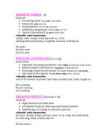
PRESENT SIMPLE [s] lihtolevik · kestvad tegevused. Tom works in the market. · rutiinid. He works every day. · loodusseadused. The sun sets in the west. · ajatabelid ja programmid. The buss leaves at 7 am. · (spordi) kommentaarid. Ben passes ball to Tom. väljendid, mida kasutatakse: usually, often, always, every day/week etc, in the morning/afternoon/evening, at night/the weekend, on Friday etc. He works He don't work Does he work PRESENT CONTINUOUS [ is + ing] kestev olevik · tegevused, mis praegu leiavad aset. Karl is doing his homework at the moment. · plaanitud tegevus lähitulevikus. I am going to school tomorrow. · kui midagi toimub/muutub praegu. The number of burglaries is increasing. · alati sama korduv tegevus. You are always eating, when i wake up. väljendid, mida kasutatakse: now, at the moment, at present, these days, nowdays, still, today, tonight etc. He is working He isn't working Is he working
I work I don't work Do I work no I don't, you don't, he/she/it doesn't You work you don't work do you work? He/she it works he/she/it doesn't works does he/she/it work We work we don't work do we work You work you don't work do you work? They work they don't work do they work? Unit 6 / Present Continuous be- verb-ing / kestev olevik + - ? I am crying I'm not crying am I crying? You are having a party you aren't crying are you crying? He/she/it is crying he/she/it isn't crying is he/she/it crying? We are having a party. We aren't crying are we crying? You are crying you aren't crying are you crying?
ja käändelõppude puudumine! Mitmekesine ajalugu on aidanud kaasa eri päritolu sõnavarale ning ka hääldusmuredele. Väidetavalt on üle poole inglise keele sõnavarast mitte anglo- saksi päritolu, ehk siis laenatud – kontrolli hoolega, kas ‘sympathy’ ikka tähendab ‘sümpaatiat! kaastunne Aari Juhanson, MA 2009 Tenses – Tegusõna ajad • Olevik (Present) • Minevik (Past) • Tulevik (Future) • Kaudne tulevik (Future-in-the-Past) Aari Juhanson, MA 2009 Present Tenses • Lihtolevik (Present Simple / Present Indefinite) – regulaarne, korduv tegevus • Kestev olevik (Present Progressive / Present Continuous) – pooleliolev, ühes tükis tegevus • Täisminevik !!! (Present Perfect) – tehtud, *lõpetamata* tegevus • Kestev täisminevik (Present Perfect Progressive) – äsja tehtud (tagajärjed
7. Verb: The principal forms of the verbs: Verbil on 4 põhivormi: Regular verb Irregular verb 1. the base form Talk Speak üldoleviku tüvivorm 2. the past form/ -ed form Talked Spoke üldmineviku vorm 3. the past participle (-ed Talked Spoken participle) mineviku kesksõna 4. the present participle (- Talking Speaking ing participle) oleviku kesksõna The tenses: Expressing the future:
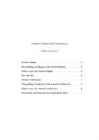
Present Simple and Continuous Table of Contents Present Simple ..................................................................... 2 The spelling of endings in the Present Simple ....................... 2 When to use the Present Simple ........................................... 3 The verb 'be' ......................................................................... 4 Present Continuous.............................................................. 5 The spelling of endings in the Present Continuous................ 5 When to use the Present Continuous.................................... 6 State verbs and event (action or dynamic) verbs ................... 7 Present Simple In the Present Simple we use the verb without an ending. I work you live we think they dance NB
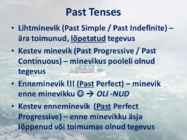
Past Tenses • Lihtminevik (Past Simple / Past Indefinite) – ära toimunud, lõpetatud tegevus • Kestev minevik (Past Progressive / Past Continuous) – minevikus pooleli olnud tegevus • Enneminevik !!! (Past Perfect) – minevik enne minevikku OLI -NUD • Kestev enneminevik (Past Perfect Progressive) – enne minevikku äsja lõppenud või toimumas olnud tegevus Created by Aari Juhanson, MA 2009 Past Simple • Ära toimunud (regulaarne) tegevus: I WORKED yesterday. S/he didn’t WORK last Monday. • Lõpetatud tegevus: I already CALLED them today. (I’m not going to call again!) Which countries did you VISIT? (You’re back …) BUT:
2 had known had been waiting singers and TV presenters 3 had enjoyed/had been enjoying 1A Talking about people 4 had thought/had been thinking page 3 3 1 F 3 F 5 T 5 had understood 2 F 4 T 6 F 1 1 unreliable 4 modest 6 had belonged 2 naive 5 thoughtless Challenge
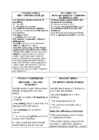
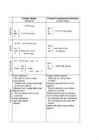
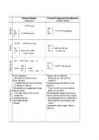
.. ?) Tegevus minevikus mingil teatud Kirjeldused. ajal: Teatud ajal minevikus toimunud They went camping by the last kestev tegevus: month. At six o'clock they were having Minevikus üksteise järel toimunud dinner. tegevused: Kaks või enam pikka samaaegset First she paid the driver, then she tegevust minevikus: got out the taxi. She was talking on her mobile Praeguseks lõppenud mineviku phone while she was driving to harjumused ja olukorrad: work. Kitchens were very different a Kestev tegevus minevikus, kui hundred years ago. teine tegevus tuli sisse: Laused, milles on järgmisi sõnu: He was walking down the street yesterday, then, when, How long when he ran into an old friend. ago ...?, last night/week/month/
.. ?) Tegevus minevikus mingil teatud Kirjeldused. ajal: Teatud ajal minevikus toimunud They went camping by the last kestev tegevus: month. At six o'clock they were having Minevikus üksteise järel toimunud dinner. tegevused: Kaks või enam pikka samaaegset First she paid the driver, then she tegevust minevikus: got out the taxi. She was talking on her mobile Praeguseks lõppenud mineviku phone while she was driving to harjumused ja olukorrad: work. Kitchens were very different a Kestev tegevus minevikus, kui hundred years ago. teine tegevus tuli sisse: Laused, milles on järgmisi sõnu: He was walking down the street yesterday, then, when, How long when he ran into an old friend. ago ...?, last night/week/month/
.. ?) Tegevus minevikus mingil teatud Kirjeldused. ajal: Teatud ajal minevikus toimunud They went camping by the last kestev tegevus: month. At six o'clock they were having Minevikus üksteise järel toimunud dinner. tegevused: Kaks või enam pikka samaaegset First she paid the driver, then she tegevust minevikus: got out the taxi. She was talking on her mobile Praeguseks lõppenud mineviku phone while she was driving to harjumused ja olukorrad: work. Kitchens were very different a Kestev tegevus minevikus, kui hundred years ago. teine tegevus tuli sisse: Laused, milles on järgmisi sõnu: He was walking down the street yesterday, then, when, How long when he ran into an old friend. ago ...?, last night/week/month/
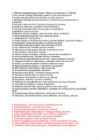
93. järelkaja - follow-up 94. täpselt kirja panema - accurate record 95. koosolekut kokku kutsuma - call a meeting 96. arutlust avama - open the discussion 97. üldine arvamus - general feeling 98. eriarvamusel olema - differences of opinion 99. peenekombeliseks jääma - remain courteous 100. meelerahu kaotama - lose your temper 101. koolituse graafik - training schedule 102. ümbernurgaütlus, riskide maandamine - hedging 103. üksmeelt saavutama- come to a consensus 104. kompromissi leidma - find a compromise 105. kokkuvõtet tegema - sum up 106. tärkavad tööstusharud - emerging industries 107. jätkusuutlik/ säästev areng - sustainable development 108. bioloogiline mitmekesisus - biological diversity 109. kalade tellingud - fish stocks 110. müra ja üldise tüütuse vähendamine - noise and general nuisance abatement 111. jääkide reguleerimine - waste regulation 112. karm kiirguse standard - stringent emission standard 113
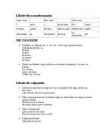
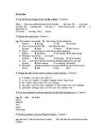
..each other for years A know B knew C knows D have known 2) Nicky........to San Francisco when the accident happened. A flies B has flown C was flying D has been flying 3) Why don`t you let her........her story? A finish B to finish C finishing D have finished 4) Tim........in a cafe at present, but he has already applied for a new job A work B have worked C is working D worked 5) My father........already worked for two years before he went to University. A was B had C has D is 3. Change the order of the words to make a correct sentence. ( 5 points ) 1) I wonder / can / you / me / help / if 2) a / my / to / written / I / mother / already / letter / long / have 3) the / watch / often / they / TV / in / evening
......................................................................................................3 Lihtolevik The present simple..................................................................................... 3 Lihtminevik The past simple....................................................................................... 3 Lihttulevik The future simple...................................................................................... 3 Kestev olevik The present continuous......................................................................... 3 Kestev minevik The past continuous........................................................................... 4 Kestev tulevik The future conrinuous..........................................................................4 Täisminevik The present perfect..................................................................................4
INGLISE KEEL Sisukord Sisukord 2 Ajavormid Tense vorms 3 Lihtolevik The present simple 3 Lihtminevik The past simple 3 Lihttulevik The future simple 3 Kestev olevik The present continuous 3 Kestev minevik The past continuous 4 Kestev tulevik The future conrinuous 4 Täisminevik The present perfect 4 Enneminevik The past perfect 4 Ennetulevik Future perfect 5 Üldminevik Past tense 5 Üldtulevik Future indefinite 5 Artiklid ja eessõnad 7 Eessõnad 7 Kesksõnad 8
Future Forms Future Forms · 1) Future Simple will work · 2) Be going to am/is/are going to work · 3) Present Continuous am/is/are working · 4) Present Simple start(s) Future Forms · 5) Future Continuous will be working · 6) Future Perfect will have worked · 7) Future Perfect Continuous will have been working Future Simple · We do our morning exercises and think, "I think we will have a nice day " · Prediction (ennustused kõhutunde põhjal) · verbs think, believe, guess, expect, hope etc · expressions be sure, be afraid etc · adverbs probably, perhaps, certainly Future Simple · You see your little brother carrying a very heavy suitcase and you think, "I will help him carry the suitcase." · on-the-spot decision
Golden Grammar rules 1. Don't use an with own. Sue needs her own room. (NOT Sue needs an own room.) I'd like a phone line of my own. (NOT ... an own phone line.) 2. Use or rather to correct yourself. She's German or rather, Austrian. (NOT She's German or better, Austrian.) I'll see you on Friday or rather, Saturday. 3. Use the simple present play(s), rain(s) etc to talk about habits and repeated actions. I play tennis every Saturday. (NOT I am playing tennis every Saturday.) It usually rains a lot in November. 4. Use will ..., not the present, for offers and promises. I'll cook you supper this evening. (NOT I cook you supper this evening.) I promise I'll phone you tomorrow. (NOT I promise I phone you tomorrow.) 5. Don't drop prepositions with passive verbs. I don't like to be shouted at. (NOT I don't like to be shouted.) This needs to be thought about some more. (NOT This needs to be thought some more.) 6
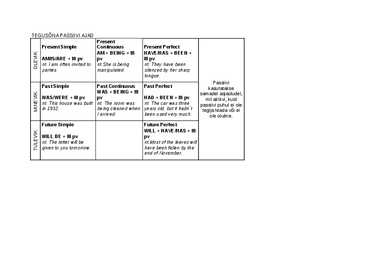
TEGUSÕNA PASSIIVI AJAD Present Present Simple Continuous Present Perfect AM + BEING + III HAVE/HAS + BEEN + OLEVIK AM/IS/ARE + III pv pv III pv nt. I am often invited to nt.She is being nt. They have been parties. manipulated. silenced by her sharp tongue.
influenced the present 3 Past Perfect A: He had spoken. · action taking place before a until that day, N: He had not spoken. certain time in the past Q: Had he spoken? · sometimes interchangeable with past perfect continuous · putting emphasis only on the fact (not the duration) Past Perfect A: He had been · action taking place before a Continuous speaking. certain time in the past N: He had not been speaking. · sometimes interchangeable Q: Had he been with past perfect simple speaking
5 I get very ________________________ before an exam and when I go to the dentist. 6 It's a great jacket and quite ________________________ considering its quality. 7 He's always having fights with people. He's very ________________________. 8 It's a nice idea but I think it's completely ________________________. It will never work. 9 Their latest CD was ________________________. Not many people bought it. 10 He is so ________________________ that people fall asleep while he is talking. Marks: /10 5 Match the words in list A with the correct definitions in list B. A B 1 intelligent a in a hurry to do things 2 stubborn b giving things to other people 3 shy c believing in yourself
We, you, they Are We are happy(Me oleme õnnelikud) They are rich.( Nad on rikkad) Tegusõnal BE (olema) on olevikus kolm vormi. Lihtminevikus kasutatakse ainsuse vormi was, mitmuses aga vormi were I, he, she, it Was We, you, they were Jaatav lause Küsiv lause Eitav lause I was there. Ma olin seal Was I there? I was not there. You were there Te olite seal Were you there? You were not there. He was there. Ta oli seal Was he there? He was not there. It was there. See oli seal Was it there? It was not there. We were there. Me olime Were we there? We were not there. seal Olevikus have, has
(like liked (hääldub [laikt]); hate hated [heitid]). Ebareeglipäraste sõnade puhul tuleb kasutada II põhivormi (vt. irregular verbs; ebareeglipäraste verbide tabel; näit. write wrote; run ran; buy bought jne.) - Küsimuste ja eitava vormi moodustamisel tuleb tegusõna panna algvormi; aga lisatakse mineviku abisõna did (Did you like the film? She did not (didn't) read the newspaper. When did you come home?) Jaatav Eitav Küsiv (kas-küsimus) I liked (went) I did not (didn't) like/go Did I go? (Läksin ma?) You liked (wento) You did not (didn't) like/go Did you like/go? He/she/it liked (went) He/she/it did not like/go Did he/she/it like/go? We liked (went) We did not like/go Did we like/go?
 annaabi.ee