Leidsid 33 sarnast õppematerjali, mis on seotud failiga "Norman Conquest". Need materjalid aitavad sul teemat sügavamalt mõista.
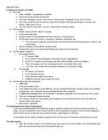
king, england, duke, harold, invasion, eleri, pärna, gymnasium, reasons, english, confessor, children, other, relative, earl, chosen, battle, hasting, beginning, took, between, killedMedieval England 1066-1485 Eva Asper Anna Pohlak 11.c The Norman Dynasty The Norman Conquest In the 11th century, Normans conquered England - The Battle of Hastings 14.10.1066 The Anglo-Saxon forces had more soldiers but the Normans had better military tactics and won in the end thanks to a clever strategy William I, also known as William the Conqueror, replaced King Harold on the throne The invasion was completed by 1071 - The Norman invasion is depicted on the Bayeux Tapestry a long embroidered cloth The death of King Harold embroidered on the Bayeux Tapestry The Norman England William I ensured his power by dividing the land into parts and making 1/7 of it a royal domain He made his nobles swear an oath of allegiance and become his vassals Died in 1087 while fighting in France, was succeeded by his third son, William II Rufus
The Middle Ages The Middle Ages are one of the most turbulent periods in English history. The Middle Ages are so called as the middle period between the decline of the Roman Empire and the Renaissance. The Middle Ages started in 1066. with the Battle of Hastings and the Norman Conquest. William the Conqueror took all the lands from the Saxon English and gave these to French nobles. Normans were known as great builders. This is assured by the fact that many great castles and other buildings, including the Tower of London, were built during the Norman Conquest. In 1086. Domesday Book was compiled. It is a detailed survey of England ordered by William the Conqueror. The reign of King William Rufus who was the son of William started in 1087 and lasted until 1100. Next king was Henry I who was the brother of William Rufus. His reign
STUDY QUESTIONS ON CHAPTER 3 · Battle of Stamford Bridge 1066- Battle, that took place on Stamford Bridge between Norwegians who were led by Harald and England (king Harold Godwinson). During the battle many Norwegian leaders were killed. Norwegians lost the battle, and it is very often taken to mark the end of the Viking Age. · Battle of Hastings 1066- Occurred on 14th October 1066 during the Norman conquest of England, between the Norman-French army of William the Conqueror and the English army under king Harold II. During the battle Harold was killed and the Normans won. It was the end of Anglo-Saxon era. · Bayeux Tapestry- Embroidered cloth nearly 70m long, which depicts the events leading up to the Norman conquest of England concerning William, Duke of Normandy and Harold, Earl of Wessex, later king of England and culminating in the battle of Hastings.
The Norman Conquest William I (the Conqueror) (1066 - 1087) On October 14, in the fateful Battle of Hastings, William defeated and killed Harold and seized the English throne. Two months after the Battle of Hastings, William I was crowned king in Westminster Abbey. The service was held on Christmas Day 1066, with all the traditional ceremonies associated with the coronation of English kings since the time of Edgar. William had gained his throne by accepting the English form of coronation, William emphasised his claim to be legitimate successor to Edward the Confessor. William I was a strong king and a man of immense determination. He was stern to people who opposed his will, but kindly disposed to those who did not. William saw England as an extension of his French domains. He dispossessed nearly all the Anglo-Saxon nobles of their lands, and put Normans in their places. These men
Edward the Confessor (1003-1066) Edward was the oldest son of Ethelred II (Ethelred the Unready http://en.wikipedia.org/wiki/Ethelred_the_Unready) and Emma of Normandy (http://en.wikipedia.org/wiki/Emma_of_Normandy). He wast he penultimate Anglo-Saxon king of England. The family was exiled in Normandy after the Danish invasion of 1013 so Edward spent the first part of his life in Normandy. He grew up in deep religious views and gained the nickname ''Confessor''. As Edward was seperated from his family and grew up in a strange land, it is said that his childhood wasn't a happy one. After Ethelred's death in 1016 the Danes again took control of England. The
For over three centuries Western Europe was raided by the Vikings. The Vikings who had settled down in England had mixed with the Anglo-Saxons. They lived under the rule of the English kings. In the 9th century a territory in northern France was conquered by another branch of the Vikings. That territory was called Normandy. They took over the French coustoms,traditions and language. The Normans lived under the rule of their own duke. By the 11th century the dukes of Normandy had become very powerful. Altought the kinf of France was their lord, they were very independent. William was the Duke of Normandy when the English king Edwar died. William had promised him that he'll be the next king. But there was another relative , Harold, who wanted to be king too. William wanted to start a war. Knights from all over the France were invited to his army.Harold was killed in the battle and the English were defeated
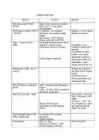
Anglo-norman period (1066-1300) The normans · The name derives from "the Northmen" · Descendants of the Vikings · Seized the north-western part of France · The area known as Normandy · Adopted French customs and Christianity · Norman-French (their version of French). 1066 · Edward the Confessor dies in January · Harold Godwinson crowned as king in Westminster Abbey on the same day · Another candidate for the throne William, Duke of Normandy · Gathered an army · Invasion delayed (bad weather) · Harald, king of Norway, invades England from the North · A battle at Stamford Bridge · Harald's army defeated, leaders killed · The end of the Viking Age · The Normans land in Britain (a few days after Stamford Bridge)
William the Conqueror (~1028-1087) · Was born in Falaise , Normandy. It's not exactly known when William born but it is is believed to have been born in either 1027 or 1028.He was son of Robert I , the Duke of Normandy. He was known as "William the Bastard" because of the illegitimacy of his birth. · Duke of Normandy from 1035. By his father's will, William succeeded him as Duke of Normandy at age seven. He was knighted by Henry at age 15. By the time William turned 19 he was successfully dealing with threats of rebellion and invasion. · King of England from 1066 to his death. Upon the death of the childless Edward the Confessor, the English throne was fiercely disputed by three claimants--William, Harold Godwinson, the powerful Earl of Wessex, and the Viking King Harald III of Norway, known as Harald Hardraada. Battles
Vikings and Norman invasion, Jorvik Centre in York Who were normans? · They were descended from norse vikings. · Norman means norseman or viking. · They played a major political, military, and cultural role in medieval Europe. Invasion to England · The Norman conquest of England began on 28 September 1066 with the invasion of England by William, Duke of Normandy. · The Norman conquest largely removed the native ruling class, replacing it with a foreign, French-speaking monarchy. Battle of Hastings · The Battle of Hastings occurred on 14 October 1066. · Norman-French army was lead by Duke William II and the English army was lead by King Harold II. · The famous Bayeux Tapestry depicts the events before and during the battle. Bayeux Tapestry Jorvik Centre in York · Jorvik Centre in York is a museum and
William the Conqueror William I was French. William I (1027 9 September 1087), better known as William the Conqueror, was Duke of Normandy from 1035 and King of England from 1066 to his death. William is also referred to as "William II" in relation to his position as Duke of Normandy. In particular, before his conquest of England, he was known as "William the Bastard because of the illegitimacy of his birth. On his father's death in 1035, William was recognised as heir, with his great uncle serving as regent. In 1042 he began to take more personal control. From 1046 until 1055 he dealt with a series of baronial rebellions. William's political and military successes helped him in negotiations to marry Matilda, daughter of Count Baldwin of Flanders in 1053.
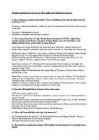
1.Who were the Normans and what did they bring with them? The normans were the people who in the 10th and 11th centuries gave their name to Normandy, a region in France. 2.How long did the Norman period last in the British Isles? 1066-1154 3.How did the Norman Conquest take place and what were the events leading to this? Edward the Confessor died and the throne was seized by his leading aristocrat, Harold Godwinson, who was crowned. Almost immediately, Harold faced two invasions - one from the king of Norway, Harald Hardrada, who was supported by Harold Godwinson's brother Tostig, and the other from William, Duke of Normandy. Harold defeated the Norwegian invasion at the Battle of Stamford Bridge in September 1066, but he was defeated and killed shortly afterwards at the Battle of Hastings. The victorious William claimed the throne. 4.What is Domesday book all about ? William the Conqueror started recording England, because he
Good at art, craftmanship, used iron Divided into tribes, ruled by kings, only in face of danger would they choose a single leader Legacy- hill-forts, farms, churches, field system, woodland, pasture, weapons, iron objects, langugae, culture Caesar in Britain The great Roman Emperor Firts came 55 BC to gather information, celts were doing agriculturally well,so romans wanted to get some food too In 54BC Caesar defeated Cassivelaunus Actual reasons why he made expeditions are unknown or wheteher he wanted to intend conquest The Roman Occupation 43-410 43 AD Emperor Claudius conquered Britain, it was easy, romans were more skilled and betetr equipped. Romans faced assaults of Picts, Scots, barbarians. 406-7 barbarians begin invasion Legacy- new types of animals, plants; miles, feet, inches-roman measurements;christianity; Roman basilica in curches; reading, writing; buildings, roads
1.What is Stonehenge? 2. Who were the Celts and the Druids? 3. When did the Romans invade Britain? 4. Why did Julius Ceasar call the land Albion ? 5.Why and who built the Hadrian Wall? 6. When did the Saxons settle in Britain? 7. When did the Vikings first raid Britain? 8. Who were the Normans? 9. When was the Battle of Hastings? 10. Who was William The Conquerer? What is Stonehenge? a prehistoric monument located in the English county of Wiltshire built in several stages from 2800 - 1800 BC. Druids built Stonehenge. Who were the Celts and the Druids? The Celts were a group of peoples that occupied lands stretching from the British Isles to Gallatia. The Druids were the wise ones, the educated class of the Celts. ( lawyers, doctors, teachers, storytellers, and other professional of that culture.) When did the Romans invade Britain? Romans invade Britain in 55 B.C
History exam *Stonehenge - is a monument located in England. It is one of the most famous prehistoric sites in the world and is composed of earthworks surrounding a circular setting of large standing stones. The surrounding circular, earth bank and ditch, have been dated to about 3100 BC. Stonehenge was produced by a culture with no written language. Many aspects of Stonehenge remain subject to debate. There is little or no direct evidence for the construction techniques used by the Stonehenge builders.
стран мира. 6 INTRODUCTION Aspects of British History presents a brief outline of the most significant milestones in the long and eventful history of Great Britain, such as the five successful invasions of the island, the birth of Parliament and transformation of an absolute monarchy into a constitutional monarchy, the origin of the English language, the rise and fall of the British Empire. The units contain an informative reading text on an important issue, preceded by preparatory discussion questions and followed by notes offering some additional information, and a vocabulary with relevant language notes. The main reading text is accompanied by comprehension, vocabulary and grammar exercises and discussion activities. Some of the units include reading passages.
mosaic floors o 122 AD- Hadrian's Wall; 138 AD- Antonine Wall o Druids(celtic priests) were banned and Britain was influenced by christianity 3) The Germanic Invasions I. The Anglo-Saxons o 5th century- 1066 o From Southern Denmark(angles); Germany(saxons); Jutland(jutes) o By the 7th c kingdoms had emerged and later KING ALFRED united the kingdoms o They were pagans and very rural people, built in wood rather than stone o It was the saxon farmstead that laid the foundations of the English village II. The Vikings o 8th century- 11th century o From Denmark, Norway o They were ship builders and sailors o In 886 the Danelaw peace treaty was made
The Roman occupation (AD 43 Londinium not important Boadicea a revolt against - AD 410) politically. An important trading the Roman conquest centre. Devastation AD 61. Rebuilt. Roman walls built in AD 200. Anglo Saxons (AD 400 Destroyed the Roman towns. Many 1066) kingdoms. London in ruins. King Egbert one Flourishing. Attacks by Vikings. kingdom England (the 9th century) King Albert the Great London is the capital Edward the Confessor
Revision questions for the test on Old English and Medieval Literature. 1.) How is literature analysed and studied? What is the difference between the diachronic and synchronic view? Literature is studied and analysed by reading the piece of work profoundly and work on all the aspects of the piece. Diachronic is development in history Synchronic is particular state at any given moment 2.) Give a general overview of Celtic Britain, Roman invasion in 55-54 BC, Anglo-Saxon invasion and the second Roman "invasion" of Great Britain, who were the leaders, what influence did they leave on the culture of Great Britain? Celtic Britain was during the Bronze Age, there were many small tribal kingdoms fighting one another. Many megalithic monuments were built around that time, e.g. Stonehenge, the Avebury ring. The Roman Invasion 55-54 BC, Julius Caesar ruled Rome, Rome built the Hadrian's wall (73 miles
Britain History Pre-Norman Britain The Iberians brought their metal-working skills and the first real civilization to Britain in the third millennium B.C and were overrun by various Celtic invasions that began in the 8th century. The Celts introduced their tribal organization and an early form of agriculture before they were forced westward by the Roman invasion. Forms of Celtic language are still spoken in Britain. Romans (with Julius Caesar in the head of them) first tried to occupy Britain in 55 B.C., but there was a rebellion in Gaul so they had to leave to fight against it. Next time they came in 43 A.D. and their leader was Emperor Claudius. Romans brought a lot with them. Their brought paved roads, the sites of important cities, the seeds of Christianity, the Roman law, Roman baths, language and advanced civilization
Years 1154-1485 Henry I was the first unquestioned ruler. One of the most important kings in the Middle Ages. He had lands in Britain & France. Then the government was the monarch, a person, not a place. He had more land than any pervious king. After his marriage to Eleanor of Aquitaine, he also ruled the lands south of Anjou. His empire stretched from the Scottish border to the Pyrenees. England provided most of its wealth, but the heart was Anjou. Henry II began to regain royal control. During the war some barons had become very powerful. He pulled down some of their castles. He tried to restore law & order. He wanted the same kind of justice to be used everywhere. He appointed his own judges to travel around the country. They dealt with crimes & disagreements over poverty. Serious offences were tried in the king's court. At first they had no special knowledge or training
Germanic tribes settled and stayed Anglia Christianity was brought, religion became important, churches were built 8th century = raids by the Vikings and the Danes 1016 1042 : Under Danish rule ( York was the capital ) 1042 : local AngloSaxons regain their rule 1066 : Normans arrive ( the Norman conquest ) Medieval Britain (106615th c.) the Battle of Hastings William the Conqueror a new AngloNorman state the feudal system introduced the rule of the king and church strengthened centralised country, military rule Scotland, Wales and Ireland conquered Norman castles built spoke Norman French 1170 the murder of Archbischop Thomas a Becket in Canterbury Cathedral ( the religious centre of England & the Anglican church of the whole world ) late 12th century : Robin Hood 1215 the Magna Carta ( personal and political liberty, signed by the king & the barons ) The first legal document! 1337 : the Hundred Year's War 1348 the Black Death
The early middle ages The Norman Conquest Since William was crowned king, there were many rebellions against the Normans. A small Norman army marched from village to village and destroyed the ones it couldn't control. The Normans took away the Saxon lords' land. Only a few Saxons who supported William could keep their land. Feudalism William gave parts of his conquered land to his captains around the country to avoid rebellions and uprisings. He also kept some land to himself to make sure his was much stronger than his nobles
laws to a new province of the Roman Empire and started to build good roads. Officials were appointed (governors, procurators to collect taxes, look after the estates and mines and se that the gold, silver, iron and lead were exported back to Rome). Introduced schools,a new language Latin, large farms (villas), baths. In AD 410 they had to leave . roman occupation lasted nearly 400 years. They left behind very little. Roman province of Britannia covered most of present-day England and Wales. 4. Latin influence on English *The influence of Latin is noticeable also in the names of European cities: the Latin noun colonia (settlement, colony) may be found in numerous place-names: Lincoln, Colchester, Cologne ; from Latin word castrum (military camp) were derived English affixes -chester and -castle: Manchester, Lancaster, Newcastle; Latin word portus (seaport) in Portsmouth *-tor - person, doer, masculine form
British history Roman Britain Roman Britain was those parts of the island of Great Britain controlled by the Roman Empire between 43 and about 410. The Romans referred to their province as Britannia. Prior to the Roman invasion, Iron Age Britain already had cultural and economic links with Continental Europe, but the invaders introduced new developments in agriculture, urbanization, industry and architecture, leaving a legacy that is still apparent today. Historical records beyond the initial invasion are sparse, although many Roman historians mention the province in passing. Most of the knowledge of the period stems from archaeological investigations and especially epigraphic evidence.
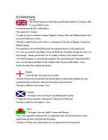
1) General facts The UK: * the United Kingdom of Great Britain and Northern Ireland was formed in 1801 * it covers 243,610 sq km * everybody from the UK is called British * the capital city is London * is made up of four constituent countries: England, Scotland, Wales and Northern Ireland which in turn are divided into counties * the flag is called the Union Jack which is a combination of the flags of England, Scotland and Northern Ireland * the population is about 60,000,000 people, the population density is 242 people/sq km * its coasts are washed by the Atlantic Ocean, the North Sea, the English Channel, the Celtic Sea, Saint George's Channel, and the Irish Sea. It is linked to France by the Channel Tunnel * the United Kingdom is a constitutional monarchy. The current monarch is Queen Elizabeth II, who is also the Queen and Head of State of fifteen other Commonwealth Realms, such as
William the Bastard Early life about the bastard William I usually known as William the Conqueror and sometimes William the Bastard, he was the first Norman King of England. William was the son of the unmarried Robert I, Duke of Normandy, by Robert's mistress Herleva. During his childhood and adolescence, members of the Norman aristocracy battled each other, both for control of the child duke and for their own ends. About william the first In 1047 William was able to quash a rebellion and begin to establish his authority over the duchy, a process that was not complete until about 1060. His marriage in the 1050s to Matilda of
The Saxons & Vikings Fragmentary knowledge of England in the 5th & 6th centuries comes from the British writer Gildas, the Anglo-Saxon Chronicle, saints' lives, poetry, archaelogical findings and place- name studies. British landlords ruled small, unstable kingdoms and continued some Roman traditions of governance. In the mid-5th cent, Vertigern, a British leader, hired Germanic mercenaries to help defend against peoples of the north (Picts & Scots). In the end they revolted & the process of invasion and settlement began
5. Which 5 places attract visitors in Wales and Scotland? Edinburgh, Loch Ness, The Highlands, Snowdonia, Cardiff. 6. Name 6 islands, 5 rivers, 3 lakes, 3 mountains in UK. Isle of Man, Isle of Wight, Isle of Lewis, Island of Mull, Island of Arran, Anglesey Island Severn, Thames, Tweed, Avon, Trent, Dove Ben Nevis, Snowdon, Ben Macdui 7. Stonehenge. Stonehenge was produced by a culture that left no written records. Built on Salisbury Plain, in Wiltshire, England some time between 5,000-4,300 years ago. One of the most famous megaliths in the world, dating from prehistoric times. Stonehenge consists of circles of stone arranged in complex patterns, and their origin is still being explored. Some of the stones come from over 200 miles away in Wales. There is little or no direct evidence revealing the construction techniques used by the Stonehenge builders. It was probably associated with sun-worship and
performed them); 2) gleeman (travelled, mostly sang other peoples' songs, not their own songs; performers of scop songs) · The oldest known song Widsith (The Far Traveller/Wonderer); tells of a gleeman who travels in Europe, of his love of noble deeds, speaks of the shortness of life http://en.wikipedia.org/wiki/Widsith · The other known song Deor's Lament. Can be called the first English lyrics, about 40 lines. Talks about a scop who is not happy with his life. · A-S poetry was fatalistic in its nature (fate controls you, not you it) · The greatest known A-S song, the epic Beowulf. The oldest epic poem in Europe. Composed at the end of the 7th century, the only manuscript that has survived is from the 10th century. Contains references to real people and real events. Scene of the poem: Denmark, southern Sweden (the A-S tribes came from these places)
By 300AD all the towns had thick walls. The Romans left about 20 large towns and a hundred of small ones. Many of the towns were at first army camps and the Latin word for it castra has still remained in the names of these towns: Leicester, Chester, Doncaster, Lancaster etc. The Towns were well built and connected with roads. In the countryside there were many large farms called villas. The life expectancy was short 2040 years. The Saxon invasion The Invaders At first the Germanic tribes only raided Britain but after 430 AD they began to settle. The invaders came from three powerful Germanic tribes the Saxons, Angles and Jutes. The Jutes settled in Kent and south coast, angles settled in east and north midlands and the Saxons settled between then. They all drove most of the Celts to Wales and in north to Scotland. Hardly anything is left from the Germanic culture. The AngloSaxons established a number of kingdoms. The most
What is London? London is one of the largest cities in the world, with an area of 1706,8 km2. It is the capital of England and The United Kingdom. It is in Central Europe. The city lies on the river Thames. London has 7,556,900 inhabitants, which is more than a quarter of the countries in Europe! For one city, London is very special. The beginning of London Before the founding of London, there had already been smaller groups of people in the area. There aren't any records on who they were. The first mayor settlement of London was in 43 AD. Romans came to the banks of the river Thames
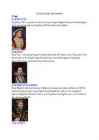
British kings and queens Kings King Henry VIII King Henry VIII is arguably the most well-known king of England. Famous for beheading his wives, of which he had six, King Henry VIII also had several children. King James I King James I was already King of Scotland when he got the English crown. King James I was the first ruler to call himself King of Great Britain, as he ruled England, Scotland and Wales. King James was the first King of Great Britain. King William I, the Conqueror King William I, otherwise known as William the Conqueror was born in France on 1028. He became friendly with the current English King, Edward the Confessor. He invaded and attacked England on Edward's death, as he was promised the English crown, but then denied it by the Saxon Harold. King George VI King George VI did not expect to become king, he was the shy brother of Edward VIII who only took the thrown when Edward abdicated
The Medieval period The Middle Ages began in 1066, when the Normans defeated Anglo-saxons at the Battle of Hastings. Now England had a Norman king William the Conquer. Norman kings ruled in England less than 100 years, during that time Normans brought England closer to the mainstream of European society. William introduced the feudalism. Under it, land was divided among noble overlords, or barons. Knights pledged their wealth and services to the overlords. In return overlords let them use their land. At the lowest end of the social scale were the serfs, peasants bound to the land. In 1154 the Norman time was at the end. In 1154 Henry II started to reign. Henry II was the king who increased royal power at the expense of nobles. His desire to
 annaabi.ee