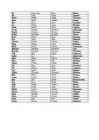
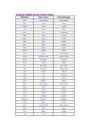
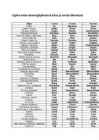
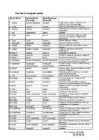
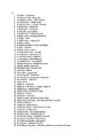
See Saw Seen Vaatama Go Went Gone Minema Read Read Read Lugema Write Wrote Written Kirjutama Teach Taught Taught Õpetama Bring Brought Brought Tooma Tear Tore Torn Kiskuma Pay Paid Paid Maksma Choose Chose Chosen Valima Ring Rung Rung Helisema Steal Stole Stolen Varastama Mistake Mistake Mistaken Viga Become became become Muutuma Fall fell Fallen Kukkuma Light Lit Lit valgustama Blow Blew Blown Puhuma Run Ran Run Jooksma Stand Stood Stood Seisma Lie Lay Lain Asetsema Fly flewn flown Lendama Lay Laid Laid Panema Think Thought Thought Mõtlema Rise Rose Risen Tõusma Come Came Come Tulema
leave left left lend lent lent let let let lie lay lain light lighted/lit lighted lose lost lost make made made mean meant meant meet met met misspell misspelled/misspelt misspelled/misspelt mistake mistook mistaken mow mowed mowed/mown overcome overcame overcome overdo overdid overdone overtake overtook overtaken overthrow overthrew overthrown
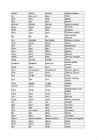
maksma cost cost cost tegema make made made lõikama cut cut cut tähendama mean meant meant tegelema deal dealt dealt kohtama meet met met tegema do did done eksima mistake mistook mistaken joonistama draw drew drawn maksma pay paid paid jooma drink drank drunk panema put put put sõitma drive drove driven välja lülitama quit quit quit sööma eat ate eaten lugema read read read
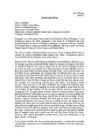
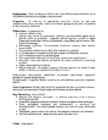
FILM REVIEW Film: Desperado Genres: Thriller, crime drama Director: Robert Rodriguez Release date: 25 August 1995 Main actors: Avtonio Banderas, Salma Hayek, Joaquim de Almeida Company: Columbia TriStar Desperado is a crime drama written, directed and edited by Robert Rodriguez. It was released on August 25, 1995. Desperado is the sequel to El Mariachi and stars Antonio Banderas as musician El Mariachi. Mariachi is a musician who gets mistaken for a hitman tries to avenge the murder of his girlfriend. The movie also stars Salma Hayek, Quentin Tarantino, Steve Buscemi and Cheech Marin. The film takes place in Mexican border town where Bucho (Joaquim DeAlmeida), a wealthy but casually bloodthirsty drug kingpin rules. When `El Mariachi'comes to town to kill Bucho for killing his lover, action begins. Desperado tells the story of El Mariachi, played by Antonio Banderas. Mariachi is out
When walking on the streets you can often see someone with a great style whom you look at and think "What an odd appearance. Kind of cool, but odd". If you bothered to waste your brain you could think that about every other person actually. It must be said that the Lila looks cool and stylish. Her style has become a trend even though she doesn't admit to it. She sees herself as one of a kind. At least that is what she wishes she could be. She mustn't be mistaken for the labels girl. Lila hates all kinds of labels. She never wears Guess or D&G even though she could very well afford them. She does all her shopping in second hand stores. She is trying so hard to keep the locations secret, not to have competition. Even though she actually shops a lot in her own secret places Lila doesn't have a decent pair of jeans or black pants. Or at least she is never seen in one. Her cupboard is full of
Although her use of words was excellent and I do not have anything negative to say about her presentation, I still think she should have had some pictures or maybe a crooked backbone with her on the stage because then people who have visual modality would have understood her better and it also would have emphasized the seriousness of the problem. Furthermore, in my opinion she should have moved more due to the fact that the stage was huge and at the moment she did not fill it up. I might be mistaken but I think it had been a good idea to walk during the time of presentation because then her moves would have also talked for themselves. Despite that her hand gestures were just perfect and she did not seem nervous. To sum up the whole presentation she used some funny words and pointed at her lower back as in the beginning of the presentation. This was used to make people more lively and to let them know that the presentation is about to end. Also she
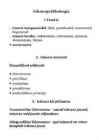
lie lay lain light lighted, lit lighted, lit lose lost lost make made made mean meant meant meet met met melt melted melted, molten mislay mislaid mislaid mislead misled misled misspell misspell misspell mistake mistook mistaken misunderstand misunderstood misunderstood mow mowed mown, mowed outdo outdid outdone overcome overcame overcome overdo overdid overdone overhang overhung overhung overhear overheard overheard overlay overlaid overlaid override overrode overridden overrun overran overrun oversee oversaw overseen
They have a double wedding with joy and love. A major theme is the importance of environment and upbringing on the development of young people's character and morality. Social standing and wealth are not necessarily advantages. Pride and Prejudice, employs the narrative technique of free indirect speech. Austen invites the reader to follow events from Elizabeth's viewpoint, sharing her prejudices and misapprehensions and being surprised along with her when events prove these to be mistaken. In my oppinion, the book was really good and I liked it a lot. Though the language was quite difficult to understand sometimes, but I liked the style she has written the novel. I like the way she talks about the characters so prolixly and they were somehow still jolly. I did not like the character of Darcy in the beginning, because I thought it was too strict and was not humorous at all. But in the end I thought he is a really good man for Elizabeth
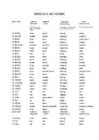
PRESENT PAST PARTICIPLE PARTICIPLE TO LIGHT light lighted, lit lighting lighted, lit TO LOSE lose lost losing lost TO MAKE make made making made TO MEAN mean meant meaning meant TO MEET meet met meeting met TO MISTAKE mistake mistook mistaking mistaken TO PAY pay paid paying paid TO PROVE prove proved proving proven TO QUIT quit quit quitting quit TO READ read read reading read TO RID rid rid ridding rid TO RIDE ride rode riding ridden TO RING ring rang ringing rung TO RISE rise rose rising risen TO RUN run ran running run TO SAY say said saying said
light lighted/lit lighted Valgustama, süütama lose lost lost kaotama make made made Tegema mean meant meant mõtlema meet met met Tutvuma, kohtuma misspell misspelled/misspelt misspelled/misspelt Vigadega kirjutama mistake mistook mistaken Eksima mow mowed mowed/mown Niitma overcome overcame overcome Üle saama overdo overdid overdone liialdama overtake overtook overtaken Mööda sõitma overthrow overthrew overthrown kukutama pay paid paid Maksma plead pled pled Paluma, väitma
Hallward is horrified and begs him to repent. Dorian claims it is too late and kills Basil in a fit of rage and hides his body. He blackmails another of his former old friend Alan Campbell into disposing of the body. An hour later, Dorian attends a party, but is bored and distracted. He then heads for an opium den and, out on the street, meets Sibyl's younger brother, who has been waiting for an opportunity to harm Dorian for nearly twenty years. Dorian makes a case for mistaken identity when he claims to have the face of a twenty-year-old and cannot be the man James is looking for. A woman in the street reveals that Dorian "sold himself to the devil for a pretty face," so James again pursues Dorian. Over the next several days Dorian lives in fear, sure that James is searching for him. While hunting one day, Dorian's friend Geoffrey accidentally shoots a man hiding on Dorian's property. This stranger is revealed to be James Vane
perceived. Nevertheless, it does not explain how the knowledge for perception is acquired. In contrast Gibson has an alternative explanation with texture gradient and affordances. 3 05144023 Nevertheless, one of the most significant problems with Gibson's theory is its inability to explain the Ames distorted room illusion (Gehringer & Engel, 1986). Gibson argues that most mistaken perception occurs in situations very different from those, which exist in the natural environment. However, to suggest that illusions are nothing but laboratory tricks designed to confuse people is not true, since at least some produce effects similar to those found in normal perception. Despite the important differences between Gibson and Gregory's theories, they agree on several points. Both believe that visual perception is mediated by light reflected from
linked to learned helplessness. Many of these stimuli are environmental stressors. Both acute and chronic exposure to noise, crowding, traffic congestion, and pollution are capable of causing learned helplessness in adults and children. Pre-exposure to brief, acute environmental stressors that are uncontrollable produces learned helplessness wherein participants manifest difficulties in learning a new task because of their mistaken belief that they are incapable of influencing their environment. · Another index of learned helplessness, less persistence in the face of challenge also follows acute exposure to uncontrollable environmental stressors. · Depressed affect may co-occur with learned helplessness under certain circumstances. Field studies of chronic environmental stressors reveal parallel trends. Chronic environmental stressors also heighten
Tegema, valmistama Make Made Made Tähendama, kavatsema Mean Meant Meant Kohtama, kohtuma Meet Met Met Ebaõigele kohale asetama Mislay Mislaid Mislaid Eksiteele viima Mislead Misled Misled Ära segama, eksima Mistake Mistook Mistaken Valesti aru saama Misunderstand Misunderstood Misunderstoo Niitma Mow Mowed Mown/mowed Enam pakkuma Outbid Out(-bid/-bade) Outbid/outbidd Ületama, üle trumpama Outdo Outdid Outdone Üle kasvama, kasvult ületama Outgrow Outgrew Outgrown Joostes ette jõudma Outrun Outran Outrun
narrative. Natural viewpoint gives the improvised feel of the action , despite that lines seem spontaneous evan as they are exactly the opposite. Altogether, ''La Règle du Jeu'' is an outstanding and non-judgmental film, a commentary on human behavior and charitable to its protagonists. Despite handling a number of thematic direction, Renoir's clarity of approach is such that these remain distinct. For example, the theme of mistaken identity, where one person substitutes for another (such as at the masquerade ball), is introduced at the airport and continues throughout. Together with the direct interpretation, every member of this upper-middle class social group is required (as a matter of course) to hide their true feelings, their identity. It is this complexity, presented in simple terms. Renoir subtly builds his case against the aristocracy, collapsing his house of cards only at the very end.
tõlgendama 113. misspell misspell misspell valesti kirjutama, õigekirjavigadega (misspelled) (misspelled) kirjutama 114. misspend misspent misspent valesti kulutama või veetma; (ära) raiskama 115. mistake mistook mistaken valesti aru saama, eksikombel arvama või 3 Aari Juhanson, MA 2007 pidama (mlkski, klkski for); eksima 116. misunderstand misunderstood misunderstood valesti või vääriti mõistma 117. mow mowed mown (mowed) niitma 118. outbid outbid outbid üle (ehk enam) pakkuma; üle trumpama 119
in his immortal life has loved another human being before. It is somewhat understood, why Bella loves Edward he is hot (even though his hotness is quite useless in their relationship, since it was repeatedly stated, that they could never get intimate) but the way Edward's love for Bella is explained is quite atrocious. Apparently she smells yummy. And he thinks she's interesting, because he can't hear her thoughts. Too bad he's mistaken, but I might say that Bella got really lucky with this one. I do understand that this is just a fantasy novel and not everything has to be deeply realistic and thoroughly explained, but I simply can't understand the dynamics of their relationship. Which is worse, the book makes young girls long for that kind of a creepy, overprotective and somewhat abusive partnership. It sends out a message, that it's perfectly fine, even romantic,
(armastus ja abielu). IV Isiksuse tüübid. Vale elustiil · domineeriv (ruling-dominant), eesmärk: teiste üle domineerimine · ootav (getting-learning: eesmärk: teiste abi ootamine, · alalhoidlik (avoidant): eesmärk: probleemide vältimine, passiivsus, Terve elustiil, sotsiaalselt kasulik (socially useful), eesmärk: probleemide lahendamine sotsiaalselt kasulikul viisil V Vale elustiili tekkimine (mistaken life-style) · füüsiline alaväärsus (physical inferiority), mis võib areneda alaväärsuskompleksiks · poputamine (pampering), vanemad rahuldavad lapse kõik soovid ja vajadused · ignoreerimine (neglecting) - vanemad ei tunnusta lapse vajadusi VI Vale elustiil ja ego kaitsestrateegiad. kaitsestrateegiaid (safeguarding strategies) a) väljavabandamine (excuses) b) agressiivsus (aggression): alavääristamine (depreciation) süüdistamine (accusation),
(armastus ja abielu). IV Isiksuse tüübid. Vale elustiil · domineeriv (ruling-dominant), eesmärk: teiste üle domineerimine · ootav (getting-learning: eesmärk: teiste abi ootamine, · alalhoidlik (avoidant): eesmärk: probleemide vältimine, passiivsus, Terve elustiil, sotsiaalselt kasulik (socially useful), eesmärk: probleemide lahendamine sotsiaalselt kasulikul viisil V Vale elustiili tekkimine (mistaken life-style) · füüsiline alaväärsus (physical inferiority), mis võib areneda alaväärsuskompleksiks · poputamine (pampering), vanemad rahuldavad lapse kõik soovid ja vajadused · ignoreerimine (neglecting) - vanemad ei tunnusta lapse vajadusi VI Vale elustiil ja ego kaitsestrateegiad. kaitsestrateegiaid (safeguarding strategies) a) väljavabandamine (excuses) b) agressiivsus (aggression): alavääristamine (depreciation) süüdistamine (accusation),
329.Marsh soo, lodu 330.Mason- müürsepp 331.Matrix- lähtekivim 332.Mature - küps 333.Meadow aas, rohumaa 334.Meandering stream-looklev oja 335.Medium blends mulla segud 336.Mere- järv, tiik 337.Meticulously arranged - hoolikalt paigutatud 338.Microclimate mikrokliima 339.Middle of - keset 340.Mild climate- leebe, vaikne, kerge kliima 341.Mimic matkima 342.Minimum amount miinimum summa 343.Mistaken eksklik, väär 344.Modify- muutma 345.Moisture content- niiskuse sisaldus 346.Moisture retention niiskuse kinnipidamine 347.Monastery- mungaklooster 348.Monetize kasumi teenimine 349.Monoculture- monokultuur, üksikkultuur 350.More doable rohkem teostatav 351.More proficient rohkem osav 352.More urgent kiirem 353.Mortality suremus 354.Mould- kujundama 355.mountain- mägi 356.Mown grass niidetud muru 357
(keerad oma nõrkuse tugevuseks) - Alaväärsustunne motiveeris või blokeeris isiksuslikku kasvu (inferiority complex) feelings of inferiority can act as a stimulus for positive growth or a sa disabling force, deppends on ones attidute toward them. Elustiil valitakse elustiil, mis on keskkonnas kättesaadav, (worldview given to a child) sotsiaalse huvi olulisus (neurootikud eksivad elustiili valikul (mistaken lifestyle)); valed elustiilid (ruling, getting, avoiding type), sotsiaalse huviga ja aktiivsed isikud õige elustiil Loov mina inimesel on valik, kuidas ta elab, millise tähenduse omistab elule, inimesed on vabad valima endale saatust Horney - sugu ei determineeri isiksust. Freud anatomy is destiny ei kehti pigem kultuuritaust. biolg kadedus. baasärevus Lapse põhivajadused (turvalisuse, bioloogilised ), laste vajaduste
illegal. In June 1972 all foreign businesses including the Iraq Petroleum Company were seized and Iraq declared that oil would be used as "a political weapon in the struggle against imperialism". Saddam Hussein assumed power in a counter-coup in 1979. 1980s The Iran-Iraq war (1980-1988) was one of a series of crises during an era of upheaval in the Middle East. In mid-September 1980 Iraq attacked Iran, in the mistaken belief that Iranian political disarray would guarantee a quick victory. The U.S., having decided that an Iranian victory would not serve its interests, began supporting Iraq. In 1984 the U.S restored full diplomatic relations with Iraq. At same time U.S. began sharing intelligence and selling weapons to Iran. In 1986 the USA increased the aid to Iraq. In early 1988, Iraq's relations with the United States were generally friendly
of Westminster Abbey. In 2010, the International Astronomical Union approved that a crater on the planet Mercury would be named after Kipling - one of ten newly discovered impact craters observed by the MESSENGER spacecraft in 2008-9. Many older editions of Rudyard Kipling's books have a swastika printed on their covers associated with a picture of an elephant carrying a lotus flower. Since the 1930s this has raised the possibility of Kipling being mistaken for a Nazi-sympathiser, though the Nazi party did not adopt the swastika until 1920. Kipling's use of the swastika was based on the Indian sun symbol conferring good luck and well-being; the word derived from the Sanskrit word svastika meaning "auspicious object". He used the swastika symbol in both right- and left-facing orientations, and it was in general use at the time. Even before the Nazis came to power, Kipling ordered the engraver to remove it from the printing block
This cafe is said to have been closed 13.Sul oleks parem kohe minna You had better go at once 14.Ma pigem ei läheks sinna I would rather not go there 15.Mul ei jää muud üle kui nõustuda temaga I cannot but agree with him 16.Niimoodi toimida oli kasutu To act like this was useless 17.Minu kavatsus oli lahendada see probleem My intention was to solve the problem 18.Ta ei suutnud seda tõestada He could not prove it 19.Ta hakkas aru saama, et ta on eksinud He came to realise that he was mistaken 20.Ta näis kõhklevat She appeared to be hesitating 21.Teda peetakse targaks meheks He is believed to be a clever man 22.Teda sunniti lepingule alla kirjutama He was made to sign the treaty 23.Ta tavatses lugeda põnevusromaane She used to read thrillers 24.Varsti ta õppis vene keelt rääkima Soon she learned to speak Russian 25.Ma ei teadnud mida vastata I did not know what to answer 26.Mul oli kahju, et olin teda solvanud I was sorry to have insulted her 27.Ta oli esimene kes tuli
and who believe in the possibility of changing. 254. If you already know it is bad and do it, you commit a sin difficult to redress. 255. The chief means of happiness in this life is the ability to consider externally always, internally never. 256. Do not love art with your feelings. 257. A true sign of a good man is if he loves his father and mother. 258. Judge others by yourself and you will rarely be mistaken. 259. Only help him who is not an idler. 260. Respect every religion. 261. I love him who loves work. 262. We can only strive to be able to be Christians. 263. Don't judge a man by the tales of others. 264. Consider what people think of you--not what they say. 265. Take the understanding of the East and the knowledge of the West--and then seek. 266. Only he who can take care of what belongs to others may have his own. 267. Only conscious suffering has any sense. 268
Affectation of candour is common enough--one meets with it everywhere. But to be candid without ostentation or design--to take the good of everybody's character and make it still better, and say nothing of the bad-- belongs to you alone. And so you like this man's sisters, too, do you? Their manners are not equal to his." "Certainly not--at first. But they are very pleasing women when you converse with them. Miss Bingley is to live with her brother, and keep his house; and I am much mistaken if we shall not find a very charming neighbour in her." Elizabeth listened in silence, but was not convinced; their behaviour at the assembly had not been calculated to please in general; and with more quickness of observation and less pliancy of temper than her sister, and with a judgement too unassailed by any attention to herself, she was very little disposed to approve them. They were in fact very fine ladies; not
5 Chapter 31: Blathers and Duff, the Bow Street Runners, come into the house and ask questions about the crime to Mrs. Maylie and Dr. Losberne. Losberne recounts the circumstances to them, and they ask about the injured boy they heard the servants speaking of. Losberne tells them that Oliver had nothing to do with the crime and that in all the excitement someone mistaken him for one of the thieves. Blathers and Duff inspect the premises and demise that the robbers were professionals, probably from London. Dr. Losberne, Mrs. Maylie, and Rose debate on whether or not Oliver should tell his story to the men, and they decide that though they believed him, it was rather farfetched. In Oliver's interest, they decided to make up a fake one for the boy so they could keep him safe. Stalling the officers, they
What is Science? 1. Science as an academic enterprise or group of academic disciplines It begs the question: Science is what Scientists do. Scientists are those who do Science. 2. Science as a body of knowledge Science is the collection of results and ‘facts’ that we know. Science discovers new truths and increases our knowledge. However, part of this body will probably be proved to be mistaken in the future. Therefore, it is better to define science in terms of methods rather than in terms of results. 3. Science as an activity What makes something a science? Is there a common scientific method? (will be discussed later) What is the demarcation criterion between Science and Non-science? Important problem in Philosophy of Science Useful to discredit Pseudo-science. Falsifiability
rest from the city life. The estate is located right near Levin's. Dolly comes to the countryside to regain her stability and find happiness with her kids. She succeeds. Kitty is coming for a visit to Dolly's estate. Levin says he will make himself unavailable, since he is trying desperately to forget Kitty. Yet once Kitty arrives, Levin spots her in her carriage and their eyes meet. He realizes he still loves her. "He could not be mistaken. There were no other eyes like those in the world. There was only one creature in the world who could concentrate for him all the brightness and meaning of life. It was she. It was Kitty." Levin again realizes his most sincere feelings are stemming from his heart, not his brain. There is no time to analyze; his heart has told him what he needs to do. Incidentally, right before he sees Kitty, Levin meets a young married couple who are very much in love
for this purpose. Also use some suitable conversational formulas. A. Saying something is correct. That's quite right / correct. Yes, you’re quite right. That’s quite true. Saying something is not correct. I`m afraid that is not quite correct. I`m not sure you`re right… I` I’m afraid you are mistaken here. ___________________________ _______________________________ Correcting someone As far as I know, … In 'my opinion To 'my mind, … B. Agreeing That’s quite true. I (fully) agree... I couldn’t agree more.
IV Isiksuse tüübid. Vale elustiil: - domineeriv (ruling-dominant) - eesmärk teiste üle domineerimine ehk võim. - ootav (gerring-learning) – eesmärk teiste abi ootamine. - alalhoidlik (avoidant) – eesmärk probleemide vältimine ja passiivsus. Terve elustiil – sotsiaalselt kasulik. Eesmärk probleemide lahendamine sotsiaalselt kasulikul viisil. V vale elustiili tekkimine (mistaken life-style). - Füüsiline alaväärsus (physical inferiority), mis võib areneda alaväärsuskompleksiks. - Poputamine (pampering) – vanemad rahuldavad lapse kõik soovid ja vajadused. - Ignoreerimine (neglecting) – vanemad ei tunnusta lapse vajadusi. Passiivsus, abiootamine, võimu ihalus, ignoreerimine. VI Vale elustiil ja ego kaitsestrateegiad. Kaitsestrateegiate jagunemine:
" Longfellow had originally planned on following Schoolcraft in calling his hero Manabozho, the name in use at the time among the Ojibwe of the south shore of Lake Superior for a figure of their folklore, a trickstertransformer. But in his journal entry for June 28, 1854, he wrote, "Work at 'Manabozho;' or, as I think I shall call it, 'Hiawatha'--that being another name for the same personage." Hiawatha was not "another name for the same personage" (the mistaken identification of the trickster figure was made first by Schoolcraft and compounded by Longfellow), but a probable historical figure associated with the founding of the League of the Iroquois, the Five Nations then located in presentday New York and Pennsylvania. Because of the poem, however, "Hiawatha" became the namesake for towns, schools and a telephone company in the western Great Lakes region, where no Iroquois nations historically resided. The late romantic authors
That is, I own, a man . . . abominable! I can't get over it; the whole thing floors me. ELMIRE What? You come out so soon? You cannot mean it! Get back under the table; 'tis not time yet; Wait till the end, to see, and make quite certain, And don't believe a thing on mere conjecture. ORGON Nothing more wicked e'er came out of Hell. ELMIRE Dear me! Don't go and credit things too lightly. No, let yourself be thoroughly convinced; Don't yield too soon, for fear you'll be mistaken. (As Tartuffe enters, she makes her husband stand behind her.) SCENE VII TARTUFFE, ELMIRE, ORGON TARTUFFE (not seeing Orgon) All things conspire toward my satisfaction, Madam, I've searched the whole apartment through. There's no one here; and now my ravished soul . . . ORGON (stopping him) Softly! You are too eager in your amours; You needn't be so passionate. Ah ha! My holy man! You want to put it on me! How is your soul abandoned to temptation! Marry my daughter, eh
what Donnellan calls the referential use. Donnellan's objection to the Theory of Descriptions is just that the theory overlooks the referential use; Russell writes as if all descriptions were used attributively. But, against Strawson, Donnellan complains that equally he did not see the attributive use, that Strawson writes as if all descriptions were used referentially, in a context, to draw somebody's attention to a particular person, place or thing. Thus both Strawson and Russell were mistaken in thinking that definite descriptions always work in one way, because there is an ambiguity acknowledged by neither. Donnellan does not take a position as to what kind of ambiguity it is; in particular he does not try to decide whether the sentence (12) itself has two different meanings explaining the description's evidently distinct "uses." Donnellan gives several informal characterizations of the new referential use: "A speaker who uses a definite description referentially in an asser-
WRITE NOP (000) If a mistake was made inputting the instruction, press the Up Arrow Key to return to the previous program address and input the instruction again. The mistaken instruction will be overwritten To specify the Completion Flag for a timer or counter, press the LD, AND, OR, or NOT Key followed by the TIM or CNT Key, and then input the timer/ counter number last. 6. Input the second instruction and operand. (In this case it isn’t necessary to enter the timer number, because it’s 000
the increasing popularity of the Persian. In the solid-colour German Longhairs, amber/yellow was the preferred eye-colour, except in solid white cats where amber, blue or odd-eyes were permitted. Deafness was a disqualifying fault in white cats which were to be tested using a whistle out of the cat's sight. He also mentioned the potential for degenerative problems, such as deafness, related to "albinism" (blue-eyed white was mistaken for albinism) so some indication that the cat wasn't albino, such as a dark membrane, was desirable. The bicolour and tricolour cats were to be more colour than white. The "masked" cats were allowed to be less symmetrically marked than bi- or tri-colours. This group included the "black and yellow" tortoiseshell and the "Spanish" (tortoiseshell and white). The tortoiseshells ideally were to have large patches of colour, but Schwangart admitted that this was rare. In parti-colour cats,
after opening its doors, the bank was forced to close to prevent a complete crash ("News," 1988).6 This account provides certain insights into the way we respond to social proof First, we seem to assume that if a lot of people are doing the same thing, they must know something we don't. Especially when we are uncertain, we are willing to place an enormous amount of trust in the collective knowledge of the crowd. Second, quite frequently the crowd is mistaken because its members are not acting on the basis of any superior information but are reacting, themselves, to the principle of social proof. There is a lesson here: An automatic pilot device, like social proof, should never be trusted fully; even when no saboteur has slipped misinformation into the mech- anism, it can sometimes go haywire by itself. We need to check the machine from time to time to be sure that it hasn't worked itself out of sync with the other sources
in its formless, unconditioned, original state. This is inner space. WHO IS THE EXPERIENCER? What you see and hear, taste, touch, and smell are, of course, sense objects. They are what you experience. But who is the subject, the experiencer? If you now say, for example, “Well, of course, I , Jane Smith, senior accountant, forty-five years old, divorced, mother of two, American, am the subject, the experiencer,” you are mistaken. Jane Smith and whatever else becomes identified with the mental concept of Jane Smith are all objects of experience, not the experiencing subject. Every experience has three possible ingredients: sense perceptions, thoughts or mental images, and emotions. Jane Smith, senior accountant, forty-five years old, mother of two, divorced, American – these are all thoughts and therefore part of what you experience the moment you think these thoughts
ing the hero with an invitation or challenge to face the unknown. In some stories the Herald is also a M e n t o r for the hero, a wise guide who has the hero's best interests at heart. In others the Herald is an enemy, flinging a gauntlet of challenge in the hero's face or tempting the hero into danger. Initially heroes often have trouble distinguishing whether a Enemy or an Ally lies behind the Herald's mask. M a n y a hero has mistaken a well-meaning mentor's Call for that of an enemy, or misinterpreted the overtures o f a villain as a friendly invitation to an enjoyable adventure. In the thriller and film noir genres, writers may deliberately obscure the reality of the Call. Shadowy figures may make ambiguous offers, and heroes must use every skill to interpret them correctly. Often heroes are unaware there is anything wrong w i t h their O r d i n a r y W o r l d and don't see any need for change
important air strikes of the war. As they lumbered into the air at Bengazi on the morning of August 1, 1943, for their 1,200-mile flight, the 9th Air Force spread a short message to Allied forces in the Mediterranean area announcing that a large mission was airborne from Libya. This was necessary because only a few weeks before, in the invasion of Sicily, the U.S. Navy had shot down dozens of American troop planes in the tragically mistaken belief that they were German bombers. The message was picked up by a Funkaufklarungsdienst unit recently posted near Athens. Soon its cryptanalysts had reduced it to plaintext. Lieutenant Christian Ochsen-schlager then passed to all defense commands "interested or affected" a message stating that a large formation of four-engined bombers, believed to be Liberators, had been taking off since early morning in the Bengazi area. This gave the
 annaabi.ee