Leidsid 33 sarnast õppematerjali, mis on seotud failiga "Menhirid". Need materjalid aitavad sul teemat sügavamalt mõista.
menhir, fourth, stone, part, europe, these, however, know, menhirid, kristjan, juks, upright, found, similar, stones, widely, distributed, across, africa, asia, western, particular, ireland, britain, brittany, there, areas, centuries, thought, druids, elements, complex, early, practically, nothing, known, social, religious, beliefs, trace, even, languageChildren wear costumes and they go to peoples' homes saying "Trick or treat!" to ask for candy, sweets in the United Kingdom, or lollies in Australia, and then people give it to them. This practice originally involved a threat. A threat is when someone says that they will do something bad if they do not get what they want. In this case the threat could be explained as: "Give me a treat or I will play a trick on you." Children today usually do not play tricks if they do not get treats. However, some children still get up to mischief (pranks or things to make fun of people; like putting toilet paper in trees; writing on windows with soap or throwing eggs at peoples' houses). People sometimes dress up as ghosts, witches, goblins and other scary things for Halloween. Traditional halloween decoration Click to edit Master text styles Second level Third level
Pudding Lane and lasted for five days . London . London is an exiting city . The population of London is about seven million people and it is made up of the people of very many nationalities . There are nine piers where you can get a boat and enjoy numerous sights like .... The Tower of London Click to edit Master text styles Second level Third level Fourth level Fifth level St Paul ´s Cathedral Click to edit Master text styles Second level Third level Fourth level Fifth level The Houses of Parliament Click to edit Master text styles
There were four basic ways for people in ancient societies to find food: hunting and fishing, gathering, farming, and raising domesticated animals. Over the course of thousands of years, American indigenous peoples domesticated, bred and cultivated a large array of plant species. These species now constitute 5060% of all crops in cultivation worldwide. The Inuit (Eskimos) and some Indian tribes of the far north relied almost entirely on hunting and fishing to survive. Some Native Americans
Climate Australia is warm and dry. There is very little extremely cold regions in Australia. Summer last from December to February. Histor y. Human habitation of Australia is estimated to have begun between 42,000 and 48,000 years ago, possibly with the migration of people by land bridges and short seacrossings from what is now Southeast Asia. These first inhabitants may have been ancestors of modern Indigenous Australians. At the time of European settlement in the late 18th century, most Indigenous Australians were hunter gatherers, with a complex oral culture and spiritual values based on reverence for the land and a belief in the Dreamtime. The Torres Strait Islanders, ethnically Melanesian, were originally horticulturalists and huntergatherers. Celebrity from Australia
They found that serotonin levels had increased in their brains. Serotonin activated the hypothalamus and the frontal cortex resulting in hallucinations. They concluded from this study that sensory deprivation triggered the release of serotonin, which actually altered the way the monks experienced the world. The application of such research has improved the lives of many people, because drugs have been developed stimulating or blocking certain neurotransmitters. Psychologists however, consider the role of neurotransmitters on behavior, but do not solely rely on it to explain behavior. Brain technology has developed rapidly during the past century and is now used extensively in neuropsychology because it provides an opportunity to study the active brain. EEG Prints out brainwaves, registers patterns of voltage change in the brain. PET scan monitors radioactive glucose metabolism in brain. Produces colored maps of brain activity. Can record ongoing activity
Act (1988). Notwithstanding its name, it does not apply to independent schools.Academies and free schools may also set their own curricula, though many choose to follow the National Curriculum. The purpose of the National Curriculum was to standardise the content taught across schools to enable assessment, which in turn enabled the compilation of league tables detailing the assessment statistics for each school. These league tables, together with the provision to parents of some degree of choice in assignment of the school for their child (also legislated in the same act) were intended to encourage a 'free market' by allowing parents to choose schools based on their measured ability to teach the National Curriculum. Whilst only certain subjects were included at first, in subsequent years the curriculum grew to fill the entire teaching time of most state schools.
Ireland (or short United Kingdom)' The population is about 60.4 million. The capital is London. Other biggest cities include Birmingham, Bristol, Portsmouth, Glasgow and Swansea. English is the main language of Great Britain, but Welsh is officially recognized in Wales and Gaelic in Scotland. 2. Geographical position The British Isles is the geographical term for a group of about 5000 islands off the coast of mainland Europe. The largest island is Great Britain, which is also the largest island in Europe. It consists of England, Wales and Scotland. The next largest island is Ireland, which is made up of Northern Ireland and the Irish Republic. Britain and Northern Island together form the United Kingdom. When referring to Britain or Great Britain in everyday life, the names are used to mean the United Kingdom. The English Channel (and best known: the Strait of Dover) separate Britain from
2003, March), Hebrew (Vantage Learning, 2001), and Bahasa Malay (Vantage Learning, 2002). Computers do not "understand" the written text being evaluated Unlike humans, a computer cannot interpret the play on words, and infer that the predicate in the answer (i.e., "ajar") is being cleverly used as a noun (i.e., "a jar"). What the computer does in an AES context is to analyze the written text into its observable components. Different AES systems evaluate different numbers of these components. Page and Peterson (1995) referred to these elements as "proxes" or approximations for underlying "trins" (i.e., intrinsic characteristics) of writing. It is the observable components that automated essay scoring engines, identify, computationally, and subsequently use to compute essay scores. AES statistical models are developed by weighting the various observable components as they relate to intrinsic characteristics of writing
from PCs (dominated by Windows), and most of the rest from three games consoles (Sony's PlayStation 2, Microsoft's Xbox, and Nintendo's GameCube) [Veronis Suhler Media 2000]. In October 2002, consulting firm Strategy Analytics (http://www.strategyAnalytics.com) predicted game console shipments to top 41.9 million units in 2002, an increase of 84% over the 2001 level. The PlayStation 2 is expected to account for 63% of sales, followed by the GameCube with 21% and the Xbox with 16%. These numbers highlight the domination of the PlayStation 2 which has accounted for 72% of global cumulative shipments, compared to 16% for the GameCube and 12% for the Xbox. NPDFunworld (http://www.npdfunworld.com/) reported that console game sales in 2002 rose by about 20% over the record US$9.4 billion in 2001. Individual game sales are also increasing: Grand Theft Auto: Vice City from Take Two Interactive sold 1
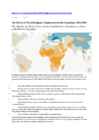
Atheists, agnostics and other people who do not affiliate with any religion – though increasing in countries such as the United States and France – will make up a declining share of the world’s total population. The global Buddhist population will be about the same size it was in 2010, while the Hindu and Jewish populations will be larger than they are today. In Europe, Muslims will make up 10% of the overall population. India will retain a Hindu majority but also will have the largest Muslim population of any country in the world, surpassing Indonesia. In the United States, Christians will decline from more than three-quarters of the population in 2010 to two-thirds in 2050, and Judaism will no longer be the largest non-Christian religion. Muslims will be more numerous in the U.S. than people
To cite this article: Rodica Dimitriu (2012) When `we' are `the other'. Travel books on Romania as exercises in intercultural communication, Perspectives: Studies in Translatology, 20:3, 313-327, DOI: 10.1080/0907676X.2012.702400 To link to this article: http://dx.doi.org/10.1080/0907676X.2012.702400 PLEASE SCROLL DOWN FOR ARTICLE Taylor & Francis makes every effort to ensure the accuracy of all the information (the "Content") contained in the publications on our platform. However, Taylor & Francis, our agents, and our licensors make no representations or warranties whatsoever as to the accuracy, completeness, or suitability for any purpose of the Content. Any opinions and views expressed in this publication are the opinions and views of the authors, and are not the views of or endorsed by Taylor & Francis. The accuracy of the Content should not be relied upon and should be independently verified with primary sources of information
No other species has ever wielded such power, and no species could. The technology behind the atomic bomb only exists because of a cooperative hive mind: hundreds of scientists and engineers working together. The same unique intelligence and cooperation also underlies more positive advances, such as modern medicine. But is that all that defines us? In recent years, many traits once believed to be uniquely human, from morality to culture, have been found in the animal kingdom (see part one in this two-part series). So, what exactly makes us special? The list might be smaller than it once was, but there are some traits of ours that no other creature on Earth can match. No animal can get close to the devastation humans can cause (Credit: Thinkstock) No animal can get close to the devastation humans can cause (Credit: Thinkstock) Ever since we learned to write, we have documented how special we are. The philosopher Aristotle marked out our differences over 2,000 years ago
A self- conscious break with traditional aesthetic forms. Rejecting the sentiment and discursiveness typical of Romanticism and Victorian literature for poetry that instead favored precision (täppis) of imagery and clear, sharp language. Modernist writers embraced the unconscious fears of a darker humanity. Sub movements: surrealism, formalism, avant-garde, symbolism, imagism Structuralism: Writers used myth and music as a part of the books structure. J. Joyce "Ulysses". Deep structure is the same as in "odyssey" and T.S. Elliot "the fisher king"-more complicated experiment. Aldous Huxley ,,point counter point"-builds his chapters on principles of music. R. Aldington ,,death of a hero"-a jazz novel. Polyphony-harmony. Cacophony Virginia Woolf ,,the waves"-symphony. Psychoanalysis: The greatest influence of psychoanalysis on literary production has
state to govern at a subnational level, such as a regional, local, or state level. It is a form of decentralization. Devolved territories have the power to make legislation relevant to the area. 10. Devolved powers- the Scottish Parliament and the Welsh and Northern Ireland Assemblies are devolved powers, subordinate to the UK Parliament. 11. Constituent country- a term sometimes used in contexts in which a country makes up a part of a larger political entity, such as a sovereign state. The term constituent country does not have any defined legal meaning, and is used simply to refer to a country which is a constituent part of something else. 12. The Commonwealth- The Commonwealth of Nations, commonly known as the Commonwealth is an intergovernmental organization of 53 member states that were mostly territories of the former British Empire. The Commonwealth operates
· Man is not a free agent, is govern by something · Unable to determine his own faith · Hereditary · Naturalists tried to apply in fiction the processes of natural sciences · Writers task is to record facts, systems of behaviour, living conditions, never revealing any natural unbiased (completely natural) · Point of view: amoral-outside the category of morality, neither good or bad · Naturalist find it absurd to blame the wicked. These criminals are doing what nature, environment, their unconscious tells them to do. Naturalists do not judge their characters, they simply report. Try to describe facts like they are. Naturalists depict the lower, coarser forms of life. · Drab, squallid set of scene. Revolting, disgusting · Characters are people with strong animal desires · Neurotic characters unable to understand the forces that control them
The maritime climate is temperate, summers are warm and winters mildly cold, the average annual temperature is 5 degrees Celsius and the average annual precipitation is 550 millimetres. The most important assets of the soil are oil shale, phosphorite and peat. The designation “Aestii” was first mentioned by the Roman historian Tacitus in “Germania” (98 AD). By the end of the first millennium the people of Western Europe referred to the land of our ancestors with the name Estonia (derived from Germanic languages and means East). The Estonians, our Finno-Ugric forefathers settled here in approximately 5,000 BC from northern Russia and the Urals, as fishermen and hunters. They called themselves “rural people”, the term “Estonians” started to spread three centuries ago, taking firm root in the middle of the 19th century. From the 13th century onwards the ancient Estonians had to continually fight
From the east by the Coral Sea and the Tasman Sea. Australia's coastline is about 37,000 km long. The Great Australian Bight washes the southern coast. The Gulf of Carpenteria and the Cape York Peninsula surround it in the south. 3. Relief Australia is the smallest continent in the world It is often called the island continent because is too big for an island but rather small for a continent. Australia is 1,800 miles from the mainland of Asia and almost half way round the world from Europe. More than 6,000 miles of ocean separate in from the America. Australia is the only continent except for Antarctica that lies all south of the equator. The natural zones of Australia are very various. There are deserts, semi deserts, grasslands, savannas, bushlands and rainforests. The wet forests occupy the narrow region in the east. Most of the animals, birds and insects live in that region, because there is enough food. The savannas which are grasslands with some trees are mostly in
national interests when addressing international problems. There are currently 192 Members of the United Nations. The Aims of the United Nations: -To keep peace throughout the world. -To develop friendly relations between nations. -To work together to help people live better lives, to eliminate poverty, disease and illiteracy in the world, to stop environmental destruction and to encourage respect for each other's rights and freedoms. -To be a centre for helping nations achieve these aims. The Principles of the United Nations: -All Member States have sovereign equality. -All Member States must obey the Charter. -Countries must try to settle their differences by peaceful means. -Countries must avoid using force or threatening to use force. -The UN may not interfere in the domestic affairs of any country. -Countries should try to assist the United Nations. The basic structure of the United Nations is outlined in an organizational chart
judges through decisions of courts and similar tribunals a common law system is based on legal precedents. The roots of the common law legal systems can be traced back to the first common law system created in England during the Middle Ages. Today, most countries that once had ties to England, including the United States, Australia, New Zealand, and Hong Kong, to name a few, operate under common law. Aside from Great Britain, the majority of the countries in Europe operate under a version of civil law modeled after the Roman legal system created centuries ago In a common law system, the law is created by precedents set after judges decide actual cases. When a judge hears a case that has a new issue in it, the judge makes a decision regarding the issue in the case. That decision then becomes a precedent that must be followed by other courts with equal standing within the legal system.
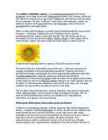
segment(segment, lõik ; segmenteerima, tükeldama) of the stem just below the bud. As the bud stage ends, the stem(tüvi) stiffens(kangestuma, jäigastuma) and the blooming stage is reached. Sunflowers in the blooming stage are not heliotropic anymore. The stem has frozen, typically in an eastward orientation. The stem and leaves lose their green color. The wild sunflower typically does not turn toward the sun; its flowering heads may face many directions when mature. However, the leaves typically exhibit some heliotropism. Cultivation and uses A sunflower farm near Mysore, India. Sunflower heads solds as snacks in China. Sunflowers are native(pärit) to the Americas. The earliest known examples of a fully domesticated sunflower were found at the Olmec site of San Andrés dating some time before 2500 B.C.[1] The Incas used the sunflower as an image of their sun god. Gold images of the flower, as well as seeds, were taken back to Europe early in the 16th
F.e.-in movies *phone ringing* Problems: Dialects/Regional varieties- When translating: Mainstream Eng. vs Jamaican Eng., then you could translate MS Eng to MS Est, and Jamaican Eng into a language variety with a similar (social) role. Social class- RP-received pronunciation-(aka posh lang.) When translating: RP vs lower class Eng, then you could translate RP using complicated words, and lower class Eng, using limited vocabulary. • Hatim and Munday – what is translation according to these two men? Why is this not quite enough nowadays? 1.Process of transferring written text from SL to TL(done by a translator) 2.The written product of the process in No.1 3.Mental, social, linguistic etc phenomenon related to the written product in No.2 It is not quite enough nowadays, because translating is not only about written product. For example, translating to deaf people via sign language, or dubbing (animated) movies and shows to the local language
Ireland is the third largest island in Europe. It lies in between the Atlantic Ocean and the Irish Sea. Politically it is divided into a sovereign state, the Republic of Ireland, that covers about five-sixths of the island (south, east, west and north-west), and Northern Ireland, which is part of the United Kingdom, covering the northeastern sixth of the island.[1] The name 'Ireland' derives from the name Ériu (in modern Irish, Éire) with the addition of the Germanic word 'land'. The population of the island is just under 6 million (2006); just over 4.2 million in the Republic of Ireland[2] (1.6 million in Greater Dublin[3]) and just over 1.7 million in Northern Ireland[4] (0.6 million in Greater Belfast[5])). Politics Politically, Ireland is divided into:
Great Britain Pärnu 2012 Contents Great Britain Great Britain or Britain is an island situated to the northwest of Continental Europe. It is the ninth largest island in the world, the largest European island, and the largest of the British Isles. With a population of about 60.0 million people in mid-2009,
1. Ancient Britain: the Celtic tribes. 2000 years ago there was an Iron Age Celtic culture throughout the Br Isles. It seems that the Celts, who had been arriving from Europe from the 8th cent BC onward, intermingled with the peoples who were already there. The Celts were extremely talented people, creative and artistic. More than 1 Celtic tribe invaded Br. The descendants of ancient Celts live in Wales, Scotland, Cornwall and Ireland. They lived in primitive society. Druids priests, more powerful than chiefs. Acted like prophets. 2. Stonehenge From prehistoric period. Was built on Salisbury plain between 2500 and 1500 bc. One of the most
Education Education is so multifaceted that it is difficult for me to know where to begin discussing it, or how to prioritize the many factors. Relaying my own experience is easy: I had a standard classroom approach, supplemented by inordinate reading. In only the briefest and least memorable instances did I receive any individual tutoring. Education is commonly thought of as the job of schools. Adults cry "educate our children!" Everyone has opinions about the best way to do the job. It is of urgent importance, and all the
northern environment, and is quite independent of the freight or content of the railway medium. The airplane, on the other hand, by accelerating the rate of transportation, tends to dissolve the railway form of city, politics, and association, quite independently of what the airplane is used for. Let us return to the electric light. Whether the light is being used for brain surgery or night baseball is a matter of indifference. It could be argued that these activities are in some way the "content" of the electric light, since they could not exist without the electric light. This fact merely underlines the point that "the medium is the message" because it is the medium that shapes and controls the scale and form of human association and action. The content or uses of such media are as diverse as they are ineffectual in shaping the form of human association.
The continent it fills is Australia, too. Australia, then, is both a country and a continent. Australia is one only continent except Antartctica that is all south of the equator. Since it is south of the equator, its seasons are just the opposite of ours. It has summer while we have winter, and the other way round. Sometimes Australia is called the island continent. There is a good reason why. It is an island. It is 1800 miles from the mainland of Asia and almost half way round the world from Europe. More than 6000 miles of ocean separate it from the America. Australia is the world's smallest, flattest and driest continent. It is also the oldest some of the rocks are more than 3,000 million years old. It is the 6th largest country. Its territory is 7 700 000 km2. Australia is an island continent, washed by the South Pacific Ocean, The Australia Sea, the Timor Sea, the Indian Ocean, the Southern Ocean and the Tasman Sea. As
disciplines and as such a high degree of research has been published in this area already. The increasing sociological interest in children in particular that has provided a new perspective around the idea of children as competent social actors has provoked a great controversy and confusion as it challenges the image of the incompetent child which is overwhelmingly prevalent in the Western society. The purpose of this dissertation is to critically explore this hotly debated tension between these two conflicting salient features that have often prevented the recognition of children as active citizens, entitled to respect and participation. With a particular interest in Wales, the following research project analyses the development of children`s active participation both in the Welsh Government and the County and Council of Swansea as they both have regarded the UNCRC on the basis of all its activity. Finally, the
language throughout the world. Some scholars claim that it has already become the first global language. And this statement isn't far from truth. But what does it mean to say that a language is a global language? Why is English the language which is usually cited in this connection? How did the situation arise? And could it change? Or is it the case that, once a language becomes a global language, it is there for ever? [1, pg.2] These are fascinating questions to explore, whether your first language is English or not. A global language is a language that is spoken internationally and is learned and spoken by a large number of people as a second language. A global language is characterized not only by the total number of speakers (native and second language speakers), but also by its geographical distribution, as well as use ininternational organizations and diplomatic relations. [4]
environment and on human health, in particular on the most vulnerable groups like children. Human health effects include impairment of the immune system, the nervous system, the hormonal system and the reproductive functions. Dioxins are also suspected of causing cancer. How Are We Exposed to Dioxins? Although formation of dioxins is local, environmental distribution is global. Dioxins are found throughout the world in the environment. The highest levels of these compounds are found in some soils, sediments and food, especially dairy products, meat, fish and shellfish. Very low levels are found in plants, water and air. Most of us receive almost all of our dioxin exposure from the food we eat: specifically from the animal fats associated with eating beef, pork, poultry, fish, milk, dairy products. How can you be exposed to dioxins and furans? You can be exposed to dioxins and furans by eating contaminated food. Dioxins and furans
Topic Estonia Tallinn 2008 1. Introduction Estonia is a small country about the size of Switzerland, or New Hampshire and Massachussetts combined. Estonia is named after the people called "Ests" who lived in the region in the 1 st century AD. The Republic of Estonia is one of the three countries commonly known as the "Baltic States". The other Baltic States are Latvia and Lithuania. 2. Geographical position Estonia is situated in northeastern Europe. Estonia is bounded on the north by the Gulf of Finland, on the east by Russia, on the south by Latvia and on the west by the Baltic Sea. In the north it borders on Finland. The coastline of the Baltic Sea in Estonia is characterized by numerous gulfs and bays, the biggest of them being the Gulf of Finland, the Gulf of Riga and the Gulf of Pärnu. Bays include the Narva Bay, Matsalu Bay, Kolga Bay, Kunda Bay, Tallinn Bay etc. Estonia has over
is on the 26th of January. In 1788 on the 26th of January the first fleet arrived at Botany Bay and established a penal colony near modern-day Sydney. Geographical Position Australia is located in the Southern Hemisphere. It’s the only continent except for Antarctica that is all south of equator. Sometimes Australia is called the island continent. There is a great reason why. It really is an island. It is 2880 km from the mainland of Asia and is almost half way round the world from Europe. More than 9 600 km separates it from America. Australia lies between the Pacific and Indian oceans. The Timor Sea and the Arafura Sea separate Australia from Indonesia. In the north the coast is washed by Great Australian Bight and the Indian Ocean. In the northeast the Coral Sea washes the coasts and in the southeast there is the Tasman Sea which also separates Australia from New Zealand. The biggest island is Tasmania which is located to the south of the country.
designated. Introduction The first bridges were natural, such as the huge rock arch that spans the Ardèche in France, or Natural Bridge in Virginia (USA). The first man-made bridges were tree trunks laid across streams in girder fashion, flat stones, such as the clapper bridges of Dartmoor in Devon (UK), or festoons of vegetation, twisted or braided and hung in suspension. These three types - beam, arch, and suspension - have been known and built since ancient times and are the origins from which engineers and builders derived various combinations such as the truss, cantilever, cable-stayed, tied- arch, and moveable spans. The essential difference among types is the way they bear their own weight - the "dead load" and the "live load" - a person, the railway train, wind, or snow that is applied to the bridge. The weight of
 annaabi.ee