Leidsid 33 sarnast õppematerjali, mis on seotud failiga "Meg Gabot". Need materjalid aitavad sul teemat sügavamalt mõista.
series, fire, horse, novels, year, indiana, yorkll, books, size, biography, cabot, february, during, chinese, sign, awaregma, least, until, became, teenager, algebra, years, university, accepted, father, taught, there, moved, middle, worker, strike, pursue, career, illustrator, failed, turn, favorite, emotional, worked, jobs, including, decadetheatre production, and finally writing his own one-act and full-length plays. Later he has worked both as a freelancer and a contracted writer. He first wrote the short story "Ender's Game" while working at the BYU press. Ender's Game and its sequel Speaker for the Dead were both awarded the Hugo Award and the Nebula Award, making Card the only author (as of 2008) to win both of science fiction's top prizes in consecutive years. Card continued the series with seven books, which divide into "Shadow" and "Speaker" series. He has also announced his plan to write two more novels: Shadows in Flight, a book that connects the "Shadow" series and "Speaker" series together, and Ender in Exile, a book that takes place after Ender's game and before Speaker for the Dead. Furthermore, Card recently announced that Ender's Game will soon be made into a movie. Though Card is best-known for "Ender's Game", he has also written in a variety of other
Isle of Man Includes early works written in Gaelic, Welsh, and Latin, works in Old, Middle, and Modern English, each of which represents a different period Full of great works British works in Latin Venerable Bede He lived between 673 and 735 AD The greatest of all the AngloSaxon scholars He's the earliest English historian, whose work has shed light on a period of English history that would have otherwise been unknown ,,The Father of English History" Wrote / translated about 40 books on almost every area of knowledge, i.e. nature, astronomy, and poetry His best known work is "The Ecclesiastical History of the English People" Starting with the Roman invasion in the 5th century, he recorded the history of the English up to his own day Old English Cædmon ,,The Father of English Hymn" Cædmon's Hymn is the oldest recorded Old English poem, and also one of the oldest surviving samples of Germanic alliterative verse
that the Church of England was beyond reform. Escaping persecution from church leadership and the King, they came to America. Of Plymouth Plantation Of Plymouth Plantation is the single most complete authority for the story of the Pilgrims and the early years of the Colony they founded. Written between 1620 and 1647, the journal describes the story of the Pilgrims from 1608, when they settled in the Netherlands, through the 1620 Mayflower voyage, until the year 1647. The book ends with a list, written in 1650, of Mayflower passengers and what happened to them. The Age of Reason The Age of Reason: Being an Investigation of True and Fabulous Theology , a deistic treatise written by eighteenth-century British radical and American revolutionary Thomas Paine, critiques institutionalized religion and challenges the inerrancy of the Bible. Published in
He is best known for writing the "Millennium series". He died suddenly and unexpectedly in November 2004, soon after delivering the manuscripts for "the Millennium trilogy". Since his death, Stieg Larsson has been haunting the bestseller list and popular media worldwide. There are many millions of copies of the millennium tilogy that has been sold worldwide. Unfortunately Larsson did not live to see the phenomenon his work has become. Sweden has already produced a trilogy of films based on the novels, and now Hollywood is doing the same. Characters *Lisbeth Salander the headcharacter in the book. She is outsider and apparently enemy of society. The state has ruled that she is mentally unstable and has a trustee to help her manage her duties. Salander doesn't really care what others think of her. In fact, she values the most her privacy and anonymity. She has no faith that the official justice system can help her. She just wanted to be left in peace.
It was written in 1916 and was first published by John Lane in the USA in October 1920 and in the UK by The Bodley Head (John Lane's UK company) on January 21 1921. In her first novel, The Mysterious Affair at Styles(1920), she created the now-famous Belgian detective Hercule Poirot, the most popular sleuth in fiction since Sherlock Holmes. Poirot and Marple have also been portrayed in the many films, radio programmes and stage plays based on her books.It is Christie's first published novel, and introduces Hercule Poirot, Inspector Japp and Lieutenant Hastings (later, Captain) The story is told in first person by Hastings, and features many of the elements that, thanks to Christie, have become icons of the Golden Age of Detective Fiction. It is set in a large, isolated country manor. There are a half-dozen suspects, most of whom are hiding facts about themselves.
enjoyed playing with the neighborhood children until her husband would call her home for the evening. The marriage lasted until 1946 when Monroe decided to pursue her career. Career Early years Mrs. Norma Jeane Dougherty, YANK Magazine, 1945While her husband was in the Merchant Marine during World War II, Norma Jeane Dougherty moved in with her mother-in-law where she started working in the Radioplane Munitions Factory owned by Hollywood actor Reginald Denny. She sprayed airplane parts with fire retardant and inspected parachutes. During this time Army photographer David Conover snapped a photograph of her for a YANK magazine article. He encouraged her to apply to the The Blue Book modeling agency. She signed with the agency, and she began researching the work of famous actresses Jean Harlow and Lana Turner, and enrolled in drama and singing classes. Monroe had her hair cut, straightened, and lightened to golden blonde.[15]
literary quality (1650) and Edward Taylor, who was born in England but lived in Boston, wrote some poetry in the style of John Donne and the metaphysical poets. All 17 th cent Am writings were, both in content and form, similar to English lit of the same period. The great literary figures of the 18th cent were Benjamin Franklin (1706-1790), Thomas Paine (1737-1809) and Thomas Jefferson (1743-1826). The common sense and witty aphorisms of Franklin's popular Poor Richard's Almanac series appealed to colonial readers. Franklin also wrote effectively on the question of allegiance to the British crown but it was his protégé, Thomas Paine, who inspired colonists during the dark days of the Revolution with his stirring pamphlet Common Sense (1776), which sold over half a million copies, and American Crisis Papers (1776-1783). Thomas Jefferson was also an influential political writer. He made important
Pushkin by heart does not work wonders with one's speaking skills, really. (Although I still can recite one of his poems...) The point is, I actually really like Russian. I've never been good at it, but I like the language and I really wish I knew it better. I can speak some, but not read much. As soon as the characters stop talking to each other, I'm stuck and can barely understand anything. Most of my Russian skills my ten years younger mates envy come from my year of living in Narva (literally starve or learn!) and talking to a variety of Estonian-Russian roleplayers I know. (But since they are also fluent in English and most in Estonian as well, it turns into a stew of languages very soon.) Chronologically the second language I started to learn was French. That was because of the Descartes Lyceum. Don't remember much of that, except for half a dozen badly spelt childrens' songs
(Maltese i.e. blue cats were a genuine dilution of black). Shaw viewed dilution as being due to the reducing amount of melanin present in the hair and not by the way pigment forms clumps in the hair. Chocolate had less melanin than black, therefore Shaw called this dilution. Blue has a the same amount of melanin, but arranged differently, so Shaw did not consider this dilution. In simple terms, the black (eumelanin) colours in cats is due to a series of genes (alleles to be precise) with the following order of dominance/recessive (most dominant at the top, most recessive at the bottom). The chart also shows how these combine with dilution genes and dilution modifier genes. A cat inherits 2 copies of the black gene and only the more dominant version will show up while the recessive gene will be hidden. The caramel form only shows up in cats that already have the dilute colour and it lightens and adds a brownish cast to the dilute colour
vivacious woman about whom a future Viceroy of India would say, "Dullness and Mrs. Kipling cannot exist in the same room."[3] Father - John Lockwood Kipling. Lockwood Kipling, a sculptor, an illustrator, museum curator and pottery designer, was the principal and professor of architectural sculpture at the newly- founded Sir Jamsetjee Jeejeebhoy School of Art and Industry in Bombay. Later in life Kipling illustrated many of Rudyard Kipling's books, and other works. Kipling also remained editor of the Journal of Indian Art and Industry, which carried drawing works from the students of the Mayo School. COUPLE named their son after the place they had first met Rudyard Lake. Alice Kipling Fleming - Sister of British author Rudyard Kipling who became a well-known psychic, producing automatic writing under the name "Mrs. Holland." Born June 11, 1868, Alice Kipling was privately educated
Bloomsbury, where they had ten children. On 9 June 1865, while returning from France with Ternan, Dickens was involved in the Staplehurst rail crash in which the first seven carriages of the train plunged off a cast iron bridge that was being repaired.Because of that he died.( 9 June1870) Oliver Twist (1837-39), Nicholas Nickleby (1838-39), The Old Curiosity Shop and, Barnaby Rudge: A Tale of the Riots of 'Eighty as part of the Master Humphrey's Clock series (1840- 41), A Christmas Carol written in 1843. Hard Times- For These Times. is a novel by Charles Dickens, first published in 1854. The book is a state-of-the-nation novel, which aimed to highlight the social and economic pressures that some people were experiencing. Unlike other such writings at the time, the novel is unusual in that it is not set in London. A Christmas Carol in Prose, Being a Ghost Story of Christmas (commonly known as A
He had unhappy childhood (parents divorced when he was little), mother left them, met Victoria at age 17, they were introduced by Uncle Leopold, they fell in love. They got married and got 9 children, 40 grandchildren. At first he was unpopular, after he made many great changes he became popular. He was the president of the Royal Society of Arts for 18 years. After his death Victoria built many memorials and Royal Albert Hall in 1871, there are more than 350 performances every year. The Albert medal, the Prince Consort´s Library. Lisanna: "Yoko Ono" She was born in 1933 in Tokyo, Japan in a wealthy family. In 1953 she moved to the USA, she was an excellent student and studied music and philosophy. She has studied in 4 schools, her art is influenced by avant-garde. She has won many awards. She has been married 3 times. In 1975 she got a son Sean. She has released 26 albums, 7 of them with John. Son Sean is a singer, songwriter and an actor. Danek: "Manchester"
Anna lies and pretends nothing is going on. Karenin is blatantly nervous, cracking his knuckles. Inside, though, Anna is fraught with frustration and anger. To her, Karenin doesn't know the slightest thing about love. She begins to forget her guilt; rather, she starts to blame Karenin internally for his failed attempt at loving her. Karenin gives up, aware now that there is nothing he can really do to save his marriage. In Chapter 10, Anna and Vronsky consummate their love, after a year of courting and flirting. Yet Anna has a strange reaction: she falls at Vronsky's feet and begs forgiveness. She is again consumed by her guilt. At this point, Anna and Vronsky realize they have started a new chapter in their relationship, and neither is quite sure of how to deal with the realization of the extramarital affair. Chapters 12-17 It's been many months since Levin's encounter with Kitty, but Levin hasn't gotten her out of his head.
· Their world is not one of culture or high moral standards · For these new writers controlling new american social experience · Naturalists offered a view that questioned the belief that now was a conscious and national being and happiness could in moral behaviour · Naturalists show man as a small figure in deterministic system which ignores him · Man is a huge machine · Lot of these novels end in tragedy · For 20 years naturalism remained dominant method. The beginning of the 1910 (modernism starts ) · American naturalists: frank Norris ,,The Octopus", Stephan Crane ,,Red badge of courage" · Jack London (1876-1916) · Grew up in extreme poverty. From early age had to support himself with dangerous manual jobs. Experienced the trouble of survival. Outlooks were eclectic (combination of various philosophies)
James Fenimore Cooper, with their emphasis on heroic simplicity and their fervent landscape descriptions of an alreadyexotic mythicized frontier peopled by "noble savages", similar to the philosophical theory of Rousseau, exemplified by Uncas, from The Last of the Mohicans. There are picturesque "local color" elements in Washington Irving's essays and especially his travel books. Edgar Allan Poe's tales of the macabre and his balladic poetry were more influential in France than at home, but the romantic American novel developed fully with the atmosphere and melodrama of Nathaniel Hawthorne's The Scarlet Letter (1850). Later Transcendentalist writers such as Henry David Thoreau and Ralph Waldo Emerson still show elements of its influence and imagination, as does the romantic realism of Walt Whitman. The poetry of Emily Dickinson--nearly unread in her
Taken at the Flood "There is a Tide" redirects here. "There is a Tide" is also the name of a short story by Larry Niven, set in the Known Space universe. Taken at the Flood is a work of detective fiction by British writer Agatha Christie, first published in the US by Dodd, Mead and Company in March 1948 under the title of There is a Tide...[1] and in the UK by the Collins Crime Club in the November of the same year under Christie's original title.[2] The US edition retailed at $2.50[1] and the UK edition at eight shillings and sixpence (8/6).[2] It features her famous Belgian detective, Hercule Poirot, and is set in 1946. 1 Plot summary In a flashback from late Spring to early Spring, Lynn Marchmont, newly demobilised from the Women's Royal Naval Service, finds difficulty settling into the village life of Warmsley Vale. She is engaged to Rowley, one of several members of the Cloade family living nearby
Lesson by lesson, this book provides basic instruction in the eight parts of speech--nouns, pronouns, verbs, adjectives, adverbs, prepositions, conjunctions, and interjections--as well as the standard patterns of English sentences. All students of English, be they native speakers or those who are studying English as a second language, will profit from the fundamental introduction and review of grammar provided by SADDLEBACK'S BASIC ENGLISH GRAMMAR 1 and 2. Helpful marginal notes throughout the books have been provided to reinforce existing skills and call attention to common problem areas. We wish you every success in your pursuit of English proficiency. 1 What is Grammar? 5 The Simple Past Tense 98 Regular and Irregular Verbs 99 Was and Were 104 2 The Capital Letter 6 The Past Progressive Tense 106
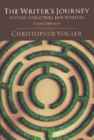
"The Writer's Journey should be on anyone's bookshelf who cares about the art o f storytelling at the movies. N o t just some theoretical tome filled with development clichés of the day, this book offers sound and practical advice on how to construct a story that works." — David Friendly, Producer, Little Miss Sunshine, Daylight, Courage Under Fire, Out to Sea, My Girl "A classic of its k i n d full of insight and inspiration that every writer, both amateur and professional, must read." — R i c h a r d D. Zanuck, T h e Zanuck C o m p a n y Charlie and the Chocolate Factory, Big Fish, Reign of Fire, Driving Miss Daisy, Cocoon, The Verdict, Sting " T h e basis for a great movie is a great screenplay, and the basis for a great
Libraries. We know a lot of things thanks to books, but we do not know exactly when and where they originated, and what should be considered the first book in the world. Ancient document, written on parchment, papyri and vellum can hardly be qualified as books the way we understand the word today. Centuries went before paper replaced parchment and papyri. In the 15 th century Johann Gutenberg invented a mechanical process of duplicating texts, which we today call book printing. The first book was printed between 1444 and 1446, so these years can be considered as the beginning years of book printing. His most important preserved printings are the 40 copies of the Bible. By the end of the 15 th
twenties. She has one of the most peculiar personalities I know. She is sometimes very quiet and completely shuts me out and then she can be very chatty. Her views of the world could be categorized as pessimistic, but I know she secretly harbours a lot of positivity. She often second guesses herself and that makes her kind of a perfectionist. I sometimes feel as if she is slow on purpose, but I know it's just the way she's made. She is an avid reader, you have to literally tear books away from her. She likes fantasy novels best, but also enjoys serious classics. When she starts with a book, it's really hard for her to stop. She also loves listening to rock music, which is what we bonded over. Also, she is a great artist if she has the time and patience. Her over analyzing makes her a slow drawer. I love Kati with all my heart. She is the best friend anyone could ever have. Whenever I need her I can call her and she's there for me
Merde Actually By Stephen Clarke "Merde Actually" is written by Stephen Clarke, who is a British journalist and a novelist living in Paris. When he first arrived in Paris, he experienced a cultural shock and got inspired by it. He started to keep a diary of his experiences and decided to publish it as a novel when the Anglo-French relationships were at their worst during the Iraq War spring 2003. Therefore his novels (he has written three in this series) have become enormously popular all around the world, especially because they are partly true. Stephen Clarke himself still lives in Paris with his French girlfriend. This novel is considered to be seriously funny and a comedy with a message. "Merde Actually" has one main character whose name is Paul West, but there are also many other significant characters, that come from the previous book "A Year in the Merde"
Catherine Morland My name is Catherine Morland. I would like to tell you a bit about myself. To begin with, I am seventeen years old and grew up in a countryside in a small town named Fullerton with my parents and nine siblings. As a child I was interested in many things like drawing, sports and music. I was very lively and cheerful, enjoyed cricket, horse riding and just hated cleanliness and restriction. As I grew up, I chose reading over sports and all of the wild games I used to like. Undoubtedly, I would now describe myself with the word naivety. I am very naïve and do not notice the most obvious things happening around me. I really hope that it is caused by the lack of experience and will eventually pass. In addition, I find myself a kind and caring person because I always want and agree to help people when needed.
and Scotland with the Acts of Union 1707 on 1 May 1707 under Queen Anne. In 1801, under a new Act of Union, this kingdom merged with the Kingdom of Ireland to create the United Kingdom of Great Britain and Ireland. After the Irish War of Independence most of Ireland seceded from the Union, which then became the United Kingdom of Great Britain and Northern Ireland. The relatively limited variety of fauna and flora on the island is due to its size and the fact that wildlife has had little time to develop since the last glacial period. The high level of urbanisation on the island has contributed to a species extinction rate that is about 100 times greater than the background species extinction rate. 2 The History of the Great Britain The island was first inhabited by people who crossed over the land bridge from the European mainland
the fact that he might turn batsh#t and eat her any second. And she, instead of running at the door, or at least acknowledgning the irresponsibility for her own life, carries on marvelling over his bronze hair, marble skin, sweet breath, sculpted chest and every other part of his finely toned body, that is repeatedly described in purple prose. I do not hate ''Twilight'', nor do I disrespect the people who really like the book , I've just grown tired of the hype and cult surrounding the series, and therefore might get somewhat passionate about my list of reasons why ''Twilight'' shouldn't be considered ''th3 bEST book eva written!!!!11'', therefore I admit that, to me, the novel is a victim of bad publicity. At least Stephenie Meyer couldn't complain too much, considering that the all the publicity surrounding the book has brought her an estimated fortune of $125 million. PS! If you were wondering, why I read it for three times, then the third time was only to
· Cats like milk. still, just, etc. · Birds do not like milk. · Do pigs like milk? Examples: · California is in America. · California is not in the United Kingdom. · You only speak English. · Windows are made of glass. · Do you only speak English? I am not reading any books right now. Present Continuous · · Are you working on any special projects at work? [am/is/are + present participle] · Aren't you teaching at the university now? Examples: USE 3 Near Future · You are watching TV. · Are you watching TV?
would never let anyone else read if it were their life. She is also important because she wrote a lot about Hiiumaa. In a matter of fact she also lived on our island, Hiiumaa. One of her stories that talks about Hiiumaa is Hundimõrsija (The Wolf's bride). It's a werewolf story about 17th century Hiiumaa. The story is rich with archaic, romantic, colourful prose. She was also given an Estonian Red Cross Merit Medal. She was always considered as a smart woman. She also wrote Lydia Koidula's biography. Thanks to her we know a lot about Hiiumaa's history and nature. Next writer is called Marie Under who lived in 1883-1980. At the beginning she wrote poetry in German because she went to a German school, but when she became older she started writing in Estonian. She started writing when she was only 13 years old and she was also at a very young age when she started reading. She was a lyric poet who wrote about life's different sides. She wrote
Page |1 Your Name:__________________ Grade:______________________ Date:_______________________ Do you often read books voluntarily? What books do you usually read? Discuss it with your neighbor. Ask your neighbor: Who is Harry Potter? What's so magical about him? Part I 1/9/2013 Page |2 Reading: Read through the text, look up unknown words by J. K. Rowling
" "Mr. Bennet, how can you abuse your own children in such a way? You take delight in vexing me. You have no compassion for my poor nerves." "You mistake me, my dear. I have a high respect for your nerves. They are my old friends. I have heard you mention them with consideration these last twenty years at least." "Ah, you do not know what I suffer." "But I hope you will get over it, and live to see many young men of four thousand a year come into the neighbourhood." "It will be no use to us, if twenty such should come, since you will not visit them." "Depend upon it, my dear, that when there are twenty, I will visit them all." Mr. Bennet was so odd a mixture of quick parts, sarcastic humour, reserve, and caprice, that the experience of three-and-twenty years had been insufficient to make his wife understand his character. Her mind was less difficult to develop. She was a woman of mean
Acted like prophets. 2. Stonehenge From prehistoric period. Was built on Salisbury plain between 2500 and 1500 bc. One of the most famous and mysterious archaeological sites in the world. One of the mysteries is how it was built at all with the technology of the time. Another is its purpose. It appears to function as a kind on astronomical clock and we know it was used by the Druids for ceremonies marking the passing of the seasons. It appears in number of novels. These days it is not only the interest of tourists but is also a gathering point of certain minority groups. It is now fenced off to protect it from damage. 3. The Roman conquest Julius Caesar's first raid was in 55 BC but the romans left. Ad 43- the Romans came to stay. The army established Roman rule in the south and SW of the country. The Romans started to introduce their laws to a new province of the Roman Empire and started to build good roads.
It is by doping so that she comes across racism and narrow- mindedness and has to deal with that. She makes up a wonderful story about the hardships that her yet innocent parents went through during their first time in England. She tells her friends when they play in the park that she [...]" was a Punjabi princess and owned an elephant Kalled Jason King," and at school she uses her Indianness as an excuse: [...] ,,I hadn't completed my homework because of an obscure religious festival involving fire eating..." Meena isa n unreliable story-teller and a self- confessed liar who uses stories and mythology to feel komplete and to belong. She basically wants to be someone, populaar and admired. She really gets the chance t omake use of her talent when her grandmother comes to visit. Meena makes up a story that her grandmother speaks several languages. Meena explains that her grandmother makes money by looking for gold. The villagers are amazed, but
the country, which became a republic, called the Commonwealth. He was its Lord Protector until his death in 1660. After Cromwell's death, the Stuarts returned to the throne, Charles I's son was crowned Charles II. However, the Parliament was firmly established this time and no future monarch would ever seriously challenge its power. England suffered during the reign of Charles II. The Plague (1665) killed almost 70 000 of London's inhabitants and the Great Fire (1666) destroyed most of the city. Sir Christopher Wren was asked to build up the city. The Great Fire had two plusses the fire killed all the rats that carried the plague and after that, all the houses were built of stone, so another fire couldn't happen. Although Charles had restored some power to monarchy by the time James II came to the throne, Parliament's support was necessary to govern the country. Parliament was
Lymstock was much like any other English village, no more than 300 people. Those that live there enjoy the peace of rural life and form a union to where it can be difficult for strangers to blend in. Fortunately, it wasn't much of a problem for Jerry and Joanna. They were just getting to know the town's strange members and their characters when an anonymous letter arrived, accusing the two of not being brother and sister, but lovers. The letter started a series of poison pen letters all over the village, which destroyed the safety the villagers took for granted. Right away, they knew it wasn't true and thought somebody was doing it just for laughs. The second letter went to Mrs Symmington, the local solicitor Mr Symmington's wife. It turned out the letters were no trick at all, when she committed suicide, after reading a letter that stated her last child wasn't her husband's. Her body was discovered with the letter, a glass containing
not spill their secrets. Chapter 14: When Oliver awakened from his fainting spell, he found that they had removed the painting of the mysterious woman. Oliver then expressed his like for it and Mrs. Bedwin said she would put it back up. Once Oliver was well enough to put on his clothing, Mr. Brownlow bought him a new suit, cap, and shoes. Oliver had never owned new clothes before and he was ecstatic. Oliver went to have a meeting and talk to Mr. Brownlow about his future. They talked about books and how someday Oliver could read and write them if he wanted to. Oliver is afraid that he is going to be sent away and begs to stay. Mr. Brownlow says that he can, and Mr. Grimwig comes for a visit. Mr. Brownlow invites Oliver to stay and talk with them. Mr. Grimwig is a cynic and expounds on the bad qualities of Oliver that he expects are there. Oliver decides that he wants to help and offers to return the books that Mr. Brownlow borrowed. Mr. Brownlow agrees and Mr. Grimwig, keeping with his
 annaabi.ee