Leidsid 33 sarnast õppematerjali, mis on seotud failiga "Määrajad". Need materjalid aitavad sul teemat sügavamalt mõista.
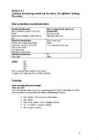
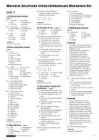
määraja, such, määrajad, both, little, nimisõnad, asesõna, either, nice, mother, snow, asesõnad, mike, bike, milk, these, those, phones, boys, girls, juice, another, several, enough, whose, weather, loevad, drank, wine, sons, tallcan picture chair radio cot television cup train desk truck door watch gate egg window 11 Exercise 1 Underline the common nouns in these sentences. 1 There's a little bird in the garden. 2 Who is your teacher? 3 Don't eat that rotten apple. 4 Kate has a lovely doll. 5 I like reading stories. 6 My father is a doctor. 7 Every child has a dictionary. 8 Rudy hates bananas. 9 The phone is ringing. 10 Here's a book for you. Exercise 2 Here's a mixed bag of words. Put each word under its correct heading. swimmer snail fire engine clown
.............................................................................................11 Kaudkõne Reported speech........................................................................................11 Kaudküsimused Reported questions..........................................................................12 Passiiv Passive voice .................................................................................................12 Loendatavad nimisõnad Countable nouns.................................................................12 Loendamatud nimisõnad Uncountable nouns............................................................13 Mitmuse moodustamine................................................................................................13 Siduvad asesõnad..........................................................................................................14 Omastav kääne............................
Artikkel the pärisnimedega 10 Artikkel the geograafiliste nimedega 10 Artikkel a, an 10 Muu 11 Otsekõne Direct speech 11 Kaudkõne Reported speech 11 Kaudküsimused Reported questions 12 Passiiv Passive voice 12 Loendatavad nimisõnad Countable nouns 12 Loendamatud nimisõnad Uncountable nouns. 13 Mitmuse moodustamine 13 Siduvad asesõnad 14 Omastav kääne 14 Käskiv kõneviis 15 Omadussõnad 15 Viisimäärsõnad 16 Tingimuslaused 16
Indefinite Pronouns Table of Contents Some and any....................................................................... 2 No (+ Noun) and none (+ Pronoun) ........................................ 3 Every and each..................................................................... 3 Whole ................................................................................... 4 Both, either and neither ....................................................... 4 Few/a few – a little/little....................................................... 5 A lot of/lots of – much/many................................................ 5 Some, any + -body / -one, + -thing, + -where ........................ 6 Some and any Some and any mean a certain number or amount. They are used with or instead of plural or uncountable nouns. Some is a possible plural form of a/an and one:
The definite article with names: We do not normally use the definite article with names: William Shakespeare wrote Hamlet. Paris is the capital of France. Iran is in Asia. But we do use the definite article with: • countries whose names include words like kingdom, states or republic: the United Kingdom; the Kingdom of Nepal; the United States; the People’s Republic of China. • countries which have plural nouns as their names: the Netherlands; the Philippines • geographical features, such as mountain ranges, groups of islands, rivers, seas, oceans and canals: the Himalayas; the Canaries; the Atlantic; the Atlantic Ocean; the Amazon; the Panama Canal. • newspapers: The Times; The Washington Post • well known buildings or works of art: the Empire State Building; the Taj Mahal; the Mona Lisa; the Sunflowers • organisations: the United Nations; the Seamen’s Union • hotels, pubs and restaurants*: the Ritz; the Ritz Hotel; the King’s Head; the Déjà Vu
-- 1st ed. Includes bibliographical references and index. 1. Health. 2. Physical fitness. 3. Weight loss. I. Title. II. Title: Four-hour body. RA775.F47 2010 613.7--dc22 2010018533 eISBN: 978-0-307-46365-4 All illustrations by Fred Haynes/Hadel Studio, unless otherwise noted in the Photo and Illustration Credits section Jacket front-flap photos: (top) (c) Mark Reifkind; (bottom) (c) Photos taken by Inge Cook, provided courtesy of Ellington Darden, PhD v3.1 For my parents, who taught a little hellion that marching to a different drummer was a good thing. I love you both and owe you everything. Mom, sorry about all the crazy experiments. Support good science-- 10% of all author royalties are donated to cure-driven research, including the excellent work of St. Jude Children's Research Hospital. LIST OF ILLUSTRATIONS GROUND ZERO--GETTING STARTED AND SWARAJ Comparison of Methods for Estimating % Bodyfat Male Examples--Bodyfat
Chapter 17 Chapter 38 Chapter 58 Chapter 18 Chapter 39 Chapter 59 Chapter 19 Chapter 40 Chapter 60 Chapter 20 Chapter 41 Chapter 61 Chapter 21 Chapter 42 Chapter 1 It is a truth universally acknowledged, that a single man in possession of a good fortune, must be in want of a wife. However little known the feelings or views of such a man may be on his first entering a neighbourhood, this truth is so well fixed in the minds of the surrounding families, that he is considered the rightful property of some one or other of their daughters. "My dear Mr. Bennet," said his lady to him one day, "have you heard that Netherfield Park is let at last?" Mr. Bennet replied that he had not. "But it is," returned she; "for Mrs. Long has just been here, and she told me all about it." Mr
taste. What can compare with fresh pees or new potatoes just boiled and served with butter? Why drown spring lamb in wine or cream and spices, when with just one or two herbs it is absolutely delicious? If you ask foreigners to name some typically English dishes, they will probably say "Fish and chips" then stop. It is disappointing, but true that, there is no tradition in England of eating in restaurants, because the food doesn't lend itself to such preparation. English cooking is found at home. So it is difficult to a good English restaurant with a reasonable prices. In most cities in Britain you'll find Indian, Chinese, French and Italian restaurants. In London you'll also find Indonesian, Mexican, Greek... Cynics will say that this is because English have no "cuisine" themselves, but this is not quite the true. Vocabulary: to criticize - tasteless overcooked - ingredient - to invent - sauces - to disguise - spice herb -
words; syntax. Language: a systematic, conventional use of sounds, signs or written symbols in a human society for communication and self-expression. - human language at all levels is rule- or principle-governed. Linguistics: the scientific study of human natural language Synchronic approach to language: Diachronic approach to language: Linguistic competence: Linguistic performance: What is grammar?: "The sounds and sound patterns, the basic units of meaning, such as words, and the rules to combine them to form new sentences constitute the grammar of a language" Prescriptive grammar vs. Descriptive garmmar: Descriptive grammar: the systematic study and description of a language. Descriptive grammar refers to the structure of a language as it is actually used by speakers and writers. Prescriptive grammar: a set of rules and examples dealing with the syntax and word structures of a language, usually intended as an aid to the learning of that language
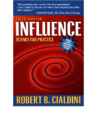
the influence process works is inte- Science and Practice, gra ted throughout. For instance, brain imaging research is presented, showing here are 5 good reasons! how the "Expensive = Good" heuristic o Updated coverage of social influence leads people to perceive more costly effects in popular culture, such as the items as better than (identical) less contagion of obesity among the young costly ones. and the contagion of violence in such tragedies as the Virginia Tech and North- o Enhanced coverage of "how to say no." New evidence is presented to ern Illinois mass killings. help readers identify their special
Surely it was a good way to die, in the place of someone else, someone I loved. Noble, even. That ought to count for something. I knew that if I'd never gone to Forks, I wouldn't be facing death now. But, terrified as I was, I couldn't bring myself to regret the decision. When life offers you a dream so far beyond any of your expectations, it's not reasonable to grieve when it comes to an end. The hunter smiled in a friendly way as he sauntered forward to kill me. 1. FIRST SIGHT My mother drove me to the airport with the windows rolled down. It was seventy-five degrees in Phoenix, the sky a perfect, cloudless blue. I was wearing my favorite shirt -- sleeveless, white eyelet lace; I was wearing it as a farewell gesture. My carry-on item was a parka. In the Olympic Peninsula of northwest Washington State, a small town named Forks exists under a near-constant cover of clouds. It rains on this inconsequential town more than any other place in the United States of America
indwelling consciousness or spirit in every creature, every life-form, recognize it as one with their own essence and so love it as themselves. Until this happens, however, most humans see only the outer forms, unaware of the inner essence, just as they are unaware of their own essence and identify only with their own physical and psychological form. In the case of a flower, a crystal, precious stone, or bird, however, even someone with little or no Presence can occasionally sense that there is more than the mere physical existence of that form, without knowing that this is the reason why he or she is drawn toward it, feels an affinity with it. Because of its ethereal nature, its form obscures the indwelling spirit to a lesser degree than is the case with other life-forms. The exception to this are all newborn life-forms – babies, puppies, kittens, lambs, and so on. They are
for me. It was the first thing my parents 5 Well, you would keep eating too noticed when I was born! 3 1 Laura was offered a place at much. Personality-wise, I've got a lot of my Manchester University but she dad's traits in me. We're both quite bubbly and friendly (or so people 1C The origins of English turned it down. page 5 2 Whilst some people are in favour say), and we share quite a laid-back of the monarchy, others think we approach to life
TARTUFFE A COMEDY CHARACTERS MADAME PERNELLE, mother of Orgon ORGON, husband of Elmire ELMIRE, wife of Orgon DAMIS, son of Orgon MARIANE, daughter of Orgon, in love with Valere CLEANTE, brother-in-law of Orgon TARTUFFE, a hypocrite DORINE, Mariane's maid M. LOYAL, a bailiff A Police Officer FLIPOTTE, Madame Pernelle's servant The Scene is at Paris ACT I SCENE I MADAME PERNELLE and FLIPOTTE, her servant; ELMIRE, MARIANE, CLEANTE, DAMIS, DORINE MADAME PERNELLE Come, come, Flipotte, and let me get away. ELMIRE
. My Opinion............................................................................................................................... Orson Scott Card He was born on the 24th of August, 1951 in Richland, Washington. Card's writing career began primarily as a poet, studying at Brigham Young University. During his studies as a theatre major, he began "doctoring" scripts, adapting fiction for theatre production, and finally writing his own one-act and full-length plays. Later he has worked both as a freelancer and a contracted writer. He first wrote the short story "Ender's Game" while working at the BYU press. Ender's Game and its sequel Speaker for the Dead were both awarded the Hugo Award and the Nebula Award, making Card the only author (as of 2008) to win both of science fiction's top prizes in consecutive years. Card continued the series with seven books, which divide into "Shadow" and "Speaker" series. He has also announced his plan to write two more novels: Shadows in
Infixes – A morpheme that is inside of the root word. English doesn’t have these types of affixes. Circumfixes – Morphemes that surround the word stem. English doesn’t have these morphemes either. Affixes can be derivational or inflectional Derivational affix – It may change the meaning in a word by changing the grammatical class of the root. For example: consider (a verb), inconsiderate (adjective), consideration (noun). Inflectional affix – It produces different word forms, not
measured (competition, conscience). verb tegusõna, In a clause, the verb is an obligatory and the most walk, put, do, be, must pöördsõna, verb central element. It denotes actions, events, processes and states. Verbs are either regular (cough, coughs, coughing, coughed) or irregular (speak, speaks, spoke, speaking, spoken). There are three main grammatical classes of verb: lexical (walk, put, love), auxiliary (do, be, have) and modal (can, must, will). Lexical and
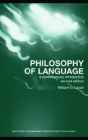
Philosophy of Language Philosophy of Language: a Contemporary Introduction introduces the student to the main issues and theories in twentieth and twenty-first-century phi- losophy of language, focusing specifically on linguistic phenomena. Topics are structured in four parts in the book. Part I, Reference and Referring, includes topics such as Russell's Theory of Descriptions, Donnellan's distinction, problems of anaphora, the description theory of proper names, Searle's cluster theory, and the causalhistorical theory. Part II, Theories of Meaning, surveys the competing theories of linguistic mean- ing and compares their various advantages and liabilities. Part III, Pragmatics and Speech Acts, introduces the basic concepts of linguistic pragmatics, includes a detailed discussion of the problem of indirect force and surveys
Countable nouns are names of the things you can count (one elephant, two elephants, three elephants, etc). Uncountable nouns are names of the things you cannot normally count (love, air, philosophy, etc). The can usually be used when we mean this. The Indefinite Article – a/an (= one!) can only be used with singular countable nouns. a child, a book, an elephant, an apple On the other hand, singular countable nouns cannot be used without any determiner. Determiners are both articles (a/an and the) and different pronouns (e.g., one, another, each, every, this, that; personal pronouns: my, your, his, her, its, our, their). Only one determiner can be used at a time: My house was deserted. Or: The house was deserted. Another problem is the pollution that the factory causes to the environment. Or: One other problem is the pollution the factory causes to the environment.
· Jaatava lause puhul on lause järjekord järgnev: tell + sihitis + to verb The teacher said: ,,Stand up." The teacher told us to stand up. · Eitav lause: tell + sihitis + not + to verb She said: ,,Don´t eat this." She ordered not to eat that. Direct speech Reported speech He said: ,,Don´t cry." He asked not to cry. My mother said to me: ,,Clean your room." My mother ordered me to clean my room. He said: ,,Merry Christmas." He wished me merry Christmas. Conditional sentences(If I do, If I did) Tingimuslaused Tingimuslaused koosnevad kahest osast: If (tingimus), (tingimus realiseerub) kõrvallause pealause Inglise keeles on kolm tingimuslause tüüpi. 1. tüüp reaalne tingimus olevikus või tulevikus Tingimus (if) Tulemus
If a person be insensitive, be it from numbing cold, exhaustion, drugs, genetic makeup, or upbringing, then the process of education is bogged down, and results come only after great efforts. Sensitivity in my integrated meaning is broad, covering literally the senses, so that deaf and blind people are less sensitive, as well as people whose senses work perfectly, but whose receptivity or thought processes are blunted for whatever reason. A person can be insensitive in one way, such as blind, and extraordinarily sensitive in another way, such as in hearing. It is also possible to be so ultra-sensitive that the result is disadvantageous. I expect no argument in asserting that a normal sensitivity is a healthy, indispensable ingredient for optimal education. Sensitivity can be heightened or blunted by education. It is intertwined with curiosity. An ideal education affords numerous and varied opportunities for students to touch, see, smell,
African nation – the young Republic of Biafra. But Biafra was defeated and Nigeria remained one, as a giant of Africa. In the last 32 years, I have watched with horror and outright helplessness as the downward slide of the African race continues to escalate. But rather than address the problems, we resort to blaming the Caucasians, Asians and others for our misfortune. We are not men enough to accept responsibility for our actions. Africans blame either the British, French or little Portuguese/Spanish for their problems. Africans in America blame the Caucasians for all their problems, or any other ethic group they have allowed to take over their neighbours, a frequently recurring phenomena. Africans blame the International Monetary Fund, the World Bank, the Group of 7, the former colonial masters for the abject poverty in our respective countries. We blame the wars ravaging several African sectors on the interference of our former colonial masters on “our internal affairs
3 They didn't give him the job because he was ________________________. He had never done anything like that before. 4 This is a very ________________________ animal. I've never seen one like it before. 5 I get very ________________________ before an exam and when I go to the dentist. 6 It's a great jacket and quite ________________________ considering its quality. 7 He's always having fights with people. He's very ________________________. 8 It's a nice idea but I think it's completely ________________________. It will never work. 9 Their latest CD was ________________________. Not many people bought it. 10 He is so ________________________ that people fall asleep while he is talking. Marks: /10 5 Match the words in list A with the correct definitions in list B. A B
colonies and across Europe. Main Ideas of the American Enlightenment: The Enlightenment caused a shift in the cultural and social attitudes of the people, bringing in some new and radical ideas. Republicanism: The doctrine of republicanism asserts a system of a government that is elected by the people of the nation. The roots of this ideology go back to ancient Greece, when the concept of a democratic government was examined by philosophers such as Plato and Aristotle. Individual Liberty: "Life, Liberty, and the pursuit of Happiness" developed as the motto of this era, which forms the cornerstone of the U.S. Constitution today. Since the colonies had very few individual rights, they declared certain fundamental rights that they deemed "inalienable." Democracy: The colonies had no say in the formation of the government, and had no representation in the lawmaking process
He smote the sledded Polacks on the ice. 'Tis strange. MARCELLUS Thus twice before, and jump at this dead hour, With martial stalk hath he gone by our watch. HORATIO In what particular thought to work I know not; But in the gross and scope of my opinion, This bodes some strange eruption to our state. MARCELLUS Good now, sit down, and tell me, he that knows, Why this same strict and most observant watch So nightly toils the subject of the land, And why such daily cast of brazen cannon, And foreign mart for implements of war; Why such impress of shipwrights, whose sore task Does not divide the Sunday from the week; What might be toward, that this sweaty haste Doth make the night joint-labourer with the day: Who is't that can inform me? HORATIO That can I; At least, the whisper goes so. Our last king, Whose image even but now appear'd to us, Was, as you know, by Fortinbras of Norway, 9
Writers became more critical and more bitter. One zanr that was proletarian literature, pro communist, left wing. The most famous representative was Michael Gold. The most interesting style was modernist combined with realism. The most interesting writer of this period was John Dos Passos 1896-1970. He is linked to the 1930's, the period of fear, unemployment, the rise of facism, market crashing. Came from an interesting background, grandfather was portugese, his mother came from puritan New England. Father was a lawyer and importand figure on wall street. He was born into a well off family and this is a paradox about him. Upper middle class family, yet his political views were very radical, he was extremely well educated. He was hostile against the social order in the usa. The central theme in his writings is the criticism of basic institutions of american society. Interestingly, he wasnt just a social critic but one of the best experimentalists. Anti
Copyright © 2003 by Brian Tracy. All rights reserved. Published by John Wiley & Sons, Inc., Hoboken, New Jersey. Published simultaneously in Canada. No part of this publication may be reproduced, stored in a retrieval system, or transmitted in any form or by any means, electronic, mechanical, photocopying, recording, scanning, or otherwise, except as permitted under Section 107 or 108 of the 1976 United States Copyright Act, without either the prior written permission of the Publisher, or authorization through payment of the appropriate per-copy fee to the Copyright Clearance Center, Inc., 222 Rosewood Drive, Danvers, MA 01923, (978) 750-8400, fax (978) 750-4470, or on the web at www.copyright.com. Requests to the Publisher for permission should be addressed to the Permissions Department, John Wiley & Sons, Inc.,
MODULE 1 Greeting. Introducing oneself and the others. The alphabet. Spelling. The tenses. How to introduce yourself and others Formal introductions How to respond and reply to an May I introduce myself? I am John introduction Smith. How do you do. Allow me to introduce John Smith to Pleased to meet you. you. Standard introduction Nice to meet you. I'd like you to meet John Smith. Hello. I want you to meet John Smith. I'm so pleased to meet you. This is Jane Smith. I'm Jane Smith. My name's John Smith. Informal introduction Hi. John. Jane. Hello. Titles: Mr Mrs Miss Ms Ms is a modern form of address for women. It replaces the traditional forms of Mrs and Miss. Greetings
Here it is. It comprises about a third of the original. This was as big as the publishers and I could make it and still keep the price within reason. In cutting the book, I retained mainly stories about how codebreaking has affected history, particularly in World War II, and major names and stages in the history of cryptology. I eliminated all source notes and most of the technical matter, as well as material peripheral to strict codebreaking such as biographies, the invention of secondary cipher systems, and miscellaneous uses of various systems. I had no space for new material, but I did correct the errors reported to me and updated a few items. The chapters have been slightly rearranged. Readers wanting to know more about a specific point should consult the text and notes of the original. If any reader wishes to offer any corrections or to tell me of his own experiences in this field, I would
3 the hills 7 bee 4 like 9 hard 2 We clambered onto the rocks. 4 a mouse 8 a fox 5 judging 3 The wooden floor had rotted. Challenge! 4 The little boy was sobbing and Transcript Students' own answers pointing to his sister's ice cream. 5 The thief grabbed my bag and ran The photos are connected with the 1B Past and perfect tenses off. topic of school. Both photos show
abiks.pri.ee Can plekkpurk Do you agree? Animals are much better than people. They never kill each other for no reason. All children should have pets. Working in the garden is really pleasant; it is more joy than work. I know recycling is important, but I find it boring if I have to think about it all the time. Hunting is a very good hobby. ABOUT ME 1. Where and when were you born? Where and when was your mother born? 2. What did you look like when you were 45 years old? Did you look like your mother? Your father? Some other relative? 3. Did you use to cry a lot? Did you use to eat too much? Too little? 4. Who did you use to play with? What games did you play? 5. Did you go to playschool? Who looked after you? 6. When did you start school? Did you like school? What school did you go to? 7. What did you use to do after school? 8. What do your parents do? 9. What do you like most about your parents
Let us return to the electric light. Whether the light is being used for brain surgery or night baseball is a matter of indifference. It could be argued that these activities are in some way the "content" of the electric light, since they could not exist without the electric light. This fact merely underlines the point that "the medium is the message" because it is the medium that shapes and controls the scale and form of human association and action. The content or uses of such media are as diverse as they are ineffectual in shaping the form of human association. Indeed, it is once too typical that the "content" of any medium blinds us to the charac- of the medium It is only today that industries have become aware of the various kinds of business in which they are engaged. When IBM discovered that it was not in the business of making office equipment or business machines, but that it was in the business of processing information, then it began to navigate
/.../ The food is at its end and water, too, is `mysteriously' disappearing. The fact is that team A is stealing it Joshua found some footprints that didn't belong to any of our team members. /.../ Kaoru is quiet about the weather now the snow is getting heavier. No surprise if our camps were smashed one night. 24 May /.../ Our situation is hopeless, I don't see a way for us to ever leave this canyon... / .../ 25 May No food. The water is ending. Why? What have we done wrong to deserve such a cruel end? Back in Singapore we never harmed anyone seriously! Well, there were quarrels between the leaders, but that's normal in army... /.../ Sometimes I wonder how is Elizabeth doing? It's been three months since I last saw her... I bet Mickey has grown a lot, soon he'll be four and a half. My big boy, how I miss you! If I could only see your smile once again, at least once! But, miracles never happen... I just hope that they have good memories of us, the ones destined to the snow.
 annaabi.ee