Leidsid 33 sarnast õppematerjali, mis on seotud failiga "Linking devices". Need materjalid aitavad sul teemat sügavamalt mõista.
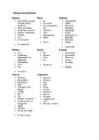
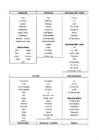
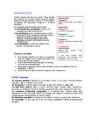
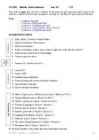
particular, cause, reason, brief, words, phrases, following, fact, finally, hence, therefore, thus, contrast, other, briefly, linking, devices, transition, clear, between, ideas, ensure, sentences, making, them, easier, circumstances, besides, furthermore, instance, addition, indeed, particularly, moreover, result, effect, since, purpose, compare, fearlinking words and phrases Sequence Result Emphasis · First / firstly, second / · So · Undoubtedly secondly, third / · As a result · Indeed thirdly etc · As a consequence · Obviously · Next, last, finally (of) · Generally · In addition, moreover · Therefore · Admittedly · Further / furthermore · Thus · In fact · Another · Consequently · Particularly / in · Also · Hence particular · In conclusion · Especially
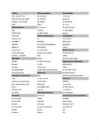
Listing Giving examples Generalising first, second, third for example in general first, furthermore, finally for instance generally to begin, to conclude as follows: on the whole next that is as a rule Reinforcement in this case for the most part also namely in most cases furthermore in other words usually moreover Result/consequence Highlighting
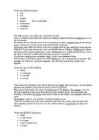
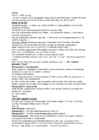
Words that ADD information · also · and · another · besides first, second, third, ... · furthermore · in addition · moreover The little girl put on her yellow shirt and brown overalls. Chris is on the basketball team this semester at Indiana School for the Deaf. In addition, he is on the soccer team. We will be here for one more week so we can finish up our work. Another reason we are staying longer is because we do not want to miss the Deaf Way conference. First of all, pour a half-cup of milk in the bowl; second, add two eggs; and third, stir the mixture. I admire I. King Jordan because he is the first deaf president of Gallaudet. Besides that, I admire him because he is a great long distance runner. Furthermore, he is a dedicated family man. All in all, there ís not much to dislike about the man, except he is too perfect! Crystal likes camping in the mountains
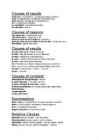
Clauses of results Such a/an + omadussõna + ainsuses loendatav nimisõna Such + omadussõna + loendamatu nimisõna/mitmus Such a lot of + loendamatu nimisõna/mitmus So + omadussõna/määrsõna So much/little + loendamatu nimisõna So many/few + mitmus Clauses of reasons The reason for + nimisõna/-ing vorm The reason why + clause (he verb) Because of/on account of/due to + nimisõna Because of/on account of/due to the fact that + clause (he verb) Now (that) + clause (they verb) Clauses of results In order to/so as to + infinitive (formal) So that + can/will (present or future reference) So that + could/would (past reference) In case + present tense (present or future reference) In case + past tense (past reference) For + nimisõna (kui tahame väljendada tegevuse eesmärki) For + -ing vorm (kui tahame väljendada millegi funktsiooni) Prevent + noun/pronoun + (from) + -ing vorm Avoid + -ing vorm
endiltteisele. Viimane lõik moodustab kokkuvõtte ja peaks esimeseslauses võtma eelpoolt oodud arutluse kokku ning seejärel lisamasellest tuleneva lõpumärkuse. · Expressing opinions Introduction State the topic and your own opinion clearly without using too many personal opinion words Main body (para. 2 - 4) Give the first, second and third argument and examples or reasons to support your opinion Conclusion Re-state your opinion, using different words Useful language To list points firstly, in the first place, first of all, to start with, secondly, thirdly, finally, last but not least To add more points to the same topic what is more, furthermore, also, apart from this, in addition to, moreover, besides, too, not to mention the fact that, another major reason To introduce conflicting viewpoints a lot of people believe/think, many people are
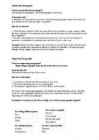
Adding and Contrasting Expressing cause / reason *and *but because as well as However, as besides Although since Moreover, despite This is why Furthermore, In spite of because of
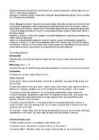
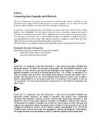
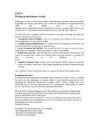
You will also need to know how to present different shades of argument to produce logically a recommendation you wish to make. This requires an ability to emphasise certain facts and 'bury' others. However, all facts need to be linked to give a logical flow. This unit will give you language practice in this important aspect of producing written documents. Evaluation Exercise 1 Connectives Study the following two versions of the same text and decide which do you find easier to read and why? what is the difference between them? When the ICN equipment was first introduced, it was found to provide a flexible and advanced system. Its speed of operation was greater than comparable hardware then available. In recent months major faults have developed in the equipment. The local agent appears incapable of providing a reliable repair service. The system is regularly out of
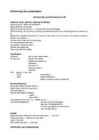
Performing the presentation Introducing yourself and your talk Greeting, name, position, opening formalities Good morning, ladies and gentlemen. Good afternoon, everyone. Good morning. My name's (...). I'm the new Finance Manager. Good morning. Let me start by saying just a few words about my own background. I started out in... Welcome to Standard Electronics. I know I've met some of you, but just for the benefit of those I haven't, my name's (...). It's very nice to see you all here today. I'm very pleased to be here. I'm glad you could all make it. Thanks for inviting me. Thank you (all) for coming. Title/Subject I'd like to talk (to you) today about ... I'm going to present the recent ... explain our position on ...
Essay 200 (+/- 10%) words The text consists of 4-5 paragraphs discussing a specified topic. Usually the task contains points you have to discuss. Make sure they are all covered! Keep in mind! Formal language – no slang, so contracted forms, colloquialisms, try to avoid repetition of words. Indented lines! Clear paragraphs with one central idea. Avoid strong feelings 8everybody hates... it is absurd to believe...) and strong personal expressions Use generalization (children assume…), but do not use overgeneralizations (all children assume…) At least 2 linking words per paragraph (separate them from the rest of the sentence by commas!) that show the connection between paragraphs. Make references to other sources (Police officials believe that…)
to persuade, recommend, offer advice, give an order, etc. The business text must therefore be easily and quickly read and its message must be understood exactly as intended. If you learn to recognize and avoid the more common errors of information control, grammar and style, you will achieve this aim. You will write more confidently and more correctly if you check everything you write. Pay particular attention to the following: · Appropriate Subject Heading Take care to prepare your reader by introducing the subject appropriately in your subject heading. · Carefully Organized Information If a reader needs to be persuaded or convinced, your information will need careful planning and organizing. · Correct Grammar and Spelling Train yourself to check for major grammatical errors, words which are commonly misspelt and sentences which are incomplete.
stated and supported by reasons. It is necessary Paragraph 1 to include the opposing viewpoint in another State the topic and your opinion paragraph. clearly A successful opinion essay should have: Main Body a) an introductory paragraph in which you Paragraph 2 state the topic and your opinion; Viewpoint 1 and reason b) a main body which consists of two or more Paragraph 3 * paragraphs. Each paragraph should present a Viewpoint 2 and reason separate viewpoint supported by your reasons. Another paragraph giving the Paragraph 4 opposing viewpoint and reasons may be Give the opposing viewpoint and
Supporting Paragraphs What are supporting paragraphs? Supporting paragraphs make up the main body of your essay. What do they do? They develop the main idea of your essay. How do I write them? 1. List the points that develop the main idea of your essay. 2. Place each supporting point in its own paragraph. 3. Develop each supporting point with facts, details, and examples. To connect your supporting paragraphs, you should use special transition words. Transition words link your paragraphs together and make your essay easier to read. Use them at the beginning and end of your paragraphs. Examples of transition words that can help you to link your paragraphs together: For counter examples For listing different points However First Even though Second
Style The term style is a polysemantic one. The latin word ,,stilus" meant a writing instrument used by the ancients for writing on waxed tablets. Already, in classical latin the meaning of style was extended to denote the manner of expressing one's ideas in written or oral form. One of the abts/the best was given by Jonathan Swift: ,,Proper words in proper places." In present- day english, the world style is used in about half a dozen basic meanings. 1. the characteristic manner in which a writer expresses his ideas. Some speak about the style of Hemingway, Dickens etc. 2. the manner of expressing ideas, characteristic of a literary movement or period. Style of symbolism, romanticism 3. the use of language to pick a literary genre-comedy, novel, drama, O.D (poetic form) etc. 4
beings grasp those meanings without even thinking about it, are very strik- ing facts. A philosophical theory of meaning should explain what it is for a string of marks or noises to be meaningful and, more particularly, what it is in virtue of which the string has the distinctive meaning it does. The theory should also explain how it is possible for human beings to produce and to understand meaningful utterances and to do that so effortlessly. A widespread idea about meaning is that words and more complex lin- guistic expressions have their meanings by standing for things in the world. Though commonsensical and at first attractive, this Referential Theory of meaning is fairly easily shown to be inadequate. For one thing, comparatively few words do actually stand for things in the world. For another, if all words were like proper names, serving just to pick out individual things, we would not be able to form grammatical sentences in the first place. Meaning and understanding
1. STYLE The term "style" is polysemantic (has many meanings): a Latin word "stilus" originally meant a writing instrument used by ancient people. Already in classical Latin the meaning was extended to denote the manner of expressing one's ideas in written or oral form. Jonathan Swift defined style as "proper words in proper places". In present day English the word "style" is used in about a dozen of principle meanings: 1. the characteristic manner in which a writer expresses his/her ideas (e.g. style of Byron) 2. the manner of expressing ideas, characteristic of a literary movement or period 3. the use of language typical of a literary genre (e.g. the style of a comedy, drama, novel). 4. the selective use of language that depends on spheres / areas of human activity (e.g
Broadly, there are three aspects to the study which are Pragmatics (studies the use of language → interested in the gap between the sentence’s meaning and the speaker’s meaning). Semantics (concerned with the meaning of the language aspects and the way they change, also how objects and language and thinking and language are related). Syntax (concerned with the rules [grammar] and how sentences and words are formed). Synchronic approach to language → A focus in language study on how language exists in one moment in time, not at how this language came to be the way it is now. Example Estonian in the 21st century. Diachronic approach to language → A focus in language study on how a language has changed over some period of time. In a way it is comparing language to what it was and how it is now. For example comparing 18th century and 19th century Estonian.
STYLISTICS 1. Style, stylistics, a survey of stylistic studies The term ,,style" is polysemantic. Latin ,,stilus"--a writing instrument used by the ancients for writing on waxed tablets. Soon, the meaning was extended to denote the manner of expressing one's ideas in written or oral form. Jonathan Swift said: ,, Style is proper words in proper places" Present day--half a dozen meanings: · the characteristic manner in which a writer expresses his ideas (Style of Byron) · the manner of expressing ideas characteristic of a literary movement or period (symbolism, romanticism) · the use of lg. typical of a literary genre (comedy, drama, novel) · the selective use of lg that depends on spheres of human activity. These
1 SYNTACTIC STYLISTIC DEVICES SYNTACTIC STYLISTIC DEVICES are based on a peculiar place of the word or phrase in the utterance (text, sentence, etc).This special place creates emphasis irrespective of the lexical meaning of the words used. Categories: syntactic stylistic devises based on: SDD: based on ABSENCE OF LOGICALLY REQUIRED ELEMENTS OF SPEECH ELLIPSIS ELLIPSIS or ELLIPTICAL SENTENCES means leaving out one or both principle members of the sentence that is the subject or predicate. NT: Where is the man I'm going to marry? - Out in the garden. (no subject) What is he doing out there? - Annoying father. Here, in the dialogue, ellipsis creates the colloquial tone of the utterance
essay: Graham Holderness’s “Reading ‘Deceptions’”, a text balanced on the borderline between literary criticism and fiction. It offers four readings of Larkin’s “Deceptions” by four fictitious characters in the same university department: a formalist, a Marxist, a feminist and a post-structuralist critic. Holderness’s parodistic readings have a central position in the volume for precisely the same reason as Larkin’s “Posterity” does in High Windows. In the first place, the poem entitles the reader to see Larkin through the eyes of Jake Balokowsky, his fictitious biographer, but Larkin also ridicules this young cosmopolitan scholar. Holderness’s Cleanth, Raymond, Kate, and Colin are both serious and ludicrous. Holderness has created four possible scholars, and he does not say that any of them are wrong. He laughs at them, but does not reject their readings
· Effect of clock drift on bit synchronization Bit synchronization is unreliable at higher data-rates use by a 1. Unbalanced configuration - consists of a primary station No selective reject no playback protection -> PAP should be avoided! detection of bits are only an approximation clock drift can cause incorrect sampling instant. and one or more secondary stations. Primary is responsible for controlling all · For acknowledged connectionless service: CHAP(Challenge Handshake Authentication Protocol): encrypted password > Byte synchronization Bit counting used to determine byte boundary e.g
of using blogs in teaching writing in English and obtain statistical data of their language improvements by the end of training. As a feedback form I plan to initiate an electronic survey for everyone who pass the course. DEFINITION OF BLOG In recent decade on the internet scene appeared such term as `weblog', the later version of which had been simplified and is nowadays known as `blog'. Due to the fact that these `personal online, web-based publications' (Armstrong & Retterer, 2009, p. 233) have found a broad response among many users both on leisure and professional level, the amount of definitions rose highly as well. Term `weblog' originally was coined in 1997 by John Barger and Robert Wisdom as they defined it as a `webpage where a web logger `logs' all the other webpage's he/she finds interesting'
STYLE AND STYLISTICS FGI 1081 Stylistics (I. Ladusseva) 2 The term "style" is polysemantic (has many meanings): a Latin word "stilus" originally meant a writing instrument used by ancient people. Already in classical Latin the meaning was extended to denote the manner of expressing one's ideas in written or oral form. The precise definition was given by Jonathan Swift, who defined style as "proper words in proper places". In present day English the word "style" is used in about a dozen of principle meanings: 1. the characteristic manner in which a writer expresses his/her ideas (e.g. style of Byron). 2. the manner of expressing ideas, characteristic of a literary movement or period (e.g. symbolism, romanticism, renaissance). 3. the use of language typical of a literary genre (e.g. the style of a comedy, drama, novel). 4
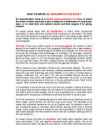
HOW TO WRITE AN ARGUMENTATIVE ESSAY An argumentative essay is a formal, impersonal piece of writing in which the writer is either expected to give a balanced consideration of a particular topic, or to state their own opinion clearly and then support it by giving reasons. An essay should begin with an introduction in which some background information is given about the problem that is going to be discussed. The angle from which the problem is going to be looked upon in the essay is also stated. In longer essays these are in different paragraphs, in shorter ones they can be in one paragraph. The body of the essay usually consists of several paragraphs, the number of which
Well, technology is indisputably better. We can store and retrieve data much more efficiently. We can communicate in a flash. But still, at the basic level, we must be well grounded -- we must possess common sense, civil manners, frank discussion skills, reasoning abilities, and moral fiber. It is possible to be a technological genius, say a computer nerd, without social skills or civil conscience. I'd rather have as a neighbor an illiterate janitor with an easy-going, friendly disposition. Hence, I value what we might call character more than specialist knowledge from an antisocial person. God knows we want everyone to be a well-mannered genius. But humans are not cut out to be happy like pigs in a pen. We instead have insatiable brains, with mental appetites. So our goal is to balance the brainwork with hearts and smiles. "Facts served with sauce." Where does common sense fit on? Is it teachable? To a degree, what we mean by common sense is simply learned experience
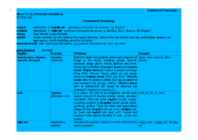
tegevusnime, oleviku kesksõna, mineviku kesksõna) derivational affix liide, tuletusliide, tuletusafiks (e.g. postwar, anti-American, wiser, greenish) parts of speech sõnaliigid English Estonian Definition Example noun (proper, common, nimisõna, Refers to words which denote classes and categories of book, water, sincerity, Mary, concrete, abstract) substantiiv things in the world, including people, animals, Estonia inanimate things, places, events, qualities, and states. Nouns can be divided into proper nouns and common nouns
Please contact me regarding any queries you may have. E . I look forward to receiving the information and would appreciate it if you could send it as soon as possible. F . Thanks again for the gift and please give my regards to your family. G . Anyway, thanks again for the invitation. I'll see you then. H .I am confident that you will carry out your new duties with your usual conscientiousness and dedication. TASK 5 Read the following sentences. Which are formal and which are informal? Which sentences are beginnings and which are endings of a letter? What kind of letter does each sentence belong to? 1. We would be honoured if you could attend a reception for Ambassador Sarah Jacobs. 2. I can't wait to see you again , and don't forget to let me know if there's anything I should bring to the barbecue. 3. I am writing to inform you about some changes in the schedule for next term's courses. 4
Copyright © 1967, 1973 by David Kahn All rights reserved. No part of this book may be reproduced or transmitted in any form or by any means, electronic or mechanical, including photocopying, recording or by any information storage and retrieval system, without permission in writing from the publisher. For information address The Macmillan Company, 866 Third Avenue, New York, New York 10022. Library of Congress Catalog Card Number: 63-16109 Crown copyright is acknowledged for the following illustrations from Great Britain's Public Record Office: S.P. 53/18, no. 55, the Phelippes forgery, and P.R.O. 31/11/11, the Bergenroth reconstruction. Published by arrangement with The Macmillan Company FIRST PRINTING SECOND PRINTING THIRD PRINTING FOURTH PRINTING FIFTH PRINTING SIXTH PRINTING SEVENTH PRINTING EIGHTH PRINTING NINTH PRINTING TENTH PRINTING SIGNET TRADEMARK: REG. TJ.S. PAT. OFF. AND FOREIGN COUNTRIES REGISTERED TRADEMARK---MARCA REGISTBADA HECHO EN CHICAGO, U.S.A.
surrounding us, therefore, we often supplement perception with unconscious inferences. Thus he argues that perception begins with an incomplete retinal image that is two- dimensional, flat and size depends on distance. He says that perception is a constructive process in which the two-dimensional retinal image is elaborated to a three- dimensional picture in our brain, based on personal knowledge and experience. In other words the processes of perception is essentially affected by our expectations and probability in perceiving the world. Therefore conceptually driven perceptual processing is called a top- down process due to the indirect process that involves making assumptions about the world. 1 05144023 However, another theory of visual perception is called bottom-up/data driven processes Gibson (1979)
The Rise and Demise of the New Public Management Wolfgang Drechsler (University of Tartu and Tallinn University of Technology, Estonia) © Copyright: Wolfgang Drechsler 2005 Within the public sphere, the most important reform movement of the last quarter of a century has been the New Public Management (NPM). It is of particular interest in the post-autistic economics (pae) context because NPM largely rests on the same ideology and epistemology as standard textbook economics (STE) is based (for my take on this, see Drechsler 2000), and it has had, and still has, similar results. Already more on the defensive within public administration (PA) than STE is within economics, NPM also shows that such major paradigm shifts in theory and policy may actually happen
· use only white paper (not yellow, blue, or pink) · the title page: on the top should be : Tallinn Pedagogical University, the second line: Department of English. In the middle: write your title without quotation marks, and below in the middle write Term Paper. Then a little below write: by Xzzz Xzzzz, and below of that write: Supervisor: Lect. Zxxx Zxxxx. Below in the end write: Tallinn 200X. · title should be not a sentence use only phrases · chapters should have titles (not a sentence but a phrase). After title page comes page 2 and Table of Contents (in the top middle) here you indicate the division of your paper (Introduction, Chapter 1 (with title), etc.). · NB! People who have literary topic should write a Preface (short, normally 1 page long ) and only then comes Table of Contents and there mention your Preface (e.g. Preface, Introduction, Chapter 1 (with title), etc.).
The Inner Choice 79 Growing Legs to Stand On 83 Standing Up for the Public Good 86 Defense 89 Stomach Signs 89 Heart-of-Hearts Signs 91 Special Vulnerabilities 93 Summary 95 Study Questions 96 CHAPTER 4 Social Proof: Truths Are Us 97 The Principle of Social Proof 99 People Power 99 After the Deluge 102 Cause of Death: Uncertain(ty) 109 A Scientific Approach 113 Devictimizing Yourself 115 Monkey Me, Monkey Do 117 Monkey Die 120 Monkey Island 128 Defense 131 Sabotage 132 Looking Up 135 Summary 138 Study Questions 139 CHAPTER 5 Liking: The Friendly Thief 141 Making Friends to Influence People 144 Why Do I Like You
2) Twin studies (type of correlational studies) compare trait similarities in identical and fraternal twins (Minnesota twin study by Tellegen, Buchard). 3) Experiment: Split-brain experiments by Gazzaniga & Sperry, brain plasticity experiments by Rosenzweig and Bennett. Neurotransmission experiment by Martinez and Kesner. 4) Case studies: Phineas Gage studied by Dr John Harlow and Oliver Sack's study on Dr P. Discuss how and why particular research methods are used at the biological level of analysis. Biological researchers often adopt a reductionist approach to the study of human behavior. They work on a micro-level of research, breaking down complex behavior into its smallest parts (e.g. genes, neurotransmitters or proteins). This approach is sometimes criticized for being overly simplistic, but it is important to have detailed information of the components of human behavior in order to understand the
right time, and at the lowest possible cost. According to Ganeshan & Harrison (2001) Supply Chain Management is a "systems approach to managing the entire flow of information, materials, and services from raw materials suppliers through factories and warehouses to the end customer." Supply chain event management (abbreviated as SCEM) is a consideration of all possible occurring events and factors that can cause a disruption in a supply chain. With SCEM possible scenarios can be created and solutions can be planned. Some experts distinguish supply chain management and logistics management, while others consider the terms to be interchangeable. From the point of view of an enterprise, the scope of supply chain management is usually bounded on the supply side by your supplier's suppliers and on the customer side by your customer's customers.
 annaabi.ee