Leidsid 33 sarnast õppematerjali, mis on seotud failiga "Kiusamine". Need materjalid aitavad sul teemat sügavamalt mõista.
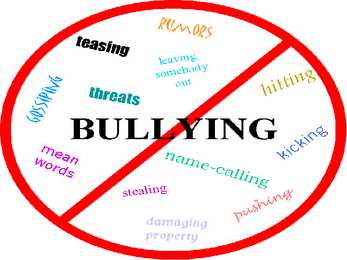
child, bully, bullying, children, physical, often, victim, girls, other, call, percent, there, even, reinforced, tell, student, left, note, names, never, person, murder, forms, taking, weak, both, such, good, equal, differ, than, boys, centre, takes, parents, discuss, report, place, toronto, joining, cases, hour, walking, occurs, know, find, natureBULLYING Bullying is a very big problem in almost every school. When bullying goes out of the limit, it might end with a terrible gunfire(Colombian massacre). I believe everyone have been bullied by someone and have been a bully for a once. Bullying is an issue that is very important in nowadays and needs a special attention. Some of the ways to bully other people are by: calling you names, making things up to get you into trouble, hitting, pinching, biting and pushing, taking things away from you, damaging your belongings, stealing your money, taking your friends away from you. Now, to talk about why people bully someone there are many aspects. Some bullies do it to get attention or to make other people afraid of them. Others might be jealous of the person they are bullying
My Magna Carta. When I first started my own Magna Carta, I thought what's the most near heart and important to me. I chose two main topics, what I find important and relevant. I'm sure that I'm not the onl one who thinks like that. The first thing I would do, is forbid bullying. What is bullying? Bullying is the use of force, threat or duress to abuse, terrorize or aggressively dominate others. There are different types of victims. One of those is the one that ignores all the hate and insulting what comes at him/her. The other one takes it all by heart and seriously. Words can hurt, a lot. Most of the people don't realize what are they causing the victim, when bullying him/her. The worse cause that bullying can cause, is suicide. There is 7% of young people who attempt suicide every year
School Bullying Worksheet Respond to the questions below in detail. 1. What are the 4 levels of negative consequences of bullying specified by the text? General school climate, right of students to learn in a safe environment without fear, lifelong consequences. 2. What is the foremost source of formal bullying research? Scandinavian countries, Great Britain, and Japan. 3. Direct bullying behaviours include (5) teasing, taunting, threatening, hitting, stealing. 4. Indirect bullying is such as spreading rumours and enforcing social isolation. 5. Boys and girls differ in their bullying behaviours in that Boys typically engage in direct bullying methods. but girls are more apt to utilize more subtle indirect strategies. 6. In general terms, bullying can be defined as direct and indirect. 7
............................................................50 All Structures are Unstable.......................................................................51 The Ego's Need to Feel Superior..............................................................52 Ego and Fame...........................................................................................52 Chapter Four Role-Playing: The Many Faces of the Ego - 54 Villain, Victim, Lover...............................................................................55 Letting Go of Self-Definitions..................................................................56 Pre-established Roles................................................................................57 Temporary Roles.......................................................................................58 The Monk with Sweaty Palms..................................................................59
degree of B.A. International Relations` Table of Contents Abstract 3 Introduction 4 Chapter 1: Citizenship, Children`s Rights and Participation: from the UN to the UK 6 Chapter 2: Citizenship Education in Wales………………………………………………14 Active Citizenship in Cadle Primary School: A Case Study 20 Conclusion 29 Bibliography 32 Appendices Appendix 1: The United Convention of the Rights of the Child Appendix 2: Interview with Jamie Richards, the Head Teacher of Cadle Primary School 2 Abstract: Children inherently have had a rather tenuous relationship with citizenship. Similarly to how women were once viewed, children have not been considered as subjects of rights due to their perceived incompetence and irrationality. Currently, children are not considered as being
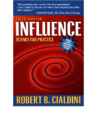
do it, enabled us to make significant changes. His work has enabled us to gain significant competitive differentiation and advantage" -LAURENCE HOF, Vice President, Relationship Consulting, Advanta Corporation "This will help executives make better decisions and use their influence wisely ... Robert Cialdini has had a greater impact on my thinking on this topic than any other scientist." -CHARLES T. MUNGER, Vice Chairman, Berkshire Hathaway, Inc. If you're wondering why of Latin America, the Far East, and Central Europe. you should buy this new edition of Influence: o More neuroscience evidence of how the influence process works is inte-
adjectives, adverbs, prepositions, conjunctions, and interjections--as well as the standard patterns of English sentences. All students of English, be they native speakers or those who are studying English as a second language, will profit from the fundamental introduction and review of grammar provided by SADDLEBACK'S BASIC ENGLISH GRAMMAR 1 and 2. Helpful marginal notes throughout the books have been provided to reinforce existing skills and call attention to common problem areas. We wish you every success in your pursuit of English proficiency. 1 What is Grammar? 5 The Simple Past Tense 98 Regular and Irregular Verbs 99 Was and Were 104 2 The Capital Letter 6 The Past Progressive Tense 106
5 (possible answers) she was my age and apart from the 1 1 go ahead 5 come to eighties hairstyle we're the spitting 1 Well, you will go to bed late every night. 2 fall through 6 bring about image of each other! Some people 2 Well, you will refuse to wear a 3 tip off 7 go down with say that they can see a strong family coat. 4 mistake for 8 come up with resemblance between my dad and me.
In London you'll also find Indonesian, Mexican, Greek... Cynics will say that this is because English have no "cuisine" themselves, but this is not quite the true. Vocabulary: to criticize - tasteless overcooked - ingredient - to invent - sauces - to disguise - spice herb - delicious - disappointing - to lend cuisine British Youth (2) Most 18 and 19 year-olds in Britain are quite independent people. English people say that children grow up more quickly now. Relationships within the British family are different now. Children have more freedom to make their own decisions. For example, children aged 13 may be employed part time in Great Britain. Age 15 is legally a "young person" not a "child". Age 16 is a school leaving age. They can leave home, drive a moped, marry with "parents' consent" buy beer. Age 17 can drive a car. Age 18 can vote, get married, drink in pubs.
BOOK REPORT Title & author of the book: 'Anita and Me' by Meera Syal The setting of the book? The story resolves around Meena Syal, the daughter of the only Punjabi family in the Midlands' mining village of Tollington. The novel provides a vision of British childhood in the 1960s, a childhood caught between two cultures, each on the brink of enormous change. Meena is desperate to fit in with the other children in her neighbourhood while forever feeling like an outsider because she is "different". Eventhough the Punjabi family is well respected by the locals, there are still sutations when they have to deal with racism. Plot summary (NB! Use the present tenses) Anita and Me by Meera Syal is the story of a young Punjabi girl growing up in the fictional English village of Tollington in the Midlands in the 1960s. The book follows Meena during her pre-teen years
It's hard to say. 6 were waiting 13 didn't admit 3 stewardess 7 retirement 7 was looking 4 wonderful 2 1 I reckon they are about 17 years old. 3 1 was getting, arrived Challenge! 2 It's a mixed class of girls and boys. 2 was preparing, cut Students' own answers 3 It's difficult to tell what kind of 3 discovered, were building 1E Past perfect simple and lesson their in. 4 started, was talking 4 It could be that they're in a maths
Truancy in school individual responsibility Hello ladies and gentlemen, today I am here to talk to you about truancy in school and why is it an individual responsibility. Truancy in school is a very serious problem nowadays. Unfortunately many students have lost their motivation to study. According to the BBC 400,000 children were persistently absent from England's schools in the past year and missed about one month of school each. The effect that poor attendance at school can have on a child's education can be permanent and damaging but skipping should be child's own responsibility and it is not right to punish the parents for it. Students have many reasons why they are skipping school, mostly they do not like the teachers or the subjects that they are taught. They tend think that they won't need
Tests Superstar 1 Luke Prodromou Test 1 Name____________________ Class_______ Use your English 1 Complete these sentences using the correct form (present simple or present continuous) of the verb in brackets. _ 1 She is in a band and she _________________________________ (record) a CD at the moment. _ 2 She is an actress and often _________________________________ (appear) on television. _ 3 At the moment she _________________________________ (have) a rest because she is tired. _ 4 Mike is a doctor and he _________________________________ (live) in Manchester. _ 5 I _________________________________ (start) work at 8.30 every morning. _ 6 He is a good cook but she _________________________________ (prefer) to eat out. _ 7 English tests _________________________________ (get) more and more interesting.
We know a lot of things thanks to books, but we do not know exactly when and where they originated, and what should be considered the first book in the world. Ancient document, written on parchment, papyri and vellum can hardly be qualified as books the way we understand the word today. Centuries went before paper replaced parchment and papyri. In the 15 th century Johann Gutenberg invented a mechanical process of duplicating texts, which we today call book printing. The first book was printed between 1444 and 1446, so these years can be considered as the beginning years of book printing. His most important preserved printings are the 40 copies of the Bible. By the end of the 15 th century there were about 1000 print-shops in Europe already. The oldest Estonian book dates back to 1535. Libraries form a vital part of education. They make available-through books,
for a particular purpose. No warranty may be created or extended by sales representatives or written sales materials. The advice and strategies contained herein may not be suitable for your situation. The publisher is not engaged in rendering professional sevices, and you should consult with a professional where appropriate. Neither the publisher nor author shall be liable for any loss of profit or any other commercial damages, including but not limited to special, incidental, consequential, or other damages. For general information on our other products and services, please contact our Customer Care Department within the United States at (800) 762-2974, outside the United States at (317) 572-3993 or fax (317) 572-4002. Wiley also publishes its books in a variety of electronic formats. Some content that
Bullying I hadn't faced the real bullying, I think I have really carried only some smaller bullying casts. I don't even know what to talk about. But well, we all make mistakes, sometimes bigger and sometimes smaller. I'm going to talk about a short story about bullying in my childhood in my other school. We had a really great class and almost everybody held together. But like in almost every class, there is someone different from others and that may cause them problems with the other people. We had very many these classmates who were a little bit bullied and couldn't stand for themselves. There was a girl, who wasn't very thin and that's the main purpose she was bullied. She wasn't very rich also and she lived only with her mother. The
(NOT We'll start as soon as Mary will arrive.) 32. Before most abstract nouns, we use great, not big. I have great respect for her ideas. (NOT I have big respect for her ideas.) We had great difficulty in understanding him. (NOT We had big difficulty in understanding him.) 33. Don't use the with a superlative when you are not comparing one person or thing with another. Compare: She's the nicest of the three teachers. She's nicest when she's working with small children. This is the best wine I've got. This wine is best when it's three or four years old. 34. Put enough after, not before, adjectives. This soup isn't hot enough. (NOT This soup isn't enough hot.) She's old enough to walk to school by herself. 35. Don't use a structure with that ... after want or would like. My parents want me to go to university. (NOT My parents want that I go to university.) I'd like everybody to leave. (NOT I'd like that everybody leaves.) 36
Open vs. Closed class words: In linguistics, a closed class (or closed word class) is a word class to which no new items can normally be added, and that usually contains a relatively small number of items. Typical closed classes found in many languages are adpositions (prepositions and postpositions), determiners, conjunctions, and pronouns.[1] Contrastingly, an open class offers possibilities for expansion. Typical open classes such as nouns and verbs can and do get new words often, through the usual means such as compounding,derivation, coining, borrowing, etc. [2] Syntax: studies how words group together to make phrases and sentences. Sentences are not simply random strings of words; they conform to specific patterns determined by the syntactic rules of the language. The syntactic rules in a grammar must account for the grammaticality of sentences, word order, structural ambiguity, the meaning relations between words in a sentence, the similarity
"koška" instead of "kot", "medvešonok" instead of "medved", "saichik" etc. Did not make much sense and we mostly played some games in Russian (Tare-tareke etc). Learned as much playing outside, since we had Estonian-Russian kids around as well. Not that we played with them. It's sad to say but it was not a nice time to be a Russian kid. We were mean to them, and we did not even know why. I think that's the only time I've ever been part of bullying someone, but there was this kid everybody called Vene-Russ and we spent a lot of time playing mean tricks on him. Well, there's that. And I also learned a lot of Russian from my mother's lover who was a Russian military officer and pretty much my father figure at the time. I tried to teach him Estonian and learned some Russian instead. My Russian studies in school have always been very hectic and making very little sense
Education Education is so multifaceted that it is difficult for me to know where to begin discussing it, or how to prioritize the many factors. Relaying my own experience is easy: I had a standard classroom approach, supplemented by inordinate reading. In only the briefest and least memorable instances did I receive any individual tutoring. Education is commonly thought of as the job of schools. Adults cry "educate our children!" Everyone has opinions about the best way to do the job. It is of urgent importance, and all the numerous factors are much studied, debated, and new (or old) ideas continually tested or retested. Some people say "it's as simple as . . . " and then name their pet peeve or passion. My view is not of an education specialist, but of one who loves sharing what I learn, and owes much to educators. Since I don't have an educational theory neatly worked-out, nor an outline
It can be conscious or unconscious. It is something that is noticed by everybody but is not always given enough attention. We sometimes ignore it and try to hide behind words, but we should never forget that we cannot fool everyone! Children react to body language because they experience the world through intuition. The same can be true for adults when feelings are involved. People who are in bad shape emotionally will often place great importance in it. In fact, they often pick up the smallest hint of a lapse in attention in the person they are speaking to. And they frequently jump to the conclusion that they are boring or a nuisance - thus compounding any sense of depression or poor self-esteem. A way to learn the secrets of body language is to watch television with the sound turned off and try to interpret what is being said simply from reading body language. You will experience that
d) Helen never does her homework. She is rather gentle/lazy'/reliable. e) I didn't talk to anyone at the party because I felt ambitious/lonely/shy. f) When Harry saw his girlfriend dancing with Paul he felt jealous/selfish/sentimental. g) I don't like people who are noisy and aggressive/courageous/sociable. h) Thanks for bringing us a present. It was very adorable/grateful/thoughtful of you. i) Teresa never gets angry with the children. She is very brave/patient/pleasant. j) Tom always pays for everyone when we go out. He's so cheerful/generous/honest. 2. Match the words in the box with the descriptions (a-l). Use each word once only. bad-tempered determined lazy reliable cheerful frank mean selfish considerate honest punctual sympathetic
rocket throwers. They used very large bamboo rockets which had a range of hundreds of metres. The British were determined to learn from their mistakes and a British officer, William Congrieve, began work on developing even bigger and better rockets. Within a few years Congrieve had developed 14 kg iron rockets that could be fired over 3200 m. These rockets were successfully used against Napoleon in the battle of Waterloo and during the US War of Independence. By the 1889s other applications for rockets were being developed. They were used for signalling, for whaling, and even for rescuing people from sinking ships. If a boat got into trouble near to the shore, a rocket with a thin rope tied to it would be fired out over the boat; survivors in lifeboats could use the ropes to pull themselves ashore. These traditional rockets are still used as distress signals on boats and planes.
Chapter 21 Chapter 42 Chapter 1 It is a truth universally acknowledged, that a single man in possession of a good fortune, must be in want of a wife. However little known the feelings or views of such a man may be on his first entering a neighbourhood, this truth is so well fixed in the minds of the surrounding families, that he is considered the rightful property of some one or other of their daughters. "My dear Mr. Bennet," said his lady to him one day, "have you heard that Netherfield Park is let at last?" Mr. Bennet replied that he had not. "But it is," returned she; "for Mrs. Long has just been here, and she told me all about it." Mr. Bennet made no answer. "Do you not want to know who has taken it?" cried his wife impatiently. "You want to tell me, and I have no objection to hearing it." This was invitation enough. "Why, my dear, you must know, Mrs
Examples are: put on, take off, give away, bring up, call in. Sometimes the particle is detached from the verb and put after the object. •He took his boots off. •They called the doctor in. apposition a grammatical construction in which two usually adjacent nouns having the same referent stand in the same syntactical relation to the rest of a sentence (as the poet and Burns in “a biography of the poet Burns”) back-reference In grammatical analysis, the term reference is often used to state a relationship of identity which exists between grammatical units, e.g. a pronoun 'refers' to a noun or noun phrase. When the reference is to an earlier part of the discourse, it may be called a 'back-reference' (or anaphora); collective noun Collective noun is the name we give to a group of nouns to refer to them as one entity. A crew of sailors. A flock of birds. A range of mountains. conjunction
Three Perfect Tenses Perfect continuous Present perfect you have walked. You have been walking. I have run. I have been running. Past Perfect You had walked. You had been walking. I had run. I had been running. Future Perfect You will have walked You will have been walking. I will have run. I will have been running. The Simple Present Tense Expresses a habit or often repeated action. Adverbs of frequency such as, often, seldom, sometimes, never, etc. are used with this tense. She goes to work everyday. They always eat lunch together. On your handout, write one sentence that reflects SIMPLE PRESENT: something you do often, sometimes, never, seldom The Simple Present Tense This tense also expresses general truths or facts that are timeless. Snow falls in the December in Minnesota.
There are about two million children currently learning at home. Homeschooled kids do well on standardized tests and are welcome at colleges and universities. Pros: Individual teaching attention Continuous population growth is leading to overcrowded schools in many areas. Add this to the recent economic struggles, with many schools laying off teachers or closing altogether. This means that teachers are more overwhelmed than ever, often handling classes of 40 or more children at a time. Personalized learning Another important consideration in the pros and cons of homeschooling is your ability to tailor lesson plans to your child. In traditional school environments, classmates often learn at very different speeds. This helps slower learners stay on track with the class, but often leaves bright children bored and distracted. With homeschooling, children can learn at their own speed.
· How do they differ? · Which extracts are examples of formal letters? · How is the reader addressed in a formal letter? · What are the closing remarks for formal letters? · What is the salutation in a friendly letter? · How would you end extracts 1,2,3 ? · How would you begin the extracts 4 and 5? 1. Dear Mr Miller, I received your kind invitation to the reception. Unfortunately, owing to other commitments. I will be unable to attend ... 2. Dear Ralph, l just got your invitation to the company's event. l `m afraid I can't make it because I've a/ready made plans which l can "t change ... 3. Dear Sirs, I am writing to complain about the poor quality of the items which I received from your company. I have no other alternative but to cancel the order which 1 placed earlier this week ... 4. ... thus, I recommend that you accept this advice on the matter
Hello. I want you to meet John Smith. I'm so pleased to meet you. This is Jane Smith. I'm Jane Smith. My name's John Smith. Informal introduction Hi. John. Jane. Hello. Titles: Mr Mrs Miss Ms Ms is a modern form of address for women. It replaces the traditional forms of Mrs and Miss. Greetings Good morning/afternoon/evening! 'How are you?' Very often people expect you to say something positive. Here's a breakdown of how you can express how you really are without complaining too much. · Fine, thanks. / On top of the world, thanks. · OK, thanks · Not so bad, thanks. / Can't complain, thanks. · So so, thanks. / So and so, thanks. · Not so good, actually 1 The English alphabet
Types of bullying 1. Physical bullying: hitting, kicking, pushing, choking, punching 2. Verbal bullying: threatening, taunting, teasing, starting rumors, hate speech. 3. Exclusion from activities: This does not mean that a child should not have the right to choose to play, or not to play, with another child; it does mean that children should not be allowed to systematically exclude others: "No one play with Mary;" "No one wants to play with him;" "Don't be her friend." 27.11.12 TAAB11 2 Types of bullying 4. School bullying 5. Workplace bullying 6. Cyber-bullying 7. Political bullying 8. Military bullying 9. Hazing 27.11.12 TAAB11 3 27.11.12 TAAB11 4 DEFINITION · "Bullying is the act of intentionally causing
htm • with parks, universities, colleges, hospitals, temples, churches, 2. http:// malls, stadiums, public www.english-4u.de/articles_e squares, beaches, waterfalls and canyons. x4.htm Example: We also visited St Paul's Cathedral. except the Grand Canyonbut we often use an article when using 3. http:// "the...of" www.english-4u.de/articles_e Example: the University of Edinburgh x6.htm Exercise:
We should eat a balanced diet that includes the right kinds of food and drink plenty of clean, fresh water. We should exercise regularly, strengthening our muscles and keeping us in shape. Exercise helps the blood circulate around our bodies, cleaning out waste and supplying plenty of oxygen. It is also important what we get enough sleep. The number of hours we sleep we need depend on our age. Young babies sleep for 20-22 hours each day, whereas older people often need only 6-7 hours. 2.1 Early hospitals The earliest known institutions aiming to provide cure were Egyptian temples. In ancient times temples dedicated to the gods of healing used to have a hospital area. Sick people came there to pray and be treated. Later in the Middle Ages hospitals attached to monasteries were run by monks and nuns. The oldest hospital still in existence is in Paris. It was founded in 800's A.D. In the 1700's European cities began to build hospitals
1 Types of bullying 1. Physical bullying: hitting, kicking, pushing, choking, punching 2. Verbal bullying: threatening, taunting, teasing, starting rumors, hate speech. 3. Exclusion from activities: This does not mean that a child should not have the right to choose to play, or not to play, with another child; it does mean that children should not be allowed to systematically exclude others: "No one play with Mary;" "No one wants to play with him;" "Don't be her friend." 2 Types of bullying 4. School bullying 5. Workplace bullying 6. Cyber-bullying 7. Political bullying 8. Military bullying 9. Hazing 3 4 DEFINITION • "Bullying is the act of intentionally causing
 annaabi.ee