Leidsid 33 sarnast õppematerjali, mis on seotud failiga "International Economic organisations, leader firms ". Need materjalid aitavad sul teemat sügavamalt mõista.
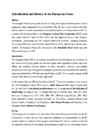
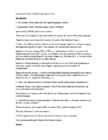
member, organisation, members, enterprise, established, economic, europe, enterprises, membership, firms, found, market, there, operation, between, aims, real, labour, develop, materials, asean, asia, north, south, founded, first, trading, founder, include, apec, opec, coal, steel, became, other, producers, finally, increase, globalisation, financeThe Membership of World Organisations Merilin Tamme Xa Tallinna Järveotsa Gymnasium 2008 The schedule · 04.04.1949 establishment of NATO. · 1951 Supreme Headquarters Allied Power Europe (SHAPE) was created near Paris in France. Later, SHAPE was relocated to Mons in Belgium. · 1952 Greece and Turkey join NATO. · 1955 Western Germany joins NATO. · 1982 Spain joins NATO. · 1991 Rome summit. Estonia is one of the founding members of the NACC. · January 1994 Brussels summit. Estonia joins PFP on 3 February. · March 1995 Estonia submits the first Individual Partnership for Peace (IPP) to NATO
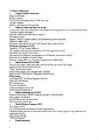
European Union Exam 1949 France, UK and the Benelux countries decide to set in place a Council of Europe. 1951 Treaty of Paris signed by the Six (Belgium, France, Germany, Italy, Luxembourg, Netherlands), establishing the European Coal and Steel Community (ECSC). 1957 Treaties of Rome establish the European Economic Community (EEC) and the European Atomic Energy Community (Euratom). 1959 July, seven countries of the Organisation for European Economic Co- operation (OEEC) – Austria, Denmark, Norway, Portugal, Sweden, Switzerland and the UK – decide to establish a European Free Trade Association (EFTA). 1960 Creation of European Free Trade Association 1961 UK applies to join the Community. 1962 The Parliamentary Assembly changes its name to the European Parliament. 1965 The Treaty merging the executives of the three Communities (ECSC, EEC, Euratom) is signed in Brussels; enters into force on July 1, 1967. Empty chair crisis 1966
Which has been the theoretical logic to cause it? Bring examples! The main idea of the ENP is to offer our neighbours a privileged relationship, building upon a mutual commitment to common values (democracy and human rights, rule of law, good governance, market economy principles and sustainable development). The ENP goes beyond existing relationships to offer political association and deeper economic integration, increased mobility and more people-to- people contacts. The level of ambition of the relationship depends on the extent to which these values are shared. Some examples which steps ENP has made in the field of human rights and which are represented in the report of implementation of the European Neighbourhood Policy about Eastern Partnership: The adherence to the shared values of democracy, rule of law, human rights and
European Union Research Compose: x X School 2009/10 What is European Union? The European Union (EU) is an economic and political partnership between 27 democratic European countries. EU population is almost a half milliard European union stands for caring and fair community. All EU members are devoted to peace, democracy, human rights respecting and working together to spread these values all the world. History The beginning of EU might consider the year 1951, when European Coal and Steel Community (ECSC) was constitute. Six countries joined with it for peace: Belgium, Netherlands, Luxembourg, Italy, France and Germany. With that move, coal and steel industry were put under one organisation, so war was almost impossible between these six country.
neighbours, which culminated in the Second World War. The idea is that countries who trade with one another become economically interdependent and so more likely avoid conflict.The ancestor of the European Union is the European Coal and Steel Community (ECSC) which was created with the Treaty of Paris (1951) and was signed by France, Italy, Belgium, Netherlands, Luxembourg and West Germany (total of 6 countries). European Economic Community (EEC) was created with the Treaty of Rome (1958), establishing a customs union (tolliliit). The European Union (EU) was created by the Maastricht Treaty which came into effect on November 1st 1993. Introduction The European Union (EU) is an economic and political union.EU policies aim to ensure the free movement of people, goods, services, and capital, enact legislation in justice and home affairs, and maintain common policies on trade, agriculture, fisheries, and regional development
............................................................................. 66 2.7. Corporate forms ......................................................................................................... 71 2.7.1. Limited Liability Company ................................................................................. 72 2.7.2. Joint-Stock Company.......................................................................................... 73 2.7.3. Private unitary enterprise .................................................................................. 74 2.7.4. Registration of the companies in Belarus .......................................................... 75 2.8. Taxation ..................................................................................................................... 75 2.8.1. Corporate income tax (CIT) ............................................................................... 75 2.8.2
..................................................17 Appendix 1...................................................................................................................................18 2 Introduction The aim of this research is to get know more about the Netherlands history and its geographical facts. This report is describing one of most the most beautiful countries in the Europe - Netherlands. Netherlands is famous for its windmills and flowers. Netherlands is also known unofficially as Holland. Government is constitutional monarchy of north-western Europe. Netherlands is bordered on the north and west by the North Sea, on the east by Germany and on the south by Belgium. The European portion of the Netherlands has a total area of 41,528 sq km of which 33,939 sq km is land surface. Country's capital and largest city is Amsterdam. Population is about 16 million.
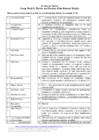
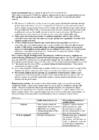
3 Customs Union C Allows for specialization, specialization leads to competitive advantage, and comparative advantage leads to economies of sales which maximizes consumer welfare and ensures the most efficient use of world-wide resources. 4 Economic Union D Approach to attaining a common market underpinned by the principles of non-discrimination, market access and concept of comparative federalism. States retain power to regulate as long as national regulation does not interfere
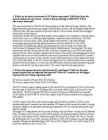
1. Which are the main cornerstones of EU-Russia cooperation? Which have been the main developments and success stories in this partnership in 2000-2012? Which side is more interested? The main cornerstones of the EU and Russia relations are the trade and energy relations. One biggest breakthrough has been gas pipeline Nord Stream. Russia is the third biggest trade partner of the EU and is the main importer of gas and crude oil. The economic benefits are the biggest cornerstones of the relations. Cooperation between Russia and the European Union progressively strengthens in foreign policy and security issues, in combating illegal migration, organised crime and terrorism. The main achievement of recent years, which can be hardly overestimated, is the understanding increasingly gaining ground that partnership between Russia and the EU is one of the cornerstones of maintaining stability and prosperity not only in Europe, but world-wide
The European Union (EU) is an economic and political union where are 27 member states drom European continent. The EU operates through a system of independent institutions and decisions are made by the member countries. EUs population is of over 500 million inhabitants which is 7.3% of the world population, there are 23 different languages and for now 17 countries are using EUs common currency Euro. EU was founded after World War II, when Europe was struggeling in social and political devastations. In 1948 a congress in Hague was held to discuss ideas about the development of European political co-operation. There were many important political figures such as Konrad Adenauer and Winston Churchill. On 9th May in 1950 French Minister of Foreign Affairs proposed that France and the Federal Republic of Germany should combine their coal and steel resources and let other European countries join also. From that on, the 9th of May has
Preparing for exam. Focus areas Defining innovation ● “An innovation is an idea, practice, or object that is perceived as new by an individual or other unit of adoption.” (Rogers 1952) ● CIS survey: “Product innovations must be new to your enterprise, but they do not need to be new to your market”. ● “Companies achieve competitive advantage through acts of innovation. They approach innovation in its broadest sense, including both new technologies and new ways of doing things” – (Porter 1990) ● “An innovative business is one which lives and breathes “outside the box”. It is not just good ideas, it is a combination of good ideas, motivated staff and an
Estonian Economy Estonians earn about half of the average European income, despite the fact that the economic growth during the recent years has been very fast and the differences have been diminishing. Although the extremely vigorous period of economic reforms is now over, the changes that Estonia is presently going through are far more extensive than those in the developed countries. The Estonian economy is diverse industry and transport, as well as commerce and different branches of services are all equally important. Due to the available natural resources Estonian economy largely relies on the branches related to the forest; Estonian energy sector is based on oil shale, a resource quite rare elsewhere in the world. Finland
before the creation of UN and the collapse of the colonial system, only metropolitan nations were considered subject of international law, this was created before the collapse of the colonialized system, UN charter is a very old and stupid document, that's why there's still such a definition) Strong point of int. Conventions - it's easier to apply, no proof is needed, the rules exist in the text. However, int. Treaties and conventions are only legally binding for member states, some conventions are not applicable to everybody. Customs are compulsory for everybody, for all countries of the world. However, it's harder to apply these, because there should be a consensus that a custom is customary norm for it to be legally binding. To create a legally binding norm, two criteria: 1) should have general practice of the states (practice should be established, wide-spread and consistent; it should be a settled practice),
Member States. The day is now celebrated each year around the world as United Nations Day. The purpose of the United Nations is to bring all nations of the world together to work for peace and development, based on the principles of justice, human dignity and the well-being of all people. It affords the opportunity for countries to balance global interdependence and national interests when addressing international problems. There are currently 192 Members of the United Nations. The Aims of the United Nations: -To keep peace throughout the world. -To develop friendly relations between nations. -To work together to help people live better lives, to eliminate poverty, disease and illiteracy in the world, to stop environmental destruction and to encourage respect for each other's rights and freedoms. -To be a centre for helping nations achieve these aims. The Principles of the United Nations: -All Member States have sovereign equality.
................................................3 The main aurthorities....................................................................4 Information...............................................................................5 What does European Union? European integratsion process began in 1951, when concluded European Coal and Steel Community founding agreement between Belgium, Netherland, Luxenbourg, Italy, France and West Germany. It was to prevent armed conflicts between the Member States. EU is economic and political partnership between 27 democratic European countries (Austria, Belgium, Bulgaria, Cyprus, the Czech Republic, Denmark, Estonia, Finland, France, Germany, Greece, Hungary, Ireland, Italy, Latvia, Lithuania, Luxembourg, Malta, the Netherlands, Poland, Portugal, Romania, Slovakia, Slovenia, Spain, Sweden, and the United Kingdom) . Its aims are peace, prosperity and freedom for its 498 million citizens -- in a fairer, safer world
Ireland Ireland (Irish: Éire, Irish pronunciation:) is a country in north-western Europe. The modern sovereign state occupies about five-sixths of the island of Ireland, which was first partitioned on 3 May 1921. It is bordered by Northern Ireland--part of the United Kingdom--to the north, by the Atlantic Ocean to the west, the Irish Sea to the east and the Celtic Sea and St George's Channel to the South and South-East. The legal name of the state is simply "Ireland", but its legal description the Republic of Ireland is sometimes used to differentiate the state from the island.
I. Portugal ABOUT Photo Location of Portugal (dark green) Portugal (Portuguese: Portugal, IPA: [putua]; officially the Portuguese Republic, Portuguese: República Portuguesa) is a country located in Southwestern Europe, on the Iberian Peninsula. It is the westernmost country of mainland Europe, and is bordered by the Atlantic Ocean to the west and south and by Spain to the north and east. The Atlantic archipelagos of the Azores and Madeira are Portuguese territory as well. The country is named
In order to be able to import all the products and services, something must be exported, that's why export holds such a prominent position for the Estonian economy and its growth. A couple of generations ago agriculture was the main occupation of the Estonians. Nowadays only about 4% of the workforce is engaged in agriculture. The 1990s was a hard time for agriculture competition with cheap imported products became an issue, enterprises had no money for new equipment and vehicles. Although today the situation in agriculture isn't perfect, some enterprises, including farms who use modern production methods, have cropped up. Joining the European Union has had a positive effect on Estonian agriculture as we can now sell food products to other European countries. Milk cattle, also pigs and poultry are the main farm animals raised in Estonia. Field crops include cereal crops, potatoes and vegetables
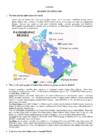
Then they evolved different cultures to suit different environments. Scientists now think that the ancestors of First Nations people may have come to North America from several different parts of Asia and Polynesia, following several different routes. Some may have come on woven reed rafts, or boats, across the Pacific from Asia and various islands. Still others may have crossed the ice fields that once connected Europe and North America. The Inuit, who live in the high Arctic, were probably the last to arrive. 4. How were the terms `Métis' and `half-breed' traditionally used? Métis French-speaking and Catholic. Half-breed English-speaking and Protestant. Half-breed is a term used almost exclusively by the federal government throughout the late nineteenth and early twentieth centuries. Race served to distinguish between populations or groups when describing an individual who
..... 10 2 Introduction. Years ago countries didn’t depend so much on imports and also on export. World has so many organizations controlling countries economics like WTO, The European Union, OPEC, NAFTA, ASEAN, APEC, MERCOSUR, CEEAC, IMF, World Bank and so on. Nowadays because of globalization there are large corporations like Apple, Gazprom and Allianz who rules the world and control the economic outcome with big organizations that are roled by influencial countries like China and USA. This essay is about criticism to IMF and World Bank. Critics of the World Bank and the IMF are concerned about the ‘conditionalities’ imposed on borrower countries. Often the conditionalities are attached without due regard for the borrower countries’ individual circumstances and the prescriptive recommendations by the World Bank and IMF fail to resolve the economic problems within the countries
Britta Kase 143123HAKB Summary The booklet offers a brief, simple explanation how the European Union is relevant to us in our everyday life, how it affects our lives in many areas and how can we benefit from it. The booklet gives also a very readable overview of EU’s history and how its member states have come together. It’s a great starting point to know the roots, history and functioning of the European Union. I found this booklet interesting because it provides an insight into relevance of the EU. I have never thought that making phone calls and flying has become cheaper as a result of EU. EU has abolished national monopolies and has permitted competition. For me the most important thing is air, water and food quality. The EU has introduced compulsory
Life in Estonia through the eyes of an economics student With a population of 1 313 271 people, Estonia is one of the least populous member states of the European Union. However, according to the IMF, it is a developed country with an advanced and high-income economy. Estonia follows market economy system which ensures the little government intervention and the determination of prices of goods and services in a free price system. Therefore, economic decisions are guided solely by the aggregate interactions of a country's citizens and businesses. In addition to mentioned afore, Estonia tends to perform favourably in measurements of civil liberties, education, and press freedom. Living in Estonia has many of its good sides, for instance it is a secure place from nature disasters and it has a beautiful nature. Although, when not to look only through rose-tinted glasses, there are still some minuses in country’s organization
3. What is the difference between English as a Second Language, English as a Foreign Language and English for Specific Purposes? Give examples of situations where they are used. English as a Second Language (ESL or TESL) is a traditional term for the use or study of the English language by non-native speakers in an English-speaking environment. That environment may be a country in which English is the mother tongue (e.g., Australia, the U.S.) or one in which English has an established role (e.g., India, Nigeria) English as a foreign language A traditional term for the use or study of the English language by non-native speakers in countries where English is generally not a local medium of communication. English for specific purposes - a sphere of teaching English language including Business English, Technical English, Scientific English, English for medical professionals, English for waiters, English for tourism, English for Art Purposes, etc 4
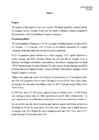
ERLE MAIDO TAAB11 Report Purpose The purpose of this report is to give an overview of Estonian population, political factors, technological factors, economic factors and the trends in Estonian economy compared to Germany and to briefly discuss Estonian business environment. Estonian population The total population of Estonia is 1 313 271 according to Statistics Estonia, of which 69.1% are Estonians, 25.1% Russians, 4.9% of which are of different nationalities for example Ukrainians, Belarusians and Finns. Rest are of unknown nationality. 68.5% of population speaks Estonian as a mother language, 29.6% speaks Russian as a mother language and 0
Claim they are the forefathers of USA aristocracy- FALSE They saw little chance of England becoming a proper country Wished to live free of English laws and oppressing church religious freedom In may (had time before winter!!!) · Mayflower Compact First governing document of Plymouth Colony Agreement composed by a consensus among new Settlers Composed for the sake of their own survival Fair and equal laws, for the general good Signed by 41 adult male members on the Mayflower Free of English law foundation of the USA constitution · Puritan Colony in Plymouth, New England America's first permanent puritan settlement Along with Jamestown, the most successful colony Originally 105 colonists First home in an empty Indian village Concluded a peace treaty with neighbouring tribes Aided by natives +++ (how to grow corn etc) went there to find relogious freedom · Puritan ethics and ideology God has a preordained plan for everybody
the agrarian legislation, was still largely shaped by the patriarchal relations between landlords and peasants, founded on customs and traditions. The rapid growth of the Estonian population 4|Page in the 18th century has even been seen as a sign of the relatively tolerable circumstances of the region's peasantry. The deterioration in the peasants' circumstances was perhaps caused by general economic development rather than by their uneasy juridical status. Shortly after the Northern War, the landlords were compelled to reconfirm the rates fixed in the
06.05.2012 Abstract 06.05.2012 Experience and Wellness management Author Group Girli Vasiljev RB1X Title of report Number of pages Economic Country Review: Finland, Estonia 20 and Hungary Teacher Kalevi Torunen The goal of this paper is to compare the economic performance of Finland, Estonia and Hungary. First, a general overview on the countries will be given. After, economic indicators (real GDP growth rate, inflation, unemployment, household consumption, investment, current account, government budget and deficit) of the three countries will be compared to draw a conclusion. Keywords GDP, inflation, unemployment, household consumption, investment, current account, government budget, deficit, surplus Table of contents 1 Introduction
one considerably powerful party. Prior election results clearly demonstrate that United Russia's position has become hegemonic: since the 2007 elections, the party controls 315 of the 450 seats in the State Duma, 78 of Russia's 83 executive posts at regional level, majorities in 81 local assemblies, and a large percentage of Russia's mayoralties, including 8 of the 10 largest cities. The party has a mass membership of over 1.5 million and nearly 60,000 regional, local and primary branches (Reuter 2010: 295). In this light, as there is considerable reason to believe that Russia's political system is moving towards a, what is called "dominant party system", in this paper, I will examine the main strategies, by witch United Russia has gained and perpetuated its dominance. After looking at the main features of a dominant party, I will focus on the reforms in Russia's electoral law,
Tallinn University TURKEY AND THE EUROPEAN UNION Tallinn 2013 INTRODUCTION The accession negotiations and the forthcoming Turkish accession present challenges to both Turkey and the EU. It is widely accepted that Turkey's accession would be different from previous enlargements because of the combined impact of Turkey's population, size, geographical location, economic, security and military potential. The case of Turkey will be different and more challenging from previous accessions for a number of reasons, some of them are presented below. Turkey is a country with a large population and geographic area. With a population of 74 million today, it is projected that it could be the largest member state at the time of accession. As a Moslem secular country, Turkey will also add a new demographic and religious dimension to the EU
000484 Tallinn 2004 2 PREFACE The Board of Directors of the Global Reporting Initiative (GRI) is pleased to release the 2002 Sustainability Reporting Guidelines. From an institutional perspective, it marks the beginning of the cycle of release, testing, review, and revision under GRIs new governance structure. The GRI was launched in 1997 as a joint initiative of the U.S. non-governmental organisation Coalition for Environmentally Responsible Economies (CERES) and United Nations Environment Programme with the goal of enhancing the quality, rigor, and utility of sustainability reporting. The first set of GRI Sustainability Reporting Guidelines appeared as an Exposure Draft in 1999. Following testing and public comment, the GRI released the June 2000 Guidelines. The 2002 Guidelines represent the GRI Boards view of a consensus on a reporting framework
dominions. They were given "responsible government" and became part of the Commonwealth. The Head of State was the British monarch. Nowadays, the word "dominion" is not used. 6. The British Commonwealth of Nations freely unites Britain and its former colonies. Ireland 1. The first inhabitants were hunters and fishers from the European mainland in 6000 BC. In 200 BC, the Celts arrived. 2. Christianity was established during the 5th century by Saint Patrick, who is also Ireland's patron saint. His feast day is on 17th of March, the day he died. 3. The English conquest of Ireland began in the 12th century by Henry II. 4. King James I settled English and Scottish Protestants in the province of Ulster. This has resulted in conflicts between the Irish Catholics and the "planted" Protestants. 5. Home Rule was the name given to the Movement of Independence in 1916. Ireland
EU Internal Market Law Mid-term online evaluation assignment for Distance Learning Students The Assignment: Hypothetical Case In the Member State A several NGOs, uniting parents concerned with safety of children and young adults, ordered a study of dog attacks on people (and especially children) resulting in deaths or maiming. The aim of the study was to identify, if possible, the dog breeds of potentially enhanced danger for people. The study’s results showed that pit bulls and their close mixes as well as Rottweilers and their close mixes were jointly responsible for over 70% of attacks. The authors of the study explained
Topic Estonia Tallinn 2008 1. Introduction Estonia is a small country about the size of Switzerland, or New Hampshire and Massachussetts combined. Estonia is named after the people called "Ests" who lived in the region in the 1 st century AD. The Republic of Estonia is one of the three countries commonly known as the "Baltic States". The other Baltic States are Latvia and Lithuania. 2. Geographical position Estonia is situated in northeastern Europe. Estonia is bounded on the north by the Gulf of Finland, on the east by Russia, on the south by Latvia and on the west by the Baltic Sea. In the north it borders on Finland. The coastline of the Baltic Sea in Estonia is characterized by numerous gulfs and bays, the biggest of them being the Gulf of Finland, the Gulf of Riga and the Gulf of Pärnu. Bays include the Narva Bay, Matsalu Bay, Kolga Bay, Kunda Bay, Tallinn Bay etc. Estonia has over
 annaabi.ee