Leidsid 33 sarnast õppematerjali, mis on seotud failiga "Indigenous people in australia". Need materjalid aitavad sul teemat sügavamalt mõista.
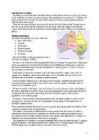
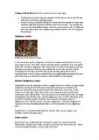
australia, origin, original, australian, tradition, language, cent, land, traditional, peoples, spoke, year, years, other, these, continent, languages, musical, class, overview, spirituality, famous, interesting, islands, around, arrived, there, unique, before, today, centre, north, belief, beings, features, plants, oldest, forms, paintings, walls, recent History – page 3-4 Religion – page 4-7 Society - page 7-9 The British – page 9-10 Conclusion – page 10-11 Resources – page 11 Appendix – page 11-14 2 Introduction I selected this theme because it was the most interesting one for me. Aborigines have interested me for a long time now so doing this essay is really fun for me. Australian Aboriginal culture is one of the world's longest surviving cultures. Australian Aborigines, also known as Indigenous Australians , are the native people of Australia . Many of them suffered when white people from Britain arrived in Australia, because of disease, the loss of their hunting lands, and unfair laws. Australian Aborigines are those people regarded as indigenous to the Australian continent.
Australia Fact file: Australia comprises a land area of 7 686 850 square kilometres. Its population is about 21,3 million people. Australia's capital is Canberra. The national language is English. The official name of it is the Commonwealth of Australia. It's divided into six states and two territories: New South Wales, Queensland, South Australia, Western Australia, Tasmania, Victoria, Australian Capital Territory (ACT) and Northern Territory. Symbols: Australia had the British flag as their official flag until 1901, when the Commonwealth of Australia was formed. Over 30 000 entries attracted the official competition. Five of them, which contained almost identical designs, were placed equally first. The Australian flag symbolises Australia's historical links with Britain, because it has
Australia Australia , officially the Commonwealth of Australia, is a country in the Southern Hemisphere comprising the mainland of the Australian continent, the island of Tasmania and numerous smaller islands in the Indian and Pacific Oceans. Australia flag Australia coat of arms. Australia is a cloudless dark blue sky, the bright sun, multikilometer beaches with snowwhite sand and ocean up to horizon. Australia's landmass of 7,617,930 square kilometers is on the IndoAustralian Plate. Surrounded by the Indian and Pacific oceans, it is separated from Asia by the Arafura and Timor seas. It the sixth largest country in area after Russia, Canada,
Australia. Kadri Rampe 2012 Position in the world. Australia, officially the Commonwealth of Australia, is a country comprising the mainland of the Australia continent, the island of Tasmania and numerous smaller islands. Its the world`s sixthlargest country by total area. On 1 January 1901, the six colonies federated,forming a Commonwealth of Australia, since Federation, Australia has maintaned a stable liberal democratic political system. The population of 22,7 million is highly urbanised and heavily concentrated in eastern states due to geography and climate. A highly developed country, Australia is the world's 12th largest economy and has the world's fifthhighest per capita income. Enviroment. Although most of Australia is semiarid or desert, it includes a diverse range of habitats from alpine heaths to tropical rainforests.
Topic Australia Introduction Many people know Australia as the land down under because it is the only continent except for Antarctica that is all on the southern hemisphere. Its name means ,,Southland". The official name of the country is the Commonwealth of Australia. It's capital is Canberra. Australia is the sixth largest country in the world but the smallest continent. Australia has 6 states and 2 territories (New South Wales, Victoria, Tasmania, Queensland, Western Australia , South Australia, The Australian Capital Territory and the Northern Territory). The Australian people are culturally the same as the Anglo Americans. There also live aborigines. Aborigines are the ancestors of the people. Like the US and Canada, Australia was an English speaking colony of Great Britain. Today Australia is a modern developed country with a diversified economy. Australia is an island continent of 7.7 million square kilometres, which makes it a little smaller than the USA.
Australia Australia is the smallest continent in the world. It is 7.6 million square kilometres big. It is often called the island continent because it is rather small for a continent and very big for an island. There are only five countries bigger than Australia in the World. There are five states in the mainland. Tasmania is also considered as a state so there are six states. The Northern Territory and Canberra are also independent but they are not states. Canberra is the capital of Australia and it is
Topic Australia Tallinn English College 2006 Australia 1 . Introduction The name Australia is derived from the Latin Australis, meaning of the south. In land area, Australia is the sixth largest nation, its territory is 7,686,850 sq km and its population reaches today over 20,5 million people. It is the only nation to govern an entire continent and its outlying islands. Australia's capital is Canberra, the only city with its own territory. It was built in the early 1900s just to be the capital. The official language is English and the official name of Australia is the Commonwealth of Australia.
Australia Australia is a country and also a continent. If someone wants to make clear, that he is speaking of the country, he may call it by its full name of Commonwealth of Australia. Australia's name means "southland."It is south of the equator. Sometimes it is also called the island continent because it is an island. There are about twenty million people in Australia.It is 1,800 miles from the mainland of Asia and almost half way round the world from Europe. More than 600 miles of ocean separate it from Americas. Since Australia is south of the equator, its seasons are just the opposite of ours. It has summer while we have winter, and the other way round. States and Territories. Australia consists of six states, two territories and eight external territories. The six states are: Western Australia (capital Perth), South Australia (capital Adelaide),
Introduction, Location Australia is a country between the Indian Ocean and the Pacific Ocean. It is the only country in the world that occupies an entire continent. The mainland covers an area of 7.7 million km² and it is about 3700 km from the most northern point to its most southern point and about 4000 km from east to west. There are also many different seas around Australia, like the Coral and the Tasman Seas in the west or the Timor and the Arafura Seas in the north, where the Indian and the Pacific Oceans meet. Because all seas and oceans near Australia are warm, surfing is a very popular hobby. Political subdivision Australia is divided into six states, which are: · New South Wales · Victoria · Queensland · South Australia · Western Australia · Tasmania New South Wales is the most populous state in Australia. Its capital is Sydney.
Society and culture of english-sspeaking countries Introduction 1. The countries of the world where the English language is spoken. 2. Approximate number of mother tongue speakers of English approximately 350-400 million native speakers. Which place does English occupy in the world by its number of speakers?After which language? English occupies second place by its number of speakers after Mandarin Chinese. 3. What is the difference between English as a Second Language, English as a Foreign Language and English for Specific Purposes? Give examples of situations where they are used. English as a Second Language (ESL or TESL) is a traditional term for the use or study of the English language by non-native speakers in an English-speaking environment. That environment may be a country in which English is the mother tongue (e.g., Australia, the U.S.) or one in which English has an established role (e.g., India, Nigeria)
The Life of Indigenous Australian Children The forced removal of indigenous children happened in every state and territory of Australia. The separation of Aboriginal children started in Victoria and New South Wales as early as 1885 and, in some states, was not stopped until the 1970s. About 85% of Aboriginal families have been affected in some way, either by having children taken away from them or by being forced to make major decisions to avoid having their children taken. Mothers of some Aboriginal children would cover their fair-skinned children with black clay; hide them in trees, behind sand dunes, or in hollow logs
Traditions Australia doesn't have many traditions. Attempts to get Halloween off the ground have stalled due to one too many homeowners telling little kids to get off their property or they will see a scary sight. Australia celebrates many of the same holidays as do people of the Western world, such as Easter and Christmas. However, Australians also celebrate some holidays unique to their country and culture. Australia Day Australia Day, 26 January, is the anniversary of the arrival of the First Fleet of 11 convict ships from Great Britain, and the raising of the Union Jack at Sydney Cove by its commander Captain Arthur Phillip, in 1788. On Australia Day, over half of the nation's population of 21 million attend either an organised community event, or get together with family and friends with the intention of celebrating our national day. It is celebrated with parties, picnics, and fireworks
Mozambique. Indigenous cookery traditional South African cuisine In the precolonial period, indigenous cuisine was characterized by the use of a very wide range of fruits, nuts, bulbs, leaves and other products gathered from wild plants and by the hunting of wild game. The domestication of cattle in the region about two thousand years ago by Khoisan groups enabled the use of milk products and the availability of fresh meat. However, during the colonial period the seizure of communal land in South Africa restricted and discouraged traditional agriculture and wild harvesting, and reduced the extent of land available to black people. Decline of indigenous cookery Urbanization from the nineteenth century, coupled with close control over agricultural production, led black South Africans to rely more and more on comparatively expensive, industrially-processed foodstuffs like wheat flour, white rice, mealie (maize) meal and sugar
Australia Australia is the only country in the world that covers an entire continent, yet also the smallest and the driest of all the continents. It's almost the same size as continental USA, being the sixth largest country in the world. It's also the oldest some of the rocks are more than 3,000 million years old. Australia is often called `Down Under', because it lies in the Southern Hemisphere. As a result, its seasons are the opposite of ours. Australia, Tasmania and a number of smaller islands form the Commonwealth of Australia. Because of the country's great size, the climate in Australia ranges from tropical regions of the Northern Territory to the cool temperate conditions in the southeast and Tasmania, where it often snows in winter. In the north, half the year is `wet' and half is `dry'. From November to April heavy rain fills the rivers and makes enormous lakes where thousands of birds come for the summer. From
..................................................................................................................10 Conclusion....................................................................................................................11 Materials........................................................................................................................11 2 Australia Introduction Australia is the one and only country in the world which fills the whole continent. The continent it fills is called Australia too. So, Australia is both a country and a continent. If you want to make clear that you are speaking about the country, you may call it the Commonwealth of Australia. It’s the official name of the country. Australia is the smallest continent, but one of the largest countries on Earth. It’s 6th largest country. Its area is about 7.6 million sq km
aborigines. I will divide the essay in 3 parts the Maori people, the aborigines and their comparison. Maori are the host people of New Zealand. Their name is derived from Ma-Uri which means the children of heaven. The arrival of the Maori people to New Zealand is considered to be somewhat of a mystery. It is known that first Polynesians arrived to New Zealand about 1000 years ago, when navigator Kupe discovered the land in 950 AD. He named it Aotearoa The Land of the Long White Cloud. Although these facts can be debatable, I will focus my attention on this interpretation of Maori history. After the Maori arrived to New Zealand, they started to develop into tribes and sub tribes, this tribal system is still in use. Their culture had almost no influence from the rest of the world. They evolved a culture endorsed by agriculture and hunting. Of course the Maori were warriors as well. They had inter-tribal battles, mostly over territory and the losers
...................................................... ................................. Aborigines and first settlers.......................................................................................... Sports............................................................................................. .................................... Culture............................................................................................. .................................. Factfile Australia is the only country in the worlf that fills the whole continent. The continent is also called Australia, if you want to make clear that you are speaking about the country you may call it by its official name: Commonwealth of Australia. Australia is the smallest continent, but one of the largest countries in the world. Its area is about 7,6 million sq kilometers. Its population is about 20,0 million and most of the people live in bigger cities: Sydney (4.2 million), Melbourne (3
NEW ZEALAND Geography: New Zealand is situated midway between the Equator and the South pole in the southern Pacific Ocean. It consists of two large islands, North Island and South Island, plus several smaller ones of which Stewart Island is the largest. North and South Islands are separated by the 32km wide Cook Strait. The total land area is 270,535 sq Km, about the size of Italy, the United Kingdom or the US state of Colorado. North Island is volcanically active with three active volcanoes. South Island has the high snow covered mountain peaks and glaciers of the Southern Alps, a range running almost 500Km along the Island. The longest river is the Waikato on North Island (425 Km), the largest inland stretch of water is Lake Taupo also on North Island (607 sq Km) and the highest point is Mount Cook on South Island (3754 m)
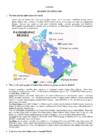
Region. Divisions are based on each area's relatively similar physical geography and landforms. Physiographic regionalization is defined here as the process by which regions with relatively homogeneous physical geography are determined 2. Who are the native people of Canada? Into which three groups can they be divided? Canada's constitution specifies three categories of aboriginal peoples: Indian (First Nations), Métis, Inuit. According to Canadian census 2011, 1.4 mln people of Aboriginal origin (4.3%): 852,000 First Nations persons, 452,000 Métis, 59,000 Inuit. Indian (First Nations) - No written history before the contact with Europeans. Chief historical sources European priests, travellers and traders not interested in the preservation of "pagan"myths. Different estimates about their
AUSTRALIA Tallinn 2008 Only one country in the world fills a whole continent. That country is Australia. The continent it fills is Australia, too. Australia, then, is both a country and a continent. Australia is one only continent except Antartctica that is all south of the equator. Since it is south of the equator, its seasons are just the opposite of ours. It has summer while we have winter, and the other way round. Sometimes Australia is called the island continent. There is a good reason why. It is an island. It is 1800 miles from the mainland of Asia and almost half way round the world from Europe. More than 6000 miles of ocean separate it from the America. Australia is the world's smallest, flattest and driest continent. It is also the oldest some of the rocks are more than 3,000 million years old. It is the 6th largest country. Its territory is 7 700 000 km2.
Compiler: Maiki Joakit Instructor: Mailis Teppo Misso 2011 New Zealand is an island country in the south-western Pacific Ocean comprising two main landmasses (the North Island and the South Island), and numerous smaller islands, most notably Stewart Island/Rakiura and the Chatham Islands. The indigenous Mori language name for New Zealand is Aotearoa, commonly translated as land of the long white cloud. Population (1998): 3,801,000.New Zealand is notable for its geographic isolation; it is situated about 2,000 kilometres (1,200 mi) southeast of Australia across the Tasman Sea, and its closest neighbours to the north are New Caledonia, Fiji and Tonga. During its long isolation New Zealand developed a distinctive fauna dominated by birds, a number of which
This fact, coupled with the grandeur of the landscape, has been central to the sense of Canadian national identity. 2. Geographical position Canada is the second largest country in the world after Russia. In the Arctic, Canada reaches almost as far north as Greenland. To the south it extends to the same latitude as southern France. The distance from Canada's west coast, the Pacific Ocean, to its east coast, the Atlantic Ocean, is farther than from North America to Europe. Canada's total land area includes thousands of adjacent islands, notably Newfoundland in the east and those of the Arctic Archipelago in the north. In longitude Canada extends from approximately 52° to 141° W, a distance that spans six time zones. In latitude it extends from approximately 42° to 83° N. With its vast Arctic and subarctic territories, Canada is often considered a country only of the far north; however, the peninsula of southern Ontario juts deeply south into the heartland
but can flourish wherever heat and rainfall are abundant. Today, palm oil is grown throughout Africa, Asia, North America, and South America, with 85% of all palm oil globally produced and exported from Indonesia and Malaysia; but most of the time not using sustainable measures. The industry is linked to major issues such as deforestation, habitat degradation, climate change, animal cruelty and indigenous rights abuses in the countries where it is produced, as the land and forests must be cleared for the development of the oil palm plantations. According to the World Wildlife Fund, an area the equivalent size of 300 football fields of rainforest is cleared each hour to make way for palm oil production. This large-scale deforestation is pushing many species to extinction, and findings show that if nothing hanges, species like the orangutan could become extinct in the wild within the next 5-10 years, and Sumatran tigers less than 3 years.
He met no living man there and soon returned to England. About 40 years later, Jacques Cartier, a French explorer, made two voyages from France. He found Indians in Canada. There are many place names in Canada that come from the Indians. The first people who came to live there were the French. It became a French colony. But soon the English also became interested in this rich country and so for many years England and France fought for the right to be the masters of the new land. In 1759 the English captured the French fortress of Louisbourg. Then Quebec lay unprotected. After the winning of Quebec they conquered Montreal and the French rule came to an end. The English allowed the French to keep their Roman Catholic religion, civil law system and language so they would not try to break away from Britain. After the American War of Independence immigrants from Britain began to arrive, among them there were also poor Irishmen and Scotsmen. Indeed, all the
Geography The name Australia means ,,southland". It is both a country and a continent, with an area of 7,617,930 square kilometres and it is also an island, separated from Asia by the Arafura and Timor seas. But Australia is also surrounded by the Indian and Pacific oceans. The Great Barrier Reef is the world's largest coral reef. It lies off the north-eastern coast and extends for over 2000 kilometres. The famous mountain range in the eastern part of Australia is the Great Diving Range and it's highest peak is Mount Kasciusco's 2230m. In the continental part, there are the Macdonnell ranges. Other smaller mountain ranges are the Musgrave Mountains, the Hammessley Mountains and the Darling Mountains. The continental part of Australia is mostly covered with deserts and these deserts are the Great Sandy Desert in the north-western part, the Great Victoria dessert in the southern part and Gibson desert and the Simpson desert
SOCIETY AND CULTURE OF ENGLISH-SPEAKING COUNTRIES Introduction 1. Nowadays, English is so widely spoken that it can hardly be considered "a one nation's" language. The main countries where English is spoken are: the U.K, the U.S, Canada, Australia, the Republic of Ireland, New Zealand, West Indies 2. There are approx. 300-400 million speakers of English in the world. English occupies the 3rd place by its number of speakers; it is right behind Mandarin and Spanish. 3. ESL (English as a Second Language) used in your own country (e.g. India) EFL (English as a Foreign Language) used in a foreign country ESP (English for Specific Purposes) used in business, airlines, hotels etc. 4
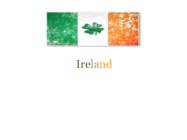
Ireland Ireland Ireland is a country which covers about 5/6 of Ireland island. Remaining 1/6 of this island is Northern Ireland. Republic of Ireland is located to west from Great Britain. Official language in Ireland is English and Irish. There's 26 countys WebRep Üldine reiting Dublin is the capital and most populous city of Ireland The population of Ireland is approximately 6.4 million. Just under 4.6 million live in the Republic of Ireland and just under 1.8 million live in Northern Ireland Ireland history The first known settlement in Ireland began around 8000 BC, when hunter-gathers arrived from continental Europe, probably via a land bridge
ground. All surviving churches, except one timber church, are built of stone or brick and in some cases show evidence of re-used Roman work. Art Anglo-Saxon art is mainly known today through illuminated manuscripts. Although they are the most well known to have survived. Perhaps the best known piece of Anglo-Saxon art is the Bayeux Tapestry which was commissioned by a Norman patron from English artists working in the traditional Anglo-Saxon style. The most common example of Anglo-Saxon art is coins, with thousands of examples extant. Anglo-Saxon artists also worked in fresco, ivory, stone carving, metalwork and enamel, but few of these pieces had survived. Literature Anglo-Saxon literary works include genres such as epic poetry, hagiography, sermons, Bible translations, legal works, chronicles, riddles, and others. The most famous works from this
Native Americans Doris Luha 11.b Falling sea levels created the Bering land bridge that joined Siberia to Alaska, which began about 60,00025,000 years ago. The indigenous peoples of the Americas are the pre Columbian inhabitants of North and South America, their descendants and other ethnic groups who are identified with those peoples. There are over 500 recognized native American tribes in America. Agriculture and hunting There were four basic ways for people in ancient societies to find food: hunting and fishing, gathering, farming, and raising domesticated animals. Over the course of thousands of years, American indigenous peoples domesticated, bred and cultivated a large
to the Norwegian "fjiords"). Tartan Tartan is a woven material,generally of wool,having stripes of different colours and varying in breadth.Tartan is a pattern consisting of criss-crossed horizontal and vertical bands in multiple colours. Tartans originated in woven cloth, but are now used in many other materials. Tartan is particularly associated with Celtic countries, especially Scotland. Culture Scottish music is a significant aspect of the nation's culture, with both traditional and modern influences. An example of a traditional Scottish instrument is the Great Highland Bagpipe, a wind instrument consisting of three drones and a melody pipe (called the chanter), which are fed continuously by a reservoir of air in a bag.Scottish literature includes text written in English, Scottish Gaelic, Scots, French, and Latin. The poet and songwriter Robert Burns wrote in the Scots language, although much of his writing is also in English and
Economy Jamaica is a mixed economy with both state enterprises and private sector businesses. Major sectors of the Jamaican economy include agriculture, mining, manufacturing, tourism, and financial and insurance services. Tourism and mining are the leading earners of foreign exchange. An estimated 1.3 million foreign toruists visit Jamaica every year. Jamaica's the number two exporter of Bauxite in the world, falling short only to the much larger Australia. The Jamaican economy is heavily dependent on services. The country continues to derive most of its foreign exchange from tourism, remittances, and bauxite/alumina. The global economic slowdown, particularly after the terrorist attacks in the US on 11 September 2001, stunted economic growth; the economy rebounded moderately in 2003, with one of the best tourist seasons on record. But the economy faces serious long-term problems: high interest rates; increased foreign competition; a pressured,
Inuit Culture, Traditions, and History Traditional Inuit way of life was influenced by the harsh climate and stark landscapes of the Arctic tundra from beliefs inspired by stories of the aurora to practicalities like homes made of snow. Inuit invented tools, gear, and methods to help them survive in this environment. Read on to learn more about traditional Inuit ways of life, and how Inuit culture has been changed over the past century. Geography Inuit communities are found in the Arctic, in the Northwest Territories, Labrador and Quebec in Canada, above tree line in Alaska (where people are called the Inupiat and Yupik), and in Russia (where people are called the Yupik people). In some areas, Inuit people are called "Eskimos" however many Inuit find this term offensive. The word "Inuit" means "the people" in the Inuktitut language. Inuit Homes
Solomon Islands Geography The Solomon Islands lie northeast of Australia in the South Pacific Ocean. They are part of a long chain of archipelagos called Melanesia, which stretches from Papua New Guinea in the north to New Caledonia and Fiji in the south. Second largest in the Melanesian chain, the Solomon Islands archipelago covers approximately 310,000 square miles (803,000 square kilometers) of ocean and consists of 10,639 square miles (27,556 square kilometers) of land. There are a total of 992 islands in the Solomon Islands History
 annaabi.ee