Leidsid 33 sarnast õppematerjali, mis on seotud failiga "History of London". Need materjalid aitavad sul teemat sügavamalt mõista.
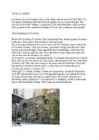
happen, england, happened, king, build, century, control, building, early, founded, romans, around, laws, bridge, 1042, throne, christmas, duke, westminster, 1290, nearly, days, plague, whom, original, boadicea, queen, tribe, alfred, saxon, viking, formulated, code, rebirth, religious, activity, reign, military, skill, innovation, sound, governanceWhat is London? London is one of the largest cities in the world, with an area of 1706,8 km2. It is the capital of England and The United Kingdom. It is in Central Europe. The city lies on the river Thames. London has 7,556,900 inhabitants, which is more than a quarter of the countries in Europe! For one city, London is very special. The beginning of London Before the founding of London, there had already been smaller groups of people in the area. There aren't any records on who they were. The first mayor settlement of London was in 43 AD. Romans came to the banks of the river Thames
Topic London Tallinn English College Tallinn 2007 1. Introduction London is the capital city of the United Kingdom and the largest urban area in England. The ancient City of London, to which the name originally belonged, still maintains its medieval boundaries, but the name "London" has long applied more to the whole metropolis that has grown up around it. London has been an important settlement for over two millenniums. It is also one of the world's leading business, financial and cultural centres and its influence in politics, education, entertainment and even fashion contribute to its status as a major global city
Contents Introduction...................................................3 London's early history.....................................45 The people of London......................................6 Buildings and bridges......................................7 Intruduction London is the capital of the united kingdom (UK), which is made up of Great Britain(England, Scotland, Wales) and Northern Ireland. The city lies in the southeast of England and covers an area of about 1,578 square kilometres on either side of the River Thames. With population of seven million, London is by far the largest city in the UK. Birmingham, the second largest, has just over one million inhabitants. Cultural life London is the worldclass centre. It has more than40 theatres, where audiences enjoy everything from musicals to William Shakespeare's plays
Empire and the Renaissance. The Middle Ages started in 1066. with the Battle of Hastings and the Norman Conquest. William the Conqueror took all the lands from the Saxon English and gave these to French nobles. Normans were known as great builders. This is assured by the fact that many great castles and other buildings, including the Tower of London, were built during the Norman Conquest. In 1086. Domesday Book was compiled. It is a detailed survey of England ordered by William the Conqueror. The reign of King William Rufus who was the son of William started in 1087 and lasted until 1100. Next king was Henry I who was the brother of William Rufus. His reign was from 1100-1135. In 1135 Henry I nephew Stephen got to the throne of England and reigned the country for 19 years. He was the last Norman king of England and his reign ended in 1154. From 1154 until 1377 the Plantagenet Kings of England ruled the English. The first
London History The Romans AD 43- AD 410 The Romans finally invaded Britain in AD 43 from Kent. The Romans lead by Julius Caesar attempted to invade Britain twice before that in 55 and 54 BC but the invasions were unsuccessful. They made their way to the river Thames and sailed up it. The Romans knew it was important to control a crossing point at the river Thames, so they decided to build a settlement on the north bank. Although small settlements had been built on the banks of the Thames, the Romans were the ones who built the first city. They called their city Londinium. The Roman engineers noticed that the point where the swampy river narrowed would make an ideal crossing point, they built London Bridge. Less than 20 years later the native Iceni tribe, led by Queen Boudicca, rose up against the Romans in revenge for mistreatment and burnt Londinium to the ground
Edward the Confessor (1003-1066) Edward was the oldest son of Ethelred II (Ethelred the Unready http://en.wikipedia.org/wiki/Ethelred_the_Unready) and Emma of Normandy (http://en.wikipedia.org/wiki/Emma_of_Normandy). He wast he penultimate Anglo-Saxon king of England. The family was exiled in Normandy after the Danish invasion of 1013 so Edward spent the first part of his life in Normandy. He grew up in deep religious views and gained the nickname ''Confessor''. As Edward was seperated from his family and grew up in a strange land, it is said that his childhood wasn't a happy one.
The battle to quench the fire is considered to have been won by two factors: the strong east winds died down, and the Tower of London garrison used gunpowder to create effective firebreaks to halt further spread eastward. 3: What did the Rebuilding of London Act 1666 say about bricks? That houses must be made out of bricks or stones. 4: Who was appointed to rebuild St. Paul's Cathedral and the ruined parish churches? Sir Christopher Wren 5: When was the Bank of England founded? It was established in 1694 (27 July). 6: When did Lloyd's of London begin to operate? The Society of Lloyd's was incorporated by Lloyd's Act 1871. 7: Why did William III build Kensington Palace? Because the King wanted a residence near London but away from the smoky air of the capital, because he was asthmatic. 8: Which king bought Buckingham Palace from the Duke of Buckingham? George III (George William Frederick) 9: What was important about coffee houses in the 18th century?
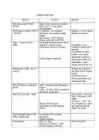
The Roman occupation (AD 43 Londinium not important Boadicea a revolt against - AD 410) politically. An important trading the Roman conquest centre. Devastation AD 61. Rebuilt. Roman walls built in AD 200. Anglo Saxons (AD 400 Destroyed the Roman towns. Many 1066) kingdoms. London in ruins. King Egbert one Flourishing. Attacks by Vikings. kingdom England (the 9th century) King Albert the Great London is the capital Edward the Confessor
1.Who were the Normans and what did they bring with them? The normans were the people who in the 10th and 11th centuries gave their name to Normandy, a region in France. 2.How long did the Norman period last in the British Isles? 1066-1154 3.How did the Norman Conquest take place and what were the events leading to this? Edward the Confessor died and the throne was seized by his leading aristocrat, Harold Godwinson, who was crowned. Almost immediately, Harold faced two invasions - one from the king of Norway, Harald Hardrada, who was supported by Harold Godwinson's brother Tostig, and the other from William, Duke of Normandy. Harold defeated the Norwegian invasion at the Battle of Stamford Bridge in September 1066, but he was defeated and killed shortly afterwards at the Battle of Hastings. The victorious William claimed the throne. 4.What is Domesday book all about ? William the Conqueror started recording England, because he
seasons. It appears in number of novels. These days it is not only the interest of tourists but is also a gathering point of certain minority groups. It is now fenced off to protect it from damage. 3. The Roman conquest Julius Caesar's first raid was in 55 BC but the romans left. Ad 43- the Romans came to stay. The army established Roman rule in the south and SW of the country. The Romans started to introduce their laws to a new province of the Roman Empire and started to build good roads. Officials were appointed (governors, procurators to collect taxes, look after the estates and mines and se that the gold, silver, iron and lead were exported back to Rome). Introduced schools,a new language Latin, large farms (villas), baths. In AD 410 they had to leave . roman occupation lasted nearly 400 years. They left behind very little. Roman province of Britannia covered most of present-day England and Wales. 4. Latin influence on English
In AD 61 the city was devastated by Boudicca, who led a revolt againt the Roman conquest of Britain. The city was burned down and its inhabitants massacred. London was rapidly rebuilt, becoming the capital of the province Britannia. AD 122 Roman walls were built around it as a Around AD 400 the Anglo-Saxons invaded Britain. They destroyed the roman towns and formed many kingdoms that were hostile to one another. London fell into ruins. King Egbert united all the small kingdoms and formed one kingdom named Englad. Later king Alfred the Great chose London to be the capital of the country. During the reign of Edward the Confessor Westminster Abbey and the royal palace were built. In 1066 The Normans invaded an William the Conqueror took the British throne as William I. He built a mighty fortess, now known as the white tower. The 14th century was a messy period. In 1337 the Hundred years war against France began.
flooding the lower-lying land that is now under the North Sea and the English Channel. The improving climate changed the environment. Vast forests covered most of the lowlands and highlands, which were rich in various animals. Rivers teemed with fish. The island became a very comfortable place to live in. Albion The most ancient name for Britain was Albion which was first used by a Greek author in the 6th century BC. Though Celtic in origin, it was supposed by the Romans to come from Lat. albus (white), with reference to the chalk cliffs at Dover. White cliffs are the first and last sight of land for visitors who come to Britain by sea. Notes 1. The British Isles is a geographical term for the islands bounded by the English Channel, the Strait of Dover, the North Sea, and the Atlantic Ocean. The
REVISION QUESTIONS 1. What do you know about Margaret Thatcher? Winston Churchill? Margaret Thatcher was the first female Prime Minister in Europe. She was a member of the conservative party. She died recently. Winston Churchill was the Prime Minister during WW II. He was excellent in making speeches, but he was a heavy drinker and also smoker. 2. What are the main countries of the UK and their capitals? There are 4: England with London as the capital; Wales with Cardiff as the capital; Scotland with Edinburgh as the capital; and Northern Ireland with Belfast as the capital. 3. What is Remembrance Day all about and why is it celebrated at that time? It is about the men (and women) who lost their lives fighting in the World Wars. It's celebrated then, because that's the day WWI was ended with a treaty. 4. Which powers does the Queen of the UK have? The Queen has to sign all the bills for them to pass
It was an important crossing point for the Romans over the river Thames. Market forces began to operate. With troops stationed and ships calling, merchants will inevitably set up shops. 3) The Celtic warrior queen Boudicca and her tribesmen fought against the Roman conquest and devastated Londinium. The city was burned down and its inhabitants massacred. 4) London was rapidly rebuilt and in AD 122 the Roman walls were built around it as a defence. 5) The Romans left Britain early in the 5th century because they had to cope with troubles elsewhere in the Empire. 6) Around AD 400 the Germanic tribes invaded Britain. 7) London fell into ruins because the Anglo-Saxons destroyed the Roman towns and formed many kingdoms that were hostile to one another. 8) All the small Anglo-Saxon kingdoms were united by king Egbert at the beginning of the 9th century. He formed one kingdom called England. 9) The powerful Saxon king Alfred the Great made London the capital of
History exam *Stonehenge - is a monument located in England. It is one of the most famous prehistoric sites in the world and is composed of earthworks surrounding a circular setting of large standing stones. The surrounding circular, earth bank and ditch, have been dated to about 3100 BC. Stonehenge was produced by a culture with no written language. Many aspects of Stonehenge remain subject to debate. There is little or no direct evidence for the construction techniques used by the Stonehenge builders.
feet, inches-roman measurements;christianity; Roman basilica in curches; reading, writing; buildings, roads Christianity in Roman Britain Until 4th C christians were persecuted 313 AD Emperor Constantine legalised christianity 380 AD Emperor Theodosius I made it the official religion of the empire Paganism had been eclipsed but continued to pose a political, religious challenge Boudicca Queen of Iceni people of Eastern England, led an uprising against Roman forces Prasutagus(ruler) was first allowed to rule when romans conquered England, after his death, romans decided to rule Iceni and flogged Boudicca and raped her daughters 60-62 AD Iceni rebelled, Boudicca´s warriors defeated Roman Ninth Legion, destroied capital-Colchester Finally Boudicca was defetated, she poisoned herself to avoid capture Hadrian´s wall A defensive barrier builtin 122 AD by Roman
Great Plague of London. The Great Fire of London. Samuel Pepys's diary . The Great Plague of London (1665-1666) The Great Plague was a massive outbreak of disease in England that killed an estimated 100,000 people The plague arrived with a merchant carrying a parcel of cloth sent from London, although this is a disputed fact It was the last major outbreak of the plague in England The English outbreak is thought to have originated from the Netherlands By July 1665, plague was in the city of London itself Though concentrated in London, the outbreak affected other areas of the country A bill of mortality for the plague People at the plague King Charles II of England, his family and his court left the city for Oxfordshire The aldermen and the the majority of the other city authorities opted to stay at their posts
Vespasian, is directly attested to have taken part. The IX Hispana,the XIV Gemina (later styled Martia Victrix) and the XX are attested in 60/61 during the Boudican Revolt, and are likely to have been there since the initial invasion. However, the Roman army was flexible, with units being used and moved whenever necessary, so this is not certain. Only the Legio IX Hispana is likely to have stayed there, as it is attested to being in residence at Eburacum (York) in AD 71 and on a building inscription there dated AD 108, before its eventual destruction fighting in the East, likely during the Bar Kochba Revolt. The invasion was delayed by a mutiny of the troops, who were eventually persuaded by an imperial freedman to overcome their fear of crossing the Ocean and campaigning beyond the limits of the known world. They sailed in three divisions, and probably landed at Richborough in Kent, although some suggest that at least part of the invasion force landed
Medieval England 1066-1485 Eva Asper Anna Pohlak 11.c The Norman Dynasty The Norman Conquest In the 11th century, Normans conquered England - The Battle of Hastings 14.10.1066 The Anglo-Saxon forces had more soldiers but the Normans had better military tactics and won in the end thanks to a clever strategy William I, also known as William the Conqueror, replaced King Harold on the throne The invasion was completed by 1071 - The Norman invasion is depicted on the Bayeux Tapestry a long embroidered cloth The death of King Harold embroidered on the Bayeux Tapestry The Norman England William I ensured his power by dividing the land into parts and making 1/7 of it a royal domain He made his nobles swear an oath of allegiance and become his vassals Died in 1087 while fighting in France, was
1) General facts The UK: * the United Kingdom of Great Britain and Northern Ireland was formed in 1801 * it covers 243,610 sq km * everybody from the UK is called British * the capital city is London * is made up of four constituent countries: England, Scotland, Wales and Northern Ireland which in turn are divided into counties * the flag is called the Union Jack which is a combination of the flags of England, Scotland and Northern Ireland * the population is about 60,000,000 people, the population density is 242 people/sq km * its coasts are washed by the Atlantic Ocean, the North Sea, the English Channel, the Celtic Sea, Saint George's Channel, and the Irish Sea. It is linked to France by the Channel Tunnel * the United Kingdom is a constitutional monarchy. The current monarch is Queen Elizabeth II, who is also the Queen and Head of State of fifteen other Commonwealth Realms, such as
The Norman Conquest William I (the Conqueror) (1066 - 1087) On October 14, in the fateful Battle of Hastings, William defeated and killed Harold and seized the English throne. Two months after the Battle of Hastings, William I was crowned king in Westminster Abbey. The service was held on Christmas Day 1066, with all the traditional ceremonies associated with the coronation of English kings since the time of Edgar. William had gained his throne by accepting the English form of coronation, William emphasised his claim to be legitimate successor to Edward the Confessor. William I was a strong king and a man of immense determination. He was stern to people who opposed his will, but kindly disposed to those who did not.
· avon river · cumb valley · ford shallow place in the river Ancient Britons had their own religion and priests or druids and temples. In the year 55 BC Britain became a Roman province. Romans were highly developed and had their own language latin, which has also greatly influenced English. The military occupation of the Isles ended in 410 AD. The Romans eventually brought Christianity to Britain. Hadrian's wall on the border of Scotland and England. It began construction in 122 AD. An Anglo-Saxon attack on Rome forced the Romans to leave The British Isles. They were replaced by Germanic tribes Angles, Jutes and Saxons, who drove the Celts to the north (Scotland) and west (Wales). They came from the North and Baltic Seas. Along with them came their dialects, which constitute the basis for Old English. Around 4500 words are still used today. They also had their own religion and Germanic gods
London London is one of the world's great cities. Located in the southeast of England, on the River Thames, it is the capital of the United Kingdom and has been the heart of its political, cultural and business life for centuries. London has always been the centre of the world. The origin of the city may be dated around the beginning of the 1st century when a Celtic tribe settled near the Thames. The Romans founded London about 50 AD. Its name is derived from the Celtic word Londinios, which means `the place of the bold one'. The Romans brought with them forts, roads and the rule of law. Then in 61 AD Queen Boudicca led a rebellion against the Romans. Her army marched on London. No attempt was made to defend London. Boudicca burned London but after her rebellion was crushed it was rebuilt. By the end of the 2nd century, a 6metre stone wall was erected around London. The Danes invaded London
Jüri Gümnaasium THE GREAT PLAGUE IN LONDON Research paper Ervin Sagor 10.h Supervisor: Kristel Kriisa Jüri 2011 TABLE OF CONTENTS INTRODUCTION The history of England has always been fascinating for me and plague was one the most horrifying diseases in human history with millions of deaths across the world. That is why I chose the Great Plague as the topic of my research. The purpose of my study is to educate myself and gain more knowledge on the history and find out how people lived in England in the seventeenth century. For a start, I will give a short review what the bubonic plague is. Then I tell about Black
mosaic floors o 122 AD- Hadrian's Wall; 138 AD- Antonine Wall o Druids(celtic priests) were banned and Britain was influenced by christianity 3) The Germanic Invasions I. The Anglo-Saxons o 5th century- 1066 o From Southern Denmark(angles); Germany(saxons); Jutland(jutes) o By the 7th c kingdoms had emerged and later KING ALFRED united the kingdoms o They were pagans and very rural people, built in wood rather than stone o It was the saxon farmstead that laid the foundations of the English village II. The Vikings o 8th century- 11th century o From Denmark, Norway o They were ship builders and sailors o In 886 the Danelaw peace treaty was made
Britain History Pre-Norman Britain The Iberians brought their metal-working skills and the first real civilization to Britain in the third millennium B.C and were overrun by various Celtic invasions that began in the 8th century. The Celts introduced their tribal organization and an early form of agriculture before they were forced westward by the Roman invasion. Forms of Celtic language are still spoken in Britain. Romans (with Julius Caesar in the head of them) first tried to occupy Britain in 55 B.C., but there was a rebellion in Gaul so they had to leave to fight against it. Next time they came in 43 A.D. and their leader was Emperor Claudius. Romans brought a lot with them.
It's not exactly known when William born but it is is believed to have been born in either 1027 or 1028.He was son of Robert I , the Duke of Normandy. He was known as "William the Bastard" because of the illegitimacy of his birth. · Duke of Normandy from 1035. By his father's will, William succeeded him as Duke of Normandy at age seven. He was knighted by Henry at age 15. By the time William turned 19 he was successfully dealing with threats of rebellion and invasion. · King of England from 1066 to his death. Upon the death of the childless Edward the Confessor, the English throne was fiercely disputed by three claimants--William, Harold Godwinson, the powerful Earl of Wessex, and the Viking King Harald III of Norway, known as Harald Hardraada. Battles · William decides to invade England ....because of the contest for the throne. William organized a council of war at Lillebonne and openly began assembling an army in Normandy
another. Many megalithic monuments were built around that time, e.g. Stonehenge, the Avebury ring. The Roman Invasion 55-54 BC, Julius Caesar ruled Rome, Rome built the Hadrian's wall (73 miles long, built in 121 127 AD) against the Picts and Scots, bits have survived till today. The Romans bring along the Christian faith The beginning of Christianization of the Celts. The Romans withdrew their forces together with the fall of the Roman empire. Anglo Saxon Invasion 5th 6th century AD. Germanic tribes from Scandinavia: the Angles, the Saxons and the Jutes settle in what today is known as England and force the Celtic tribes to move to Scotland, Ireland, Wales. The Angles settled in Northumberland, East Anglia, Mercia; The Saxons in Essex, Sussex, Wessex and the Jutes in Kent. 569 AD Pope Gregory the great sends missionaries led by St. Augustine to Britain. The Benedictines
The UK & London The United Kingdom (or the UK) is a short way of saying the United Kingdom of Great Britain and Norther Ireland. The UK is situated north-west of the European continent between the Atlantic Ocean and the North Sea. The UK consists of England, Wales, Scotland and Northern Ireland. Its highest point is Ben Nevis in Scotland followed by Snowdon in Wales. The Severn is the longest river in the United Kingdom. Other important rivers are the Trent, the Mersey, the Tyne, etc. Lough Neagh which lies in the centre of Northern Ireland is thr UK's largest freshwater lake. The climate in the UK is variable. The weather changes so frequently that it is difficult to forecast
William the Conqueror William I was French. William I (1027 9 September 1087), better known as William the Conqueror, was Duke of Normandy from 1035 and King of England from 1066 to his death. William is also referred to as "William II" in relation to his position as Duke of Normandy. In particular, before his conquest of England, he was known as "William the Bastard because of the illegitimacy of his birth. On his father's death in 1035, William was recognised as heir, with his great uncle serving as regent. In 1042 he began to take more personal control. From 1046 until 1055 he dealt with a series of baronial rebellions. William's political and military successes helped him in negotiations to marry Matilda, daughter of Count Baldwin of Flanders in 1053.
defeated Boudicca. The city was rebuilt and was gradually surrounded with a wall of stone and brick which lasted for many centuries. During the archeological excavations in 1954 the Roman Temple of Mithras was revealed. It was a pagan temple dedicated to the Persian Sun-god. The Temple was later reconstructed only a short way from its original site and the relics are displayed in the Museum of London in the Barbican. At the end of the fourth century AD the Roman Empire began to crumble and the Roman armies were recalled from Britain to defend Rome itself. Once they had left Anglo-Saxons invaded and settled in Britain. They were farming people who preffered to live outside towns. For a while London probably lay in ruins, but it eventually developed again, partly because of its position on the river was good for trading. The Tower of London There is more of London's history in the Tower than anywhere else in London. It
The Saxons & Vikings Fragmentary knowledge of England in the 5th & 6th centuries comes from the British writer Gildas, the Anglo-Saxon Chronicle, saints' lives, poetry, archaelogical findings and place- name studies. British landlords ruled small, unstable kingdoms and continued some Roman traditions of governance. In the mid-5th cent, Vertigern, a British leader, hired Germanic mercenaries to help defend against peoples of the north (Picts & Scots). In the end they revolted & the process of invasion and settlement began
Prehistory (55BC) no written records 6th 3rd c. BC the Celts came to British isles hill figures, hill forts, stone circles ( Stonehenge ) RomanBritain (55BC 400AD) Julius Caesar, named the country Albion Hadrian's Wall, villas, roads, the town of Bath The AngloSaxon, Danish and Norman invasions Germanic tribes settled and stayed Anglia Christianity was brought, religion became important, churches were built 8th century = raids by the Vikings and the Danes 1016 1042 : Under Danish rule ( York was the capital ) 1042 : local AngloSaxons regain their rule 1066 : Normans arrive ( the Norman conquest ) Medieval Britain (106615th c.) the Battle of Hastings William the Conqueror a new AngloNorman state the feudal system introduced the rule of the king and church strengthened centralised country, military rule Scotland, Wales and Ireland conquered Norman castles built spoke Norman French
 annaabi.ee