Leidsid 33 sarnast õppematerjali, mis on seotud failiga "Gepard". Need materjalid aitavad sul teemat sügavamalt mõista.
land, endangered, description, member, speeds, between, body, length, weight, mostly, africa, needs, survive, changes, wild, fallen, half, numbers, since, thanCheetah The cheetah is most famous for its speed. It is the world's fastest land animal, having been known to run at speeds up to 70 mph. However, it is able to sustain this pace for only a short period of time. In order to be able to move this quickly, the cheetah has a slender body, a small head, and long legs that allow it to travel about 24 feet in a single stride when running. It weighs between 90 and 140 pounds, stands at about 36 inches tall, and measures 72 inches in length. Not only is the cheetah's physical shape designed for speed, but it has other special features as well. For instance, the spine of the cheetah is flexible enough to act as a spring when the cheetah runs. It also is the only cat without retractable claws. This allows the claws to always be exposed, acting like cleats when the cheetah is running. The tail is also designed to help maintain balance at high speeds and during quick turns. Other features of the
Endangered species Cheetah Where found in Africa Southwestern Asia in Iran in India Characteristics The cheetahs are mammals and they belong to the cat family. The cheetahs have got black spots on its skin. The cheetahs uses its tail to steer, because of this they are allow to make sharp turns. They are meateaters. The cheetahs are the fastest land animals. The cheetahs can live for 15 years. Why endangered The cheetahs are hunted for their beautiful skin. There are only 9000 12000 cheetahs left. Intresting facts The cheetahs can run 120 km/h, but only in short distance (460m), because the cheetah's body temperature becomes so high that it would be deadly to continue. The cheetahs can accelerate from 0 to 110 km/h in three seconds, faster than most supercars.
Topic Australia Introduction Many people know Australia as the land down under because it is the only continent except for Antarctica that is all on the southern hemisphere. Its name means ,,Southland". The official name of the country is the Commonwealth of Australia. It's capital is Canberra. Australia is the sixth largest country in the world but the smallest continent. Australia has 6 states and 2 territories (New South Wales, Victoria, Tasmania, Queensland, Western Australia , South Australia, The Australian Capital Territory and the Northern Territory).
Nordic invaders to be united in the 9th century. The Vikings first raided England to plunder it, then in the days of Alfred of Wessex. They began to win wide lands `to plow and rule'. In the 10 th century England fell under Danish rule with King Canute finally managing to unite the Anglo-Saxons and Danes at the beginning of the 11 th century. After defeating the Anglo-Saxon king Harold at the battle of Hastings in 1066, William of Normandy introduced the Norman feudal system, with land in return for the continued support, and French remained the language of the upper classes and administration until the 14 th century. The origins of Parliament are to be found in the region of John's successor, Henry III. It was a meeting of the king and his barons and servants at which various administrative and financial problems were discussed. In order to make it easier to put the decisions taken into practice, each
throughout the world and are the remains of the huge former British Empire. Today Britain assists them, but they may become independent whenever they wish. There have been some difficulties with some of the territories. Argentina has made claims to the Falkland Islands and Spain to Gibraltar. History When the glaciers retreated from Britain about 10,000 years ago, Stone-Age men started to inhabit the isles. The early Britons came across the land bridge which joined Britain to the continent. They were cave-dwellers at first. This way of life was replaced by the invaders from the Mediterranean lands. These men were the first farmers. In about 500 BC came the people whose homeland was near the Rhine River. These were the Celts. The Roman invasion began in 43AD. The Romans were highly organized conquerors. They built good roads, baths and bridges. The Romans stayed in the British Isles up to the 5th century
Topic Australia Tallinn English College 2006 Australia 1 . Introduction The name Australia is derived from the Latin Australis, meaning of the south. In land area, Australia is the sixth largest nation, its territory is 7,686,850 sq km and its population reaches today over 20,5 million people. It is the only nation to govern an entire continent and its outlying islands. Australia's capital is Canberra, the only city with its own territory. It was built in the early 1900s just to be the capital. The official language is English and the official name of Australia is the Commonwealth of Australia.
being the Gulf of Finland, the Gulf of Riga and the Gulf of Pärnu. Bays include the Narva Bay, Matsalu Bay, Kolga Bay, Kunda Bay, Tallinn Bay etc. Estonia has over 1500 islands, the largest being Saaremaa and Hiiumaa, Muhu and Vormsi. Saaremaa and Muhumaa are connected to each other with a bridge. The best- known smalles islands are Naissaar, Aegna, Ruhnu, Kihnu, Väike-Pakri, Suur-Pakri etc. 3. Relief Lying in the north-western part of the East-European Plain, Estonia is mostly flat with an average elevation of about 50 metres above sea level. South-eastern and eastern parts of Estonia are higher than the western parts. The relief of the present-day landscape was shaped during the Ice Age. Ice sheet has carried large boulders and limestone blocks here, not to mention that the hilly terrain in Estonia was also shaped by the continental ice and the melting water. The land is rising 25 cm every one hundred years. In folklore, many features of the relief are
Goverment: Parliamentary republic President: Tarja Halonen Prime Minister: Matti Vanhanen 1 Nature and geography Finland is a country of thousands of lakes and islands; 187,888 lakes (larger than 500 m²) and 179,584 islands to be precise. One of these lakes, Saimaa, is the fifth largest in Europe. The Finnish landscape is mostly flat with few hills and its highest point, the Halti at 1,324 metres, is found in the extreme north of Lapland at the border between Finland and Norway. The landscape is covered mostly (seventy-five percent of land area) by coniferous taiga forests and fens, with little arable land. The most common type of rock is granite. It is a ubiquitous part of the scenery, visible wherever there is no soil cover. Moraine or till is the
New Zealand New Zealand is an island country. It is in the south-western Pacific Ocean comprising two main island, North- and the South Island with lots of smaller islands. New Zealand is notable for its geographic isolation. It's about 1,600 kilometers from Australia and its closest neighbours to the north are New Caledonia, Fiji and Tonga. New Zealand's total land area is 268,021 square kilometers. The country extends more than 1600 kilometers along its main,north - north-east axis and has about 15,000 kilometers of coastline. The South Island is the largest land mass of New Zealand and is divided along its lenght by the Southern Alps and the highest mountain Mount Cook is 3,754 meters high. There are 18 peaks over 3000 meters in the South Island. The highest North Island mountain is Mount Ruapehu and it is an active cone volcano
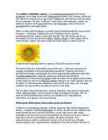
Sunflowers are native(pärit) to the Americas. The earliest known examples of a fully domesticated sunflower were found at the Olmec site of San Andrés dating some time before 2500 B.C.[1] The Incas used the sunflower as an image of their sun god. Gold images of the flower, as well as seeds, were taken back to Europe early in the 16th century. The Giant sunflower (Hlianthus giganteus) is native to Connecticut. They can grow to be between 3 and 12 feet tall. Their flower heads can be between 2 to 3 inches wide. They are most commonly found in valleys with wet meadows or swamps. The Giant sunflower grows between July and October. To grow well, sunflowers need full sun. They grow best in fertile, moist, well-drained soil with a lot of mulch. In commercial planting, seeds are planted 45 cm (1.5') apart and 2.5 cm (1") deep. Sunflower "whole seed" (fruit) is sold as snacks and can be processed into a peanut butter
In the early 18th century, the Great Northern War left Estonia under Russian rule. A high point of the Estonian national movement was the first nation-wide Song Festival in Tartu in June 1869. In 1918 on the 24th of February, the Estonian Republic was proclaimed. It is a highly important holiday in Estonia. At first it was merely a decision on paper. True independence was fought for in the following years, in the War of Liberation. Independence lasted until 1939 when a pact between Nazi Germany and the Soviet Union was signed. Following the Soviet occupation in 1940, Estonia was occupied by Nazi Germany from 1942 to 1944. The Soviet Union incorporated Estonia in the autumn of 1944. A large proportion of the population fled abroad. Many others were arrested and deported to Siberia. Estonia regained independence by the way of the Singing Revolution of 1988 and has been fully independent since 1991. In 2004, Estonia became a NATO member state and an EU state.
3. Relief The USA is situated in the central part of the North American continent. Its western coast is washed by the Pacific Ocean and its eastern coast is washed by the Atlantic Ocean and in the south its coast is washed by the Gulf of Mexico. The coastline is even. There are no big islands belonging to the USA except the Hawaiian Islands which lie halfway the continents of America and Asia. The biggest peninsulas are the Florida Peninsula and Alaska. 4. Land Regions Mountains The Appalachian Mountains are a vast system of North American mountains, partly in Canada, but mostly in the United States, forming a zone, from 100 to 300 miles wide, running from the island of Newfoundland some 150 miles south-westward to central Alabama in the United States. The Rocky Mountains, often called the Rockies, are a broad mountain range in western North America. The Rocky Mountains stretch more than 4800 km. The Rocky Mountain System within
and on this day every year Australia day is celebrated. In all, about 160 000 en and women were brouth to Australia as convicts. The transportation was ended in 1868. by this time many settlements were established. In 1901 all the separate parts of Australia were united into one country. In 1851 gold was discovered in eastern Australia. This brought along the great gold rush. Thousands of people went to the new land to find fortune. Forty years later the gold was found in the west. The miners of the east had a very hard time, the water was scarce and the roads were bad. But then the railway was built. Many of people who came to Australia to find gold stayed on to do other kinds of work. The found that Australia has other riches too, such as coal, copper, ironore, nickel, natural gas and more. The forests had good timber. Along seashorepearls and tortoise shells could be gathered. Some
and established a penal colony near modern-day Sydney. Geographical Position Australia is located in the Southern Hemisphere. It’s the only continent except for Antarctica that is all south of equator. Sometimes Australia is called the island continent. There is a great reason why. It really is an island. It is 2880 km from the mainland of Asia and is almost half way round the world from Europe. More than 9 600 km separates it from America. Australia lies between the Pacific and Indian oceans. The Timor Sea and the Arafura Sea separate Australia from Indonesia. In the north the coast is washed by Great Australian Bight and the Indian Ocean. In the northeast the Coral Sea washes the coasts and in the southeast there is the Tasman Sea which also separates Australia from New Zealand. The biggest island is Tasmania which is located to the south of the country. 3 Relief
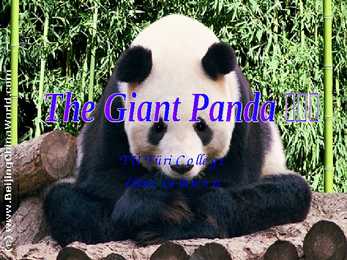
T Ü T üri C o lle g e Liina Le inm e ts Introduction · Panda (Ailuropoda melanoleuca) is a mammal classified in the bear family, native to centralwestern and southwestern China. It is easily recognized by its large, distinctive black patches around the eyes, over the ears, and across its round body. · The Giant Panda lives in a few mountain ranges in central China. · It once lived in lowland areas, but farming, forest clearing, and other development now restrict the Giant Panda to the mountains. In the wild · The Giant Panda is a · Pandas communicate terrestrial animal and through vocalization primarily spends its life and scent marking such roaming and feeding in as clawing trees or the bamboo forests
cold. Seasons are the reverse of the Northern Hemisphere History A brown-skinned people called Maori were the first people to live in New Zealand. Europeans first visited the country in 1642, but they didn't start to settle on the island until the late 1700''. Today, New Zealanders are descendants of early European settlers who arrived in 1800's. The settlers came mainly from Britain. The country was once part of the British Empire. Today, it is an independent member of the Commonwealth of Nations. Economy The economy of new zealand has long depended on farming and foreign trade. The sale of butter, cheese, meat and wool to other countries provides much of the nation's income. Tourism has also become an importand source of income. New Zealand has few minerals. The most important include coal, oil, gold, iron, limestone and natural gas. The underground steam in the volcanic area of the north island is an important source of power
The Mountain Lion cougar (Puma concolor), also puma, cougar, or panther, is a member of the Felidae family, native to the Americas. This large, solitary cat has the greatest range of any wild land mammal in the Western Hemisphere, extending from Yukon in Canada to the southern Andes of South America. An adaptable species, the cougar is found in every major North American habitat. The Mountain lions of Yellowstone region were significantly reduced by predator control measures during the early 1900s. It is reported that 121 lions were removed from the park
diversity. Eco systems, which took millions of years to perfect, are in danger when any species population is decimating. Another example is the destruction of coral reefs in the various oceans, which support the rich marine life. FIND OUT 5 WAYS HOW TO HALT THE LOSS OF BIODIVERSITY 6. Deforestation: Our forests produce fresh oxygen and help in regulating temperature and rainfall. At present forests cover 30% of the land but every year tree cover is lost amounting to the country of Panama due to growing population demand for more food, shelter and cloth. Deforestation simply means clearing of green cover and making that land available for residential, industrial or commercial purpose. FIND OUT 5 WAYS HOW TO STOP DEFORESTATION. 7. Ocean Acidification: It is a direct impact of excessive production of CO2. 25% of CO2 produced by humans
and an autonomous grand duchy of Russia after 1809. It won its complete independence in 1917. During World War II, it was able to successfully defend its freedom and resist invasions by the Soviet Union albeit with some loss of territory. In the subsequent half century, the Finns made a remarkable transformation from a farm/forest economy to a diversified modern industrial economy; per capita income is now among the highest in Western Europe. A member of the European Union since 1995, Finland was the only Nordic state to join the euro system at its initiation in January 1999. In the 21st century, the key features of Finland's modern welfare state are a high standard of education, equality promotion, and national social security system currently challenged by an aging population and the fluctuations of an exportdriven economy (Central Intelligence Agency, 2012, ISSN 15538133). 2.1.2 Geography
the north with a chain of mountains, the Pennines, dividing east and west Other hilly areas in the north and Midlands are the Lake District, the North York Moors, and the Peak District The largest natural harbour in England is at Poole, on the south-central coast. Some regard it as the second largest harbour in the world, after Sydney Coast England has 3200 km of coastline, much smaller than the deeply indented Scottish coastline, but still a considerable length The North Sea coast of England is mainly flat and sandy The English North Sea coast is an important area of bird life and is a habitat for many shore and wading birds (one of the most important ares for bird watching) Into Devon and Cornwall the coastline becomes more rocky and steep, with numerous cliffs and tiny fishing villages along the coastline Click to edit Master text styles Second level Third level Fourth level
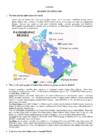
inhabitants. The majority of them live within 300 kilometres of Canada's southern border. Much of the rest of Canada is uninhabited or thinly populated, because the country has a rugged terrain and severe climate. Canada extends across the continent of North America, from Newfoundland on the Atlantic coast to British Columbia on the Pacific coast and northward into the Arctic Ocean. Canada shares land borders with the United States to the south and north-west. Canada is a land of great variety. Towering mountains, crystal-clear lakes, and lush, green forests make Canada's far west a beautiful region. Farther inland, fields of wheat and other grains cover Canada's vast prairies. Thes fertile farmlands contrast vividly with the Arctic wastelands to the north. Most of the largest towns and industrial areas lie near the Great Lakes and the St Lawrence River in central Canada. In the east, fishing villages and sandy beaches dot the Atlantic coast
that go back that far. Many scientists now believe that some of the First Peoples may have been here for much longer than that. For a long time, scientists believed that the ancestors of all North American First Nations people crossed over on foot to North America from Asia at the end of the last ice age, about 12,000 years ago. At that time Asia and North America were joined, and what is now the bottom of the Bering Sea between Russia and Alaska was dry land, (a "land bridge) because sea levels were much lower than they are now. The earliest man-made artifacts tools or ornaments that archaeologists have found date from that time. The theory is that nomadic hunting people followed the big animals (moose, deer, elk, buffalo) for food, and eventually moved south and spread out as the ice sheets melted back. Then they evolved different cultures to suit different environments.
bordered by the Atlantic Ocean to the west and south and by Spain to the north and east. The Atlantic archipelagos of the Azores and Madeira are Portuguese territory as well. The country is named after its second largest city, Porto, whose Latin name was Portus Cale. SETTLEMENT The land within the borders of the current Portuguese Republic has been continuously settled since prehistoric times. In the 8th century most of the Iberian Peninsula was conquered by Moorish invaders professing Islam, who were later expelled by the Knights Templar. During the Christian Reconquista, Portugal established itself as an independent kingdom from León in 1139, claiming to be the oldest European nation-state. In the 15th and 16th centuries, as the
Mulgimaa owe to the diligence and tenacity of the local people. Village handicraftsmen and masters have always been honoured. Mulgikapsad (stewed sauerkraut with barley groats), Estonian cheesecakes and kama (a roasted meal-mixture) have not lost their popularity. However, linen growers have now been replaced by cereal grains growers and many farms have specialised on raising sheep or horses. And as the song goes: "Mulgimaa it's a place where life is good. It's a land of vast woods, fertile fields and nature's charms, the home of prosperous Estonian farms..." Tourism and handicraft in Lõuna-Viljandimaa Lõuna- Viljandimaa captivates senses with its beautiful landscapes. Lõuna- Viljandimaa as we know it today stays in the heart of the historic Mulgimaa. Mulgimaa is the home of mountains, deep valleys and lakes, its natural axis is the beautiful old valley of Halliste.
considerably warmer. As a part of the East-European Plain, the country has a rather flat surface. The highest and most topographically variagated region in Estonia is in the south-eastern part of the country. The Sakala Upland plains offer contrast to the hills of Ottepää, Karula and Haanja. At 318 metres, Suur Munamägi ('Great Egg Hill') is not only the highest point in Estonia, but of all the Baltic countries. The country has 3974 km of coastline, while the land border, in comparison, is only a mere 633 km. The coast varies from limestone cliff in the north to sandy beaches in the west. Most of Estonia's many islands belong to the West Estonian archipelago. The largest islands are Saaremaa with 2671 sq km, Hiiumaa with 989 sq km and Muhu with 200 sq km. The sea between these islands and the Mainland Väinameri is very shallow (less than five metres deep on average) and rich in shoals. The water of the Baltic Sea is brackish
term. From then until now, acid rain has been an issue of intense debate among scientists and policy makers. Acid rain, one of the most important environmental problems of all, cannot be seen. The invisible gases that cause acid rain usually come from automobiles or coal-burning power plants. Acid rain moves easily, affecting locations far beyond those that let out the pollution. As a result, this global pollution issue causes great debates between countries that fight over polluting each other's environments. For years, science studied the true causes of acid rain. Some scientists concluded that human production was primarily responsible, while others cited natural causes as well. Recently, more intensive research has been done so that countries have the information they need to prevent acid rain and its dangerous effects. The levels of acid rain vary from region to region. In Third World nations without pollution
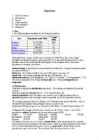
% (mid- Part Population (mid-2006) 2006) England 50,762,900 83.8 Scotland 5,116,900 8.4 Wales 2,965,900 4.9 Northern Ireland 1,741,600 2.9 United Kingdom 60,587,300 100 Although Britain is quite small in terms of land area (245,000 sq km), it has a large population of nearly 61 million, which ranks the 21st in the world (Britain is the 21st most populous state in the world) and the third largest in the European Union. The size of population is changing very slowly. Natural change is the difference between birth and death rates. It may be a natural increase or a natural decrease. Birth rate the number of babies born per 1,000 persons per year 12
the Senate (77 members) and the House of Representatives(148 members). Australia's Flag and Coat of Arms. Australia's flag has a Brittish flag, five stars that represent the constellation Southern Cross and a large star for the country's states and territories. The coat of arms features a kangaroo and an emu, golden whattle blossoms, a shield with the coats of arms of the six states of Australia and a star for the states and territories. Landforms Only 5% of the land is above 600 meters. Most of the land is empty. Most of the people live in the south and in east. 2/3 of Australia is a desert with hills and big saltlakes. The biggest deserts are the Great Sandy Desert, the Gibson Desert, the Simpson Desert, The Great Victoria Desert. The biggest mountain ranges are the Great Divining Range, the Australian Alps, the Blue Mountains and the New England Range. The outback is flat and hot centre of Australia. The nearest neighbor may be a hundred kilometers away
anyone to leave the Soviet Union. The major group of post-Soviet immigrants were the political refugees, persons who claim persecution or reasonable fear of persecution in Russia. Largest Russian communities today are in New York, California and Florida. 5. From where did the Indians come to America? *Native Americans aka. Indians, Red Indians, Redskins, American Indians, Amerindians, Namerind, First Nations people (Canada) *Origins of N-Am, theories = Bering Land Bridge theory = North American Indians are the people whose ancestors were living in North America when the Europeans discovered the Western Hemisphere. They often are called red men, or redskins, and they were named Indians because Columbus thought that he had reached the East Indies in his voyage across the Atlantic. Stone-age people who were to become American Indians began entering America at least 10,000 years ago. Most experts believe the first Indian
Ireland is the third largest island in Europe. It lies in between the Atlantic Ocean and the Irish Sea. Politically it is divided into a sovereign state, the Republic of Ireland, that covers about five-sixths of the island (south, east, west and north-west), and Northern Ireland, which is part of the United Kingdom, covering the northeastern sixth of the island.[1] The name 'Ireland' derives from the name Ériu (in modern Irish, Éire) with the addition of the Germanic word 'land'. The population of the island is just under 6 million (2006); just over 4
This fact, coupled with the grandeur of the landscape, has been central to the sense of Canadian national identity. 2. Geographical position Canada is the second largest country in the world after Russia. In the Arctic, Canada reaches almost as far north as Greenland. To the south it extends to the same latitude as southern France. The distance from Canada's west coast, the Pacific Ocean, to its east coast, the Atlantic Ocean, is farther than from North America to Europe. Canada's total land area includes thousands of adjacent islands, notably Newfoundland in the east and those of the Arctic Archipelago in the north. In longitude Canada extends from approximately 52° to 141° W, a distance that spans six time zones. In latitude it extends from approximately 42° to 83° N. With its vast Arctic and subarctic territories, Canada is often considered a country only of the far north; however, the peninsula of southern Ontario juts deeply south into the heartland
sources suggest the genes had additive effect on each other to create the pale milk coffee coloured cats when there were 2 Barrington Brown genes. Since Barrington Brown is a recessive gene. If only one copy was present it should be masked by the dominant non- Barrington copy. This is part of the problem when interpreting reports that use an old, non- standard genetics notation! ba - Barrington Brown Locus (unverified) Genotype Description Phenotype Cat unaffected - i.e. Ba/Ba Homozygous - Non Barrington Brown Black/Brown/Chocolate etc Heterozygous - Non Barrington Brown - Cat unaffected - i.e. Ba/ba carrying Barrington Brown Black/Brown/Chocolate etc
maintaned a stable liberal democratic political system. The population of 22,7 million is highly urbanised and heavily concentrated in eastern states due to geography and climate. A highly developed country, Australia is the world's 12th largest economy and has the world's fifthhighest per capita income. Enviroment. Although most of Australia is semiarid or desert, it includes a diverse range of habitats from alpine heaths to tropical rainforests. Australian forests are mostly made up of evergreen species, particularly eucalyptus trees in the less arid regions, wattles replace them in drier regions and deserts as the most dominant species. Among wellknown Australian fauna are the monotremes (the platypus and echidna); a host of marsupials, including the kangaroo, koala, and wombat, and birds such as the emu and the kookaburra. The koala and eucalyptus form an iconic australian pair pair. Culture
 annaabi.ee