Leidsid 33 sarnast õppematerjali, mis on seotud failiga "Food economics". Need materjalid aitavad sul teemat sügavamalt mõista.
production, condition, conditions, land, market, special, economic, increase, stock, economics, year, other, demand, hansen, specific, physical, unique, several, affect, supply, biological, income, agriculture, crop, grain, seasonal, nature, speed, slow, another, cannot, 2016, author, henning, otte, senior, resource, denmark, introduction, provideMargit Tepner k0848752 Sustainability aspects of biofuels 1. Introduction The literature review will discuss the sustainability aspects of biofuels. Food production will be the main concern as it is the most debated issue, but other aspects, such as land use change and water consumption will be also considered as they are essential aspects in the biofuels sustainability criteria. The review will discuss the viability of biofuels based on the current technologies. Second-generation biofuels are not yet commercially viable and therefore will not be discussed; although they could significantly improve the sustainability of biofuels when they break through to the industrial scale. 2. The scale of biofuels production 2.1
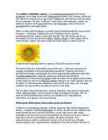
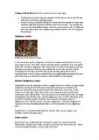
hydrogenated oils and shortenings. While the vibrant, strong sunflower is a recognized worldwide for its beauty, it is also an important source of food. Sunflower oil is a valued and healthy vegetable oil and sunflower seeds are enjoyed as a healthy, tasty snack and nutritious ingredient to many foods. Sunflower is an important agricultural crop choice for US producers in the northern plains of the Dakotas to the panhandle of Texas. Browse this complete site on US sunflower production to learn about the sturdy sunflower and the healthy products it provides. Introduction Sunflower seeds are an American original. Called either confection or non-oil, seeds are a delicious and nutritious snack or addition to your favorite food. It is a native species to North America and was used by American Indians for an important, high-energy food source. Spanish explorers carried it with them to Europe. Russian agronomists were responsible for the first agricultural hybrids
Estonian University of Life Sciences Report on Soil Microflora By Katrin Vares Tartu 2013 Introduction The purpose of this report is to define soil microflora and establish the importance of it. Since the microorganisms clearly play an important role in preserving the balance of life, the next objective is to look into factors that influence this balance. Natural conditions and cultural impact could be considered as the variables that correlate the most with the activity and composition of microflora, hence some of the natural and cultural factors will be looked into a little more in detail. Definition, composition and importance of microflora Saunders Comprehensive Veterinary Dictionary (2007) cited by the online medical dictionary (2013) defines living microorganisms as that small that they can be seen only with a
and Venezuela, rain forests that were once great have been lost. According to some estimates, 50 million acres of rain forest are cut down every year. The United Nations says the figure is closer to 17 million acres. The World Wildlife Fund says that every minute, 25 to 50 acres are cut or burned to the ground. The world's growing population has been a primary cause of rain forest destruction. More people need land to live on and wood products to consume. Limiting population growth may be the first in a series of steps that would limit the destruction of the rain forests. Intensive farming Advantages ✔ One of the major advantages of this farming technique is that the crop yield is high. ✔ It helps the farmer to easily supervise and monitor the land and protect his livestock from being hurt or hounded by dangerous wild animals.
...................................................................................... 19 1.2. The Business Environment ........................................................................................ 23 1.3. Banking system.......................................................................................................... 27 1.4. Starting a business in Ukraine ................................................................................... 32 1.5. Market entry strategies .............................................................................................. 33 1.5.1. Direct Sales ........................................................................................................ 33 1.5.2. Agency and Commission arrangements ............................................................. 34 1.5.3. Joint venture with a Ukrainian partner.............................................................. 34 1.5.4
Climate Canada's climate varies wildly based on geography, from perma-frost in the north to four distinct seasons towards the equator. In this region the temperature can climb up to 35 degrees Celsius in the summer and descend to a chilly -25 degrees Celsius during winter. Canada's climate and environment are one of the main reasons that Canada is such a succesful country. The blend of natural resources and climate sustains us. The seasons dictate the look of the land: according to whether the natural environment is in a state of dormancy or growth. Canada's climate is characterized by its diversity, as temperature and precipitation differ depending on where you are and what time of year it is. Other than the North where it's above freezing for only a few months a year, most Canadian cities are within 300 km of the southern border, where mild springs, hot summers and pleasantly crisp autumns are common during the majority of the year.
3. 1 ref to operon; 2 normally repressor substance bound to operator; 3 prevents RNA polymerase binding (at promoter) / prevents transcription; 4 lactose binds to repressor; 5 changes shape of protein molecule; 6 unable to bind (to operator); 7 RNA polymerase binds (at promoter) / transcription occurs / genes switched on; 8 AVP; e.g. production of lactose permease / production of beta- galactosidase; max 5 [5] 4. a change in the genetic material; unpredictable / AW; extra detail; e.g. addition / substitution / deletion / frame shift / small part of chromosome / may code for different protein / may code for no protein
Estonian Economy Estonians earn about half of the average European income, despite the fact that the economic growth during the recent years has been very fast and the differences have been diminishing. Although the extremely vigorous period of economic reforms is now over, the changes that Estonia is presently going through are far more extensive than those in the developed countries. The Estonian economy is diverse industry and transport, as well as commerce and different branches of services are all equally important. Due to the available natural resources Estonian economy largely relies on the branches related to the forest; Estonian energy sector is based on oil shale, a resource quite rare elsewhere in the world. Finland
..7 2.1.2. Growth and cost trends................................................................................8 2.1.3. Theoretical potential.....................................................................................9 2.1.4. Benefits of wind energy................................................................................10 2.2. Solar Energy........................................................................................................11 2.2.1 Development, deployment and economics................................................12 2.3. Hydroenergy.......................................................................................................13 2.4. Geothermal Energy............................................................................................14 2.5. Biomass Energy....................................................................................................16 3. Conclusion............................................................................
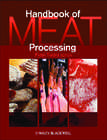
chapters distributed in three parts. The first guished international experts from fifteen part deals with the description of meat chem- countries. The editor wishes to thank all the istry, its quality for further processing, contributors for their hard work and for and the main technologies used in meat sharing their valuable experience, as well as processing, such as decontamination, aging, to thank the production team at Wiley- freezing, curing, emulsification, thermal pro- Blackwell. I also want to express my appre- cessing, fermentation, starter cultures, drying, ciation to Ms. Susan Engelken for her kind smoking, packaging, novel technologies, support and coordination of this book. and cleaning. The second part describes the manufacture and main characteristics of Fidel Toldrá
molecules, and using fluid catalytic cracking to convert the longer, more complex molecules in the oil to the shorter, simpler ones in the fuels. Due to its high energy density, easy transportability and relative abundance, oil has become the world's most important source of energy since the mid-1950s. Petroleum is also the raw material for many chemical products, including pharmaceuticals, solvents, fertilizers, pesticides, and plastics; the 16 per cent not used for energy production is converted into these other materials. Petroleum is found in porous rock formations in the upper strata of some areas of the Earth's crust. There is also petroleum in oil sands (tar sands). Known oil reserves are typically estimated at around 190 km3 (1.2 trillion (short scale) barrels) without oil sands, or 595 km3 (3.74 trillion barrels) with oil sands. Consumption is currently around 84 million barrels (13.4×10⁶ m3) per day, or 4.9 km3 per year
diversity. Eco systems, which took millions of years to perfect, are in danger when any species population is decimating. Another example is the destruction of coral reefs in the various oceans, which support the rich marine life. FIND OUT 5 WAYS HOW TO HALT THE LOSS OF BIODIVERSITY 6. Deforestation: Our forests produce fresh oxygen and help in regulating temperature and rainfall. At present forests cover 30% of the land but every year tree cover is lost amounting to the country of Panama due to growing population demand for more food, shelter and cloth. Deforestation simply means clearing of green cover and making that land available for residential, industrial or commercial purpose. FIND OUT 5 WAYS HOW TO STOP DEFORESTATION. 7. Ocean Acidification: It is a direct impact of excessive production of CO2. 25% of CO2 produced by humans
A couple of generations ago agriculture was the main occupation of the Estonians. Nowadays only about 4% of the workforce is engaged in agriculture. The 1990s was a hard time for agriculture competition with cheap imported products became an issue, enterprises had no money for new equipment and vehicles. Although today the situation in agriculture isn't perfect, some enterprises, including farms who use modern production methods, have cropped up. Joining the European Union has had a positive effect on Estonian agriculture as we can now sell food products to other European countries. Milk cattle, also pigs and poultry are the main farm animals raised in Estonia. Field crops include cereal crops, potatoes and vegetables. Plant products are mostly for internal use, a considerable amount of meat is imported. Some dairy products and some specific products e.g. cultivated and wild berries,
and on this day every year Australia day is celebrated. In all, about 160 000 en and women were brouth to Australia as convicts. The transportation was ended in 1868. by this time many settlements were established. In 1901 all the separate parts of Australia were united into one country. In 1851 gold was discovered in eastern Australia. This brought along the great gold rush. Thousands of people went to the new land to find fortune. Forty years later the gold was found in the west. The miners of the east had a very hard time, the water was scarce and the roads were bad. But then the railway was built. Many of people who came to Australia to find gold stayed on to do other kinds of work. The found that Australia has other riches too, such as coal, copper, ironore, nickel, natural gas and more. The forests had good timber. Along seashorepearls and tortoise shells could be gathered. Some
comments made in the publication do not necessarily reflect the opinion of GIZ. This publication may not be reproduced in whole or in part without the written permission of the copyright holder. © Deutsche Gesellschaft für Internationale Zusmmenarbeit GmbH (GIZ), 2011. 2 CYAN MAGENTA YELLOW BLACK 2 Introduction For the past few years, Georgian government has carried out a number of significant economic reforms in various fields in order to create attractive business environment and to breathe a new life into Georgian economy. The main aim of the reforms was to boost foreign investments, cre- ate new jobs, stimulate entrepreneurial activities in a variety of fields and increase the welfare of citizens. As a result of economic deregulation policy which was focused on liberalization of the Economy, a number of state regulated spheres were sharply decreased and regulation procedures were sim-
but can flourish wherever heat and rainfall are abundant. Today, palm oil is grown throughout Africa, Asia, North America, and South America, with 85% of all palm oil globally produced and exported from Indonesia and Malaysia; but most of the time not using sustainable measures. The industry is linked to major issues such as deforestation, habitat degradation, climate change, animal cruelty and indigenous rights abuses in the countries where it is produced, as the land and forests must be cleared for the development of the oil palm plantations. According to the World Wildlife Fund, an area the equivalent size of 300 football fields of rainforest is cleared each hour to make way for palm oil production. This large-scale deforestation is pushing many species to extinction, and findings show that if nothing hanges, species like the orangutan could become extinct in the wild within the next 5-10 years, and Sumatran tigers less than 3 years.
The challenge of integrating and coordinating the flow of materials from multitude of suppliers, including offshore, and similarly managing the distribution of the finished product by way of multiple intermediaries. Achieving cost reduction or profit improvement at the expense of their supply chain partners does not make companies more competitive. Transferring cost upstream or downstream leads to "logistics myopia" as all costs ultimately will make way to the final market place to be reflected in the price paid by the end user. Therefore, the leading edge companies seek to make the supply chain as a hole more competitive through the value it adds and the cost it reduces overall. Thus today the real competition is not the companies against the companies but rather supply chain against supply chain. DEFINITIONS Supply Chain Management (SCM) is the process of planning, implementing,
.................................................................................................31 9.2 How wind machines work..........................................................................................32 9.3 Types of wind machines............................................................................................. 32 9.4 Wind power plants......................................................................................................33 9.5 Wind production......................................................................................................... 34 9.6 Wind and the environment..........................................................................................34 TIDAL ENERGY............................................................................................................... 35 10.1 Wave Energy............................................................................................................ 36 10
Life in Estonia through the eyes of an economics student With a population of 1 313 271 people, Estonia is one of the least populous member states of the European Union. However, according to the IMF, it is a developed country with an advanced and high-income economy. Estonia follows market economy system which ensures the little government intervention and the determination of prices of goods and services in a free price system. Therefore, economic decisions are guided solely by the aggregate interactions of a country's citizens and businesses. In addition to mentioned afore, Estonia tends to perform favourably in measurements of civil liberties, education, and press freedom. Living in Estonia has many of its good sides, for instance it is a secure place from nature disasters and it has a beautiful nature. Although, when not to look only through rose-tinted glasses, there are still some minuses in country’s organization
prospects of the biogas. I have tried to make this report as understandable as possible. By the end of this report I want to come to a conclusion whether biogas is the best source of future energy or are there any other sources that are better. What is biogas? Typically it refers to the gas produced by the anaerobic digestion or fermentation of organic matter including manure, sewage sludge, municipal solid waste, biodegradable waste. If opportunely refined it can be used for electricity production. Also for space-, water- or process heating. Unintentional production of biogases has been an ongoing issue in many regions of the world, and several nations have also looked to biogas as a potential source of clean energy. India and China have both invested extensively in creative biogas technology to provide fuel for their citizens and there are a number of interesting applications for this gas which appeal to people who are interested in sustainable energy and the health of the environment.
around the house, such as antiseptics, medicines, cosmetics, dish-washing liquids, fabric softeners, shoe-care agents, carpet cleaners, glues and adhesives, lacquers, paper, plastics, and some types of wood products. Some people are exposed to higher levels of formaldehyde if they live in a new mobile home, as formaldehyde is given off as a gas from the manufactured wood products used in these homes. Formaldehyde is used in many industries. It is used in the production of fertilizer, paper, plywood, and urea-formaldehyde resins. It is present in the air in iron foundries. It is also used in the production of cosmetics and sugar, in well-drilling fluids, in agriculture as a preservative for grains and seed dressings, in the rubber industry in the production of latex, in leather tanning, in wood preservation, and in photographic film production. Formaldehyde is combined with methanol and buffers to make embalming fluid
District heating is a means to utilise such surplus heat to cover heat demand. District heating can utilise the heat from electricity generation in combined heat and power (CHP) plants. District heating can also use other heat sources that are difficult to use for individual buildings, such as unrefined biomass fuels, heat from waste incineration and industrial surplus heat. The latter may, for example, be a by-product from production of automotive biofuel. District heating can provide cheap energy to consumers by using low-cost energy sources, such as wood, waste and surplus heat. Many of these resources can be of local origin and promote local business and industry. The main advantages with district heating are high security of supply through utilisation of domestic renewable energy resources, if available, low primary energy demand due to high
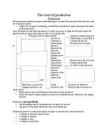
The costs of production Production Decisions about production require individual agents to make decisions about the allocation and use of physical inputs. · Objectives of agents, technology, availability and quality of inputs determine the nature of these decisions. Since the objectives are often pecuniary, it is often necessary to relate the decisions about the physical units of inputs and outputs to the costs of production. · If the prices of the inputs and the production relationships are
their lives because they had to pay high taxes. In 1773, the 'Boston Tea Party' took place and it made the British mad, so in 1775 the War of Independence started. The Americans were led by George Washington who in 1788 became the country's first president. On the 4th of July, 1776 the Declaration of Independence was written and that day is now celebrated as the Day of Independence. The war ended in 1788 and during the time following it, the Americans bought large pieces of land from foreign countries to themselves, creating a big country. By 1860 America was a big country but there was a big difference between the free North and the slavery South. The biggest problem was the issue of slaves and due to that the Civil War broke out in 1861. President Abraham Lincoln tried hard to unite the country again. Though both sides were strong, the North had more men, more factories and stronger leaders. In 1865 the South accepted the loss
weren't pleased with their lives because they had to pay high taxes. In 1773, the 'Boston Tea Party' took place and it made the British mad, so in 1775 the War of Independence started. The Americans were led by George Washington who in 1788 became the country's first president. On the 4th of July, 1776 the Declaration of Independence was written and that day is now celebrated as the Day of Independence. The war ended in 1788 and during the time following it, the Americans bought large pieces of land from foreign countries to themselves, creating a big country. By 1860 America was a big country but there was a big difference between the free North and the slavery South. The biggest problem was the issue of slaves and due to that the Civil War broke out in 1861. President Abraham Lincoln tried hard to unite the country again. Though both sides were strong, the North had more men, more factories and stronger leaders. In 1865 the South accepted the loss
Pure Competition Competition The word "competition" may be used in two ways: rivalry (synonym; opposition, antagonism) structural competition or "pure competition" The main characteristics of competition: 1. Number of firms 2. Type of product 3. Control over price 4. Conditions of entry 5. Nonprice competition 6. Information flow Pure Competition · Involves very large numbers of sellers and buyers. · Firms producing identical or homogeneous products. · Standardized product (a product identical to that of other producers). (ex. corn or cucumbers). · Free Entry and Exit: no significant legal, technological, financial, or other obstacles
08.08.2001 129-FZ (as last amended on 29.12.2012) 4 1.2. Documents for registration of the company In order to register a company with foreign capital in Russia, it is necessary to carry out the whole range of legal actions that you want to implement Russian citizens in the registration of legal entities without foreign participation. In addition, there are some nuances associated with the special status of foreign shareholders. To register a company with foreign capital must provide an expanded list of documents compared with a package of documents necessary for the registration of organizations with Russian capital. Consider the example of a package of documents on registration of a limited liability company (LLC). If the founder are individuals: Document confirming payment of state duty for registration of a limited liability company, 4000 rubles ( EUR 100);
Mozambique. Indigenous cookery traditional South African cuisine In the precolonial period, indigenous cuisine was characterized by the use of a very wide range of fruits, nuts, bulbs, leaves and other products gathered from wild plants and by the hunting of wild game. The domestication of cattle in the region about two thousand years ago by Khoisan groups enabled the use of milk products and the availability of fresh meat. However, during the colonial period the seizure of communal land in South Africa restricted and discouraged traditional agriculture and wild harvesting, and reduced the extent of land available to black people. Decline of indigenous cookery Urbanization from the nineteenth century, coupled with close control over agricultural production, led black South Africans to rely more and more on comparatively expensive, industrially-processed foodstuffs like wheat flour, white rice, mealie (maize) meal and sugar
3 control of Jamaica), succeeded in organizing frequent uprisings against the European landowners. The sugar industry declined in the 19th cent., partly because of the abolition of slavery in 1833 (effective 1838) and partly because of the elimination in 1846 of the imperial preference tariff for colonial products entering the British market. Economic hardship was the prime motive behind the Morant Bay rebellion by freedmen in 1865. The British ruthlessly quelled the uprising and also forced the frightened legislature to surrender its powers; Jamaica became a crown colony. Poverty and economic decline led many blacks to seek temporary work in neighboring Caribbean areas and in the United States; many left the island permanently, emigrating to England, Canada, and the United States. Indians were imported to meet the labor shortage on
Large animals now extinct provided more meat than the animals which we are familiar with. Some parts of the continent were richer in vegetable food, but there were no cultivated crops or animals that could be domesticated such as cattle and sheep. As Australia was isolated from the rest of the world, Aboriginals had very little contact with other people from whom to borrow techniques, to trade good, to acquire crop seeds, or animals. Each clan grouping occupied a well-defined area of land. The group belonged with, or to, the land - as well as the animals and plants. They had no idea of being able to buy or sell land. The land was given long ago, in the Dreamtime. Aborigines were limited to the food, which they had growing naturally in their area. But they knew when, where and how to find anything edible. But food was not obtained without effort. Inland, the search for water was a life and death matter. Aborigines survived where the others would have died. They
organisms according to the needs of humanity, going back to the initial modifications of native plants into improved food crops through artificial selection and hybridization. Bioengineering is the science upon which all biotechnological applications are based. With the development of new approaches and modern techniques, traditional biotechnology industries are also acquiring new horizons enabling them to improve the quality of their products and increase the productivity of their systems. Before 1971, the term, biotechnology, was primarily used in the food processing and agriculture industries. Since the 1970s, it began to be used by the Western scientific establishment to refer to laboratory-based techniques being developed in biological research, such as recombinant DNA or tissue culture-based processes, or horizontal gene transfer in living plants, using vectors such as the Agrobacterium bacteria to transfer DNA into a host organism
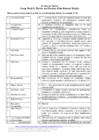
EU Internal Market Group Work I: History and Purpose of the Internal Market Please connect terms (numbers) with correct description (letter), for example 17 M 1 Common Market A ... is characterized by free movement of goods between the participating countries, but autonomous external trade policies in relation to non-participants. 2 Comparative B A top-down approach to integration that can be best
Nordic invaders to be united in the 9th century. The Vikings first raided England to plunder it, then in the days of Alfred of Wessex. They began to win wide lands `to plow and rule'. In the 10 th century England fell under Danish rule with King Canute finally managing to unite the Anglo-Saxons and Danes at the beginning of the 11 th century. After defeating the Anglo-Saxon king Harold at the battle of Hastings in 1066, William of Normandy introduced the Norman feudal system, with land in return for the continued support, and French remained the language of the upper classes and administration until the 14 th century. The origins of Parliament are to be found in the region of John's successor, Henry III. It was a meeting of the king and his barons and servants at which various administrative and financial problems were discussed. In order to make it easier to put the decisions taken into practice, each
 annaabi.ee