Leidsid 33 sarnast õppematerjali, mis on seotud failiga "Fiji". Need materjalid aitavad sul teemat sügavamalt mõista.
fiji, land, island, islands, sugar, tourist, though, rate, pacific, metres, include, sports, reserve, bank, building, south, between, tonga, viti, vanua, other, popular, year, mainly, however, government, power, still, sector, growth, major, sources, although, there, four, today, west, archipelago, located, through, north, important, tropical, nadi................................ 8 Pictures........................................................................................................................................8 Used material:............................................................................................................................. 9 2 Introduction Jamaica is an island nation of the Greater Antilles, 234 kilometres (146 mi) in length and as much as 80 kilometres (50 mi) in width situated in the Caribbean Sea. It is about 620 kilometres (385 mi) northeast of the Central American mainland, 145 kilometres (90 mi) south of Cuba, and 190 kilometres (120 mi) west of the island of Hispaniola, on which Haiti and the Dominican Republic are situated. Its indigenous Arawakan-speaking Taíno
New Zealand New Zealand is an island country. It is in the south-western Pacific Ocean comprising two main island, North- and the South Island with lots of smaller islands. New Zealand is notable for its geographic isolation. It's about 1,600 kilometers from Australia and its closest neighbours to the north are New Caledonia, Fiji and Tonga. New Zealand's total land area is 268,021 square kilometers. The country extends more than 1600 kilometers along its main,north - north-east axis and has about 15,000 kilometers of coastline. The South Island is the largest land mass of New Zealand and is divided along its lenght by the Southern Alps and the highest mountain Mount Cook is 3,754 meters high. There are 18 peaks over 3000 meters in the South Island. The highest North Island mountain is Mount Ruapehu and it is an active cone volcano
Misso Keskkool New Zealand Precis Compiler: Maiki Joakit Instructor: Mailis Teppo Misso 2011 New Zealand is an island country in the south-western Pacific Ocean comprising two main landmasses (the North Island and the South Island), and numerous smaller islands, most notably Stewart Island/Rakiura and the Chatham Islands. The indigenous Mori language name for New Zealand is Aotearoa, commonly translated as land of the long white cloud. Population (1998): 3,801,000.New Zealand is notable for its geographic isolation; it is
Solomon Islands Geography The Solomon Islands lie northeast of Australia in the South Pacific Ocean. They are part of a long chain of archipelagos called Melanesia, which stretches from Papua New Guinea in the north to New Caledonia and Fiji in the south. Second largest in the Melanesian chain, the Solomon Islands archipelago covers approximately 310,000 square miles (803,000 square kilometers) of ocean and consists of 10,639 square miles (27,556 square kilometers) of land. There are a total of 992 islands in the Solomon Islands History When Spanish explorer Álvaro de Mendaña de Neira visited the Solomon Islands in 1568, he found some gold at the mouth, he erroneously thought that this could be one of the locations in which King Solomon (the Israelite monarch) obtained gold for his
.............................. ......8 6.Sport.................................................................. ......9 7.Language........................................................... ....10 8.Conclusion......................................................... ....11 9.New words............................................................12 10.References...................................................... .....13 Introduction Jamaica is an island nation of the Greater Antilles, 234 kilometres in length and as much as 80 kilometres in width, amounting to 11, 100 km 2. It is situated in the Caribbean Sea. With 2.8 million people, it is the third most populous anglophone country in North America, after the United States and Canada. Kingston is the largest city in Jamaica and the country's capital. I am interested in this country and it is my favourite country. History
Climate Canada's climate varies wildly based on geography, from perma-frost in the north to four distinct seasons towards the equator. In this region the temperature can climb up to 35 degrees Celsius in the summer and descend to a chilly -25 degrees Celsius during winter. Canada's climate and environment are one of the main reasons that Canada is such a succesful country. The blend of natural resources and climate sustains us. The seasons dictate the look of the land: according to whether the natural environment is in a state of dormancy or growth. Canada's climate is characterized by its diversity, as temperature and precipitation differ depending on where you are and what time of year it is. Other than the North where it's above freezing for only a few months a year, most Canadian cities are within 300 km of the southern border, where mild springs, hot summers and pleasantly crisp autumns are common during the majority of the year.
The capital of Canada is Ottawa. Other large cities are Montreal, Toronto, Vancouver, Winnipeg and Quebec. 2. Geographical position Canada is a huge country in the continent of North America. It is bordered with the Atlantic Ocean in the east, the Pacific Ocean in the west, the United States of America in the south and the Arctic Ocean in the north. Canada is a vast country, with a territory of 3.8 million square miles of land and fresh water it is the second biggest country in the world after Russia. Canada covers most of the northern part of North America. Canada has over 151,480 miles of coastline. Most of Canada's human population lives along its southern border. 3. Relief Canada's geography is very diverse. It has huge lakes, evergreen forests, prairies, meadows and beautiful mountains
and the International Atomic Energy Agency (1957). Never before have so many countries (around 190, in the case of some UN bodies) been represented in single meeting-places. People have, in short, become more mobile, both physically and electronically, and even the notion of the global village occurred. According to Cristal, there is no country which does not have some level of accessibility using telephone, radio, television, and air transport, though facilities such as fax, electronic mail and the Internet are much less widely available. The pressure to adopt a single lingua franca, to facilitate communication in such contexts, is considerable. The scale and recency of the development has to be appreciated. In 1945, the United Nations began life with 51 member states. By 1956 this had risen to 80 members. But the independence movements which began at that time led to a massive increase in the
This fact, coupled with the grandeur of the landscape, has been central to the sense of Canadian national identity. 2. Geographical position Canada is the second largest country in the world after Russia. In the Arctic, Canada reaches almost as far north as Greenland. To the south it extends to the same latitude as southern France. The distance from Canada's west coast, the Pacific Ocean, to its east coast, the Atlantic Ocean, is farther than from North America to Europe. Canada's total land area includes thousands of adjacent islands, notably Newfoundland in the east and those of the Arctic Archipelago in the north. In longitude Canada extends from approximately 52° to 141° W, a distance that spans six time zones. In latitude it extends from approximately 42° to 83° N. With its vast Arctic and subarctic territories, Canada is often considered a country only of the far north; however, the peninsula of southern Ontario juts deeply south into the heartland
and Victoria). The capital city is Canberra in New South Wales. Australia is a parliamentary democracy. Queen Elizabeth II is formally head of state, but she is represented in Australia by a Governor General. There are two houses of Parliament: the Senate and the House of Representatives. Prince Charles has said that Australians should be able to have a Republic if they want one. Animals and plants. Sixty million years ago Australia and its nearby islands were separated from the other world by a great upheaval. They were cut off from Asia by the ocean. Almost no animals visited Australia before English colonists began to settle there. Now a strange thing happened when the ocean blocked off this island continent. The ancestors of cats and tigers, of dogs and wolves, of elephant and sheep just were not there. As a result, the reptile like mammals that have died out everywhere else in the world are very much alive in Australia
without fresh foreign finance, preferably in the form of disbursements from the IMF. A two-year IMF stand-by arrangement, put in place in 2008, provided exceptional access to financing that was crucial in helping Ukraine through the Great Recession. In particular, it helped to prevent a banking crisis. In many respects, however, Ukraine reneged on its commitments, and the program went off-track very soon, as a 2011 IMF evaluation concludes. This holds for fiscal, exchange rate, and monetary policies, but in particular for the energy sector. In 2008, Ukraine committed itself to phasing out all gas subsidies in three years, but little was done on that front. For some specific industries, gas prices were actually decreased in 2009. Ukrainian households still pay traditionally extremely little for the gas their everyday life depends on. At end of the year, gas prices for households accounted for about one-fifth and those for utilities for one-third of import prices
Topic Australia Tallinn English College 2006 Australia 1 . Introduction The name Australia is derived from the Latin Australis, meaning of the south. In land area, Australia is the sixth largest nation, its territory is 7,686,850 sq km and its population reaches today over 20,5 million people. It is the only nation to govern an entire continent and its outlying islands. Australia's capital is Canberra, the only city with its own territory. It was built in the early 1900s just to be the capital. The official language is English and the official name of Australia is the Commonwealth of Australia. Australia is located on the Southern Hemisphere (because of that Australia is also called "A land down under"). 2 . Geographical position
national festivals. Cultural diversity makes Canada even more interesting. In spite of this, in recent years there is a strong movement in French-speaking Quebec to become an independent country. There are many different native people throughout Canada like the Crees, Mohawks, Troquois and Sioux. In the north of the country, the Inuit (Eskimos) now have a self-governing homeland called Nunavut, meaning our land. It is over two million square kilometers and it is inhabited by 17,500 Inuits. The national symbol of Canada is the maple leaf. The national tree is the maple. Canada is also the most tolerant societies in the world because only 13% of Canadians say that they would object their children marrying somebody of a different race, compared with 32% in the USA. Canada's political structure is independent constitutional monarchy and head of state is Elizabeth ll
Language: Finnish, Swedish Currency: Euro (EUR) Goverment: Parliamentary republic President: Tarja Halonen Prime Minister: Matti Vanhanen 1 Nature and geography Finland is a country of thousands of lakes and islands; 187,888 lakes (larger than 500 m²) and 179,584 islands to be precise. One of these lakes, Saimaa, is the fifth largest in Europe. The Finnish landscape is mostly flat with few hills and its highest point, the Halti at 1,324 metres, is found in the extreme north of Lapland at the border between Finland and Norway. The landscape is covered mostly (seventy-five percent of land area) by coniferous taiga forests and fens, with little arable land. The most common type of rock is granite. It is
Estonia is situated in northeastern Europe. Estonia is bounded on the north by the Gulf of Finland, on the east by Russia, on the south by Latvia and on the west by the Baltic Sea. In the north it borders on Finland. The coastline of the Baltic Sea in Estonia is characterized by numerous gulfs and bays, the biggest of them being the Gulf of Finland, the Gulf of Riga and the Gulf of Pärnu. Bays include the Narva Bay, Matsalu Bay, Kolga Bay, Kunda Bay, Tallinn Bay etc. Estonia has over 1500 islands, the largest being Saaremaa and Hiiumaa, Muhu and Vormsi. Saaremaa and Muhumaa are connected to each other with a bridge. The best- known smalles islands are Naissaar, Aegna, Ruhnu, Kihnu, Väike-Pakri, Suur-Pakri etc. 3. Relief Lying in the north-western part of the East-European Plain, Estonia is mostly flat with an average elevation of about 50 metres above sea level. South-eastern and eastern parts of Estonia are higher than the western parts. The relief of the
4. Who were settled in the province of Ulster by King James I? James I settled English and Scottish Protestants in Munster and Ulster. What has this resulted in? It has resulted in an amount of English people in Ireland. 5. What is meant by Home Rule? Home Rule was a movement that sought to repeal the Acts of Union 1800. The Home Rule Act, was meant to permit Ireland self-government within the UK. 6. Changes in the number of population since the 1840s. 1841: 6.5M in Ireland, 8.2M on the island 1901: 3.2M in Ireland, 5M on the island 1951: 3.0M in Ireland, 4.4M on the island 2011: 4.6M in Ireland, 6.4M on the island Causes of emigration from Ireland. The Irish Famine caused some 150,000 people to leave the island. The Great Famine (1845-52) killed roughly a million and prompted another million to emigrate. In 1890, 40 % of Irish people were living abroad "Exodus in reverse" has been used to describe Irish people returning to Ireland, especially from the US.
take home more alcohol and tobacco. The number of tourists from more distant countries of the European Union, however, has increased most because of the much easier border crossing and an interest in the new member states. Weekend travellers arrive mostly from Finland but also from Sweden, Russia and Latvia. Visitors arriving by sea usually limit their visit to Tallinn and the areas nearby. People who have come for a longer period travel around the country, visiting the islands, south-east Estonia, nature parks and reserves, enjoying the untouched nature or staying in Estonian sanatoriums and recreation establishments. Hotels and sanatoriums in the so-called resort areas (Pärnu, Haapsalu, the isles, Otepää) are usually packed with foreign visitors. In the 1990s the majority of Estonian sewing and textile enterprises worked for foreign companies, providing cheap labour for those through subcontracting. Experience and skills
Bush. 2. Geographical position The United States of America is located on the continent of North America. It has borders with two countries Mexico and Canada. There are also the Atlantic Ocean, the Pacific Ocean and the Gulf of Mexico surrounding the big country. There are 50 states in America. Most of the people live in towns. The biggest state is Alaska; next by size are California, Alaska and Montana. Six states - Maine, Vermont, New Hampshire, Connecticut, Rhode Island and Massachusetts are called New England. They are all small states in the USA that lie in the north- east. The first colony of immigrants settled down in Virginia, in the eastern part of the USA. 3. Relief The USA is situated in the central part of the North American continent. Its western coast is washed by the Pacific Ocean and its eastern coast is washed by the Atlantic Ocean and in the south its coast is washed by the Gulf of Mexico. The coastline is even. There are no big islands
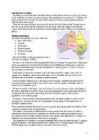
Commonwealth of Australia. It’s the official name of the country. Australia is the smallest continent, but one of the largest countries on Earth. It’s 6th largest country. Its area is about 7.6 million sq km. One third of it is occupied by deserts. It’s both the flattest and, except for Antarctica the driest. Neighbouring countries include Indonesia, East Timor and Papua New Guinea in the north, the Solomon Islands, Vanuatu in the northeast, and New Zealand in the southeast. Its capital is Canberra. Other big cities are Melbourne, Sydney, and Brisbane. National language in Australia is English. Monetary unit is Australian dollar. Their national holiday is on the 26th of January. In 1788 on the 26th of January the first fleet arrived at Botany Bay and established a penal colony near modern-day Sydney. Geographical Position Australia is located in the Southern Hemisphere. It’s the
Its territory is about 9.4 million square kilometres and its population is more than 260 million people, 12% of them are the Afro-Americans. It is the world's third-largest country by size and by population. The population density is about 27 people per square kilometre. Most of the people live in towns. There are 50 states in America. The biggest of the state is Texas, next by size are California, Alaska and Montana. Six states - Maine, Vermont, New Hampshire, Connecticut ,Rhode Island and Massachusetts are called New England. They are all small states in the U.S. that lie in the north-east. The first colony of immigrants settled down in Virginia, in the eastern part of the U.S.A. The biggest cities are New York, Washington, Chicago, Los Angeles, San Francisco, etc. The flag of America was adopted on 14 th June 1777. It is called the "Stars and Stripes". It is said that Betsy Ross sewed the first flag. It features 13 horizontal red and
Australia Fact file: Australia comprises a land area of 7 686 850 square kilometres. Its population is about 21,3 million people. Australia's capital is Canberra. The national language is English. The official name of it is the Commonwealth of Australia. It's divided into six states and two territories: New South Wales, Queensland, South Australia, Western Australia, Tasmania, Victoria, Australian Capital Territory (ACT) and Northern Territory. Symbols:
Ireland is the third largest island in Europe. It lies in between the Atlantic Ocean and the Irish Sea. Politically it is divided into a sovereign state, the Republic of Ireland, that covers about five-sixths of the island (south, east, west and north-west), and Northern Ireland, which is part of the United Kingdom, covering the northeastern sixth of the island.[1] The name 'Ireland' derives from the name Ériu (in modern Irish, Éire) with the addition of the Germanic word 'land'. The population of the island is just under 6 million (2006); just over 4.2 million in the Republic of Ireland[2] (1.6 million in Greater Dublin[3]) and just over 1.7 million in Northern Ireland[4] (0.6 million in Greater Belfast[5])). Politics Politically, Ireland is divided into: · The Republic of Ireland, with its capital Dublin.
Topic Australia Introduction Many people know Australia as the land down under because it is the only continent except for Antarctica that is all on the southern hemisphere. Its name means ,,Southland". The official name of the country is the Commonwealth of Australia. It's capital is Canberra. Australia is the sixth largest country in the world but the smallest continent. Australia has 6 states and 2 territories (New South Wales, Victoria, Tasmania, Queensland, Western Australia , South Australia, The Australian Capital Territory and the Northern Territory).
· New South Wales · Victoria · Queensland · South Australia · Western Australia · Tasmania New South Wales is the most populous state in Australia. Its capital is Sydney. Victoria is one of the most densely populated states in Australia. Its capital city is Melbourne and it was named after the British Prime Minister Lord Melbourne. Melbourne is said to be the heart of Australian finance and the headquarters of industry giants. Victoria is more an industry than a tourist state. Queensland is known for its natural riches like huge coalfields, copper, silver, lead. Its capital city is Brisbane, which is the third largest city in Australia. Because it lies in the Northeast part of Australia, its climate is mainly tropical. South Australia is famous as it is the region of fruit farming, vineyards and olive groves. Only the southern coast is fertile, most of the state is arid. Its capital is Adelaide, which is known for the Adelaide circuit.
NEW ZEALAND Geography: New Zealand is situated midway between the Equator and the South pole in the southern Pacific Ocean. It consists of two large islands, North Island and South Island, plus several smaller ones of which Stewart Island is the largest. North and South Islands are separated by the 32km wide Cook Strait. The total land area is 270,535 sq Km, about the size of Italy, the United Kingdom or the US state of Colorado. North Island is volcanically active with three active volcanoes. South Island has the high snow covered mountain peaks and glaciers of the Southern Alps, a range running almost 500Km along the Island. The longest river is the Waikato on North Island (425 Km), the largest inland stretch of water is Lake Taupo also on North Island (607 sq Km) and the highest point is Mount Cook on South Island (3754 m). Over 75% of New Zealand is above 200m.
bordered by the Atlantic Ocean to the west and south and by Spain to the north and east. The Atlantic archipelagos of the Azores and Madeira are Portuguese territory as well. The country is named after its second largest city, Porto, whose Latin name was Portus Cale. SETTLEMENT The land within the borders of the current Portuguese Republic has been continuously settled since prehistoric times. In the 8th century most of the Iberian Peninsula was conquered by Moorish invaders professing Islam, who were later expelled by the Knights Templar. During the Christian Reconquista, Portugal established itself as an independent kingdom from León in 1139, claiming to be the oldest European nation-state. In the 15th and 16th centuries, as the
is 7 hours behind Greenwich Time, Pacific Standard Time. Alaska and Hawaii have their own time zones: Alaska Standard Time and Hawaii Standard Time. Geographical Position The USA lies in the Northern Hemisphere in North America. It covers a big part of the continent and is also the third largest country in the world. The country consists of 50 states, but two of them lie separately. One of them is Alaska, which is near the Arctic Circle. And the other state is Hawaii, which is a group of island is the Pacific Ocean. The USA shares the border with Canada in the north and Mexico in the south. In the east the coast is washed by the Atlantic Ocean and in the west by the Pacific Ocean. In the south there is the Gulf of Mexico. The highest mountain in the country is Mount McKinley, which is in Alaska. It's about 6 km high. But the lowest point is in Death Valley and its 89 m below sea level. Relief About half of the United States' territory is covered by plateaus and mountains. The
Scotland ! Scotland (Gaelic: Alba) is a country in northwest Europe that occupies the northern third of the island of Great Britain. It is part of the United Kingdom, and shares a land border to the south with England. It is bounded by the North Sea to the east, the Atlantic Ocean to the north and west, and the North Channel and Irish Sea to the southwest. In addition to the mainland, Scotland consists of over 790 islands including the Northern Isles and the Hebrides. Edinburgh, the country's capital and second largest city, is one of Europe's largest financial centres. It was the hub of the Scottish Enlightenment of the 18th century, which saw Scotland become one of the commercial, intellectual and industrial powerhouses of Europe. Scotland's largest city is Glasgow, which was once one of the world's leading industrial metropolises, and now lies at the centre of the Greater Glasgow conurbation which
Its territory is about 9.4 million square kilometres and its population is more than 260 million people, 12% of them are the Afro-Americans. It is the world's third-largest country by size and by population. The population density is about 27 people per square kilometre. Most of the people live in towns. There are 50 states in America. The biggest of the state is Texas, next by size are California, Alaska and Montana. Six states - Maine, Vermont, New Hampshire, Connecticut ,Rhode Island and Massachusetts are called New England. They are all small states in the U.S. that lie in the north-east. The first colony of immigrants settled down in Virginia, in the eastern part of the U.S.A. The biggest cities are New York, Washington, Chicago, Los Angeles, San Francisco, etc. The official language of the USA is English; Spanish is also widely spoken. The currency of the USA is the United States Dollar. Lakes and rivers
The currency used in Estonia is Eesti kroon. The Estonian national flag is blue-black-white. It was originally the flag of the Estonian Students' Society. The flag was first consecrated in Otepää Church in 1884. For a while, during the Soviet occupation, the flag was banned but it was again seen in public in Tartu in May 1988. The national flower is cornflower, the national bird is barn swallow and the national stone is limestone. The Estonian national anthem called "My Native Land, My Pride and Joy" was composed in 1848 by Friedrich Pacius. The Estonian language words were written by J. V. Jannsen. It was officially adopted after the War of Independence in 1920.The same melody with different words is also Finland's national anthem. The current coat of arms of Estonia is a golden shield which includes three slim, blue leopards (or lions) in the middle, with oak branches along the side of the shield. It originates from Denmark. It was officially adopted in 1925.
1. Introduction The official name of Great Britain is `the United Kingdom of Great Britain and Northern Ireland (or short United Kingdom)' The population is about 60.4 million. The capital is London. Other biggest cities include Birmingham, Bristol, Portsmouth, Glasgow and Swansea. English is the main language of Great Britain, but Welsh is officially recognized in Wales and Gaelic in Scotland. 2. Geographical position The British Isles is the geographical term for a group of about 5000 islands off the coast of mainland Europe. The largest island is Great Britain, which is also the largest island in Europe. It consists of England, Wales and Scotland. The next largest island is Ireland, which is made up of Northern Ireland and the Irish Republic. Britain and Northern Island together form the United Kingdom. When referring to Britain or Great Britain in everyday life, the names are used to mean the United Kingdom.
inhabitants. The majority of them live within 300 kilometres of Canada's southern border. Much of the rest of Canada is uninhabited or thinly populated, because the country has a rugged terrain and severe climate. Canada extends across the continent of North America, from Newfoundland on the Atlantic coast to British Columbia on the Pacific coast and northward into the Arctic Ocean. Canada shares land borders with the United States to the south and north-west. Canada is a land of great variety. Towering mountains, crystal-clear lakes, and lush, green forests make Canada's far west a beautiful region. Farther inland, fields of wheat and other grains cover Canada's vast prairies. Thes fertile farmlands contrast vividly with the Arctic wastelands to the north. Most of the largest towns and industrial areas lie near the Great Lakes and the St Lawrence River in central Canada. In the east, fishing villages and sandy beaches dot the Atlantic coast
and on this day every year Australia day is celebrated. In all, about 160 000 en and women were brouth to Australia as convicts. The transportation was ended in 1868. by this time many settlements were established. In 1901 all the separate parts of Australia were united into one country. In 1851 gold was discovered in eastern Australia. This brought along the great gold rush. Thousands of people went to the new land to find fortune. Forty years later the gold was found in the west. The miners of the east had a very hard time, the water was scarce and the roads were bad. But then the railway was built. Many of people who came to Australia to find gold stayed on to do other kinds of work. The found that Australia has other riches too, such as coal, copper, ironore, nickel, natural gas and more. The forests had good timber. Along seashorepearls and tortoise shells could be gathered. Some
 annaabi.ee