Leidsid 33 sarnast õppematerjali, mis on seotud failiga "Eric van Lustbader". Need materjalid aitavad sul teemat sügavamalt mõista.
bourne, thriller, novel, eric, york, novels, action, series, good, greenwich, village, states, graduate, columbia, degree, sociology, translated, twenty, languages, wife, author, live, island, works, present, ninja, testament, snow, five, genres, fantasy, iraq, egypt, antagonist, seen, movies, such, books, twist, admit, there, strong, female, characters· Man as an animal-clever than other beasts, still explainable within the framework · Man is not a free agent, is govern by something · Unable to determine his own faith · Hereditary · Naturalists tried to apply in fiction the processes of natural sciences · Writers task is to record facts, systems of behaviour, living conditions, never revealing any natural unbiased (completely natural) · Point of view: amoral-outside the category of morality, neither good or bad · Naturalist find it absurd to blame the wicked. These criminals are doing what nature, environment, their unconscious tells them to do. Naturalists do not judge their characters, they simply report. Try to describe facts like they are. Naturalists depict the lower, coarser forms of life. · Drab, squallid set of scene. Revolting, disgusting · Characters are people with strong animal desires
By the Age of Enlightenment, literature had grown in importance, and from the early 1830s, Russian literature underwent an astounding golden age in poetry, prose and drama. Romanticism permitted a flowering of poetic talent: Vasily Zhukovsky and later his protégé Alexander Pushkin came to the fore. Prose was flourishing as well. The first great Russian novelist was Nikolai Gogol. Then came Ivan Turgenev, who mastered both short stories and novels. Leo Tolstoy and Fyodor Dostoyevsky soon became internationally renowned. In the second half of the century Anton Chekhov excelled in short stories and became a leading dramatist. The beginning of the 20th century ranks as the Silver Age of Russian poetry. The poets most often associated with the "Silver Age" are Konstantin Balmont, Valery Bryusov, Alexander Blok, Anna Akhmatova, Nikolay Gumilyov, Osip Mandelstam, Sergei Yesenin, Vladimir Mayakovsky, Marina Tsvetaeva and Boris Pasternak
Christopher Columbus (1451-1506) was an Italian explorer who sailed across the Atlantic Ocean in 1492, hoping to find a route to India (in order to trade for spices). He made a total of four trips to the Caribbean and South America during the years 1492-1504. He discovered America in 1492. I Indian sun, they pray for fan. J we hate Jews, they are fools. K Bush is okey, because he is not gay. L Americans are large, they eat much. M Mc`Donalds is good, there is a lot of food. N is for Nigga who pulled the trigger. O is for Osama who wears pyjamas. P is for Pamela who likes camera. Puritans The Puritans were a group of people who grew discontent in the Church of England and worked towards religious, moral and societal reforms. The writings and ideas of John Calvin, a leader in the Reformation, gave rise to Protestantism and were pivotal to the Christian revolt
He is best known for writing the "Millennium series". He died suddenly and unexpectedly in November 2004, soon after delivering the manuscripts for "the Millennium trilogy". Since his death, Stieg Larsson has been haunting the bestseller list and popular media worldwide. There are many millions of copies of the millennium tilogy that has been sold worldwide. Unfortunately Larsson did not live to see the phenomenon his work has become. Sweden has already produced a trilogy of films based on the novels, and now Hollywood is doing the same. Characters *Lisbeth Salander the headcharacter in the book. She is outsider and apparently enemy of society. The state has ruled that she is mentally unstable and has a trustee to help her manage her duties. Salander doesn't really care what others think of her. In fact, she values the most her privacy and anonymity. She has no faith that the official justice system can help her. She just wanted to be left in peace.
and clear, sharp language. Modernist writers embraced the unconscious fears of a darker humanity. Sub movements: surrealism, formalism, avant-garde, symbolism, imagism Structuralism: Writers used myth and music as a part of the books structure. J. Joyce "Ulysses". Deep structure is the same as in "odyssey" and T.S. Elliot "the fisher king"-more complicated experiment. Aldous Huxley ,,point counter point"-builds his chapters on principles of music. R. Aldington ,,death of a hero"-a jazz novel. Polyphony-harmony. Cacophony Virginia Woolf ,,the waves"-symphony. Psychoanalysis: The greatest influence of psychoanalysis on literary production has probably been to add legitimacy to the already-existing trends towards greater psychological introspection and towards more prominent and franker discussions of sexuality. Main characteristic features of Modernism: Characteristics of Modernism Formal characteristics(11) · Open Form · Free verse · Discontinuous narrative
classes (to higher class); huge boost of the middle and working class; after industrial revolution there was still social division; late 18th century philosophers and writers started to question the social status of the nobility · What were the reasons behind upward mobility? New public schools for poorer people; S. Smile "Self Help"; questioning the social status of the nobility · Reasons behind the rise of literacy 1850 Libraries Act, the Sixpenny novels (people could by cheap books- T. Malory "Morte d'Arthur", W. Scott historical novels- most popular was "Ivanhoe"; new schools for middle class- public schools; not so rich people got some education; the Penny Magazine · Key words of the British national identity: 1852- the Great Exhibition; Gothic revival Architectures; the Battle of the Styles; The Tower of London, Hampton Court were opened to public · Why were the Brits obsessed with the middle ages?
................... 4 3. PICTURES.............................................................. 5 4. PLOT....................................................................... 6 5. PLOT....................................................................... 7 6. CHARACTERS...................................................... 8 7. SETTING................................................................ 9 8. LANGUAGE AND STYLE................................... 9 9. WHOM DO I RECCOMEND THIS NOVEL........ 9 10. SUMMARY........................................................... 10 11. SOURCES.............................................................. 11 INTRODUCTION The Mysterious Affair at Styles is a detective novel by Agatha Christie. It was written in 1916 and was first published by John Lane in the USA in October 1920 and in the UK by The Bodley Head (John Lane's UK company) on January 21 1921.
......................................................................... ...... 6 · Language and style.................................................................................................................. 7 · More about the novel.............................................................................................................. 8 · Sources.............................................................................................................................. ....... 9 Page 2 About the author Douglas Noël Adams was and English writer (11 March 1952 11 May 2001). He borned in Cambridge
Cædmon's Hymn is the oldest recorded Old English poem, and also one of the oldest surviving samples of Germanic alliterative verse The Hymn itself was composed between 658 and 680, recorded in the earlier part of the 8th century Middle English Geoffrey Chaucer 13431400 Known as the ,,Father of English literature", the greatest English poet of the Middle Ages An author, philosopher, alchemist and astronomer, diplomat Wrote The Book of the Duchess, the House of Fame, the Legend of Good Women and Troilus and Criseyde Best known today for "The Canterbury Tales" Crucial figure in developing the legitimacy of the vernacular, Middle English, at a time when the dominant literary languages in England were French Modern English William Shakespeare 26 April 1564 23 April 1616 The Elizabethan Era English poet and playwright, widely regarded as the greatest writer in the English language and the world's most important dramatist ,,England's national poet"
George II, who was a staunch Catholic and did not allow freedom of religion to Protestants in New England. Voltaire was among the first to denounce Christianity and other organized religions as mere ploys to support monarchy. What emerged was Deism, which was more or less a new religion that considered reason its foundation. In Deism, there is no interference by a deity, and man controls his own destiny. These ideas stirred the masses into action, as the people dreamed of carving their own futures. Adopted by the Founding Fathers, Enlightenment ideals became the vision for modernday America, where these ideologies are deeply rooted in the nation. The Enlightenment was important America because it provided the philosophical basis of the American Revolution. The Revolution was more than just a protest against English authority; as it turned out, the American Revolution provided a blueprint for the organization of a democratic society
theatre production, and finally writing his own one-act and full-length plays. Later he has worked both as a freelancer and a contracted writer. He first wrote the short story "Ender's Game" while working at the BYU press. Ender's Game and its sequel Speaker for the Dead were both awarded the Hugo Award and the Nebula Award, making Card the only author (as of 2008) to win both of science fiction's top prizes in consecutive years. Card continued the series with seven books, which divide into "Shadow" and "Speaker" series. He has also announced his plan to write two more novels: Shadows in Flight, a book that connects the "Shadow" series and "Speaker" series together, and Ender in Exile, a book that takes place after Ender's game and before Speaker for the Dead. Furthermore, Card recently announced that Ender's Game will soon be made into a movie. Though Card is best-known for "Ender's Game", he has also written in a variety of other
To Althea, from Prison: Song; The Grasshopper: To My Noble Friend, Mr Charles Cotton: Ode Waller: wrote of queen as the queen of love. Cowley: Robert Herrick: The Argument of His Book, Delight in Disorder 6. The Caroline „beauty of holiness” Sermons and religious verse, witty preaching. George Herbert, Caroline piety expressed. His verse is sensitive and decorous, monument to „beauty of holiness”, practice of liturgy with good order and ritual which was the essence of Charles I’s religious policy. High Anglican piety. Herbert celebrates wat Puritans wished to sweep away. Beauty and significance of ritual, of the mystery of the sacraments offering praise to the angles, to the saints and Virgin Mary. We are in Heaven that can only be Anglican, filled with deep inner piety which spoke of the anguish of heart in its search for God.Church resumed as holy place again,
Master of the Moor Author Ruth Rendell born 17 February 1930. She has been writing some books under the pseudonym Barbara Vine. She lives in London and is known English crime writer. Known for her psycological thrillers and murder mysteries. Has worked as a journalist for Essex newspapers. Novel ,,Master of the Moor" was Publisher 1982. She has been rewarded with Silver, Gold and Cartier Diamond Daggers awards from Crime Writers' Assosiation and many other awards. Setting The action takes place in the city of Vangmoor. Lots of action goes around the Moor. Time of the story unknown. Characters Stephen Whalby ''Voice of Vangmoor", Loves walks on the Moor. Suspected of killing girls because he knows Moor very well. Not very into the marriage. Lyn Whalby Stephens wife
Every man kills the thing he loves. The death of Wilde is the end of decadence in English literature. Late Victorian novel, Thomas Hardy. Modernism, James Joyce. Realism continued to flourish in England throughout the second half of the 19th century. Late Victorian novel. Took influence from continental Europe, e.g. Emile Zola. Concern for the social role of women – the heroines broke the conventional roles of Victorian women by supporting suffrage, smoking and adopting a more “rational” dress, also
· Adela Marchmont, Lynn's mother · Beatrice Lippincott, pub landlady of The Stag · Major Porter, the club bore · "Enoch Arden", a blackmailer · Mrs. Leadbetter, a resident of The Stag 3 Explanation of the novel's title The title of the book in both the UK and US markets is a line from Shakespeare's Julius Caesar in a speech by Brutus in Act IV: "There is a tide in the affairs of men, which taken at the flood leads on to fortune...". The quotation is given in full as the epigraph to the novel. 4 Literary significance and reception No review of this book appeared in the Times Literary Supplement. For once, Maurice Richardson, in his review of the 21 November 1948 issue of The Observer was slightly unimpressed: "Agatha Christie has, if not a whole day off, at least part of the afternoon. The killing of the blackmailing Enoch Arden, who puts up at the local to harry the already embarrassed Cloade family, the murder that follows, and Poirot's doubly twisted solution are ingenious
The moon is down Author: John Steinbeck.(February 27, 1902--December 20, 1968) John Steinbeck III was one of the best-known and most widely read American writers of the 20th century. He wrote the Pulitzer Prize-winning novel The Grapes of Wrath, published in 1939 and the novella Of Mice and Men, published in 1937. In all, he wrote twenty-five books, including sixteen novels, six non-fiction books and several collections of short stories. In 1962 Steinbeck received the Nobel Prize for Literature. In his subsequent novels, Steinbeck found a more authentic voice by drawing upon direct memories of his life in California. Later he used real historical conditions and events in the first half
, Devon, a school founded a few years earlier to prepare boys for the armed forces. The school proved rough going for him at first, but later led to firm friendships, and provided the setting for his schoolboy stories Stalky & Co. published many years later.[22] During his time there, Kipling also met and fell in love with Florence Garrard, a fellow boarder with Trix at Southsea (to which Trix had returned). Florence was to become the model for Maisie in Kipling's first novel, The Light that Failed (1891).[22] Towards the end of his stay at the school, it was decided that he lacked the academic ability to get into Oxford University on a scholarship[22] and his parents lacked the wherewithal to finance him; [16] consequently, Lockwood Kipling obtained a job for his son in Lahore (now in Pakistan), where Lockwood was now Principal of the Mayo College of Art and Curator of the Lahore Museum. Kipling was to be assistant editor of a small local
sent her to school in Paris. In 1834, Dickens became a political journalist, reporting on parliamentary debate and traveling across Britain by stagecoach to cover election campaigns for the Morning Chronice. His journalism, in the form of sketches which appeared in periodicals from 1833, formed his first collection of pieces Sketches by Boz which were published in 1836 and led to the serialization of his first novel, The Pickwick Papers, in March 1836. On 2 April 1836, he married Catherine Thompson Hogarth (1816 1879), the daughter of George Hogarth, editor of the Evening Chronice. After a brief honeymoon in Chalk, Kent, they set up home in Bloomsbury, where they had ten children. On 9 June 1865, while returning from France with Ternan, Dickens was involved in the Staplehurst rail crash in which the first seven carriages of the train plunged off a cast iron bridge that was being repaired
They were married soon after he obtained his freedom; Douglass escaped slavery on September 3, 1838, boarding a train to Havre de Grace, Maryland dressed in a sailor's uniform and carrying identification papers provided by a free black seaman. After crossing the Susquehanna River by ferry at Havre de Grace, Douglass continued by train to Wilmington, Delaware. From there Douglass went by steamboat to "Quaker City"--Philadelphia, Pennsylvania. His escape to freedom eventually led him to New York, the entire journey taking less than 24 hours. Abolitionist activities Douglass joined various organizations in New Bedford, Massachusetts, including a black church, and regularly attended Abolitionist meetings. He subscribed to William Lloyd Garrison's weekly journal, The Liberator, and in 1841, he heard Garrison speak at the Bristol Anti-Slavery Society's annual meeting. Douglass was inspired by Garrison, later
literary quality (1650) and Edward Taylor, who was born in England but lived in Boston, wrote some poetry in the style of John Donne and the metaphysical poets. All 17 th cent Am writings were, both in content and form, similar to English lit of the same period. The great literary figures of the 18th cent were Benjamin Franklin (1706-1790), Thomas Paine (1737-1809) and Thomas Jefferson (1743-1826). The common sense and witty aphorisms of Franklin's popular Poor Richard's Almanac series appealed to colonial readers. Franklin also wrote effectively on the question of allegiance to the British crown but it was his protégé, Thomas Paine, who inspired colonists during the dark days of the Revolution with his stirring pamphlet Common Sense (1776), which sold over half a million copies, and American Crisis Papers (1776-1783). Thomas Jefferson was also an influential political writer. He made important
like hot lava, and until I worked at Fox 2 0 0 0 I had only heard it rumbling. Now I was standing hip deep in it. It was the most adult environment I had ever been in, run on unspoken but rigorous principles of personal responsibility. N o whining allowed, no excuses. And the same fierce intensity was applied to the stories. Every concept, every comment, every suggestion had to pass the most stringent tests of common sense, logic, and show business instinct. I had the good fortune to work with some of the best story brains in the business, foremost among them being Fox 2 0 0 0 ' s founder Laura Ziskin, but also many talented executives, writers, directors, and producers. In this exacting laboratory I learned useful techniques for analyzing stories, ways of looking at characters and describing story situations that I hope will inform the new sections of this revised edition. Among the things I learned at Fox 2 0 0 0 was to listen to my body as a judge
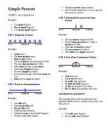
Windows are not made of wood. Simple Present · · New York is a small city. It is not important that this fact is untrue. [VERB] + s/es in third person USE 3 Scheduled Events in the Near Examples: Future · You speak English. · Do you speak English? · You do not speak English. USE 1 Repeated Actions Examples:
Astrid disregarded the barriers that came her way and went straight to strike for what she believed in. Pippi jumped right into the world of boys and grown-ups without any permission. She was bold and gave her opinion on anything to anyone. Pippi would never just sit and wait for her prince charming to come riding on his white stallion. She had her own horse. Lindgren has also challenged conservative codes of children’s literature in later works. Her novel The Brothers Lionheart brought up the taboo of the death and the doctrine of reincarnation. Mio, min Mio, a classical story dealt with good and evil, which has sources from the Bible, folk tales, and lyric poetry. Lindgren had considerable public influence, however, she used it scarcely. Her constant concern with animal welfare was active in passing a new law in 1988 controlling factory farming, which put Sweden among the most developed countries on this issue
bookstores. Fiction Many of the books published today are fictitious stories. They are in-part or completely untrue or fantasy. Historically, paper production was considered too expensive to be used for entertainment. An increase in global literacy and print technology led to the increased publication of books for the purpose of entertainment, and allegorical social commentary. Most fiction is additionally categorized by genre. The novel is the most common form of fictional book. Novels are stories that typically feature a plot, setting, themes and characters. Stories and narrative are not restricted to any topic; a novel can be whimsical, serious or controversial. The novel has had a tremendous impact on entertainment and 9/15 publishing markets. A novella is a term sometimes used for fictional prose typically between 17,500 and 40,000 words, and a novelette between 7,500 and 17,500. A Short story may be any length up to
theatre and film in all their complexity. For making the music accessible 238 score examples (piano arrangements and some score originals) have been added. There is a Bibliography and list of useful addresses. I have worked on this text for twenty-five years, with some intervals, paying a lot of attention to the phenomena of cultural life in general. Without this background and the changes in it there would be no new and novel happenings in the Arts. For evaluating the past and present we need a perspective. This perspective cannot be confined to that which is at hand at the present moment: it loses its sense. While examining our present achievements we must not praise them excessively: this may lead to the abasement of the ideal. The essential development of Estonian music has taken place within the past one hundred years. The creation of national symphonic works indicated that a
unusual in the way that they also appeal to adults. Each of the six books covers about a year in Harry's life as he grows from a boy into a teenager. At the start of the first book we learn that he is an orphan who lives with his horrible aunt and uncle, the Dursleys. On his eleventh birthday he discovers he is a wizard, and soon afterwards goes off to study at Hogwarts School of Witchcraft and Wizardry, which is where most of the action in the six books takes place. Hogwarts is part of a magical world that is invisible to people without magical powers, who are known as `Muggles'. Harry is the hero of all the stories, though there are many other likeable characters such as his friends Ron and Hermione, and the powerful wizard Albus Dumbledore. The main villain is the evil wizard Lord Voldemort, who killed Harry's parents. The stories are full of things that appeal to imagination of readers of all ages
Were many fun fairs. Werent no distripution. Pathe-inventor of film industry. Whole principle was affected by hollywood. Rent out cameras and projectors, you make money from rents. The infrastructure with making money. Studium. Black maria-first film studio. It was turnable to catch light. George melies(1861-1938) Brought the film from the street to studio. Magic. He was hacing a background in the theater and was a musician and thought that it is a good idea do produce fictional movies. He was disliked by lumiere brothers, they thought that cinema should be documentary. He was the man who did it all. You can tell cinema storys if u use tricks, costumes, you create illusiona nd tricks in technological way. ,,special effects". He was interested how to make things to look like magic. Some tricks came by accident. Melies was filming in the street. He saw a horsecar passing by. Camera stopped and started later, there was a horsecar with a coffin.
airplane is used for. Let us return to the electric light. Whether the light is being used for brain surgery or night baseball is a matter of indifference. It could be argued that these activities are in some way the "content" of the electric light, since they could not exist without the electric light. This fact merely underlines the point that "the medium is the message" because it is the medium that shapes and controls the scale and form of human association and action. The content or uses of such media are as diverse as they are ineffectual in shaping the form of human association. Indeed, it is once too typical that the "content" of any medium blinds us to the charac- of the medium It is only today that industries have become aware of the various kinds of business in which they are engaged. When IBM discovered that it was not in the business of making office equipment or business
chapter on Romania in Exit into History (1999). These preliminary in-depth analyses will then trigger (section II) translation scenarios to be converted into real translation projects for a distinct series on foreign travellers' books on Romania. The ethical value of such translations will be discussed in terms of their relevance for the Romanian readers' further mediation of their cultural identity in the context of globalization, and the ever-increasing intercultural contact it has
his own candid, natural tone. (1992, 6) When Larkin publishes his first book, The North Ship, has only passed two from the appearance of the Four Quartets of Eliot, that maybe can explain that they must pass ten years more until the first book sees the light, in 1955 The Less Deceived, Of its previous published book, The North Ship, Larkin would affirm later “it was very young, born of reading Yeats and so on (...) It’s not very good, though your courtesy will prevent you from agreeing (...) There are some pieces I hate very much indeed”. (2001, 50) He finds himself in a time in which the poetry seems to move towards a model that Lodge himself characterizes like “anti-modernist, readily and realistic” (1989, 119). In its beginnings, Larkin, along with Kingsley Amis, John Wain, Thom Gunn, D. J. Enright, John Holloway, Donald Davie and Elizabeth Jennings, constitute the poetic
While graffiti artists only work with spray paint and pride themselves on knowing their way around a can of the stuff, street artists use other media to create their pieces. “Graffiti artists really pride themselves on what we call can control,” says Cameron Moberg, 33, a graffiti artist and Street Art Throwdown contestant from San Francisco, California. “We take pride in not needing a stencil and really working on our can skills, that’s where the divide originally came from. But with good content coming out, there’s some more respect. You even see some collaboration between street artists and graffiti artists.” [http://mentalfloss.com/article/61441/12-things-you-probably-didnt-know-about-street-art] 14.01.18) 3.1. Hip-hop culture in the US and in Europe Hip Hop Culture who was already very popular in the United States started developing in Europe in the early 80's. Africa Bambaataa’s “planet rock” made an international hit, New York graffiti
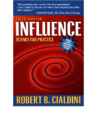
Central Europe. you should buy this new edition of Influence: o More neuroscience evidence of how the influence process works is inte- Science and Practice, gra ted throughout. For instance, brain imaging research is presented, showing here are 5 good reasons! how the "Expensive = Good" heuristic o Updated coverage of social influence leads people to perceive more costly effects in popular culture, such as the items as better than (identical) less contagion of obesity among the young costly ones. and the contagion of violence in such tragedies as the Virginia Tech and North- o Enhanced coverage of "how to say
TIMES MIRROR Copyright © 1967, 1973 by David Kahn All rights reserved. No part of this book may be reproduced or transmitted in any form or by any means, electronic or mechanical, including photocopying, recording or by any information storage and retrieval system, without permission in writing from the publisher. For information address The Macmillan Company, 866 Third Avenue, New York, New York 10022. Library of Congress Catalog Card Number: 63-16109 Crown copyright is acknowledged for the following illustrations from Great Britain's Public Record Office: S.P. 53/18, no. 55, the Phelippes forgery, and P.R.O. 31/11/11, the Bergenroth reconstruction. Published by arrangement with The Macmillan Company FIRST PRINTING SECOND PRINTING THIRD PRINTING FOURTH PRINTING FIFTH PRINTING SIXTH PRINTING SEVENTH PRINTING EIGHTH PRINTING NINTH PRINTING TENTH PRINTING SIGNET TRADEMARK: REG. TJ.S. PAT
 annaabi.ee