 Tasuta
Faili alla laadimine on tasuta
Tasuta
Faili alla laadimine on tasuta
 ~ 2 lehte
Lehekülgede arv dokumendis
~ 2 lehte
Lehekülgede arv dokumendis
 2018-12-19
Kuupäev, millal dokument üles laeti
2018-12-19
Kuupäev, millal dokument üles laeti
 2 laadimist
Kokku alla laetud
2 laadimist
Kokku alla laetud
 0 arvamust
Teiste kasutajate poolt lisatud kommentaarid
0 arvamust
Teiste kasutajate poolt lisatud kommentaarid
 rjdney
Õppematerjali autor
rjdney
Õppematerjali autor
ENERGY STORY Once upon a time, in a town not far away, there was an 8th grader who was afraid of the dark. Her name was Jules. She was also afraid of the quiet, and of the cold. So she always left on the lights, the TV, and stereo even when she had her I-Pod earbuds on. She took lots of very long, hot showers. She never walked anywhere, but got rides from her mom in a big SUV. She couldn't be happy unless she was using all the energy she possibly could for all the stuff around her. Her friend, Les, didn't like to use any energy at all. He walked to school, read books instead of watching TV, played the trumpet instead of Guitar Hero, and turned off the lights anytime he left a room. Then one evening, there was a power outage. The lights went out, the TV turned off, and everything became very quiet. Jules became very upset, and quite scared. She couldn't do anything that she wanted to do. She didn't think she could survive. Meanwhile, Les didn't
1·1 Chapter 1 Routine maintenance and servicing 1 Contents Air cleaner element renewal . . . . . . . . . . . . . . . . . . . . . . . . . . . . . . .34 Fuel filter renewal - fuel injection engines . . . . . . . . . . . . . . . . . . . .36 Alternator drivebelt check . . . . . . . . . . . . . . . . . . . . . . . . . . . . . . . .20 Hinge and lock check and lubrication . . . . . . . . . . . . . . . . . . . . . . .31 Automatic transmission fluid level check . . . . . . . . . . . . . . . . . . . . .27 Idle speed and mixture adjustment . . . . .
Handbook of Meat Processing Handbook of Meat Processing Fidel Toldrá EDITOR A John Wiley & Sons, Inc., Publication Edition first published 2010 © 2010 Blackwell Publishing Blackwell Publishing was acquired by John Wiley & Sons in February 2007. Blackwell’s publishing program has been merged with Wiley’s global Scientific, Technical, and Medical business to form Wiley-Blackwell. Editorial Office 2121 State Avenue, Ames, Iowa 50014-8300, USA For details of our global editorial offices, for customer services, and for information about how to apply for permission to reuse the copyright material in this book, please see our website at www.wiley.com/ wiley-blackwell. Authorization to photocopy items for internal or personal use, or the internal or personal use of specific clients, is granted by Blackwell Publishing, provided that the base fee is paid directly to the Copyright Clearance Center, 222 Rosewood Drive, Danvers, MA 01923. F
Two-Stroke TUNER’S HANDBOOK By Gordon Jennings Illustrations by the author Copyright © 1973 by Gordon Jennings Compiled for reprint © 2007 by Ken i PREFACE Many years have passed since Gordon Jennings first published this manual. Its 2007 and although there have been huge technological changes the basics are still the basics. There is a huge interest in vintage snowmobiles and their “simple” two stroke power plants of yesteryear. There is a wealth of knowledge contained in this manual. Let’s journey back to 1973 and read the book that was the two stroke bible of that era. Decades have passed since I hung around with John and Jim. John and I worked for the same corporation and I found a 500 triple Kawasaki for him at a reasonable price. He converted it into a drag bike, modified the engine completely and added mikuni carbs and tuned pipes. John borrowed Jim’s cop
A... AA Auto Answer AAA Authentication, Authorization and Accounting AAB All-to-All Broadcast AAC Advanced Audio Coding AACS Advanced Access Control System AAL Asynchronous Transfer Mode Adaption Layer AAM Automatic Acoustic Management AAP Applications Access Point [DEC] AARP AppleTalk Address Resolution Protocol AAS All-to-All Scatter AASP ASCII Asynchronous Support Package AAT Average Access Time AATP Authorized Academic Training Program [Microsoft] .ABA Address Book Archive (file name extension) [Palm] ABAP Advanced Business Application Programming [SAP] ABC * Atanasoff-Berry Computer (First digital calculating machine that used vacuum tubes) ABEND Abnormal End ABI Application Binary Interface ABIOS Advanced BIOS ABIST Automatic Built-In Self-Test [IBM] ABLE Adaptive Battery Life Extender + Agent Building and Learning Environment [IBM] ABM Asynchronous Balanced Mode ABR Available Bit Rate ABRD
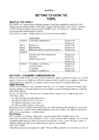
CHAPTER 1 GETTING TO KNOW THE TOEFL WHAT IS THE TOEFL? The TOEFL is a comprehensive English language examination required by more than 3,000 colleges and universities in the United States, Canada, and other parts of the world. In addition, foreign born professionals frequently need a TOEFL score for certification to practice their profession in the United States or Canada. The TOEFL is a timed test that consists of the three sections listed here. THE TOEFL Section 1 Listening Comprehension 50 questions 35 minutes Part A Statements 20 questions Part B Short Dialogs 15 questions Part C Minitalks and Extended Conversation
50,000 employees, and $25 billion per year in revenue. In other words, Branson had personally built an empire larger than the GDP of some developing countries. Then he broke the silence: "Work out." He was serious and elaborated: working out gave him at least four additional hours of productive time every day. The cool breeze punctuated his answer like an exclamation point. 4HB is intended to be much more than a book. I view 4HB as a manifesto, a call to arms for a new mental model of living: the experimental lifestyle. It's up to you--not your doctor, not the newspaper--to learn what you best respond to. The benefits go far beyond the physical. If you understand politics well enough to vote for a president, or if you have ever led taxes, you can learn the few most important scienti c rules for redesigning your body. These rules will become your friends, 100% reliable and trusted. This changes everything.
Without these fea- tures we would stand frozen-cataloging, appraising, and calibrating-as the time for action sped by and away. From all indications, we will be relying on these stereotypes to an even greater extent in the future. As the stimuli saturating our lives continue to grow more intricate and variable, we will have to depend increas- ingly on our shortcuts to handle them al1.4 Psychologists have recently uncovered a number of mental shortcuts that we employ in making our everyday judgments (Kahneman, Slovic, ~ Tversky, 1982; Todd ~ Gigerenzer, 2007). Termed judgmental heuristics, these shortcuts operate in much the same fashion as the expensive = good rule, allowing for simplified think- ing that works well most of the time but leaves us open to occasional, costly mis- takes. Especially relevant to this book are those heuristics that tell us when to believe or do what we are told
 annaabi.ee







Kõik kommentaarid