Endangered species Chris Anderson Endangered animals There are 8,462 types of animal whose futures are threatened. Top 10 Most Endangered Species 1. Black Rhino 6. Alligator Snapping Turtle 2. Giant Panda 7. Hawksbill Turtle 3. Tiger 8. Big Leaf Mahogany 4. Beluga Sturgeon 9. Green-Cheeked Parrot 5. Goldenseal 10. Mako Shark Black rhino The Black Rhinoceros or Hooklipped Rhinoceros. An adult Black Rhinoceros stands 140170 cm high at the shoulder and is 3.33.6 m in length. An adult weighs from 800 to 1,400 kg . The females are smaller than the males. Black rhino Alligator Snapping Turtle largest freshwater turtles in the world about 12 years of age. Female clutch of 1050 eggs hunted for their carapaces Alligator Snapping Turtle Thank you!!!
Endangered species The Giant Panda lives in central-western and southwesterns China. Although the panda is a carnivore, he has a diet which is 99% bamboo. Like most subtropical mammals, but unlike most bears, the giant panda does not hibernate. The Giant Panda is endangered as there are only 2,000-3,000 of them living in the wild and about 270 living in captivity. They have become endangered due to the destruction of their habitat and the variety of bamboo that is decreasing. They are also illegally hunted for their fur. To protect them, there have been many special wildlife parks set up. Elephants live in Central Africa and are the largest land animals alive today. They eat grass, twigs and some fruit. In many Asian countries elephants are symbols of wisdom and are famed for their memory and high intelligence. Once numbering in the millions, the African elephant population has dwindled to between 470,000 ...
Protecting endangered species will make a difference in humans' life In the nature of humankind it is natural to hunt animals. However, nowadays hunting endangered species will make humans be just killers, because it is not necessary to kill something just to have a trophy on the wall at home. People can be proud of what they have done, but decreasing the population of a species largely will cause the specific animal breed to go extinct faster than it would happen via natural causes. Therefore, humans should stop hunting endangered species to slow down their extinction, as these species offer balance in the wildlife, are used without purpose in medicine, and may even reduce poverty. Species on the brink of extinction affect us more than we realize. Sure, pandas are cute, and rhinos are fun to look at, but is there anything more to that? All animals and plants form a very important part of our ecosystem that also includes our land...
SUURBRITANIA,ROOTSI,POOLA,SLOVAKKIA. 1) Võrdle metsaressursse 4s riigis.Milline neist riikidest on metsarikkaim? metsavaeseim? Milliste näitajate põhjal otsustasite? Kõige rikkaim neis riikidest on ROOTSI , sest Rootsis on ligikaudu 27,5 (1000 ha) metsa. Area (1000 hectares) FRA 2005 categories 1990 2000 2005 Forest 27,367 27,474 27,528 Võrdluseks: SLOVAKKIAKS: Area (1000 hectares) RA 2005 categories 1990 2000 2005 Forest 1,922 1,921 1,929 SUURBRITANNIAKS ...
Subject: Animals in danger of extinction Date: 20.04.11 The aim of this report is to make an overview of the status of wild animals in the world. The report is based on up-to-date statistics related to the topic. There are several disappointing facts and figures. a) Over the last couple of years the list of animals in danger of extinction has grown rapidly. The International Union for Conservation of Nature (IUCN) has calculated the percentage of endangered animals as 40 percent of all organisms. Recent research indicates that 70% of the world's most threatened mammal species are currently receiving little or no conservation attention.On 29 January 2010, the IUCN Red List of Threatened Species identified 842 extinct species and subspecies. b) The rarest animal on Earth today is the Pinta Island Tortoise (originating from the Galapagos Islands) , which is critically endangered, since t...
Wildlife of Alaska. Triin Õismaa Brown bear. Most widely distributed. Cubs birth. Extremely fast. Range in colours. Cubs can climb. Male bear's heavier. Poor eyesight. Black bear. Seen in different shades. Shy, easy to frighten, curious. Good climbers and swimmers. Live over 25 years. Good hearing, sense of smell. Polar bear. Only humans prey or hunt. Fur is not white. Tend to overheat more. Can swim up to 100 miles (161 km). Cubs learn to freeze. Caribou. Covered with winter coat. Wear antlers. Releases special scent when faced with danger. Live about 4,5 years. Very fast. Moose. Largest members of the deer family. Good sense of smell and hearing. Lives about 1525 years. "Twig eater." Can run up to 56 km. Very good swimmers. Mountain goat. Goatantelopes. Thick white fur (double coat). In spring they rub their body against the rocks. Offers various sounds. Liv...
Presentation "Weirdest pets" Weirdest pets ● Bobcats ● Lions ● Tigers ● Alligators ● Bears ● Hippos ● Reindeer ● Zebras Weirdest pets (2) Most Endangered Species ● Green-cheeked parrot ● Hawksbill turtle ● Black Rhino ● Giant Panda ● Tiger ● Mako shark Most Endangered Species (2) Strongest animals ● Grizzly bear ● Ox ● Gorilla ● Elephant ● Rhinoceros Beetle Smartest animals ● Chimpanzees ● Dolphins ● Elephants ● African Grey Parrot ● Rats ● Giant Octopus Smartest animals (2) Used links ● http://www.ruethedayblog.com/wp- content/uploads/2010/09/186371578_3982f3c3 c0_z.jpg ● http://www.ruethedayblog.com/2010/09/the- worlds-10-weirdest-pets/ ● http://cellar.org/2008/cycle-ride-with-rani.jpg ● http://www.extravalue.com/pm.shtml ● http://upload.wikimedia.org/wikipedia/commons/ thumb/7...
The problems the contemporary world faces Over Loorits LE108 Pollution Air pollution produced by industry and motor vehicles. Water pollution caused by chemicals and sewer water dumped into water. Soil pollution caused by chemicals released into underground lakes. Natural resources running out Rainforests are being cut down constantly. There are not enough fresh water in some parts of the world. Fossil fuels are used too much and most of its reserves will be used up by 2050. Endangered species 40 percent of all organisms are endangered All the different species are important for biodiversity Habitat loss and hunting are the most widespread cause of species endangerment . Climate change Climate change is a change in the statistical distribution of weather over periods of time. The Earth's average surface temperature has risen by 0.76° C since 1850. Most of the warming that ha...
Strange and mysticals places on Earth Eye of africa - Mauritania Eye of africa- Mauritania · The Richat structure (Sahara, Mauritania) appears as a large dome at least 40 km in diameter within a Late Proterozoic to Or- dovician sequence. · This natural phenomenon is actually a Richat structure caused by the dome shaped symmetrical uplifting of underlying geology now made visible by millennia of erosion. Socotra island · is a small archipelago of four islands in the India Ocean. The largest island, also called Socotra, is about 95% of the landmass of the archipelago. It lies some 240 kilometres (150 mi) east of the Horn of Africa and 380 kilometres (240 mi) south of the Arabian Peninsula. The island is very isolated and through the process of speciation, a third of its plant life is found nowhere else on the planet. It has been described as the most alien- looking place on Earth. So...
Every year, more and more animals are facing extinction. In order to protect endangered species, what can we about this problem? One way of solving the problem is to protect wildlife habitats as the best way to protect endangered species is to protect the places they live in. In addition to this, wildlife must have a place to find food and shelter from the weather. Logging, oil and gas drilling, over-grazing and real estate development have all resulted in the destruction of these habitats, which must be minimized as much as possible. Another way to solve the problem is to stop buying products that are made from animal skin. The lack of demand would result in hunters being unable to continue their business. Finally, it is important to pay attention when driving. One of the problems in developed areas is that roads divide habitats, meaning they are a constant hazard to not only themselves, but to the people driving on those roads ...
MOST ENDANGERED BEARS SIIRI PAURSON EMÜ 2016 TOPICS 1. GIANT PANDA (hiidpanda e. bambuskaru) 2. SUN BEAR (päikesekaru e. malai karu e. biruang) 3. ASIATIC BLACK BEAR (kaeluskaru) 4. SLOTH BEAR (huulkaru) 5. ANDEAN BEAR (prillkaru) 6. POLAR BEAR 7. BROWN BEAR 8. THE AMERICAN BLACK BEAR (baribal) 1. GIANT PANDA • The giant panda remains the world's most threatened bear species. • A very high risk of extinction (väljasuremine) in the wild. • Despite "the establishment of nearly 60 panda reserves, a ban on logging (metsaraie keeld), and widespread reforestation programmes," habitat destruction and degradation are still the panda's greatest enemies. 2. SUN BEAR • The world's smallest bear species. • We estimate that sun bears have declined by at least 30 percent over the past 30 years and continue to decline at this rate. • Sun bears live mostly in the tropical forests of mainland Southea...
Endangered species Cheetah Where found in Africa Southwestern Asia in Iran in India Characteristics The cheetahs are mammals and they belong to the cat family. The cheetahs have got black spots on its skin. The cheetahs uses its tail to steer, because of this they are allow to make sharp turns. They are meateaters. The cheetahs are the fastest land animals. The cheetahs can live for 15 years. Why endangered The cheetahs are hunted for their beautiful skin. There are only 9000 12000 cheetahs left. Intresting facts The cheetahs can run 120 km/h, but only in short distance (460m), because the cheetah's body temperature becomes so high that it would be deadly to continue. The cheetahs can accelerate from 0 to 110 km/h in three seconds, faster than most supercars.
Rare animals Rare Chinese tiger seen in the wild Researchers have confirmed that a wild tiger, photographed by a farmer in the Qinba Mountains of Shaanxi Province, Central China, is indeed that of the critically endangered South China tiger. The South China tiger classified as one of only five subspecies of tiger still alive today is extremely rare, with only an estimated 20 to 30 still remaining in the wild. The wildlife and conservation group WWF says the South China tiger is actually native to the Hainan most forests of south-east China, and because there are so few individuals left, it is regarded by many scientists as being "functionally extinct" in the wild. But a group called Save China's Tigers has been working on a captive- breeding programme and hopes to reach an agreement with China's State Forestry Administration to reintroduce captive-bred animals into the wild. If all goes...
Whale There are 13 species of great whale and several species of smaller whales. Whales are large, intelligent, aquatic mammals. Whales have many features that we- other mammals have. Such as four-chambered heart,hair, they are warm- blooded. They are the only mammals, other than seacows , that live their entire life in the water, and the only mammals that have adapted to life in the open oceans. Whales are not fish, because they have lungs and they breath air with them.What is special about the whales is their size. They are enormous. Whales are about 29 m long, height is the 9 sotry building. Many whales exhibit behaviors such as breaching and tail slapping that expose large parts of their bodies to the air. These mammals communicate with one another using whale songs, which often sound very high-pitched to the human ear. These songs are unique and fascinating even may be scary. ...
Endangered animal koala bear Though often called the koala "bear," this cuddly animal is not a bear at all, it is a marsupial. Koalas live in eastern Australia, where the eucalyptus trees they love are most plentiful. In fact, they rarely leave these trees. That is why they are usually called "treehuggers". Koalas have thick, grayish fur, with white on their chests, inner arms, and ears. They have large furry ears and leathery noses.The koala has large, sharp claws to assist with climing tree trunks. The koala is one of the few mammals that have fingerprints. Koalas do not live in big groups, they rather prefer to be alone. Koalas consume eucalyptus leaves and bark from 12 different eucalyptus tree species. Koalas rests motionless for about 16 to 18 hours a day, sleeping most of that time. They can be aggressive towards each other, throwing a foreleg around their opponent and biting. Koalas have become endangered because their habi...
Kool Tallinn, 2009 How can we make our planet a safer place to live Essay Nimi Klass Juhendaja notice the cars. But to put this in pracitce, public Is our problems and transport should be improved the buses planet a safe therefore we should be cleaner, they should drive more place to live can't fight frequently and there must be buses driving for animals, them. This to more destinations. This way people would fish, birds, way the air is understand that this is an easier, faster and a ourselves or being more cheaper way to get where ever you want. plants? Many and more You do not have to worry about parking and people think it polluted and gas prizes. is....
The flora of the Mediterranean Basin is dramatic. Its 22,500 endemic vascular plant species are more than four times the number found in all the rest of Europe; the hotspot also supports many endemic reptile species. As Europe's vacation destination, populations of threatened species are increasingly fragmented and isolated to make way for resort development and infrastructure. The Mediterranean monk-seal, the barbary macaque and the Iberian ...
Wildlife under threat Giant panda The giant panda lives in a few mountain ranges in central China. As a result of farming, deforestation and other development, the panda has been driven out of the lowland areas where it once lived. The Chinese language has given the bear 20 different names, such as ,,large bear cat'' or ,,bamboo bear'. Unlike other bear species, pandas have round pupils. Pandas are known for their large black patches around their eyes, ears and across their round bodies. Male pandas can weigh up to 160 kg and females can weigh as little as 75 kg. The giant panda's thick, wooly coat keeps it warm in the cool forests. It has strong jaw muscles and teeth for eating tough bamboo. Giant pandas are generally solitary. Each adult has a defined territory and female pandas do not tolerate each other. Pandas are known to attack humans, but rather out of irritation than ag...
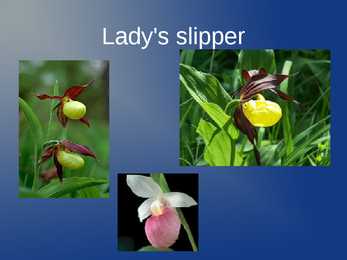
Lady's slipper Common names: American Valerian, Moccasin Flower, Nerveroot, Whippoorwill's-shoe and Yellow Indian Shoe. Bionominal name- Cypripedium pubescens. The plant comes into flowering age only after 10-15 years. Height is 12-30 inches tall. Are found across much of North America, as well as in parts of Europe. This plant grows in the wild in forest lands and meadows, but owing to excessive harvesting, lady's slipper is seldom found growing in the wild. However, to a certain extent, this herb is also cultivated. This plant has only 2 leaves. The color of lady's slipper flowers varies from yellowish to purplish- brown and are borne at the top of an elongated stalk. One petal of the flower changes into a structure akin to a yellow sac, known as the `slipper'. The herb has a plump rootstock that gives rise to numerous curved stems covered with bristles. The stems bear alternate leaves and typical golde...
Alaska Aron Leemets 8.c Alaska Size -1,7 mil km2 Population -690,000 Capital -Juneau Biggest city-Anchorage Anchorage Size- 5080 km2 Population- 300,950 Fauna Polar Bear Brown Bear Endangered Animal Species Fin whale Humpback whale Flora Tundra Mineral resources Gold, coal, oil, copper, zinc, platinum, Main sights Hubbard glacier Sledge dogs Interesting Facts spread worldwide, dog breed Used literature http://et.wikipedia.org/wiki/Alaska http://et.wikipedia.org/wiki/Tundra http://en.wikipedia.org/wiki/Wildlife_of_Alaska https://www.google.ee/search? q=alaska+fauna&hl=et&biw=1366&bih=667 &source=lnms&tbm=isch&sa=X&ei=8Y4NVdL gJYjOaKTsgqAF&ved=0CAYQ_AUoAQ Thank you for listening
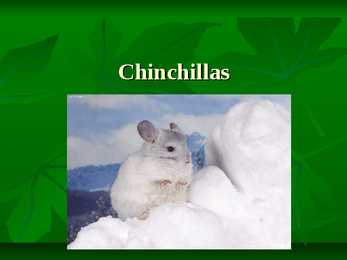
Chinchillas The short-tailed chinchilla (Chinchilla brevicaudata) Also called the Bolivian, Peruvian, and Royal chinchilla. Their bodies measure between 28 to 49 cm long and weigh around 1,1 to 1,5 kg. They have short front limbs and long, powerful legs that aid in climbing and jumping. Short-tailed chinchillas have thicker necks and shoulders and have much shorter tails than their long-tailed relatives. The long-tailed chinchilla (Chinchilla lanigera) Also called the Chilean, coastal, or lesser chinchilla. Body length up to 26 cm. Average males weight 369493 g and females weigh 379450 g. The Chinchilla lanigera species, though rare, can be found in the wild. Domestic chinchillas are thought to come from the lanigera species. General info General color of upper parts is bluish or silvery gray, underparts are yellowish w...
Continental- kontinentaalne Roaming- ränne Due to-tõttu,-tänu,-põhjusel Defend-kaitse Invasion-invasioon Shipwrecks-laevavrakid Stretch-veniv,-venitus Shipping lanes-laevateed Stop over-peatuma Feature-tunnusjoon Extends-laiendab Peaks- Wild-metsik Slopes-nõlvadel Spruces-kuused Reach-jõudma Established-asutatud Hampered-takistab Settlers-asunike Runs-jookseb Emit-kiirgama Run out-välja jooksma Contribute to-kaasa Entire-kogu Damaging-lõhkuma Drawbacks-puudusi Take advantage of-ära kasutama Coastline-rannajoon Arrays-massiivi Rotor blades-rootori labad Take up-võtma Unoccupied sites-sisustama saidid Objections-vastuväited Significant-märkimisväärne Demands-nõudmisi Overpopulation-ülerahvastus Lack of resources-vahendite puudumine Global warming-globaalne soojenemine Deforestation-raie Endangered species-ohustatud liigid Ozone layer-osoonikiht Oil spills-õlireostus Fossil fuels-fossiilsed kütused Grateful-tänulik Guilty-süüdi Hopeless-lo...
The California Floristic Province The California Floristic Province is a zone of Mediterranean-type climate and has the high levels of plant endemism characteristic of these regions. The hotspot is home to the giant sequoia, the planet's largest living organism and its taller but less massive relative, the coastal redwood. This region also holds a number of threatened endemic species such as the giant kangaroo rat and the desert slender salamander, and some of the last individuals of the Critically Endangered California condor can still be found here. In fact, it is the largest avian breeding ground in the United States. Wilderness destruction caused by commercial farming is a major threat for the region as the California Floristic Province generates half of all the agricultural products used by U.S. consumers. The hotspot is also heavily threatened by the expansion of urban areas, pollution, and road construction. The Ca...
Marie-Helene Sarapuu 8.b Uluru, also named as Ayers Rock, is a large sandstone rock in the central of Australia. Uluru and Kata Tjuta are the two major features of the Uluru-Kata Tjuta National Park. Uluru is sacred to the Pitjantjatjara and Yankunytjatjara, the Aboriginal people of the area. Uluru is one of Australia`s most recognisable natural icons (of course).The world-renowned sandstone is 348m high, 5 km long and 1,5km wide.It is interesting that Uluru changes colour as the different light strikes it at different times of the day and year.Uluru produce an incredible light show at sunset ,with crimsons turning to rusts and pinks to mauves.Uluru has also many springs, waterholes,rock caves and ancient paintings. Fauna and flora Historically, 46 species of native mammals are known to have been living in the Uluru region; ...
Zoos are sometimes seen as necessary alternatives to a natural environment. Not only people are trying to keep endangered species and rare animals in the nature reserves, but also the number of zoos built around the world is slowly growing. Do we actually need those kind of man-made "homes" for animals or is it better for them to live outside cement walls in their natural habitat? First of all, nowadays we need to help the nature and animals that are the ones facing quite big danger of becoming extinct. Mostly it is caused by our selfish attitude: we do not take care of nature. Zoo is one of the solutions to help to preserve nature and to protect it from poachers. For example Loxodonta africana is an African elephant who has been hunt down and whose population was significantly reduced in 20th century.The population in the Tanzanian Selous Game Reserve, once the largest of any reserve in the world, dropped from 109 000 in ...
OVERFISHING Presented by: Siiri Paurson Tartu 2015 INTRODUCTION What is overfishing? What is causing overfishing? Why is overfishing a problem? Fishing down the food web (toitumisahela võrgustik) What can we do to help? WHAT IS OVERFISHING? Catching too much fish for the system to support leads to an overall degradation to the system. Overfishing is a non-sustainable use of the oceans. WHAT IS CAUSING OVERFISHING? Worldwide, fishing fleets are at least two to three times as large as needed to take present day catches of fish and other marine species. On a global scale we have enough fishing capacity to cover at least four Earth like planets. Overfishing have a large impact on the basic functioning of our marine ecosystems. These unselective fishing practices and gear cause treme...
Geography New Zealand is an island country in the Southwest Pacific Ocean. It lies about 1600 kilometres southeast of Australia, its nearest continental neighbour. New Zealand belongs to Polynesia, a large island group. The country consists of two main islands The North Island and the South Island and several dozen much smaller islands. The population is 4.1 million. New Zealand is a beautiful country of snowcapped mountains, green lowlands, beaches and many lakes and waterfalls. No place is more than 130 kilometres from the coast. Lakes, rivers, and waterfalls are found throughout New Zealand. Most of the lakes lie in the volcanic plateu of the North Island and in glacial valleys near the Southern Alps of the South Isaland. On both islands the rivers rise in the mountains and flow down to the sea. The rapid flow of New Zealand's rivers makes them important sources of hydroelectric power. New Zealan...
Should cloning be banned ? Cloning is using genetic engineering to make exact copies of living animals and plants. One of the most famous cloning processes involved a sheep named Dolly. The sheep was the first mammal cloned from adult DNA. Since then it has become part of real life and the subject of public debate. For some people, human cloning is acceptable in medicine in spite of the criticism that it is repulsive. Firstly, cloning the organs can save many lives. For example when a person needs an organ and can not find a donor, doctors could just give her the cloned organ. People would not need to donate their organs anymore. Secondly, parents who can not have children may wish to clone a child for themselves. Also endangered animal or plants could be cloned to rise their species. On the other hand, there are also many arguments againts cloning. Most cloned animals suffer severe medical issues and many...
Good afternoon. My name is Siiri Paurson. And I will be speaking today about OVERFISHING. I will be speaking for about 10 minutes. I’ll be pleased to answer any questions you may have at the end of the presentation. INTRODUCTION: What is overfishing? What is causing overfishing? Why is overfishing a problem? Fishing down the food web. What can we do to help? WHAT IS OVERFISHING?: Overfishing can be defined in a number of ways. However, everything comes down to one simple point: Catching too much fish for the system to support leads to an overall degradation (degrödašon) to the system. Overfishing is a non-sustainable use of the oceans. WHAT IS CAUSING OVERFISHING?: Worldwide, fishing fleets are two to three times as large as needed to take present day catches of fish and other marine species (spiišis) and as what our oceans can sustainably support. On a global scale we have enough fishing capacity (cäpaseti) to cover at least four Earth...
Florida Pirjo Mononen I VÕ GEOGRAPHY Bordered by Georgia, Alabama, the Atlantic Ocean and the Gulf of Mexico. 151,670 sq km Capital – Tallahassee Biggest city – Jacksonville Population - 15,982,378 HISTORY Discovered in 1513 by Juan Ponce de León. South of Mason-Dixon line. Entered the Union - March 3, 1845 (27th) Every NASA human space flight since December 1968 has been launched from J.F Kennedy Space Center in Florida. FACTS The state abbreviation for Florida is FL Nickname - the Sunshine State Motto - In God we trust STATE SYMBOLS Flower – orange blossom Bird – mockingbird Animal – Florida panther Tree – Sabal (cabbage) palmetto FLAG indians in florida The Seminoles Two federally recognized tribes in Florida today DISNEY WORLD Opened - October 1, 1971 52.5 million visitors annually UNIVERSAL ORLANDO Two theme parks - Universal Studios Florida and Islands of Adventure Night-time entertainmen...
White Tiger Annette Kirotar Gustav Adolf Grammar School 2008/2009 A white tiger is a tiger with a genetic condition that nearly eliminates pigment in the normally orange fur, though they still have stripes. Another genetic condition also makes the stripes of the tiger very pale; white tigers of this type are called snowwhite or "pure white". Compared to orange tigers without the white gene, white tigers tend to be larger both at birth and at full adult size. All the white tigers are Bengal tigers. White tiger is very rare and it is known only in zoos. Looks pink nose, pink paw pads, iceblue eyes, white to creamcoloured fur black, ash grey, or chocolatecoloured stripes Male tigers weigh about 172133 kg. Female tigers weigh 241262 kg. White tiger White tigers are the most endangered species of tigers. White tigers feed on antelopes, buffa...
CITES CITES ehk Washingtoni (1973) konventsioon loodusliku loomastiku ja taimestiku ohustatud liikidega rahvusvahelise kaubanduse kohta Et vältida ohustatud loomade ja taimede hävimist looduses on sõlmitud rahvusvaheline kokkulepe "Loodusliku loomastiku ja taimestiku ohustatud liikidega rahvusvahelise kaubanduse konventsioon", mida laiemalt tuntakse CITES'i (Convention on International Trade in Endangered Species of Wild Fauna and Flora) nime all. See konventsioon kirjutati alla Washingtonis 3. mail 1973 aastal ja jõustus 1975 aasta 1. juulil. CITES'i eesmärgiks on reguleerida rahvusvahelist kaubandust ohustatud looma- ja taimeliikidega. Probleemid haruldaste looma- ja taimeliikidega kaubanduses on muutunud järjest teravamaks. Kauplemine loodusest hangitud looma- ja taimeliikide isenditega ongi suuruselt teine oht nende püsimajäämisele elupaikade hävimise järel. Ko...
Fishery resources Capture fisheries resources are highly diverse. FAO landing statistics refer to about 2 500 species or group of species most of which are finfish. By far the most numerous fish species, and those most important to aquaculture and fisheries, are teleosts, or bony fish, which in the sea extend from small "grazing" species such as anchovy to large active predatory fish such as tuna. A similarly wide range is also found in freshwater, with the most important species from a production point of view belonging to the carp family. These account for over half the total of inland waters fisheries production. Marine capture fisheries resources are usually considered close to full exploitation worldwide with about half of them fully exploited, one quarter over exploited, depleted or recovering from depletion and one quarter only with some capacity to produce more than they presently do...
TARTU VEERIKU KOOL New Guinea animals and plants Koostaja: Tauri-Viljar Vahesaar Juhendaja: Priit Pensa Tartu 2009 Table of content Introduction................................................................................................................................................3 The forests of New Guinea .......................................................................................................................5 The problem with trading wildlife.....................................................................................................6 Animals of the lowlands....................................................................................................................8 Reptiles.......................................................
Tundra animals Reindeer Reindeer were first domesticated in Norway and northern Asia. When it was seen how valuable they were, they were brought to Alaska in 1887 and later to parts of Canada. These North American reindeer became known as caribou. Although they are called by different names, they are both considered to be a single species. Unlike deer, both the male and female have antlers. The antlers of the male are long, branched and massive, and they are a little flattened at the ends. The antlers of the female are much shorter, simpler and more slender and irregular. Their large, spreading hooves support the animal in snow in the winter and marshy tundra in the summer. Reindeer are also great swimmers and use their feet as paddles. They can also lower their metabolic rate and go into a semi-hibernation when conditions get very harsh. When it looks like there is nothing to eat on the win...
Ecology and Environment I Word formation Noun Verb Adjective Eruption Protection Pollution - Penetration Contamination Emission - Depletion - Prediction Reduction Consumption Campaign/campaigner Disaster - Radiation Destruction - II Give the opposite ... Renewable resources Use Protect Admissibly Predicted III Fill in the correct word 1. The polar bear's .......................... is the icy waste...
1. energia allikas- energy source 2. liik - species 3. ohustatud endangered 4. soojustama issulate 5. jalakäija pedestrian 6. ümber töötlema prügi recycle 7. tuumaelektrijaam nuclear power station 8. tootma generate 9. puudus lack 10. välja laskma emit 11. linnade vohumine urban sprawl 12. jalgrattatee cyclepath 13. prügimägi dump 14. säästmine pollution 15. veepuudus water shortage 16. ülerahvastus crowded 17. lage raie clear cutting 18. kaldalähedane inshore 19. vee energia hydropower 20. päikseenergia solarpower 21. mandri euroopa continental Europe 22. vahepeatus call at 23. mäenõlvad mountain slopes 24. tõkestuma hamper 25. sissetung invasion 26. loodus keskkond natural habitat 27. eraldatud separated 28. munakivisillutisega cobblet 29. föön hair- dryer 30. putukatõrje insect repellent 31. esmaabi first- aid 32. tulikuum boiling hot 33. jäiselt külm freezing 34. nõmm ...
10.kl VOCABULARY OF UNIT 4 acid rain happevihm address aadress afar kaugele (nt maale) alternative alternatiiv, valikuvõimalus ant sipelgas armour soomus, raudrüü array rivi, rida ballad ballaad ban keelustama budget eelarve can´t help ei saa midagi parata can´t stand ei talu car pool auto ühiskasutus centipede sajajalgne circumference ümbermõõt clad kaetud, riietatud clover ristikhein coal kivisüsi community kogukond, ühiskond consequence tagajärg conservation looduskaitse crimson veripunane, tulipunane daisy tree karikakra puu deceive tüssama, petma, eksiteele viima deforestation metsa lageraie demand nõudma diameter diameeter drawback puudus, tagasilöök drift triivima, hulkuma emit eraldama, kiirgama endangered species ohustatud/hävimisohus liigid energy use energia kasutus epic eepiline, kangelaslik face vastu astuma, silmitsi olema fairy land muinasjutumaa fil...
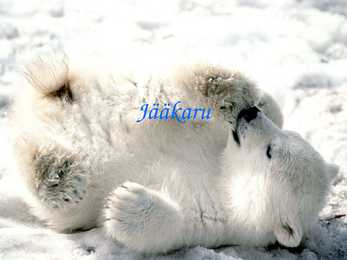
Jääkaru Põhiandmed · Kõrgus püstiasendis: 2,4 3,3 m. · Jalatalla suurus: 30 cm pikk ja 25 cm lai. · Kaal: Isastel 350650 kg, emastel 175300 kg · Harjumuspärane eluviis: Elavad eraldi. · Poegade arv: Tavaliselt 2 · Toitumine: Hülged, loomakorjused, taimestik. · Eluea pikkus: 2530 aastat Jääkaru suurus · Kuna jääkaru on maailma suurim kiskja, looduslikke vaenlasi tal rohkem ei olegi. · Teda pole peaaegu üldse valges lumes märgata, sest ta sulab hästi ümbritsevaga kokku. Tema karvakate võib olla valgest kollaseni. · Jääkarude jalatallad on kaetud karvaga, see annab talle stabiilsuse jääl liikumiseks. Eluviis Jääkarud kogunevad kokku enne jääle minemist. Üheskoos oodatakse kuni jää on piisavalt paks, et suudaks kanda kuni 650 kg kaaluvat suurt kiskjat. Ootamise ajal naudivad jääkarud üksteise seltskonda ja mängivad palju. Suurema osa oma e...
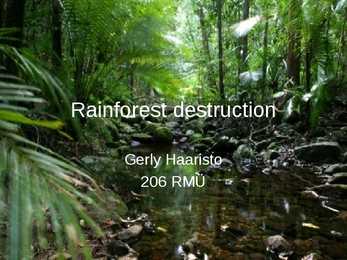
Rainforest destruction Gerly Haaristo 206 RMÜ The Disappearing Rainforests Kaduvad Vihmametsad · Rainforests once covered 14% of the earth's land surface; now they cover a mere 6% and experts estimate that the last remaining rainforests could be consumed in less than 40 years. · Vihmametsad katsid kunagi 14% maapinnast, praegu katavad nad ainult 6% ja eksperdid arvavad et viimased alles olevad vihmametsad nö. tarvitatakse ära vähema kui 40 aasta pärast. Causes of rainforest destruction Vihmametsa hävitus põhjused. · Logging · Agriculture · Fuelwood- küttepuud · Large Dams- suured tammid · Mining and industry- kaevandus ja tööstus. · Tourism turism. · Poverty and overpopulation vaesus ja ülerahvastatus. · Colonialism kolonialism. Why save it? · The rainforest is home to over · Vihmamets on koduks rohkem fifty perc...
TartuWaldorf School FINLAND Report Johan Mähar Tartu 2008 Contents p. 1. Introduction....................................................................................................1 2. Nature and geography.....................................................................................2 3. Position and size.............................................................................................2 4. Climate..............................................................................................
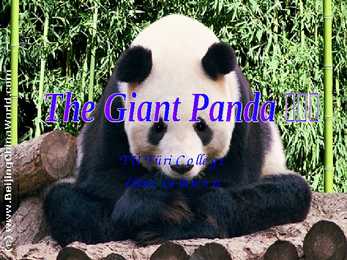
T Ü T üri C o lle g e Liina Le inm e ts Introduction · Panda (Ailuropoda melanoleuca) is a mammal classified in the bear family, native to centralwestern and southwestern China. It is easily recognized by its large, distinctive black patches around the eyes, over the ears, and across its round body. · The Giant Panda lives in a few mountain ranges in central China. · It once lived in lowland areas, but farming, forest clearing, and other development now restrict the Giant Panda to the mountains. In the wild · The Giant Panda is a · Pandas communicate terrestrial animal and through vocalization primarily spends its life and scent marking such roaming and feeding in as clawing trees or the bamboo forests. spraying urine. It is able · Though generally alone, to climb and take each adult has a shelter in hollo...
Australia Basic Knowledge Capital city: Canberra States: New South Wales, Queensland, South Australia, Tasmania, Victoria and Western Australia National Language: English Demonym: Australian, Aussie Goverment: Federal parliamentary constitutional monarchy Monarch: Elizabeth II Area: 7, 617, 930km2 Population: 22, 822, 641 Currency: Australian Dollar Flag and Coat of arms Flag Coat of arms Click to edit Master text styles Second level Click to edit Master text styles Third level Second level Fourth level Third level Fifth level Fourth level Fifth level Location It's located on the Southern Hemisphere. Surrounded by the New-Ze...
Palm oil Palm oil is a type of edible vegetable oil that is derived from the palm fruit, grown on the African oil palm tree. Oil palms are originally from Western Africa, but can flourish wherever heat and rainfall are abundant. Today, palm oil is grown throughout Africa, Asia, North America, and South America, with 85% of all palm oil globally produced and exported from Indonesia and Malaysia; but most of the time not using sustainable measures. The industry is linked to major issues such as deforestation, habitat degradation, climate change, animal cruelty and indigenous rights abuses in the countries where it is produced, as the land and forests must be cleared for the development of the oil palm plantations. According to the World Wildlife Fund, an area the equivalent size of 300 football fields of rainforest is cleared each hour to make way for palm oil production. This lar...
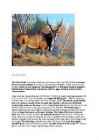
The Giant Eland The Giant Eland (Taurotragus derbianus also known as the Lord Derby Eland) is an open forest savannah antelope. It is found in Central African Republic, Sudan, Cameroon and Senegal. There are two subspecies: the endangered T. d. derbianus, found in Senegal's Niokolo-Koba National Park, and the low risk T. d. gigas, found in Central Africa. Characteristics Giant Eland are typically between 220-290 cm (7.3-9.6 ft) in length, stand approximately 150 to 175 cm (4.9 to 5.7 ft) at the shoulder, and weigh 440-900 kg (968- 1,980 lb). Despite its common name, it is of very similar size to the Common Eland. The smooth coat is reddish- brown to chestnut, usually darker in males than females, with several well-defined vertical white stripes on the torso. A crest of short black hair extends down the neck to the middle of the back, and is especially prominent on the shoulders. The slender legs are slightly lighter on their inner su...
Palm oil Kristiina Pällo LU1 EMÜ 2016 • Edible vegetable oil that is derived from the palm fruit • Oil palm trees are grown in tropical areas • Widely used in food industry due to its semi-solid state in room temperature and long shelf-life • It is in a lot of everyday products – makeup, shampoo, soap, biodiesel. Also in food – sweet treats (chocolate, biscuits etc), margarine, nut butters, crisps. The Two kinds of palm oil • Palm oil comes from palm fruit. It is rich in vitamin E and it has a red colour due to beta-caroten in it. High in saturated fats. Used mostly in food industry • Palm kernel oil comes from palm fruit seed. Also high in saturated fats. Used mostly in products such as shampoos, makeup, biofuel etc Ingridient list • Vegetable Oil, Vegetable Fat, Palm Kernel, Palm Kernel Oil, Palm Fruit Oil, Palmate, Palmitate, Palmolein, Glyceryl, Stearate, Stearic Acid, Elaeis Guinee...
New Zealand New Zealand is an island country. It is in the south-western Pacific Ocean comprising two main island, North- and the South Island with lots of smaller islands. New Zealand is notable for its geographic isolation. It's about 1,600 kilometers from Australia and its closest neighbours to the north are New Caledonia, Fiji and Tonga. New Zealand's total land area is 268,021 square kilometers. The country extends more than 1600 kilometers along its main,north - north-east axis and has about 15,000 kilometers of coastline. The South Island is the largest land mass of New Zealand and is divided along its lenght by the Southern Alps and the highest mountain Mount Cook is 3,754 meters high. There are 18 peaks over 3000 meters in the South Island. The highest North Island mountain is Mount Ruapehu and it is an active cone volcano. There are also two oth...
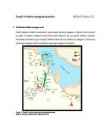
Saudi Araabia energiamajandus Mihkel Sooba 11C 1. Traditsioonilised energiavarud Saudi Araabias leidub kasutatavatest maavaradest naftat ja maagaasi. Allpool oleval joonisel on näha, et enamus varadest asuvad Pärsia lahe rannikul või siis natuke rohkem sisemaal. Suuremad leiukohad on just rannikul. Naftat leidub kõvasti rohkem kui maagaasi. Joonisel on rohelisega märgitud nafta leiukohad ja punasega maagaasi leiukohad. Joonis 1: Saudi Araabia energiavarade paikenemine Allikas: Energy information administration Alternatiivenergia Kasutamist soodustavad Kasutamist takistavad tegurid liik tegurid Päikeseenergia Väga päikeseline riik. Nafta ja maagaasi varud kaaluvad üle (eraomanduses) päikeseenergia kasutamise. Tööstustes pole ...
khTallinn English College The United Kingdom Topic Mari-Liis Pakats Tallinn 2008 2 Table of Contents Introduction..................................................................................................................4 Geographical Position .................................................................................................4 History .........................................................................................................................4 Government..................................................................................................................5 Queen Victoria.............................................................................................................5 Relief...............................................................................................................................
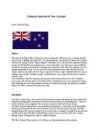
National Symbols of New Zealand New Zealand flag History The idea of the flag of New Zealand was first introduced in 1830, because of trading troubles. At that time, a trading ship built inNZ, Sir George Murray was seized in Sydney by Customs officials for sailing without a flag or register. Australia, which was the most important trading partner for NZ had British navigation laws which ruled that every ship must carry an official certificate detailing construction, ownership and nationality of the ship. The problem was that during that period of time, NZ was not yet a colony ofGreat Britan, thats why the NZ-built ships could not sail under a British flag or register. Without a flag to represent the new nation, trading ships and their valuable cargoes would continue to be seized (held by the Australian customs (toll) The Australians called for signing a legislation to remove any obstacles to New Zealand's incre...
 annaabi.ee