Leidsid 33 sarnast õppematerjali, mis on seotud failiga "Endangered species". Need materjalid aitavad sul teemat sügavamalt mõista.
rhino, black, turtle, endangered, rhinoceros, species, animal, adult, than, males, female, chris, anderson, animals, there, types, whose, tiger, leaf, green, parrot, mako, shark, stands, shoulder, length, weighs, years, clutch......................9 Vital waterways for people and wildlife..............................................................................................10 2 Introduction If you were asked to show on a world map the regions with the most biodiversity, your finger would probably end up pointing at the Amazon, the Congo Basin or the island of Borneo. But I chose New Guinea, an island that represents no more than 1% of the world's landmass, an array of extraordinary animals and plants have also flourished, such as tree kangaroos and birds of paradise. Close to 10% of the world's vertebrates are concentrated here, while 7% of the world's higher (vascular) plants grow on the island's productive soils. 3 Geography Papua New Guinea consists of over 600 islands and lies in the middle of the long chain of islands stretching from mainland South-East Asia
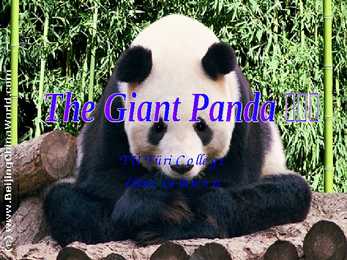
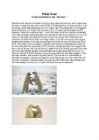
T Ü T üri C o lle g e Liina Le inm e ts Introduction · Panda (Ailuropoda melanoleuca) is a mammal classified in the bear family, native to centralwestern and southwestern China. It is easily recognized by its large, distinctive black patches around the eyes, over the ears, and across its round body. · The Giant Panda lives in a few mountain ranges in central China. · It once lived in lowland areas, but farming, forest clearing, and other development now restrict the Giant Panda to the mountains. In the wild · The Giant Panda is a · Pandas communicate terrestrial animal and through vocalization primarily spends its life and scent marking such
Protecting endangered species will make a difference in humans' life In the nature of humankind it is natural to hunt animals. However, nowadays hunting endangered species will make humans be just killers, because it is not necessary to kill something just to have a trophy on the wall at home. People can be proud of what they have done, but decreasing the population of a species largely will cause the specific animal breed to go extinct faster than it would happen via natural causes. Therefore, humans should stop hunting endangered species to slow down their extinction, as these species offer balance in the wildlife, are used without purpose in medicine, and may even reduce poverty. Species on the brink of extinction affect us more than we realize. Sure, pandas are cute, and rhinos are fun to look at, but is there anything more to that
ICE AGE The earth is very old. During its long history there have been many changes in climate. Between one and two million years ago one of these changes took place the great Ice Age began. It grew colder in the Far North. More snow fell in the winter than could melt away in the summer. The snow grew deeper and deeper. It changed to solid ice. As more snow fell, the ice grew thicker. It began to move. Great sheets of moving ice, or glaciers, were formed. The edges of the sheets were pushed outward. At last the ice covered most of what is now Canada. And it spread southward into what is now the United States. The ice was probably a mile deep in places. It moved over hills and valleys, rivers and forests
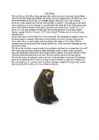
MOST ENDANGERED BEARS SIIRI PAURSON EMÜ 2016 TOPICS 1. GIANT PANDA (hiidpanda e. bambuskaru) 2. SUN BEAR (päikesekaru e. malai karu e. biruang) 3. ASIATIC BLACK BEAR (kaeluskaru) 4. SLOTH BEAR (huulkaru) 5. ANDEAN BEAR (prillkaru) 6. POLAR BEAR 7. BROWN BEAR 8. THE AMERICAN BLACK BEAR (baribal) 1. GIANT PANDA • The giant panda remains the world's most threatened bear species. • A very high risk of extinction (väljasuremine) in the wild. • Despite "the establishment of nearly 60 panda reserves, a ban on logging (metsaraie keeld), and widespread reforestation programmes," habitat destruction and degradation are still the panda's greatest enemies. 2. SUN BEAR • The world's smallest bear species. • We estimate that sun bears have declined by at least 30 percent over the past 30 years and continue to decline at this rate.
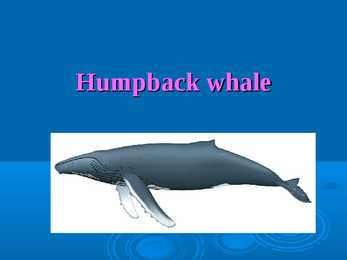
Humpback whale Humpback whale Megaptera novaeangliae CLASS: Mammalia ORDER: Cetacea SUBORDER: Mysticeti FAMILY: Balaenopteridae GENUS: Megaptera SPECIES: Novaeangliae Physical Description The head is broad and rounded when viewed from above, but slim in profile. The body is quite round, narrowing to a slender peduncle. The top of the head and lower jaw have rounded, bump-like knobs, each containing at least one stiff hair. The body is black on the dorsal side, and mottled black and white on the ventral side. About 2/3 of the way back on the body is an irregularly shaped dorsal fin. Its flippers are very long, between 1/4 and 1/3 the length of its body, and have large knobs on the leading edge. The flukes, which can be 5.5 m wide, is serrated and pointed at the tips. Adult males measure 12.2-14.6 m, adult females measure 13.7-15.2 m. They weigh 25 to 40 tons. Feeding
The Giant Eland The Giant Eland (Taurotragus derbianus also known as the Lord Derby Eland) is an open forest savannah antelope. It is found in Central African Republic, Sudan, Cameroon and Senegal. There are two subspecies: the endangered T. d. derbianus, found in Senegal's Niokolo-Koba National Park, and the low risk T. d. gigas, found in Central Africa. Characteristics Giant Eland are typically between 220-290 cm (7.3-9.6 ft) in length, stand approximately 150 to 175 cm (4.9 to 5.7 ft) at the shoulder, and weigh 440-900 kg (968- 1,980 lb). Despite its common name, it is of very similar size to the Common Eland. The smooth coat is reddish- brown to chestnut, usually darker in males than females, with several well-defined
Tundra animals Reindeer Reindeer were first domesticated in Norway and northern Asia. When it was seen how valuable they were, they were brought to Alaska in 1887 and later to parts of Canada. These North American reindeer became known as caribou. Although they are called by different names, they are both considered to be a single species. Unlike deer, both the male and female have antlers. The antlers of the male are long, branched and massive, and they are a little flattened at the ends. The antlers of the female are much shorter, simpler and more slender and irregular. Their large, spreading hooves support the animal in snow in the winter and marshy tundra in the summer. Reindeer are also great swimmers and use their feet as paddles.
Tundra swans Tundra swans ● Whooper swan, Bewick´s swan and mute swan (laululuik, väikeluik, kühmnokk-luik) Whooper swan ● Large white swan (bigger than bewick) ● Lenght – 140 to 165 cm ● Deep honking call and powerfull fliers ● Require large areas to live in ● Adult birds – feathers entirely white, black feet, mostly black bill ● Pens (females) – slightly smaller than cobs (males) ● Immatures – white mixed with some dull grey feathering; bills – black, large dirty-pink patch ● In Estonia first nesting - 1979 Whooper swan Behaviour of whooper swan ● Pair for life, cygnets stay with them all the winter ● Breffered breeding habitat – wetlands ● Both build the nest ● Male will stand guard over the nest while female incubates ● 4 to 7 eggs Influence of whooper swan ● Much admired in Europe
The Galapagos Islands are situated on junctions between several shifting tectonic plates on the equator and about 1000 km off the Pacific coast of Ecuador. They are the product of one of the most volcanically active regions on our planet, a hot spot is situated directly beneath the islands and also It is the point where major ocean currents meet. These circumstances combine to make an area that truly is like no other place on earth. Galapagos is comprised of 13 major islands, more than 120 smaller islets and rocks, and the surrounding ocean. The total land mass is almost 8,000 sq. km. Highest peak is Wolf Volcano reaching 1707m. The present islands are all younger than 4 million years and were formed separately from other land masses as a result of volcanic eruptions. The Galapagos were discovered in 1535 by Fray Toms de Berlanga, the Bishop of Panama. He was sailing from Panama to Peru when he accidentally discovered the islands
In 1788 on the 26th of January the first fleet arrived at Botany Bay and established a penal colony near modern-day Sydney. Geographical Position Australia is located in the Southern Hemisphere. It’s the only continent except for Antarctica that is all south of equator. Sometimes Australia is called the island continent. There is a great reason why. It really is an island. It is 2880 km from the mainland of Asia and is almost half way round the world from Europe. More than 9 600 km separates it from America. Australia lies between the Pacific and Indian oceans. The Timor Sea and the Arafura Sea separate Australia from Indonesia. In the north the coast is washed by Great Australian Bight and the Indian Ocean. In the northeast the Coral Sea washes the coasts and in the southeast there is the Tasman Sea which also separates Australia from New Zealand. The biggest island is Tasmania which is located to the south of the country.
Annette Kirotar Gustav Adolf Grammar School 2008/2009 A white tiger is a tiger with a genetic condition that nearly eliminates pigment in the normally orange fur, though they still have stripes. Another genetic condition also makes the stripes of the tiger very pale; white tigers of this type are called snowwhite or "pure white". Compared to orange tigers without the white gene, white tigers tend to be larger both at birth and at full adult size. All the white tigers are Bengal tigers. White tiger is very rare and it is known only in zoos. Looks pink nose, pink paw pads, iceblue eyes, white to creamcoloured fur black, ash grey, or chocolatecoloured stripes Male tigers weigh about 172133 kg. Female tigers weigh 241262 kg. White tiger White tigers are the most endangered species of tigers. White tigers feed on antelopes, buffaloes, cattle, deer and pigs.
The Mountain Lion cougar (Puma concolor), also puma, cougar, or panther, is a member of the Felidae family, native to the Americas. This large, solitary cat has the greatest range of any wild land mammal in the Western Hemisphere, extending from Yukon in Canada to the southern Andes of South America. An adaptable species, the cougar is found in every major North American habitat. The Mountain lions of Yellowstone region were significantly reduced by predator control measures during the early 1900s. It is reported that 121 lions were removed from the park between the years 1904 and 1925. Then, the remaining population was estimated to be 12 individuals. Mountain lions apparently existed at very low numbers between 1925 and 1940. They maintain a secretive profile in the Yellowstone region
Causes: *The main cause of animal extinction, without doubt,is human demand, either for animal resources directly, or for the natural resources of the animals' habitats. *In addition to that, there are other indirect causes caused by human activities. *Habitat loss: Is considered to be the main cause for animal extinction. Humans are clearing our forests for wood and timber. The foodchain is disturbed and animals will die. *Wildlife trade: Poaching and wildlife trade are another common threat to animals. International wildlife trade has also been linked to drugs trade. The most common anilmal trade is pet trade, such as orangutangs. Animals are also killed for fur(tigers, leopards, cheetahs) *Climate change: It has been recently suggested that warmer global temperatures may be affecting animals
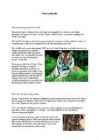
Rare animals Rare Chinese tiger seen in the wild Researchers have confirmed that a wild tiger, photographed by a farmer in the Qinba Mountains of Shaanxi Province, Central China, is indeed that of the critically endangered South China tiger. The South China tiger classified as one of only five subspecies of tiger still alive today is extremely rare, with only an estimated 20 to 30 still remaining in the wild. The wildlife and conservation group WWF says the South China tiger is actually native to the Hainan most forests of south-east China, and because there are so few individuals left, it is regarded by many scientists as being "functionally extinct" in the wild. But a group called Save China's Tigers
Sun Bear The Sun Bear is 120-150 cm long, making it the smallest member in the bear family. Males tend to be 10-45% larger than females the former normally weigh between 30 and 70 kg , and the latter between 20 and 40 kg. The shoulder height is about 60-72cm .The Sun Bear possesses sickle-shaped claws that are relatively light in weight. It has large paws with naked soles, probably to assist in climbing. Its inward-turned feet make the bear's walk pigeon toed, but it is an excellent climber. It has small, round ears and a stout snout. The tail is 1.2-2.8 inches (3-7 cm) long
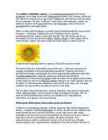
alternative, Sunbutter, especially in China, the United States, the Middle East and Europe. In Russia it is probably the most wide spread snack.[citation needed] It is also sold as food for birds and can be used directly in cooking and salads. Sunflower oil, extracted from the seeds, is used for cooking (but is less cardiohealthy than olive oil), as a carrier oil and to produce biodiesel, for which it is less expensive than the olive product. During the 18th Century, the use of sunflower oil became very popular in Europe, particularly with members of the Russian Orthodox Church because sunflower oil was one of the few oils that was not prohibited during Lent. The cake remaining after the seeds have been processed for oil is used as a livestock feed. Some recently developed cultivars have drooping heads. These cultivars are less
Animal rights movements and their views on hunting Koostaja: In Wikipedia there are listed 34 animal rights organizations [8], so in this report author has picked out some of these organizations and will introduce their views on game management and hunting. First hypothesis before deeper research is that all such organizations are against all sort of hunting. When mentioned animal rights people usually think about people fighting against wearing furs and keeping animals in cages, but when delving deeper into this there are many problems that animal rights organizations/ movements are addressing. There are also those organizations that have not made any statements about hunting, some of those concentrate only on pets (mostly cats and dogs) but some just don’t mention hunting in any way. These types of organizations have been left out from this report.
Natural zones The wet forests also called the rainforests occupy the narrow coastal region in the east. In the west they give place to grasslands with some trees called savannas. Farther west the trees disappear and the savannas give place to the bushlands. The real desert occupies the centre of the Western Plateau. In the very southwest there are thin forests of evergreen trees. Plants A rich variety of plant can be found in the natural landscapes of Australia. A lot of species can be found in wet tropical forests in the north and in temperate rainforests in the south. The biggest family of the native plants is the myrties. They include more than 500 species of eucalyptus, or gum trees. Only the big river red gum is seen everywhere. These can be found beside rivers and dry riverbeds. Some gum trees are valuable timber species and have been cut down for many years. Gum tree leaves are full of oils, which evaporate easily. That why
These strong trees do not die when there are forest fires. Some other kinds are small bushes in the semi-deserts.Eucalyptuses give the local people timber and eucalyptus oil. Of 600 kinds of acacias the golden wattle, the national flower of Australia, is the best known. Australia has many other kinds of tree, and thousands of kinds of wild flowers too. Of other trees there grow bottle trees in the savannas, tree ferns in the tropical forests and many others. Fauna. The animal life of Australia is unique. The marsupials or pouched animals form the biggest group of animals in Australia. Most of the she-marsupials have pouches in which they carry their young. The kangaroo is one Australian animal that everybody knows.There are more than 50 species of kangaroo. They are furry animals that hop on their hind legs. The biggest are red kangaroos, grey kangaroos and euros. The smallest are thekangaroos that belong to the group called rat kangaroos
MJ15 What is overpopulation? • Overpopulation is an undesirable condition where the number of existing human population exceeds the carrying capacity of Earth. • Human overpopulation is among the most pressing environmental issues • Overpopulation can result from an increase in births, a decline in mortality rates, an increase in immigration, or an unsustainable biome and depletion of resources • Human population has been rising continuously since the end of the Black Death, around the year 1350 • The most significant increase has been since the 1950s, mainly due to medical advancements and increases in agricultural productivity • The recent rapid increase in human population over the past three centuries has raised concerns that the planet may not be able to sustain present or future numbers of inhabitants. Loss of Fresh Water • Most of the freshwater resources are either unreachable or too
first. The Australian flag symbolises Australia's historical links with Britain, because it has British flag on it, and Australia's location in the southern hemisphere, because it has stars of the Southern Cross on it. The large seven-pointed star represents the six original states and the territories of Commonwealth. There is also the Indigenous Australian flag, which represents the Aboriginal Australians. The flag with its colours of red (representing the land), black (representing the people) and the yellow in the middle (representing the sun) is a source of pride for Indigenous Australians. The present coat of arms was granted by King George V in 1912. It consists of a shield containing the badges of six Australian states, enclosed by an ermine border. The shield is a symbol for the federation of the states, which took place in 1901. The crest, which is above the shield, is a seven-pointed gold star on a blue and gold wreath. The seven points of
Was it a spontaneous mutation? Crossing of those cats with known chocolate and cinnamon colour cats of other breeds ruled out chocolate/lilac and cinnamon/fawn genes. These cats were a totally new colour, peculiar to the Norwegian Forest Cat gene pool and dubbed the "X Colours". They are now called Amber and Light Amber. The Amber effect is due to the extension gene (also called red factor) which controls the production of red and black pigment. The dominant version of the gene produces normal black pigment in the coat while the recessive version produces red pigment. The name comes from the effect of black or brown pigment not being extended throughout the whole coat, but being restricted to the skin of the extremities and to the eyes (for example in bay horses). This Norwegian Forest Cat was bred by Yve Hamilton Bruce from a silver mackerel tabby female (imported from Denmark) and a classic red tabby and white male. The result was 1 silver tabbies and 2 silver tabbies with white
.............................................................................................5 Relief............................................................................................................................6 Climate ........................................................................................................................7 Plants............................................................................................................................7 Animal life................................................................................................................... 7 Natural Resources........................................................................................................ 8 Economy...................................................................................................................... 8 Population and Ethnicity.............................................................................................
Chipmunks are small and striped little animals that many peole adore. Chipmunks are easily recognized by the light and dark stripes on the back and head. They can be confused with some of the striped ground squirrels, but chipmunks are smaller and have five dark stripes on their backs. The cimpunk is very colorful: it’s black, white, grey, brown and red. Chimpunk weights up to one hundred and twenty five grams, but theres also some smaller species. Chimpunks are 16 cm to 30 cm long and have one-third to nearly half of their total length long tail. Chimpunks live usually in forests but you can find them also at parks. They eat many things: seeds, nuts, fruit, grass, shoots and many ohter plants, but also small frogs, worms and bird eggs. Some species hibernate in the winter, but some don’t. Chimpunks typically live about three years, but there have been some, who live nine years. Squirrels are familiar to almost everyone. More than
Poverty and economic decline led many blacks to seek temporary work in neighboring Caribbean areas and in the United States; many left the island permanently, emigrating to England, Canada, and the United States. Indians were imported to meet the labor shortage on the plantations after the slaves were freed, and agriculture was diversified to lessen dependence on sugar exports. A new constitution in 1884 marked the initial revival of local autonomy for Jamaica. Despite labor and other reforms, black riots recurred, notably those of 1938, which were caused mainly by unemployment and resentment against British racial policies. Jamaican blacks had been considerably influenced by the theories of black nationalism promulgated by the American expatriate Marcus Garvey. A royal commission investigating the 1938 riots recommended an increase of economic development funds and a faster restoration of representative government for Jamaica. In 1944 universal adult suffrage was introduced, and
Zoos are sometimes seen as necessary alternatives to a natural environment. Not only people are trying to keep endangered species and rare animals in the nature reserves, but also the number of zoos built around the world is slowly growing. Do we actually need those kind of man-made "homes" for animals or is it better for them to live outside cement walls in their natural habitat? First of all, nowadays we need to help the nature and animals that are the ones facing quite big danger of becoming extinct. Mostly it is caused by our selfish attitude: we do not take care of nature. Zoo is
....7 10. History..........................................................................................................8 11. Conclusion....................................................................................................9 12. References....................................................................................................10 Introduction I chose finland because there are friendly people and beautiful nature. Finland is bigger than Estonia. There lives over 5 milj. people. Finland capital is Helsingi and there lives about 2 milj. people. Highest top is 1328m. Finland is bordersed with Sweden to the west, Russia to the east and Norway to the north. It is the eight largest city in Europe. Most Finns speak Finnish. The second language is Swedish. Finland is rated the sixth most peaceful country in the World. In Finland there are more than 60000 lakes. Capital: Helsinki
Another suggestion, although much less frequently used, is the Islands of the North Atlantic (IONA). Climate Overall, Ireland has a mild, but changeable, climate all year. The island is not noted for its extremes. The warmest recorded air temperature was 33.3°C. The coldest air temperature was -19.1°C Average temperatures in the island vary from -4°C (min) to 11°C (max) in January, and 9°C (min) to 23°C (max) in July. Flora and fauna Ireland has fewer animal and plant species than either Britain or mainland Europe because it became an island very soon after the end of the last Ice Age, about 8,000 years ago. Nevertheless, it is home to hundreds of plant species, some of them unique to the island. Many different habitat types are found in Ireland, including farmland, open woodland, temperate forests, conifer plantations, peat bogs, and various coastal habitats. Fauna Only 31 mammal species are native to Ireland, again because it was isolated from Europe by rising sea
Polar bear Ursus maritimus or the "sea bear." Polar bears live near the circumpolar at north in areas where they can hunt seals at open leads. Scientists estimate that there are between 22000 to 27000 polar bears. Its closest relative is the brown bear. Adult male polar bears are 2,5 to 3 meters tall. They weigh 250 to 770 kilograms. Adult female bears are smaller. They are about 1,8 to 2,5 meters tall and weigh 90 to 320 kilograms. Polar bears usually eat seals usually the ringed seasl, but sometimes the bearded seals. When hunting is good, polar bears will typically eat only the fat and leave the rest of the carcass for scavengers including arctic foxes, ravens, and younger bears. Polar bears also
Their colour was green. PAINT CLAN Medicine men/Priests Make special red war paint Keepers of sacred cristals-which are used to determine guilt in murder trials CEREMONIAL PIPES. Used to ask guidance from Great Spirit. Your heart speaks the truth. 7 SACRED DIRECTIONS 1. North-blue,winter, peace+self-reflection(meditation) 2. South-white(sunlight) summer, corn, happy children, plentyful meat 3. East-assoiciated with red, spring, dawn, rebirth, new beginnings 4. West- black, autumn, death, ,,the shadow life of the spirit" 5. Up- yellow, the sun, the creator, the Great Spirit 6. Down-brown, Mother Earth+all of her goodness 7. Centre- green, self, dedication to purity+honesty DANCE Ensures personal health+health of society Scare away evil spirits Dramatic Art Religous rituals Historical documentary Prophecy CONTACT WITH EUROPEANS Group of Spanish concistadores-Hernando de Soto. 1540. By 1650-1/2 cherokees killed by smallpox.
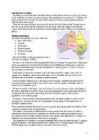
Australia is a country and also a continent. If someone wants to make clear, that he is speaking of the country, he may call it by its full name of Commonwealth of Australia. Australia's name means "southland."It is south of the equator. Sometimes it is also called the island continent because it is an island. There are about twenty million people in Australia.It is 1,800 miles from the mainland of Asia and almost half way round the world from Europe. More than 600 miles of ocean separate it from Americas. Since Australia is south of the equator, its seasons are just the opposite of ours. It has summer while we have winter, and the other way round. States and Territories. Australia consists of six states, two territories and eight external territories. The six states are: Western Australia (capital Perth), South Australia (capital Adelaide), Queenslnd (capital Brisbane), New South Wales (capital Sydney), Victoria (capital
· New South Wales · Victoria · Queensland · South Australia · Western Australia · Tasmania New South Wales is the most populous state in Australia. Its capital is Sydney. Victoria is one of the most densely populated states in Australia. Its capital city is Melbourne and it was named after the British Prime Minister Lord Melbourne. Melbourne is said to be the heart of Australian finance and the headquarters of industry giants. Victoria is more an industry than a tourist state. Queensland is known for its natural riches like huge coalfields, copper, silver, lead. Its capital city is Brisbane, which is the third largest city in Australia. Because it lies in the Northeast part of Australia, its climate is mainly tropical. South Australia is famous as it is the region of fruit farming, vineyards and olive groves. Only the southern coast is fertile, most of the state is arid. Its capital is Adelaide, which is known for the Adelaide circuit.
 annaabi.ee