Leidsid 33 sarnast õppematerjali, mis on seotud failiga "Eessõnade kasutamine inglise keeles". Need materjalid aitavad sul teemat sügavamalt mõista.
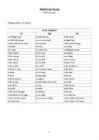
millestki, speak, above, before, meeting, during, work, opposite, front, behind, cinema, between, shop, until, since, across, train, dream, shout, eessõnad, shelf, desk, monday, evening, profit, products, euros, kestel, seminar, milleni, hotel, beach, window, dentist, airport, weekend, night, nine, clock, beginning, year, bank, theatre, birthday, streetBad at-paha milleski Bad to sb- kellelegi paha olema Base on-põhinema Beg for-anuma Begin with-algama Believe in-uskuma Belong to-kuuluma Benefit from-kasu saama Bet on-kihla vedama Beware of-eemale hoidma (put the) blame on sb-süüd kellegi peale ajama Blame sb for sth-süüdistama kedagi milleski Blame sth on sb-süüdistama.. Boast about/of-uhkustama Bored with/of-tüdinenud Borrow sth from sb-laenama Brilliant at-very good at Busy with-hõivatud capable of-võimeline care about-hoolima millestki care for sb-kellestki hoolima (take)care of-hoolitsema care for sth-like to do sth-hoolima millestki,tasskohvi careful of-ettevaatlik careless about/with-hooletu cause of-põhjus certain of-kindel charge for-süüdistama charge sb with-süüdistama-a crime cheque for-tsekk choice between/of-valik clever at-kaval-clever of you close to-lähedal comment on-kommentaar communicate with-ühenduses olema compare with-võrdlema in ja asju compare to-võrdlema inimesi comparison between-võrdlus
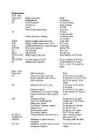
Kindel punkt ajas, kellaaeg At half past nine At 3 o'clock SINCE Mingist kindlast ajapunktist siiani Since 1980 FOR Mingist kindlast ajaperioodist siiani For 2 years AGO Kindlal ajal minevikus, mingi aeg tagasi 2 years ago BEFORE Enne mingit ajahetke Before 2004 TO Aja ütlemisel Ten to six PAST Aja ütlemisel Ten past Six TO/TILL/UN Mingist ajast mingi ajani From Monday to/till Friday TIL TILL/UNTIL Kui kaua mingi asi kestab He is on holiday until Friday. BY Mingiks ajaks hiljemalt I will be back by 6 o'clock
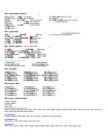
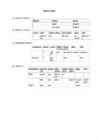
She is marta we aren't are we German? you aren't, they aren't. It is a school. you aren't are you German? We are students they aren't are they German? You are in class 12 They are teachers Unit 2 / present simple + - ? yes- I do, you do, he/she/it does. I work I don't work Do I work no I don't, you don't, he/she/it doesn't You work you don't work do you work? He/she it works he/she/it doesn't works does he/she/it work We work we don't work do we work You work you don't work do you work? They work they don't work do they work? Unit 6 / Present Continuous be- verb-ing / kestev olevik
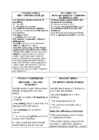
VIISIMRUSES ESINEVAD EESSNAD KUIDAS? by bus (bussiga) by train (rongiga) by plane (lennukiga) on foot (jalgsi) in English (inglise keeles) in a loud voice (valju hlega) in a whisper (sosinal) with difficulty (suure vaevaga) with care (hoolikalt) with his key (vtmega) without delay (viivitamata) AJAMRUSES ESINEVAD EESSNAD MILLAL? IN 1. Pikad ajajrgud (sajandid, aastad, aastaajad, kuud) *in June (juunis) *in spring (kevadel) *in 1991 (1991. aastal) 2. Pevaperioodid (v.a. sel- at night) *in the morning (hommikul) *in the afternoon (prastlunal)
at 10 High Street on Fifth Avenue in the world at 224 Fifth Avenue on the street(AmE) in High Street at the corner of the street on the plane in the east of Europe at a hotel on a bus in London at a store on a boat/ship in Trafalgar Square at the concert on the floor in America at the cinema on the wall in a village at the theatre on the shelf in the country at the station on the table in (the) town at the airport on a hook in the mountains at the bus- stop on the notice- board in the field at home on the radio in the park
INGLISE KEELE GRAMMATIKA Present Simple Lihtoleviku moodustamine Jaatav vorm Eitav vorm Küsiv vorm I make I do not make Do I make? He/she/it speaks He/she/it does not speak Does he/she/it speak? We/you/they go We/you/they do not go Do we/you/they go? NB! ERANDID! · Verbidele, mis lõpevad ss, h, ch, tch, x või oga, lisatakse ainsuse kolmdandas pöördes es. he does he goes he misses he watches he mixes · Verbid, mis lõpevad yga, mille ees on konsonant, muudavad y iks enne es lisamist. fly he flies carry he carries
Will she be at home tomorrow. Täisminevik The present perfect Äsja lõppenud tegevus. Seotud olevikuga.Just, today, this week, never, ever,yet. have / has + 3. pv We are tired. We have walked ten kilometers today. We haven't had lunch yet. Has he ever been to England? Enneminevik The past perfect Tegevus, mis toimus enne mingit teist tegevust minevikus. Seotug minevikuga. had + 3. pv We were tired. We had walked ten kilometers. We had seen this film so we didn't go to the cinema. Had you been abroad be 4 Ennetulevik Future perfect Tulevikus toimuma hakkav tegevus. Tomorrow, next week, next year, in 2020. Will + 3. pv Two more years and I hope I will pass my exams. I will go swimming with my sister next week. Will you help me with my homework tomorrow. Üldminevik Past tense Üldminevik väljendab inglise keeles minevikus aset leidnud lõpetatud tegevust.
Will she be at home tomorrow. Täisminevik The present perfect Äsja lõppenud tegevus. Seotud olevikuga.Just, today, this week, never, ever,yet. have / has + 3. pv We are tired. We have walked ten kilometers today. We haven't had lunch yet. Has he ever been to England? Enneminevik The past perfect Tegevus, mis toimus enne mingit teist tegevust minevikus. Seotug minevikuga. had + 3. pv We were tired. We had walked ten kilometers. We had seen this film so we didn't go to the cinema. Had you been abroad be 5 Ennetulevik Future perfect Tulevikus toimuma hakkav tegevus. Tomorrow, next week, next year, in 2020. Will + 3. pv Two more years and I hope I will pass my exams. I will go swimming with my sister next week. Will you help me with my homework tomorrow. Üldminevik Past tense Üldminevik väljendab inglise keeles minevikus aset leidnud lõpetatud tegevust.
November • Monday morning • breakfast • the morning(s)/ • the day of • lunch(time) afternoon(s)/evening(s), • dinner(time) • the holidays • night • the interval In Estonia the school year starts in September. The first school day is on the 1st of September. Lessons usually start at 8 0’clock. I often work at night. These prepositions are also used in the following expressions and prepositional phrases: in on at • the beginning • holiday • the beginning of sth • the middle of ... • business • the end of May • the end (=finally) • time (= punctual, not • (the age of) 27
13. Don't separate the verb from the object. VERB OBJECT She speaks English very well . (NOT She speaks very well English.) Andy likes skiing very much. (NOT Andy likes very much skiing.) 14. Don't use the present perfect have/has seen, have/has gone etc with words that name a finished time. I saw him yesterday. (NOT I have seen him yesterday.) They went to Greece last summer. (NOT They have gone ... last summer.) 15. English (the language) normally has no article. You speak very good English. (NOT You speak a very good English.) 16. After look forward to, we use ing, not an infinitive. I look forward to seeing you. (NOT I look forward to see you.) We're looking forward to going on holiday. (NOT ... to go on holiday.) 17. Information is an uncountable noun. Can you give me some information? (NOT Can you give me an information?) I got a lot of information from the Internet. (NOT I got a lot of informations from the Internet.) 18
Here's a breakdown of how you can express how you really are without complaining too much. · Fine, thanks. / On top of the world, thanks. · OK, thanks · Not so bad, thanks. / Can't complain, thanks. · So so, thanks. / So and so, thanks. · Not so good, actually 1 The English alphabet Spelling Work with your partner and spell out first your name and then some names of places. Write down each letter as you hear it, and then say the word. The English alphabet on the phone: You might find the following alphabet (used by international airlines) useful when trying to spell a word on the telephone. A Alpha O Oscar Ä Alpha-Echo Ö Oscar-Echo B Bravo P Papa
1 Sorry. I ... (write) a report at the moment. I can't come with you. 2 When Peter arrived, his friends ... (play) football. 3 I ... (sleep) when the alarm went off in my sister's room. 4 Dad's mobile phone is switched off because he ... (fly) to Paris. He's on the plane at the moment. 5 I ... (read) an interesting book. It's a collection of memories. 6 Leo was late again. He ... (step) out of his father's car when the bell rang. 7 Helen ... (lie) on the sofa when an ambulance stopped in front of the house. 8 I ... (give) this report from inside the school radio studio. Right now, the two teams ... (take) their places on the football field. 9 Mrs Watson ... (make) her speech when the girls rushed in. --- 4 2. Write the verbs in the past simple, the future simple, or the present perfect tense. Do you remember? I started I'll start I've started / she's started I'm not interested in sport, but lots of my classmates are. Some of them ... (1 do) great things in sport. Lisa ..
Word order: positive sentences subjects verb(s) object I speak English. I can speak English. Negative sentences subject verbs Indirect object Direct object place time I will not you the story at Tomorro tell school w. Subordinate Clauses conjunction subject verb(s) Indirec Direct place time
in brackets. _ 1 She is in a band and she _________________________________ (record) a CD at the moment. _ 2 She is an actress and often _________________________________ (appear) on television. _ 3 At the moment she _________________________________ (have) a rest because she is tired. _ 4 Mike is a doctor and he _________________________________ (live) in Manchester. _ 5 I _________________________________ (start) work at 8.30 every morning. _ 6 He is a good cook but she _________________________________ (prefer) to eat out. _ 7 English tests _________________________________ (get) more and more interesting. _ 8 They _________________________________ (have) a party because it's her birthday. _ 9 I sometimes _________________________________ (ride) my bicycle to school. 10_ She usually _________________________________ (go) to the gym on Friday evenings.
FUTURE SIMPLE BE GOING TO Will + infinitive (will go) Am/is/are going to + infinitive (is going to rain) 1.A decision at the moment of 1.Future plans made before the speaking: moment of speaking: A: 'I'm cold'. A: 'We've run out of milk.' B: 'I'll close the window'. B: 'I know, I'm going to buy some.' 2.Prediction based on opinion: 2.Prediction based on present I think the Conservatives will win the evidence: next election. Look at those boys playing football! 3
Alice, Tom, James, Kim, Snow White 4Use a capital letter for the names of places: National Museum, Bronx Zoo, London, Sacramento 4Use a capital letter for festivals, holidays, days of the week, months of the year: New Year's Day, Christmas, Labor Day, Mother's Day, Sunday, Monday, Friday, January, May, July, October Exercise 1 Circle the letters that should be CAPITALS. Then write the correct letter in the space above them. 1 peter and i are good friends. we are going to chicago during our summer 2 vacation. 3 there is an interesting football game on sunday. 4 jason lives on thomson avenue. 5 january is the first month of the year. Exercise 2 Look at the signs on the left. Can you find the mistakes? Write the names correctly. hopkins hotel lincoln school orchard street newton road botanic gardens national library shea stadium
estate. He discovers that Kitty is also being pursued by Count Alexei Kirillovich Vronsky, an army officer. At the railway station to meet Anna, Stiva bumps into Vronsky. Vronsky is there to meet his mother. It surmises that Anna and the Countess Vronskaya have travelled together in the same carriage and talked together. As the family members are reunited, and Vronsky sees Anna for the first time, a railway worker accidentally falls in front of a train and is killed. Anna interprets this as an "evil omen." Vronsky is infatuated with Anna. Anna, who is uneasy about leaving her young son, Seryozha, alone for the first time, talks openly and emotionally to Dolly about Stiva's affair and convinces Dolly that her husband still loves her, despite his infidelity. Dolly is moved by Anna's speeches and decides to forgive Stiva. Dolly's youngest sister, Kitty, comes to visit her sister and Anna. Kitty, just 18, is in her first season
Bill uses humor to deal with the emotional and psychological fallout of World War I. He and Jake, as American veterans, share a strong bond, and their friendship is one of the few genuine emotional connections in the novel. However, Bill is not immune to the petty cruelty that characterizes Jake and Jake's circle of friends. Mike Campbell - A constantly drunk, bankrupt Scottish war veteran. Mike has a terrible temper, which most often manifests itself during his extremely frequent bouts of drunkenness. He has a great deal of trouble coping with Brett's sexual promiscuity, which provokes outbreaks of self-pity and anger in him, and seems insecure about her infidelity as well as his lack of money. Pedro Romero - A beautiful, nineteen-year-old bullfighter. Romero's talents in the ring charm both aficionados and newcomers to the sport alike. He serves as a foil (a character whose attitudes or emotions
This one is for Dr. David Allen Goodwin. My love and gratitude are boundless. Thank you, Dave. You saved my life. Acknowledgments My deepest gratitude to my editor, Hilary Sares, who really dug into this story and made me work for it. Basically, she kicked my ass. By not pulling her punches or letting me shortchange the details, she made me work harder and because of that, this story is a much, much better book. BARED TO YOU wouldn't be what it is without you, Hilary. Thank you so much! To Martha Trachtenberg, copy editor extraordinaire. This book is an important one for me and she treated it that way. Thank you, Martha! To Victoria Colotta, for all her hard work on the interior design and typesetting. She took my plain text and made it gorgeous. Thank you, Victoria!
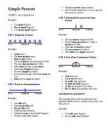
Simple Present · · New York is a small city. It is not important that this fact is untrue. [VERB] + s/es in third person USE 3 Scheduled Events in the Near Examples: Future · You speak English. · Do you speak English? · You do not speak English. USE 1 Repeated Actions Examples: · The train leaves tonight at 6 PM. · The bus does not arrive at 11 AM, it arrives at 11 PM. · When do we board the plane?
spend a month every summer until I was fourteen. That was the year I finally put my foot down; these past three summers, my dad, Charlie, vacationed with me in California for two weeks instead. It was to Forks that I now exiled myself-- an action that I took with great horror. I detested Forks. I loved Phoenix. I loved the sun and the blistering heat. I loved the vigorous, sprawling city. "Bella," my mom said to me -- the last of a thousand times -- before I got on the plane. "You don't have to do this." My mom looks like me, except with short hair and laugh lines. I felt a spasm of panic as I stared at her wide, childlike eyes. How could I leave my loving, erratic, harebrained mother to fend for herself? Of course she had Phil now, so the bills would probably get paid, there would be food in the refrigerator, gas in her car, and someone to call when she got lost, but still... "I want to go," I lied
4 1 has/had just arrived 1 1 had been having hits since 1992 5 It looks as if one of them is asleep. 2 was she doing 2 had been writing songs since 1998 6 It's clear that the girl in the front 3 worked/was working 3 had been working as a DJ for six desk isn't interested. 4 travelled years 5 has she changed 4 had been studying psychology for Transcript 6 went five years
.. 3. Dear Sirs, I am writing to complain about the poor quality of the items which I received from your company. I have no other alternative but to cancel the order which 1 placed earlier this week ... 4. ... thus, I recommend that you accept this advice on the matter. I am pure that the suggestion offered is the best solution. Please let me know if this was helpful. Yours sincerely, Lee Jones 5. ... I would appreciate a reply at your earliest convenience. I look forward to meeting you to discuss employment opportunities. Yours faithfully, Nicole Porter Paragraph Plan for Letters · salutation · Paragraph 1 reasons for writing · Paragraphs 2, 3 development · Final paragraph closing remarks · Name · Letters are divided into two categories, formal and informal. There are various types of formal and informal letters . · It is important to think about the person who you are writing to before you begin
2 past simple 5 wide-eyed 3 1 set 7 on 3 past continuous 6 fair-skinned 2 tells 8 on 4 future in the past 3 made 9 for 5 past perfect 3 1 well-behaved 6 used to 2 far-reaching 4 during / in 10 that 3 strange-sounding 5 who 11 only / just 2 a 2 b 6 c 4 d 1 e 3 f 5 4 eye-catching 6 over 12 why 3 1 been seeing 5 opening 4 1 Because the planes they were 2 have gone
an example of at mealtime, Oliver thought he would do just about anything to leave the workhouse. However, when a chimneysweep, Mr. Gamfield, came to get the money offered and Oliver the boy quickly changed his mind. The board assessing Mr. Gamfield said that the State would only pay three pounds and ten shillings instead of the five originally offered and Mr. Gamfield accepted. Mr. Bumble cleaned Oliver up, and brought him before the magistrates. As the magistrates were signing the contracts of Oliver's indenture, they realized that Oliver was petrified of going with the evil looking Mr. Gamfield. Because of this, they ordered Oliver back to the workhouse from which he came with orders to Mr. Bumble to treat him well. Chapter 4: The board decides that the best thing to do with Oliver is send him out to sea as a cabin boy.
FROM FIREWORKS TO THE MOON At first glance you might think that there couldn't possibly be anything common between a 13 th century festival in China and the Apollo 11 moon landing in 1969. However, there is a link and that is that they both relied on the use of rockets. The Chinese first developed rockets by filling bamboo tubes with an explosive made from saltpetre, charcoal, and sulphur. The sealed tubes would be thrown onto fires during celebrations because it was thought that the loud explosions would protect them. It was not long before the ancient Chinese realised the military potential of these devices and primitive rockets were used to repel a Mongol invasion in 1232 AD. Word of these new amazing weapons quickly spread around the world and soon rockets were being used in military operations in North Africa and Europe. During the 15 th and 16th centuries they were widely used in naval battles to set fire on enemy ships
Lamb to the Slaughter by Roald Dahl (1916-1990) The room was warm and clean, the curtains drawn, the two table lamps alight - hers and the one by the empty chair opposite. On the sideboard behind her, two tall glasses, soda water, whiskey. Fresh ice cubes in the Thermos bucket. Mary Maloney was waiting for her husband to come him (correction: home) from work. Now and again she would glance up at the clock, but without anxiety, merely to please herself with the thought that each minute gone by made it nearer the time when he would come. There was a slow smiling air about her, and about everything she did. The drop of a head as she bent over her sewing was curiously tranquil. Her skin - for this was her sixth month with child - had acquired a wonderful translucent quality, the mouth was soft, and the eyes, with their new placid look, seemed
Age 15 is legally a "young person" not a "child". Age 16 is a school leaving age. They can leave home, drive a moped, marry with "parents' consent" buy beer. Age 17 can drive a car. Age 18 can vote, get married, drink in pubs. Education is a very important part in the life of British youth. One can't become an independent person without it. When time comes to enter a college a young Englishman chooses one far away from home. It is a necessary part of becoming adult. During the last 30 years there were a lot of different trends in youth movements. All of them were characterized by their own philosophy, way of life, style of dressing. Each tendency was born by the influence of economic and political changes in the society. Those trends are known as the "hippies" the "punks" the "rockers". But certainly there are different traditional youth organizations in Great Britain. Among them -- the Scout Association, the Girl Guides Association, the National Union of
Jonathan Dekel-Chen lectures, Jews in the USSR, 1917-2000 1937 census didn't get published. 1939, pretty accurate for Js. 3.1 mill Js in pre- Molotov-Ribbentrop area. 1939, 2.2 mill. Js not shy about declaring Jewishness. Inherits 1.3 mill in Poland. Similar # annexed by Germ. 250,000 in Lithuania. 330,000 Bessarabia. Back to pre-1917 #s of Sov Jewry. 5 ½ mill of pre-war levels. Pre-mature deaths during famine of '21-'22, '31-'33, 7 years of war, emigration up to 1924 (vast majority to West, 3rd and 4th aliyahs). J pop growth still significant, high birth rates, but pop static. Grows more in SU than anywhere else few leaving, pop growth significant. Vast majority in W borderlands. Very few emigrate during year and a half from annexed areas. Germans occupied Leningrad-Moscow-Stalingrad, all and more of former Pale. 1939, started evacuating. Stalin thought 43-44, war
Some of the things you will learn in THE CODEBREAKERS • How secret Japanese messages were decoded in Washington hours before Pearl Harbor. • How German codebreakers helped usher in the Russian Revolution. • How John F. Kennedy escaped capture in the Pacific because the Japanese failed to solve a simple cipher. • How codebreaking determined a presidential election, convicted an underworld syndicate head, won the battle of Midway, led to cruel Allied defeats in North Africa, and broke up a vast Nazi spy ring. • How one American became the world's most famous codebreaker, and another became the world's greatest.
about the importance of love and family. You are my mainstay and my greatest inspiration. ccc_tracy_fm_i-xviii.qxd 7/7/03 3:22 PM Page vi ccc_tracy_fm_i-xviii.qxd 7/7/03 3:22 PM Page vii Foreword If you are ready to leverage yourself to greatness and achieve giant results, you have the right road map in your hands.You have before you the DNA of your future. All you need to create a wonderful fu- ture for yourself is to read this book, decide how you are going to apply it to your own life, write out a plan, and then go forth with en- thusiasm and make it happen. I have a confession to make. I am one of Brian’s raving fans. I have studied him, his brilliant work, and the extraordinary results he has achieved
kui sul pole midagi selle vastu - If you don't mind tänan teid lahkuse eest - thank you very much for your kindness väga maitsev lihasalat - very delicious meat salad ma võtan sedasama - I'll take the same müügiosakonnas - at the sales department 16 mind peeti kinni - I was detained ma tean, kus mis asub - I know my whereabouts umbes kolveerand üheksa - at about to quater to nine väga informatiivne - most informative igapäevane rutiinne töö - day-to-day routine work veerand tundi on vaja - a quarter of an hour is needed muudatustest teadma saama - to learn about some changes kas saite aru? - got it? sekretariaat - the general secretarial office ma ootan, et sa trükid nad kohe välja - I expect you to type them out immediately saada nad kohe ära - send them off as soon as possible sinu ülesandeks on määrata ametlikke kohtumisi - you task is to make appointments kui ma olen kohal - If I'm in konsulteeri minuga - consult me first
.........................................................................130 Allowing the Diminishment of the Ego......................................................130 As Without, So Within................................................................................132 Chapter Eight The Discovery of Inner Space - 135 Object Consciousness and Space Consciousness.......................................137 Falling Below and Rising Above Thought.................................................138 Television...................................................................................................139 Recognizing Inner Space...........................................................................141 Can You Hear the Mountain Stream? .......................................................143 Right Action..............................................................................................144
 annaabi.ee