Leidsid 33 sarnast õppematerjali, mis on seotud failiga "Direct and indirect speech revs". Need materjalid aitavad sul teemat sügavamalt mõista.
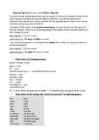
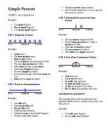
asked, direct, night, indirect, toldere, says, father, exam, tonight, before, present, perfect, simple, cont, come, indra, dessy, anymore, work, friend, changes, following, there, statement, teacher, could, tomorrow, today, continuous, reported, going, visit, angry, tense, cindy, seen, film, sport, command, open, siska, piece, paper, call, leave, aloneWe can report people's words by using direct speech or direct speech reported speech. speech `I'm tired!', Helen said. Helen said (that) she was tired. The main verb of the sentence is usually past ( Tom said that... / I told her that...) and the rest of the sentence is usually past too. Sequence of tenses if the verb in the main sentence is in the past tense the other verbs are usually in one of the past tense too. Present Simple Past Simple I'm a teacher. He said (that) he was a teacher Present Progressive Past Progressive I'm having lunch with my He said (that) he was having parents. lunch with his parents.
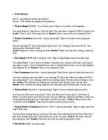
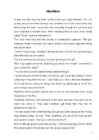
Reported Speech (in other words Indirect Speech) If we report what another person has said, we usually do not use the speaker's exact words (direct speech), but reported (indirect) speech. Therefore, you need to learn how to transform direct speech into reported speech. We use reported speech when we are saying what other people say, think or believe. - Example: If this verb is in the present tense (says), it's easy. We just put 'she says' and then the sentence. When we are reporting things in the present, future or present perfect we don't change the tense. : direct speech: "I like ice cream" reported speech: She says she likes ice cream - But, if the reporting verb is in the past tense (said), then usually we change the tenses in
minutes. minutes. had to must He said that all tickets had to be bought in All tickets must be bought in advance. advance. shall should What shall we do about it? He asked what we should do about it. may might May I smoke? He asked if he might smoke. Things are slightly more complicated with imperatives. tell + infinitive positive imperative He told me to shut up. Shut up! tell + not + infinitive
n e k õ n e T d C E H a u R C K D E I IN PE S v i i rek aa S n e U m St H s iu 12 lva naa E üm G 3 Kaudne kõne Kõneleja sõnu saab edasi anda otseselt ja kaudselt.Otsene kõne kordab kõneleja sõnu täpselt Näiteks: She says, ,,I am a student ." Kaudne kõne annab kõneleja sõnu edasi ümberjutustatult. Näiteks: She says that she is a student. Otsene kõne Otsene kõne antakse kaudses kõned edasi sihitislausega, kusjuures toimuvad mõningad muudatused , näiteks muutuvad vastavalt lause mõttele asesõnad ja mõnel juhul ka verbi pöördevormid. Saatelause Otsene kõne Reporting clause Direct speech He says, ,,I like your
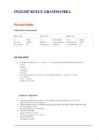
We/you/they go We/you/they do not go Do we/you/they go? NB! ERANDID! · Verbidele, mis lõpevad ss, h, ch, tch, x või oga, lisatakse ainsuse kolmdandas pöördes es. he does he goes he misses he watches he mixes · Verbid, mis lõpevad yga, mille ees on konsonant, muudavad y iks enne es lisamist. fly he flies carry he carries Võrdle: say he says Lihtolevik väljendab: · Antud momendil toimuvat tegevust, mis ei väljenda kestvat aega, näiteks see, hear, know. I see that man who you are pointing at. · Üldist, kogu aeg toimuvat või korduvat tegevust, pole oluline, kas tegevus toimub rääkimise hetkel. Teachers teach in schools. He usually goes to gym on Monday. · Tegevust mingil ajal. I go to school at 8 o´clock.
1. Active/Passive Active - the professor teaches the students. Passive - The students are taught by the professor 2. Present Simple [VERB] + s/es in third person. Tegevus on korduv või tavapärane. You speak English. I play tennis. Cats like milk. The train leaves tonight at 6 PM. I am here now. Active= Once a week, Tom cleans the car. Passive= Once a week, the car is cleaned by Tom. 3. Present Continuous [am/is/are + present participle]. Tegevus toimub/ei toimu praegusel hetkel. You are watching TV. You are learning English now. I am studying to become a doctor. I am meeting some friends after work. Active= Right now, Tom is writing the letter. Passive= Right now, the letter is being written by Tom. 4. Past Simple [VERB+ed] or irregular verbs
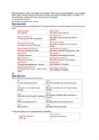
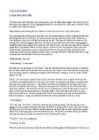
Kaudne kõne 1. Saatelause olevikus (he says that ...) Kõneleja juttu saab edasi anda otseselt (direct) ja kaudselt (reported). Otsene kõne: He says: "I am a man" Kaudne kõne: He says (that) he is a man. Kaudsel kõnel võivad muutuda asesõnad ja ka verbi pöördevormid. She tells me: ,,I like your dress." She tells me (that) she likes my dress. 2. Saatelause minevikus (he said that ...) Kui saatelause on minevikus, siis võivad samuti muutuda asesõnad ja verbi pöördevormid. Pane tähele! Oleviku vorm otseses kõnes muutub mineviku vormiks kaudses kõnes. am/is --- was are -- were do/does --- did
· action that is still going on now, up to now · action that stopped recently · finished action that has an influence on the present action that has taken place once, never or several times before the moment of speaking Present Perfect A: He has been · putting emphasis on the all day, Continuous speaking. course or duration (not the since 1993, N: He has not been how long?, result) speaking. the whole
past perfect in advance. bought in advance. past simple He said he had bought a I bought a new car. new car. shall should past perfect continuous What shall we do about He asked what we should do past continuous He said it had been it? about it. It was raining earlier. raining earlier. past perfect past perfect may might The play had started NO CHANGE POSSIBLE May I smoke? He asked if he might smoke. when I arrived. past perfect continuous
No, I don't like the Spice Girls. Marks: /10 Words, words, words 4 Complete these sentences using the correct form of the words below. There is one extra word which you do not need to use. aggressive nervous dull funny easy-going ambitious expensive usual experienced successful practical 1 She told a very ________________________ joke and everyone laughed. 2 She's a very ________________________ person. She will do anything to become famous. 3 They didn't give him the job because he was ________________________. He had never done anything like that before. 4 This is a very ________________________ animal. I've never seen one like it before. 5 I get very ________________________ before an exam and when I go to the dentist.
1271 Avenue of the Americas, New York, NY 10020 Visit our Web site at www.lb-teens.com First Edition: September 2005 The characters and events portrayed in this book are fictitious. Any similarity to real persons, living or dead, is coincidental and not intended by the author. Library of Congress Cataloging-in-Publication Data Meyer, Stephanie, 1973-- Twilight : a novel / by Stephanie Meyer. -- 1st ed. p. cm. Summary: When seventeen-year-old Bella leaves Phoenix to live with her father in Forks, Washington, she meets an exquisitely handsome boy at school for whom she feels an overwhelming attraction and who she comes to realize is not wholly human. ISBN 0-316-16017-2 [1. Vampires -- Fiction. 2. High schools -- Fiction. 3. Schools -- Fiction. 4. Washington (State) -- Fiction.] I. Title. PZ7.M57188Tw2005 [Fic] --dc22 2004024730 Printed in the United States of America For my big sister, Emily, without whose enthusiasm this story might still be unfinished.
I look forward to seeing you. (NOT I look forward to see you.) We're looking forward to going on holiday. (NOT ... to go on holiday.) 17. Information is an uncountable noun. Can you give me some information? (NOT Can you give me an information?) I got a lot of information from the Internet. (NOT I got a lot of informations from the Internet.) 18. Use ing forms after prepositions. I drove there without stopping. (NOT I drove there without to stop.) Wash your hands before eating. (NOT Wash your hands before to eat.) 19. Use this, not that, for things that are close. Come here and look at this paper. (NOT Come here and look at that paper.) How long have you been in this country? (NOT How long have you been in that country?) 20. Use a plural noun after one and a half. We waited one and a half hours. (NOT We waited one and a half hour.) A mile is about one and a half kilometres. (NOT A mile is about one and a half kilometre.) 21
Kinds of Adjectives 58 Comparison of Adjectives 65 13 Sentences 139 What is a Sentence? 139 6 Determiners 71 Kinds of Sentences 140 The Imperative 141 The Articles 71 The Subject and the Object 143 Demonstrative Determiners 73 Direct and Indirect Objects 144 Interrogative Determiners 74 Positive and Negative Sentences146 Possessive Determiners 75 Questions 147 7 Verbs and Tenses 79 14 Punctuation 150 The Simple Present Tense 80 Period 150 Am, Is and Are 83 Comma 151 The Present Progressive Tense 89 Exclamation Point 152
2) Nicky........to San Francisco when the accident happened. A flies B has flown C was flying D has been flying 3) Why don`t you let her........her story? A finish B to finish C finishing D have finished 4) Tim........in a cafe at present, but he has already applied for a new job A work B have worked C is working D worked 5) My father........already worked for two years before he went to University. A was B had C has D is 3. Change the order of the words to make a correct sentence. ( 5 points ) 1) I wonder / can / you / me / help / if 2) a / my / to / written / I / mother / already / letter / long / have 3) the / watch / often / they / TV / in / evening 4) the / gave / my / for / this / umbrella / is / that / Sally / me / my / birthday
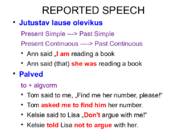
REPORTED SPEECH Jutustav lause olevikus Present Simple ---> Past Simple Present Continuous ----> Past Continuous Ann said ,,I am reading a book Ann said (that) she was reading a book Palved to + algvorm Tom said to me, ,,Find me her number, please!" Tom asked me to find him her number. Kelsie said to Lisa ,,Don't argue with me!" Kelsie told Lisa not to argue with her. Jutustav lause minevikus Past Simple --> Past Perfect (had + 3.pv) Present Perfect --> Past Perfect Past Continuous ---> had + been + ing Lynn said ,,I went to the cinema last night." Lynn said (that) she had gone to the cinema the night before. Ed said ,,I have finished the exercise." Ed said (that) he had finished the exercise. Kerri said ,,We were waiting for the bus."
Present Progressive Past Progressive Present Perfect Past Perfect Present Perfect Progressive Past Perfect Progressive Past Simple Past Perfect Past Progressive Past Perfect Progressive Past Perfect jääb muutmata Past Perfect Progressive jääb muutmata Future Simple Future in the Past 3. Kui saatelause verb on minevikus, asendatakse kaudses kõnes mõned lähedust väljendavad sõnad kaugust väljendavate sõnadega: This that These those Here there Now then Ago before Today that day Tomorrow the next day Yesterday the day before Last night the previous night Next week the following week Aegade nihet ei toimu kui 1. Lause väljendab üldtuntud tõde He said, ´The sun is 92 million miles away.´ He said that the sun is 92 million miles away. Tingimuslausete 2. ja 3. tüübis 2. Kui Past Simple otsese kõnes tähistab tegevust, mis toimus teatud momendil
UNIT 4 4.1 Like and as Kasutame like, et öelda, et asjad on sarnased. He looks like his father. Ametlikumas vormis kasutame as, et öelda, et asjad on sarnased (esineb enne alust) The exam starts at 9.30 as I have already said. Kasutame as, et rääkida ametitest ja töödest, mida inimesed teevad She works as a teacher in a primary school. Kasutame as, kui me viitame informatsioonile, mida nii rääkija kui kuulaja juba teavad As you know, I'm starting a new job next month. 4.2 Narrative tenses 4.2a Lihtminevik Kasutame: et rääkida sündmustest minevikus, mis on nüüdseks lõppenud I went to the zoo last weekend.
Näitelaused 1.Mother said to Jane, ,,Take care of your money". Mother warned Jane to take care of her money. 2.The teacher said to the students, ,,It's a good idea to learn these rules by heart." The teacher advised the students to learn these rules by heart. 3.Father said to uncle John, ,,Why don't you have your car servied?" Father advised uncle John to have his car servised. 4.Tom asked his teacher, ,,Is it right that water boils at 100 degrees?" Tom asked his teacher if water boils at 100 degrees. 5.Father said to Dan, ,,Don't put your hands in your pockets." Father warned Dan not to put his hands in his pockets. 6.Tim said to his neighbour, ,,I'm sorry for the noise last night.It won't happen again." Tim apologised to his neighbour for the noise previous night.He promised it wouldn't happen again. 7.Mother said to Bob, ,,Open the door for me, please." Mother asked Bob to open the door for her. 8
BARED TO YOU wouldn't be what it is without you, Hilary. Thank you so much! To Martha Trachtenberg, copy editor extraordinaire. This book is an important one for me and she treated it that way. Thank you, Martha! To Victoria Colotta, for all her hard work on the interior design and typesetting. She took my plain text and made it gorgeous. Thank you, Victoria! To Tera Kleinfelter, who read the first half of Bared to You and told me she loved it. Thank you, Tera! To all girls who were at Cross Creek at some point in your adolescence: May all your dreams come true. You deserve it. And to Alistair and Jessica, from Seven Years to Sin , who inspired me to write Gideon and Eva's story. I'm so glad the inspiration struck twice! 1 "We should head to a bar and celebrate." I wasn't surprised by my roommate's emphatic pronouncement
................................................................................................... 9 Artikkel the pärisnimedega...........................................................................................10 Artikkel the geograafiliste nimedega............................................................................10 Artikkel a, an.................................................................................................................10 Otsekõne Direct speech..............................................................................................11 Kaudkõne Reported speech........................................................................................11 Kaudküsimused Reported questions..........................................................................12 Passiiv Passive voice .................................................................................................12
Artiklid ja eessõnad 7 Eessõnad 7 Kesksõnad 8 Prefiksid ehk eesliited 8 Sufiksid ehk järelliited 9 Artikkel the pärisnimedega 10 Artikkel the geograafiliste nimedega 10 Artikkel a, an 10 Muu 11 Otsekõne Direct speech 11 Kaudkõne Reported speech 11 Kaudküsimused Reported questions 12 Passiiv Passive voice 12 Loendatavad nimisõnad Countable nouns 12 Loendamatud nimisõnad Uncountable nouns. 13 Mitmuse moodustamine 13 Siduvad asesõnad 14 Omastav kääne 14
I usually say the opposite of what I mean, in order to seem funny. Isn't that rather clever? I have to admit that I am a perceptive person because I understand people quite well. I have read many books and I work as a clergyman, I think that this explains why am I good at understanding people. Also, I am definitely not a shy person. I tend to be rather honest, often to the point of being blunt, and express my opinions on different things and criticise them. As I said before, there are not many things to tell about me, so I will have to finish because I've got nothing to say anymore. Digested read No one who had ever seen Catherine Morland in her infancy, would have supposed her born to be a heroine. Her situation in life, the character of her mother and father, her own person and disposition, were all equally against her. Catherine had many interests, but she was never interested enough to be accomplished at anything. She was a cheerful child with a good temper
6 Uwe´s grandparents live in Germany. They speak German. 7 Michael comes from Australia. He speaks Australian English. 8 Eve lives in Ireland. She speaks English and Irish. 3 Write the sentences in reported speech. 1 Martin said, "We´re going on a class trip tomorrow." Martin said they were going on a class trip the next day. 2 Mary said to us, "I bought a book on big cats yesterday." Mary told us she had bought a book on big cats the day before. 3 Ben said to Brian, "You can wait for me here." Ben told Brian he could wait for him there. 4 Dad said, "I´ll finish work early today." Dad said he would finish work early that day. 5 My sister said to me, "This dress looks good on you." My sister told me that dress looked good on me. 6 Simon said, "I was in Springfield last week." Simon said he had been in Springfield the week before. 4 Complete the sentences. Use the word on the right to from a suitable noun or adjective.
5 If you don't need the gloves immediately, it's ... to wait until the sales start. 6 It's wise to remember the birthdays of your family and friends. 7 Gina's mum was puzzled to hear about the broken window. 8 I was ... to have a matchbox on me, so we could light a candle. 6. Translate. 1 Ma asun teele. Kohtumiseni homme! I'm off, see you at home! 2 Võta aega ja mõtle see läbi enne, kui vastad. Take your time and thing it through, before you answear. 3 Mis lahti? Kas te kaklesite? What's up? Fighted you? 4 Mul tuli hea mõte. Miks me ei võiks üllatuspidu teha? I hit upon an idea, why couldn't we do the sürpriise party? 5 Eddie ja Lara vahel tekkis pinge. The tention was building up between Eddie and Laura. 6 Et endid lõbustada, hakkasime naljalugusid rääkima. To cheer ourselves up, we tõld the funny stories. 7 Carrie silmad olid täis pisaraid kui ta luges oma venna kirja.
If-clause present (past) simple Main clause present (past) simple Sometimes sentences with if express certainty rather than possibility. The zero conditional is used to talk about sth. that is always true (such as a scientific fact), or that was always true in the past. In this type of conditional we can use when instead of if. E.g., If/When you mix blue and red, you get purple. If/When you don't water flowers, they die. (present simple in both parts of the sentence) If/When I asked her to come with us, she always said no. (past simple in both parts of the sentence) 1 First conditional If-clause present simple; Main clause future tense (or: can, must, may, etc., + bare infinitive) Used to talk about the consequences of a possible action (a real or very probable situation in the present or future). E.g., If I write my essay this afternoon, I will have time to go out tonight. (or: I might go out tonight).
12. A man was fleeing .................. the ice. 13. He became obsessed .................. theories about human life . 14. All green plants take .................. carbon dioxide and give off oxygen. 15. ..................the same time 16. The puppy is .................. the trash can. 17. .................. midnight 18. We are going .................. holiday next week. 19. There is a bridge .................. the river. 20. Would you like to go .................. the cinema tonight? 21. The woman's bag is .................. the table. 22. The woman is sitting .................. a table. 23. Some kinds .................. plants 24.To be caused .................. something 25.To last .................. years 26. .................. the stairs 27.I can depend .................. my best friend Paul. 28. Stop! Wait .................. me 29.The letter was written ..................my pen friend in Scotland. 30. Benjamin is really interested ..................history. 31
Maturita Solutions Upper-Intermediate Workbook Key 1G Magazine article page 10 1 1 Introduction: C 2 Background information: A 3 Main events: D 4 Conclusion: B 2 1 One afternoon, at the time, when I finally reached safety, after that day 2 and fast! The rock was now more than a kilometre out to sea! After that day, I always checked the times of the tides before I went swimming! I'd never been so exhausted in my life! 3 exhausted, fantastic 4 Only when I woke up ... 3 1 Had the distance been twenty metres further, I wouldn't have made it. 2 Never in my life had I been so exhausted. 3 So tired was I that I fell asleep. 45 Students' own answers Photocopiable © Oxford University Press 2 Maturita Solutions Upper-Intermediate Workbook Key Unit 2 4
· I play tennis. · She does not play tennis. USE 4 Now (Non-Continuous Verbs) · Does he play tennis? · The train leaves every morning at 8 AM. · The train does not leave at 9 AM. · When does the train usually leave? · She always forgets her purse. · He never forgets his wallet. Examples: · Every twelve months, the Earth circles the Sun. · I am here now. · Does the Sun circle the Earth? · She is not here now. · He needs help right now. USE 2 Facts or Generalizations · He does not need help now. · He has his passport in his hand. · Do you have your passport with you?
"My dear Mr. Bennet," said his lady to him one day, "have you heard that Netherfield Park is let at last?" Mr. Bennet replied that he had not. "But it is," returned she; "for Mrs. Long has just been here, and she told me all about it." Mr. Bennet made no answer. "Do you not want to know who has taken it?" cried his wife impatiently. "You want to tell me, and I have no objection to hearing it." This was invitation enough. "Why, my dear, you must know, Mrs. Long says that Netherfield is taken by a young man of large fortune from the north of England; that he came down on Monday in a chaise and four to see the place, and was so much delighted with it, that he agreed with Mr. Morris immediately; that he is to take possession before Michaelmas, and some of his servants are to be in the house by the end of next week." "What is his name?" "Bingley." "Is he married or single?" "Oh! Single, my dear, to be sure
collecting money from the rich, I can't help you! This is the end, Heartless! Go to the dorms, pack your things and leave my orphanage at once! You are no longer welcome here!" Heartless tried to protest, but the man hit her, so there she was now lying helplessly on the floor. Suddenly, someone else knocked on the door and two other girls and an older boy came in. They saw Heartless, yet knew that they had no allowance to help her. The man asked them what had they brought and after taking all the money they showed away, he said, "Well, Heartless, you should've done as well as Loveless' s team. Then you'd still be one of us!" But the little girl grinned and said proudly, "I prefer keeping my honor rather than stealing from the old and sick like all your puppets do!" 1 The man got irritated and shouted her out of his house. The girl turned and
the thought that each minute gone by made it nearer the time when he would come. There was a slow smiling air about her, and about everything she did. The drop of a head as she bent over her sewing was curiously tranquil. Her skin - for this was her sixth month with child - had acquired a wonderful translucent quality, the mouth was soft, and the eyes, with their new placid look, seemed larger darker than before. When the clock said ten minutes to five, she began to listen, and a few moments later, punctually as always, she heard the tires on the gravel outside, and the car door slamming, the footsteps passing the window, the key turning in the lock. She laid aside her sewing, stood up, and went forward to kiss him as he came in. "Hullo darling," she said. "Hullo darling," he answered. She took his coat and hung it in the closer. Then she walked over and made the drinks, a strongish
an example of at mealtime, Oliver thought he would do just about anything to leave the workhouse. However, when a chimneysweep, Mr. Gamfield, came to get the money offered and Oliver the boy quickly changed his mind. The board assessing Mr. Gamfield said that the State would only pay three pounds and ten shillings instead of the five originally offered and Mr. Gamfield accepted. Mr. Bumble cleaned Oliver up, and brought him before the magistrates. As the magistrates were signing the contracts of Oliver's indenture, they realized that Oliver was petrified of going with the evil looking Mr. Gamfield. Because of this, they ordered Oliver back to the workhouse from which he came with orders to Mr. Bumble to treat him well. Chapter 4: The board decides that the best thing to do with Oliver is send him out to sea as a cabin boy.
I leave your house, I tell you, quite disgusted; You do the opposite of my instructions; You've no respect for anything; each one Must have his say; it's perfect pandemonium. DORINE If . . . MADAME PERNELLE You're a servant wench, my girl, and much Too full of gab, and too impertinent And free with your advice on all occasions. DAMIS But . . . MADAME PERNELLE You're a fool, my boy--f, o, o, l Just spells your name. Let grandma tell you that I've said a hundred times to my poor son, Your father, that you'd never come to good Or give him anything but plague and torment. MARIANE I think . . . MADAME PERNELLE O dearie me, his little sister! You're all demureness, butter wouldn't melt In your mouth, one would think to look at you. Still waters, though, they say . . . you know the proverb; And I don't like your doings on the sly. ELMIRE But, mother . . . MADAME PERNELLE Daughter, by your leave, your conduct In everything is altogether wrong; You ought to set a good example for 'em;
 annaabi.ee