Leidsid 33 sarnast õppematerjali, mis on seotud failiga "Brazil's national drinks". Need materjalid aitavad sul teemat sügavamalt mõista.
brazil, sugar, coffee, alcohol, country, outside, drink, beverage, while, juice, other, crystal, year, drinks, lime, almost, popular, available, years, glass, known, figures, billion, between, gives, meaning, though, production, both, products, results, bars, throughout, once, widely, recent, part, first, rate, brands, association, official, easy, littleJAMAICA The english speaking country · Jamaica is an island country situated in the Caribbean Sea, consisting of the third-largest island of the Greater Antilles (*The Greater Antilles is a grouping of the larger islands in the Caribbean Sea). · The flag consists of a gold saltire, which divides the flag into four sections: two of them green (top and bottom) and two black (hoist and fly). · black representing the strength and creativity of the people which has allowed them to overcome the odds, gold for the wealth of the country and the golden
predicted to increase, more fuel needs to be dedicated to transport (Karp, 2011. There are many reasons why biofuels are necessary, but at the same time, they are controversial for a number of reasons. 2.2. Biofuels' feedstock and future projections There are mainly two types of liquid biofuels, which have significantly grown in the last decade: that is bioethanol and biodiesel. Bioethanol is based on sugar, extracted from sugarcane and beet, or starch, which mainly comes from maize, wheat or cassava. Starch- based crops must be first converted into sugars in the saccarification process, which requires substantial volumes of enzymes to turn starch into sugars (Soetaert, W. 2008). The starchy products represent only a small percentage of the total plant mass. Other plants' building blocks like cellulose and lignin are currently not being used to make biofuels as there is not a
· During the Gupta empire influenced by diet buduism and jainism. Many religious people were vegetarians. Most of the people consumed the chickens, sheep and goat meat. · Muslims also put emphasis on the development of food. Indians brought to the diet of dried fruit and flat bread. India introduced the dietary habits of the Portuguese and Chinese. · Indian diet is mixed with a variety of cultures. Etiquette: · Traditionally, meals were eaten while seated either on the floor or on very low stools or cushions. · Food is most often eaten without cutlery, instead using the right hand. Among the middle class throughout India, spoons and forks are commonplace. · Hot food is served on banana leaves, the leaves add aroma and taste to the food. Eating habits: · The breaksfast is most importing. They generally prefer to drink tea or coffee with the first meal of the day. North Indian people prefer curd
and the Dominican Republic are situated. Its indigenous Arawakan-speaking Taíno inhabitants named the island Xaymaca, meaning either the "Land of Springs," or the "Land of Wood and Water". Formerly a Spanish possession known as Santiago, it later became the British West Indies Crown colony of Jamaica. It is the third most populous anglophone country in the Americas, after the United States and Canada. I chosed Jamica because there are many things what I like in this country. Mostly I like Jamaica´s music, culture and climate. Geography Jamaica is the third largest island in the Caribbean, and the most populous English speaking island there. The island of Jamaica is home to the Blue Mountains inland and is surrounded by a narrow coastal plain. Most major towns and both cities are located on the coast. Chief towns include the capital city Kingston, Portmore, Spanish Town, Mandeville, Ocho Rios, Port Antonio, and the city of Montego Bay. History
communal land in South Africa restricted and discouraged traditional agriculture and wild harvesting, and reduced the extent of land available to black people. Decline of indigenous cookery Urbanization from the nineteenth century, coupled with close control over agricultural production, led black South Africans to rely more and more on comparatively expensive, industrially-processed foodstuffs like wheat flour, white rice, mealie (maize) meal and sugar. Often these foods were imported or processed by white wholesalers, mills and factories. The consequence was to drastically restrict the range of ingredients and cooking styles used by indigenous cooks. On the other hand, some imported food plants (maize, tomatoes) have expanded the dietary range of indigenous cooks. Of these maize is the most significant - it has been integrated to such an extent into the traditional diet that it is often assumed to be an indigenous plant.
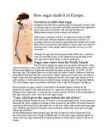
How sugar made it to Europe. Sweetness in older than sugar. Europeans and others have respected sugar for thousands of years. Prior to knowing sugar, our ancestors used honey and other sweet ingredients which were used as sweeteners. We know all that thanks to Mediterranean antique culture writings and bareljeefs . Oldest known sweetener is honey. In Arãna caves there are 12000 years old murals where are depicted woman honey collectors. As nowadays, womans used honey to make food, heal wounds and to make
Cottage pie contains meat and fisherman's pie contains fish and other seafood. PUDDING: Lot of different puddings such as bread and butter pudding, Eccles cake, Eton mess, rhubarb crumble, apple pie, treacle tart, summer pudding, Bakewell tart, Christmas pudding and trifle. These dishes are simple and traditional. Puddings are often served with custard(English sauce), it is a cooked mixture of milk and egg yolk , also it includes sugar and vanilla. HOT DRINK S: Tea is very popular in England, and they usually drink black tea with milk. Strong tea served with lots of milk and often two teaspoons of sugar. Coffee is a less popular than in continental Europe, but is still drunk by many, often with milk. Also the hot chocolate are fairly popular. ALCOHOL: Beer was the first alcoholic drink to be produced in England. Any kind of beer may accompany a meal in pub.
COCA-COLA Have you ever come home from school, practice or whatever and felt soooo thirsty? So you walk towards the fridge and hope there's something cold to drink. You open the door of the fridge and start to smile, because you have seen a bottle of COCA-COLA!! Coca- Cola is a carbonated soft drink sold in stores, restaurants and vending machines throughout the world. It is produced by The Coca-Cola Company and is often known as Coke. The Coca-Cola Company has introduced other cola drinks under the Coke brand name. The most famous of these are Coca-Cola Zero, Coca- Cola Light and Coca-Cola Cherry. Based on Interbrand's best global brand 2011, Coca-Cola was the world's most valuable brand. It was 1886, and in New York Harbour, workers were constructing the Statue of Liberty. But
are capable of inactivating the parasites of animals and the various pathogens. Nowadays Waste management business Sterecycle owns patented technologies that are capable of recycling and recovering up to 80 per cent of waste typically produced by a household. Rarbach cited oil major Shell's tie up with Cosan as being one of the most notable strategic partnerships that has taken place last year. The $12bn joint venture will see the pair produce and sell sugar, energy and ethanol from sugarcane, and distribute fuels for transportation and industry from the companies' integrated distribution and retail networks in Brazil. Through the deal, Shell strengthened its whole business in biofuel and bioethanol. Sterecycle was debating whether to list in Canada or in its domestic market on the AIM exchange in London. French chemical company Rhodia's subsidiary Rhodia Energy Services has
Burger King Burger King (NYSE: BKC), often abbreviated to BK, is a global chain of hamburger fast food restaurants. The first restaurant was opened in Miami, Florida in 1954 by James McLamore and David Edgerton, and has since used several variations of franchising to expand its operations. Burger King Holdings Corporation is the parent company of Burger King; in the United States it operates under the Burger King Brands title while internationally it operates under the Burger King Corporation banner. It is a publicly traded company with investment firms of TPG Capital, L.P., Bain Capital, and Goldman Sachs each owning about 25% of the company. At the end of its fiscal year 2007, Burger King reported that there are more than 11,300 outlets in 69 countries; 66% are in the United States and 90% are privately owned and operated. The company has more than 37,000 employees serving approximately 11.4 million customers daily
used and then compare her energy consumption to how much she really needed. To do this, they figured out how much energy Jules was using for entertainment, light, heating and cooling, cleaning, preparing food, transportation, and communication devices. They discovered that the amount of energy used for any purpose could be measured in different ways. Light bulbs are measured in watts. Air conditioners and hot water heaters are measured in BTUs, while energy used by cars is measured in gallons of fuel. They used a spreadsheet to figure out how much energy they consumed for each of their activities. Each of the lights, car miles, games, and other appliances was converted to a common unit of power consumption called kilowatt-hours. The spreadsheet was used to determine how many kilowatt-hours were used during each day, each week, and each year for each energy consumption activity. The spreadsheet converted their energy consumption
I. Portugal ABOUT Photo Location of Portugal (dark green) Portugal (Portuguese: Portugal, IPA: [putua]; officially the Portuguese Republic, Portuguese: República Portuguesa) is a country located in Southwestern Europe, on the Iberian Peninsula. It is the westernmost country of mainland Europe, and is bordered by the Atlantic Ocean to the west and south and by Spain to the north and east. The Atlantic archipelagos of the Azores and Madeira are Portuguese territory as well. The country is named after its second largest city, Porto, whose Latin name was Portus Cale. SETTLEMENT
Private individuals and organizations also make cross-borders transfers. Private transfers have grown rapidly in recent decades as immigration has expanded. Many immigrants move to other countries specifically to earn higher incomes and transfer part of those incomes back to family in their native countries. A lot makes important moves currency . Different countries usually use diferent currencies. Therefore, even though prices reflect opportunity costs wihin each country, these prices will not be immediately comparable across countries. This is where Exchange rates come in. Exchange rates Translate the prices in one country into prices in other countries currencies. Example homeland (U.S) food costs 2$ but Aboroad 20¥. If we look price shanging processes then there is good exampl about Foreign demand for tequila Mexican drinkers. Tequila has been the national dring of Mexico ever since the Spanish perfected a native fermente
Guyana Guyana is officially named the Co-operative Republic of Guyana and it is in South America. Its capital is a Georgetown and presdient Bharrat Jagdeo. The population is about 738,000. Guyana is bordered to the east by Suriname, to the south and southwest by Brazil and to the west by Venezuela. It is the third smallest country on the mainland of South America. Culturally it is more associated with the Caribbean than with Latin America and is the only English speaking country in South America. Guyana is an Amerindian word meaning "Land of many waters" beacause of its rain forests dissected by numerous rivers, creeks and waterfalls, including the famous Kaieteur Falls. The country enjoys a diverse, multicultural society, high floral and faunal biodiversity, prize-winning rum, and Demerara sugar
3) Discuss the meaning and origin of the following words and phrases: Among other sources use the evidence of the Corpus of Historical American English (http://corpus.byu.edu/coha/) department store – The term was first brought to use in the 19th century. In 1877, George and Edward Butler founded a small wholesale mail-order company in Boston, which later became known as the Butler Bros. Their innovation of the “Five Cent Counter” started the epidemic of department stores all over the country. From the French department, which meant “group of people” and “departure”, English has borrowed the sense of “separate division”. Meanwhile, store originally meant “supplies or provisions for a household, camp, etc” and was related to warfare. The word as “a place where goods are kept for sale” was first recorded in 1721 in American English. Eskimo pie - Eskimo Pie was America's first chocolate covered ice cream bar and it was invented
shortened to condensate. Condensate resembles petrol in appearance and is similar in composition to some volatile light crude oils. The proportion of light hydrocarbons in the petroleum mixture varies greatly among different oil fields, ranging from as much as 97 percent by weight in the lighter oils to as little as 50 percent in the heavier oils and bitumens. The hydrocarbons in crude oil are mostly alkanes, cycloalkanes and various aromatic hydrocarbons while the other organic compounds contain nitrogen, oxygen and sulfur, and trace amounts of metals such as iron, nickel, copper and vanadium. The exact molecular composition varies widely from formation to formation but the proportion of chemical elements vary over fairly narrow limits as follows: Composition by weight Element Percent range Carbon 83 to 87% Hydrogen 10 to 14% Nitrogen 0.1 to 2% Oxygen 0.05 to 1.5% Sulfur 0.05 to 6.0%
Australia Australia is the only country in the world that covers an entire continent, yet also the smallest and the driest of all the continents. It's almost the same size as continental USA, being the sixth largest country in the world. It's also the oldest some of the rocks are more than 3,000 million years old. Australia is often called `Down Under', because it lies in the Southern Hemisphere. As a result, its seasons are the opposite of ours. Australia, Tasmania and a number of smaller islands form the Commonwealth of Australia. Because of the country's great size, the climate in Australia ranges from tropical regions of
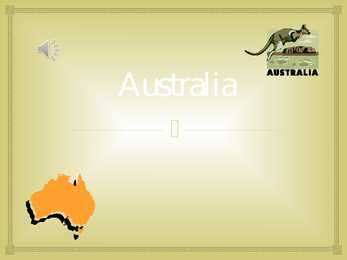
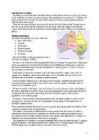
Australia Australia , officially the Commonwealth of Australia, is a country in the Southern Hemisphere comprising the mainland of the Australian continent, the island of Tasmania and numerous smaller islands in the Indian and Pacific Oceans. Australia flag Australia coat of arms. Australia is a cloudless dark blue sky, the bright sun, multikilometer beaches with snowwhite sand and ocean up to horizon.
English people say that children grow up more quickly now. Relationships within the British family are different now. Children have more freedom to make their own decisions. For example, children aged 13 may be employed part time in Great Britain. Age 15 is legally a "young person" not a "child". Age 16 is a school leaving age. They can leave home, drive a moped, marry with "parents' consent" buy beer. Age 17 can drive a car. Age 18 can vote, get married, drink in pubs. Education is a very important part in the life of British youth. One can't become an independent person without it. When time comes to enter a college a young Englishman chooses one far away from home. It is a necessary part of becoming adult. During the last 30 years there were a lot of different trends in youth movements. All of them were characterized by their own philosophy, way of life, style of dressing. Each
Wales, Germany, Ukraine and Scandinavia. In Edmonton and Calgary there are also historic Chinatowns, and Calgary has Canada's third largest Chinese community. Geographical features Alberta covers an area of 661,848 square kilometres, an area about 5% smaller than Texas or 20% larger than France. This makes it the fourth largest province after Quebec, Ontario, and British Columbia. To the south, the province borders on the 49th parallel north, separating it from the U.S. state of Montana, while on the north the 60th parallel north divides it from the Northwest Territories. To the east the 110th meridian west separates it from the province of Saskatchewan, while on the west its boundary with British Columbia follows the 120th meridian west south from the Northwest Territories at 60°N until it reaches the Continental Divide at the Rocky Mountains. The province extends 1,223 kilometres north to south and 660 kilometres east to west at its maximum width
Cities Muckanaghederdauhaulia - This is probably the longest place name in Ireland. it consists of 22 letters There is also a village in Ireland called '' Inch village'' outside the village there is a sign '' Inch 1 mile'' i couldn't find a picture of it from the internet so i created a sign myself to make it more clear, so that can be quite confusing for a foreigner The capital city , Dublin was founded by the Vikings in 841 Worth to mention The Titanic was built in Harland and Wolff yards in Belfast , which is nowadays part of the Northern Ireland , but back then in 1909 - 1912 (which is the time when Titanic was built ) it was still part of the Ireland
New York City New York City is on the east coast of the USA, in the south-eastern corner of New York State. It has a population of over seven million,the largest of any city in the country, and an area of 783 kilometres. The population of New York has contained members of many races ever since the 17th century. Nowadays about 40 per cent of its inhabitants are immigrants or have a parents who were. The city has over 20 000 hectars of parkland. One of the parks, Central Park, was designed by Frederic Law Olmsted and Calvert Vaux. Its 340 hectares contain half a million tees, several lakes, a rollerskating rink, a theatre, the Metropolitan Museum of Art and much more.
Introduction, Location Australia is a country between the Indian Ocean and the Pacific Ocean. It is the only country in the world that occupies an entire continent. The mainland covers an area of 7.7 million km² and it is about 3700 km from the most northern point to its most southern point and about 4000 km from east to west. There are also many different seas around Australia, like the Coral and the Tasman Seas in the west or the Timor and the Arafura Seas in the north, where the Indian and the Pacific Oceans meet. Because all seas and oceans near Australia are warm, surfing is a very popular hobby.
Viti Levu hosts the capital city of Suva, and is home to nearly three quarters of the population. Other important towns include Nadi (the location of the international airport), and the second city -Lautoka (the location of a large sugar mill and a seaport). The main towns on Vanua Levu are Labasa and Savusavu. Other islands and island groups include Taveuni and Kadavu (the third and fourth largest islands respectively), the Mamanuca Group (just outside Nadi) and Yasawa Group, which are popular tourist destinations, the Lomaiviti Group, outside of Suva, and the remote Lau Group. Rotuma, some 500 kilometres (310 mi) north of the archipelago, has a special administrative status in Fiji. Fiji's nearest neighbour is Tonga. The climate in Fiji is tropical and warm most of the year round. Fiji's culture is a rich mosaic of indigenous, Indian, Chinese and European traditions, comprising
In 2004 the number of passengers in Estonia grew almost 35%, considerably enhanced by new routes, including those opened by the cheap airlines . About 3.4 million tourists visit Estonia every year, the majority of them come Finland and stay for a short period -- morning (night) trip from Helsinki to Tallinn, evening (night) trip from Tallinn to Helsinki. Here they visit shops and service outlets. Tourists who come for a couple of days also go to the theatre and other places outside Tallinn. The number of tourists from Sweden and Germany is constantly growing. In 2003 Tallinn was the third- largest cruise destination at the Baltic Sea (after Copenhagen and St Petersburg), welcoming more than 200 thousand travellers from different parts of the world (USA, Great Britain, etc). Joining the European Union considerably increased the number of foreign visits in summer 2004, reputedly by 20-25% or even more. The share of diminishing shopping
water through the turbines to produce electricity on demand. In addition, reservoirs may offer recreational opportunities, such as swimming and boating. A typical hydro plant is a system with three parts: an electric plant where the electricity is produced; a dam that can be opened or closed to control water flow; and a reservoir where water can be stored. Hydroelectric power provides almost onefifth of the world's electricity. China, Canada, Brazil, the United States, and Russia were the five largest producers of hydropower in 2004. The first hydroelectric power plant was built at Niagara Falls in 1879. Negative aspects of hydropower Damming rivers may destroy or disrupt wildlife and other natural resources. Hydropower plants can cause low dissolved oxygen levels in the water, which is harmful to river habitats. Hydroelectric power plants don't work for a very long time.
Topic Canada Tallinn English College 2006 1. Introduction If you had to use two words to describe Canada, they might be large and diverse. Canada is the second largest country in the world with a territory of about 10 million square kilometers and it is bordered by three oceans: the Arctic, the Pacific and the Atlantic Oceans. The population of Canada is about 31 million people. About 77% of the people live in cities which lie in a band about 100 miles wide above the border of the United States. The capital of Canada is Ottawa. Other large cities are Montreal, Toronto, Vancouver, Winnipeg and Quebec. 2
Canada is one of the largest countries in the world, second only to Russia in territorial size. It has a total area of 9.9 million square kilometers. This includes 755,170 square kilometers of water. Toronto is the largest city in Canada with a population of 4.3 million. Other major cities include Montreal (3.3 million people), Vancouver (1.8 million people). Located in the southeast corner of the nation, Ottawa is the nation's capital. Relief Canada is a vast country comprised of a multitude of very different landscapes: Atlantic provinces, the Appalachians, St. Lawrence and Great Lakes lowlands, Canadian Shield, The Prairies, mountain ranges and high plateaus of the Canadian Cordillera, and northern Canada. Climate Canada's climate varies wildly based on geography, from perma-frost in the north to four distinct seasons towards the equator. In this region the temperature can climb up to 35 degrees Celsius in
Põhikooli inglise keele eksam 2010 LUGEMINE Task 1 (5 points) Read the notices below and tick ( )the correct answer A, B , C , or D. An example (0) has been done for you. 0. Hotel. Free parking at rear. A You can park next to the hotel. B You can park in front of the hotel. C You can park under the hotel. D Y ou can park behind the hotel. 1. A You can buy a Niagara Falls Coffee mug if you have this voucher. B Many souvenirs are 20% cheaper with this voucher. C All souvenirs are 20% cheaper with this voucher. D You will get a coffee mug 20% cheaper with this voucher. 2. Summer Clearance today! Up to 30 % off many items. A After the sale many items will cost 30% less. B All items are 30% cheaper today. C All items will be 30% cheaper this summer. D Some items are 30% cheaper today. 3. This film is unsuitable for children under 16.
Estonia Topic Tallinn 2007 2 List of Contents page Facts and figures 3 Geography 3 Climate 3 Nature 4 History 5 Economy 6 Culture 6 Biggest towns 7 Language 8 3 Facts and figures The Republic of Estonia is a small country. Covering only 45, 228 sq km it is slightly bigger than Denmark, Belgium or Switzerland. Estonia's population is under 1.4 million. The official language is Estonian but since very many Russians live here Russian is also wide spread. The capital of Estonia is Tallinn. The currency used in Estonia is Eesti kroon. The Estonian national flag is blue-black-white. It was originally the flag of the Estonian Students' Society. The flag was first consecrated in Otepää Church in 1884. For a while,
Tallinn University School of Governance, Law and Society Coca-Cola Company's role in IPE Final paper Tallinn 2018 Brief overview The Coca-Cola Company is an American corporation founded in 1892 and today engaged primarily in the manufacture and sale of syrup and concentrate for Coca-Cola, a sweetened carbonated beverage that is a cultural institution in the United States and a global symbol of American tastes, headquartered in Atlanta, Georgia (Encyclopædia Britannica). Coca-Cola is the world's largest beverage company, refreshing consumers with more than 500 sparkling and still brands and nearly 3,900 beverage choices. Led by Coca-Cola, one of the world's most valuable and recognizable brands, their company's portfolio features 21 billion-
Estonians continue to value their varieties of black rye-based bread. Estonia has not been a land of plenty. If a piece of bread was dropped on the floor, it was good form to pick it up, kiss it to show respect, and eat it.[citation needed] When Estonians live abroad, they often say that they miss black bread the most. Desserts Specific desserts include kissel, curd snack and kama. Rhubarb pies are a favorite. Red currant kissel Strawberry and kiwi curd snack Drinks A traditionally popular drink called kali - similar to Russian kvass - is becoming more popular again. Mead or mõdu, the drink that was most popular in ancient times, has almost completely disappeared. Nowadays, locally brewed beer is the number one choice to accompany food, different juices or simply water being the main non-alcoholic choice. Wine is widely drunk, and although it is still not as popular as beer, it is becoming all the more common. There are also Estonian fruit wines made of apples or different berries
Tartu 2013 TABLE OF CONTENTS INTRODUCTION ................................................................................................................... 4 1. UKRAINE ...................................................................................................................... 5 1.1. General information ..................................................................................................... 5 1.1.1. Country Profile ..................................................................................................... 5 1.1.2. Post-Independent Ukraine. Economy and politics ............................................... 6 1.1.3. Key Macroeconomic indicators ......................................................................... 14 1.1.4. Foreign Direct Investments ................................................................................ 16 1.1.5
 annaabi.ee