Leidsid 33 sarnast õppematerjali, mis on seotud failiga "Benefits of the EU". Need materjalid aitavad sul teemat sügavamalt mõista.
europe, avoid, there, benefit, benefits, citizen, travel, other, affairs, makes, exchange, peace, single, market, move, formed, political, allowed, freely, around, millions, moved, country, work, study, given, voice, latvia, another, advantage, strong, currency, travelling, easier, cheaper, holiday, worry, money, therefore, managed, feel, safe, nobel1995 Austria, Finland and Sweden 2004 Estonia, Latvia, Lithuania, Poland, Hungary, Czech, Slovakia, Slovenia, Maltese and Cyprus 2007 Romania and Bulgaria No member state has ever left the Union, although Greenland (an autonomous province of Denmark) withdrew in 1985. EU at present Almost in all the territory of the European Union can travel without passport and border checks For personal usage everyone may buy goods without limits and extra taxes from a country where it is cheaper. Common money euro enables buyer to compare the prices in member countries where that currency is in use. Travelling to member countries has become simpler because the discomfort and expenses related to changing the currency is forgotten Over two million young people has been studying or practice in some other EU countries via European Union
Benefits and drawbacks of the EU Joining the European Union in 2004 has definitely brought some good and some bad things to Estonia in the past 9 years. As they say, you have to take the good with the bad. One positive thing that almost immediately pops into my head is the fact that being in the EU makes travelling so much easier between the member countries. So, along with the EU currency the euro, travelling in Europe has never been this easy. Now people don't even have to exchange their currency when travelling for example to Finland. But the simplification of travel could also bring some drawbacks. With leaving the country being so easy, many students who are looking for better opportunities abroad now have the chance to easily leave their homeland and maybe never come back. So Estonia is losing some of its valuable young people. And since the use of euro, prices have gone up a lot, and Estonians are
countries (Austria, Belgium, Bulgaria, Cyprus, the Czech Republic, Denmark, Estonia, Finland, France, Germany, Greece, Hungary, Ireland, Italy, Latvia, Lithuania, Luxembourg, Malta, the Netherlands, Poland, Portugal, Romania, Slovakia, Slovenia, Spain, Sweden, and the United Kingdom) . Its aims are peace, prosperity and freedom for its 498 million citizens -- in a fairer, safer world. For now European Union is achieved frontier-free travel and trade, the euro (the single European currency), safer food and a greener environment, better living standards in poorer regions, joint action on crime and terror, cheaper phone calls, millions of opportunities to study abroad ... and much more besides. To make these things happen, EU countries set up bodies to run the EU and adopt its legislation. The main ones are: *the European Parliament (representing the people of Europe);
Pros and Cons of the European Union The European Union is a unique partnership between 27 democratic countries in the Europe. The European Union has brought peace and economic prosperity to Europe. The European Union helps a lot of countries and many Europe countries wish to be EU members. But is it really useful to join into the union? The European Union has a lot of pros, but there are also some cons. On the one hand, the European Union gives benefits to Member States. Firstly, it is easy to travel from one Member State to another, live, study or even work there. Secondly, there is no need to change money because most Member States use Euro as the common currency. Thirdly, thanks to the European Union food products became safer and phone calls to European countries cheaper. Furthermore, if somebody has own company, it is easy for him to offer his products and services in other Union countries. Finally, all of the
Britta Kase 143123HAKB Summary The booklet offers a brief, simple explanation how the European Union is relevant to us in our everyday life, how it affects our lives in many areas and how can we benefit from it. The booklet gives also a very readable overview of EU’s history and how its member states have come together. It’s a great starting point to know the roots, history and functioning of the European Union. I found this booklet interesting because it provides an insight into relevance of the EU. I have never thought that making phone calls and flying has become cheaper as a result of EU. EU has abolished national monopolies and has permitted competition. For me the
Empty chair crisis 1966 Luxembourg compromise – solution for the empty chair crisis: weaker commission, veto power, common argiculture policy, qualified majority voting 1967 UK re-applies to join the Community. 1968 Agreement of EEC’s common external tarif 1972 Referendum in Norway on joining; majority votes against. Launch of „snake in the tunnel“ 1973 January: Denmark, Ireland and the UK join the European Communities. 1974 April: foreign secretary James Callaghan makes statement to the Council on the new Labour government’s policy on the Community. Calls for major changes in the Common Agricultural Policy (CAP), "fairer methods of financing the Community budget" and solutions to monetary problems. December: the Community’s heads of state or government decide to hold meetings three times a year as the European Council, agree direct elections to the European Parliament, resolve to set up the European
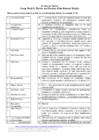
html, by Mariusz Maciejewsk, 12/2016 6 R. Barents "Charges have an Equivalent effect on Customs Duties" (1978) 15CNL rev 415 7 - Paul Craig, Gráinne de Búrca, EU Law: Text, Cases, and Materials, p.613, 617, 618, 2015 8 - http://eur-lex.europa.eu/legal-content/EN/TXT/?uri=CELEX%3A61968CJ0024 6 Model of Integration situated, they shall enjoy the same treatment. 1 Theory of Comparative Q Within this area there is all factors of production can move 7 Advantage freely. Answers 1 2 3 4 5 6 7 8 9 10 11 12 13 14 15 16 17 Q K H D C A O G I J P E N L B F M HOL_6012 EU Internal Market Group Work 2: EU Internal Market and Free Movement of Goods (Ch
The Membership of World Organisations Merilin Tamme Xa Tallinna Järveotsa Gymnasium 2008 The schedule · 04.04.1949 establishment of NATO. · 1951 Supreme Headquarters Allied Power Europe (SHAPE) was created near Paris in France. Later, SHAPE was relocated to Mons in Belgium. · 1952 Greece and Turkey join NATO. · 1955 Western Germany joins NATO. · 1982 Spain joins NATO. · 1991 Rome summit. Estonia is one of the founding members of the NACC. · January 1994 Brussels summit. Estonia joins PFP on 3 February. · March 1995 Estonia submits the first Individual Partnership for Peace (IPP) to NATO
A dedicated and regular EU- Republic of Moldova Human Rights Dialogue was launched in March 2010. The EU and Armenia launched a dedicated and regular Human Rights Dialogue in December 2009. The EU and Georgia further consolidated their exchange on human rights, with three dedicated meetings held so far. The EU welcomed Azerbaijan's readiness to engage in a regular dialogue on human rights issues and democratization. There are also steps in the environmental matter. There have been 44 projects in order to improve the Mediterranean Sea`s condition. Also the co-operation in the field of energy have had great results. One is definately oil and gas pipelines. I think that very important things have been done but still many goals have not been achieved. Good examples are also Moldova`s first joint EU visa application centre and free trade area in Ukraine
1. Which are the main cornerstones of EU-Russia cooperation? Which have been the main developments and success stories in this partnership in 2000-2012? Which side is more interested? The main cornerstones of the EU and Russia relations are the trade and energy relations. One biggest breakthrough has been gas pipeline Nord Stream. Russia is the third biggest trade partner of the EU and is the main importer of gas and crude oil. The economic benefits are the biggest cornerstones of the relations. Cooperation between Russia and the European Union progressively strengthens in foreign policy and security issues, in combating illegal migration, organised crime and terrorism. The main achievement of recent years, which can be hardly overestimated, is the understanding increasingly gaining ground that partnership between Russia and the EU is one of the cornerstones of maintaining stability and prosperity not only in Europe, but world-wide.
EU member states. Greece and Cyprus are cases in point. In recent years, Greek- Turkish relations have improved considerably and Greece's policy towards Turkish accession is a positive one, but this depends on the political barometer over the Aegean and Cyprus. The fact that Turkey does not recognize the Republic of Cyprus a full member of the EU since May 2004 has been a source of legal controversies and political complications. (Joseph, J.S., 2006) In that regard, there is still an open question that how can a candidate country conduct accession negotiations and sign an international treaty with a country it does not recognize. That is a big problem and question that Turkey has to deal with. TURKEY WAITING ON THE DOORSTEPS OF EUROPE While some oppose Turkey's full membership on cultural-religious grounds, others view Turkey as a ,,poor and populous country, waiting on the doorsteps of Europe, trying to push in". It is a fact
The European Union (EU) is an economic and political union where are 27 member states drom European continent. The EU operates through a system of independent institutions and decisions are made by the member countries. EUs population is of over 500 million inhabitants which is 7.3% of the world population, there are 23 different languages and for now 17 countries are using EUs common currency Euro. EU was founded after World War II, when Europe was struggeling in social and political devastations. In 1948 a congress in Hague was held to discuss ideas about the development of European political co-operation. There were many important political figures such as Konrad Adenauer and Winston Churchill. On 9th May in 1950 French Minister of Foreign Affairs proposed that France and the Federal Republic of Germany should combine their coal and steel resources and let other European countries join also. From that on, the 9th of May has
This money is spent mainly to improve agriculture (direct aid, export refunds, storage, rural development and other) but also to improve less prosperous regions by building up infrastructure and supporting companies with different kinds of grants. EU is also the largest aid donor in the world. For example EU has supported Georgia's ambitions to get closer to the EU between 1992-2009 with 865 million. Unfortunately, everything is not so black and white and there are also negative aspects. Biggest problem at the moment in the EU is countries dept - Greece in the first place. They took more loans that they could pay back and now, the country is in big crisis. If it increases, it will be a serious threat for all EU countries because we have common economy and Greece is using Euro (usually, the countries which are in crisis like that will devalue money, but because Greece is using Euro, it is impossible)
Introduction and history of the European Union History The European Union is set up with the aim of ending the frequent and bloody wars between neighbours, which culminated in the Second World War. The idea is that countries who trade with one another become economically interdependent and so more likely avoid conflict.The ancestor of the European Union is the European Coal and Steel Community (ECSC) which was created with the Treaty of Paris (1951) and was signed by France, Italy, Belgium, Netherlands, Luxembourg and West Germany (total of 6 countries). European Economic Community (EEC) was created with the Treaty of Rome (1958), establishing a customs union (tolliliit). The European Union (EU) was created by the Maastricht Treaty which came into effect on November 1st 1993. Introduction
free price system. Therefore, economic decisions are guided solely by the aggregate interactions of a country's citizens and businesses. In addition to mentioned afore, Estonia tends to perform favourably in measurements of civil liberties, education, and press freedom. Living in Estonia has many of its good sides, for instance it is a secure place from nature disasters and it has a beautiful nature. Although, when not to look only through rose-tinted glasses, there are still some minuses in country’s organization. So, what are the beneficial and negative sides of living in Estonia? To start with, a big advantage is a great location between Scandinavia and prosperous Russia which ensures the connections, networks and possible trading options. Close connections and pendulum migration have tightened the cooperation between the countries. For instance, Estonia and Finland have developed common economic space. Right now Estonia's most
It was established in 1960.Its aim is to regulare the price of crude oil for the world market.There are 12 member countries including Iran,Iraq and Kuwait. USA and Russia are not members of OPEC. EU-European Union. It was firstly founded on the 9th of May , 1950 as a European Coal and Steel Community and in 1951 the real organisation was established.The six founders were Belgium,Netherlands,Luxembourg,France,West-Germany and Italy. Its main aims were: 1. To avoid military conflicts 2. To strenghten Europe 3. To trade coal and steel Its main aims are now: 1. To assure peace,wealth and freedom in an safer world 2. To cooperate between the membership countries In 1957 was established the European Economic Union.The present name was taken in use in 1992. In 1999 euro was take in use only by business.In 2002 Euro became a reality.Estonia- in 1995 Estonia decided that they want to become a member.In 1998 there were negotiations
product which can be valued in money and which is capable of forming the subject of commercial transactions. Therefore PB&R company and its business is selling dogs, or shall I say goods not just on a local fields, but the movement of goods is linked to abroad EU countries by making a profit of it I shall conclude that it involves a “movement of goods within the EU Member States” (Articles 26 and 37). 2. Is there a restriction of trade in goods? a. Can we name an animal, or to be more exact a dog as a “good” – yes, in accordance of Article 13 TFEU: “In formulating and implementing the Union's agriculture, fisheries, transport, internal market, research and technological development and space policies, the Union and the Member States shall, since animals are sentient beings, pay full regard to the welfare
Writting a summary I read the following sections of the booklet „Europe. A journal for young people“. The booklet is listed in 7 sections:“ Europe in everday life“; „The European Union- what does this mean exactly?“; „How does the European Union work?“; „What exactly does the EU do?“; „Europe moves on_ the enlargement of the European Union“; „Europe and the wider world“ and „The future of Europe“. ‘Europe is somewhere else.’ This provocative statement opens the first chapter of „Europe. A journal for young people“. It is, of course, not true. As EU citizens, Europe is our home
EU structural support and regional implementing agencies, that are available for a businessman to apply for a fund. A successful student will be aware of and understand the EU fundraising possibilities in the frames of cooperation with Russian and Eastern Partnership countries, and able to define the financing criteria and priorities. The current reading material summarises the main aspects covered by lectures and structurises the information channels for the future. The course supports the other Traderun courses, especially the course related to EU cooperation with Russia and Eastern Partnership Countries. 4 1. UKRAINE 1.1. General information 1.1.1. Country Profile Capital: Kyiv. Total area: 603,550 sq. km (the largest country in Europe by area that is physically within Europe entirely). Population: ~ 45 million (declining). Major cities and estimated population (Good news! Not all the business and capital
Even though Brexit is seen by its leaders as a positive change, it will also have quite a negative effect on Britain and play a big role in reshaping European Union. Most British people were voting for Brexit to regain sovereignty, to ‘take back control’ and regulate their laws. At first glance, it may seem that they would be in charge of their actions which would mean that nobody on the outside can manipulate them. Although nowadays countries depend on each other a lot and the UK is no exception. Everything is more connected than ever and because of that existing completely on your own is quite an impossible task. For that matter, giving up a little bit of sovereignty can be beneficial. For example, trading in the EU. It is not always regulated by countries and some may not like it, but it can also lead to new routes, destinations which in the end can bring bigger profits. Also, being on your own and
leverage the De Beers brand, in partly by selling De Beers jewelry; It helped create and then meet emerging demand in emerging markets. (O'Connell 2009) Second reason why they still have a near monopoly is strong advertisement. They play on the fact that they are oldest and most famous diamond company, they don't just sell diamonds they sell De Beers diamonds. They call de beers diamonds as the symbol of the love and when other things disappear on this world then diamonds are forever. That is the reason why millions of loved people every year celebrate their love and one important thing there is the diamonds. Also over the ages the DeBeers diamonds are advertised by the famous people like example Marilyn Monroe and Elisabeth Taylor. From 2009 DeBeers output is not been as high as their biggest competitor Arlosa, is this again strategy? On Table 3 we will see that DeBeers output is not as big, but their income is
Kati-Liis Karu 03.01.2011 The euro in Estonia Joining the European Union in 2004 made people in Estonia think about the changing of currency. We had almost six years to get used to the fact that the Estonian kroon is eventually going to end. In that time there was a lot of discussion about whether we should stick to the kroon or change our money to the euro. Lots of people were afraid that they lose their money during the period of transition - this belief was quite popular among people who still remember the time when the Russian rubles were changed into kroons and did lose much money. Luckily there haven't been any complaints yet. The reason I chose this political concern is its contradictoriness. I myself
Ireland Ireland (Irish: Éire, Irish pronunciation:) is a country in north-western Europe. The modern sovereign state occupies about five-sixths of the island of Ireland, which was first partitioned on 3 May 1921. It is bordered by Northern Ireland--part of the United Kingdom--to the north, by the Atlantic Ocean to the west, the Irish Sea to the east and the Celtic Sea and St George's Channel to the South and South-East. The legal name of the state is simply "Ireland", but its legal description the Republic of Ireland is sometimes used to differentiate the state from the island.
and an autonomous grand duchy of Russia after 1809. It won its complete independence in 1917. During World War II, it was able to successfully defend its freedom and resist invasions by the Soviet Union albeit with some loss of territory. In the subsequent half century, the Finns made a remarkable transformation from a farm/forest economy to a diversified modern industrial economy; per capita income is now among the highest in Western Europe. A member of the European Union since 1995, Finland was the only Nordic state to join the euro system at its initiation in January 1999. In the 21st century, the key features of Finland's modern welfare state are a high standard of education, equality promotion, and national social security system currently challenged by an aging population and the fluctuations of an exportdriven economy (Central Intelligence Agency, 2012, ISSN 15538133). 2.1.2 Geography
- Arendab EL ühist välis- ja julgeolekupoliitikat - Sõlmib rahvusvahelisi lepinguid (annab komisjonile volitused pidada EL nimel läbirääkimisi) - Võtab vastu eelarve (koos parlamendiga) - Liikmeteks valitsuse ministrid igast ELi liikmesriigist vastavalt arutamisele kuuluvale poliitikavaldkonnale st esindab riike; permanent representaties (COREPER) - Eesistuja!!! - Asutati 1958 ECSC raames Council of Europe – Euroopa Nõukogu - Rahvusvaheline organisatsioon; 47 riiki Euroopast ja Aasiast - Tegevusvaldkonnad: inimõigused, sotsiaalõigused, keelelised õigused, haridus ja kultuur - Ei ole EL institutsioon - Asutas inimõiguste kohtu pärast EHCR 1950. aastal - Juhtorganiks parlamentaarne assamblee ja ministrite komitee European Council – Euroopa ülemkogu - Liikmeteks riigipead või valitsusjuhid, Euroopa Ülemkogu eesistuja ja Euroopa
The European Union is governed by seven institutions; the European Parliament, the European Council, the Council of the European Union (the Council), the European Commission, the Court of Justice of the European Union, the European Central Bank and the Court of Auditors.The first four of these hold the executive and legislative power of the European Union. Of these four institutions, the only one directly elected is the European Parliament whose 736 members are elected every 5 years; each citizen in each member state having the right to vote. Seats are subsequently assigned to member-states in accordance with their population, and for the purpose of sustaining some balance and proportionality, no member-state takes in excess of 99, however no less than 5. In addition to this, the European Council consists of the heads of state and the Council consists of representatives for each member, who have been elected by the citizens of their own country. In contrast, the
PIL regulates relations between states. Thats why PIL is important for international relation students. PIL influences the life of everybody, it doesn't regulate people directly but indirectly (through the decisions of the states), because it's everywhere. It's like air. E.g. when you want to send a letter to Brazil, you put a stamp from your own country and send it from your post office and the letter gets delivered. Why is this so easy, because there are certain international conventions that regulate postal services. E.g. traffic signs are almost the same everywhere, why? Because of certain int conventions that require the states to have more or less unified traffic signs. States apply international regulations to national regulations and they have to be in accordance with each other, the states can always specify these regulations. Therefore, PIL regulates people indirectly.
the statistics. It also noticed, “Children are normally at greatest risk from dog bite because they play with dogs more often, have less experience in reading dog behavior, are more likely to engage in activity that alarms or stimulates a dog, and are less able to defend themselves when a dog becomes aggressive”. Scientific studies in dog psychology were not conclusive on direct causation between a dog breed and aggressiveness. They pointed out other influential factors such as individual character and disposition of an animal, resulted, among other things, from its training, living surroundings etc. In those circumstances and following the precautionary principle, the parliament adopted the prohibitive law of the scope suggested by the NGOs stating that “the State cannot idly wait until the scientists come to the definite conclusion about actual sources of the dangerous behavior” and
Väldime I-vormi, vaid kasutame passive-vormi. Lõhikesi vorme ei kasutata! (don't) 150 sõna Teema "should mery-killing be punished?" HOMEWORK Terms to explain: Nation - a country, especially when thought of as a large group of people living in one area with their own government, language, traditions, etc: Stranger someone whom you do not know Citizen - a person who is a member of a particular country and who has rights and obligations because of being born there or because of being given them Penalty - a punishment for doing something that is against a law Government - the group of people who officially control a country System of courts - a set of connected positions which operate together to ensure ... ? To commit a crime to do sth that is forbidden by law Corruption - illegal, immoral or dishonest behaviour, especially by people in positions of power Fine (trahv) - an amount of money that has to be paid as a punishment for not obeying a rule
Today more and more disputes are caused by the enormous spread of the English language throughout the world. Some scholars claim that it has already become the first global language. And this statement isn't far from truth. But what does it mean to say that a language is a global language? Why is English the language which is usually cited in this connection? How did the situation arise? And could it change? Or is it the case that, once a language becomes a global language, it is there for ever? [1, pg.2] These are fascinating questions to explore, whether your first language is English or not. A global language is a language that is spoken internationally and is learned and spoken by a large number of people as a second language. A global language is characterized not only by the total number of speakers (native and second language speakers), but also by its geographical distribution, as well as use ininternational organizations and diplomatic relations. [4]
Tallinn English College Topic Estonia Tallinn 2008 1. Introduction Estonia is a small country about the size of Switzerland, or New Hampshire and Massachussetts combined. Estonia is named after the people called "Ests" who lived in the region in the 1 st century AD. The Republic of Estonia is one of the three countries commonly known as the "Baltic States". The other Baltic States are Latvia and Lithuania. 2. Geographical position Estonia is situated in northeastern Europe. Estonia is bounded on the north by the Gulf of Finland, on the east by Russia, on the south by Latvia and on the west by the Baltic Sea. In the north it borders on Finland. The coastline of the Baltic Sea in Estonia is characterized by numerous gulfs and bays, the biggest of them being the Gulf of Finland, the Gulf of Riga and the Gulf of Pärnu. Bays include the
Nowadays only about 4% of the workforce is engaged in agriculture. The 1990s was a hard time for agriculture competition with cheap imported products became an issue, enterprises had no money for new equipment and vehicles. Although today the situation in agriculture isn't perfect, some enterprises, including farms who use modern production methods, have cropped up. Joining the European Union has had a positive effect on Estonian agriculture as we can now sell food products to other European countries. Milk cattle, also pigs and poultry are the main farm animals raised in Estonia. Field crops include cereal crops, potatoes and vegetables. Plant products are mostly for internal use, a considerable amount of meat is imported. Some dairy products and some specific products e.g. cultivated and wild berries, mushrooms, ecologically pure produce etc are for export. The forest is among Estonia's most important natural resources and a source of a
when the UN Charter had been ratified by a majority of the original 51 Member States. The day is now celebrated each year around the world as United Nations Day. The purpose of the United Nations is to bring all nations of the world together to work for peace and development, based on the principles of justice, human dignity and the well-being of all people. It affords the opportunity for countries to balance global interdependence and national interests when addressing international problems. There are currently 192 Members of the United Nations. The Aims of the United Nations: -To keep peace throughout the world. -To develop friendly relations between nations. -To work together to help people live better lives, to eliminate poverty, disease and illiteracy in the world, to stop environmental destruction and to encourage respect for each other's rights and freedoms. -To be a centre for helping nations achieve these aims. The Principles of the United Nations:
 annaabi.ee