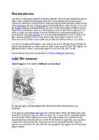
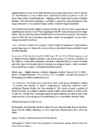
THE BRONTE SISTERS CHARLOTTE EMILY ANNE BIOGRAPHY FATHER AN IRISH PROTESTANT, A CLERGYMAN IN YORKSHIRE MOTHER DIED IN THEIR CHILDHOOD VIVID IMAGINATION DRAWING, WRITING AND TELLING STORIES EDUCATED AT A CHARITY SCHOOL GOVERNESSES "POEMS BY CURRER, ELLIS AND ACTON BELL" CAHRLOTTE 1816-1855 THE PROFESSOR (1857) JANE EYRE (1847) SHIRLEY (1849) VILLETTE (1853) JANE EYRE GREATLY AUTOBIOGRAPHICAL REALISTIC PICTURES + ROMANTICISM WOMAN'S PROBLEMS AND SOUL LONELINESS, POVERTY, SOCIAL INSIGNIFICANCE ATTACKS THE GREED AND LACK OF CULTURE OF THE BOURGEOISIE JANE EYRE SOCIETY CAN BE REFORMED BY MEANS OF EDUCATION INHUMAN EDUCATION SYSTEM OF CHARITY SCHOOLS FIGHT FOR WOMEN'S EMANCIPATION EMILY 1818 - 1848 WUTHERING HEIGHTS (1847) PLOT FULL OF MYSTERY REALISTISC THE
Instruction manual инструкция по эксплуатации Autobiographical novel автобиографический роман party political broadcast политическая передача партии news bulletin выпуск новостей sports coverage спортивный репортаж first edition первое издание advertising campaign рекламная кампания glued to a TV приклеенный к телевизору adhered to a principle твёрдо придерживаться какого-л. принципа
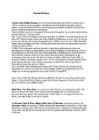
Carson McCullers Nele Otsmann 12A Early Life · Born on 19 February 1917 in Columbus, Georgia · From a middle class family · From the age of 10 she took piano lessons · 15 years old got her first typewriter · At the age of 17 she left home to study piano at Juilliard School of Music in New York City. · In 1936 "Wunderkind" - autobiographical Marriage and Career · 09/1937 married with Reeves McCullers · Moved to Charlotte, North Carolina wrote her 1st novel "The Heart is a Lonely Hunter" (the title was taken from Fiona MacLeod's poem "The Lonely Hunter") · Book was interpreted as an anti-fascist book · Altogether she published 8 books · In 1941 divorced and in 1945 remarried Emotional Struggles · In 1948 attempted suicide while depressed · In 1953 tried to convince her husband to
Comparison. Jan Guillous' " Evil". "Evil" is based on a 1981 autobiographical novel by Jan Guillou. It is about a boy called Erik Ponti who had always had violence in his life. Whether he was beat by his father or was he the one being violent to others. After problems in school, his mother decides to send him to a private school, and in order to do so, she had to sell some of her precious items. Erik understand that the private school called Stjärnsberg is his last change to get a good education and he wants to stop being violent. He goes to Stjärnsbergwith great hope
led to his death. Writing career Sand and Jules Sandeau published a few stories in co-operation, signing them "Jules Sand." She adopted, for her first independent novel Indiana (1832) , the pen name that made her famous George Sand. Her first published novel, Rose et Blanche (1831), was written in collaboration with Jules Sandeau. Also she had written some rural novels from her childhood experiences of the countryside, some theatre pieces and autobiographical pieces. Sand often performed her theatrical works in her small private theatre at the Nohant estate. In addition, Sand authored literary criticism and political texts. Her most widely used quote is "There is only one happiness in life, to love and be loved." A few excerpts demonstrate much of what was often said about George Sand: "She was a thinking bosom and one who overpowered her young lovers, all Sybil -- a Romantic." V.S. Pritchett (writer)
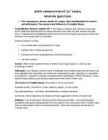
Media and advertising 1. Complete the collocations in each sentence with an appropriate word from the box. broadcast bulletin coverage forecast media brochure campaign edition manual novel a) Read the instruction ..manual. before using your new word-processor. b) 'David Copperfield' is an autobiographical ……………. c) What did it say on the weather …………….? d) This is a party political……………. on behalf of the Democratic Party. e) What time is the next news …………….? f) This channel doesn't have very good sports……………. g) A first……………. of this book is worth a fortune. h) The mass……………. in most countries is dominated by advertising. i) When does our new advertising …………….begin?
· Natural and pure: children and animals Some authors: Wordsworth, Coleridge, Byron, Shelly, Keats, Burns, Southey, Cowper, and Thomson. Predecessors: Theocritus Greek pastoral poet, whose Idylls are set in Arcadia, Virgil, Horace, Spenser, Milton's The Garden of Eden from the Paradise Lost. Influences: 7. G.G. Byron major works: 1806 Hours of Idleness 1809 English Bards and Scotch Reviewers 1813-1818 Childe Harold's Pilgrimage a partly autobiographical narrative poem that describes the travels and reflections of a world-weary young man who, disillusioned with a life of pleasure and revelry, looks for distraction in foreign lands; in a wider sense, it is an expression of the melancholy and disillusionment felt by a generation weary of the wars of the post-Revolutionary and Napoleonic eras. 1813 The Giaour; The Bride of Abydos 1814 The Corsair; Lara 1815 Hebrew melodies 1816 Parisina; The Prisoner of Chillon; The Dream; Prometheus; Darkness
were rumors of a scandalous incestuous romance with his halfsister and selfimposed exile It has been speculated that he suffered from bipolar disorder and was bisexual The Byronic hero The Byronic hero is a variant of the Romantic hero as a type of character, named after Lord Byron. Both Byron's life and writings have been considered in different ways to exemplify the type. The Byronic hero first appears in Byron's semi autobiographical epic narrative poem Childe Harold's Pilgrimage Many of Byron's characters are a similar specific type of the Romantic hero: An idealised but flawed character with great talent and passion, a distaste for society, disrispect towards rank and privilege, arrogance, overconfidence, selfdistructiveness. Is rebellious, exiled. Charles Dickens 18121970 Works are very much influenced by his life Dickens worked in a factory as a young child, using this experience in many of his
Aimre, I. (2005). Sotsioloogia. Tallinn: Sisekaitseakadeemia. Beck, U. & Beck-Gernsheim, E. (2001/2009). Individualization: Institutionalized Individualism and its Social and Political Consequences. London, Thousand Oaks, New Delhi, Singapore: SAGE Publications. Giddens A. (2009). Sociology. Sixth Edition. Cambride: Polity Press. Giddens, A. (1984/1997). The Constitution of Society Chicago. Cambridge: Polity Press Schütze, F. (2007). Biography Analysis on the Empirical Base of Autobiographical Narratives: How to Analyse Autobiographical Narrative Interviews. INVITE Project. URL http://www.biographicalcounselling.com/download/B2.1.pdf The Cambridge Handbook of Acculturation Psychology. (2006). Berry, J.W & Sam, D. L. (Eds.) Cambridge: Cambridge University Press. 5. Tarbimine, elustiilid ja jätkusuutlik ühiskond Mõisted ja teoreetilised lähenemised · Situatsionalistide ,,vaatemängu ühiskond"
cousins; her education at Lowood School, where she acquires friends and role models but also suffers privations; her time as the governess of Thornfield Manor, where she falls in love with her Byronic employer, Edward Rochester; her time with the Rivers family at Marsh's End (or Moor House) and Morton, where her cold clergyman-cousin St John Rivers proposes to her; and her reunion with and marriage to her beloved Rochester. Partly autobiographical, the novel abounds with social criticism. It is a novel considered ahead of its time. In spite of the dark, brooding elements, it has a strong sense of right and wrong, of morality at its core. There are several Christian aspects underlying the plot that mold its character and essence. Jane Eyre is divided into 38 chapters; most editions are at least 400 pages long (although the preface and introduction on certain copies are liable to take up another 100). The original was
resulted in a severe criticism of the American society(American Notes). He saw a significant change in the people and the circumstances of America. After that he didn't have as big American readership but still some supporters remained. · Name more important works by him. The Picwick Papers all his essays Novels: Oliver Twist, Nicholas Nickelby, The Old Curiosity Shop, Christmas Carol all made into films America: American Notes, Martin Chuzzlewit Social Novels: David Copperfield(most autobiographical), Bleak House, Little Dorrit, A Tale of Two Cities 1861-1867: Great Expectations, Our Mutual Friend 5. The Woman Question · What is the Woman Question? It is the change in womens role in society in the 19th century. Women wanted to have equal rights with men, the right to vote, many women became feminists. Women wanted to move beyond home and from domestic life. Some women were supportive of these ideas, some were not. · What were the main reasons behind the Woman Question?
railways, allow higher education for women, 'The True Bon Englishamn', 'The Shortest Way with Dissenters' in which he attacked both the Tories and the church and deended religious freedom. For the latter he was sent to the pillory for three days. After that experience he wrote 'Hymn to the Pillory' in which he criticized the law. 'Robinson Crusoe' was published in 1719. It is based on the true story of Alexander Selkirk and is also autobiographical. Robinson is considered the first bourgeoisie character. He also wrote 'Roxana', 'Captain Singleton' and 'Moll Flanders'. Jonathan Swift (1667 1745) was born in Dublin to a poor family. However, his father died before he was born and he was raised by his uncle. He attended Dublin Univerity, where he excelled at history, literature and languages. After graduation he became a private secretary to Sir William
that of others, for material: the fall of man, the restoration of the human race in Christ, destruction of God’s enemies, from the heavnely point of view, his poetry must teavh, purify and elevate the heart (his work assume great knowledge of Bible); purpose: assert Eternal Providence, justify the ways of God to men, his God mysterious and inscrutable, to understand God’s message men must purigy their hearts. Paradise lost: a prayer to God from mankind. 10. 17th century autobiographical writing (Pepys, Evelyn) Diarists like Pepys and Evelyn depicted everyday London life and the cultural scene of the times. In 17th increase in autobiographical writing. Form of self-expression open to both men and women Samuel Pepys: detailed private diary, 1660 – 1669. Combination of personal revelation and eyewitness accounts of great events (Great Plague of London, the Second Dutch War, Great Fire of London).
Twilight”; a revival of the Celtic (Gaelic) language, nationalism, glorification of all Irish. Joyce’s writings tightly connected to Ireland. Left the country in 1904 but never truly left at heart. Ulysses is like a guidebook through Dublin. Autobiographical piece A Portrait of the Artist as a Young Man. Künstlerroman, subtype of the Bildungsroman. Stream of consciousness, interior monologue (avoids impressions and perceptions, and violation of grammar/logic – more grammatically correct than
· Old Possum's Book of Practical Cats (1939) · Four Quartets (1945) James Augustine Aloysius Joyce James Augustine Aloysius Joyce (2 February 1882 13 January 1941) was an Irish expatriate writer, widely considered to be one of the most influential writers of the 20th century. He is best known for his landmark novel Ulysses (1922) and its highly controversial successor Finnegans Wake (1939), as well as the short story collection Dubliners (1914) and the semi-autobiographical novel A Portrait of the Artist as a Young Man (1916). Although he spent most of his adult life outside Ireland, Joyce's psychological and fictional universe is firmly rooted in his native Dublin, the city which provides the settings and much of the subject matter for all his fiction. In particular, his tempestuous early relationship with the Irish Roman Catholic Church is reflected through a similar inner conflict in his recurrent alter ego Stephen Dedalus
Education was standard, middle class. He had quite prestigious start on education, Jesuit university college, Dublin. Ended up in rebellion. Against inhibiting(keelama) forces of family, church, school. Moved to the continent, Paris, Ulysses-Zürich and Paris. Joyce and Ireland. ,,Cultic twalette", left in 1904, couldn't help returning in every page he composed, short story collection Dubliners, Ulysses-guidebook through Dublin. A Portrait of the Artist as a Young Man Largely autobiographical, Joyce's own spiritual searches. Growing up in Ireland at the turn of the century, the formation of an artist. Künstlerroman (A Künstlerroman meaning "artist's novel" in German, is a narrative about an artist's growth to maturity), but with an Irish specificity. Bildungsroman(coming-of-age story is a literary genre that focuses on the psychological and moral growth of the protagonist from youth to adulthood), but in the modernist style. Stephen's and Joyce's spiritual searchings
He retired to his ranch near Sonoma, where he died at age 40 of various diseases and drug treatments. Novels · A Daughter of the Snows (1902) · The Call of the Wild (1903) · The Kempton-Wace Letters (1903) · The Sea-Wolf (1904) · The Game (1905) · White Fang (1906) Short story collections · Son of the Wolf (1900) · Children of the Frost (1902) · Tales of the Fish Patrol (1906) · South Sea Tales (1911) Autobiographical memoirs · The Road at Project Gutenberg (1907) · John Barleycorn (etext) at Project Gutenberg (1913) Francis Scott Key Fitzgerald Francis Scott Key Fitzgerald (September 24, 1896 December 21, 1940) was an American writer of novels and short stories, whose works are evocative of the Jazz Age, a term he coined himself. He is widely regarded as one of the twentieth century's greatest writers.
lifelong fascination" with illness, dying and death. Perhaps surprisingly for a New England spinster, her poems allude to death by many methods: "crucifixion, drowning, hanging, suffocation, freezing, premature burial, shooting, stabbing and guillotinage". She reserved her sharpest insights into the "death blow aimed by God" and the "funeral in the brain", often reinforced by images of thirst and starvation. Dickinson scholar Vivian Pollak considers these references an autobiographical reflection of Dickinson's "thirstingstarving persona", an outward expression of her needy selfimage as small, thin and frail. Dickinson's most psychologically complex poems explore the theme that the loss of hunger for life causes the death of self and place this at "the interface of murder and suicide". Gospel poems Throughout her life, Dickinson wrote poems reflecting a preoccupation with the teachings of Jesus Christ and, indeed, many are addressed to him
ending. Yet, the general perspective is somehow reinforced by the narrators' re- crossing of borders, one year after their first visit. However, travel books are also autobiographical writings, and as such they inscribe the writers as narrators/characters in their texts. Thus, the authors not only `translate' the foreign/Romanian culture for `home', but, in so doing, they also practice intercultural communication in their texts, by interacting with the native
And again exaggeration. Slaughterhouse 5 This novel iis almost black humour novel, represents vonnegut effort to bring together everything he thinks about war and american society. The protagonist is billy pilgrim. The action takes place in the 1960's, but billy pilgrim recalls certain events that happened before, in the war. Recalls his capture by the germans, he is forced to stay in dresden during its destruction. How this event influenced his future life. In this sense the novel is partly autobiographical. The title of this book is important, because billy and other prisoners of war are housed in dresden in a slaughterhouse, numbered 5. When the bomb raid begins, they find shelter in the deep freeze areas, this is how they survive when 100 350 people die in dresden. When they come out of the slaughterhouse, dresden looks like a surface of moon. They are saved in the place of slaughter. This already raises moral and philosophical questions about
historical background. In the poem "It's Good", Mayakovsky writes about socialist society being the "springtime of humanity". Mayakovsky was instrumental in producing a new type of poetry in which politics played a major part. In the 1930s Socialist realism became the predominant trend in Russia. Its leading figure was Maxim Gorky, who laid the foundations of this style with his works The Mother and his play The Enemies (both 1906). His autobiographical trilogy describes his journey from the poor of society to the development of his political consciousness. His novel The Artamanov Business (1925) and his play Egor Bulyshov (1932) depict the decay and inevitable downfall of Russia's ruling classes. Gorky defined socialist realism as the "realism of people who are rebuilding the world," and points out that it looks at the past "from the heights of the future's goals"
were distinctive, but also because they stirred up our emotions and aroused us. By physiologically monitoring people during recall tasks, on arousing and neutral stimuli, researchers have found that arousing stimuli trigger the release of stress hormones. This causes neurotransmitters to increase activation of the amygdala, a brain structure that helps encode the emotional aspects of experiences into long-term memory. Outside the laboratory researchers have found that emotional arousal enhances autobiographical memories. The theory of flashbulb memory comes from Brown and Kulik. Flashbulb memories are recollections that seem so vivid, so clear, that we can picture them as if they were snapshots of moments in time and the curve of forgetting is far less affected by time than in the case of other types of memories. Flashbulb memories are most likely to occur for distinctive events that evoke strong emotional reactions and that are repeatedly recalled in conversations with others
meaning "ain't in the head." (Burge's real concern in the article is for mind, not language: to show that even belief contents are not in the head.) Chapter 5 1 "The fact is that absolutely all the contents of the Universe, absolutely everything that is at all, may be divided into two classes--namely into propositions, on the one hand, and into things which are not propositions on the other hand" (Moore 1953/1962: 71). Moore reported in an autobiographical note that he had once had a nightmare in which he dreamed that propositions were tables. 2 Though, like "idea," "concept" has also been used to mean a kind of particular mental entity. This equivocation has caused some confusion in contemporary cognitive psychology. 3 "Why does opium put people to sleep?"--"Because it has a dormitive virtue." That may sound profound until one realizes that the phrase is just transliterated Latin for "power of producing sleep
 annaabi.ee