Leidsid 33 sarnast õppematerjali, mis on seotud failiga "A person who has committed a crime loses his/her right to be". Need materjalid aitavad sul teemat sügavamalt mõista.
person, crime, there, equal, work, first, trust, hard, choose, loses, member, come, earn, good, criminal, doesn, reasons, able, chance, these, complicated, than, punished, issues, among, difficulties, prejudice, again, therefore, know, someone, easier, often, same, views, beside, however, posture, different, another, find, inequality, looking, withoutg. law of gravity Prescriptive law – prescribe how people ought to behave e.g. speed limits In all societies relations between people are regulated by prescriptive law; customs (informal rules of social and moral behaviour); rules we accept if we belong to a particular institution (religion, organization); laws imposed on people by a government Penalties for breaking the rules are different. For not following the customs there may not be a punishment, or a person may be criticized by the society; rules of a social institution tend to carry precise penalties but they are not enforceable by any political authority; however governments use a system of courts backed by the power of the police to enforce the laws they have made. The relations between people are regulated by a combination of all these rules. One of the ways to classify laws is to separate them into prescriprive and descriptive law. Descriptive laws simply describe how people usually behave
descriptive law (kirjeldav õigus) - laws which simply describe how people or even natural phenomenas usually behave nation (riik) - country with its own goverment citizen (kodanik) - person native of a country; realationship between country and a person stranger (välismaalne) - person who is unfamiliar, from another country penalty (karistus) - punishment fixed by law, as for a crime or from any soical groups goverment (valitsus) - organization which controlls a stre or community System of Courts (kohtusüsteem) - organization applying law in the name of states to commit a crime (kuritegu läbi viima) - breaking a law, usually given out by the goverment fine (trahv) - certain sum of money person pays for breaking a law corruption (korruptsioon) - dishonest or unethincal conduct by a person entrusted with a position of authority
PIL regulates relations between states. Thats why PIL is important for international relation students. PIL influences the life of everybody, it doesn't regulate people directly but indirectly (through the decisions of the states), because it's everywhere. It's like air. E.g. when you want to send a letter to Brazil, you put a stamp from your own country and send it from your post office and the letter gets delivered. Why is this so easy, because there are certain international conventions that regulate postal services. E.g. traffic signs are almost the same everywhere, why? Because of certain int conventions that require the states to have more or less unified traffic signs. States apply international regulations to national regulations and they have to be in accordance with each other, the states can always specify these regulations. Therefore, PIL regulates people indirectly.
· What we do - 1 test, on words. · 2 Essays, that means that we have to look into academic writing · Homereading we read a case from European Court of Justice thingy. · Oral thing. · 90% you have to attend · Have to prepare for class and take part of it etc What we learn: Terms Expressions / collocations (nt obey/abide by the law) Explaining AWOL absence without a leave Legal English can be divided into 3 levels. We learn the first one, which is needed for the other two! You have to know the vocabulary etc. Second level has to do with legal contracts... The third level both 1 and 2 and explaining... We learn the vocabulary + explaining. Process of law-making draft law/bill (seaduseelnõu) is developed draft is sent to the parliament readings(amendments made to the law (seadusemuudatused)pass/ adopt the lawpass on to the presidentproclame (väljakuulutama) or veto or sent to supreme court (riigikohus) (may declare it
the goverment *Hobbes: To preserve one's safety *Locke: To preserve one's safety and property *Rosseau: To preserve one's safety, property and freedom, but to guarantee the latter, the goverment also has the responsoility of improving/educating the citizens. Laws are historical conventions, people can be forsed to be free. State of nature Hobes: state of nature is a state of conflict, a state of war. Locke: state of nature is peaceful, all men are equal. They treat others as themselves. Rousseau - people in the state of nature were neither good or bad. Man was like an animal not posessing any needs besides the primary ones. The bad habits of men are byproducts of ingaging in a civil society. All men are equal Sovereign Hobbes: can not be overthrown and can do whatever the fuck it wants. The best one is monarch. Locke: can be overthrown, if fails to do the job. Criticises monarch for haveing hereditary power. Prefers election for a term
moral working as a prosecutor At least 24- is professional. years old WHO CANNOT The person A person who: a person who BE? who has has been convicted a a person who is removed from criminal convicted of a the bar offence criminal offence;
· And when you begin to miss me, dont forget it was you who let me go. · There is an end to things no matter how much we want to hold into them. · Otsisin keset seda pimedust, sind ja loodetud vabadust,kui mu käed su poole, tegid alguse loole, printsessist ja printsist, ühest kaunist kandist, kus oleme meie kaks, kus lõbutseme, kuni otsas jaks. Sa ei pea muinasmaad looma, sa ei pea tähti taevast tooma. Ole vaid minu kõrval, kui tõuseb päike. Ole vaid mu kõrval kui mind piinab meeleheide. Ole mu kõrval, kui kumab kuu, kui su nime
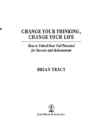
results, you have the right road map in your hands.You have before you the DNA of your future. All you need to create a wonderful fu- ture for yourself is to read this book, decide how you are going to apply it to your own life, write out a plan, and then go forth with en- thusiasm and make it happen. I have a confession to make. I am one of Brian’s raving fans. I have studied him, his brilliant work, and the extraordinary results he has achieved. I am also one of his close colleagues and friends. We have worked together on many platforms, and met and talked with each other on numerous occasions. Brian is one of the finest thinkers and writers on inner develop- ment and personal success in the world. I know; I have sold over 82 million books aimed at helping people get the most out of themselves.
· They wanted something fresh, new · They were disgusted by romantics · Showed the harsh tone in moral life · Refleced the development of science · Period of intense urbanisation, the city is in the center of the novel, often · New characters were businessmen, salesman, immigants, poor farmers · These characters were in new settings, skyscrapers, departments store, apartment building, ghetto, stockyard (cattle, cows were slaughtered), commercial trust · Their world is not one of culture or high moral standards · For these new writers controlling new american social experience · Naturalists offered a view that questioned the belief that now was a conscious and national being and happiness could in moral behaviour · Naturalists show man as a small figure in deterministic system which ignores him · Man is a huge machine · Lot of these novels end in tragedy
relates to American Revolution on the one hand and the European Enlightenment on the other. Influenced by the scientific revolution of the 17th century and the humanist period during the Renaissance, the Enlightenment took scientific reasoning and applied it to human nature, society, and religion. American Enlightenment a gradual but powerful awakening that established the ideals of democracy, liberty, and religious tolerance in the people of America. If there were just one development that directly caused the American Revolution and uplifted the intellectual culture of the continent while it was only a British colony, it would be the American Enlightenment. Broadly, the Enlightenment was an intellectual movement that changed the fundamental perspective of the masses, urging them to foster skepticism and apply scientific principles in matters of religion and morality. Its chief values were: Liberty, Democracy, Republicanism, Religious Tolerance
say that they can see a strong family coat. 4 mistake for 8 come up with resemblance between my dad and me. I can't see it myself, not facially anyway 3 Well, she would keep driving too 2 1 bring about 5 go ahead although there are certain similarities fast in the town. 2 fall through 6 go down with in our physical build. I also seem to 4 Well, he would keep misbehaving 3 tip off 7 come to have inherited his big feet, unluckily in class. 4 come up with 8 mistake for for me. It was the first thing my parents 5 Well, you would keep eating too noticed when I was born
.........183 The New Earth Is No Utopia.....................................................................184 Notes...........................................................................................................186 About the Author........................................................................................189 CHAPTER ONE THE FLOWERING OF HUMAN CONSCIOUSNESS EVOCATION Earth, 114 million years ago, one morning just after sunrise: The first flower ever to appear on the planet opens up to receive the rays of the sun. Prior to this momentous event that heralds an evolutionary transformation in the life of plants, the planet had already been covered in vegetation for millions of years. The first flower probably did not survive for long, and flowers must have remained rare and isolated phenomena, since conditions were most likely not yet favorable for a widespread flowering to occur. One day,
Notes: Proto-Germanic » Northwest Germanic » West Germanic » North Sea Germanic » Anglo Frisian » English 2. How to classify words into different word classes? (definition is that enough?, morphology, distribution and function tests); Grammatical categories for nominals, verbs, adjectives. "A set of words like dog, child, cat, man, bird where the individual words are mutually substitutable is known as a word class..." Definitions a) A noun is the name of a person, place or thing. b) A verb expresses an action, process or state. c) An adjective is a describing word which modifies a noun. "Although such definitions will identify many members of a word class, linguists generally agree that they need to be supplemented by formal tests. e.g. sincerity Sincerity can be frightening misery Lee is misery itself. Such miseries are uncommon Distribution: - a distribution test
The basic ingredients, when fresh, are so full of flavour that British haven't had to invent sauces to disguise their natural taste. What can compare with fresh pees or new potatoes just boiled and served with butter? Why drown spring lamb in wine or cream and spices, when with just one or two herbs it is absolutely delicious? If you ask foreigners to name some typically English dishes, they will probably say "Fish and chips" then stop. It is disappointing, but true that, there is no tradition in England of eating in restaurants, because the food doesn't lend itself to such preparation. English cooking is found at home. So it is difficult to a good English restaurant with a reasonable prices. In most cities in Britain you'll find Indian, Chinese, French and Italian restaurants. In London you'll also find Indonesian, Mexican, Greek... Cynics will say that this is because English have no "cuisine" themselves, but this is not quite the true. Vocabulary:
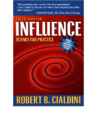
"We've known for years that people buy based on emotions and justify their buying decision based on logic. Dr. Cialdini was able, in a lucid and cogent manner, to tell us why this happens." --MARK BLACKBURN, Sr. Vice President, Director of Insurance Operations, State Auto Insurance Companies "Dr. Cialdini's ability to relate his material directly to the specifics of what we do with our customers and how we do it, enabled us to make significant changes. His work has enabled us to gain significant competitive differentiation and advantage" -LAURENCE HOF, Vice President, Relationship Consulting, Advanta Corporation "This will help executives make better decisions and use their influence wisely ... Robert Cialdini has had a greater impact on my thinking on this topic than any other scientist." -CHARLES T. MUNGER, Vice Chairman, Berkshire Hathaway, Inc.
Libraries. We know a lot of things thanks to books, but we do not know exactly when and where they originated, and what should be considered the first book in the world. Ancient document, written on parchment, papyri and vellum can hardly be qualified as books the way we understand the word today. Centuries went before paper replaced parchment and papyri. In the 15 th century Johann Gutenberg invented a mechanical process of duplicating texts, which we today call book printing. The first book was printed between 1444 and 1446, so these years can be considered as the beginning years of book printing. His most
retested. Some people say "it's as simple as . . . " and then name their pet peeve or passion. My view is not of an education specialist, but of one who loves sharing what I learn, and owes much to educators. Since I don't have an educational theory neatly worked-out, nor an outline of my perceptions, my intent is to address each educational ingredient that comes to my mind. After I've said what I think about each topic, readers may have a fair comprehension of my philosophy. First comes sensitivity. If a person be insensitive, be it from numbing cold, exhaustion, drugs, genetic makeup, or upbringing, then the process of education is bogged down, and results come only after great efforts. Sensitivity in my integrated meaning is broad, covering literally the senses, so that deaf and blind people are less sensitive, as well as people whose senses work perfectly, but whose receptivity or thought processes are blunted for whatever reason
Abstract: Children inherently have had a rather tenuous relationship with citizenship. Similarly to how women were once viewed, children have not been considered as subjects of rights due to their perceived incompetence and irrationality. Currently, children are not considered as being rational and capable of exercising responsibility until the age of majority, the age of 18. However, the adoption of the U.N Convention of the Rights of the Child (UNCRC) in 1989 granted for the first time the recognition for children as worthy individuals with rights of their own. The UNCRC laid the foundation for the potential re-evaluation of our traditional understanding of childhood and the perception of children as primarily objects of the adult world. Since, then the UNCRC has attracted significant scholarly interest from various disciplines and as such a high degree of research has been published in this area already. The
Crime & Punishment The fight between good and evil is as old as the humankind itself. Even in society there are always black sheep and these people are called 'criminals'. Although we are part of the EU and tend to be as humane as possible, we have to deal with the problem of growing numbers of people admitted to penitentiaries. One in all we have to dwelve into the mind of a criminal and find out what makes a felon tick. What forces an individual to commit crimes against others? Are we too humane and lenient? When looking for the reasons why people commit crimes I can only say what I believe to be
Essay How the right of privacy was viewed in the 1890s and 2010s. Comparison between two articles by Warren & Brandeis and Julie Cohen The two articles have questioned - What is privacy ? The simplest answer would be that the privacy is a human right and like in the first article by Warren & Brandeis, they quote Judge Cooly who sayd that, the privacy is the right to be let alone. This means, that a person is free to go and do what ever the person wants, no one has a right to harm him/her physically or mentally and vice versa. What ever the person decides to do, nobody else has the right to know about it without persons premission. Julie Cohen starts her essay with a point that privacy has the image problem. In the world where there is no mobile platforms, data mining social meedia, in simple words the internet, its easyer to leave the
legitimacy from serving as a sovereign nation. A state is a political and geopolitical entity, while a nation is a cultural and ethnic one. The term "nation state" implies that the two coincide, but "nation state" formation can take place at different times in different parts of the world. 7. Commonwealth realm- is a sovereign nation within the Commonwealth which has Queen Elizabeth II as its head of state. There are 16 of them (including the UK) and they have a combined area of 18.7 million sq km and a population of 140 million. The vast majority of the population live in the six most populous realms: the UK, Canada, Australia, Papua New Guinea, New Zealand, and Jamaica. A Commonwealth realm is a country which shares Queen Elizabeth II as monarch. 8. Crown dependency- consist of the Isle of Man in the Irish Sea and
To begin with, my childhood was quite ordinary, I spent a lot of time in my country home, spending most of my time playing. I have been raised by my mother. As I grew older, I got more and more interested in different things. At one point it occured to me that when I want to be successful in some field, then I really have to educate myself in that filed.When my friends have characterised me then they have mainly mentioned that I am an active person, who has been successful in different fields. I still do not think I am succesful because it is a really complicated definition, but I know that I have succeeded in doing several things. For me the key is my so called success has been that when dealing with a particular thing I have tried to delve into the subject as deep as possible. Firstly, when we are talking about success and asking the question who is a succesful person, we
Kati-Liis Karu 03.01.2011 The euro in Estonia Joining the European Union in 2004 made people in Estonia think about the changing of currency. We had almost six years to get used to the fact that the Estonian kroon is eventually going to end. In that time there was a lot of discussion about whether we should stick to the kroon or change our money to the euro. Lots of people were afraid that they lose their money during the period of transition - this belief was quite popular among people who still remember the time when the Russian rubles were changed into kroons and did lose much money. Luckily there haven't been any complaints yet. The reason I chose this political concern is its contradictoriness. I myself
hypothetical situations can hardly relate to real situations. The ticking bomb argument looks at the hypothetical case where a leader of a state is asked to give their permission to torture a captured rebel leader because he (probably) knows the locations of a few explosives that are spread around the city in different apartment buildings. In case they are not found within 24 hours, they will explode and many will be left dead (Walzer, 1973). Is it justified to torture this person to find out where the bomb is? This essay will look in to how it has according to the thinkers in the strand of consequentialism / utilitarianism been labelled justifiable to use torture techniques in combating terrorism and will present the reasons for why this controversial behaviour that democratic governments have been proven to conduct and still are being accused of until the current day is irrational and dangerous. Theoretical justification of torture
Draughts- a game for two people, played on a board with black and white squares using 24 round pieces. The American word is checkers Drill- a way of teaching people something by making them repeat it several times Ecological- relating to the environment and the way that plants, animals, and humans live together and affect each other Energy usage- Excavation- the process of digging in the ground to find things from the past Flannel coat- Forgery- the crime of making copies of valuable documents or works of art in order to make money by selling them Fowl- a bird that is kept on a farm for its eggs and meat, for example a chicken or a duck Fully-equipped- Fully-furnished- Genuine- real, rather than pretended or false Glass front- Handle- to take action in order to deal with a difficult situation Hob- the top part of a cooker that you put pans on Hoist- to lift someone or something to a higher place
All rights reserved. No part of this book may be reproduced in any form or by any means, electronic or mechanical, including photocopying, recording, or by any information storage and retrieval system, without the written permission of the publisher. ISBN 1-59905-201-6 Printed in the United States of America 13 12 11 10 09 08 07 9 8 7 6 5 4 3 2 1 Introduction Grammar is a very old field of study. Did you know that the sentence was first divided into subject and verb by Plato, the famed philosopher from ancient Greece? That was about 2,400 years ago! Ever since then, students all over the world have found it worthwhile to study the structure of words and sentences. Why? Because skill in speaking and writing is the hallmark of all educated people. Lesson by lesson, this book provides basic instruction in the eight parts of speech--nouns, pronouns, verbs, adjectives, adverbs, prepositions, conjunctions, and
53. To one destined for purgatory, God says, "You try again." To one destined for hell, He says, "I'll try again." 54. Unless he's more intelligent than himself, there's no hope for a man. 55. Wants should subsidize needs. 56. We need to expand our sense of the possible and contract our sense of the probable. 57. What good is it to be able to read someone else's mind if you can't read your own? 58. When a moron meets a lesson, they annihilate one another. 59. While there is only one human race, there are lots of human losers. 60. Willingness to volunteer and suitability for the job to be done are two completely different things. 61. You can remember that you are only if you forget who you are. 62. You can't answer someone who asks you to shoulder your burden of proof by asking him to prove something else. 63. Your thought must become more rigorous; otherwise you won't be able to be sufficiently skeptical. 64. Abandon your ego to its fate. 65
Harold McMillan articulated his now famous “winds of change” sweeping Africa. We had high hopes for Africa, for the Black race, that the insidious imposition of foreign rule on us, the looting of Africa’s natural resources by our colonial masters accorded us would be things of history. That is more than forty years ago. Unfortunately, the promise of independence has not been fulfilled. Today, Africa has become more desolate; there is more starvation, diseases and non-provision of essential services than when we got our independence. There are all kinds of wars in Africa than the rest of world put together. The majority of so-called Africans leaders want to stay in power until the day their bodies are put in the grave. Through buffoonery, utter mismanagement and downright stealing of the wealth of the masses, these leaders have so impoverished Africa that we are now nothing but a beggar continent. We beg for
Terms Language → A systematic, conventional (tavakohane) use of sounds, signs or written symbols in a human society for communication and self-expression. Human language at all levels is rule- or principle- governed (valitsema) meaning that language corresponds to the grammar. Natural language is usually spoken, while language can also be encoded into symbols (such as letters, morse etc) For example: Estonian, English. Linguistics → The scientific study of human natural language. Broadly, there are three aspects to the study which are Pragmatics (studies the use of language → interested in the gap between the sentence’s meaning and the speaker’s meaning). Semantics (concerned with the meaning of the language aspects and the way they change, also how objects and language and thinking and language are related). Syntax (concerned with the rules [grammar] and how sentences and words are formed).
3 1 gold 5 lamb 3 obstinate 6 misery 2 show 7 as though 2 bird 6 rake 3 imagine 8 would guess 2 1 Water was pouring into the boat. 3 the hills 7 bee 4 like 9 hard 2 We clambered onto the rocks. 4 a mouse 8 a fox 5 judging 3 The wooden floor had rotted. Challenge! 4 The little boy was sobbing and Transcript
An analysis of the problem of Political Power Written by: Katre Kikkas Introduction It is said that in the political philosophy there are only two questions: ,,Who can have what?" and ,,Who will decide over it?". It is not exactly like that but it is quite close to the trough, to begin with. The first question includes material amenity's, and dividing rights and liberties.(Wolff, 1996) What is power? It is ability to influence others to do something they otherwise would not. Also, others can be affected with threats and force. (Kilp, 2010) Political power includes also right to force the others and to punish them if they disobey. Who should have that kind of power? Actually the political power is quite mysterious by itself. If someone has legitimate political power over me then he or she has
SUBJECT: ENGLISH BY NIKITA GUSTSHIN TMHG 19.04.2012 "The History of Journalism" What is "Journalism"? Journalism is the investigation and reporting of events, issues and trends to a broad audience. Though there are many variations of journalism, the ideal is to inform the intended audience. Along with covering organizations and institutions such as government and business, journalism also covers cultural aspects of society such as arts and entertainment. The field includes editing, photojournalism, and documentary. History of journalism. Ancient journalism. Note: "Journalism" is often called the first draft of history, but not all of it has to get written down in real time
in brackets. _ 1 She is in a band and she _________________________________ (record) a CD at the moment. _ 2 She is an actress and often _________________________________ (appear) on television. _ 3 At the moment she _________________________________ (have) a rest because she is tired. _ 4 Mike is a doctor and he _________________________________ (live) in Manchester. _ 5 I _________________________________ (start) work at 8.30 every morning. _ 6 He is a good cook but she _________________________________ (prefer) to eat out. _ 7 English tests _________________________________ (get) more and more interesting. _ 8 They _________________________________ (have) a party because it's her birthday. _ 9 I sometimes _________________________________ (ride) my bicycle to school. 10_ She usually _________________________________ (go) to the gym on Friday evenings.
 annaabi.ee