 50 punkti
Autor soovib selle materjali allalaadimise eest saada 50 punkti.
50 punkti
Autor soovib selle materjali allalaadimise eest saada 50 punkti.
 ~ 1 leht
Lehekülgede arv dokumendis
~ 1 leht
Lehekülgede arv dokumendis
 2015-01-23
Kuupäev, millal dokument üles laeti
2015-01-23
Kuupäev, millal dokument üles laeti
 4 laadimist
Kokku alla laetud
4 laadimist
Kokku alla laetud
 0 arvamust
Teiste kasutajate poolt lisatud kommentaarid
0 arvamust
Teiste kasutajate poolt lisatud kommentaarid
 libarebane
Õppematerjali autor
libarebane
Õppematerjali autor
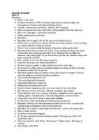
Geography of the novel extends from east coast to west coast. It is also international because part of it takes place in france. Organization of LEIVA??, industrial interest, war and ??, art, expluatation, standardisation, dehumanistaion, degradation of ethical and cultural values. He is fascinated with outcasts, the alienated, the outsiders, people who have been beated with life, the descenters-those who don't agree with the majority are the descenters, they are interested in those people. The book follows the lives of nine characters. All aspects of the lives are represented to us, the rich are corrupt, the poor may be not so corrupt, decent, but they can accomplish nothing because they are poor. The unjust triumph and the whole trilogy ends with a memorable sketch of a young harmless hitchhiker who wants to catch a car on a highway that leads nowhere. The final scene is the big indictment-critisism of america, road to nowhere. It is one of the experimental novels
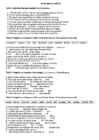
Entertainment and Art Task 1. Underline the most suitable word or phrase. a) I like this book, and I've read six capitals/chapters/prefaces already. b) It's not a proper drawing, only a rough/plan/sketch. c) The play is very long but there are three breaks/intervals/rests. d) At the cinema I don't like sitting too near the film/screen/stage. e) We heard a piece by Mozart performed by a German band/group/orchestra. f) Her second book was very popular and became a best buy/seller/volume. g) I like the painting but I can't stand its ugly border/frame/square. h) Robert's new book will be broadcast/published/typed in August. i) I liked the acting, and the costumes/dressing/outfits were good too. j) The best act/place/scene in the film is when Jack meets Kate. Task 2. Complete each sentence with a word from the box. Use each word once only.
the style he used to use, to get in to a second part in which I will assess the way he presents and expresses his ideas. 1.CHAPTER I 1.1. LARKIN STUDIES POINTS OF VIEW: BIOGRAPHY AND POETRY In the collection of essays edited by Stephen Regan (Philip Larkin, 1997) we can find some underlying question as: are we discussing the poem or the poet? Or, in Larkin’s terms: are we more deceived or less deceived by the metonymy of the phrase “we are reading Larkin”? The main purpose of the volume may be discussing and assessing Larkin’s poetry, but there are at least as many references to his letters (mainly published in SL) and to his life as to the poems themselves. If we think that Larkin is known as a legend we shouldn’t be surprised about the importance his life takes as a part of his work. His work, balancing on the borderline between “Life” and “Art”, will probably always is interesting not only for critics, but
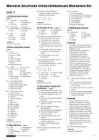
' I believe we Listening something online, criminals could should ban guns, period. · Remind students to prepare for the get hold of the details, then use Unfortunately, guns are used for listening by reading the statements them to buy other stuff. protection by certain people. They carefully and underlining any key S1But how often does that happen? are a part of street culture, like words. Play the recording twice.
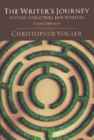
THE W R I T E R ' S JOURNEY M Y T H I C STRUCTURE FOR W R I T E R S THIRD EDITION CHRISTOPHER VOGLER S C R E E N W R I T I N G / W R I T I N G Christopher Vogler explores the powerful relationship between mythology and storytelling in his clear, concise style that's made i this book required reading for movie executives, screenwriters, playwrights, fiction and non-fiction writers, scholars, and fans of pop culture all over the world. Discover a set of useful myth-inspired storytelling paradigms like "The Hero's Journey," and step-by-step guidelines to plot and • character development
the general character of a new American people. Yet while Crevecoeur echoed Jefferson, Thomas's agrarian ideals, his letters also acknowledged the realities of frontier savagery and southern slavery. After taking a post as a French consul in 1783, Crevecoeur published little in English, though he did publish a French revision of Letters (1787) and a final book on his American experiences: Voyage dans la Haute Pensylvanie et dans l'état de NewYork (1801). Letters from an American Farmer is an excellent example of how a New World American thinks about the many changes occurring and that have occurred during the era of Enlightenment. Crevecoeur's essay is an enlightened perspective that shows how the people of that time are feeling about being a part of the new world and its current workings
Lovelace’s most well-known works are To Lucasta, going to the Wars and To Althea from Prison. Waller was another Cavalier poet, who during his lifetime was quite renowned. Like the other Cavalier poets, Waller’s work celebrates the king and queen as a heroic couple. His poems are dedicated to Henrietta Maria as ‘Queen of Britain, and the Queen of Love’. Robert Herrick was another famous poet of the time. His most famous work is a book of poems called Hesperides. The beginning of this book of poems expressed clear defiance regarding the execution of the king that year. Cowley was a well-known poet of the time, whose works gathered a lot of popularity during his lifetime. (Coursebook, pp. 38-48) 6. The Caroline "beauty of holiness". The Caroline “beauty of holiness” regarded the profoundness of Caroline piety and its beauty. In the context of the Caroline era, the sermon was perhaps comparable to the theatre, in terms of the attention it received from the public
as Jim's moral unsoundness, comes to befriend him, for he is "one of us". Marlow later finds Jim work as a ship chandler's clerk. Jim tries to remain incognito, but whenever the opprobrium of the Patna incident catches up with him, he abandons his place and moves further east. Nostromo (1904)- Nostromo is set in the South American country of Costaguana (a fictional nation, though its geography as described in the book closely matches real-life Colombia). Costaguana has a long history of tyranny, revolution and warfare, but has recently experienced a period of stability under the dictator Ribiera. Charles Gould is a native Costaguanero of English descent who owns an important silver-mining concession near the key port of Sulaco. He is tired of the political instability in Costaguana and its concomitant corruption, and uses his wealth to support Ribiera's government, which he believes will
 annaabi.ee





Kõik kommentaarid