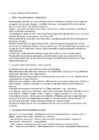
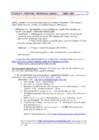
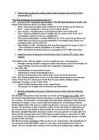
- Põhk – reaalne 110 GWh/a - Vetikad (veetaimed) - Olme- ja tööstusjäätmete biolagunev osa - Biogaas (prügilagaas, reoveegaas) 11. Biomassi kui biokütuste lähtematerjali peamised kategooriad 1. Puitmaterjal metsast (Forest products): •− Kogupuu (Wood) •− Raiejäätmed (Logging residues) •− Puud, põõsad ja puitjäätmed (Trees, shrubs and wood residues) •− Saepuru, koor jm (Sawdust, bark, etc.) 2. Biolagunevad jäätmed (Biorenewable wastes): •− Põllumajandusjäätmed (Agricultural wastes) •− Põllukultuuride jäätmed (Crop residues) •− Saeveski jäätmed (Mill wood wastes ) •− Aia ja pargijäätmed (Urban wood wastes ) •− orgaanilised olmejäätmed (Urban organic wastes) 3. Energiakultuurid (Energy crops): •− Kiirekasvulised puittaimed (Short rotation woody crops) •− Puituvad rohttaimed (Herbaceous woody crops) •− Heintaimed (Grasses) •− Tärklist sisaldavad taimed (Starch crops)
them to people who need those things. For example: glothes, use newspaper as a wrapping paper. Recycle- recycle thing. It does not take too long and it makes so much differencs Saving energy and your money Save electricity - people use a lot of electricity only because they forget or leave electrical appliances on. How: unplug everything that you do not use and do not forget to turn the light off Save water - Wasting water wastes electricity wich wastes energy. How: repair all leaky water mechanisms and if possible take shorter showers Saving energy and your money Save gasoline- It takes a lot of energy to operate a car. How: use other healthier alternatives like bicyclel or walking, but even using public transport helps reduce gasoline usage Save heat-It takes a lot of energy to heat houses and water. How: wear warmer clothes, if possible do not use hot water unnecessarily
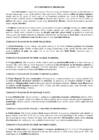
nuclear energy is used, so it has lower impact on the environment (Buzz, 2009) · Relatively low operating costs (Buzz, 2009) · Developed technology is ready for market and doesn't take much time to start producing (Buzz, 2009) · Can produce large amounts of power and is able to "feed" industrial and city needs. It can create power for heavy manufacturing (Buzz, 2009) · Nuclear wastes can be reduced through waste recycling and reprocessing (Buzz, 2009) NUCLEAR ENERGY · Can be produced in very small amount of volume and that makes it easy to transport ("Pros of nuclear," ) · Nuclear power plants have a big income, it helps to create more jobs and the countries to overcome the struggle with its bad economy Cons: · High construction costs because of radiation and complicated procedures and long construction time (Buzz, 2009)
Some people say that every body should do voluntary work for environment Nowadays when most of the people live in city environment don't see what that makes to the nature. Big city's wastes lot of water and product a lot garbage all so waste air with fumes. It would be great when people who take something from the environment give something back to it. This is easy when just start doing something. If nobody doesn't drop junk on the ground then that's a good thing to. Also should take part on different trees planting and junk cleaning events. I guess that government and local authorities should make more and more with that kind of purpose events.
reason not understanding how important it is not to waste it because we may soon run out of fresh water. It can seem like there's no solution, but there is! A few simple changes can help a lot. First of all, it is really important to keep our lakes clean, because nature is the premier source of fresh water. So people should stop dropping garbage into the lakes or near them. And walking pets near the lakes is also not such a good idea. It's not very nice to find some animal's body wastes while going to swim. Secondly, think about how much water you use. A few simple steps could save your money and help protect the environment. For example you should prefer shower to bath or you should turn the water off while brushing your teeth. Finally, people who work in agriculture, should start collecting rainwater to water their fields and gardens. It's much cheaper and naturefriendly. So don't just sit there! We can all do our bit from keeping our lakes clean to collecting
Disposal of Nuclear Waste Mattias Allpere 5.b Radioactive waste is waste that contains radioactive material.Radioactive wastes are usually the by-product of nuclear techology and they are the remnants of nuclear fission. There are different types of nuclear waste.Low-level waste,intermediate-level waste and high-level waste.Radioactivity diminishes over time.Low-level waste is stored in sealed facilities for hours,days or weeks,but high-level waste stays isolated for thousands of years,it is buried deep underground. Radioactive waste comes from different sources as used nuclear fuel and from nuclear weaponry
⦿ Suspended particles in freshwater reduces the quality of drinking water for humans and the aquatic environment for marine life. ⦿ Suspended particles can often distrub the growth of plants and micro-organisms. HOW DO BREVENT WATER POLLUTION? ⦿ Recycle. ⦿ Use water wisely. ⦿ Take Responsibility. ⦿ Set up a composter. ⦿ Swim responsibly. ⦿ Help cleaning up your nearest beach, lake or river. ⦿ Dispose of household wastes, oils, and other litter properly. ⦿ Never put the chemicals down from the sink or toilet. ⦿ Use household products that are safe for the environment. ⦿ Don’t over use the chemicals in your garden. ⦿ Keep boats in good condition to avoid leaking into the water. ⦿ Use car washes instead of soapy water in your driveway. USED MATERIALS ⦿ http://www.water-pollution.org.uk/ ⦿ http://en.wikipedia.org/wiki/Water_pollutio n ⦿ http://techandscience.com/techblog/ShowAr
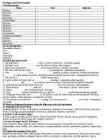
Prediction Reduction Consumption Campaign/campaigner Disaster - Radiation Destruction - II Give the opposite ... Renewable resources Use Protect Admissibly Predicted III Fill in the correct word 1. The polar bear's .......................... is the icy wastes of the Arctic. (looduslik elupaik) 2. The bitter wind ........................ even the thickest clothing. (läbi tungima) 3. High levels of radioactive ................... were found in the area. (saastatus, reostatus) 4. The office staff has been sadly ......................... by redundancies. (kahandama,vähendama) 5. Over............................ is an ........................... problem nowadays. (tarbimine, kohutav/hirmutekitav) 6. ...........
•Varieeruvad suurel hulgal •Kuid enamasti on tegemist suure hulga tuubulitega, kus paiknevad kohastunud apikaal ja basaalpinnaga rakud. Protonefriid: leekrakud e solenotsüüdid: • Protonefriid – Umbsete otsadega tuubulite süsteem. –Esineb lameussidel, mõnedel keriloomadel, mõnedel rõngussidel ja limustel. •Tuubulid ulatuvad üle terve keha –Väikseimad tuubulid lõppevad umbse leekrakuga –Beating of cilia moves water and solutes through flame cells –Wastes are secreted through pores called nephridopores •Need tuubulid eritavad lahjendatud vedelikke. Metanefriidid: •Ehk avatoruneerud •Nt rõngussidel –Igas lülis avatud otsaga metanefriidide paar –Contain a ciliated funnel called a nephrostome –Wastes pass through a coiled collecting tubule –Passed into bladder and then are secreted from nephridopores. •Metanefriidid koosnevad avatud otsaga tuubulitest, mis koguvad kehavedelikke
eestiloodus.ee/artikkel1070_1062.html) 2. EL 2010/6-7 Põlva energiamajanduse roheline tulevik (http://www.eestiloodus.ee/index.php?id=3361&id_a=3333) 3. EL 2012/6-7 Ravimijäägid looduskeskkonnas (http://www.eestiloodus.ee/index.php?id=4680&id_a=4623) 4. EL 2011/02 Keskkonnahoidlik põllumajandus tasub ära (http://www.eestiloodus.ee/index.php?id=3733) 5. M. Luna-delRisco1, A. Normak1 and K. Orupõld1,2. Biochemical methane potential of different organic wastes and energy crops from Estonia. Agronomy Research 9 (1–2), 331–342, 2011 6. Lämmastikuringest, Nitraadiprobleem . MADIS METSUR, TIIU VALDMAA 2003 (http://www.maves.ee/Tasub_teada/nitraat.htm) 7. Biogaasi ressurss ja tootmine Eestis. Projekti W-Fuel andmebaasi loomine. Ülo Kask Tallinna Tehnikaülikool, Projekti W-Fuel infopäev Lääne-Virumaal, Rakvere, 4.03.2010
that the methane content must be higher than 95% and also sets limits for dew point, sulphur content and some other minor constituents. Upgrading of biogas is a relatively new technology but experience from Sweden and other countries shows that it is possible now to upgrade biogas with high reliability and at reasonable costs. The Swedish experience shows that biogas can be an economical sustainable fuel with a potential to drastically reduce emissions in urban transport. Other benefits Wastes do not perish. Instead of that, they become more valuable compost. The weeds in animal compost cannot germinate. Biogas has especially positive health effects in rural areas. Smell of animal compost disappears widely after biogas production. Also, disease agents threatening human health coming from animal waste become inactive. Health Biogas can have significant health benefits. According to the Integrated
php?id=60 sõltumatu infoportaal,“ [Võrgumaterjal]. [2] „ http://www.miksike.ee/documents/main/referaadid/tuum.pdf,“ [Võrgumaterjal]. [3] L. Tanning, „''Maailma energia ülevaade II osa",“ Tallinn, 2010, pp. 5-46. [4] „http://www.thedailygreen.com/environmental-news/latest/nuclear-power-pro- con,“ [Võrgumaterjal]. [5] „http://www.world-nuclear.org/Information-Library/,“ [Võrgumaterjal]. [6] „http://www.world-nuclear.org/Nuclear-Basics/What-are-nuclear- wastes-/#.UnN3wfl3Zpk,“ [Võrgumaterjal]. [7] E. Realo, „http://www.tuumaenergia.ee/index.php?id=58,“ TÜ Füüsika Instituut. [Võrgumaterjal]. [8] K. Kallemets, „http://www.inseneeria.ee/tuumaenergia-kui-21-sajandi-energia- eesti-tuumajaam-on-teostatav/,“ MTÜ Eesti Tuumajaam, Mai 2009. [Võrgumaterjal]. [9] E. Puura, „http://www.tuumaenergia.ee/index.php?id=111,“ [Võrgumaterjal]. [10 K. Kell, „http://energiafoorum.blogspot.com/2009/02/pressiteade-energeetika-
Environmental Pollution-Sulfur 94, Air Pollution-Volatile Organic Compounds, Agreements Antarctic-Environmental Protocol, Antarctic-Marine Living Resources, Antarctic Seals, Antarctic Treaty, Biodiversity, Climate Change, Climate Change-Kyoto Protocol, Desertification, Endangered Species, Environmental Modification, Hazardous Wastes, Law of the Sea, Marine Dumping, Marine Life Conservation, Ozone Layer Protection, Ship Pollution, Tropical Timber 83, Tropical Timber 94, Wetlands, Whaling signed, but not ratified: Air Pollution- Persistent Organic Pollutants Oil and Gas Industry Organization Private sector active in all aspects of industry. Major Oil/Gas Bacton, St. Fergus, Teeside, Easington, Isle of Grain, Cruden
Kättesaadav: https://docs.google.com/viewer? a=v&q=cache:TnyeyByruCgJ:resourceventure.org/free-resources/get-started/green- buildingpublications/CWM%2520Guide.pdf +&hl=et&gl=ee&pid=bl&srcid=ADGEESipD6SQl55HhKRyg6-JhUQikjwk6 1Twdf2amMV7IACbw_jn1c2ZQBmZe5lJclUlAgO8jHiBqqbHWdf5prwOdwWTc obAjTAqHomN5i_7fo7dF0k4WTqE-raqHWV8l19m8x1YCIb9&sig=AHIEtb S1JW7Cyi2YNZCtG6Vd87h3dbEOsw (01.11.2012) 5. Mark Lennon. Recycling construction and demolition wastes: A guide for architects and contractors. 2005. Kättesaadav: http://www.mass.gov/dep /recycle/reduce/cdrguide.pdf (23.10.2012) 6. European Comission. Eurostat Home. Kättesaadav: http://appsso.eurostat .ec.europa.eu/nui/show.do?dataset=env_wasgen&lang=en (30.10.2012) 7. The Department for Environment, Food and Rural Affairs. Kättesaadav: http:// www.defra.gov.uk/statistics/environment/waste/wrfg09-condem/ (26.10
moderating inf luence of the North Atlantic Current, Baltic Sea, and more than 60,000 lakes Terrain: mostly low, f lat to rolling plains interspersed with lakes and low hills Natural resources: timber, iron ore, copper, lead, zinc, chromite, nickel, gold, silver, limestone Land use: arable land: 6.54%, permanent crops: 0.02%, other: 93.44% (2005) Environment current issues: air pollution from manufacturing and power plants contributing to acid rain; water pollution from industrial wastes, agricultural chemicals; habitat loss threatens wildlife populations (Central Intelligence Agency, 2012, ISSN 15538133). 2.1.3 People and Society Ethnic groups: Finn 93.4%, Swede 5.6%, Russian 0.5%, Estonian 0.3%, Roma (Gypsy) 0.1%, Sami 0.1% (2006) Languages: Finnish (official) 91.2%, Swedish (official) 5.5%, other (small Sami and Russian speaking minorities) 3.3% (2007) Religions: Lutheran Church of Finland 82.5%, Orthodox Church 1.1%, other Christian 1.1%, other 0.1%, none 15.1% (2006)
tuumaenergia.ee/index.php?id=60 sõltumatu infoportaal," [Võrgumaterjal]. [2] ,, http://www.miksike.ee/documents/main/referaadid/tuum.pdf," [Võrgumaterjal]. [3] L. Tanning, ,,''Maailma energia ülevaade II osa"," Tallinn, 2010, pp. 5-46. [4] ,,http://www.thedailygreen.com/environmental-news/latest/nuclear-power-pro-con," [Võrgumaterjal]. [5] ,,http://www.world-nuclear.org/Information-Library/," [Võrgumaterjal]. [6] ,,http://www.world-nuclear.org/Nuclear-Basics/What-are-nuclear-wastes-/#.UnN3wfl3Zpk," [Võrgumaterjal]. [7] E. Realo, ,,http://www.tuumaenergia.ee/index.php?id=58," TÜ Füüsika Instituut. [Võrgumaterjal]. [8] K. Kallemets, ,,http://www.inseneeria.ee/tuumaenergia-kui-21-sajandi-energia-eesti-tuumajaam-on- teostatav/," MTÜ Eesti Tuumajaam, Mai 2009. [Võrgumaterjal]. [9] E. Puura, ,,http://www.tuumaenergia.ee/index.php?id=111," [Võrgumaterjal]. [10] K. Kell, ,,http://energiafoorum.blogspot.com/2009/02/pressiteade-energeetika-arengukavad.html,"
keskkonnainfo.ee/failid/2011_1_ewc.pdf (20.04.2013) 18 7. Транспортировка отходов в Эстонии [WWW]- http://www.prugivedu.ee/ehitusjaatmed?seo=ehitusjaatmed (20.04.2013) 8. Транспортировка отходов в контейнерах [WWW]- http://www.veolia.ee/teenused/ehitusjaatmete-vedu/ (20.04.2013) 9. Mark Lennon. Recycling construction and demolition wastes [WWW]- http://www.mass.gov/dep/recycle/reduce/cdrguide.pdf (20.04.2013) 10. Демонтаж зданий [WWW]- http://tehnobyr.ru/demontazh/vidy-demontazha (20.04.2013) 11. ZenRobotics Recycler [WWW]- http://www.zenrobotics.com/et/company/ (20.04.2013) 12. Установка ZenRobotics Recylcer[WWW]- http://www.zenrobotics.com/assets/installation_scheme-940x726.jpg (20.04.2013) 13. Схема работы ZenRobotics Recycler [WWW]- http://iresen
FIND OUT 5 WAYS HOW TO STOP OVERPOPULATION. 4. Waste Disposal: The over consumption of resources and creation of plastics are creating a global crisis of waste disposal. Developed countries are notorious for producing an excessive amount of waste or garbage and dumping their waste in the oceans and, less developed countries. Nuclear waste disposal has tremendous health hazards associated with it. Plastic, fast food, packaging and cheap electronic wastes threaten the well being of humans. FIND OUT 5 WAYS HOW TO MANAGE WASTE. 5. Loss of Biodiversity: Human activity is leading to the extinction of species and habitats and loss of bio- diversity. Eco systems, which took millions of years to perfect, are in danger when any species population is decimating. Another example is the destruction of coral reefs in the various oceans, which support the rich marine life. FIND OUT 5 WAYS HOW TO HALT THE LOSS OF BIODIVERSITY 6
hospitals, factories, office buildings, rail systems and other users. 12.4 Nuclear power and the environment Compared to electricity generated by burning fossil fuels, nuclear energy is clean. Nuclear power plants produce no air pollution or carbon dioxide but a small amount of emissions result from processing the uranium that is used in nuclear reactors. Like all industrial processes, nuclear power generation has by-product wastes: spent (used) fuels, other radioactive waste, and heat. Spent fuels and other radioactive wastes are the principal environmental concern for nuclear power. Most nuclear waste is low- levelradioactive waste. It consists of ordinary tools, protective clothing, wiping cloths and disposable items that have been contaminated with small amounts of radioactive dust or particles. These materials are subject to special regulation that govern their disposal so
· Three federally recognized tribes The Cherokee Nation (in Oklahoma) Eastern Band of Cherokee Indians (North Carolina) United Keetowah Band of Cherokee Indians (in Oklahoma) · Over 200 groups claim to be Cherokee nations, tribes and bands Traditional activities agriculture, ranching, forestry, fishing, mining · Nontraditional land-based activities tourism, manufacturing, providing dumping sites for solid and hazardous wastes · Non-land based activities providing services for the passersby, wage labor off the reservation, bingo and casino gambling *Native Americans in the White Mind = · 19th century Native Americans perceived as museum pieces, destined to disappear completely · Hippies became interested in Native American cultures, a valuable model for alternative lifestyles · Images of the noble savage, peaceful and harmonious communities
(2007). Mineral compositsion of Estonian oil shale semi-coke sediments. – Oil Shale. Nr. 3, lk 405- 422. 21. Ots, K., Mandre, M,. Pärn, H., Kask, R., Pikk, J. (2009). Change in the allovation of nutrients and biomass in Scots pine (Pinus sylvestris L.) canopy in an area of cement industry in Northeast Estonia. – Baltic Forestry. Nr. 2, lk 237-247. 22. Ots, K., Reisner, V. (2006) Scots pine (Pinus sylvestris L.) and its habitat in Muraka bog under the influence of wastes from the Narva power plants (North-East Estonia). – Special issue on effects of industrial wastes on Florest. Proceedings of the Estonian Academy of Sciences, Biology, Ecology. Nr. 2, lk 137- 148. 23. Paal, J., Degtjarenko, P., Suija, A., Liira, J. (2012). Vegetation responses to long- term alkaline cement dust pollution in Pinus sylvestris-dominated boreal forests- niche breadth along the soil pH gradient. – Applied Vegetation Science. Nr. 16, lk
phase affect cost and the sophistication of the execution phase. Thus he started to standardize design by considering all the limits that other stages of the production system are setting. Taiichi Ohno, founder of TPS, expressed it in 1988 even more succinctly (Liker, 2003): "All we are doing is looking at the time line from the moment the customer gives us an order to the point when we collect the cash. And we are reducing that time line by removing the non-value-added wastes." 6 Toyotas executive, invented Toyota Production System between 1948 and 1975. 7 Sakichi Toyoda invented the principle of "intelligent automation" or "automation with a human touch". Decentralizing decision making. 30 TPS is a sophisticated system of production, where all parties concerned must contribute to the whole.
last several years. The latest devaluation forecast was related to Parliamentary elections on October 28th, 2012. It was expected that following the elections, that government will undertake a controlled devaluation of UAH for 10-20%. However, by March 31, 2013 (date of writing this course) no steps were taken. Clearly, though, the situation with UAH is not sustainable. UAH rate is kept /manipulated by NBU, which wastes, by opinion of many economists, foreign currency reserves on keeping UAH at its current pegged rate while the trade deficit widens. The chart below illustrates dynamics of Ukraine's foreign currency reserves, clearly indicating that capital outflow accelerates. Source: National Bank of Ukraine, Ukraine Macro Outlook for 2013 by UkrSibbank (BNP Paribas Group) For the last several years the NBU has shielded the UAH against sharp depreciation, despite
Porpoises are very perceptive mammals. security n. the feeling of freedom from danger, adv. securely doubt, or worry adj. secure Syn. safety v. secure Her sense of security increased as her grades improved. We secured all of the doors of the lab before leaving. toxic adj. harmful; capable of being fatal n. toxicity Syn. poisonous Disposal of toxic wastes is an ongoing problem. This product has the highest toxicity of any known to science. tranquility n. calm; quietness adv. tranquilly Syn. peacefulness adj. tranquil v. tranquilize The tranquility of the lake at sunrise inspired a profound sense of well-being. His tranquil manner of expression made us all feel more secure. trap v. to catch and hold onto, usually by trickery; adj. trapped deceived
According to Georgian law, several types of uses of minerals require a license. These include: a) Exploration of minerals; b) Mining of minerals; b1) Handling a mineral deposit or processing minerals; c) Utilization of the remains of mining enterprises; d) Use of underground spaces, as well as building and exploitation of such underground facilities (including facilities for storage of industrial wastes from oil and natural gas pro- duction and wastewater) that are not related to extraction of useful minerals; e) Gathering geological, mineralogical, paleontological collections for museum exhibits. (The Law on Minerals, Article 6, Paragraph 1) A license for the use of minerals does not cover oil and natural gas resources. Usually, an application for a mineral use license is issued for a definite term, specifically for a period of 5 to 45 years.
It comes as no surprise that those people who work without ego are extraordinarily successful at what they do. Anybody who is one with what he or she does is building the new earth. I have also met many others who may be technically good at what they do but whose ego constantly sabotages their work. Only part of their attention is on the work they perform; the other part is on themselves. Their ego demands personal recognition and wastes energy in resentment if it doesn't get enough – and it's never enough. “Is someone else getting more recognition than me?” Or their main focus of attention is profit or power, and their work is no more than a means to that end. When work is no more than a means to an end, it cannot be of high quality. When obstacles or difficulties arise in their work, when things don't go according to expectation, when other people or circumstances are not helpful or cooperative, instead of
for this purpose. Purgation was both metaphorical and literal in these ancient societies. M e n tally and metaphorically, people were supposed to purge themselves of sour feelings, resentments, jealousies, and so on. But they were also supposed to cleanse the body of impurities by fasting and even by inducing vomiting. Catharsis was a medical term in Aristotle's time for the natural processes by which the body eliminates poisons and wastes. It comes from the word "katharos" which means pure, so a catharsis is a purification, but it can also be a purgation, a vomiting up or violent expelling of impurities. Sneezing is a cathartic reaction to rid the nasal passages of impurities. In the Poetics, Aristode used the term "catharsis of the emotions" as a metaphor, comparing the emotional effect of a drama with the way the body rids itself of toxins and impurities
812 is in Tokyo time." The calendar had become a clock, and the clock had begun to tick. On November 25, Yamamoto ordered the Pearl Harbor strike force to sortie next day. At 6 a.m. on November 26, the 32 ships of the force—six carriers, two battleships, and a flock of destroyers and support vessels— weighed anchor and sliced across the wrinkled surface of Tankan Bay. They steamed slightly south of east, heading into the "vacant sea"—the wintry North Pacific, whose wastes were undefiled by merchant tracks and whose empty vastness would swallow up the force. They had been ordered to return if detected before December 6 (Tokyo time); if discovered on December 7, Nagumo would decide whether or not to attack. Strict radio silence was enjoined. Aboard the battleship Hiei, Commander Kazuyoshi Kochi, a communications officer for the force, removed an essential part of his transmitter and put it in a wooden box, which he used as a pillow
It should be a hissing exhalation and make a tsssssss sound. All breathing and exercises--both inhalation and exhalation--are performed through the mouth. Purging: A strong exhalation as if you were trying to blow a toy sailboat across a pool, followed by a big but faster inhalation. David's cheeks were puffed out as he demonstrated the exhalation. (Imagine the Big Bad Wolf blowing the pigs' houses down.) Be careful not to heave or rock back and forth, as this wastes oxygen. Keep as still as possible. Semi-purging: Breathing somewhere between the above two. More forceful than deep breathing but less forceful than full purging. Used for recovering after each time trial. THE STEPS All durations are in MIN:SEC format, and everything was done seated. 1:30 deep breathing 1:15 purging (if you feel like you're going to pass out, do it less intensely) 1:15 purging (if you feel like you're going to pass out, do it less intensely)
perfringens biopolymer after cellulose and is a starting spore germination and outgrowth over material for chitosan (deacetylated derivative 12-, 15-, and 18-hour cooling cycles and a of chitin) manufacturing. Since biodegrada- 2 log10 CFU/g reduction during a 21-hour tion of chitin is slow, its accumulation during cooling cycle. Three treatments of fully crustacean processing (mainly shrimp and cooked grilled pork (air packaged, vacuum crab shell wastes) is a disposal challenge. packaged, or treated with chitosan and The production of value-added chitin by- vacuum packaged) were investigated for the products, such as chitosan, could provide a duration of shelf life (Yingyuad et al. 2006). solution to crustacean processing waste accu- The authors found significant shelf life exten- mulation (Shahidi et al. 1999). Chitosan is sion of 2°C stored product, with standard
 annaabi.ee