In my mind, the most important technological invention is the jet airliner, the Boeing 707- 120, which was invented in 1958. I concidered different inventions but thought, that the ability to move from one point to another in an innoventional and extremely quick way is worth the title. The four engine plane can carry up to 181 passengers and cruise at 600 mph for 5280 miles on a full tank. This has made continetial travelling extremely comfortable, as voyages that formerly took a couple of weeks can now be passed with only 1 day or even less. The first jet flight took off from New York and landed in Paris, soon after that there was a connection between Los Angeles and New York. I can only assume that the tickets had to cost a fortune in the beginning, but the time spared was and is still worth it, as the plane tickets do not even cost so much nowadays, it is perhaps the cheapest and the fastest way to travel.
· In 1477, Columbus travelled a 100 leagues beyond Tile (Thule), where he noted the immense tides (probably Iceland). · 1478- Columbus and his wife lived in Madeira · In 1479- Columbus got married to Portuguese Felipa Moniz Perestrello · By the 1480- they returned back to Lisbon, where their son was born. · While he was in Lisbon, he used his father-in-law power and researched materials and voyages of Atlantic Sea · Columbus examined maps thoroughly and also he became a cosmographer, so he began to produce and sell marine charts, also he was interested in new discoveries and settlements. · He travelled a lot till he approached the king, offering to find India and Cipangu, in 1483, 1484, but king sent the vessel to test Columbus theory and the vessel didn't reach any shore. · 1480- Christopher's wife died and he abandoned his career in merchant-navigator
Satire in Lilliput In Jonathan Swift's Gulliver's Travels, Swift uses satire to tell a tale of Lemuel Gulliver going on voyages in strange lands and meeting a variety of different characters. Jonathan Swift's was one of the greatest satirists of his and our time. In the first book of Gulliver's Travels millions of young schoolchildren have grown to love this famous story and never recognize the satire hidden in the story. In his first Book he uses satire to demonstrate English politics by using the citizens of Lilliput. Gulliver's first adventure takes place in Lilliput
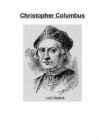
He thought he had found the Indies and called the people he saw there "Indians". When they got to Cuba, he thought he was in China. The world was a lot larger than he thought. On Christmas Eve, the Santa Maria was wrecked near Haiti. Columbus built a fort and left 40 men to hunt for gold. Then he returned to Spain on the Nina. The Pinta also returned. The people of Spain welcomed him as a hero. He made three more voyages across the ocean. His 13-year-old son, Ferdinand went with him on the fourth voyage. Columbus did not become rich as he had hoped. At the end of his life he only had a pension the king and queen had given him because he was the first to reach the New World. He spent the last few months of his life in bed because of the pain of arthritis. Columbus not only discovered a New World, but he led the way for other explorers.
The voyage home was a rough one, and Columbus did not reach Spain until March 1493. He was received by the King and Queen a month later. He gave them the birds, plants and six Indians he had brought back with him as well as what little gold he had obtained. The rulers were pleased with Columbus' gifts and with his tales of discovery. A second voyage started on September 25, 1493. Columbus found some gold on his return to Haiti and he discovered Jamaica and Puerto Rico. He made two more voyages to the New World 1498 and 1502 but he never found the riches of his dreams and he never received the reward he had been promised. Christopher Columbus died in 1506, as a sad and bitter man.
b. Ühepoolsed liinid – liini teenindavad ühe riigi laevaomanikele kuuluvad firmad (üks või mitu) c. Kahepoolsed liinid – liini teenindavad kahe või enama riigi laevad d. Trampveod (Tramp Shipping) – mitteregulaarsed veod, kaubad ja veosuunad ei ole püsivad. Kuid põhitunnuseks (primaarseks) on kaubavood, millised põhiliselt (kuid mitte tingimata) koosnevad massikaupadest. e. Üksikreisid (Single Voyages) – laevad töötavad erinevate kaupade transportimisega erinevatel suundadel, erinevate sadamate vahel. f. Järjestikused reisid (Consecutive Voyages) – laevad töötavad teatud aja (teatud reiside arv või veomahud) ühel ja samal veosuunal, sageli – ühtede ja samade sadamate vahel. g. Tšarterveod- Tšarterveoleping on lastiveoleping, kus vedaja kohustuseks on laeva veoruumi kasutamise võimaldamine kaupade vedamiseks
tulemus, mis eelneb prahilepingu sõlmimisele. 4. Kuidas võiksite prahilepinguid (tsartereid) liigitada ja milliste tunnuste järgi? Tsarter üheks reisiks (Voyage Charter) tsarter sõlmitakse üheks reisiks. Kasutatakse juhul, kui veod ei oma reisidel mitte mingit regulaarsust. Omab olulisi puuduseid vedaja kulude, esmajärjekorras sadamatasude formeerumisel. Tsarter järjestikuteks reisideks (Consequtive voyages) tsarter sõlmitakse teatud arvuks järjestikusteks reisideks mingi kindla kauba veol kokkulepitud sadamate vahel. Vedajale kulude kokkuhoiu seisukohast kasulikum variant. Generaaltsarterid (General Charter-party) omavad sõltuvalt nende kasutamisest mõlema liigi tunnuseid. Need tsarterid kehtivad tavaliselt pikema aja (aasta, kvartal) jooksul või isegi tähtajatult. Tsarterid sõlmitakse konkreetsete kaupade (kaubagruppide)
BUNKER ADJUSTMENT FACTOR - kütusehinna kooskõlastustegur BUNKERS – laoruum, kus hoitakse katelde kütmiseks vajalikku sütt/ laeva kütusevaru CANCELLING DATE - tühistamiskuupäev CERTIFICATE OF ORIGIN - päritolusertifikaat COMMENCEMNT OF LAYTIME - puhkuse algus. Laytime on ajavahemik, mille jooksul omanik teeb laeva kaubaveo jaoks kättesaadavaks, tähtis on teada, millal periood algab CONGESTION – ülekoormus/ummistus CONSECUTIVE VOYAGES – järjestikused reisid CONSIGNEE – kauba saaja CONTRACT OF AFFREIGTMENT - laevaomaniku ja prahtija vaheline leping, milles laevaomanik on nõus prahtijale kaupa laevas vedama või prahtijale kogu laeva või selle osa kasutama CUSTOMARY DESPATH or CUSTOMARY QUICK DESPATCH - tavalise kiirusega laadimine ja lossimine CUSTOME OF THE PORT - sadamakoht DEAD FREIGHT - tasu kasutamata laadruumi eest DECK CARGO - tekilast
It is a very easy planet to pick out in the sky because it is one of the brightest lights in the shy. It also has a very faint greenish color that makes it stand out from the rest of the objects in the sky ("Astronomy for Kids"). Saturn is the second largest planet in the solar system, Jupiter being the only planet that is bigger. It also has at least eighteen moons, more than any other planet in the solar system. There have been three voyages to this extraordinary planet, and one is still in process today. The Pioneer II traveled to Saturn in September of 1979, the Voyager missions took place in the 1980's and the Cassini probe began it's voyage in October of 1997 (Kuhn 280-282). There are many aspects of Saturn that make it one of the most extraordinary planets in this solar system. Galileo Galilei was the first to view Saturn's system of rings in the year 1610
form of nationalism. The Quiet Revolution can be credited for the surge in Quebec nationalism. The Quebec Liberal Party has traditionally supported a form of Quebec federalism that supports Quebec remaining within the Canadian federation while also supporting reforms that would allow Quebec substantial autonomy. 23. The best-known explorers of Canadian north. The Hudson's Bay Company. Sir Martin Frobisher was an English seaman who made three voyages to the New World to look for the Northwest Passage. All landed in northeastern Canada, around today's Resolution Island and Frobisher Bay. Voyages in 1576, 1577 and 1578. John Davis was one of the chief English navigators and explorers under Elizabeth I. He led several voyages to discover the Northwest Passage, discoverer of Davis Strait in 1587. Henry Hudson was an English sea explorer and navigator in the early 17th century. For his third expedition in
chez soi. transposer7 Capacité à gérer les phénomènes de contact entre cultures différentes lorsque l'on communique avec des étrangers dans le cadre de rencontres ponctuelles, d'échanges, de voyages ou de séjours touristiques, en parler avec 3. inter représen- rencontrer, particulier en repérant les incompréhensions (commu- culturelle tations découvrir8 causées par ses représentations préalables niquer)
and they reached Canada. It is thought that they reached Labrador. They saw forested areas there and further exploration were encouraged by this discovery because the Norse colonists from Greenland lacked lumber which was found in Canada. Five hundred years later an Italian John Cabot sailed from England to the shores of Canada in 1497. He met no living man there and soon returned to England. About 40 years later, Jacques Cartier, a French explorer, made two voyages from France. He found Indians in Canada. There are many place names in Canada that come from the Indians. The first people who came to live there were the French. It became a French colony. But soon the English also became interested in this rich country and so for many years England and France fought for the right to be the masters of the new land. In 1759 the English captured the French fortress of Louisbourg. Then Quebec lay unprotected. After the winning of Quebec they
nädalat õhupallis" ("Cinq semaines en ballon"), millel oli määratu menu. Seda raamatut tõlgiti paljudesse keeltesse ja Verne rikastus. Kirjastaja sõlmis kohe autoriga omapärase lepingu: Verne kohustus kirjutama kahekümne aasta jooksul kaks seiklusromaani aastas või lühema aja jooksul kakskümmend romaani. Viis korda uuendati lepingut kirjanikule üha soodsamail tingimusil. Nii sai aluse ligi seitsmekümneköiteline sari "Erakordsed reisid" ("Voyages extraodinaires"), mis hõlmab põhilise osa Jules Verne'i loomingust ning on leidnud tee peaaegu kõigi maade tõlkekirjandusse. Jules Verne'i teoste üldiseloomustus Miks on Jules Verne tänaseni jäänud üheks maailma kõige avaldatavamaks kirjanikuks? Miks tema teoseid ikka ja jälle, mitmeid kordi loetakse? Ammendavat vastust on nendele küsimustele peaaegu võimatu. Me võime küll öelda, et ta oli väga hea kirjanik, aga see pole vastus
1 Essemko (Essemko), 15 m 16 4. Laevade töökorralduse optimaalse vormi valik Antud ülesande raames laevade optimaalseimaks töökorralduse vormiks otstarbekam valida trampveondust. Kuna Paberpuit on 50 000 tonni transportimiseks on antud aasta ja kindlaksmääratud kaks sadamad, siis reisid toimuvad järjestiku reziimi järgi (consecutive voyages). Selle vormi korral laevad töötavad teatud aja jooksul ja ühel ja samal veo suunal ning samade sadamate vahel (Romasaare- Kokkola). Leppisime kokku, et laev teeb üks reis kuus ja vedab 4166 tonni paberipuitu. Kuni vahemaa läbimine kiirusega 11,2 ehk 1 ööpäev ja 9 tundi ühes suunas (lähtesadamasse ülemineku ja laadimis- ja lossimisprotseduuride arvestamata), siis 50 000 tonni toimetamiseks Grinna balkeriga piisab 12 reisi ehk 12.
Tourism review International. Vol. 9, pp. 195-212 9 Anthropology of Tourism Madli Tuvike Kinnard, V. & Hall, D. (1994) Tourism: a Gender Analysis. John Wiley & Sons Ltd, Chichester. Lonely Planet (2014) Money & Costs http://www.lonelyplanet.com/bhutan/practical-information/money-costs - accessed 19/03/2014 Matthew-Sawyer, M., McCullough, K. & Myers, P. (2002) Maiden voyages: The rise of women- only travel. PATA Compass Magazine. pp. 36-40 Mintel (2010) Market in Brief. Activity Holidays – UK – February 2010. Mintel International Group Ltd, London. - accessed 17/03/2014 Mintel (2010a) Shrinking the business travel gender gap - August 2010. Mintel International Group Ltd, London. Accessed 17/03/2014 Mintel (2013) Segment Performance. Singels on Holiday – UK - March 2013. Mintel International Group Ltd, London. - accessed 18/03/2014
crossed the ocean in search of new opportunities or to escape the poverty and intolerance. Their writings were matter-of-fact accounts of life in America, which explained colonisation to Englishmen back in the homeland. An example of this form of writing is John Smith's A True Relation of Virginia, which is widely recognized to be the first example of Am lit. The early years of colonisation produced a mass of utilitarian writings including biographies, accounts of voyages, diaries, sermons, pamphlets. Much of the material addressed the problems of Church and State. There were few examples of fiction, poetry or drama. Anne Bradstreet of Massachusetts published some lyrical poems of high literary quality (1650) and Edward Taylor, who was born in England but lived in Boston, wrote some poetry in the style of John Donne and the metaphysical poets. All 17 th cent Am writings were, both in content and form, similar to English lit of the same period.
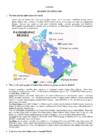
Canada is one of the least densely populated countries in the world. 4. Who are the native peoples of Canada? Métis (mixed-race decendants of the indigenous peoples) Inuit (also referred to as Eskimos) The First Nations (various indigenous peoples who are neither of the above) 5. The discovery of Canada by Europeans (St Brendan, Scandinavians, John Cabot, Jacques Cartier). St Brendan the Navigator (C6) was an Irish monk. Tradition holds that he reached North America on one of his voyages. Leif Eriksson (C11) was a Norseman who likely landed in North America around 1000 AD. John Cabot was an Italian explorer who reached North America in 1497. Jacques Cartier was a French explorer who landed in modern-day Newfoundland on 10 May 1534 6. From which countries did most immigrants arrive in Canada in the following periods: before the 1760s - The French founded New France and Québec City in 1608. 1760s to the end of the 19th century
9 4.LAEVADE TÖÖKORRALDUSE OPTIMAALSE VORMI VALIK Antud ülesande raames laevade optimaalseimaks töökorralduse vormiks otstarbekam valida trampveondust. Kuna Toornafta on 2 000 000 tonni transportimiseks on antud 10 aasta ja kindlaksmääratud kaks sadamad, siis reisid toimuvad järjestiku reziimi järgi (consecutive voyages). Selle vormi korral laevad töötavad teatud aja jooksul ja ühel ja samal veo suunal ning samade sadamate vahel (Primorsk-Rotterdam). Selleks, et ühe aastaga oleks võimalik vedada 2 000 000 tonni toornaftat on vaja kasutada laeva, mis on võimeline korraga vedada umbes 80 000 tonni toornaftat, aga kuna sellel laeval peab olema vastav jääklass, et Primorsk sadamasse sisse sõita ja laeva pikkus ei pea ületama
The game starts in the centre of the town, and the distance between two goals is two miles. The only rule is not to use motorcycles, cars and lorries in the game. In 1958 one team buried the ball. The other team didn't know and ran after them. Later first team took the ball and won. 3) JAMES WATT He was born in the small port of Greenock on the river Clyde in Scotland in 1736. His father was a mathematical-instrument maker and also kept a shop to supply ships with goods for their voyages. James was a delicate boy and often suffered from headaches. That is why he could not go to school at the age when other children did. His mother taught him to read and his father taught him writing and arithmetic. He had very good memory and a natural love of work. He liked mathematics and was also fond of designing and making things. James was an observant and thoughtful boy. When James was able to go to school, he was sent to a private school. He learnt many subjects there
In AD 985 Norse seamen sailing from Iceland to Greenland were blown far westward off their course and sighted the coast of what must have been Labrador. The report of forested areas on the strange new coast encouraged further explorations by Norse colonists from Greenland, whose settlers lacked lumber. In AD 1000 Leif Eriksson became the first European to land in North America. According to the sagas this was the first of many Norse voyages to the eastern shores of the continent. Leif Eriksson established a colony what the Vikings described as Vinland. By 1600 the wealth from the fur trade and the fishing industry renewed French interests in North America. The King of France decided to settle what is now eastern Canada. The colony would be named New France. But for that claim to be internationally recognized the region had to be successfully colonized by the French. To
9 commercial and maritime power of Europe, and Amsterdam was the financial centre of the Continent. (3) 2.7 Exploration and Colonization About 1600 a Dutch merchant expedition of three vessels sailed from Amsterdam to Java. This was the first of numerous journeys that left Dutch geographic names scattered over the globe, from Spitsbergen to Cape Horn and from Staten Island to Tasmania. These voyages resulted in the establishment or acquisition of many trading stations in Africa, Southeast Asia, and America. (3) In 1602 the Dutch parliament granted to the Dutch East India Company a charter that gave it a trading monopoly with all countries east of the Cape of Good Hope in Africa and west of the Strait of Magellan in South America. The charter also conferred many sovereign powers on the company, including the right to wage war and to conclude peace. The West India Company
kiireks määramiseks võib kasut Soringute vaikust eetris. kodeeritud, kontrolliga ja korrake täielikult" Kõikidel laevadel kogumahutavusega 400 ja Kaarti Lühireisideks ( lashing charts on short Iga veerand- ja kolmveerandtund peetakse 3 või ZL= ,,teie signaal on vastu võetud, kuid enam ning laevadel, kus on 15 või enam voyages ). Illustratiivne soringute kaart on minutti vaikust eetris (võimaliku SECURITE ja arusaamatu". laevapere liiget ning reisijat, peab olema ,,Prügi toodud 30t veokile, laeva kõikumisega 20 PANPAN teadete jaoks). Asenduslippude kasutamine: asenduslipu käitlemise plaan" ja ,,Prügiraamat". kraadi, pikiõõtse 5kraadi
USA: BasicBooks. Germann Molz, J. (2006). Cosmopolitan bodies: Fit to travel and travelling to fit. Body & Society, 12(3), 1-21. Germann Molz, J. (2008). Global abode: Home and mobility in narratives of round-the-world travel. Space and Culture, 11(4), 325-342. Giddens, A. (1991). Modernity and self-identity: Self and society in the late modern age. Cambridge: Polity Press. Gogia, N. (2006). Unpacking corporeal mobilities: The global voyages of labour and leisure. Environment and Planning A, 38(2), 359-375. Hall, S. (1996). Introduction: Who needs ‘identity’. In S. Hall & P. d. Gay (Eds.), Questions of cultural identity (pp. 1-17). London: Sage. Hannerz, U. (1990). Cosmopolitans and locals in world culture. In M. Featherstone (Ed.), Global culture: Nationalism, globalization and modernity (pp. 237-251). London: Sage. Havitz, M., & Dimanche, F. (1990)
 annaabi.ee