Leidsid 33 sarnast õppematerjali, mis on seotud failiga "Vene teadlaste avastused.". Need materjalid aitavad sul teemat sügavamalt mõista.
kulibin, 1904, project, clock, projects, designed, mechanic, built, bridge, light, ship9, 1891, 1895, 1818, mechanical, during, academy, other, ships, 1856, 1903, 1886, 1910, 1769, russia, developed, such, flywheel, brake, gear, novgorod, interest, special, workshop, current, worked, wooden, span, never, metallic, same, year, planet, asteroid, 1859The Adventures of Sherlock Holmes By Arthur Conan Doyle Sveta Kostina Arthur Conan Doyle was born in Edinburgh on 22nd May 1859. he studied medicine at the University of Edinburgh medical practice at Bush Villas in Elm Grove, Southsea good at sport two wives: Louisa (or Louise) Hawkins and Jean Elizabeth Leckie five childrens: two with his first wife and three with his second wife studied the eye in Vienna; practice as an ophthalmologist died of his heart attack, aged 71, on 7th July 1930 Arthur Conan Doyle Bibliography A Study in Scarlet (1887) The Sign of Four (1890) The Adventures of Sherlock Holmes (1892) The Memoirs of Sherlock Holmes (1894) The Hound of the Baskervilles (1902) The Return of Sherlock Holmes (1904) The Valley of Fear (1915) His Last Bow (1917) The Case-Book of Sherlock Holmes (1927) The Lost World (1912) The Poison Belt (1
Bloomsbury, where they had ten children. On 9 June 1865, while returning from France with Ternan, Dickens was involved in the Staplehurst rail crash in which the first seven carriages of the train plunged off a cast iron bridge that was being repaired.Because of that he died.( 9 June1870) Oliver Twist (1837-39), Nicholas Nickleby (1838-39), The Old Curiosity Shop and, Barnaby Rudge: A Tale of the Riots of 'Eighty as part of the Master Humphrey's Clock series (1840- 41), A Christmas Carol written in 1843. Hard Times- For These Times. is a novel by Charles Dickens, first published in 1854. The book is a state-of-the-nation novel, which aimed to highlight the social and economic pressures that some people were experiencing. Unlike other such writings at the time, the novel is unusual in that it is not set in London. A Christmas Carol in Prose, Being a Ghost Story of Christmas (commonly known as A
Foreword Bridging rivers, gorges, narrows, straits, and valleys always has played an important role in the history of human settlement. Since ancient times, bridges have been the most visible testimony of the noble craft of engineers. A bridge can be defined in many ways, but Andrea Palladio, the great 16th century Italian architect and engineer, hit on the essence of bridge building when he said "...bridges should befit the spirit of the community by exhibiting commodiousness, firmness, and delight." In more practical terms, he went on to explain that the way to avoid having the bridge carried away by the violence of water was to make the bridge without fixing any posts in the water. Since the beginning of time, the goal of bridge builders has been to create as wide a span as possible which is commodious, firm, and occasionally delightful
suppressed aspects of his mentality. Conan Doyle was found clutching his chest in the family garden on 7 July 1930. He soon died of his heart attack, aged 71, and is buried in the Church Yard at Minstead in the New Forest, Hampshire, England. His last words were directed toward his wife: "You are wonderful." The epitaph on his gravestone reads: STEEL TRUE BLADE STRAIGHT ARTHUR CONAN DOYLE KNIGHT PATRIOT, PHYSICIAN & MAN OF LETTERS Undershaw, the home Conan Doyle had built near Hindhead, south of London, and lived in for at least a decade, was a hotel and restaurant from 1924 until 2004. It was then bought by a developer, and has been empty since then while conservationists and Conan Doyle fans fight to preserve it. A statue honours Conan Doyle at Crowborough Cross in Crowborough, East Sussex, England, where Sir Arthur lived for 23 years. There is also a statue of Sherlock Holmes in Picardy Place, Edinburgh, Scotland, close to the house where Conan Doyle was born
London History The Romans AD 43- AD 410 The Romans finally invaded Britain in AD 43 from Kent. The Romans lead by Julius Caesar attempted to invade Britain twice before that in 55 and 54 BC but the invasions were unsuccessful. They made their way to the river Thames and sailed up it. The Romans knew it was important to control a crossing point at the river Thames, so they decided to build a settlement on the north bank. Although small settlements had been built on the banks of the Thames, the Romans were the ones who built the first city. They called their city Londinium. The Roman engineers noticed that the point where the swampy river narrowed would make an ideal crossing point, they built London Bridge. Less than 20 years later the native Iceni tribe, led by Queen Boudicca, rose up against the Romans in revenge for mistreatment and burnt Londinium to the ground. The well disciplined Roman army defeated her forces and Londinium was rebuilt
Some of Kipling's earliest and fondest memories are of his and sister Alice's trips to the bustling fruit market with their ayah or nanny, or her telling them Indian nursery rhymes and stories before their nap in the tropical afternoon heat. His father's art studio provided many creative outlets with clay and paints. Often the family took evening walks along the Bombay Esplanade beside the Arabian Sea, the dhows bobbing on the glittering waters. Kipling's days of "strong light and darkness" in Bombay were to end when he was five years old.[21] As was the custom in British India, he and his three-year-old sister, Alice (or "Trix"), were taken to England--in their case to Southsea (Portsmouth), to be cared for by a couple that took in children of British nationals living in India. The two children would live with the couple, Captain and Mrs. Holloway, at their house, Lorne Lodge, for the next six years. In his autobiography,
1918). Oli samal ajal kui James McKeen Cattell Wundti õpilane (1884). Tema esimene teaduslik uurimus ilmus Wundti toimetatud ajakirjas Philosophische Studien ja oli pühendatud komplikatsiooni katsetele. Tõlkis Wundti füsioloogilise psühholoogia õpiku vene keelde. Pidas -5- Psühholoogia Eestis J.Allik 2002 iga aastal kuni 1904. aastani regulaarselt psühholoogia kursust. Sarnaselt Kraepeline juhendas mitmeid eksperimentaalpsühholoogia dissertatsioone: nahapuudutuste ruumimälu (E.Loewenton, 1893); memory of active movements (F.Schneider, 1894); asukoha taju ja selle mälu (B.Barth, 1894); visuaalne mälu (K.Zaborovsky, 1894); erineva sotsiaalse päritoluga naiste taktiilne ja maitsetundlikkus (W.V.Dehm, 1894); pulsi ja hingamise muutus erinevates psüühilistes seisundites (G
ordinary. His reputation was saved by the intervention of Ruskin who was also a critic bud who defended him. The publicity excited by the painting provoked Queen Victoria into requesting a private viewing. Her opinion is not known. "Ophelia" ( 1852) oil on canvas- many Shakespearean allusions(vihjed)- for example the rose in her hand implies to his brother Laertes (because he had discribed her as the rose of may). Millais spent a lot of time studying the exact stream and how the trees shed light on it. His model was Elizabeth Siddal who was later Rossetti's wife. She had to pose fully dressed in a bath-tub and caught cold because of it. Dante Gabriel Rossetti (1828 82) Painter and a poet. He was gifted with a great imagination. He grew up in a literary environment because his sister was also a poetess. He was fascinated with Keats poetry- this is what connected him and Hunt. After the hostile reception of the Pre-Raphaelites, Rossetti devoted a decade largely to
painted Soldier with a Pipe (1916) while on furlough. In September 1916 he almost died after a mustard gas attack by the German troops at Verdun. During a period of convalescence in Villepinte he painted The Card Players (1917), a canvas whose robot-like, monstrous figures reflect the ambivalence of his experience of war. As he explained: ...I was stunned by the sight of the breech of a 75 millimeter in the sunlight. It was the magic of light on the white metal. That's all it took for me to forget the abstract art of 1912-1913. The crudeness, variety, humor, and downright perfection of certain men around me, their precise sense of utilitarian reality and its application in the midst of the life-and-death drama we were in...made me want to paint in slang with all its color and mobility.[4] This painting marked the beginning of his "mechanical period", during which the figures and
" Garrison was likewise impressed with Douglass, and mentioned him in the 'Liberator'. Several days later, Douglass gave his first speech at the Massachusetts Anti-Slavery Society's annual convention in Nantucket. Twenty-three years old at the time, Douglass later said that his legs were shaking. He conquered his nervousness and gave an eloquent speech about his rough life as a slave. In 1843, Douglass participated in the American Anti-Slavery Society's Hundred Conventions project, a six month tour of meeting halls throughout the east and middle west of the United States. He participated in the Seneca Falls Convention, the birthplace of the American feminist movement, and was a signatory of its Declaration of Sentiments. Douglass later became the publisher of a series of newspapers: North Star, Frederick Douglass Weekly, Frederick Douglass' Paper, Douglass' Monthly and New National Era.
London important sights guide Roman period 20th century · Big Ben is the nickname for the great bell of the clock at the north end of the Palace of Westminster in London and is often extended to refer to the clock or the clock tower as well. It is the largest four-faced chiming clock and the third-tallest free-standing clock tower in the world. The clock first ticked on 31 May 1859. The pendulum is installed within an enclosed windproof box sunk beneath the clockroom. It is 3.9m long, weighs 300 kg and beats every 2 seconds. The clockwork mechanism in a room below weighs 5 tons. · Buckingham Palace is the official London residence of the British monarch. Originally known as,
THE CITY OF LONDON History The City of London occupies one square mile in the middle of the capital. It once made up entire town of London, surrounded by the wall first built by Romans. The Romans also built a bridge over the Thames and there has been one in the same area ever since. The Roman Londinium grew up on the northern side of the bridge. In AD 61 the native Celtic tribe, led by Queen Boudicca, rose up against the Romans. They burnt down Londinium to the ground and killed most of its inhabitants. Roman armies eventually defeated Boudicca and Londinium was rebuilt. At the end of the fourth century AD the Roman Empire began to crumble and the Roman armies were recalled from Britain to defend Rome itself. Once they had left, tribes such as Angles, Saxons and Jutes invaded and settled in from Holland, Germany and Denmark
by the end of the day that he wanted to buy the house. For the house and furnishings, the Prince paid £220,000. Sandringham's first role was as a home for newly-weds. Prince Albert Edward married Princess Alexandra of Denmark on 10 March 1863, and they travelled to Norfolk 18 days later. The young couple made many extensions and improvements to the house and estate, including the construction of new roads, the rebuilding of cottages and landscaping. A new garden wall was built to accommodate the magnificent gift of the famous Norwich Gates - spectacular ironwork gates designed by Thomas Jekyll and presented as a wedding gift by the people of Norwich and Norfolk. It became obvious that the existing house was not suitable for large social gatherings and a growing family, so the Prince of Wales rebuilt it completely. As home to the heir to the throne and his wife, Sandringham was venue to many glittering occasions
If Victoria was to insistently interject her opinions and make her views felt in the cabinet, it was only because of Albert's teachings of hard work. The general public, however, was not enamored with the German prince; he was excluded from holding any official political position, was never granted a title of peerage and was named Prince Consort only after seventeen years of marriage. Albert took an active interest in the arts, science, trade and industry; the project for which he is best remembered was the Great Exhibition of 1851, the profits from which helped to establish the South Kensington museums complex in London. Reflecting back into her childhood, Victoria was always prone to self pity. On Dec. 14th 1861 Albert died(aged 42) from typhoid fever at Windsore Castle. Victoria was deeply attached to her husband and she sank into depression after he died. She had lost a devoted husband and her principal trusted adviser in affairs of state
The City of London History The City of London occupies one square mile in the middle of the capital. It once made up the entire town of London, surrounded by the wall first built by the Romans. The Roman Londinium grew up on the northern side of the "London Bridge" in the past. Products such as olive oil, wines and fruit were brought by ships from different parts of the Roman Empire and unloaded onto wooden quays along the river. In AD 61 the native Celtic Iceni tribe, led by Queen Boudicca, rose up against The Romans. They burnt Londinium to the ground but Roman armies eventually defeated Boudicca. The city was rebuilt and was gradually surrounded with a wall
................................................................................10 Conclusion..........................................................................................................................................12 References..........................................................................................................................................13 Introduction What is nuclear power? Nuclear power is any nuclear technology designed to extract usable energy from atomic nuclei via controlled nuclear reactions. The most common method today is through nuclear fission, though other methods include nuclear fusion and radioactive decay. All utility-scale reactors heat water to produce steam, which is then converted into mechanical work for the purpose of generating electricity or propulsion. In 2007, 14% of the world's electricity came from nuclear power. More
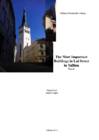
Old Thomas - quardian of Tallinn, put on top of the spire of Tallinn Town Hall in 1530; boy that excelled springtime contests thrown by Baltic German elite, because of his low-born status was unable to receive a prize, therefore was granted the position of town guard. Right now there’s third Old Thomas, first one can be seen at Tallinn City Museum. Toompea as a symbol of power Toompea palace - wooden fortification was originally built in the 9th century, Danes made the castle the centre of secular power; Toompea palace hosts the parliament of the Republic of Estonia, designed by Eugen Habermann and Herbert Johanson. The parliament has 101 members and is chosen for 4 years. Stenbock House - the official seat of the Estonian Government since 2000; the building started in 1787, originally meant to be a courthouse. After russians ran out of fund, house went into Jakob Pontus Stenbock’s possession
Therefore, the steel design and construction industry has been on the forefront of technical innovation. The purpose of this study is to determine how 3D and BIM are changing the design, fabrication and construction of complex steel structures. The thesis is qualitative in nature, in that it tries to determine the effects of virtual design and construction based on in-depth analysis of two case studies. Data were collected during 5 interviews with people who were intimately involved in the projects. Background information was obtained from professional journals, engineering articles and conference papers. During analysis, the data were compared to propositions that emerged from the literature review to determine whether a clear pattern was present. A comparison table was created to compare the effects of virtual design and construction of the two projects. Additionally, a schedule is presented to explain the deadline slippage on one of the case studies. The schedule is
These Games proved a success. Paradoxically, the first president of this non-commercial and non- governmental organization was not Coubertin himself, but Demetrius Vikelas from Greece. Still Coubertin was the driving force behind the Olympic movement. Vikelas stepped down after the games had been held in his own country and then Coubertin became the president. Despite the initial success, the Olympic Movement faced hard times, as the 1900 (in De Coubertin's own Paris) and 1904 Games were both swallowed by international fairs, and received little attention. This changed for the better after the 1906 Summer Olympics, and the Olympic Games grew to become the most important sports event. De Coubertin stepped down from his IOC presidency after the 1924 Olympics in Paris, which proved much more successful than the first attempt in that city in 1900. He was succeeded as president by Belgian Henri de Baillet-Latour.
Legend has it that one day, when the Danes were about to lose a bloody battle, the sky suddenly opened and a red flag with a white cross on it dropped down upon them from the heavens. This is allegedly how the Danes obtained their national flag, the Dannebrog in a battle against the Estonians. In the middle of the 14th century Denmark sold its possessions in Estonia to the German Teutonic Order. Toompea became the seat of the German-born gentry. A wall was built to separate the Upper Town and the Lower Town. In 1285 Tallinn joined the Hanseatic league and became a junction of trade between East and West. Tallinn is said to be built on salt, as it was an important trading commodity. In the 16th century Tallinn had a population of about 7,000 8,000 making it one of the biggest cities in northern Europe. In 1629 Sweden took control of the whole of Estonia. Though hard times
[1] In 1887 Victoria's golden jubilee (fifty years in power) was celebrated, and ten years later, her diamond jubilee (sixty years in power) was magnificently celebrated. [8] Death of Queen Victoria The Victorian Era came to an end when the symbol of the age, Queen Victoria, died on January 22, 1901. Britain's monarch, who had ascended to the throne at the age of 18, was 81 years old. [9] She was buried at Windsor beside Prince Albert, in the Frogmore Royal Mausoleum, which she had built for their final resting place. Above the Mausoleum door are inscribed Victoria's words: 'farewell best beloved, here at last I shall rest with thee, with thee in Christ I shall rise again'. [7] Wordlist · subsequent(adj)- happening or coming after something else · a withdrawal(noun) - the act of moving or taking something away or back · the Electoral Reform- a group formed in 1884 to work for a change in the way
The Presentations Triinu: "The Notorious Prisoners of the Tower" Built in 1078, has been used as a fortress, Royal Palace, a prison, the home for Crown Jewels. The first prisoner was Ranulf Flambard in 1100. The only woman tortured in the Tower was Anne Askew. Guy Fawkes was prisoned 5 th November 1605, hung in 1607. Walter Raleigh was knighted, married without queen´s permission. Last prisoners were in the Tower in 1952. Rita: "Alexander Fleming" Was a pharmacologist, has graduated 6 schools, studied anti-bacterial agents, found
Given that the construction industry does not have a particularly good reputation among the public, the first part of this thesis focuses mainly on this problem and its sources. It is the reason why we need new and better business models, like LC and BIM, or even an integration of the two models. Both LC and BIM have been shown to have a profound impact on improving construction processes and therefore, project outcomes, as discussed in the third and the fourth chapters. Different studies and practical experience show that a combination of these originally independent approaches can ensure even better processes. Integrated Project Delivery (IPD), which is discussed in the fifth chapter, is an example of this. In conclusion, a recommendation supported by research is made for improving the Estonian construction industrys performance.
Sculptures and monuments St. John's Lutheran Church St John's Church was probably built in the first third of the 14th century. There is no other brick church decorated with so much terracotta plastic in Europe Eduard Tubin Monument The Eduard Tubin monument, marking the 100th birthday of the composer, was dedicated in 2005. The authors of the statue are sculptor Aili Vahtrapuu, architect Veronika Valk, with sound installations by Louis Dandrel.Eduard Tubin (1905-1982) was a versatile composer and conductor, one of the most recognized symphonists throughout history
Adventures of Huckleberry Finn, which has since been called the Great American Novel, and The Adventures of Tom Sawyer. He is extensively quoted. During his lifetime, Twain became a friend to presidents, artists, industrialists and European royalty. Twain enjoyed immense public popularity. His keen wit and incisive satire earned him praise from both critics and peers. American author William Faulkner called Twain "the father of American literature." Twain began his career writing light, humorous verse but evolved into a grim, almost profane chronicler of the vanities, hypocrisies and murderous acts of mankind. At mid-career, with Huckleberry Finn, he combined rich humor, sturdy narrative and social criticism. Twain was a master at rendering colloquial speech and helped to create and popularize a distinctive American literature built on American themes and language. Many of Twain's works have been suppressed at times for various reasons. Adventures of Huckleberry Finn has been
source for the Imperial Valley has desiccated the lower course of the river in Mexico such that it no longer consistently reaches the sea. The Tennessee River is the largest tributary of the Ohio River. It is approximately 1049 km long and is located in the south-eastern United States in the Tennessee Valley. The river was once popularly known as the Cherokee River, among other names. The river has been dammed numerous times, primarily by Tennessee Valley Authority projects. The Ohio River is the largest tributary by volume of the Mississippi River. It is approximately 1,579 km long and is located in the eastern United States. The river had great significance in the history of the Native Americans. It was a primary transportation route during the westward expansion of the early U.S. It flows through or along the border of six states, and its watershed encompasses 14 states, including many of the states of the south eastern U.S. through its largest
The origins of American literature The first Americans were explorers and settlers, adventurers and idealists who crossed the ocean in search of new opportunities or to escape the poverty and intolerance. Their writings were matter-of-fact accounts of life in America, which explained colonisation to Englishmen back in the homeland. An example of this form of writing is John Smith's A True Relation of Virginia, which is widely recognized to be the first example of Am lit. The early years of colonisation produced a mass of utilitarian writings including biographies, accounts of voyages, diaries, sermons, pamphlets. Much of the material addressed the problems of Church and State. There were few examples of fiction, poetry or drama. Anne Bradstreet of Massachusetts published some lyrical poems of high literary quality (1650) and Edward Taylor, who was born in England but lived in Boston, wrote some poetry in the style of John Donne and the metaphysical poets. All 17 th cent A
It seems that the Celts, who had been arriving from Europe from the 8th cent BC onward, intermingled with the peoples who were already there. The Celts were extremely talented people, creative and artistic. More than 1 Celtic tribe invaded Br. The descendants of ancient Celts live in Wales, Scotland, Cornwall and Ireland. They lived in primitive society. Druids priests, more powerful than chiefs. Acted like prophets. 2. Stonehenge From prehistoric period. Was built on Salisbury plain between 2500 and 1500 bc. One of the most famous and mysterious archaeological sites in the world. One of the mysteries is how it was built at all with the technology of the time. Another is its purpose. It appears to function as a kind on astronomical clock and we know it was used by the Druids for ceremonies marking the passing of the seasons. It appears in number of novels. These days it is not only the interest of tourists but is also a
Every five years national song and folk dance festivals take place in Tallinn. The yachting regatta of the 1980 Moscow Olympic Games was held at Pirita. History Tallinn means in English "Danish town". The place is believed to have been settled by Finno-Ugric people about 2500 BC. It was first marked on a map of the world by the Arab geographer al-Idrisi in 1154. The Estonians were the first to build a stronghold on the spot of the Toompea Hill, but the real Tallinn was built by the Danes who conquered the north of Estonia in 1219. Legend has it that one day, when the Danes were about to lose a bloody battle, the sky suddenly opened and a red flag with a white cross on it dropped down upon them from the heaven. This is how the Danes obtained their national flag. In 1346 the Danish king sold his Estonian lands to the Teutonic Order, who a year later resold them to the Livonian Order. The Germans renamed Tallinn and called it Reval.
Wilhelm Eduard Weber (24 October 1804 23 June 1891) was a German physicist. * Saksa füüsik, kes koostas absoluutse mõõtühikute süsteemi. Ta ehitas Saksamaale esimese elektromagnetilise telegraafi * Tema nime kannab magnetvoo mõõtühik. The SI unit of magnetic flux, the weber (symbol: Wb) is named after him. Heinrich Rudolf Hertz (February 22, 1857 January 1, 1894) was a German physicist who clarified and expanded the electromagnetic theory of light that had been put forth by Maxwell. He was the first to satisfactorily demonstrate the existence of electromagnetic waves by building an apparatus to produce and detect VHF or UHF radio waves. Saksa füüsik, kelle järgi see sagedusühik oma nime sai. Hendrik Antoon Lorentz (18 July 1853 4 February 1928) was a Dutch physicist who shared the 1902 Nobel Prize in Physics with Pieter Zeeman for the discovery and theoretical explanation of the Zeeman effect.
von Kotzebue (1761-1819), the life and soul of the theatre, lived in Tallinn for several long periods. (Otto von Kotzebue, the son of August von Kotzebue, accompanied explorer Adam Johann von Krusenstern on his Journey around the World of 18031806.) Estonian was heard from a theatre stage for the first time. Early in the 19th century city architect Carl Ludwig Engel (helped rebuild Helsinki and also built the palace at 8 Kohtu Street on Toompea) designed a sumptuous hall for the theatre, but it was destroyed in a fire. Another fire devastated the theatre in 1902, after which it moved out from Old Town. The premises came into the possession of the Puppet Theatre in 1955. In 1991, the whole building was given to the theatre. Renovation works took place in 2001-03. 5 17 Lai Street Lai 17, so-called Menshikov House was completed about 1685 in the Dutch Baroque style. The family coat-of-arms on the pediment was added in 1817 by
threatening to demolish the stately edifice.1 The overture was warmly received, as with every new symphonic composition at the time, but it did not have any permanent influence on Estonian symphonic music. Obviously such themes demanded quite a different creative hand, one that could express “thunder and lightning”. Some later works by Läte do not excel the overture in their quality. No doubt, for the composer the overture was a weighty achievement. From 1904 onwards the activities of the composer Rudolf Tobias played an important role in Tartu. He returned from St. Petersburg, where he had graduated from the Conservatoire as a composer and organist in 1897. He was active as a music teacher, conductor, organist, pianist, critic, and together with Läte arranged performances of classical music. Tobias formed the first Estonian string quartet and Heino Eller (1887-1970) was its first violinist. In 1906 the Vanemuine Theatre
immediately from indicators that the message bore for the guidance of Japanese code clerks that it was in the top Japanese cryptographic system. This was an extremely complicated machine cipher which American cryptanalysts called PURPLE. Led by William F. Friedman, Chief Cryptanalyst of the Army Signal Corps, a team of codebreakers had solved Japan's enciphered dispatches, deduced the nature of the mechanism that would effect those letter transformations, and painstakingly built up an apparatus that cryptographically duplicated the Japanese machine. The Signal Corps had then constructed several additional PURPLE machines, using a hodgepodge of manufactured parts, and had given one to the Navy. Its three components rested now on a table in Room 1649: an electric typewriter for input; the cryptographic assembly proper, consisting of a plugboard, four electric coding rings, and associated wires and switches, set on a wooden frame; and a printing unit for output
 annaabi.ee