Leidsid 33 sarnast õppematerjali, mis on seotud failiga "Transport system in London". Need materjalid aitavad sul teemat sügavamalt mõista.
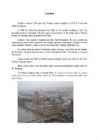
underground, rail, airport, network, service, hire, cycle, surface, known, ticket, europe, buses, services, iconic, black, bicycle, best, there, cycling, kaspar, local, government, responsible, greater, england, tube, oldest, metro, lines, majority, rather, than, tunnel, begin, heavy, focal, british, along, paris, train, scheduled, weekday, routes, nightAs of July 2007, it had an official population of 7,556,900 within the boundaries of Greater London making it the most populous municipality in the European Union, with a population more than double that of its nearest rival. As of 2001, the Greater London Urban Area had a population of 8 278 251 and the metropolitan area is estimated to have a total population of just under 14 million, the largest metropolitan area in the EU. The public transport network, administered by Transport for London, is one of the most extensive in the world, Heathrow Airport is the busiest airport in the world by international passenger traffic and the air space is the busiest of any city in the world. Parks and gardens The largest parks in the central area of London are the Royal Parks of Hyde Park and its neighbour Kensington Gardens at the western edge of central London and Regent's Park on the northern edge.
London Stansted Airport JESSICA PENTSOP 8.C London Stansted Airport London Stansted Airport is an international airport located at Stansted in the local government district of Uttlesford Essex. Stansted is a base for a number of major European low-cost carriers, being the largest base for low-cost airline Ryanair with over 100 destinations served by the airline. Map Review About the Airport In 2013 it was the fourth busiest airport in the United Kingdom after Heathrow, Gatwick and Manchester. Stansted’s runway is also used by private companies such as the Harrods Aviation terminal wich is opposite the main terminal building and handles private jets and some state visits. Owners The airport is owned and operated by the Manchester Airports Group (MAG), wich also owns and operates three other UK airports.
capital of the British Empire. Its population expanded from 1 million in 1800 to 6.7 million a century later. During this period, London became a global political, financial, and trading capital. In this position, it was largely unrivaled until the latter part of the century, when Paris and New York began to threaten its dominance. The first railway to be built in London was a line from London Bridge to Greenwich, which opened in 1836. This was soon followed by the opening of great rail termini which linked London to every corner of Britain. These included Euston station (1837), Paddington station (1838), Fenchurch Street station (1841), Waterloo station (1848), King's Cross station (1850), and St Pancras station (1863). From 1863, the first lines of the London Underground were constructed.Parliament finally gave consent for the MBW to construct a massive system of sewers. The engineer put in charge of building the new system was Joseph Bazalgette
city under Danish king Canute and forced the then-English king to flee. Years later, following a victory at the Battle of Hastings, William the Conqueror was crowned King of England in the newly-finished Westminster Abbey in 1066. William granted the citizens of London special privileges while building a castle in the corner of the city to keep them under control. This castle was expanded by later kings and is now known as the Tower of London. The city grew in wealth and population during the Middle Ages. In 1100 its population was around 18,000 but after 200 years it had grown to nearly 100,000. However disaster struck during the Black Death, when London lost nearly a third of its population. After the defeat of the Spanish Armada, stability in politics allowed the city to grow even more. In 1603, James VI of Scotland came to the throne of England, essentially uniting the two countries. An
Farriner in Pudding Lane and lasted for five days. London is the capital of England and the United Kingdom. By now London has swallowed up many of the small towns and villages that once surrounded it. London is on the same latitude as Warsaw. London is a city were more than 7 million inhabitants live. In London there are famous Telephone booths and taxis. Also there are red double- decker buses. The quick and easy way is use the underground trains. The cheapest is to buy a Travelcard. London hosted the 1908 and 1948 Summer Olympic Games and will host the 2012 Summer Olympic Games. Many visitors come to see the famous sights, museums and galleries; others come for the shopping. The famous sopping street is Oxford Street. It is the most famous street in London where you can buy souvenirs, clothes, and so on. Today Harrods's is among the world`s best known shops.
surrounded it. It is a city of seven million pepole covering 1,606 square miles. London is an exciting city which attracts people from all over the world. Nowadays the population of London is made up of the people of many nationalities because it is a popular place to live. Many visitors come to see the famous sights, museums and galleries. London's West End has many theatres and concert halls, which attract both the inhabitants and tourists. The most usual means of transport in London are Underground trains and red double decker buses. A quick and easy way to travel around the city is to use the Underground trains, which run all day and most of the night. But you can see much more of London from red double decker buses. It is very expensive if you buy a single ticket but the cheapest is to buy a Travelcard, which you can get for one day or for several days. Besides these there are special visitor's buses that take you to the most important sights during one and a half hours
England's capital London, is the largest metropolitan area in the United Kingdom, drawing from a wide range of people, cultures and religions, speaking over 300 different languages, mixing their culture, traditions, music. It is the largest urban zone in the European Union, today one of the world's most important business, financial and cultural centres. London is an international transport hub, with five international airports and a large port, it has extensive underground, train, bus and taxi services. It is a major tourist destination and one of the world's most remarkable and exciting cities, with iconic landmarks including the Houses of Parliament, Tower Bridge, the Tower of London, Westminster Abbey, Buckingham Palace and the London Eye amongst its many attractions, along with famous institutions such as the British Museum and the National Gallery. About 30% of London is made up of parks and green space, that provides the perfect opportunity for walks,
Regents park, Richmond Park, St James's park and Hyde park. Hyde Park is the best known because it's the largest and finest park in London. Its territory is 140 hectares. It is famous for its public speakers who stand on a box, a table or just a chair and talk to little crowds about all sorts of political, social and other ideas. The Greenwich Park is also special, because it is surrounding the national sea museum. The Regents Park is known, because there is the London zoo. The London zoo, opened in 1828 as a scientific zoo, is the oldest one in the whole world. In 1848, it was opened for people. The London zoo covers 36 acres and there are about 5000 animals in the zoo. The zoo is open every day except Christmas Day. The ticket costs 14 pounds for and adult and 10.75 pounds for a child. St. James's park is famous for its water birds, for example ducks and pelicans. Buckingham palace is near St James's park. The building of the
the most populous municipality in the European Union, with a population more than double that of its nearest rival. As of 2001, the Greater London Urban Area had a population of 8 278 251 and the metropolitan area is estimated to have a total population of just under 14 million, the largest metropolitan area in the EU. The public transport network, administered by Transport for London, is one of the most extensive in the world, Heathrow Airport is the busiest airport in the world by international passenger traffic and the air space is the busiest of any city in the world. Leisure and entertainment Piccadilly Circus at night The Trooping the Colour held in 2006 to mark the Queen's 80th birthday. Within the City of Westminster, the entertainment district of the West End has its focus around Leicester Square, where London and world film premieres are held, and Piccadilly Circus, with its giant electronic advertisements. London's theatre
The largest islands that belong to the United Kingdom are the Isle of Man in the Irish Sea and the Isle of Wight which lies off of England's southern coast. The largest groups of islands are the Shetland Islands, the Orkney Islands and the Hebrides. Geographical Position The UK is situated in the Northern Hemisphere. The United Kingdom is bordered by the Atlantic Ocean in the west, the North Sea in the east, the Norwegian Sea in the north, and the English Channel, also known as La Manche, in the south and it also separates the country from the continent of Europe. The neighbours of the United Kingdom are Iceland in the north-west, Norway in the east and France in the south. Britain also has many dependant territories which are scattered throughout the world and are the remains of the huge former British Empire. Today Britain assists them, but they may become independent whenever they wish. There have been some difficulties with some of the territories
written 13 musicals. The story is based on a book. The musical was first staged at Sydmonton, at the home of A.L Webber. The main actors were Sarah Brightman and Michael Crawford. There have been 65 000 performances and over 80 million people have seen it. There was a film made in 2004. The play consists of 2 acts. The main characters are The Phantom and Christine, then Raoul, Carlotta, Madame Giry. It has won over 50 awards. The opera house has 17 floors, is above an underground lake, was built in 1861-1875 in a neo-baroque style, golden ornamental decorations, statues, columns and bronze busts of composers Siret: "Prince Albert" Born in 1819 in Germany. He had unhappy childhood (parents divorced when he was little), mother left them, met Victoria at age 17, they were introduced by Uncle Leopold, they fell in love. They got married and got 9 children, 40 grandchildren. At first he was unpopular, after he made many great changes he became popular
sanctioned by the UN. History Ireland is the successor-state to the Dominion called the Irish Free State. That Dominion came into being when all of the island of Ireland seceded from the United Kingdom of Great Britain and Ireland on 6 December 1922. However, the following day the Parliament of Northern Ireland exercised its right under the Anglo-Irish Treaty to opt back into the United Kingdom. This action, known as the Partition of Ireland, followed four attempts to introduce devolved autonomous government over the whole island of Ireland (in 1886, 1893, 1914 and 1920). The Irish Free State was abolished when Ireland was formally established on 29 December 1937, the day the Constitution of Ireland came into force. Irish independence in 1922 was preceded by the Easter Rising of 1916, when Irish volunteers and the Irish Citizen Army took over sites in Dublin and Galway under terms
Oxford Street , Regent Street , Bond Street and others streets . Oxford Street . Oxford Street is one and a half miles end to end. Most shops open 10am until 6 or 7pm. Some open Sunday 12 to 6pm with late nights on Click to edit Master text styles Thursday. Oxford Street is best known for Selfridges and the other big department stores which are all found in the section from Marble Arch to Oxford Circus, along with most of the big-name multinationals. It's more of the same as you continue towards Tottenham Court Road, but generally on a smaller scale. Oxford Street is said to be the busiest shopping street in Europe. Second level Third level
The name came after some people felt an unexpected swaying motion on the first two days after the bridge opened. It was then closed and modified. Hyde Park is London's largest open space (630 acres). Hyde Park was the site of Prince Albert's Great Exhibition in 1851. It used to be a hunting ground for Henry VIII. It is famous for its Speakers' Corner. The park has become a traditional location for mass demonstrations. Another place often visited by tourists is the London Eye also known as the Millennium Wheel. It is the tallest (135 metres) Ferris wheel in Europe. It was established in 1834. It has 32 capsules and you can see 40 km from the top of the wheel. 4
southeast corner of the city to keep them under control. This castle was expanded by later kings until it became the complex we now call the Tower of London. The Tower acted as royal residence, and it was not until later that it became famous as a prison. In 1176 the first stone London Bridge was built. This bridge was to remain the only one in London until 1739. Because the passage across this one bridge was narrow and clogged with traffic, it was much quicker for travellers to hire boatmen to row them across the river, or transport them up or down river. In 1191 Richard I acknowledged the right of London to self-government, and in 1192 the election of the first Mayor was held. In 1245 Henry III began his lifetime work of rebuilding Westminster Abbey, which was re- consecrated in 1269. An other building project of the medieval period was Old St. Paul's Cathedral which was finished in 1280. Tudor London 1485-1603
grazing. Over half of all full-time farms are devoted to dairy- or beef-farming, or sheep raising. Tourism forms a big part of English economy. Britain is one of the world's leading tourist destinations. The industry is a big business and now about 2 million people are employed in this area. The majority of tourists come from Western Europe. It is good to travel all over Britain because there is a good railway and road network. It is also possible to travel by inland waterways. People come to Britain because the things that you can see there are very famous all over the world e.g. Stonehenge, Big Ben and of course the magnificent natural beauty. History. Britain was connected to the European mainland by a land bridge until the end of the last Ice Age. Afterwards the ice started to melt and oceans began to rise and the connection was covered with water. Britain became a separate island in about 6000 BC
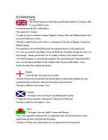
The re st of the population is generally considered Anglo-Saxon in origin. Nowadays Britain is a multi- racial society. In fact, it has an ethnic minority population of about 2.58 million corresponding to 4.7% of the total population. About 45% of these people were actually born in Britain. Most immigrants originated from the Commonwealth countries, such as the West Indies, India and Pakistan. FLAG The Union Flag, popularly known as the Union Jack, is the national flag of the United Kingdom. It is the British flag. It is called the Union Flag because it symbolises the administrative union of the countries of the United Kingdom. It is made up up of the individual Flags of three of the Kingdom's countries all united under one Sovereign - the countries of 'England, of 'Scotland' and of 'Northern Ireland'. As Wales was not a Kingdom but a Principality it could not be included on the flag. Industry
The main function of the House of Commons is to legislate. The House of Lords is presided over by the Lord Chancellor. It is made up of Lords Spiritual and the Lords Temporal, the latter comprise all hereditary and life peers. The leader of the party which obtains a majority of seats in a general election is named Prime Minister. A number of ministers are invited by the Prime Minister to attend regular meetings to discuss policy and this group of ministers is known as the Cabinet. The main opposition party forms a Shadow Cabinet. People vote for any one of the candidates in the constituency in which they are registered. The Conservative Party was formed by Robert Peel from what was left of the old Tory party in the 1930s. The Labour Party was formed by James Keir Hardie in 1892 to represent the workers. The recently-formed Green Party has begun to threaten the left-of-centre Liberal Democratic Party as the nation's "third" party.
Most of the land is suitable for agriculture, although the largest area is reserved for pasture and grazing land. Agriculture provides around 60 per cent on the country's food needs. The biggest cities in The UK are: Edinburgh and Glasgow in Scotland; Cardiff, Newport and Swansea in Wales; Belfast and Londonderry in Northern Ireland and London, Oxford, Birmingham and York in England. Edinburgh is the capital of Scotland and is well known for its monuments and for the International Festival which is held every August. Glasgow is the industrial capital of Scotland, it lies on the River Clyde and is the third largest city in Great Britain. Cardiff is the capital of Wales, and Newport and Swansea are the biggest cities in Wales. Belfast is the capital of Northern Ireland, it is also the most important port and industrial and commertial centre. Oxford is the home of the oldest university in England
Boudicca, rose up against the Romans. They burnt down Londinium to the ground and killed most of its inhabitants. Roman armies eventually defeated Boudicca and Londinium was rebuilt. At the end of the fourth century AD the Roman Empire began to crumble and the Roman armies were recalled from Britain to defend Rome itself. Once they had left, tribes such as Angles, Saxons and Jutes invaded and settled in from Holland, Germany and Denmark. Together they are known as Anglo-Saxons. They were farming people who preferred living outside towns. For a while London probably lay in ruins, but it eventually developed again, partly because its position on the river was good for trading. In 1666 most of the City of London was destroyed in the Great Fire of London. London Bridge The home of the London Bridge is the Thames River, and a bridge has existed on the spot for at least the last 2000 years
The Roman stone wall, parts of which can still be seen on the territory of the Tower, may have been a small Roman fort near the river. The White Tower, called so on account of the white Caen stone Brought from Normandy, is the original Norman stronghold. It is the central building of the Tower of London. The white tower has three small square towers and one round one. Later other buildings were added. It has served as a palace as well as a fortress, but it is as a prison that it is known best. Many people have been locked in the Tower, for religious beliefs or suspected treason. Traitors' Gate, set in the southern wall of the Tower, has steps leading down to the river Thames. Countless prisoners, including the future Queen Elisabeth I, were brought to the Tower by barge and went up the steps before being imprisoned for many it was their last moment of freedom before their death. Fortunately, Elisabeth was released from the Tower and later became Queen.
Subsequently I will write about plague doctors, what they wore as a protection against the plague, how people invented different techniques to fight the plague and what the City Corporation did with cats and dogs. Finally, I will share the wisdom what I acquired on the fading point of the plague and how people thought that the Great Fire of London put an end to the Great Plague. 2 1 BUBONIC PLAGUE Bubonic plague also known has Black Death got its name from the symptoms because the victim's skin turned black. The plague spread from animals to humans by fleas. Nowadays bubonic plague does not spread to advanced countries which are located in Europe. Last greater plague outbreak was in Kongo Democratic Republic. (Wikipedia homepage: http://et.wikipedia.org/wiki/Katk) 1.1 Symptoms Buboes are commonly found in the armpits, groin or neck. Due to its bite-based form of
coast of mainland Europe. The largest island is Great Britain, which is also the largest island in Europe. It consists of England, Wales and Scotland. The next largest island is Ireland, which is made up of Northern Ireland and the Irish Republic. Britain and Northern Island together form the United Kingdom. When referring to Britain or Great Britain in everyday life, the names are used to mean the United Kingdom. The English Channel (and best known: the Strait of Dover) separate Britain from mainland Europe and its closest neighboring country France. 3. History Great Britain has a long and interesting history stretching back millennia's. The Iberians brought their metal working skills and the first real civilization to Britain in the 3rd millennium B.C. And were then overrun by the various Celtic tribes that begun in the 8th century B.C. The Celts introduced the tribal organization and an early form of
farms, baths. In AD 410 they had to leave. 11. The battle of hastings. Bayeux Tapestry. On I 4 October 1066 an invading army from Normandy defeated the English at the Battle of Hastings. The battle was close and extremely bloody. At the end of it, most of the best warriors in England were dead , including their leader, King Harold. On Christmas day that year the Norman leader, Duke William of Normandy, was crowned king of England. He is known in popular history as 'William the Conqueror'. The date is remembered for being the last time that England was successfully invaded. The Bayeux Tapestry is technically not a tapestry, but a huge band of embroidered linen, which describes the Norman invasion of England and the events that led up to it. The Tapestry contains 2
When there are many buildings close together, like on a college campus or in a big city, it is sometimes more efficient to have a central heating and cooling plant that distributes steam, hot water, or chilled water to all of the different buildings. A district system can reduce equipment and maintenance costs, as well as save energy. 9 Picture 2.6. Types of energy used in commercial buildings Retail and service buildings use the most total energy of all the commercial building types. This isn't too surprising when you think of all the stores and service businesses in most towns. Offices use a large share of energy, too. Education buildings, like your school, use 13 percent of all total energy, which is even more than all hospitals and other medical buildings combined! Lodging buildings (like hotels or dormitories) use 8 percent of all energy
in the south of the country. Waterbodies There are very few rivers in Australia. Australian temporary rivers are called the creeks they are full only after it rains. The biggest rivers are in the east. Most of them are very short. The Murray river with its tributary the Darlinggives water for irrigation. Most of the lakes alsi have water after it rains only. Lake Eyre, the biggest, is one of the many salt lakes in Central Australia. Australia has much underground water. The Great Artesian Basin under the central Lowlands makes cattlebreeding possible thee. The network of artesian wells provides cattle with water. Natural zones The wet forests also called the rainforests occupy the narrow coastal region in the east. In the west they give place to grasslands with some trees called savannas. Farther west the trees disappear and the savannas give place to the bushlands. The real desert occupies the centre of the Western Plateau.
are devolved powers, subordinate to the UK Parliament. 11. Constituent country- a term sometimes used in contexts in which a country makes up a part of a larger political entity, such as a sovereign state. The term constituent country does not have any defined legal meaning, and is used simply to refer to a country which is a constituent part of something else. 12. The Commonwealth- The Commonwealth of Nations, commonly known as the Commonwealth is an intergovernmental organization of 53 member states that were mostly territories of the former British Empire. The Commonwealth operates by intergovernmental consensus of the member states, organized through the Commonwealth Secretariat and Non-governmental organizations, organized through the Commonwealth Foundation. 13. British subject- derive their status as British subjects from British India or the Republic of
Põhikooli inglise keele eksam 2010 LUGEMINE Task 1 (5 points) Read the notices below and tick ( )the correct answer A, B , C , or D. An example (0) has been done for you. 0. Hotel. Free parking at rear. A You can park next to the hotel. B You can park in front of the hotel. C You can park under the hotel. D Y ou can park behind the hotel. 1. A You can buy a Niagara Falls Coffee mug if you have this voucher. B Many souvenirs are 20% cheaper with this voucher. C All souvenirs are 20% cheaper with this voucher. D You will get a coffee mug 20% cheaper with this voucher. 2. Summer Clearance today! Up to 30 % off many items. A After the sale many items will cost 30% less. B All items are 30% cheaper today. C All items will be 30% cheaper this summer. D Some items are 30% cheaper today. 3. This film is unsuitable for children under 16. A You cannot watch films until you are 16. B This film cannot be watched after 16 years. C You
Why are you in such a 5. ...?" Lewis thinks for a 6. ... and then says, "You see, officer, I want to get home before I 7. ... out of petrol." 4. Describe the high street of your town / the nearest town. Write the description (50-70 words) in your notebook. 5. a. Match the phrases. 1 a parking 2 You can't 3 the best way 4 watch the world 5 in the direction 6 for pedestrians 7 were sold 8 ask a at half price b of home c only d to explore London e for directions f ticket g go by h miss it --- 17 b. Complete the sentences with the phrases from 5a. 1 This street is ... . You cannot drive there. 2 In summer I like to sit in the Town Hall Square and ... . 3 There was a sale at the department store and many goods ... . 4 We parked our car longer than we had paid for and got ... . 5 Which would be ... - to take a bus, to travel by the Underground, or to walk? 6 We set off ... early in the morning. 7 I'm afraid we've got lost. Let's ... . 6
Gümnaasium Prague referaat Autor: Klass: Juhendaja: 2010 CONTENTS 1. Contents 2. Introduction 3. Compendium about Prague 4. Important about Czech Republic and Prague 5.-7. History 8. Independence 9. Main sights 10. the Czech Republic 11. List of famous people from Prague 12. Geography 13. Weather and climate 14. Population 15. Culture 2 INTRODUCTION The Czech Republic lies at the heart of Central Europe and at its center is the beautiful and historic city of Prague. With a population of some 1.3 million residents, the city lies on either side of the Vltava River in the middle of Bohemia that is one of the three historic Czech territories; the others being Moravia and Silesia. The city has seven "Chapter Divisions" or districts.
Britain in the reign of Elizabeth 3 Elizabeth II (Elizabeth Alexandra Mary; born 21 April 1926) is the constitutional monarch of 16 sovereign states known as the Commonwealth realms, and head of the 54-member Commonwealth of Nations. In her specific role as the monarch of the United Kingdom, one of her 16 realms,
One can't become an independent person without it. When time comes to enter a college a young Englishman chooses one far away from home. It is a necessary part of becoming adult. During the last 30 years there were a lot of different trends in youth movements. All of them were characterized by their own philosophy, way of life, style of dressing. Each tendency was born by the influence of economic and political changes in the society. Those trends are known as the "hippies" the "punks" the "rockers". But certainly there are different traditional youth organizations in Great Britain. Among them -- the Scout Association, the Girl Guides Association, the National Union of Students, the Youth Club. The latter offers, for example, a wide range of sporting and social activities. The National Union of Students was founded in 1922. It operates through local branches in colleges and universities. It promotes the educational, social and general
The natural course of the river flows into the Gulf of California, but the heavy use of the river as an irrigation source for the Imperial Valley has desiccated the lower course of the river in Mexico such that it no longer consistently reaches the sea. The Tennessee River is the largest tributary of the Ohio River. It is approximately 1049 km long and is located in the south-eastern United States in the Tennessee Valley. The river was once popularly known as the Cherokee River, among other names. The river has been dammed numerous times, primarily by Tennessee Valley Authority projects. The Ohio River is the largest tributary by volume of the Mississippi River. It is approximately 1,579 km long and is located in the eastern United States. The river had great significance in the history of the Native Americans. It was a primary transportation route during the westward expansion of the early U.S
 annaabi.ee