Leidsid 33 sarnast õppematerjali, mis on seotud failiga "Tower Bridge". Need materjalid aitavad sul teemat sügavamalt mõista.
bridge, river, traffic, crossing, jones, feet, original, drive, engine, rise, speed, thames, close, east, albert, towers, split, leaves, raised, allow, five, stevenson, replaced, hydraulic, while, clear, before, near, started, driver, police, still, road, order, maintain, suspension, england, gives, iconic, symbol, half, 19th, century, developmentTHE CITY OF LONDON History The City of London occupies one square mile in the middle of the capital. It once made up entire town of London, surrounded by the wall first built by Romans. The Romans also built a bridge over the Thames and there has been one in the same area ever since. The Roman Londinium grew up on the northern side of the bridge. In AD 61 the native Celtic tribe, led by Queen Boudicca, rose up against the Romans. They burnt down Londinium to the ground and killed most of its inhabitants. Roman armies eventually defeated Boudicca and Londinium was rebuilt. At the end of the fourth century AD the Roman Empire began to crumble and the Roman armies were recalled from Britain to defend Rome itself. Once they had left, tribes such as Angles, Saxons and Jutes invaded and settled in from Holland, Germany and Denmark
Foreword Bridging rivers, gorges, narrows, straits, and valleys always has played an important role in the history of human settlement. Since ancient times, bridges have been the most visible testimony of the noble craft of engineers. A bridge can be defined in many ways, but Andrea Palladio, the great 16th century Italian architect and engineer, hit on the essence of bridge building when he said "...bridges should befit the spirit of the community by exhibiting commodiousness, firmness, and delight." In more practical terms, he went on to explain that the way to avoid having the bridge carried away by the violence of water was to make the bridge without fixing any posts in the water. Since the beginning of time, the goal of bridge builders has been to create as wide a span as possible which is commodious, firm, and occasionally delightful
London History The Romans AD 43- AD 410 The Romans finally invaded Britain in AD 43 from Kent. The Romans lead by Julius Caesar attempted to invade Britain twice before that in 55 and 54 BC but the invasions were unsuccessful. They made their way to the river Thames and sailed up it. The Romans knew it was important to control a crossing point at the river Thames, so they decided to build a settlement on the north bank. Although small settlements had been built on the banks of the Thames, the Romans were the ones who built the first city. They called their city Londinium. The Roman engineers noticed that the point where the swampy river narrowed would make an ideal crossing point, they built London Bridge. Less than 20 years later the native Iceni tribe, led by Queen Boudicca, rose up against the Romans in revenge for mistreatment and burnt
river. In AD 61 the native Celtic Iceni tribe, led by Queen Boudicca, rose up against The Romans. They burnt Londinium to the ground but Roman armies eventually defeated Boudicca. The city was rebuilt and was gradually surrounded with a wall of stone and brick which lasted for many centuries. During the archeological excavations in 1954 the Roman Temple of Mithras was revealed. It was a pagan temple dedicated to the Persian Sun-god. The Temple was later reconstructed only a short way from its original site and the relics are displayed in the Museum of London in the Barbican. At the end of the fourth century AD the Roman Empire began to crumble and the Roman armies were recalled from Britain to defend Rome itself. Once they had left Anglo-Saxons invaded and settled in Britain. They were farming people who preffered to live outside towns. For a while London probably lay in ruins, but it eventually developed again, partly because of its position on the river was good for trading.
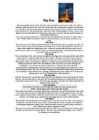
Tower Bridge is a combined bascule and suspension bridge in London, England, over the River Thames. It is close to the Tower of London, which gives it its name. It has become an iconic symbol of London. The bridge consists of two towers which are tied together at the upper level by means of two horizontal walkways which are designed to withstand the horizontal forces exerted by the suspended sections of the bridge on the landward sides of the towers. The vertical component of the forces in the suspended sections and the vertical reactions of the two walkways are carried by the two robust towers. The bascule pivots and operating machinery are housed in the base of each tower. The bridge's present colour dates from 1977 when it was painted red, white and blue for the Queen's Silver Jubilee. Originally it was painted a chocolate brown colour.
London Topic Tallinn 2008 2 General information London is the capital of the United Kingdom. It covers the area of about 1000 square kilometres and its population is about 7 million. London is located on the river Thames. It is divided into 32 boroughs and the City. Currency used in London is British Pound. London is one of the most popular tourist destination in the world. It is also world's leading business, financial and cultural centre. Subway is commonly used to move around in London. Climate London has a temperate marine climate. It has daily high temperatures during summer. The warmest month is July. The coolest month is January. Winders are seldom below freezing.
· Madam Tussauds is a wax museum in London with branches in a number of major cities. It was founded by wax sculptor Marie Tussaud and was formerly known as "Madame Tussaud's". It displays waxworks of historical and royal figures, film stars, sports stars and famous murderers. · Millenium Bridge - The London Millennium Footbridge is a steel suspension bridge for pedestrians crossing the River Thames in London. The southern end of the bridge is near Globe Theatre, the Bankside Gallery and Tate Modern, the north end next to the City of London School below St Paul's Cathedral. The bridge has two river piers and is made of three main sections of 81 metres144 metres and 108 metres with a total structure length of 325 metresthe aluminium deck is 4 metres
grown up around it. London has been an important settlement for over two millenniums. It is also one of the world's leading business, financial and cultural centres and its influence in politics, education, entertainment and even fashion contribute to its status as a major global city. London is a major tourist attraction with four world heritage sites, several royal parks and numerous iconic landmarks such as the Houses of Parliament, Towe Bridge, the Tower of London, Westminster Abbey and the London Eye. 2. History Although there is some evidence of a permanent settlement before the Romans came in 43 A.D., it is more accepted by historians that the Romans were the first. The settlement was called Londinium. The first London lasted for just seventeen years, for around AD 61, a tribe of Celts led by Queen Boudica stormed London, burning it to the ground. The next heavily-planned London
The park is divided in two by the Serpentine. The park is contiguous with Kensington Gardens; although often still assumed to be part of Hyde Park, Kensington Gardens has been technically separate since 1728, when Queen Caroline made a division between the two. THE TOWER OF LONDON: Her Majesty's Royal Palace and Fortress, more commonly known as the Tower of London (and historically as The Tower), is a historic fortress and scheduled monument in central London, England, on the north bank of the River Thames. It is located within the London Borough of Tower Hamlets and is separated from the eastern edge of the City of London by the open space known as Tower Hill. It is the oldest building used by the British government. [1] TOWER BRIDGE: Tower Bridge is a combined bascule and suspension bridge in London, England, over the River Thames. It is close to the Tower of London, which gives it its name.It has become an iconic symbol of London.
London London is the capital of Great Britain. It is situated on the river Thames. The Thames is a river flowing through southern England and connecting London with the sea. The Thames has a length of 346 kilometres (215 miles). The first bridge was the tower bridge, built in the 12th century. The second bridge was built in the year 1750. .The river Thames divides London into the northern and the southern part. The port of London is one of the greatest trade centres in the world. The river Thames is certainly the most famous water body in London. London is also the seat of the government of Great Britain. It is one of the largest cities in the world with its population of about seven million. Before the great fire in 1666 there were many wooden houses and
The tower was begun following the disastrous fire which destroyed the old Palace of Westminster in 1834. Charles Barry was given the contract to rebuild the Palace, and his designs included a clock tower. The Tower The clock tower of the Palace of Westminster took 13 years to build, and was completed in 1856. The tower is 316 feet high. The spire that rises above the belfry is built with an iron frame, and it is this frame which supports the weight of the bells. A staircase rises up inside the tower, and a climb is rewarded by excellent views from the belfry level. Several small rooms are built into the lower part of the tower, including a small prison cell. The Clocks
In 1632, King Gustav II Adolf of Sweden, then at the war camp near Nürnburg, signed the charter to found Tartu University, which was also named Academia Gustaviana in his honour. The memorial statue to King Gustav II Adolf (1594-1632) stood next to the main building of the university from 1928, until 1950, when it was removed by the Soviet occupation forces. With Swedish assistance, it was repaired and re-mounted 42 years later, in 1992. The King of Sweden was present both at the original and the re-opening of the monument. Elisabeth Tebelius-Myren authored the restored work. Karl Ernst von Baer monument Karl Ernst von Baer was a naturalist, the founder of comparative embryology and geocryology, recognized worldwide as the discoverer of the ovum in mammals. He was a student of Tartu University, practiced in the sciences in Königsberg and St. Petersburg, and was an academician at the St. Petersburg Academy of Sciences.Seven geographical objects
During the 19th century, London was transformed into the world's largest city and capital of the British Empire. Its population expanded from 1 million in 1800 to 6.7 million a century later. During this period, London became a global political, financial, and trading capital. In this position, it was largely unrivaled until the latter part of the century, when Paris and New York began to threaten its dominance. The first railway to be built in London was a line from London Bridge to Greenwich, which opened in 1836. This was soon followed by the opening of great rail termini which linked London to every corner of Britain. These included Euston station (1837), Paddington station (1838), Fenchurch Street station (1841), Waterloo station (1848), King's Cross station (1850), and St Pancras station (1863). From 1863, the first lines of the London Underground were constructed.Parliament finally gave consent for the MBW to construct a massive system of sewers
Anglo-Saxons. The annals were initially created late in the 9th century, probably in Wessex, during the reign of Alfred the Great. Multiple manuscript copies were made and distributed to monasteries across England and were independently updated. In one case, the chronicle was still being actively updated in 1154. Nine manuscripts survive in whole or in part, though not all are of equal historical value and none of them are the original version. 8. Beowulf Beowulf is the most famous heroic poem (written down 8-9cc) Beowulf is a war-leader from Scandinavia.He rescued the land of the Danes from a man-like monster Grendel. The monster kills the hero.The poet describes the funeral and how warriors mourned their king. 9. The Vikings, their way of life. Sutton Hoo In 789 three ships carrying Northmen (Vikings vikingr = pirate, raider in the old Norwegian) landed on the coast of the kingdom of the West Saxon
HOUSES OF PARLIAMENT Houses of Parliament also known as the Palace of Westminster is one of the most attractive buildings in London. It stands on the site where Edward the Confessor had the original palace built in the first half of the eleventh century . In 1547 the royal residence was moved to Whitehall Palace, but the Lords continued to meet at Westminster, while the commons met in St. Stephen's Chapel. Ever since these early times, the Palace of Westminster has been home to the English Parliament. In 1834 there was a huge fire that destroyed much of the old palace. All that remained was the chapel crypt, The Jewel Tower and Westminster Hall. It was Lord
Kristi . 8a. klass LONDON History .... There were some people living on the banks of the Thames when the Romans came to England in 43 AD . The Romans built houses , a port and a bridge over the river and named the place Londinium. In September 1666 , when the Great Fire destroyed four fifts of the wooden buildings . The fire began in the kitchen of the King ´s baker in Pudding Lane and lasted for five days . London . London is an exiting city . The population of London is about seven million people and it is made up of the people of very many nationalities . There are nine piers where you can get a boat and enjoy numerous sights like .... The Tower of London
..........................................................68 5.2.5 Discussion ...............................................................................................................................69 5.3 EMPIRICAL EVIDENCE FOR LC AND BIM SYNERGY.........................................................................69 5 5.3.1 Crusell Bridge case study........................................................................................................69 5.3.2 Discussion ...............................................................................................................................71 5.4 CONCLUSION ..................................................................................................................................73 CHAPTER 6- CONCLUSION ..........................................................
with units being used and moved whenever necessary, so this is not certain. Only the Legio IX Hispana is likely to have stayed there, as it is attested to being in residence at Eburacum (York) in AD 71 and on a building inscription there dated AD 108, before its eventual destruction fighting in the East, likely during the Bar Kochba Revolt. The invasion was delayed by a mutiny of the troops, who were eventually persuaded by an imperial freedman to overcome their fear of crossing the Ocean and campaigning beyond the limits of the known world. They sailed in three divisions, and probably landed at Richborough in Kent, although some suggest that at least part of the invasion force landed on the south coast, in the Fishbourne area of West Sussex. The Romans defeated the Catuvellauni and their allies in two battles: the first, assuming a Richborough landing, on the river Medway, the second on the Thames. One of the
London, it is a tourist attraction, and one of the most famous squares in the United Kingdom and the world. At its centre is Nelson's Column, which is guarded by four lion statues at its base. Statues and sculptures are on display in the square, including a fourth plinth displaying changing pieces of contemporary art, and it is a site of political demonstrations. The name commemorates the Battle of Trafalgar (1805), a British naval victory of the Napoleonic Wars. The original name was to have been "King William the Fourth's Square", but George Ledwell Taylor suggested the name "Trafalgar Square". The northern area of the square had been the site of the King's Mews since the time of Edward I, while the southern end was the original Charing Cross, where the Strand from the City met Whitehall, coming north from Westminster. As the midpoint between these twin cities, Charing Cross is to this day considered the heart of London, from which all distances are measured.
it was built in 1211 by William the Lion. Fyvie was the site of an open-air court held by Robert the Bruce, and Charles I lived there as a child. Following the Battle of Otterburn in 1390, it ceased to be a royal stronghold and instead fell into the possession of five successive families - Preston, Meldrum, Seton, Gordon and Leith - each of whom added a new tower to the castle.Inside, the castle stronghold features a great wheel stair, a display of original arms and armour, and a particularly fine collection of portraits.Manus O'Cahan and Montrose fought a successful minor battle against the Covenant Army at Fyvie Castle on August 24th 1644. Following Victorian trends, the grounds and adjoining Loch Fyvie were landscaped in the 19th century. The American industrialist Alexander Leith bought the castle in 1885. It was sold to the National Trust for Scotland in 1984 by his descendants.The castle (like many Scottish castles) is said to be haunted
another way leading up to Toompea - Lühike Jalg, which was made in the 14th century. At present Pikk Jalg and Lühike Jalg are used only by pedestrians. Until the 20th century there was no way down from the western side of Toompea except for a foot-path. The stairs were built in 1903 and called Patkul Stairs after Dietrich Friedrich von Patkuli who had been the deputy Governor in Tallinn during the Great Northern War. Pikk Jalg (Long Leg) - the original road leading to the ancient Estonian stronghold (therefore the oldest street in Tallinn) and the only public road connecting the upper and lower town. It was paved with cobblestones already in the 14th century and was considered quite a dangerous place in the old times. It was certainly not recommended to walk along it after dark and it was not an easy road to be taken on a carriage, as the steep rise often proved too difficult for the
Canada is the second largest country in the world. Situated to the north of the United States, in North America, it has both English and French as its official languages. Even though its area is bigger than that of the United States, its population is only about 11% of that of the USA some 35 million. Because of that, Canada has one of the lowest population densities in the world. The capital of Canada is Ottawa the name of whose comes from the old Algonquin language, with the original word meaning `to trade'. Due to the country's huge size and position, it is very diverse. It is bordered by the Pacific Ocean to the west, the Atlantic to the east, and the Arctic to the north. The landscapes differ greatly from rolling plains and mountains to the cold tundra in the northern part of the country. Geographically, the country's split into 5 major regions the Pacific, the Prairie Provinces, Central Canada, the Atlantic Provinces and the North.
These include: Manchester, Leeds, Liverpool, Newcastle, Sheffield, Bristol, Coventry, Leicester, Nottingham and Hull. England features mostly low hills and plains. the Lake District in the north- west features some of England's most beautiful landscapes, and includes Scafell Pike at 978 m, the highest point of England. There are also some important rivers in England and the most significant ones are Thames, Severn (the longest river in Great Britain) and Avon. The flag of England is a red cross on a white background. It is also on the Union Jack. Scotland is in the northern part of Britain. It covers a little less than 80000 square kilometres and this is about one third of Great Britain. The population of Scotland is about 5 million people. There are three official languages spoken there: English, Scots, Gaelic. Edinburgh, the country's capital and second largest city, is one of Europe's
throughout the world and are the remains of the huge former British Empire. Today Britain assists them, but they may become independent whenever they wish. There have been some difficulties with some of the territories. Argentina has made claims to the Falkland Islands and Spain to Gibraltar. History When the glaciers retreated from Britain about 10,000 years ago, Stone-Age men started to inhabit the isles. The early Britons came across the land bridge which joined Britain to the continent. They were cave-dwellers at first. This way of life was replaced by the invaders from the Mediterranean lands. These men were the first farmers. In about 500 BC came the people whose homeland was near the Rhine River. These were the Celts. The Roman invasion began in 43AD. The Romans were highly organized conquerors. They built good roads, baths and bridges. The Romans stayed in the British Isles up to the 5th century
fresh water lakes on Earth. They are sometimes called the inland seas. There are: 1. Lake Superior (the largest and deepest) 2. Lake Michigan (the only one entirely in USA) 3. Lake Huron 4. Lake Erie (smallest and most shallow) 5. Lake Ontario (much lower elevation than the rest). The Great Lakes between the USA and Canada are joined together by rivers and canals. The lakes are connected to the Atlantic Ocean by the St. Lawrence River and to the Hudson River by a canal. Between Lake Ontario and Lake Erie is Niagara Falls (51 m). Another large lake in the USA is Great Salt Lake. It is saltier than the sea. Rivers The Mississippi river is the major river of North America and the United States. It flows from north-western Minnesota south to the Gulf of Mexico. It is a significant transportation artery and when combined with its major tributaries (the Missouri and the Ohio rivers) it becomes the third largest river system in the world (at 6,236 km)
SIGNET, SIGNET CLASSICS, SIGNETTE, MENTOR AND PLUME BOOKS are published by The New American Library, Inc., 1301 Avenue of the Americas, New York, New York 10019 FIRST PRINTING, FEBRUARY, 1973 PRINTED IN THE UNITED STATES OF AMERICA To my Parents and my Grandmother Contents A Note on the Abridged Version Preface A Few Words 1. One Day of Magic: I 2. One Day of Magic: II 3. The First 3,000 Years 4. The Rise of the West 5. On the Origin of a Species 6. The Era of the Black Chambers 7. The Contribution of the Dilettantes 8. Room 40 9. A War of Intercepts 10. Two Americans 11. Secrecy for Sale 12. Duel in the Ether: I 13. Duel in the Ether: II 14. Censors, Scramblers, and Spies 15. The Scrutable Orientals 16. PYCCKAJI Kranrojioras 17. N.S.A. 18. Heterogeneous Impulses 19. Ciphers in the Past Tense 20. The Anatomy of Cryptology Suggestions for Further Reading Index A Note on the Abridged Version
California and Hawaii. These two states are grouped together mainly because they are relatively near each other: California is the state which is situated nearer to Hawaii than any other state. They are not alike: California is one of the largest and most populated 5 states; Hawaii is one of the smallest and least populated ones. Yet there is one thing these two states have in common: lots of sun and sand. Rivers, Lakes The longest river in the United States is the Mississippi with its west tributary Missouri. Altogether they are about 7,300 km long. The other main tributary of the Mississippi, flowing into it from the east, is the Ohio River. The Mississippi flows to the south and empties into the Gulf of Mexico at New Orleans. Another important river of the United States is the Hudson River which flows across the northeastern part of the country and empties into the Atlantic Ocean at New York.
8. Independence 9. Main sights 10. the Czech Republic 11. List of famous people from Prague 12. Geography 13. Weather and climate 14. Population 15. Culture 2 INTRODUCTION The Czech Republic lies at the heart of Central Europe and at its center is the beautiful and historic city of Prague. With a population of some 1.3 million residents, the city lies on either side of the Vltava River in the middle of Bohemia that is one of the three historic Czech territories; the others being Moravia and Silesia. The city has seven "Chapter Divisions" or districts. 3 I read one girl blog and she described Prague so beautifuly. She talked about her adventures. When i was reading that it seemed so real, that i was there to.
The natural lakes of the interior of continental Australia are salt lakes. Fed by streams and rivers, they receive water rarely. Lake Eyre, Torrens, Frome and Gairdner are the remains of a vast inland sea which once extended south from the Gulf of Carpentaria. Rivers Australia has only few rivers. Many of them are full of water only after it rains. There are many temporary rivers called creeks. The biggest rivers are in the east. All the rivers in Australia are short. Murray River is Australia's principal river. The Murray River and its tributaries run approximately 3,370km in length and form most of the border between New South Wales and Victoria. Climate Because of its size, Australia has many climates. The Tropic Capricorn cuts across the northern part of Australia so about 40per cent of the country lies in tropics. In the south, the island state of Tasmania lies in the cool roaring forties. In the north the climate is tropical
Tourists visit it because it is beautiful, relaxing and interesting. Lakes The big lakes of the desert area are dry most of the time. Enormous Lake Eyre (70km wide, 130km long) was dry for a hundred years until 1950. Lake Eyre is the lowest place in Australia. It is 16 meters below sea level. Other bigger lakes are Lake Disappointment, Lake Mackay, and Lake Carnegie in the western part. Lake Torrens, Lake Gairdner and Lake Eyre in the southern part. Rivers The biggest river is the Murray. The other biggest rivers are the Mitchel and the Flinders. Other rivers are short and have water only after rains. The Climate Australia stretches from the tropics to the temperature region. It is a hot and dry country. The northern part has a hot tropical climate with heavy rainfall. It has two seasons - wet summer and dry winter. The south and the east of Australia have warm summers and winters. The southeastern coast gets rains all year around
population more than double that of its nearest rival. As of 2001, the Greater London Urban Area had a population of 8 278 251 and the metropolitan area is estimated to have a total population of just under 14 million, the largest metropolitan area in the EU. The public transport network, administered by Transport for London, is one of the most extensive in the world, Heathrow Airport is the busiest airport in the world by international passenger traffic and the air space is the busiest of any city in the world. Parks and gardens The largest parks in the central area of London are the Royal Parks of Hyde Park and its neighbour Kensington Gardens at the western edge of central London and Regent's Park on the northern edge. This park contains London Zoo, the world's oldest scientific zoo, and is located near the tourist attraction of Madame Tussauds Wax Museum. Closer to central London are the smaller Royal Parks of Green Park and St
Union, with a population more than double that of its nearest rival. As of 2001, the Greater London Urban Area had a population of 8 278 251 and the metropolitan area is estimated to have a total population of just under 14 million, the largest metropolitan area in the EU. The public transport network, administered by Transport for London, is one of the most extensive in the world, Heathrow Airport is the busiest airport in the world by international passenger traffic and the air space is the busiest of any city in the world. Leisure and entertainment Piccadilly Circus at night The Trooping the Colour held in 2006 to mark the Queen's 80th birthday. Within the City of Westminster, the entertainment district of the West End has its focus around Leicester Square, where London and world film premieres are held, and Piccadilly Circus, with its giant electronic advertisements. London's theatre district is here, as are many cinemas, bars, clubs
Polish national hero General Tadeusz Kociuszko. Like many of Australia's highest peaks, Mount Kosciuszko is not particularly difficult to climb. There is a road to Charlotte Pass, from which it is a seven kilometre walk up a path to the summit. Anybody with a modest level of fitness should be able to climb it. Until the 1960s the road was open to motor vehicles and it was possible to drive close to the summit. Uluru, also known as Ayers Rock, is a large sandstone rock formation in central Australia, in the Northern Territory. It is located in UluruKata Tjuta National Park. Uluru is 346 metres high, more than 8 km (5 miles) around with a hard exterior compared to most other large rock formations which has prevented formation of scree slopes, resulting in the unusual steep faces down to ground level.
 annaabi.ee