If I were the minister of education in Estonia, I would change many things. Firstly, I would rather spend our money on building schools and purchasing new equipment for teaching, than wasting it on our tough national examinations, because there are a lot of schools that would need a new building. Secondly, English would be taught as a second language at schools. It must be a compulsory subject, because most of the world's population is talking English. I would have all the textbooks revised so that they would be updated with latest happenings and etc. Especially history, because we are learning from textbooks that are missing a lot of information that has been discovered after the book was printed. Also I would change most of the subjects for optional, that students can choose the best subjects for them. I think that the absences wouldn't be so punishable by the school, because I think it's your own choice if you go to school or not, just like in universities
8. There I (notice) ............................... how important it (be) ................................... to speak foreign languages nowadays. 9. Now I (have) ............................ much more fun learning English than I (have) ............................... before the course. 10. At the moment I (revise) ............................. English grammar. 11. And I (begin / already) .................................... to read the texts in my English textbooks again. 12. I (think) .................................. I (do) ............................ one unit every week. 13. My exam (be) .............................. on 15 May, so there (not / be) ................................. any time to be lost. 14. If I (pass) .............................. my exams successfully, I (start) .......................... an apprenticeship in September. 15. And after my apprenticeship, maybe I (go) ...............................
I am writing to you to express my annoyance at the supreme quality of service that was promised but never delivered. I am talking about the intensive 4-wekk language course provided by you, International Language Centre. First things first the "highly qualified staff" had a terrible sense of time and always arrived late. Not to mention their insufficient language level, which I found quite displeasing. In addition to that, the provided free course materials were in reality just old and used textbooks and the desks were just way too small to work on, and the classes had no heating, which were quite cold in the mornings. Also you advertised small study groups, but the fact that there were over a dozen people in class determined that it was a lie. Now, according to these points that I brought out, I believe I am entitled to a full refund and I expect your full cooperation. Yours faithfully, Mart Mets
disadvantages of state and private schools. Firstly, there are many different facilities in private schools. For example, there are swimming pools, skating rinks, libraries, etc. I have heard that one school has its own drama class. Of course, state schools cannot afford such things like drama classes and swimming-pools. I am very happy because we have a stadion, a gym, and a finess studio. Secondly I would like to bring out free-of-charge textbooks, exercise books and free In conclusion, it is a very good choice to go to a state school. Firstly, there are no fees. Secondly, you will get a high quality aducation. Furthermore lunch in a state school. Our school food tastes as good as some expensive private school´s food. One important aspect is that private schools can afford all kinds of accessories and models. There are big physics and chemistry laboratories
should it be provided for all subjects? While I believe that computers are necessary for many subjects, I do not believe that students should use computers in all subjects. Firstly, in some lessons, students have to write very many pages and computers would definitely speed up the writing and it would not be as tiring as writing in a notebook. Furthermore, if students could get all their learning materials and notes from computers, they would not have to carry heavy textbooks. This would be very convenient for students. On the other hand, students can easily get distracted by all the computers. They might start playing games on the computers or something else inappropriate. Computers are also not suitable for subjects such as art and mathematics, where students have to draw and sketch. In conclusion, I feel that schools should provide computers for some subjects that require computers
Many students and their parents are in the position that every school should permit computers for their students. Is this a good idea if every student at school has their own computer what they can use in lesson? In my opinion having computers in our English class is very good idea. There is a lot of reasons why. Firstly, our textbooks and worksbooks are compiled that method that there are some excercises which we will have to check from internet like all kind of searching tasks what expect us to use Internet. It also simplify teacher work, teacher does not have to waste her time preparing the lessons.Because they can check out the difficult words quickly from internet. On the other hand, sitting in the computers every day is not good for our health, staring at a
24 hours a day. By 2050, we will see robots everywhere- in factories, schools, offices, hospitals, shops and homes. In the 2050 every human have an opportunity to go on space travel, because space travels will cost less. Even the poor people can allow this. Schooling will be much better and cheaper (in the long run) in 2050. The word ,,school" will no longer be in our vocabulary. School will be called a ,,work force". There will be no more textbooks, paper, pens or pencils. Everything will be done electronically. Classes will be conjoyned together such as, English and History, Math and Science, etc. School will be more interesting and fun, plus school days will be shorter. By 2050 the work will be much easier. People will use computers to do their job. Everyone will have equal pay. The work days will be shorter. Humans have to work only 5 hours. In transport, cars will run on new, clean fuels and they will go very fast
Of course, like every other thing, computerised world has its own downsides. Kids spend too much time on social networks and playing computer games. Of course it is not the only negative thing, actually even students rely too much on computers, they copy their homework from the internet and find the answers just googling around in the web, which does not let them think by themselves and they do not have to search for the needed information all around textbooks, like they actually are supposed to. To sum up I would say that although computers have maybe made our life and the people too comfortable, still none of us could actually imagine the life in not computerised world. There is just too much good in it. It is like with any other thing- there is no good without bad.
well. For example, in American English any 'r' is usually pronounced. So words large, hear, hurt, and dinner would sound differently. In 1785 Noah Webster became famous by producing The American Spelling Book, which marked the real birth of American English. He was a graduate of Yale University who started his career as a teacher in a school. When teaching, reading and spelling, he lacked good materials. The only textbooks used at that time were textbooks from overseas that made no reference to the people, events, or language of America. Webster felt that an original American textbook would help inspire the sense of identity and patriotism of the younger generation. It was his belief that pupils should enjoy learning; therefore the grammar in his popular ''speller book'' was kept simple, and it contained inspiring text by American authors. Webster began to think systematically how words should be spelled. He achieved his goal
. . . . . . . . . . 182 4 Morphological Explanations of the Chinese Characters. A Comparative Study of Kanji Dictionaries. ma thesis 2000 Helsinki University Department of Asian and African Languages and Cultures Abstract The current paper is a comparative study on the morphological explanations of the Chinese characters as explained in eight character dictionaries and textbooks. C. S. Peirce sign systems theory is used for describing the morphological space of the Chinese characters. A hypothesis about the possibilities offered by reliable character morphology for explanation of the lexical multivalency of Chinese characters is proposed. Also criteria for judging the quality of available morphological explanations is provided and their shortcomings are being outlined. Finally, as a practical implematation of the above-presented theoretical
`'Baptism of Christ'', which first gained notoriety. Leonardo Da Vinci died in 1519 at the age of 67. Leonardo was and is primarily known as a painter. Among his other works, `'Mona Lisa'' is the most famous and most parodied portrait which he pained during 1503-1519. The most reproduced religious painting `'The Last Supper'' was pained by him during 1495-1498. His drawing of the `'Vitruvian Man'' is regarded as a cultural icon, being reproduced on items such as the euro coin, textbooks and t-shirts. Perhaps fifteen of his paintings have survived. His studies in science and engineering are recorded in more than 13,000 pages of notes and drawings which have found their way to major collections such as the Royal Library at Windsor Castle, the Louvre and many others. As a successful artist he was also given permission to dissect human corpses. He made over 240 detailed drawings on anatomy. During his lifetime he was also valued as an engineer. He was able
Kaunistamise traditsioon kujunes välja 6. sajandil31. Osadel kofunitel, nagu näiteks Kitora kofunil, olid seinamaalingud. Sellised kofunid pärinevad 7. sajandist32. Kofunite ümber leidus seest õõnsaid savikujusid, mida nimetati haniwadeks33. Nende üheks otstarbeks peetakse almuste hoidmist34. Siiski on nende tegelik otstarve ja päritolu tundmatu35. 23 Boundless. Kättesaadav: https://www.boundless.com/art-history/textbooks/boundless-art-history-textbook/japan-before-1333-ce-15/pr ehistoric-japan-102/grave-goods-in-the-kofun-period-475-5357/ (9.10.16) 24 Osaka ülikooli arheoloogiaosakonna kodulehekülg. (9.10.16) 25 Jaapani arheoloogia kodulehekülg (9.10.16) 26 Jamal Masoodi blogi. Kättesaadav: http://armchairtravelogue.blogspot.com.ee/2010/05/worlds-largest-tomb-daisen-kofun-huge.html (9.10.16) 27 Metropolitani muuseumi kodulehekülg. Kättesaadav: http://www.metmuseum
any Internet connected device in one geographic location, talk to another Internet connected device in another geographic location. The way that the information is transmitted varies greatly, and in some countries, wireless ham radios are even used to transmit email. Keep in mind that the word "connected" is used very loosely here. The Open Systems Interconnection (OSI) Model The seven open systems interconnection layers (OSI) are a staple of most networking textbooks. The idea is that a network will work on many different levels, or "layers" each of which will perform a supporting function for the next layer. OSI Model Internet packets, or Internet datagrams An Internet protocol packet, or datagram, is a morcel of information that is sent out on the net. For example if you send an email to someone, then your computer will break that email message down into small peices and "encapsulate" them
could treat very well. Still the origin of healing dates back to the birth of first civilisations. About 3000 B.C. the Egyptians began making some important process in medicine. The Egyptian god of healing Imhotep was actually one of the first physician of the world. At 2500 B.C. Egyptian physicians started to specialize. Some of them specialized in internal diseases, some of them treated the diseases of eyes and teeth. Also Egyptians produced first medical textbooks. Chinese developed a medical practice, which is based on balance between two life forces yin and yang. To restore the balance chinese developed acupuncture - inserting needles into ones body. Medicine and elements of medical care Medicine is the science of healing, but at the same time it is art of healing. It is a science, because it is based on knowledge, which is gained through careful study and experimentation.
We studied it casually in form 8, but I'd like to overlearn some facts and maybe even get new ones. Unit three has the honour to gift us reading, grammar, listening and other needful exercises we might actually use in real life after all, that's what the school's about; it's preparing us to dive into the frozen ocean of realistic life of the adulthood without getting any scratches. And, since we're all really eager to learn new things from our English textbooks, I'm sure that one day we'll be able to perfectly complete that dive and be happy, enjoying every single day like it's the last one we'll ever see (not considering 2012). Well, after chapter one there'll be chapter two however, aren't we forgetting about something? Of cause we're not there are going to be lovely tests somewhere in the middle of the two chapters! They'll be including everything we've learned so far, and, it's just a
homeless do exist in major cities, but they are usually over-burdened with patients. The conditions affecting the homeless are somewhat specialized and have opened a new area of medicine tailored to this population. Skin conditions and diseases abound, because homeless people are exposed to extreme cold in the winter and they have little access to bathing facilities. Homeless people also have more severe dental problems than the general population. Specialized medical textbooks have been written to address this for providers. There are many organizations providing free care to the homeless in countries which do not offer free medical treatment organised by the state, but the services are in great demand given the limited number of medical practitioners. For example, it might take months to get a minimal dental appointment in a free-care clinic. Communicable diseases are of great concern,
Marju Lauristin. Televisiooni zhanriline areng ja selle avaldumine Eesti teleprogrammides. Tartu Ülikool Kaja Tampere, PhD, 2003, juh. Marju Lauristin. Public Relations in a Transition Society 1989-2002: Using a Stakeholder Approach in Organisational Communication and Relations Analyses. Jyväskylä Ülikool 6 Külli-Riin Tigasson, MA, 2003, juh. Marju Lauristin. Valimisreklaami muutumine televisioonis 1992-2002. Tartu Ülikool Veronika Kalmus, PhD, 2003, juh. Marju Lauristin. School Textbooks in the Field of Socialisation. Tartu Ülikool Maarja Lõhmus, PhD, 2002, juh. Marju Lauristin. Role of the Estonian Russian-language Media in the Integration of the Russian-speaking Minority into Estonian Society. Turu Ülikool Pille Vengerfeldt, MA, 2002, juh. Marju Lauristin. Information Flows in the New Media Environment: a Case Study of Crisis News Reception. Tartu Ülikool Valeria Jakobson, PhD, 2002, juh. Marju Lauristin. Role of the Estonian Russian-language
Seda kõike muutis 1947ndal aastal Christian Dior, tuues Pariisi moelavadele eelnevale täieliku vastandi (vt joonis 15). Tema disainitud kleitidel oli rõhutatud õlgade ümarust ning peent siluetti. Selle saavutamiseks hakati taas korsette kandma. Kihilisest aluseelikust sai tavaline riideese. Velvet, satään, tüll ja siid need olid luksuslikud kangad, mida õmblemisel kasutati16. 15Kättesaadav Internetist: https://www.boundless.com/u-s- history/textbooks/boundless-u-s-history-textbook/politics-and-culture-of- abundance-1943-1960-28/culture-of-abundance-215/the-post-war-boom- 1187-2238/ 16 http://vintagedancer.com/1950s/1950s-fashion-history/ 12 Joonis 14. Teise maailmasõja lähiaja piirangutega Joonis 15. Christian Dior'i riietusstiil uuenduslik stiil 1950 Allikas: http://vintagedancer.com/1950s/1950s-fashion- Allikas: history/ (15.05
American English, the latter is clearly more featured in television, music, video games and internet, naturally appealing more to English learners than British English. Also, in international communication American English is usually the preferred choice as it is acceptable and easily understandable in any context from Japan to Peru. While British English, especially the Received Pronunciation, is generally viewed as some kind of a “gold standard” in education and is usually focused on in textbooks and dictionaries, it should be remembered that American English has about 10 times more speakers than the RP and thus the significance of it in the today’s world should not be underestimated. 2) Submarine sandwich is ‘a large sandwich consisting of a long roll split lengthwise and filled with layers of meat, cheese, tomatoes, lettuce and condiments’ (www.ahdictionary.com). How did it get its name?
Õpikut ei näita progressi 176. The 11th Chapter in Kuhn’s ‘The Structure of Scientific Revolutions’ is titled ‘The Invisibility of Scientific Revolutions’. In this chapter Kuhn revisits the themes developed in earlier chapters. He explains that the celebrated scientific revolutions that he uses as examples are selected solely that the reader is already familiar with them. Kuhn suggests in this chapter that revolutions are invisible because of historical revisionism in science textbooks. His argument runs along the following lines. Firstly assuming that scientists and laypeople use textbooks as the primary source of learning about a scientific field then the presentation of the field within the textbooks is of central importance. Secondly Kuhn suggests that there is a central assumption that science is independent of the historical context (note that he himself does not hold this view). Thirdly Kuhn
People would rather read several small blocks of text than one big block. Page 7 of 9 Figures, Tables and Equations Technical reports almost always have figures, tables and equations. Use a profession style for captions, referencing figures and equations and for equation placement and punctuation. The best way is to follow the format and style that you find in one of your engineering textbooks. For example, pay close attention to the caption format (Plain? Italic? Centered? “Fig. 1” or “Figure 1”), how a figure is referenced in the body (“Figure 1”? “Fig. 1?”), how equation variables are described and so on. Format Your client may have requirements for the report format. If not, use 1 inch margins, single spacing, blank line between paragraphs, serif or sans-serif font at 10 or 11 (preferred) point. Number pages and
be using mobile devices. With devices like iPads for example, students are no longer confined to a computer class. As soon as an assignment is available students can work on it inside their classroom, at home, while waiting on the bus, in between classes, etc. Mobile classroom technology can bridge the gap between classroom and home learning. In the future the textbook is becoming extinct. One of the favourite pre-school activities for many children is making book covers for the textbooks but this ritual will soon be unheard of with the impending extinction of the textbook. With all these mobile devices in the classroom, eBooks are becoming more popular. Which makes sense; they are cheaper, more up-to-date, quickly accessed, and more interactive. Also, with technology in the classroom the traditional student and teacher roles have changed. The student has become a lot more active and engaged. The teacher has become more of a facilitator than just a
often called a handbook. Books which try to list references and abstracts in a certain broad area may be called an index, such as Engineering Index, or abstracts such as chemical abstracts and biological abstracts. An atlas Books with technical information on how to do something or how to use some equipment are called instruction manuals. Other popular how-to books include cookbooks and home improvement books. Students typically store and carry textbooks and schoolbooks for study purposes. Elementary school pupils often use workbooks, which are published with spaces or blanks to be filled by them for study or homework. There is a large set of books that are made only to write private ideas, notes, and accounts. These books are rarely published and are typically destroyed or remain private. Notebooks are blank papers to be written in by the user. Students and writers commonly use them for taking notes.
confusing for beginners. 20 Games Programming with Java and Java 3D The source code for the Java 3D utility package com.sun.j3d.utils is available in the file java3d-utils-src.jar, which is usually to be found in the Java SDK folder. The code for geometry like Sphere and Cylinder, and behaviours like OrbitBehaviour and MouseTranslate can be a useful source of ideas. A.3. Java 3D Books Two good textbooks on Java 3D: · Java 3D API Jump-Start, Aaron E. Walsh, Doug Gehringer, Prentice Hall; ISBN: 0-1303-4076-6, 2001 · Java 3D Programming, Daniel Selman, Manning Pub.; ISBN: 1-9301-1035-9; 2002 The Walsh and Gehringer text is an excellent overview, using code snippets rather than page after page of listings. This is a good book to read in conjunction with the tutorial. The Selman book is more advanced and has some very sophisticated examples. For
" Howells believed the future of American writing was not in poetry but in novels, a form which he saw shifting from "romance" to a serious form. Mark Twain and his critique of American civilisation through the eyes of children. Mark Twain shared a common understanding of U.S. identity and world mission. The national narrative originated in nineteenthcentury history texts, which fuse ProtestantChristian and Enlightenment values. According to the textbooks, the Puritans came to the New World to establish religious freedom, and American civil liberties are a uniquely Protestant idea. The doctrine of Free Trade became part of the narrative, semantically shifting words like "freedom" to connote the marketplace rather than the social arena. By the end of the century the energies of 19thcentury evangelical outreach crossed over into U.S. national selffashioning, and history texts positioned the Founding Fathers as directors of a divinely
• Always answer every question. If you must guess, choose (B) or (C) as your answer. CHAPTER 3 IMPROVING YOUR TOEFL VOCABULARY READ A LOT One of the best ways to build your vocabulary is to read authentic English language material. You should read material that a college student would read. Examples of such material are newspapers, college textbooks, encyclopedia articles, magazines, and academic books. Any material that-has an academic theme will help you get used to the kinds of words and the style of writing you will find on the TOEFL. Reading articles on a variety of topics of interest to you will help you develop your vocabulary. MAKE FLASH CARDS As you read, you will find new words that you will want lo learn. One good way to learn words is to make flash cards. Use small cards made of thick paper, like index cards The cards
"washes out" the original colour to something paler. This is also called maltesing since the it was first identified in black cats and blue cats - Maltese is term for blue-grey and some of the eary blue cats imported into Britain were known as Maltese cats. A secondary type of dilution is called the dilute modifier. It only affects already diluted colours. Since it gave rise to the colour "caramel". I have referred to it here as "caramelising" purely to avoid confusing the layperson. Textbooks always refer to it as the dilute modifier. ORIGINAL COLOUR DILUTE VERSION CARAMELISED VERSION OF THE DILUTE VERSION (DILUTE MODIFIER, DOUBLE DILUTION) White N/A N/A Black Blue Caramel (UK: Blue-based caramel)
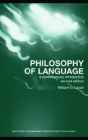
be needed to explain the basics of formal syntax, without having to omit presentation of some philosophical issues I consider essential to competence in the field. Since around 1980, some philosophers of language have taken a turn toward the philosophy of mind, and some have engaged in metaphysical exploration of the relation or lack thereof between language and reality. These adversions have captured many philosophers' interest, and some fine textbooks have focused on one or both (for example, Blackburn 1984; Devitt and Sterelny 1987). But I have chosen otherwise. Whatever the merits of those sorts of work, I have not found that either helps us sufficiently to understand spe- cifically linguistic mechanisms or the core issues of philosophy of language itself. This book will concentrate on those mechanisms and issues. (Readers who wish to press on into metaphysics or philosophy of mind should consult, respectively, Michael J
to visit her as well, to test her and ask her questions about her condition. 1 ccc_tracy_1_1-17.qxd 6/23/03 2:46 PM Page 2 2 ➤ CHANGE YOUR THINKING, CHANGE YOUR LIFE ■ STARTING OVER Eventually, she went home, her memory a complete blank. Deter- mined to understand what had happened to her, she began reading medical textbooks and studying in the specialized area of amnesia and memory loss. She met and spoke with specialists in this field. Eventually she wrote a paper on her condition. Not long afterward, she was invited to address a medical convention to deliver her pa- per, answer questions about her amnesia, and share her experiences and ideas on neurological functioning. During this period, something amazing happened. She became a new person completely
 annaabi.ee