Leidsid 33 sarnast õppematerjali, mis on seotud failiga "Testide vastused 1-4". Need materjalid aitavad sul teemat sügavamalt mõista.
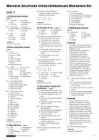
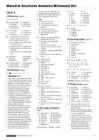
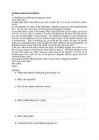
here, work, students, thing, unit, first, fourth, edition, oxford, university, whose, doing, come, live, doesn, shop, took, walk, went, often, speak, study, earn, having, hard, fast, arrive, year, twenty, talk, slice, piece, came, today, going, playing, english, looking, never, plays, making, shopping, walked, check, started, thirty, little, somethingStudents' own answers pointing to his sister's ice cream. 5 The thief grabbed my bag and ran The photos are connected with the 1B Past and perfect tenses off. topic of school. Both photos show page 4 6 He dropped a leaf into the water students in class. In the first photo I imagine that 1 1 ate and watched it drift under the they're about 13 years old. 2 have/'ve met bridge.
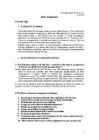
5 obsolete 4 1 I've asked you time and time 3 1 There's a strong resemblance again to keep the noise down. between Paul and Joe. 1D Sporting origins page 67 2 She recognised him at once. 2 Phobias can be genetically 3 He's working at his father's shop inherited. 1 1 staunchly / resolutely for the time being. 3 When it comes to politics, 2 By and large 4 They'll be here any moment now. Edward and his dad have a lot in 3 swiftly 5 Everybody makes mistakes once common. 4 loosely in a while
Here's a breakdown of how you can express how you really are without complaining too much. · Fine, thanks. / On top of the world, thanks. · OK, thanks · Not so bad, thanks. / Can't complain, thanks. · So so, thanks. / So and so, thanks. · Not so good, actually 1 The English alphabet Spelling Work with your partner and spell out first your name and then some names of places. Write down each letter as you hear it, and then say the word. The English alphabet on the phone: You might find the following alphabet (used by international airlines) useful when trying to spell a word on the telephone. A Alpha O Oscar Ä Alpha-Echo Ö Oscar-Echo B Bravo P Papa
1 BASIC ENGLISH BASIC ENGLISH GRAMMAR GRAMMAR BASIC ENGLISH GRAMMAR Book 1 Book 1 Younger students at beginning to intermediate levels will greatly benefit from this step-by-step approach to English grammar basics. This is the ideal supplement to your language arts program whether your students are native English speakers or beginning English language learners. Skill-specific lessons make it easy to locate and prescribe instant reinforcement or intervention. · Illustrated lessons are tightly focused on core concepts of grammar · Nearly 70 practice exercises are included
in brackets. _ 1 She is in a band and she _________________________________ (record) a CD at the moment. _ 2 She is an actress and often _________________________________ (appear) on television. _ 3 At the moment she _________________________________ (have) a rest because she is tired. _ 4 Mike is a doctor and he _________________________________ (live) in Manchester. _ 5 I _________________________________ (start) work at 8.30 every morning. _ 6 He is a good cook but she _________________________________ (prefer) to eat out. _ 7 English tests _________________________________ (get) more and more interesting. _ 8 They _________________________________ (have) a party because it's her birthday. _ 9 I sometimes _________________________________ (ride) my bicycle to school. 10_ She usually _________________________________ (go) to the gym on Friday evenings.
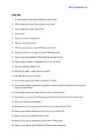
10. Have you got a collection of cassettes, CD´s or LP´s at home? 11. Have you watched a ballet on TV? 12. Which do you prefer ballet, drama or musical? 13. How often do you go to the theatre? 14. Do you prefer going to the theatre or watching TV? Why? 15. Do you prefer buying a cheap ticket and getting a seat at the back or spending more money and sitting in the front? Why? 16. Do you prefer going to the theatre with your family or friends? Why? 17. How old were you when you first went to see a puppet show? Do you remember what it was? 18. Who is your favourite actor/actress? 19. What performance or concert would you like to see if it were possible? Why? 20. Have you got a drama club at your school? Are you a member of it? 21. Have you ever worn a costume? When? Why? 22. Have you ever seen a rehearsal of a show? When? Which show? 23. Have you ever been to a zoo? Which zoo? What animals were there?
Task 1. Underline the most suitable word or phrase. a) Jack decided to take a course/lesson in hotel management. b) Sheila always got good marks/points in algebra. c) After leaving school, Ann studied/trained as a teacher. d) Peter decided not to go in/enter for the examination. e) My sister learned/taught me how to draw. f) I can't come to the cinema. I have to read/study for a test. g) In history we had to learn a lot of dates by hand/heart. h) I hope your work will improve by the end of course/term. i) Martin failed/missed his maths exam and had to sit it again. j) If you have any questions, raise/rise your hand. Task 2. Complete each sentence with a word from the box. Use each word once only. cheat copy memorise pay revise concentrate divide pass punish underline a) Our teachers used to punish us by making us stay behind after school. b) If you…….twenty-seven by nine, the answer is three.
http://www.english-4u.de/a_an_some_ex1.htm ◦ *some bananas *some cats *some monkeys *some 2. http://www.english-4u.de/a_an_some_ex3.htm balls ◦ *some eggs*some oranges *some umbrellas *some 3. http://www.english-4u.de/a_an_some_ex6.htm eagles We us the • when we talk about a specific thing. • when it is clear which thing or person we mean. A – AN - THE • when there is only one of something. Examples:
results, you have the right road map in your hands.You have before you the DNA of your future. All you need to create a wonderful fu- ture for yourself is to read this book, decide how you are going to apply it to your own life, write out a plan, and then go forth with en- thusiasm and make it happen. I have a confession to make. I am one of Brian’s raving fans. I have studied him, his brilliant work, and the extraordinary results he has achieved. I am also one of his close colleagues and friends. We have worked together on many platforms, and met and talked with each other on numerous occasions. Brian is one of the finest thinkers and writers on inner develop- ment and personal success in the world. I know; I have sold over 82 million books aimed at helping people get the most out of themselves.
"We've known for years that people buy based on emotions and justify their buying decision based on logic. Dr. Cialdini was able, in a lucid and cogent manner, to tell us why this happens." --MARK BLACKBURN, Sr. Vice President, Director of Insurance Operations, State Auto Insurance Companies "Dr. Cialdini's ability to relate his material directly to the specifics of what we do with our customers and how we do it, enabled us to make significant changes. His work has enabled us to gain significant competitive differentiation and advantage" -LAURENCE HOF, Vice President, Relationship Consulting, Advanta Corporation "This will help executives make better decisions and use their influence wisely ... Robert Cialdini has had a greater impact on my thinking on this topic than any other scientist." -CHARLES T. MUNGER, Vice Chairman, Berkshire Hathaway, Inc.
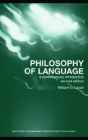
proper names, Searle's cluster theory, and the causalhistorical theory. Part II, Theories of Meaning, surveys the competing theories of linguistic mean- ing and compares their various advantages and liabilities. Part III, Pragmatics and Speech Acts, introduces the basic concepts of linguistic pragmatics, includes a detailed discussion of the problem of indirect force and surveys approaches to metaphor. Part IV, new to this edition, examines the four theories of metaphor. Features of Philosophy of Language include: · new chapters on Frege and puzzles, inferentialism, illocutionary theories of meaning, and relevance theory · chapter overviews and summaries · clear supportive examples · study questions · annotated further reading · glossary Praise for the First Edition: "This exceptional text fulfils two essential criteria of a good introduc-
* visuaalne info on pandud kahekordsete ümarsulgude vahele. I Love English 6 töövihik sobib inglise keele õpetamiseks 8. klassis Töövihik vastab riiklikule õppekavale Retsenseerinud Piret Kärtner, Viive Latt, Ingrit Tera Toimetanud Viiu Menning, Nicola Fyfe, Tiina Helekivi Kujundanud ja küljendanud Eve Kurm Tehniliselt toimetanud Andero Kurm Illustreerinud Ülle Meister Esikaas: Boswell and Dr. Johnson (foto Scanpix). Vaata Unit 20. Autoriõigus: Mare Jõul, Ülle Kurm, 2009 Kirjastus Studium, 2009 Kõik õigused on kaitstud. Ilma autoriõiguse omaniku eelneva kirjaliku loata pole lubatud ühtki selle töövihiku osa paljundada ei elektroonilisel, mehaanilisel ega muul viisil. Töövihik on kooskõlas 2009. a uuendatud õppekomplektiga I Love English 6. Tartu, 2014 ISBN 978-9949-436-59-0 Kirjastus Studium Riia 15b, Tartu 51010 www.studium.ee Trükitud OÜ Greif trükikojas Lohkva, Luunja vald Tartumaa 62207
5. Once again, I cant tell you how awful I feel about missing your birthday party. 6 I am writing to complain about the products I received from your company. 7 I look forward to receiving your advice on this matter. 8 Looking forward to seeing you and catching up on all your news. 9 Your thoughtful gift was greatly appreciated. Once again. , thank you for your generosity. 10 I am very sorry but unfortunately you won't be able to use my summer house during the first week of August. 11 I'm so happy for you! Write back soon and tell me all about your new job. 12 Hope this advice helps. Informal (friendly) letters Giving News TASK 6 Read the following questions then listen to the dialogue and answer them. a) Why hasn't Steve written earlier? b) What does he think of Hong Kong? c) What is the weather like? d) What happened to him recently? e) What does he say about his new colleagues?
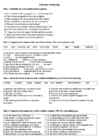
Test 2 1 Translate. 1 Küll on kahju, et sa ei saanud tulla. What a pity that you couldn´t came. 2 Mitte keegi ei olnud närvis. Nobody was nervous. 3 Klass oli täis juttu ja naeru. The classroom was full of laughter and talk. 4 Õpilased tervitasid oma õpetajat rõõmsalt. The students greeted their teacher cheerfully. 5 Ma õppisin selle luuletuse pähe. I learned this poem by heart. 6 Lapsed olid enne pidu ootusärevil. The children were excited before the party. 7 osasid vahetama swap the role 8 kahe nädala pärast in two time a week 2 Complete the sentences with the correct verb form 1 Did you meet Ann at the party last night? (meet) 2 Do you think our team will win the football match tomorrow? (win) 3 I can´t go out because I haven´t done my homework yet
Peter is playing the guitar. If we want to say something about the manner of the action ( how does something happen?), we put the adverbial of manner in front of the predicate: She quietly opened the door. If we want to stress the mode of action, we put the adverbial of manner after the object. She opened the door quietly. If we want to show the place where the action takes place we put the adverbial of place after the predicate. Janet lives in Paris. I work in the library. If we want to say when or how long something happens, we put the adverbial of time at the end of the sentence: 3 I saw Peter last week. I have not seen Jane for a long time. If we want to stress the time factor, we put the adverbial of time at the beginning of the sentence: Last week, when I saw Peter, I forgot to tell him that his rent was overdue. For a long time Jane did not want to talk to me.
· I play tennis. · She does not play tennis. USE 4 Now (Non-Continuous Verbs) · Does he play tennis? · The train leaves every morning at 8 AM. · The train does not leave at 9 AM. · When does the train usually leave? · She always forgets her purse. · He never forgets his wallet. Examples: · Every twelve months, the Earth circles the Sun. · I am here now. · Does the Sun circle the Earth? · She is not here now. · He needs help right now. USE 2 Facts or Generalizations · He does not need help now. · He has his passport in his hand. · Do you have your passport with you?
..= with no ... : He crossed the frontier without any difficulty/with no difficulty. • With questions except the types noted above: Have you got any money? Did he catch any fish? • After if, whether and in expressions of doubt: If you need any money, please let me know. I don’t think there is any petrol in the tank. 2 Some or any can be used with singular, countable nouns: Some here usually means ’an unspecified or unknown’: Some idiot parked his car outside my garage. Or other can be added to emphasize that the speaker isn’t very interested: He doesn’t believe in conventional medicine; he has some remedy or other of his own. Any can mean ’practically every’, ‘no particular (one)’: Any book about writing will tell you how to saddle a horse. Any dictionary will give you the meaning of these words.
(NOT ... to go on holiday.) 17. Information is an uncountable noun. Can you give me some information? (NOT Can you give me an information?) I got a lot of information from the Internet. (NOT I got a lot of informations from the Internet.) 18. Use ing forms after prepositions. I drove there without stopping. (NOT I drove there without to stop.) Wash your hands before eating. (NOT Wash your hands before to eat.) 19. Use this, not that, for things that are close. Come here and look at this paper. (NOT Come here and look at that paper.) How long have you been in this country? (NOT How long have you been in that country?) 20. Use a plural noun after one and a half. We waited one and a half hours. (NOT We waited one and a half hour.) A mile is about one and a half kilometres. (NOT A mile is about one and a half kilometre.) 21. Use the present perfect, not the present, to say how long things have been going on. I've been waiting since 10 o'clock
Highly recommended." --Dr. Stewart D. Friedman, adviser to Jack Welch and former director of the Work/Life Integration Program at the Wharton School, University of Pennsylvania "It's about time this book was written. It is a long-overdue manifesto for the mobile lifestyle, and Tim Ferriss is the ideal ambassador. This will be huge." --Jack Can eld, cocreator of Chicken Soup for the Soul®, 100+ million copies sold "Stunning and amazing. From mini-retirements to outsourcing your life, it's all here. Whether you're a wage slave or a Fortune 500 CEO, this book will change your life!" --Phil Town, New York Times bestselling author of Rule #1 "The 4-Hour Workweek is a new way of solving a very old problem: just how can we work to live and prevent our lives from being all about work? A world of in nite options awaits those who would read this book and be inspired by it!" --Michael E. Gerber, founder and chairman of E-Myth Worldwide and the world's #1 small business guru
1. Active/Passive Active - the professor teaches the students. Passive - The students are taught by the professor 2. Present Simple [VERB] + s/es in third person. Tegevus on korduv või tavapärane. You speak English. I play tennis. Cats like milk. The train leaves tonight at 6 PM. I am here now. Active= Once a week, Tom cleans the car. Passive= Once a week, the car is cleaned by Tom. 3. Present Continuous [am/is/are + present participle]. Tegevus toimub/ei toimu praegusel hetkel. You are watching TV. You are learning English now. I am studying to become a doctor. I am meeting some friends after work. Active= Right now, Tom is writing the letter. Passive= Right now, the letter is being written by Tom. 4. Past Simple [VERB+ed] or irregular verbs
Each tendency was born by the influence of economic and political changes in the society. Those trends are known as the "hippies" the "punks" the "rockers". But certainly there are different traditional youth organizations in Great Britain. Among them -- the Scout Association, the Girl Guides Association, the National Union of Students, the Youth Club. The latter offers, for example, a wide range of sporting and social activities. The National Union of Students was founded in 1922. It operates through local branches in colleges and universities. It promotes the educational, social and general interests of students. But certainly the most numerous is the Scout Association, founded in 1908 for boys and in 1910 for girls by Lord Baden-Powel. The Scout movement is to encourage a sense of adventure and of responsibility for others among young people. The programme of training
4) Are you going ..... the ball? 5) ..... piano sounds great, don't you agree? 6) Hey, Keith, bring me some of ..... ice cream, too! 7) Linda sat ..... the rock and sang ..... song. 8) ..... school is something you never forget, yet while studying many things just are forgotten. 9) He jumped off ..... cliff and fell ..... the ice-cold ocean. 10) It was ..... noisiest concert ever! 11) What are you doing? Don't you know that ..... fishing isn't allowed here? 12) Neither ...... them moved, they were just staring ..... each other. 13) You must go, Susan, or else I won't go ..... there as well. 14) He laughed ..... her, not feeling any pity at all. 15) Mother listened ..... the radio while Jim was catching ..... butterflies. 16) She was soon bored, so he decided ..... finish his speech earlier. 17) Marta was hungry; she went ..... the kitchen .... order to grab ..... sandwich and ..... bottle ..... milk. 1
Please speak quietly. Tom drove carefully along the narrow road. 2. Some adverbs tell us where. These are called Adverbs of Place: She put the book on the table. 3. Some adverbs tell us when. These are called Adverbs of Time. We met them at five o´clock. 4. Some adverbs tell us how often. These are called Adverbs of Frequency. E.g. always, sometimes, often, never, usually, seldom, hardly ever, and rarely: She never comes on time. They usually work on Saturday mornings. I have always loved plays written by Oscar Wilde. 5. Some adverbs tell us how much. These are called Adverbs of Degree. E.g. definitely, absolutely, obviously, possibly, just, certainly, very, quite, rather: He is definitely the right man for the job. He would certainly have been chosen for the team if he hadn’t injured his knee. 2 6. Some adverbs have the same form as the adjective
THE W R I T E R ' S JOURNEY M Y T H I C STRUCTURE FOR W R I T E R S THIRD EDITION CHRISTOPHER VOGLER S C R E E N W R I T I N G / W R I T I N G Christopher Vogler explores the powerful relationship between mythology and storytelling in his clear, concise style that's made i this book required reading for movie executives, screenwriters, playwrights, fiction and non-fiction writers, scholars, and fans
ELT Methodology (FLGR.01.041) 27.12.2012 Home Assignments. I Youtube clips: · A vision of K-12 students I personally think that Estonian learners are also digital learners. They spend more time at the computers or laptops or iPads etc. than read books or move outside. And another thing is that teachers are less capable in using technological appliances. But the latter mentioned fact is an advantage for us teachers as well. It gives us an opportunity to provide our students to experience success. They can help and assist us if we need some technological help. Another thing is that in schools, in classes generally students are not allowed to use their appliances, so it means they have to communicate verbally as well. I
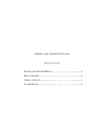
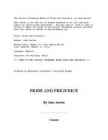
Chapter 18 Chapter 39 Chapter 59 Chapter 19 Chapter 40 Chapter 60 Chapter 20 Chapter 41 Chapter 61 Chapter 21 Chapter 42 Chapter 1 It is a truth universally acknowledged, that a single man in possession of a good fortune, must be in want of a wife. However little known the feelings or views of such a man may be on his first entering a neighbourhood, this truth is so well fixed in the minds of the surrounding families, that he is considered the rightful property of some one or other of their daughters. "My dear Mr. Bennet," said his lady to him one day, "have you heard that Netherfield Park is let at last?" Mr. Bennet replied that he had not. "But it is," returned she; "for Mrs. Long has just been here, and she told me all about it." Mr. Bennet made no answer. "Do you not want to know who has taken it
e.g. I can swim. Do you think I should go? Characteristics of Modal Verbs • There is no -s in the third person singular: She can ski. He must be tired. It might rain. • They are used to form questions and negatives: Shall we go for a walk? What should I do? He can’t dance. You mustn’t tell lies! • Modal auxiliary verbs don’t usually have past forms. Other expressions are used instead: I had to work hard at school. The prisoner was able to/managed to escape by climbing onto the roof of the prison. (NOT *could escape) (=ability / performance on one occasion) In some cases could can be used with a past meaning: I could swim when I was six. (=general ability) • They have no infinitives and no –ing forms. Other expressions are used instead. I’d love to be able to ski. I hate having to get up early. • They are followed by an infinitive without -to
o'clock. 39. It lasts ..................two hours and forty-five minutes. 40. That's interesting. I haven't been ..................the cinema for so many years. 2.Tenses ( Active/ Passive ) 1. Once a week, Tom ................................................ the house.(CLEAN) 2. The customer by the salesman .........................................when the thief came into the store. (HELP) 3. Recently, John ............................................................................... the work.(DO) 4. Many tourists ......................................................................... that castle.(VISIT) 5. Sally ................................................................................ a beautiful dinner tonight.(MAKE) 6. The work ............................................................................. by 5:00 PM.(FINISH) 7. That castle ............................................................ by many tourists.(VISIT) 8. Right now, the letter ........................
You are in room 13 you aren't am you German? you are, they are. He is jane he/she/it isn't Is he/she/it German? No I'm not, you aren't, he/she/it isn't, we aren't, She is marta we aren't are we German? you aren't, they aren't. It is a school. you aren't are you German? We are students they aren't are they German? You are in class 12 They are teachers Unit 2 / present simple + - ? yes- I do, you do, he/she/it does. I work I don't work Do I work no I don't, you don't, he/she/it doesn't You work you don't work do you work?
SCIENCE AND TECHNOLOGY A century ago communication across any distance was dependent upon the telegraph or letters. No jets crossed the ocean, no television pictures enabled us instantly to see events in any part of the world, there were no worldwide telephone networks and no computers. It is just a short lifetime since humanity first travelled into space and discovered how fragile our planet looks. FROM FIREWORKS TO THE MOON At first glance you might think that there couldn't possibly be anything common between a 13 th century festival in China and the Apollo 11 moon landing in 1969. However, there is a link and that is that they both relied on the use of rockets. The Chinese first developed rockets by filling bamboo tubes with an explosive made from saltpetre, charcoal, and sulphur. The sealed tubes would be thrown onto fires during celebrations because it was thought that the loud explosions would protect them
ees artiklit THE, mis tähendab `see' või `need': Give me the apple. Anna mulle see (ainus) õun (mis siin/seal on). Artiklit THE kasutatakse ka teatud väljendites, mis tuleb lihtsalt pähe õppida: go to the country maal käima, maale minema in the morning hommikul LISTEN & REPEAT REPEAT 61 Võrdle: Is there a hotel near here? Kas siin lähedal on hotelli? The hotel was very nice. See hotel (kus me peatusime) oli väga kena. This is a nice picture. See on (üks) ilus pilt. Can you show me the picture? Palun näita mulle seda pilti. I often listen to music. Ma kuulan sageli muusikat. The film wasn't very good (See) film (mida me nägime) ei but I liked the music. olnud eriti hea, aga (see) muusika
Artikliga 1.Veekogud jõed, mered, ookeanid, lahed, väinad. The Thames, the Atlantic Ocean 2. Mäeahelikud The Rocky Mountains 3. Saarestikud The British Isles 4. Riikide nime, milles esineb üldnimi (state, kingdom) The United States 5. Kõrbed The Sahara Artiklita 1. Järved Loch Ness 2. Üksikud mäetipud Mount everest 3. Üksikud saared Ireland 4. Riikide ja mandrite nimed Estonia, Europe 5. Linnade, külade, tänavate nimed London, Oxford street Artikkel a, an Umbmäärane artikkel on a konsonantide ees ja an vokaalide ees. 11 A dog A cake An apple An umbrella 12 Muu Otsekõne Direct speech 1. Otsekõne käib jutumärkides. 2. Saatelause järel on koma. Tom says to me: "I'm hungry." He adds: "I have eaten nothing today." Kaudkõne Reported speech 1. Kaudkõnes jutumärgid puuduvad 2
Artikliga 1.Veekogud jõed, mered, ookeanid, lahed, väinad. The Thames, the Atlantic Ocean 2. Mäeahelikud The Rocky Mountains 3. Saarestikud The British Isles 4. Riikide nime, milles esineb üldnimi (state, kingdom) The United States 5. Kõrbed The Sahara Artiklita 1. Järved Loch Ness 2. Üksikud mäetipud Mount everest 3. Üksikud saared Ireland 4. Riikide ja mandrite nimed Estonia, Europe 5. Linnade, külade, tänavate nimed London, Oxford street Artikkel a, an Umbmäärane artikkel on a konsonantide ees ja an vokaalide ees. A dog A cake An apple An umbrella 10 Muu Otsekõne Direct speech 1. Otsekõne käib jutumärkides. 2. Saatelause järel on koma. Tom says to me: "I'm hungry." He adds: "I have eaten nothing today." Kaudkõne Reported speech 1. Kaudkõnes jutumärgid puuduvad
 annaabi.ee