Leidsid 33 sarnast õppematerjali, mis on seotud failiga "Technology Home reading". Need materjalid aitavad sul teemat sügavamalt mõista.
blind, light, implant, sight, campbell, other, part, vision, cause, came, project, camera, science, develop, brain, visual, work, image, object, vice, technology, late, works, year, artificial, real, could, university, device, process, first, disease, york, making, processor, years, reach, there, even, going, including, wide, different, results, might5 (possible answers) she was my age and apart from the 1 1 go ahead 5 come to eighties hairstyle we're the spitting 1 Well, you will go to bed late every night. 2 fall through 6 bring about image of each other! Some people 2 Well, you will refuse to wear a 3 tip off 7 go down with say that they can see a strong family coat. 4 mistake for 8 come up with resemblance between my dad and me.
In the 15 th century Johann Gutenberg invented a mechanical process of duplicating texts, which we today call book printing. The first book was printed between 1444 and 1446, so these years can be considered as the beginning years of book printing. His most important preserved printings are the 40 copies of the Bible. By the end of the 15 th century there were about 1000 print-shops in Europe already. The oldest Estonian book dates back to 1535. Libraries form a vital part of education. They make available-through books, films, recordings and other media- knowledge that has been accumulated through the ages. People in all walks of life use libraries to get information for their work. Libraries also play an important role in preserving people's cultural heritage. For example, some libraries have rare books, authors' and composers' manuscripts or works by artists. Today's libraries differ very much from the ones from the past - not only in
Chapter 21 Chapter 42 Chapter 1 It is a truth universally acknowledged, that a single man in possession of a good fortune, must be in want of a wife. However little known the feelings or views of such a man may be on his first entering a neighbourhood, this truth is so well fixed in the minds of the surrounding families, that he is considered the rightful property of some one or other of their daughters. "My dear Mr. Bennet," said his lady to him one day, "have you heard that Netherfield Park is let at last?" Mr. Bennet replied that he had not. "But it is," returned she; "for Mrs. Long has just been here, and she told me all about it." Mr. Bennet made no answer. "Do you not want to know who has taken it?" cried his wife impatiently. "You want to tell me, and I have no objection to hearing it." This was invitation enough. "Why, my dear, you must know, Mrs
do it, enabled us to make significant changes. His work has enabled us to gain significant competitive differentiation and advantage" -LAURENCE HOF, Vice President, Relationship Consulting, Advanta Corporation "This will help executives make better decisions and use their influence wisely ... Robert Cialdini has had a greater impact on my thinking on this topic than any other scientist." -CHARLES T. MUNGER, Vice Chairman, Berkshire Hathaway, Inc. If you're wondering why of Latin America, the Far East, and Central Europe. you should buy this new edition of Influence: o More neuroscience evidence of how the influence process works is inte-
Vronsky, Betsy's cousin. Vronsky continues to pursue Anna. Although Anna initially tries to reject him, she eventually succumbs to his attentions. Karenin warns Anna of the impropriety of paying too much attention to Vronsky in public, which is becoming a subject of society gossip. He is concerned about his and his wife's public image, although he believes that Anna is above suspicion. Vronsky, a keen horseman, takes part in a steeplechase event, during which he rides his mare Frou-Frou too hard and she falls and breaks her back. Vronsky escapes with minimal injuries but is devastated that his mare must be shot. Anna tells him that she is pregnant with his child, and is unable to hide her distress when Vronsky falls from the racehorse. Karenin is also present at the races and remarks to her that her behaviour is improper. Anna, in a state of extreme distress and emotion, confesses her affair to her husband
shared housing and compatible mates are crafting come-ons that are as far removed from, say, "female nonsmoker wanted" as a business card is from a doctoral thesis. Consider the efforts of Ms. Berger, 28, and Ms. Hazard, 24, who advertised eloquently for roommates before even settling on a house: "Some of the things we like are: permaculture, living sustainably, gardening, dancing, hula hooping, yoga, herbalism, making music, active listening, non-violent communication ..." they wrote, in part. The idea, they said last week, was that the relationships would be more important than the real estate. What they hoped to put together was a kind of family, but without sibling rivalry or parents, of course; the thought was that everyone would do the dishes without grumbling. "It's hard to feel supported in a place like New York City, especially without a partner, or consistent person or group that you are able to connect with daily," said Ms. Berger, a
I've already used his advice to go spear shing on remote islands and ski the best hidden slopes of Argentina. Simply put, do what he says and you can live like a millionaire." --Albert Pope, derivatives specialist at UBS World Headquarters "Reading this book is like putting a few zeros on your income. Tim brings lifestyle to a new level--listen to him!" --Michael D. Kerlin, McKinsey & Company consultant to Bush-Clinton Katrina Fund and a J. William Fulbright Scholar "Part scientist and part adventure hunter, Tim Ferriss has created a road map for an entirely new world. I devoured this book in one sitting --I have seen nothing like it." --Charles L. Brock, chairman and CEO of Brock Capital Group; former CFO, COO, and general counsel of Scholastic, Inc.; and former president of the Harvard Law School Association "Outsourcing is no longer just for Fortune 500 companies. Small and mid-sized rms, as well as
8 have you phoned them are looking at the experiment each of the three disasters. 2 1 written 8 was trying and working together. They are 4 1 D 3 F 5 G all wearing uniform it's quite an 2 been meaning 9 came 2 A 4 B 6 E old-fashioned-looking uniform, so 3 got 10 grew 5 1 at first hand 5 maiden voyage I would guess that it's a private 4 fell 11 were chatting 2 tuberculosis 6 mine school, but it could be a state 5 seen 12 walked
have remained rare and isolated phenomena, since conditions were most likely not yet favorable for a widespread flowering to occur. One day, however, a critical threshold was reached, and suddenly there would have been an explosion of color and scent all over the planet – if a perceiving consciousness had been there to witness it. Much later, those delicate and fragrant beings we call flowers would come to play an essential part in the evolution of consciousness of another species. Humans would increasingly be drawn to and fascinated by them. As the consciousness of human beings developed, flowers were most likely the first thing they came to value that had no utilitarian purpose for them, that is to say, was not linked in some way to survival. They provided inspiration to countless artists, poets, and mystics. Jesus tells us to contemplate the flowers and learn from then how to live
Color-- -1- -2- -3- -4- -5- -6- -7- -8- -9- Text Size-- 10-- 11-- 12-- 13-- 14-- 15-- 16-- 17-- 18-- 19-- 20-- 21-- 22-- 23-- 24 TWILIGHT By Stephenie Meyer Contents PREFACE 1. FIRST SIGHT 2. OPEN BOOK 3. PHENOMENON 4. INVITATIONS 5. BLOOD TYPE 6. SCARY STORIES 7. NIGHTMARE 8. PORT ANGELES 9. THEORY 10. INTERROGATIONS 11. COMPLICATIONS 12. BALANCING 13. CONFESSIONS 14. MIND OVER MATTER 15. THE CULLENS 16. CARLISLE 17. THE GAME 18. THE HUNT 19. GOODBYES 20. IMPATIENCE 21. PHONE CALL 22. HIDE-AND-SEEK 23. THE ANGEL 24. AN IMPASSE EPILOGUE: AN OCCASION twilight STEPHENIE MEYER LITTLE, BROWN AND COMPANY New York Boston Text copyright © 2005 by Stephenie Meyer All rights reserved.
Ameerika Kirjandus 30.01.13 Naturalism · France, Emile Zola · Put down his theory in 1879: Le Roman Experimental, attempt to explain the development of human society throuch biological laws · Outlook is deterministic, pessimistic, fatalistic (fate or biology) · Man as an animal-clever than other beasts, still explainable within the framework · Man is not a free agent, is govern by something · Unable to determine his own faith · Hereditary · Naturalists tried to apply in fiction the processes of natural sciences · Writers task is to record facts, systems of behaviour, living conditions, never revealing any natural unbiased (completely natural) · Point of view: amoral-outside the category of morality, neither good or bad
AMBER AND RUSSET - LATE COLOUR CHANGE GENES Copyright 2014, Sarah Hartwell The ancestors of the domestic cat were nondescript black/brown striped tabbies. Over the centuries, mutation produced a wide array of colours based on 2 different pigments. Eumelanin gives the blacks, browns and blues while phaeomelanin gives the reds, fawns and creams. A few other genes give further variations on those colours such silvers, colourpoints and solids/selfs. Mutations continue to occur and unexpected colours also turn up due to inbreeding where recessive genes, hidden for generations, start showing up. AMBER AND LIGHT AMBER During the 1990s, some purebred Norwegian Forest Cats in Sweden produced chocolate/lilac and cinnamon/fawn offspring. However, those colours are not found in the purebred Norwegian Forest Cat gene pool
And they frequently jump to the conclusion that they are boring or a nuisance - thus compounding any sense of depression or poor self-esteem. A way to learn the secrets of body language is to watch television with the sound turned off and try to interpret what is being said simply from reading body language. You will experience that humans say a lot with their mouth which is contradicted by their body, gestures and other channels of communication. Messages are ambiguous. But a notable feature of the early years of the 21st century is the fact that the body language of different nations is gradually becoming more similar. Thus, a gesture made by someone in (say) South America can often be easily interpreted by people in Russia or Japan. Much of this is due to the effects of TV, which of course shows the same sort of `soap operas' in all parts of the globe. Words and body language
or scarring brain tissue). Prior to the development of modern technology, one of the most common ways to study the brain was case study. Often case studies provide researchers with a situation that they could never ethically reproduce in a laboratory. One of the most famous case studies of how brain damage can affect behavior is the study of Phineas Gage by Dr John Harlow. Gage was in a serious accident, where a metal pole pierced his skull and brain. Luckily he survived, losing vision in his left eye. He had no difficulty with speech or language, but the balance between his intellectual abilities and emotional control had been destroyed. He became highly agitated and irrelevant, often impatient and rude. Study to his frontal lobe provided evidence that the brain affects personality and social behaviors. Discuss ethical considerations related to research studies at the biological level of analysis.
Style bears the stamp of indivual usage, that is every writer has a unique pattern/habit and abilities that form his style. This approach is best illustrated in the well-known victum of the french poet Georges-Louis de Buffon ,,Style is the man himself." Stylistics English stylistics or the study of style has not been discussed on the same scale as french stylistics, german or russian. The very term stylistics came into more common use in english only some 30-40 years ago. It was however recorded much earlier that is in 1882 for the first time, meaning ,,The Study of literary style, the study of stylistic features." A short history of the development of stylistics Stylistics is regarded a relatively new branch of philology, yet its roots go back as far as ancient Greece and Rome, where the rhetoricians (retoorikud) cultivated the art of clear and
Not many people bought it. 10 He is so ________________________ that people fall asleep while he is talking. Marks: /10 5 Match the words in list A with the correct definitions in list B. A B 1 intelligent a in a hurry to do things 2 stubborn b giving things to other people 3 shy c believing in yourself 4 popular d being very clever 5 pessimistic e not very good at talking to other people 6 friendly f wanting to know the answer to things 7 impatient g easy to talk to and nice 8 generous h not changing your mind easily
The making of a new nation. The Enlightenment in America. The emergence of the notion of the American Dream. The great Enlighteners: Crèvecoeur, Jefferson, Paine, Franklin. The American Enlightenment is the intellectual thriving period in the United States in the midtolate 18th century (17151789), especially as it relates to American Revolution on the one hand and the European Enlightenment on the other. Influenced by the scientific revolution of the 17th century and the humanist period during the Renaissance, the Enlightenment took scientific reasoning and applied it to human nature, society, and religion. American Enlightenment a gradual but powerful awakening that established the ideals of democracy, liberty, and religious tolerance in the people of America.
SCIENCE AND TECHNOLOGY A century ago communication across any distance was dependent upon the telegraph or letters. No jets crossed the ocean, no television pictures enabled us instantly to see events in any part of the world, there were no worldwide telephone networks and no computers. It is just a short lifetime since humanity first travelled into space and discovered how fragile our planet looks. FROM FIREWORKS TO THE MOON At first glance you might think that there couldn't possibly be anything common between a 13 th century festival in China and the Apollo 11 moon landing in 1969. However, there is a link and that is that they both relied on the use of rockets.
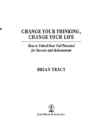
CHANGE YOUR LIFE How to Unlock Your Full Potential for Success and Achievement B R I A N T R AC Y JOHN WILEY & SONS, INC. ccc_tracy_fm_i-xviii.qxd 7/7/03 3:22 PM Page iv Copyright © 2003 by Brian Tracy. All rights reserved. Published by John Wiley & Sons, Inc., Hoboken, New Jersey. Published simultaneously in Canada. No part of this publication may be reproduced, stored in a retrieval system, or transmitted in any form or by any means, electronic, mechanical, photocopying, recording, scanning, or otherwise, except as permitted under Section 107 or 108 of the 1976 United States Copyright Act, without either the prior written permission of the Publisher, or authorization through payment of the appropriate per-copy fee to the Copyright Clearance Center, Inc., 222 Rosewood Drive,
killed her unfaithful husband. It was relief that you have when you find something precious you thought you'd lost, after a long search, you find cool, sweet water in the desert. The Knowledge: A taxi driver, Ricky, picked up a man called himself "Bruce Lee", and this "Bruce Lee" taught him the true meaning of fighting. He said," Don't think that fighting is about aggression. You don't realize that it's about being strong enough to walk away". After this strange thing, Ricky came home early and found his wife had another man. Ricky was too angry and felt like killing that man, but recalled what Bruce taught him, he calmed down and let his wife went away. He rethought his life and his ambition, he didn't want just be a taxi driver. He entered a collage, and then ran his own business. It is never too old to learn. Knowledge is everything. Fifteen hundred words: Abi was a film writer, she used to created thrill story, but now it's time to changed her favor
27. Use who, not which, for people in relative structures. The woman who lives upstairs is from Thailand. (NOT The woman which lives upstairs is from Thailand.) I don't like people who shout all the time. (NOT I don't like people which shout all the time.) 28. Use for, not during, to say `how long'. We waited for six hours. (NOT We waited during six hours.) He was ill for three weeks. (NOT He was ill during three weeks.) 29. Use to ..., not for ..., to say why you do something. I came here to study English. (NOT I came here for study English.) She telephoned me to explain the problem. (NOT She telephoned me for explain the problem.) 30. Use reflexives (myself etc) when the object is the same as the subject. I looked at myself in the mirror. (NOT I looked at me in the mirror.) Why are you talking to yourself? (NOT Why are you talking to you?) 31. Use a present tense to talk about the future after when, until, as soon as, after, before etc. I'll phone you when I arrive
Vocabulary: to criticize - tasteless overcooked - ingredient - to invent - sauces - to disguise - spice herb - delicious - disappointing - to lend cuisine British Youth (2) Most 18 and 19 year-olds in Britain are quite independent people. English people say that children grow up more quickly now. Relationships within the British family are different now. Children have more freedom to make their own decisions. For example, children aged 13 may be employed part time in Great Britain. Age 15 is legally a "young person" not a "child". Age 16 is a school leaving age. They can leave home, drive a moped, marry with "parents' consent" buy beer. Age 17 can drive a car. Age 18 can vote, get married, drink in pubs. Education is a very important part in the life of British youth. One can't become an independent person without it. When time comes to enter a college a young Englishman chooses one far away from home. It is a necessary part of becoming adult.
1 Where have you been? .................... (you/play) tennis? 2 Look! Somebody ...................... (break) that window. 3 You look tired. ....................... (you/work) hard? 4 `................ (you/ever/work) in a factory?' `No, never.' 5 `Jane is away on holiday.' `Oh, is she? Where ....... (she go)?' 6. Exercise: 1 I was very tired when I arrived home. I .......... (work) hard all day. 2 The two boys came into the house. They .......... (play) football. 3 I was sad when I sold my car. I ........... (have) it for a very long time. 4 Mary was sitting on the ground. She was out of breath. She ....... (run). 5 We were good friends. We ........ (know) each other for a long time. 6 Irregular verbs Infinitive Past simple Past participle Translation be was / were been beat beat beaten
wonderful translucent quality, the mouth was soft, and the eyes, with their new placid look, seemed larger darker than before. When the clock said ten minutes to five, she began to listen, and a few moments later, punctually as always, she heard the tires on the gravel outside, and the car door slamming, the footsteps passing the window, the key turning in the lock. She laid aside her sewing, stood up, and went forward to kiss him as he came in. "Hullo darling," she said. "Hullo darling," he answered. She took his coat and hung it in the closer. Then she walked over and made the drinks, a strongish one for him, a weak one for herself; and soon she was back again in her chair with the sewing, and he in the other, opposite, holding the tall glass with both hands, rocking it so the ice cubes tinkled against the side. For her, this was always a blissful time of day. She knew he didn't want to speak much until the
After I've said what I think about each topic, readers may have a fair comprehension of my philosophy. First comes sensitivity. If a person be insensitive, be it from numbing cold, exhaustion, drugs, genetic makeup, or upbringing, then the process of education is bogged down, and results come only after great efforts. Sensitivity in my integrated meaning is broad, covering literally the senses, so that deaf and blind people are less sensitive, as well as people whose senses work perfectly, but whose receptivity or thought processes are blunted for whatever reason. A person can be insensitive in one way, such as blind, and extraordinarily sensitive in another way, such as in hearing. It is also possible to be so ultra-sensitive that the result is disadvantageous. I expect no argument in asserting that a normal sensitivity is a healthy, indispensable ingredient for optimal education.
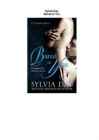
come true. You deserve it. And to Alistair and Jessica, from Seven Years to Sin , who inspired me to write Gideon and Eva's story. I'm so glad the inspiration struck twice! 1 "We should head to a bar and celebrate." I wasn't surprised by my roommate's emphatic pronouncement. Cary Taylor found excuses to celebrate, no matter how small and inconsequential. I'd always considered it part of his charm. "I'm sure drinking the night before starting a new job is a bad idea." "Come on, Eva." Cary sat on our new living room floor amid a half-dozen moving boxes and flashed his winning smile. We'd been unpacking for days, yet he still looked amazing. Leanly built, dark-haired, and green-eyed, Cary was a man who rarely looked anything less than absolutely gorgeous on any day of his life. I might have resented that if he hadn't been the dearest person on earth to me.
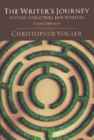
playwrights, fiction and non-fiction writers, scholars, and fans of pop culture all over the world. Discover a set of useful myth-inspired storytelling paradigms like "The Hero's Journey," and step-by-step guidelines to plot and • character development. Based on the work of Joseph Campbell, The Writers Journey is a must for all writers interested in further developing their craft. This updated and revised Third Edition provides new insights and observations from Vogler's ongoing work on mythology's influence on stories, movies, and man himself. In revealing new material, he explores key principles like polarity and catharsis, plus: • A revised chapter which looks back at the Star Wars phenomenon and analyzes
............................................................................................. ...................................................................................................... ............................................................................. 1.2 Read the text and strike though words that don't suit. She stood and watched on/the darkening autumn sky. It was cold. So cold, that the little girl could/might not even cry. She was/is scared, but having no other choice, she stood/stands still until it started to rain. Then, finally, a/an older woman spotted the shaking creature, and called her in for/due to a cup of hot chocolate. The little girl had been/was really happy and followed the kind woman. They became good friends and in/at the evening the woman said that/if the girl could stay as long as she wanted/had wanted. And so it was decided that the girl would/will/is going to/was going to stay with her new stepmother. Happy end 1
He wants to guide you on the way to heaven; My son should train you all to love him well. DAMIS No, madam, look you, nothing--not my father Nor anything--can make me tolerate him. I should belie my feelings not to say so. His actions rouse my wrath at every turn; And I foresee that there must come of it An open rupture with this sneaking scoundrel. DORINE Besides, 'tis downright scandalous to see This unknown upstart master of the house-- This vagabond, who hadn't, when he came, Shoes to his feet, or clothing worth six farthings, And who so far forgets his place, as now To censure everything, and rule the roost! MADAME PERNELLE Eh! Mercy sakes alive! Things would go better If all were governed by his pious orders. DORINE He passes for a saint in your opinion. In fact, he's nothing but a hypocrite. MADAME PERNELLE Just listen to her tongue! DORINE I wouldn't trust him, Nor yet his Lawrence, without bonds and surety. MADAME PERNELLE
tips and useful language notes Book 1 Anne Seaton · Y. H. Mew Three Watson Irvine, CA 92618-2767 Web site: www.sdlback.com First published in the United States by Saddleback Educational Publishing, 3 Watson, Irvine, CA 92618 by arrangement with Learners Publishing Pte Ltd, Singapore Copyright ©2007 by Saddleback Educational Publishing. All rights reserved. No part of this book may be reproduced in any form or by any means, electronic or mechanical, including photocopying, recording, or by any information storage and retrieval system, without the written permission of the publisher. ISBN 1-59905-201-6 Printed in the United States of America 13 12 11 10 09 08 07 9 8 7 6 5 4 3 2 1 Introduction Grammar is a very old field of study. Did you know that the sentence was first divided into subject and verb by Plato,
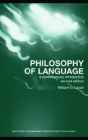
Philosophy of Language Philosophy of Language: a Contemporary Introduction introduces the student to the main issues and theories in twentieth and twenty-first-century phi- losophy of language, focusing specifically on linguistic phenomena. Topics are structured in four parts in the book. Part I, Reference and Referring, includes topics such as Russell's Theory of Descriptions, Donnellan's distinction, problems of anaphora, the description theory of proper names, Searle's cluster theory, and the causalhistorical theory. Part II, Theories of Meaning, surveys the competing theories of linguistic mean- ing and compares their various advantages and liabilities. Part III, Pragmatics and Speech Acts, introduces the basic concepts of linguistic pragmatics,
You've probably heard that drugs are bad for you, but what does that mean and why are they bad? Medicines Are Legal Drugs If you've ever been sick and had to take medicine, you already know about one kind of drugs. Medicines are legal drugs, meaning doctors are allowed to prescribe them for patients, stores can sell them, and people are allowed to buy them. But it's not legal, or safe, for people to use these medicines any way they want. Cigarettes and Alcohol Cigarettes and alcohol are two other kinds of legal drugs. (In Estonia, adults 18 can buy cigarettes and alcohol.) But smoking and excessive drinking are not healthy for adults and off limits for kids. Nicotine is the drug in tobacco leaves. Whether someone smokes, chews, or sniffs tobacco, he or she is delivering nicotine to the brain. Each cigarette contains about 10 milligrams of nicotine. Nicotine is what keeps people smoking despite its harmful effects. Because the
the selective use of language that depends on spheres / areas of human activity (e.g. style of fiction, scientific prose, newspapers, business correspondence, etc.). These are called functional styles or registers. Stylistics is the study of style. In spite of the variety of styles English Stylistics has not been discussed on the same scale as French or German stylistics; it has not been discussed thoroughly. The very term "stylistics" came in more common use in English only some 45 years ago. However, it was recorded for the first time much earlier in 1882, meaning "the study of literary style, the study of stylistic features" (Oxford Dictionary). Stylist is a writer / speaker skilled in a literary style (e.g. Hemingway is considered a peculiar stylist used a lot of repetitions). Stylistician is a scholar (a student).
 annaabi.ee