Leidsid 33 sarnast õppematerjali, mis on seotud failiga "Sochi Olympic Winter Games (winners)/Sochi Olümpia võitjad". Need materjalid aitavad sul teemat sügavamalt mõista.
russia, norway, canada, winners, medal, germany, sweden, medals, gold, silver, bronze, netherlands, sport, skating, skiing, sochi, winter, olympic, games, france, hockey, speed, track, china, figure, curling, britain, biathlon, cross, country, poland, japan, slovenia, nordic, alpine, snowboard, skeletonspeed skating, and freestyle skiing have earned a permanent spot on the Olympic programme. The first Winter Olympics were held in Chamonix, France in 1924. Many countries have played home to the Winter Olympics. France has been host to the Games three times. The United States has hosted the Games four times, more than any other country. Several countries including Italy, Japan, Austria and Norway have hosted the Games twice. The next host city will be Vancouver, Canada in 2010. This will be the second time the Games will be held in Canada.The Games will then be hosted by Sochi, Russia in 2014. This will be the first time that Russia has hosted a Winter Olympic Games. Vancouver is a coastal city located in the Lo wer Mainland of Britis Country : Canada h Columbia, Canada. It is nam
Olympia could accommodate more than 40,000 spectators. The only event in the first 13 games was the stadion which is a running-race of 192 metres. As the years passed, longer running races and other types of competition became a part of the games wrestling, the pentathlon, boxing and chariot-racing. The pentathlon was a combination of long jump, running, discus, and javelin throwing and wrestling. The games were so important that truce was called out between the fighting city-states. Olympic winners were greatly honoured. They were given olive wreaths as prizes and were treated like true heroes. 3. The modern Olympic Games The Olympic Games are the most important international athletic competition in the world. The games consist of the Summer Games and the Winter Games (the last being established in 1924) used to take place the same year as the Summer Games, but beginning in 1992 the games were divided and scheduled on four-year-cycles two years apart. Since 394 A.D. when
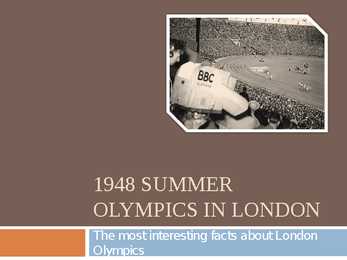
At 4 p.m. 2500 pidgeons were set free to spread the peace-spirit of the games Greece was the first one to leave the stadium, and UK-s team was the last one Overview of the sports events: Athletics: 33 athletics events were contested; 24 for men and 9 for women. 4 of these were making their debut - the men's 10km walk, the women's 200 meters, long jump and shot put Duncan White won the first ever medal for Sri Lanka in Ahtletics Basketball: 23 nations entered the competition. The United States defeated France 65-21 in the final. Brazil was the third Football: 18 teams were contested. The shiniest medal was claimed by Sweden, who defeated Yugoslavia 3-1 in the final. Denmark won the bronze medal Hockey: 13 nations participated. Surprisingly, the gold medal went to India, who won Great Britain. It
Geneva, Switzerland. He was buried in Lausanne (the seat of the IOC), although his heart was buried separately in a monument near the ruins of ancient Olympia. The Summer Olympic Games are an international multi-sport event held every four years, organised by the International Olympic Committee. The Olympics are the most prestigious of such events in the world. Olympic victory is widely considered to be the most prestigious achievement in sports. Medals are awarded in each event, with gold for first place, silver for second and bronze for third, a tradition which started in 1904. Competitors are entered by a National Olympic Committee (NOC) to represent their country of citizenship. National anthems and flags accompany the medal ceremonies, and tables showing the number of medals won by each country are widely used. In general only recognised nations are represented, but a few non- sovereign countries are allowed to take part. The special case of Taiwan was handled
· Temperate zone coniferous woods soft timber · Transport floating of logs, road transport 5. Late Industrial m.m · Ruinous economy Forestry in different regions of the world: 1. Europe 1) West Europe · A lot of forests were destructed during Late Agrarian times. · During the industrialisation only timber industry · Situation has improved timber, paper and cellulose industries in France and Germany 2) Finland, Sweden, Norway · Climate was not suitable for fields forests were preserved. · Smaller population necessity was smaller · Situation is good raw timber is exported to West-Europe, export half-finished products 3) Russia · Backward country · Started with forestry in 1950 · After establishing complexes in 1960, development was fast · Wood was transported by rivers · All kinds of industries quite developed · Problems with over-felling 2
know the rules that we all have to get along. I think that the profession of a lawyer is one of the most important in the law-governed state, which we are creating now. Seasons 1)There are four seasons in a year: spring, summer, autumn and winter. In the United States autumn is called Fall. Each season lasts three months. In most countries of the world the new year begins on the 1st of January. This day is a holiday in Russia. 2)Every season is beautiful in its own way. Winter in Russia is cold, especially in the northern regions. The sun sets early and rises late. The rivers and lakes are frozen over. Everything is covered with snow. Sometimes it is very cold, and the temperature can drop to thirty below zero. Going out in weather like this isn't very pleasant. Winter is a good time for sports. People go in for skating and skiing. Tobogganing is also popular, not as a kind of sport, but rather as fun. Winter in St.Petersburg is worse than in Central Russia
Canada. Canada is a very big country in the continent of North America. It is about 10 million square kilometres and that makes it the second largest country in the world after Russia. Quebec (the province) is six times as big as the UK. Canada borders the Atlantic Ocean, the Pacific Ocean, the Arctic Ocean and the USA. The capital of Canada is Ottawa and other main cities are Toronto, Montreal and Vancouver. It is a very developed country. Montreal is the largest city and it is called the Paris of North America because most of the people there speak French. The population of Canada is 28 million people. It is a very multicultural country. People from many different countries have come to live there. The natives
Estonian sport Alfred Neuland ● 10 October 1895 ● first Olympic gold 1920 ● weightlifter ● 12 WR Palusalu’s triumph ● 10 March 1908 ● Berlin Olympic games 1936 ● two gold ● Greco-Roman and freestyle heavy weight ● people came to railway stations ● 40 000-60 000 people Paul Keres ● January 7, 1916 ● chess grandmaster ● the world's top players from the mid-1930s to the mid-1960s. ● the strongest player never to become world champion ● one of the greatest players in history Jaan Talts ● 19 May 1944 ● weightlifter ● silver 1968 ● gold 1972 ● 41 WR ● lifted 500 kg Erika Saulmäe ● born 11 June 1962
Vinson Massif Antarctica 16,864 An tarctica Everest Nepal-Tibet 29,035 Asia Kosciu sk o Australia 7,3 10 Au stral ia Elb rus Russia 18,5 10 Europe Mc Kin ley Alask a, U.S. 20,320 N orth Am erica Aconcagua Argentina 22 ,834 South America Lowest Elevations
..............................................................................9 12. References....................................................................................................10 Introduction I chose finland because there are friendly people and beautiful nature. Finland is bigger than Estonia. There lives over 5 milj. people. Finland capital is Helsingi and there lives about 2 milj. people. Highest top is 1328m. Finland is bordersed with Sweden to the west, Russia to the east and Norway to the north. It is the eight largest city in Europe. Most Finns speak Finnish. The second language is Swedish. Finland is rated the sixth most peaceful country in the World. In Finland there are more than 60000 lakes. Capital: Helsinki Area: 338145km2 Population: 5200000 Language: Finnish, Swedish
LISA 3: Eksport Rootsi 30 suuremale kaubanduspartnerile The Swedish export of goods to the thirty largest countries of destination (SEK million). Value January- Ranking Country October Share in % Change in % 2012 2011 2012 2011 2012 2012/2011 TOTAL 989 654 1 010 911 100.0 2 1 2 Norway 100 606 94 317 10.2 7 2 1 Germany 98 763 100 743 10.0 2 3 3 United Kingdom 76 458 70 494 7.7 8 4 4 USA 64 247 64 635 6.5 1 5 6 Finland 62 740 61 021 6.3 3 6 5 Denmark 61 801 61 483 6.2 1
For example European Union,World Trade Organisation. 2. Cartels-a formal agreement of some kind of raw materials. ASEAN-Association of Southeast-Asia Nations. It was established in 1967-Its aim is to make favorable conditions for membership countries. The members are Brunei,Philippines,Indonesia,Thailand, Myanmar, Cambodia, Laos, Vietnam, Malaisia and Singapore. NAFTA-North American Free Trade Agreement.It was established in 1989 by Canada, USA, and Mexico. They have remained totally independent.All countries may join with this organisation.It is one of the world's biggest economic organisations. MERCOSUR-The South common market.Regional Trade Agreement among Uruguay,Paraguay,Brazil and Argentina.It was founded in 1991. Bolivia, Chile, Colombia, Ecuador and Peru currently have associate member status. Venezuela is an applicant country. . Its purpose is to promote free trade and the fluid movement of goods, people, and currency.
Canada is the second largest country in the world. Situated to the north of the United States, in North America, it has both English and French as its official languages. Even though its area is bigger than that of the United States, its population is only about 11% of that of the USA some 35 million. Because of that, Canada has one of the lowest population densities in the world. The capital of Canada is Ottawa the name of whose comes from the old Algonquin language, with the original word meaning `to trade'. Due to the country's huge size and position, it is very diverse. It is bordered by the Pacific Ocean to the west, the Atlantic to the east, and the Arctic to the north. The landscapes differ greatly from rolling plains and mountains to the cold tundra in the northern part of the country.
European Union Exam 1949 France, UK and the Benelux countries decide to set in place a Council of Europe. 1951 Treaty of Paris signed by the Six (Belgium, France, Germany, Italy, Luxembourg, Netherlands), establishing the European Coal and Steel Community (ECSC). 1957 Treaties of Rome establish the European Economic Community (EEC) and the European Atomic Energy Community (Euratom). 1959 July, seven countries of the Organisation for European Economic Co- operation (OEEC) – Austria, Denmark, Norway, Portugal, Sweden, Switzerland and the UK – decide to establish a European Free Trade Association (EFTA). 1960 Creation of European Free Trade Association 1961 UK applies to join the Community. 1962 The Parliamentary Assembly changes its name to the European Parliament. 1965 The Treaty merging the executives of the three Communities (ECSC, EEC, Euratom) is signed in Brussels; enters into force on July 1, 1967. Empty chair crisis 1966
Topic Canada Tallinn English College 2006 1. Introduction If you had to use two words to describe Canada, they might be large and diverse. Canada is the second largest country in the world with a territory of about 10 million square kilometers and it is bordered by three oceans: the Arctic, the Pacific and the Atlantic Oceans. The population of Canada is about 31 million people. About 77% of the people live in cities which lie in a band about 100 miles wide above the border of the United States. The capital of Canada is Ottawa. Other large cities are Montreal, Toronto, Vancouver, Winnipeg and Quebec. 2. Geographical position Canada is a huge country in the continent of North America. It is bordered with the Atlantic Ocean in the east, the Pacific Ocean in the west, the United States of America in the south
territory is in daylight. This was a saying refering to the fact that Britian had colonies all around the world. 2. What is the Commonwealth? The Commonwealth is an association of sovereign nations that support each other and work together towards international goals. 3. When was it founded? 1931 4. Who were the founder members? Great Britain, the Irish Free State (now the Republic of Ireland), Canada, Newfoundland (since 1949 part of Canada), Australia, New Zealand, and South Africa. 5. Are they still members? Why? Irish Free State left in 1949 with the republic of ireland acts, Newfoundland (since 1949 part of Canada), 6. What was the difference between the British Empire and the British Commonwealth of Nations? the british Empire has a constitutional monarchy, all countries were a part of the british Empire and the queen was the head of all countries,
2) History Prehistoric Britain, Roman Britain, Anglo-Saxon, Danish, Norman invasions (...-1066): Britain was part of the European land mass until the end of the last Ice Age. It became an island by about 6000 BC. From about 3000 to 2000 BC the British Isles were inhabited by a group of people called the Iberians. These Stone Age people lived in limestone caves, they used stone axes and fashioned antlers and bones into leather-working tools. Later groups of people from what are now Germany, the Netherlands and Brittany also settled in Briton. During the Bronze Age, they mined tin, gold and copper and made bronze tools. They also probably built the spectacular prehistoric megaliths, such as Stonehenge on Salisbury Plain. The Celts invaded the British Isles in the 5th century BC in two waves. The Britons grew wheat and corn, caught fish, and tamed and bred animals. They made coarse cloth for their clothes,
Carl Lewis The greatest and most famous athlete of the last century, who formerly won about 20 gold medals in four different events (100 m, 200 m, long jump and 4x100 relay), is called Carl, which is a nick that hides his true identity: Frederick Carlton Lewis. He was born on 1st July 1961 in Birmingham, Alabama, the same country of Jesse Owens for the will of doom: in fact his parents lived there fleetingly owing to their job. Third of five sons, he spent his childhood in Willingboro together with his younger sister Carol, Bill, his dad and Evelyn, his mother
In 731 ,,The Great Ecclesiastical History of the English People"- overshaows all other sources of 7th, early 8th C Well-founded scraps of tradition, first work of history, where AD system is used Angles, Saxons, Jutes. Frisians 430´s onwards, Germans settlers arrived in large numbers. Anglo-Saxon invasions in 499 The Saxons- Saxon country to South and West The Angles- Angulus to East Anglia, Jutes in Kent Same culture as southern Scandinavia, Germany, northern France 600 they had founded their 7 kingdoms The Anglo-Saxon kingdoms Kent-JUtes, Essex, Sussex, Vessex- Saxons East Anglia, Mercia, Nothumbria- Angles Series of over-kings from various kingdoms St Patrick Conversion of Irish- 432-461 Patron saint of Ireland, originally pagan, slave He escaped, became a Christian priest and later bishop. Ireland was largely christian by 6th C Monasteries multiplied, monastic lines,
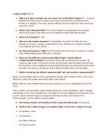
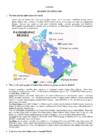
CANADA REVISION QUESTIONS 2010 1. The main physiographic regions of Canada. Canada may be divided into seven physiographic regions: Arctic Lowlands, Cordilleran Region, Interior Plains, Hudson Bay Lowlands, Canadian Shield (Forest Lands), St Lawrence Lowlands and Appalachian Region. Divisions are based on each area's relatively similar physical geography and landforms. Physiographic regionalization is defined here as the process by which regions with relatively homogeneous physical geography are determined 2. Who are the native people of Canada
Tallinna Inglise Kolledz Canada. The land of diversity. Tallinn 2006 Canada. If you had to use two words to describe Canada, they might be large and diverse. Canada is the second largest country in the world with a territory of about 10 million square kilometers and it is bordered by three oceans: the Arctic, the Pacific and the Atlantic Oceans. The population of Canada is about 31 million people. About 77% of the people live in cities which lie in a band about 100 miles wide above the border of the United States. The capital of Canada is Ottawa. Other large cities are Montreal, Toronto, Vancouver, Winnipeg and Quebec. Canada has two official languages English and French. It's interesting to know that about 61% of Canadians name English and 24% French their mother tongue. There are also many other languages spoken in Canada such
10,7 Cyprus Average 9,2 Czech Republic 9,2 Czech Republic Average 41 France 11,5 France 23,5 France 9,3 France 21,325 France Average 14,4 Germany 9,8 Germany 25,5 Germany 10 Germany 9,8 Germany 9,8 Germany 16,6 Germany 10,7 Germany 14,6 Germany 13,4667 Germany Average 9 Hong Kong 20 Hong Kong 19 Hong Kong 26 Hong Kong 18,5 Hong Kong Average 16,8 India 10 India 9,2 India 31,1 India 27 India 13,2 India 15,5 India 17,5429 India Average 10,3 Israel
9,2 Czech Republic 10,7 Average Cyprus 10,7 Cyprus Average 41 France 23,5 France 11,5 France 9,3 France 21,325 France Average 25,5 Germany 16,6 Germany 14,6 Germany 14,4 Germany 10,7 Germany 10 Germany 9,8 Germany 9,8 Germany 9,8 Germany 13,4666666667 Germany Average 26 Hong Kong 20 Hong Kong 19 Hong Kong 9 Hong Kong 18,5 Hong Kong Average 31,1 India 27 India
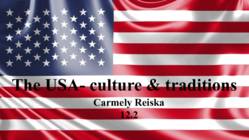
Drop Biscuits and Sausage Gravy Clam Chowder Hominy Grits Barbecue Ribs Tacos American fashion ★ Mostly informal ★ Blue jeans ★ Cowboy hat ★ Cowboy boots ★ Motorcycle jacket Sports ★ American football ★ Baseball ★ Basketball ★ Ice-hockey ➢ Super Bowl ➢ Olympic Games: ➔ 1127 gold medals ➔ 907 silver medals ➔ 794 bronze medals ➔ 2828 total Cinema of the US ★ Hollywood ★ Paramount Pictures ★ Universal Pictures ★ Warner Bros. ★ Walt Disney Studios ★ 20th Century Studios American holidays and major celebrations ★ New Year’s Day (January 1) ★ Birthday of Martin Luther King Junior (Third Monday in January) ★ President’s Day (Third Monday in February) ★ Memorial Day (Last Monday in May) ★ Independence Day (July 4)
86 206.28 203.30 182.62 158.12 159.38 163.51 175.22 181.63 186.34 China (excluding Hong Kong) 52.60 74.63 82.00 90.15 106.22 128.69 160.33 194.83 232.59 247.62 Russian Federation 35.90 63.78 65.87 64.49 70.69 83.95 112.59 140.89 144.27 173.32 Switzerland 55.12 62.57 63.63 61.69 59.09 62.00 66.58 71.59 76.92 80.07 Norway 30.42 47.19 46.37 48.02 51.02 55.29 67.22 79.16 76.65 92.01 Japan 75.41 92.09 81.13 73.65 72.39 74.69 74.06 77.29 78.35 74.79 Turkey 15.96 18.74 22.08 24.59 27.26 32.73 36.08 41.70 46.96 45.88 Korea (Republic of) (South) 20.50 26.96 23.27 24.56 26.00 30.67 34.45 40.77 41.35 39.38
Parlamendiliikmed liikmesriigi ja fraktsiooni järgi // Seitsmes ametiaeg Leida: parlamendiliikmete arv riikide lõikes (veerg Kokku); maksimaalne arv kohti saadikutele ühes fraktsioonis riikide lõikes (veerg Max kohti); valimiste võitnud fraktsioon number (Frakts. #) ja nimetus igas riigis. Fraktsioonide # EL_Riik 1 2 3 4 5 6 Germany 42 23 12 14 8 Italy 34 22 5 2 France 30 13 6 16 5 Poland 29 7 11 Spain 25 23 2 2 1 Hungary 14 4 1 Romania 14 11 5
Estonia is a small country about the size of Switzerland, or New Hampshire and Massachussetts combined. Estonia is named after the people called "Ests" who lived in the region in the 1 st century AD. The Republic of Estonia is one of the three countries commonly known as the "Baltic States". The other Baltic States are Latvia and Lithuania. 2. Geographical position Estonia is situated in northeastern Europe. Estonia is bounded on the north by the Gulf of Finland, on the east by Russia, on the south by Latvia and on the west by the Baltic Sea. In the north it borders on Finland. The coastline of the Baltic Sea in Estonia is characterized by numerous gulfs and bays, the biggest of them being the Gulf of Finland, the Gulf of Riga and the Gulf of Pärnu. Bays include the Narva Bay, Matsalu Bay, Kolga Bay, Kunda Bay, Tallinn Bay etc. Estonia has over 1500 islands, the largest being Saaremaa and Hiiumaa, Muhu and Vormsi.
Africa Mauritania Brazil Africa Réunion British Virgin Islands Africa Eswatini Brunei Africa Malawi Bulgaria Africa Rwanda Burkina Faso Africa Djibouti Burundi Africa Congo Cabo Verde Africa Equatorial Guinea Cambodia Africa Mayotte Cameroon Africa CAR Canada Africa Somalia CAR Africa Mali Caribbean Netherlands Africa Gambia Cayman Islands Africa South Sudan Chad Africa Benin Channel Islands Africa Togo Chile Africa Burkina Faso China Africa Guinea-Bissau Colombia Africa Sierra Leone Comoros Africa Lesotho Congo Africa Chad Costa Rica
..............................................................8 Culture..........................................................................................................................9 Materials.................................................................................................................... 11 3 Introduction The United States of America is an enormous country. It is the third largest in the world after Russia and Canada. In the USA there are 50 states of which 48 lie together. The population of The USA is about 300 million people. The territory is about 10 million square kilometers. Its geography is very diverse ranging from moist rainforests to dry deserts and bald mountain peaks. There are two big mountain ranges, one of them is the Rocky Mountains and the other is The Appalachian Mountains. The Capital of The USA is Washington D.C. Other big and famous cities are New York,
95 Robin Li 42 9,4 96 Serge Dassault & family 85 9,3 97 Kumar Birla 43 9,2 97 Petr Kellner 46 9,2 99 Leonid Mikhelson 55 9,1 100 Cheng Yu-tung 85 9 page_id=2 Riik Mexico USA USA France USA India Spain Brazil India USA Hong Kong Germany Sweden Russia France USA Canda USA USA USA USA USA Hong Kong USA USA Saudi Arabia Chile Hong Kong Russia USA USA Italy Russia Russia Russia India Russia Germany Mexico
Crude oil varies greatly in appearance depending on its composition. It is usually black or dark brown (although it may be yellowish, reddish, or even greenish). In the reservoir it is usually found in association with natural gas, which being lighter forms a gas cap over the petroleum, and saline water which, being heavier than most forms of crude oil, generally sinks beneath it. Crude oil may also be found in semi-solid form mixed with sand and water, as in the Athabasca oil sands in Canada, where it is usually referred to as crude bitumen. In Canada, bitumen is considered a sticky, black, tar-like form of crude oil which is so thick and heavy that it must be heated or diluted before it will flow. Venezuela also has large amounts of oil in the Orinoco oil sands, although the hydrocarbons trapped in them are more fluid than in Canada and are usually called extra heavy oil. These oil sands resources are called unconventional oil to distinguish them
SOCIETY AND CULTURE OF ENGLISH-SPEAKING COUNTRIES Introduction 1. Nowadays, English is so widely spoken that it can hardly be considered "a one nation's" language. The main countries where English is spoken are: the U.K, the U.S, Canada, Australia, the Republic of Ireland, New Zealand, West Indies 2. There are approx. 300-400 million speakers of English in the world. English occupies the 3rd place by its number of speakers; it is right behind Mandarin and Spanish. 3. ESL (English as a Second Language) used in your own country (e.g. India) EFL (English as a Foreign Language) used in a foreign country ESP (English for Specific Purposes) used in business, airlines, hotels etc. 4
13 Stefan Persson 63 24,5 72 Stefan Quandt 44 10,7 46 Steve Ballmer 54 14,5 44 Susanne Klatten 48 14,6 50 Vagit Alekperov 60 13,9 70 Viktor Rashnikov 62 12,2 57 Viktor Vekselberg 53 13 14 Vladimir Lisin 54 24 34 Vladimir Potanin 50 17,8 3 Warren Buffett 80 50 page_id=2 Riik USA Mexico Russia USA Nigeria Russia Spain Malaysia USA India France Germany USA Sweden USA Mexico USA Hong Kong USA USA Canda Russia USA Brazil Chile Switzerland USA France India USA
 annaabi.ee