 50 punkti
Autor soovib selle materjali allalaadimise eest saada 50 punkti.
50 punkti
Autor soovib selle materjali allalaadimise eest saada 50 punkti.
 ~ 13 lehte
Lehekülgede arv dokumendis
~ 13 lehte
Lehekülgede arv dokumendis
 2020-09-17
Kuupäev, millal dokument üles laeti
2020-09-17
Kuupäev, millal dokument üles laeti
 0 laadimist
Kokku alla laetud
0 laadimist
Kokku alla laetud
 0 arvamust
Teiste kasutajate poolt lisatud kommentaarid
0 arvamust
Teiste kasutajate poolt lisatud kommentaarid
 Urmi
Õppematerjali autor
Urmi
Õppematerjali autor
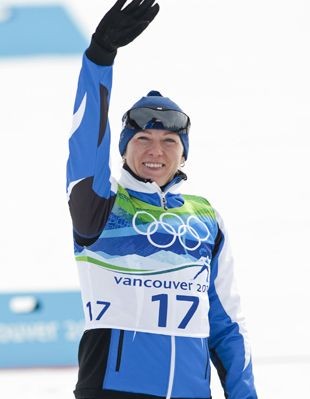
n tro d uc ti on. 1. I 2. Ab o u t Va ncou ver. . 3. Sports 4. Masco ts 5. Estonian athletes. The Winter Olympic Games are a winter multi-sport event held every four years. They feature What is the Winter winter sports held on snow or ice, such as Alpine skiing, cross- Olympics?? country skiing, figure skating, bobsledding and ice hockey. Cross-country skiing, figure skating, ice hockey, Nordic
Topic Sports Tallinn English College 8b form 2007 1. Introduction For some people sport plays a very important part in their lives. And to some, it is even a way of life. There are different kinds of sports. For instance, there are sports meant for playing indoors, some can be practised only at a certain time of year. There are winter and summer sports also. Skiing, figure-skating, sledding and snowboarding these four most popular are practised during winter. Good examples of summer sports are: swimming, badminton, roller skating and golf. 2. The ancient Olympic Games
Pierre de Frédy, was a French pedagogue and historian, but is best known as the founder of the modern Olympic Games. He was born in Paris into a French aristocratic family. As a young man he was an avid sportsman with rowing being one of his favourites, also practicing the sports of boxing, fencing and horse-riding. Influenced by the social, political and scientific events of the late 19th century and his substantial education, Coubertin developed a passionate belief that sport possessed a power to benefit humankind and encourage peace among the nations of the world. He refused the military career planned for him by his family, as well as renouncing a promising political career. De Coubertin was inspired by his visits to British and American colleges and universities, and set out to improve education. He thought part of this improvement should be sports education, which he considered an important part of the personal development of young people.
long jump and 4x100 relay), is called Carl, which is a nick that hides his true identity: Frederick Carlton Lewis. He was born on 1st July 1961 in Birmingham, Alabama, the same country of Jesse Owens for the will of doom: in fact his parents lived there fleetingly owing to their job. Third of five sons, he spent his childhood in Willingboro together with his younger sister Carol, Bill, his dad and Evelyn, his mother. Since his first years of life he could breath the soft and clean air of sport: his father used to train athletes at university and his mother was 6th at 80 m hurdles in the Pan-American games of 1951.He saw the Olympic games of 1968 on TV and could admire Bob Beamon: he was so impressed that after the jump of 8,90 m he went out with a friend to take the length of a limousine in order to realize how far Bob flied! But for the moment Carl was really thin, so thin that the doctor suggested to make him do sports. His education, beyond studies, embraced a lot of fields
SPORT In English the word ‘sport’ describes both casual play and the highest levels of performance. Recent surveys reveal that 10% of adults play sports more than twice a week, the majority of the British population involves in sport or physical recreation at least once a month. Most people have an interest in some sports as a player, spectator or gambler, but everybody in Britain seems to be fond of outdoor exercise, be it jogging, walking, rambling or just sitting on the bench outdoors. As British homes are rather cool in winter (at least for Estonians!), the saying goes that ‘the English like fresh air outdoors and indoors’. Most people are conscious of the good influence of sport on their health
Ads on the whole are convenient for grown-ups. But is it good for children to watch all those ads where they show all kinds of underwear and what not? Questions: 1. What advantages does television have? 2. What disadvantages does television have? 3. What did my friend find when his TV-set broke down? 4. What do they sometimes show? Vocabulary: entertainment -- to turn on -- passive -- to dominate -- to break down -- argument -- violence -- pop music -- ads (advertisemets) -- Sport in My School If you want to keep fit you must go in for one kind of sport or another. Sport is an essential part of my daily life. Every morning all the year round I do my morning exercises. Almost every day I do some training. In summer I go swimming or rowing. During my summer holidays I go on hikes. I usually spend my winter holidays in the country where I ski, skate or toboggan. I also go in for track-and-field (athletics) events. Different sports and games are popular
Topic Australia Tallinn English College 2006 Australia 1 . Introduction The name Australia is derived from the Latin Australis, meaning of the south. In land area, Australia is the sixth largest nation, its territory is 7,686,850 sq km and its population reaches today over 20,5 million people. It is the only nation to govern an entire continent and its outlying islands. Australia's capital is Canberra, the only city with its own territory. It was built in the early 1900s just to be the capital. The official language is English and the official name of Australia is the Commonwealth of Australia. Australia is located on the Southern Hemisphere (because of that Australia is also called "A land down under"). 2 . Geographical position Australia is an island continent and it is located between the Indian and South Pacifi
Topic Australia Introduction Many people know Australia as the land down under because it is the only continent except for Antarctica that is all on the southern hemisphere. Its name means ,,Southland". The official name of the country is the Commonwealth of Australia. It's capital is Canberra. Australia is the sixth largest country in the world but the smallest continent. Australia has 6 states and 2 territories (New South Wales, Victoria, Tasmania, Queensland, Western Australia , South Australia, The Australian Capital Territory and the Northern Territory). The Australian people are culturally the same as the Anglo Americans. There also live aborigines. Aborigines are the ancestors of the people. Like the US and Canada, Australia was an English speaking colony of Great Britain. Today Australia is a modern developed country with a diversified economy. Australia is an island continent of 7.7 million square kilometres, which makes it a little smaller than the USA. Located in
 annaabi.ee









Kõik kommentaarid