Leidsid 33 sarnast õppematerjali, mis on seotud failiga "Ruslan ja Ljudmilla". Need materjalid aitavad sul teemat sügavamalt mõista.
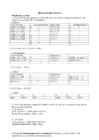
false, words, homework, answer, relevant, lines, russian, following, phrases, describe, characterMictrocontroller Week 03 Numbering systems 1. Convert the decimal number 123.456 to the following formats, taking whole numbers and fractions into account. Show calculations. a) binary b) hexadecimal c) base-5 d) BCD === 1. a) 0111 1011.0111 01002 b) 7B.7416 c) 443.2125 d) 0001 0010 0011.0100 0101 01102 === 2. Extend the following unsigned 8-bit binary numbers to their 16-bit equivalents and convert the result to hexadecimal. a) 011010112 b) 101101012 === 2. a) 006B b) 00B5 === 3. Extend the following signed two’s complement 8-bit binary numbers to their 16-bit equivalents and convert the result to hexadecimal. a) 011010112 b) 101101012 === 3. a) 006B b) FFB5 === Logic and arithmetic 4. Using two’s complement arithmetic, calculate the following (choose a suitable number of bits for the representation): a) 121 – 185
STYLISTICS 1. Style, stylistics, a survey of stylistic studies The term ,,style" is polysemantic. Latin ,,stilus"--a writing instrument used by the ancients for writing on waxed tablets. Soon, the meaning was extended to denote the manner of expressing one's ideas in written or oral form. Jonathan Swift said: ,, Style is proper words in proper places" Present day--half a dozen meanings: · the characteristic manner in which a writer expresses his ideas (Style of Byron) · the manner of expressing ideas characteristic of a literary movement or period (symbolism, romanticism) · the use of lg. typical of a literary genre (comedy, drama, novel) · the selective use of lg that depends on spheres of human activity. These
1 SYNTACTIC STYLISTIC DEVICES SYNTACTIC STYLISTIC DEVICES are based on a peculiar place of the word or phrase in the utterance (text, sentence, etc).This special place creates emphasis irrespective of the lexical meaning of the words used. Categories: syntactic stylistic devises based on: SDD: based on ABSENCE OF LOGICALLY REQUIRED ELEMENTS OF SPEECH ELLIPSIS ELLIPSIS or ELLIPTICAL SENTENCES means leaving out one or both principle members of the sentence that is the subject or predicate. NT: Where is the man I'm going to marry? - Out in the garden. (no subject) What is he doing out there? - Annoying father. Here, in the dialogue, ellipsis creates the colloquial tone of the utterance
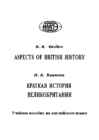
milestones in the long and eventful history of Great Britain, such as the five successful invasions of the island, the birth of Parliament and transformation of an absolute monarchy into a constitutional monarchy, the origin of the English language, the rise and fall of the British Empire. The units contain an informative reading text on an important issue, preceded by preparatory discussion questions and followed by notes offering some additional information, and a vocabulary with relevant language notes. The main reading text is accompanied by comprehension, vocabulary and grammar exercises and discussion activities. Some of the units include reading passages. The book is intended for university and school students as well as other English learners wishing to acquire more knowledge about the country whose tongue became the world’s leading language, and which is considered as the Mother of Parliaments. 7 UNIT 1 THE ISLAND
beings grasp those meanings without even thinking about it, are very strik- ing facts. A philosophical theory of meaning should explain what it is for a string of marks or noises to be meaningful and, more particularly, what it is in virtue of which the string has the distinctive meaning it does. The theory should also explain how it is possible for human beings to produce and to understand meaningful utterances and to do that so effortlessly. A widespread idea about meaning is that words and more complex lin- guistic expressions have their meanings by standing for things in the world. Though commonsensical and at first attractive, this Referential Theory of meaning is fairly easily shown to be inadequate. For one thing, comparatively few words do actually stand for things in the world. For another, if all words were like proper names, serving just to pick out individual things, we would not be able to form grammatical sentences in the first place. Meaning and understanding
1. STYLE The term "style" is polysemantic (has many meanings): a Latin word "stilus" originally meant a writing instrument used by ancient people. Already in classical Latin the meaning was extended to denote the manner of expressing one's ideas in written or oral form. Jonathan Swift defined style as "proper words in proper places". In present day English the word "style" is used in about a dozen of principle meanings: 1. the characteristic manner in which a writer expresses his/her ideas (e.g. style of Byron) 2. the manner of expressing ideas, characteristic of a literary movement or period 3. the use of language typical of a literary genre (e.g. the style of a comedy, drama, novel). 4. the selective use of language that depends on spheres / areas of human activity (e.g
3.456 - 2 = 1.456 1 1 0.456 * 2 = 0.912 0 0.912 * 2 = 1.824 1 0.824 * 2 = 1.642 1 0.642 * 2 = 1.284 1 0.284 * 2 = 0.568 0 0.568 * 2 = 1.136 1 0.136 * 2 = 0.272 0 0,544 * 2 = 0,544 0 b)1111011.01110100 to hex 0111 => 7 1011 => 11 0111 => 7 0100 => 4 and so on.. answer is: 7B.74 c) 123.456 to base-5 100 = 400 20 = 40 3=3 400 + 40 + 3 = 443 5^-1 = 0,2 5^-2 = 0,04 5^-3 = 0,008 0,456/0,2 = 2 0,056/0,04 = 1,4 0,4/0,2 = 2 Final answer 443.212 d) 1 = 0001 2 = 0010 3 = 0011 4 = 0100 5 = 0101 6 = 0110 0001 0010 0011.0100 0101 0110 2) a) 16bit equivalent is a) 0000000001101011 the answer is 006B 1011 is in dec 11 and in hex B 0110 is in dec 6 and in hex also 6 b) 16bit equivalent is b) 0000000010110101 the answer is 00B5 0101 is in dec 5 and in hex also 5 1011 is in dec 11 and in hex B 3) 16bit equivalents to hex a) 0000000001101011 => 006B b) 1111111110110101 => FFB5 4) a) 121 - 185 = -64
Some Love Poems and English Phrases!!! 1. A kiss is just a kiss until you find the one you love. A hug is just a hug until you find the one you're thinking of. A dream is just a dream until it comes true. Love was just a word until the day I saw you. 2. You are my sun, my moon you're my words, my tune. My earth, my sky, my sea you're everything to me! You're my light in the darkness you're my peace and happiness. You're ma hope and you put my above you are my forever love. 3. Love is an energy, love is a mystery love is meant to be true. Love is a part of me, love is the harmony love is going to be me and you. Love is patient, love is kind. It always protects, always trusts, always hopes. That what you are (name)...My love! 4
Galperin "Stylistics") *- very bulky questions they will be split into several parts at the exam. FGI 1081 Stylistics (I. Ladusseva) 1 STYLISTIC TERMS: Understatement (nonce-words) Style Zeugma Common Coll. Voc. Stylistics Semantically false chain Special Coll. Voc.: The styl. of lg. Pun Slang The styl. of speech Periphrasis Jargon Denotation Simile Cant Connotation Euphemism Vulgarisms Inherent Personification Professional w.
Mictrocontroller Week 03 Numbering systems 1. Convert the decimal number 123.456 to the following formats, taking whole numbers and fractions into account. Show calculations. a) Binary Fractional part : Reading direction Integral part: Reading direction 0,456 x 2 = 0,912 0 123 / 2 = 61 1 0,912 x 2 = 1,812 1 61 / 2 = 30 1 0,812 x2 = 1,624 1 30 / 2 = 15 0 0,624 x 2 = 1,248 1 15 / 2 = 7 1
As quick as a flash, ... In the wink of an eye, ... In a matter of seconds/minutes, ... In no time at all, ... Looking back In retrospect, ... When I think back to what happened then, ... REPORTS Introductory comments I recently visited (the new Leisure Centre) and have prepared the following report for your consideration. Further to my visit to ... , I have prepared the following report. The following report relates to my recent visit to ... General comments On the whole, I found that ... Although ... , I should point out that ... It is a fact that ... Concluding comments All things considered, I believe that ... Taking all these points into consideration, I would recommend ...
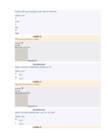
Usaldusühingu asutajaid peab olema vähemalt Select one: kolm üks kaks Feedback The correct answer is: kaks Question 2 Correct Mark 1.00 out of 1.00 Flag question Question text Aktsia väikseim nimiväärtus Eestis on 1 € Select one: True False Feedback The correct answer is 'False'. Question 3 Correct Mark 1.00 out of 1.00 Flag question Question text Aktsia väiksem nimiväärtus Eestis on 10 senti Select one: True False Feedback The correct answer is 'True'. Question 4 Correct Mark 1.00 out of 1.00 Flag question Question text Aktsiaseltsi aktsiakapital peab olema vähemalt 2500 € Select one: True False
y Constantly with desire, one observes its manifestations y These two emerge together but differ in name y The unity is said to be the mystery y Mystery of mysteries, the door to all wonders 1) Tao and Its Name y The Tao that can be spoken is not the eternal Tao y The word "Tao" is used to represent the origin that existed before the universe was born, the source of everything in our form and formless world y Using the limitations of language to try to describe, or speak about the limitless Tao if extremely difficult y Any aspect of "Tao" that we are able to describe with our words is not the same as the original and To understand the real Tao is to realize it and experience it, everlasting Tao. not by talking about it y Glacier Bay, Alaska 1.1) Tao and Its Name y The name that can be named is not the eternal name y To communicate and describe this concept we need to give it name
AND(loogikaavaldis{;loogikaavaldis}) - tagastab väärtuse TRUE ("tõene"), kui kõikide avaldiste väärtused on tõesed OR(loogikaavaldis{;loogikaavaldis}) - tagastab väärtuse TRUE ("tõene"), kui vähemalt ühe avaldise väärtus on tõene =if(and(x>=2;x<=10);3*x+2;0) =if(or(a3="m";a3="M");0,5*p;0,25*p) NOT(loogikaavaldis) TRUE() tagastab loogilise väärtuse TRUE FALSE() tagastab loogilise väärtuse FALSE NB! Need väärtused võib lahtrisse või valemisse kirjutada ilma funktsioone kasutamata NOT(logical) tagastab vastandväärtuse (FALSE korral TRUE; TRUE korral FALSE) NOT(FALSE) tagastab TRUE NOT(1+1=2) tagastab FALSE AND(logical1, logical2, ...) (1 kuni 30 argumenti) tagastab TRUE, kui kõik argumendid on TRUE muul juhul tagastab FALSE
1 - Recognizing arguments What is an argument? An argument is a group of statements, so that one or more of them (called the premises) is said to provide support for one of the others (called the conclusion). When the course starts, you should listen But the course has started Therefore, you should listen. What is a Statement? Statements are declared sentence. A statement (or a Proposition) is a sentence that is either true or false. Truth and falsity are called Truth values. - Tallinn is the capital of Estonia - Statement (true/false) - Sydney is the capital of Australia Example of sentences that are not statements: Let us go to have lunch (invitation) What time is it? (question) Go away! (command) What is an Inference? An argument has one or more premises and one conclusion. The premises provide evidence, support or reasons to believe the conclusion.
Pride and Prejudice Questionnaire · Task 1: watch the movie to the end on You Tube http://www.youtube.com/watch?v=l6RI7Rb2g6k · and answer the questions: 1. What was the relationship between Mr. Wickham and Mr. Darcy (what kind of common past did they share)? Both had grown up in the same area and under the protection of grand old Mr.Darcy, who had raised two boys equally as his sons. Two childhood friends parted immediately after old Mr.Darcy's death in arguings over money, power and honour (which one Wicham- had less in tons). · Mr
Style The term style is a polysemantic one. The latin word ,,stilus" meant a writing instrument used by the ancients for writing on waxed tablets. Already, in classical latin the meaning of style was extended to denote the manner of expressing one's ideas in written or oral form. One of the abts/the best was given by Jonathan Swift: ,,Proper words in proper places." In present- day english, the world style is used in about half a dozen basic meanings. 1. the characteristic manner in which a writer expresses his ideas. Some speak about the style of Hemingway, Dickens etc. 2. the manner of expressing ideas, characteristic of a literary movement or period. Style of symbolism, romanticism 3. the use of language to pick a literary genre-comedy, novel, drama, O.D (poetic form) etc. 4
I agree that this method is perfect at the beginner level. And it is pretty natural as well. The goals are having an enjoyable lesson, understanding the instructions and following them. In the beginning it is totally teacher-centred method. If a student doesn´t understand the teacher repeats the instruction. This method is similar to Dewey´s learning technique:" learning by doing". This method emphasizes on listening skills and following the orders. It is difficult to say how is evaluation accomplished but I think if the student performs correctly then the task passed. And once again no native language was used. · Humanistic methods: Community language learning http://www.youtube.com/watch?v=JWn4DJgbGHM Language Teaching Methods: Video 1c http://www.youtube.com/watch?v=AZVoN-roMM0 The Community Language Learning by 3rd Year of English Nondefensive learning (security, aggression, attention, reflection, retention)
English language and the world's most important dramatist ,,England's national poet" Early plays in 1590's were mostly comedies (The Taming of the Shrew, The Merchant of Venice..) Began to focus on tragedy/drama in early 1600's (Romeo and Juliet, Hamlet, Macbeth, Othello..) In 1608 tragedy is replaced with romance Wrote historical plays too (Richard III, Julius Caesar..) Used allegory and methaphores Brought over 1700 words into the English language ,,A fool thinks himself to be wise, but a wise man knows himself to be a fool. " ,,Hell is empty and all the devils are here. " ,,Expectation is the root of all heartache." ,,It is not in the stars to hold our destiny but in ourselves." ,,Words without thoughts never to heaven go." Sir Walter Scott 1771 1832 Suffered polio, which left him with a permanent limp Studied law and history Became interested in Scotland's rural habitants, collected folklore
English lexicology 1. Size of English vocabulary Vocabulary is a sum total of words used in a language by speakers or for dictionary-making. Active and passive vocabulary. The Old English vocabulary was homogenous. There were about 50 000 – 60 000 words, 1/3 of which have survived. o About 450 loans from Latin o About 2000 from the Viking invasions. The Middle-English vocabulary became a heterogeneous hybrid of Germanic and Romanic languages. 100 000 to 125 000 words. o About 10 000 loans from Norman French, 75% are still in use o Continuing Latin influence Early Modern English. 200 000 – 250 000 words
DORINE Our neighbour Daphne, and her little husband, Must be the ones who slander us, I'm thinking. Those whose own conduct's most ridiculous, Are always quickest to speak ill of others; They never fail to seize at once upon The slightest hint of any love affair, And spread the news of it with glee, and give it The character they'd have the world believe in. By others' actions, painted in their colours, They hope to justify their own; they think, In the false hope of some resemblance, either To make their own intrigues seem innocent, Or else to make their neighbours share the blame Which they are loaded with by everybody. MADAME PERNELLE These arguments are nothing to the purpose. Orante, we all know, lives a perfect life; Her thoughts are all of heaven; and I have heard That she condemns the company you keep. DORINE O admirable pattern! Virtuous dame! She lives the model of austerity; But age has brought this piety upon her,
Answer: 7000 Feedback MPC = 1 MPS; MPC = C / Y 1 Question 3 Correct Mark 1.0 out of 1.0 Flag question Question text Keynes'i rist (kogukulutuste joone AE - aggregate expenditure - ning 45-kraadi joone lõikepunkt) näitab säästuläve, millest madalamatel sissetuleku tasemetel on tarbimiskulutused väiksemad kui kasutatav tulu, seega esineb negatiivne säästmine. Select one: True False Feedback Vaadates juuresolevat joonist, nähtub, et negatiivse säästmise korral on tarbimiskulud suuremad võrreldes sissetulekutega. Niisugusel juhul kasutatakse tarbimiskulude katteks ära ka olemasolevaid sääste, mis toob kaasa säästude vähenemise ehk negatiivse säästmise. 2.1.1. Question 4 Partially correct Mark 0.5 out of 1.0 Flag question Question text
.. take them back. 4 Before leaving home, Colin always ... check the back door. 5 As we'd missed the bus, we ... run to be on time. 6 If you want to have breakfast before seven o'clock, you ... make it yourself. 7 I ... wash my clothes last year because mum did the washing for me. --- 11 8 Mrs Stewart was ill last Friday, so we ... go to school until 10 o'clock. 9 I usually ... look after my baby brother on Sunday mornings when my mum and dad go to church. 10 You ... learn all the words for tomorrow. The test will be next week. 5. Write true sentences about yourself, your family, and friends. have / has to ... don't / doesn't have to ... 1 On school days I always have to o to school. 2 Last year I ... 3 At weekend ... 4 Every day I ... 5 My friend ... 6 ... 7 ... 8 ... 6. Translate. 1 Võti ripub nööri otsas akna kõrval. 2 Lapsed otsisid puude alt rohu seest kastanimune. 3 Mitu punkti sa said? 4 Helen ja Julia lugesid kordamööda lauseid.
Philosophy Aristotle - four causes or better "becauses" because they are the 4 ways in which we use the word "because" or answer the question "why?" 1. Material cause: - what it is made of - why is the bridge strong? because made of steel 2. Formal cause: - what form, definition or property it has - why is this salt? because made of sodium and chloride 3. Efficient cause: - what initiated the change or movement - why did the baseball move? because someone hit it 4. Final cause:
be replenished. Concerns for the environment have prompted the formation of green parties, political parties that seek to address environmental issues. Initially these were formed in Australia, New Zealand and Germany but are now present in many other countries. By raising awareness about these issues, we can help contribute to a more environmentally conscious and friendly place for us to live. ADDITIONAL TASKS 1. Translate the italicized prepositional expressions and bold words in the text. Make sure that your translation is appropriate! 2. Make derivations from the following words, using prefixes and suffixes and translate each word: DERIVE, POLLUTE, CONSUME, DESTROY, CREATE. 3. Bring out some facts about the Estonian Green Party. PLASTIC POLLUTION As the world’s population continues to grow, so does the amount of garbage that people produce.
My literal translation is plain and easy to understand, but doesn't have the lovely flow that the Spanish does (really, none of the English versions do. For me anyways). When I wrote the literary translation, I tried to reinstate that artistic and compassionate flow of the original. "True love conquers all", "universal truths", and "succumb" are some of the 4 compassionate phrases that I feel demonstrate the feeling of the original. The last statement, about God and him putting that force in place, was tricky. I handled it by modifying the entire sentence structure and using key words to tie ideas together. I went back and add the word force to the previous sentence, and made sure driven was in the right spot as well. I wanted to make sure the readers understood what exactly god put into place. I think I did a good job of that, but if
finite action of the epic within a broader, universal context. Oftentimes, the poet is also paying homage to the ancestors of audience members. 5. Main characters give extended formal speeches. 6. Use of the epic simile. A standard simile is a comparison using "like" or "as." An epic or Homeric simile is a more involved, ornate comparison, extended in great detail. 7. Heavy use of repetition and stock phrases. The poet repeats passages that consist of several lines in various sections of the epic and uses homeric epithets, short, recurrent phrases used to describe people, places, or things. Both made the poem easier to memorize. Aristotle described six characteristics: "fable, action, characters, sentiments, diction, and meter." Since then, critics have used these criteria to describe two kinds of epics: Serious epic Comic epic
William Shakespeare's play A Midsummer Nights Dream is about love. Shakespeare creates for readers a world of wonder. How true is my love? Will it stay true? Is there a destiny for me? Do I make my own destiny? With that we see Hermia and Lysander. Their love is found to be altered throughout the story. Can you tell who you are going to love tomorrow, do you know for sure that you wont wake up tomorrow infatuated with someone else? Is love predictable? For many the answer to that question is yes but thinking logically you can't choose love. "I would my father looked but with my eyes." (Act I scene 1 line 57 Hermia). Hermia'a father Egeus has chosen for her a husband. Hermia is in love with someone already. Hermia won't have her life be chosen for her and she decides to elope with her love. This is exciting and they only think they will love forever because this love is so true. But puck puts a spell on Lysander to fall in love with Hermias best friend Helena
From contemporary accounts of his research, we can infer that results were slower to come than he had anticipated. His work complements hers. His work overlaps hers. His work is empirical/ ambiguous/ coherent/ comprehensive/ authoritative. Talking about figures and processes Arbitrary based on chance rather than a plan or a particular reason. Figures that deviate from the norm are different from what is typical. If statistics distort the picture, they give false impression. If you refer to the incidence of something (e.g. dyslexia), you are referring how often it occurs in the population. If something (e.g. incidence) is predominant, it is the Frequent academic/ every day words Academic verb Everyday verb append add (at the end) conceive think up contradict go against convene meet demonstrate show denote to be a sign of, stand for
Letters Letters FORMAL, INFORMAL, TRANSACTIONAL TASK 1 Read the extracts and answer the questions. · Where are the extracts from? · What is the purpose of each letter? · How do they differ? · Which extracts are examples of formal letters? · How is the reader addressed in a formal letter? · What are the closing remarks for formal letters? · What is the salutation in a friendly letter? · How would you end extracts 1,2,3 ? · How would you begin the extracts 4 and 5? 1. Dear Mr Miller,
You know, one day you look at the person and you see something more than you did the night before. Like a switch has been flicked somewhere. And the person who was just a friend is suddenly the only person you can ever imagine yourself with. Me? I'm scared of everything. I'm scared of what I feel, of what I've said, of who I am, but most of all I'm scared of walking out of this room and never feeling the rest of my life the way I feel when I'm with you. I wish you could hear all the words I'm too afraid to say. A relationship is only made for two, but some bitches don't know how to count - all those moments will be lost in time , like tears in the rain . - people always tell me to follow my dreams , so thats why i follow u . - life is too short to be anything , but happy . - Don't fall in love . Fall off a bridge , it hurts less . - I'm like a butterfly ; pretty to look at , hard to catch .
' B: 'I'll close the window'. B: 'I know, I'm going to buy some.' 2.Prediction based on opinion: 2.Prediction based on present I think the Conservatives will win the evidence: next election. Look at those boys playing football! 3.A future fact: They're going to break the window. He will be ten next year. 4.Promises / requests / refusal / willingness: I'll help you with your homework. Will you give me a hand? 5.In the same way as the future continuous, but with state verbs: I'll be at the station when you arrive. 'Shall' is used mainly in the forms 'shall I ?' and 'shall we?' in British English. These forms are used when you want to get someone's opinion, especially for offers and suggestions: •Shall I open the window? (=do you want me to open the window). •Where shall we go tonight? (=what's your opinion?).
majapidamise suurus ning pereliikmete vanuseline jaotus Question 2 Lineaarset tarbimisfunktsiooni kujutava tarbimisjoone tõusu väljendab säästmise piirkalduvus (MPS - Complete marginal propensity to save Mark 1.0 out of 1.0 ). Select one: True False Question 3 Keinsistliku teooria eelduseks on, et turg ei suuda hindade ja palkade jäikuse tõttu lühiajaliselt tasakaalustuda, seepärast peab valitsus stimuleerima Complete kogunõudlust, sest kogunõudluse kasv suurendab ka pakkumist. Mark 1.0 out of 1.0 Select one: True False Question 4 Keynes'i rist (kogukulutuste joone AE -
 annaabi.ee